

Luigi Mangione pleaded guilty Friday to federal stalking charges in the killing of UnitedHealthcare CEO Brian Thompson, admitting in court that he tracked the executive to a New York investor conference and shot him on a Manhattan street in December 2024.
Mangione, 28, appeared in Manhattan federal court in a beige jail uniform, shackled at the feet but not handcuffed. Reading from a prepared statement, he described shooting Thompson on the morning of December 4, 2024, saying simply that Thompson died as a result.
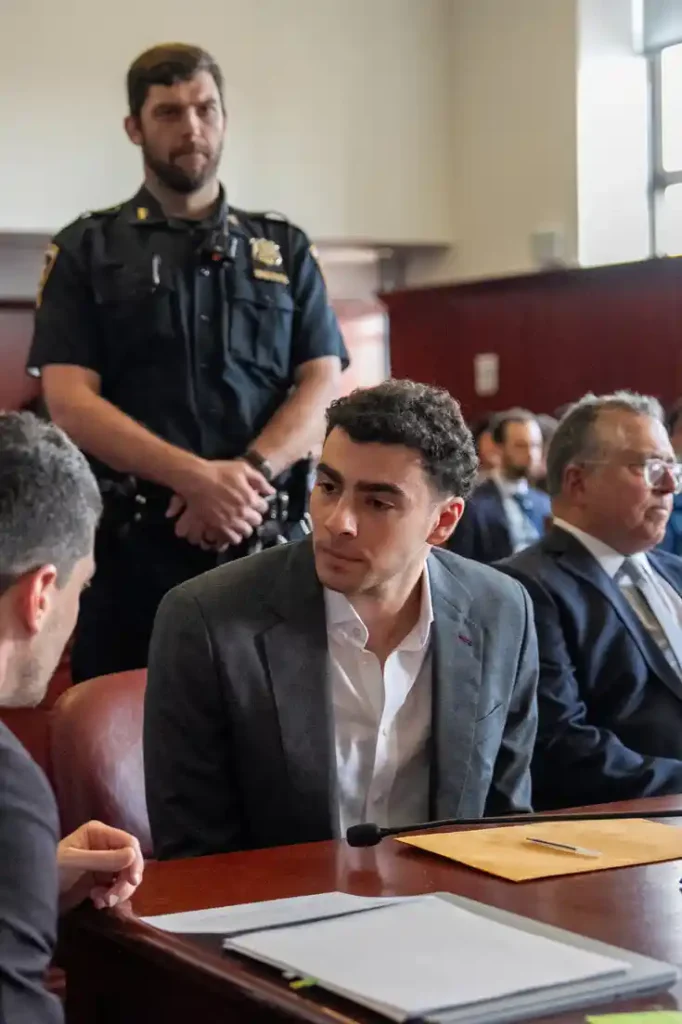
Thompson’s widow, Paulette, sat in the front row of the courtroom gallery and appeared to fight back tears as Mangione described the shooting, with family members seated beside her offering comfort.
What We Know So Far
Mangione told the court he used a 3D printer to manufacture part of a gun and traveled to New York intending to kill Thompson. He said he had emailed UnitedHealthcare leadership seeking details about the company’s 2024 investor conference while posing as an investor managing more than 50 billion dollars in assets, and said he received a response within an hour, faster than he had experienced in prior interactions with insurers. He told the court he noted that the conference, despite the company’s stated mission of improving the health system, would be attended by executives, board members and investors rather than doctors, nurses or patients.
U.S. District Judge Margaret Garnett asked Mangione whether he understood he could spend the rest of his life in prison. He answered that he did. Prosecutors said they intend to seek a life sentence, the maximum allowed, at Mangione’s sentencing, scheduled for December 18.
Both prosecutors and Mangione’s defense lawyers said the plea came without any deal or promise of leniency, and it was not entered to avoid a potential death sentence, since that possibility had already been eliminated when a federal murder charge was dismissed earlier this year on legal grounds. Judge Garnett may still consider Mangione’s decision to plead guilty as a mitigating factor at sentencing.
Following the plea, Mangione’s lawyers moved to dismiss a separate state murder case in New York on double jeopardy grounds, arguing he should not face prosecution twice over the same underlying conduct. New York’s double jeopardy protections can apply when an earlier prosecution ends in a guilty plea, though the law allows exceptions for charges involving different elements or aimed at preventing different kinds of harm.
The Manhattan district attorney’s office, which is prosecuting the state case, said it remains committed to pursuing it and would contest the defense’s dismissal motion. A trial in that case had been scheduled for September 8 before Justice Gregory Carro, and Mangione would face 25 years to life in prison if convicted of second degree murder there. Legal analyst Catherine Christian, a defense lawyer and former Manhattan prosecutor, said the stalking charges Mangione pleaded guilty to still require proof of intent to kill, which could complicate prosecutors’ efforts to argue the state charges are meaningfully distinct.
What Authorities Are Saying
Manhattan U.S. Attorney Jamie McDonald, whose office handled the federal case, said no grievance or ideological cause can ever justify murder. New York Police Commissioner Jessica Tisch said violence is not a cause and that a killer is not a hero, addressing those who have expressed support for Mangione since the killing.
Mangione’s defense lawyer, Karen Friedman Agnifilo, said her client has accepted full responsibility for Thompson’s death, arguing he should not face two separate prosecutions over what she called a single tragic event. A spokesperson for Manhattan District Attorney Alvin Bragg said the office remains prepared to litigate the defense’s motions and stays committed to pursuing justice for Thompson and his family.
Thompson’s family said in a statement that the plea represented an important step toward justice, while noting that Mangione still faces separate state prosecution. UnitedHealth Group said it remains grateful to law enforcement for bringing Thompson’s killer to justice, describing his death as devastating to everyone who knew him.
Why This Matters
The case became a flashpoint in the broader national debate over the U.S. health insurance industry after investigators said ammunition recovered at the scene bore the words “delay,” “deny” and “depose,” language echoing criticism of how insurers handle claims. Authorities have said Mangione’s private writings similarly criticized insurers, details that helped transform the killing into a cause among some critics of the industry, even though Mangione was never a UnitedHealthcare customer, according to police and the company.
Mangione’s courtroom statement citing years of back pain and frustration with the insurance system provided the most direct public account yet of his stated motivation, though officials have been clear that personal grievance does not excuse the killing. The tension between public sympathy in some quarters and the formal legal proceedings against him has made the case unusually prominent for what would otherwise be a conventional, if brazen, workplace adjacent killing.
The double jeopardy fight now shaping up in the state case adds a significant legal wrinkle, since a successful dismissal motion could mean Mangione faces no additional charges beyond the federal stalking plea and eventual sentencing, despite New York prosecutors having pursued a separate murder case for more than a year.
What Happens Next
Mangione’s federal sentencing is set for December 18, where prosecutors will seek a life sentence. Judge Garnett will decide how much weight, if any, to give his guilty plea as a mitigating factor.
The more immediate question is whether the state murder case in Manhattan proceeds toward its scheduled September 8 trial or is dismissed under the double jeopardy motion Mangione’s lawyers have now filed. Bragg’s office has signaled it will fight to keep the case alive, setting up a legal dispute over whether the stalking and murder charges are sufficiently distinct under New York law, a question that could delay or reshape the state case’s timeline regardless of the outcome.
Reporting drawn from the Associated Press and Reuters





