

Burkina Faso’s military government has formally ended diplomatic relations with France, accusing its former colonial ruler of interfering in the country’s internal affairs and supporting activities that undermine its national interests, a move that further widens the growing divide between several Sahel nations and Western governments.
The announcement, which took effect Friday, was delivered in a government statement broadcast on national television. Officials said the decision followed what they described as a sustained deterioration in bilateral relations built on disagreements over sovereignty, security and foreign influence.
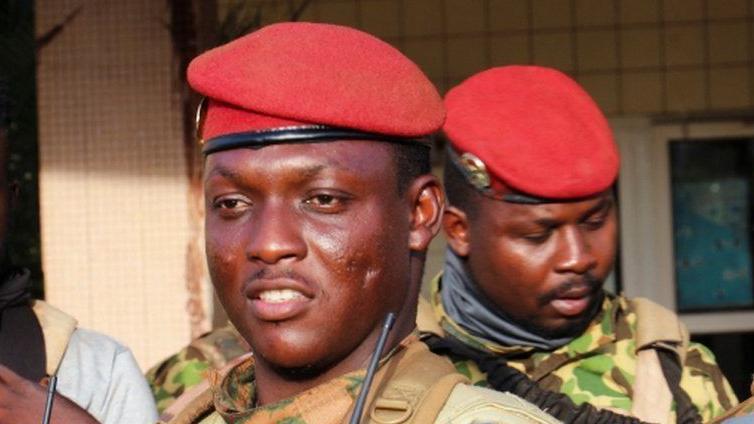
Burkina Faso’s ruling junta, led by Captain Ibrahim Traore since the September 2022 military coup, accused France of pursuing what it called “neo colonial ambitions” and alleged that Paris had supported subversive networks and terrorist groups operating in the country. The government did not present evidence to support those allegations.
Communications Minister Pingdwende Gilbert Ouedraogo said the conditions necessary to maintain diplomatic relations based on mutual respect, reciprocal trust, noninterference in domestic affairs and respect for national sovereignty no longer existed. He added that the decision affects only official diplomatic relations between the two governments and does not alter the longstanding historical, cultural and social ties between the people of Burkina Faso and France.
France rejected the accusations, describing the move as hostile and unfounded.
French Foreign Ministry spokesman Pascal Confavreux said Paris regretted the decision and was considering reciprocal measures while closely monitoring the safety of French diplomatic personnel and citizens remaining in Burkina Faso. French authorities also urged their nationals to exercise heightened caution.
The diplomatic rupture follows years of steadily worsening relations between the two countries.
Since taking power, Burkina Faso’s military government has expelled French troops, requested the withdrawal of France’s ambassador, ordered several French diplomats to leave the country and increasingly aligned itself with Russia while distancing itself from traditional Western partners.
France had long been one of Burkina Faso’s principal security partners, supporting military operations against extremist groups linked to Al Qaeda and the Islamic State that have destabilized much of the Sahel over the past decade. Despite repeated military interventions and international support, extremist violence has continued to spread across Burkina Faso, Mali and Niger, displacing millions of people and leaving thousands dead.
Analysts say the latest diplomatic break reflects a broader geopolitical shift unfolding across West Africa. Military governments in Burkina Faso, Mali and Niger have increasingly challenged France’s historical influence while strengthening political, military and economic partnerships with Russia and expanding cooperation with China.
The move also illustrates the rapid transformation of the Sahel into one of the world’s most contested strategic regions, where global powers are competing for influence through security partnerships, investment and diplomatic engagement.
Economically, the diplomatic split could reshape trade, development assistance and foreign investment between the two countries. France has historically provided development financing, technical assistance and private sector investment in Burkina Faso. Although existing commercial activities are expected to continue in the short term, analysts say prolonged political tensions could discourage new investment, complicate development projects and affect future bilateral cooperation.
Security experts also warn that reduced diplomatic engagement may make intelligence sharing and regional counterterrorism coordination more difficult at a time when extremist organizations continue expanding their operations across the Sahel. Burkina Faso remains one of the countries hardest hit by militant violence, with large areas outside government control despite repeated military campaigns.
Human rights organizations have also expressed concern over the country’s internal security situation. Human Rights Watch recently said government forces were responsible for at least 1,200 of the 1,837 civilian deaths documented between January 2023 and August 2025, while extremist groups have continued carrying out attacks against civilians and security forces. The military government has repeatedly defended its security strategy as necessary to combat terrorism.
The diplomatic split is unlikely to immediately sever people to people connections between the two countries, but it marks one of the most significant setbacks in relations since Burkina Faso gained independence from France in 1960.
The decision also reinforces a broader trend across several former French colonies, where anti French sentiment has grown alongside demands for greater political independence and new international partnerships.
What we know so far
Burkina Faso has officially ended diplomatic relations with France, accusing Paris of violating the principles of mutual respect and noninterference. France has rejected the allegations, expressed regret over the decision and is considering reciprocal diplomatic measures.
What authorities are saying
Burkina Faso’s government maintains that diplomatic relations could no longer continue because the foundations of mutual trust and respect had broken down. French officials insist the accusations are without foundation and say they are reviewing their response while prioritizing the safety of French citizens in the country.
Why this matters
The diplomatic rupture underscores the rapidly changing balance of power in the Sahel, where military governments are redefining foreign alliances while reducing Western influence. The decision could have lasting implications for regional security, international investment, development assistance and counterterrorism cooperation across West Africa.
What happens next
France is expected to announce reciprocal diplomatic measures in the coming days. Analysts will closely monitor whether embassies remain operational, how bilateral cooperation evolves and whether Burkina Faso strengthens its strategic partnerships with Russia, China and other non Western allies as regional realignments continue.
Sources: Reuters; Associated Press; African News





