

The death toll from the twin earthquakes that struck Venezuela earlier this week climbed sharply to 1,430 by Saturday, with nearly 69,000 people reported missing by their families, more than 3,200 injured, and mounting public fury over what many survivors described as a government response that was woefully inadequate given the scale of the disaster.
National Assembly President Jorge Rodriguez announced the updated figures on state television Saturday, adding that 3,100 people had been left homeless and that rescuers were still searching through rubble across the hardest-hit areas, the Guardian and the Associated Press confirmed.
The United Nations estimated Saturday that the earthquakes caused $6.7 billion in damage, equivalent to six percent of Venezuela’s gross domestic product.
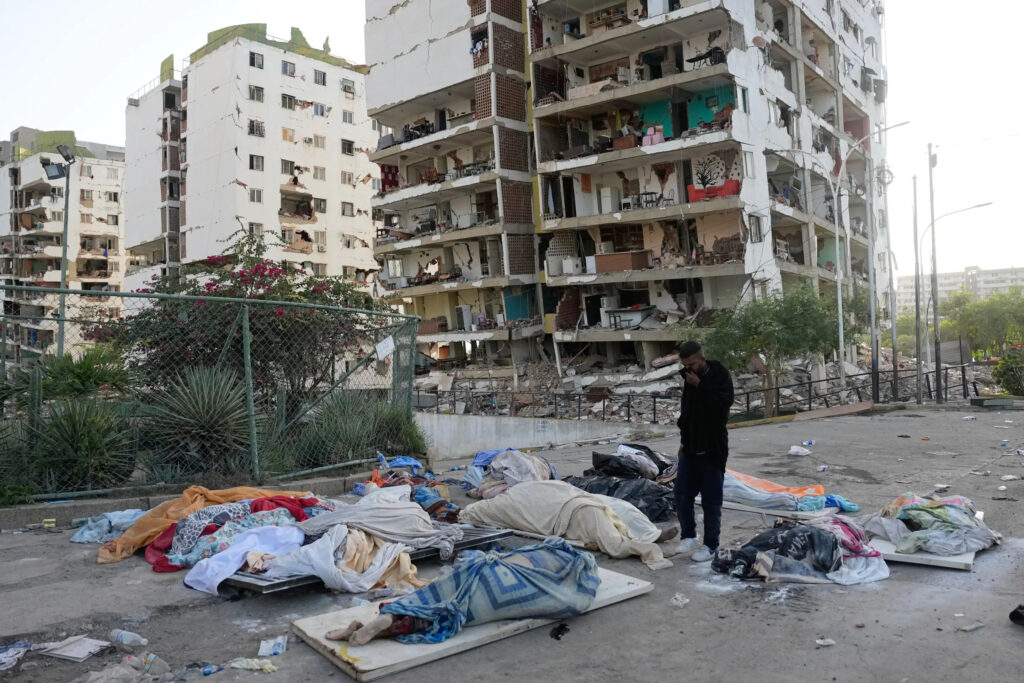
What We Know So Far
Rescue operations continued Saturday in La Guaira, the coastal state north of Caracas that suffered the heaviest casualties, where civilians and rescue teams worked through punishing heat using shovels, ropes, heavy equipment, and bare hands to dig through mounds of collapsed concrete.
At least 68,900 people had been reported unaccounted for by their families as of Saturday, with an opposition-maintained tracking website separately listing more than 55,000 missing, Reuters confirmed.
The gap between those figures reflected the difficulty of compiling accurate information across an area where communications, infrastructure, and government systems were all severely disrupted.
More than 14,000 military and police personnel were patrolling affected areas, acting President Delcy Rodriguez said on state television. Access to La Guaira was restricted, with special permits required to enter and checkpoints on the main road from Caracas, where authorities said traffic was slowing emergency vehicles.
Seventeen flights carrying more than 1,600 foreign rescue workers had landed by Saturday, Rodriguez confirmed. Search teams from Mexico, the United States, Brazil, El Salvador, France, the Netherlands, Turkey, and the United Kingdom were among those deployed, joining growing international efforts to find survivors, the Associated Press reported.
Jeremy Lewin, the senior U.S. State Department official overseeing foreign assistance, said the U.S. military was coordinating flights to deliver rescue workers, mobile hospitals, and supplies.
He confirmed that a U.S. Navy transport ship was docked off Venezuela’s coast, ready to receive airlifted survivors requiring medical attention. One runway at Simon Bolivar International Airport, badly damaged in the initial earthquakes, had been made operational with U.S. assistance, Lewin said.
“People are trapped under rubble, and the priority is to get the search and rescue teams and the medical professionals and others to them as quickly as possible to save lives,” Lewin told reporters, describing the effort as “a race against the clock.”
The International Organization for Migration estimated that more than six million people could ultimately be affected, with roughly two million in Caracas alone, the Associated Press noted.
Foreign nationals were confirmed among the dead, including 15 people of Portuguese nationality or descent, seven Chinese nationals, five Spaniards, two Brazilians, and one Italian-Venezuelan, the Guardian reported.
Pope Leo, speaking in Rome on Saturday, offered prayers for the victims, their families, and those involved in relief operations, expressing hope that global solidarity with Venezuela would endure.
What Authorities And Witnesses Are Saying
Public frustration with the official response boiled over at multiple points Saturday in La Guaira. Mileidy Romero, searching in the seaside town of Caraballeada, described finding bodies that had gone unrecovered overnight despite signs of life the previous evening.
“At 8 p.m. yesterday there were people alive down there, and they haven’t bothered to rescue them. We’ve located several bodies, and they haven’t helped us recover them either. What are they waiting for?” she said, the Associated Press reported.
Tensions peaked in one scene where a crowd blocked an excavator from leaving a collapse site and pulled the operator from the cabin after state workers were seen taking photographs in front of flattened buildings before departing without helping. At least five bodies lay wrapped in blankets nearby.
Yeison Marcano, one of the civilians who had been digging for three days, captured the widespread sentiment. “They came to eat arepas and take pictures to make it look like they were working,” Marcano said of officials who arrived at the site. “They didn’t even get their uniforms dirty like we have.”
Moments later, a man pulled alive from the rubble of a public housing building was loaded into a pickup truck by rescue personnel. Visibly disoriented and crying out for water, he fought with workers as they moved him, screaming for his family.
Loyce Pace, the International Red Cross regional director for the Americas, said survivors remained terrified to re-enter what had been their homes.
Authorities warned that frequent aftershocks were continuing, further complicating rescue efforts in structurally compromised buildings. Power was being gradually restored across the region, though Venezuela’s electricity grid, weakened by years of underinvestment and economic sanctions, had been experiencing regular failures even before the earthquakes struck.
A senior U.S. administration official told Reuters that a nine-figure funding package was expected to be announced within a day or two, in addition to the $150 million already committed by the Trump administration. A White House official separately told Reuters that efforts by Venezuelan opposition leader Maria Corina Machado to secure U.S. assistance for her return to Venezuela were frustrating senior officials in Washington, who said it was too soon after the disaster to address that request.
Why This Matters
Three days after the earthquakes, the Venezuelan response has exposed the full weight of a decade-long institutional collapse. The country that the earthquakes struck was not simply unprepared for a disaster of this magnitude.
It had been systematically hollowed out by economic mismanagement, political turmoil, international sanctions, and mass emigration long before Wednesday evening’s twin strikes.
Aid agencies have consistently held that the first 48 to 72 hours are the critical window for recovering people alive from earthquake rubble. By Saturday, that window had largely passed for many of those still trapped in La Guaira, though specialists noted that survival is possible beyond that period when victims have access to water or air pockets.
The scenes of civilians digging with motorcycle helmets in the absence of hard hats, of families blocking government machinery from leaving, of crowds confronting officials taking selfies beside the dead, tell a story about institutional trust and state capacity that goes beyond any single disaster response failure.
Venezuela’s government, led by Rodriguez since Maduro’s capture by U.S. forces in January, is attempting to manage a catastrophe while already lacking the legitimacy, resources, and infrastructure that effective disaster response requires.
The USGS had projected a final death toll potentially exceeding 10,000 using its predictive modeling system. With the confirmed figure at 1,430 and nearly 69,000 people still unaccounted for, that projection cannot yet be ruled out as the search continues through densely collapsed urban areas where full accounting will take weeks.
The international response has been substantial and rapid by the standards of a country that until recently was politically isolated. The willingness of the United States, which ordered Maduro’s removal earlier this year, to now coordinate military logistics and commit hundreds of millions of dollars in aid to Venezuela represents a striking shift in the bilateral relationship, one driven by humanitarian necessity and domestic political pressure as much as by any strategic calculation.
What Happens Next
Search operations were continuing Saturday across La Guaira and parts of Caracas, with international teams joining civilian volunteers already working for days on the same sites. The U.S. military’s repair of one runway at Simon Bolivar International Airport will be critical to sustaining the flow of personnel and supplies into the disaster zone.
Rodriguez’s government faces a dual challenge in the days ahead. It must demonstrate meaningful progress in recovering survivors and distributing aid in communities that have publicly lost confidence in its competence, while managing access restrictions that have drawn criticism from both local residents and international observers.
The U.N. preliminary assessment covering $6.7 billion in asset losses does not yet account for broader economic disruption from business closures, infrastructure repair costs, or the long-term displacement of people from coastal communities. A fuller picture of the economic damage will emerge in the weeks following the immediate emergency phase.
For Venezuela, a country that before Wednesday had already been grappling with more than a decade of hardship, the earthquakes have added a new and devastating layer to a humanitarian situation that the United Nations estimated was already affecting eight million people before the first tremor struck.
TheGuardian/AP/Reuters





