

A federal jury in Boston convicted a Massachusetts engineer on Monday of conspiring to illegally export controlled electronic components to Iran in a scheme prosecutors said ultimately benefited the Islamic Revolutionary Guard Corps drone program, delivering a significant verdict in a case that intersected with the broader U.S.-Iran conflict now dominating global headlines.
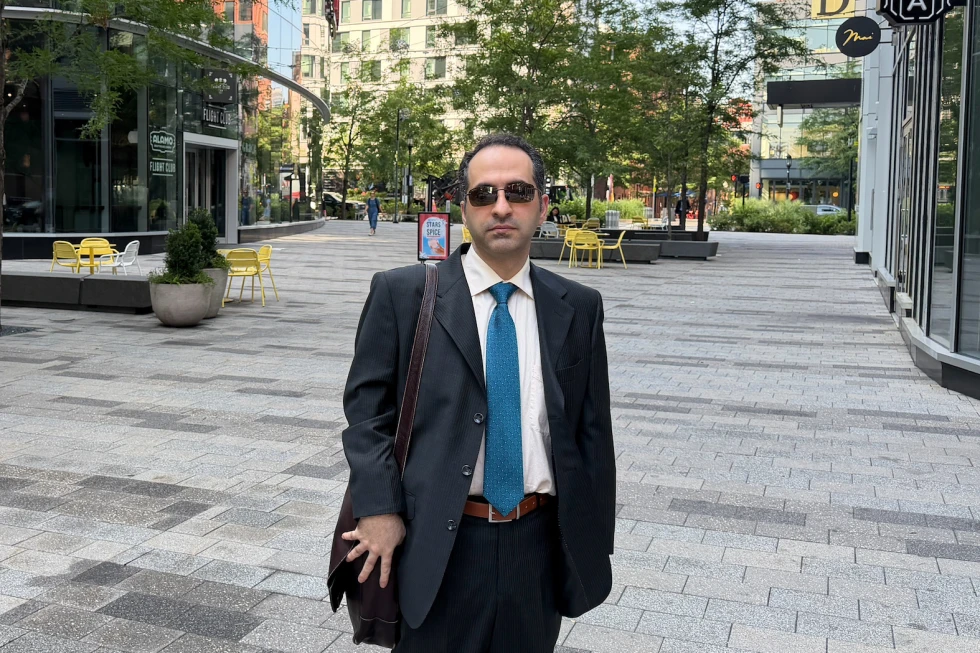
Mahdi Mohammad Sadeghi, 43, a dual U.S.-Iranian citizen and former engineer at global semiconductor company Analog Devices, was found guilty on three of five charges, including conspiracy to violate U.S. export control and sanctions laws.
He showed no visible reaction as the verdict was read on the fourth day of jury deliberations and will remain free until his sentencing on October 13, Reuters confirmed.
What We Know So Far
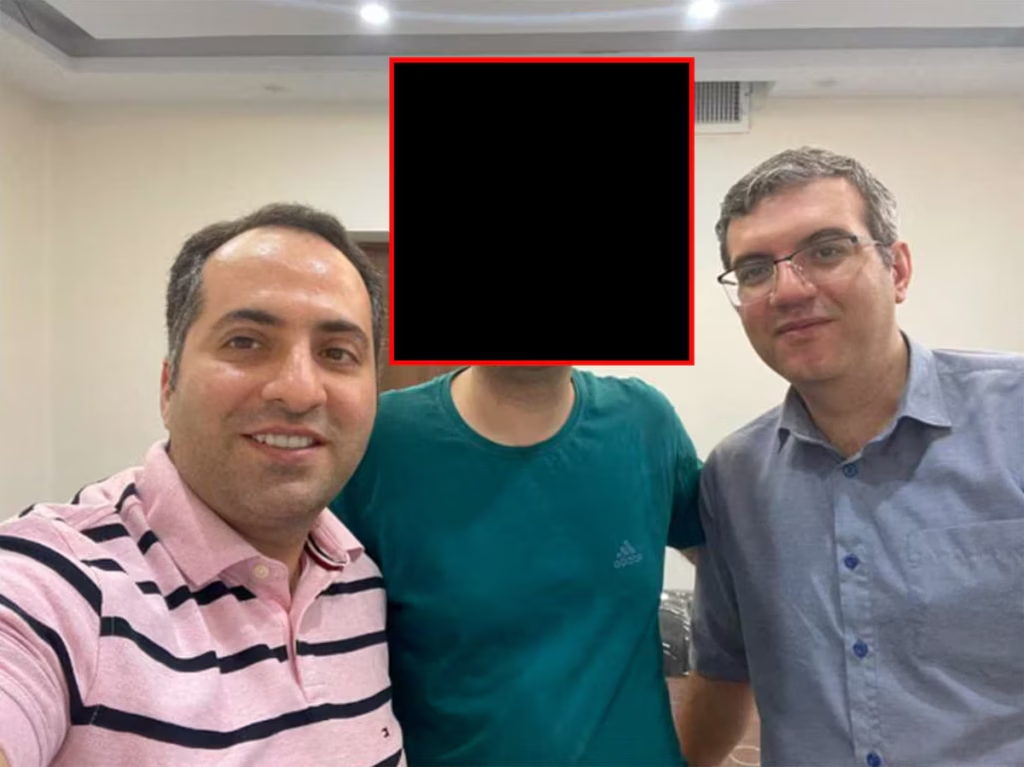
Sadeghi was accused of working with an Iranian business associate, Mohammad Abedini, whose Tehran-based company manufactured navigation systems sold to the Revolutionary Guard’s aerospace force.
Prosecutors said Sadeghi used his position at Analog Devices to help Abedini’s company, known as SDRA, illegally obtain American-origin electronic components including sophisticated sensors, accelerometers, gyroscopes, and inertial measurement units, the Department of Justice confirmed.
Central to the scheme, according to prosecutors, was a Swiss company called Illumove SA, which Abedini established in 2019 as a front to receive American technology without triggering export controls.
Sadeghi helped Abedini set up the Swiss entity and later secured a contract between Illumove and Analog Devices, through which controlled components flowed to Iran via Switzerland without Analog Devices’ knowledge, according to court documents.
The jury found Sadeghi not guilty on two additional counts, both involving violations of the International Emergency Economic Powers Act. The three counts on which he was convicted carried maximum sentences of up to 20 years each.
Sadeghi did not testify in his own defense. He had been employed at Analog Devices since 2019 and lost his position following his arrest in December 2024. A father of two and a naturalized U.S. citizen originally born in 1982, he had lived in the United States for decades before the charges upended his career and personal life.
The second defendant in the case, Abedini, was not tried alongside Sadeghi. He was arrested in Italy at the United States’ request in December 2024, but was released a month later and returned to Iran following what appeared to be an informal prisoner exchange linked to the detention of Italian journalist Cecilia Sala in Tehran.
Sala, who was widely believed to have been held as leverage for Abedini’s release, returned to Italy in January 2025. Abedini faces separate charges in the United States, including conspiracy to provide material support to a foreign terrorist organization resulting in death, the Associated Press confirmed.
The trial took place against the backdrop of the ongoing U.S.-Iran war, which began February 28. Sadeghi’s arrest predated the war by several months, but defense attorneys had sought a delay in proceedings out of concern that the conflict would prevent selection of an impartial jury.
Defense attorney Daniel Marx pressed jurors in his opening statement to “judge Mr. Sadeghi based on the evidence in this courtroom, not what is going on in the rest of the world,” Reuters noted.
Prosecutors sought to introduce evidence at trial related to an Iranian drone used in a January 2024 attack on a U.S. military outpost in Jordan, known as Tower 22, that killed three American service members and wounded more than 40 others. Court documents and the Department of Justice’s earlier indictment stated that the navigation system used in the drone involved in that attack was manufactured by Abedini’s company, SDRA.
The judge barred that evidence from Sadeghi’s trial to avoid what she described as unfair prejudice, as prosecutors acknowledged they had no proof Sadeghi knew anything about how the technology he allegedly exported was ultimately used.
What Prosecutors And Defense Said
Assistant U.S. Attorney Alathea Porter framed the government’s case in terms that left little room for nuance. “At its core, this case is straightforward. You cannot send goods, especially the goods at issue in this case, to Iran. Period. Full stop. The defendant knew that, and conspired with Mr. Abedini to do that,” Porter told the jury.
Assistant U.S. Attorney Jared Dolan told jurors in his closing remarks that documentary evidence including text messages, emails, and photographs established that Sadeghi knew exactly what Abedini was doing and helped him anyway. “The evidence established that he knew what Abedini was doing because he told him in writing. He helped him anyway,” Dolan said.
Sadeghi’s attorney William Fick argued that the prosecution’s narrative made no sense and was riddled with evidentiary gaps. He told jurors that Sadeghi was merely offering professional advice to a longtime friend about how to pursue legitimate business with a semiconductor company and bore no responsibility for how Abedini ultimately used any products he obtained.
Fick contested whether the Swiss company was genuinely a front, disputing that any parts had been proven to have reached Iran, and pointed out that prosecutors had not shown Sadeghi received any personal benefit from the alleged scheme. “If you look at the world through dirty glasses, everything looks dirty.
That is fundamentally what the prosecution is asking you to do here,” Fick said. “He had nothing to gain and everything to lose. He has lived in the country for decades. He was a well-regarded, respected employee on his way up in the company.”
Why This Matters
The Sadeghi conviction is one of the most significant export control prosecutions in recent American history and carries implications that extend well beyond a single defendant’s fate.
The case exposes the operational architecture through which Iran has systematically acquired advanced American technology for its military programs despite decades of sanctions.
SDRA’s business, as laid out in court documents, was almost entirely dependent on selling navigation systems to the Revolutionary Guard’s aerospace force, with approximately 99 percent of its Sepehr Navigation System sales going to the IRGC between 2021 and 2022. Those systems, embedded in one-way attack drones, have enabled lethal strikes against American and allied targets across the region.
The use of a Swiss front company to launder the procurement chain illustrates a method that American export enforcement agencies have repeatedly identified but struggled to detect in real time.
Illumove SA presented itself to Analog Devices as a legitimate motion-tracking technology business, and the Massachusetts company reportedly had no knowledge it was being used to funnel American semiconductor technology to an IRGC supplier. That gap between the legal transaction and its true destination is precisely the vulnerability that adversaries of the United States have learned to exploit.
The timing of the trial and conviction during the active U.S.-Iran war adds a dimension that transcends the legal proceedings. The components at the center of the case, navigation sensors and inertial measurement units, are the same categories of technology that enable precision drone strikes.
The attack at Tower 22, while kept out of the trial itself, looms over the verdict as a reminder of what is ultimately at stake when American technology reaches the wrong hands.
The prosecution was coordinated through the Disruptive Technology Strike Force, a joint Department of Justice and Department of Commerce initiative specifically designed to prevent critical technology from reaching authoritarian regimes. The Sadeghi conviction will be cited by that initiative as evidence that the strategy produces results.
What Happens Next
Sadeghi’s sentencing is scheduled for October 13 before U.S. District Judge Indira Talwani. He faces a maximum of 20 years in prison on each of the three counts on which he was convicted, though the actual sentence will be determined by the guidelines and the judge’s assessment of the specific circumstances.
Abedini’s legal situation remains unresolved. He is believed to be in Iran and his extradition from Italy was rendered moot by his release and return to Tehran. The Department of Justice’s Office of International Affairs is formally seeking his extradition, but that process faces obvious practical obstacles given the current state of U.S.-Iran relations. He faces charges that include conspiracy to provide material support to a foreign terrorist organization resulting in death, which carries a potential life sentence.
For Analog Devices, which was not charged with any wrongdoing and reportedly had no knowledge it was being used to supply Iranian military drone technology, the case raises questions about supply chain verification and the adequacy of current screening procedures for international business partnerships. The company had conducted what it apparently believed was a legitimate contract with a Swiss firm that turned out to be an IRGC-linked front.
The broader lesson the conviction sends to individuals positioned, as Sadeghi was, at the intersection of American technology companies and foreign contacts with ties to sanctioned programs, is unambiguous. The Disruptive Technology Strike Force will be watching, the tools of digital forensics will preserve the written record, and the verdict will follow.
Sources: The Associated Press, Reuters, United States Department of Justice, Iran Watch.





