

The Pentagon has increased the official United States military death toll from the Iran conflict to 14 after a Navy pilot died following a helicopter crash in the Arabian Sea earlier this month.
The latest casualty was classified as a noncombat death after the helicopter made what the Navy initially described as an emergency landing on July 1. Military officials said there was no evidence that hostile action caused the incident, and the three other sailors aboard the aircraft were rescued safely.
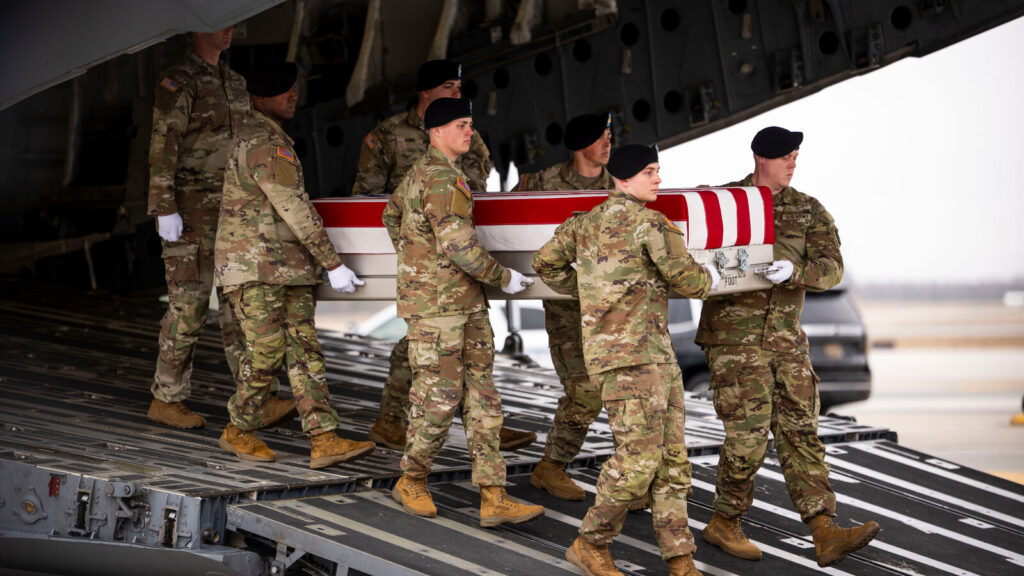
The updated casualty figures also show that 414 American service members have been wounded since the conflict began. United States Central Command said most of those injuries involve traumatic brain injuries, highlighting one of the most common medical conditions affecting troops serving in the conflict.
Capt. Tim Hawkins, a spokesperson for United States Central Command, said the military added one Air Force service member to the list of wounded personnel on Monday. Officials did not identify the airman or indicate whether the injury was connected to renewed military exchanges between the United States and Iran.
The latest death is the first reported since March, when 13 American service members were killed during separate incidents at the beginning of the war.
Those fatalities included six soldiers killed in an Iranian drone attack on a command center in Kuwait. Another soldier later died from wounds sustained during an attack on Prince Sultan Air Base in Saudi Arabia. Six additional service members were killed when a KC 135 refueling aircraft supporting United States military operations crashed in Iraq.
Military officials have not released updated figures on the number of critically injured personnel or how many required evacuation from the region.
Maj. Emma Thompson, another spokesperson for United States Central Command, said she had no additional information on severely wounded troops but noted that almost all injured personnel have since returned to active duty.
Traumatic brain injuries have become one of the defining medical challenges for modern combat forces. Many cases occur after exposure to nearby missile strikes or powerful explosions, even when soldiers suffer no visible physical wounds. Medical experts continue to study the long term effects of repeated blast exposure, which can include memory loss, cognitive impairment and emotional disorders.
The latest casualty update comes as military operations between the United States and Iran continue despite periodic diplomatic efforts aimed at reducing tensions. Defense analysts say the growing number of nonfatal injuries demonstrates that modern conflicts increasingly produce long lasting neurological damage even when protective equipment reduces battlefield fatalities.
The rising casualty figures also highlight the continuing burden on military medical services and veterans’ care systems. Traumatic brain injuries, together with post traumatic stress disorder, remain among the most significant health issues facing service members returning from combat operations.
What We Know So Far
The Pentagon has confirmed that 14 United States service members have died since the conflict with Iran began. The newest fatality involved a Navy pilot who died after a helicopter crash in the Arabian Sea that officials say was not caused by hostile action. Military records now show 414 wounded personnel, with traumatic brain injuries accounting for the majority of reported cases.
What Authorities Are Saying
United States Central Command said most injured service members suffered traumatic brain injuries and confirmed that almost all have returned to duty. The Navy maintained there was no indication that the July 1 helicopter emergency was caused by enemy action, while Pentagon officials have not linked the newest injury figures to recent military exchanges with Iran.
Why This Matters
The updated casualty figures illustrate the evolving nature of modern warfare, where blast related injuries often outnumber combat deaths. They also highlight the long term medical and financial challenges governments face in caring for service members whose injuries may not be immediately visible but can have lifelong consequences.
What Happens Next
The Pentagon is expected to continue updating casualty figures as military operations continue. Medical experts will also closely monitor the long term health outcomes of troops diagnosed with traumatic brain injuries, while policymakers assess the broader human and strategic costs of the conflict.
While battlefield fatalities remain relatively limited compared with previous large scale wars, the steady increase in traumatic brain injuries reflects a significant shift in how modern conflicts affect military personnel. Advances in protective equipment have improved survival rates, but exposure to repeated explosions and missile attacks continues to produce neurological injuries that may require years of treatment. As operations continue, these invisible wounds are likely to shape future military health policies and veterans’ support programs long after active combat ends.





