

Six workers were killed after a fire swept through a building under construction in central Brussels on Tuesday, trapping them inside an elevator shaft in one of Belgium’s deadliest workplace accidents in recent years.
Emergency crews recovered the victims after a lengthy rescue operation at the Oxy Tower project, a major redevelopment near Brussels’ Grand Place. Firefighters battled difficult conditions for several hours before reaching an elevator that had become trapped inside a smoke-filled shaft, where the bodies were discovered.
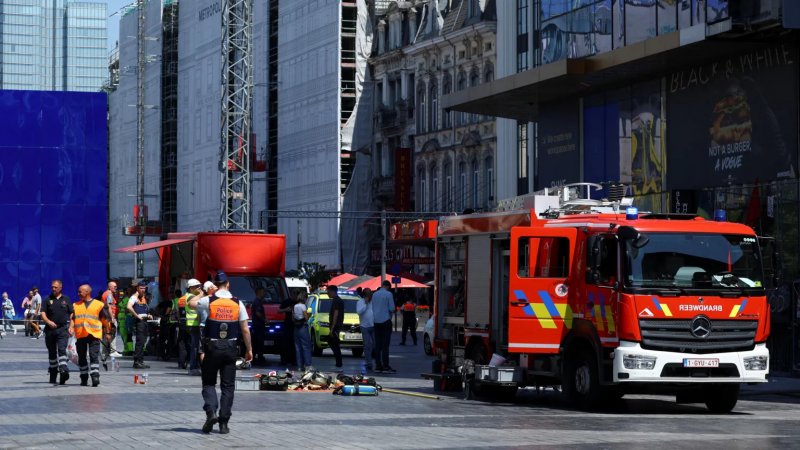
The fire broke out shortly before 8 a.m. local time on the second floor of the building. Although firefighters quickly brought the initial blaze under control, flames spread through the elevator shafts, creating an extremely dangerous environment for workers inside.
Authorities initially said six workers were missing while rescue teams searched the building. As operations continued, officials confirmed that all six missing workers had died inside one of the elevators.
What we know so far
The Brussels Labour Prosecutor’s Office confirmed that six bodies were recovered from a trapped elevator after rescue crews gained access to the shaft.
The victims were among roughly 250 construction workers who were at the site when the fire erupted. Two additional workers suffered serious burns and were transported to hospital, while a firefighter received treatment after being exposed to extreme heat during rescue efforts.
The cause of the fire has not yet been established, and investigators are examining the scene to determine how the blaze spread so rapidly into the elevator system.
The Oxy Tower project involves the conversion of a former commercial building into a mixed use complex featuring residential apartments, office space, a luxury hotel, restaurants and rooftop entertainment facilities.
What authorities are saying
Brussels Mayor Philippe Close praised firefighters, police officers and rescue personnel for their response, describing their work as exceptional under extremely difficult conditions. He expressed sympathy for the victims, their families and fellow workers affected by the tragedy.
Belgian Prime Minister Bart De Wever and King Philippe visited the site later Tuesday to receive briefings from emergency officials and thank first responders.
Interior Minister Bernard Quintin said he was deeply shocked by the loss of life and extended condolences to the victims’ families while commending emergency services for their efforts.
Justice Minister Annelies Verlinden also expressed sympathy for those affected and praised rescue teams for their swift response.
The developers behind the Oxy Tower project, Immobel and Whitewood, issued statements expressing profound sorrow over the deaths and said they were cooperating fully with investigators. Main contractor Cordeel said its immediate priority was supporting victims’ families, employees and everyone affected by the disaster.
Why this matters
The tragedy has renewed attention on construction site safety across Belgium, particularly at large urban redevelopment projects where hundreds of workers operate in confined spaces with temporary infrastructure. Fires involving elevator shafts are especially hazardous because they can rapidly channel smoke and intense heat throughout a building, limiting escape routes and complicating rescue operations.
The incident also underscores the importance of emergency evacuation procedures, fire prevention measures and ongoing safety inspections at major construction sites. As cities across Europe continue investing in large scale redevelopment projects, workplace safety remains a critical concern for regulators and the construction industry.
What happens next
Labour inspectors, fire investigators and prosecutors are expected to conduct a comprehensive investigation into the origin of the blaze and assess whether workplace safety regulations were properly followed.
Investigators will examine construction materials, fire protection systems, elevator operations and emergency response procedures to determine whether negligence or technical failures contributed to the disaster.
The findings could influence future construction safety standards and regulatory oversight for similar high rise development projects throughout Belgium.
While investigators have not identified the cause of the fire, the deaths highlight the elevated risks associated with large scale renovation projects, where temporary electrical systems, construction equipment and incomplete safety infrastructure can increase the likelihood of serious incidents.
The outcome of the investigation may shape stricter fire safety requirements for construction sites, particularly those involving high rise buildings and enclosed elevator systems. The incident is also likely to prompt renewed scrutiny of emergency preparedness and worker protection measures across Belgium’s construction sector.
Sources: The Associated Press, Reuters, Cyprus Mail, The Brussels Times





