

Andy Burnham walked through the famous black door of 10 Downing Street on Monday as Britain’s new prime minister, becoming the seventh person to hold the office in just ten years and inheriting a country that has lurched through crisis after crisis since the 2016 Brexit referendum upended its political foundations.
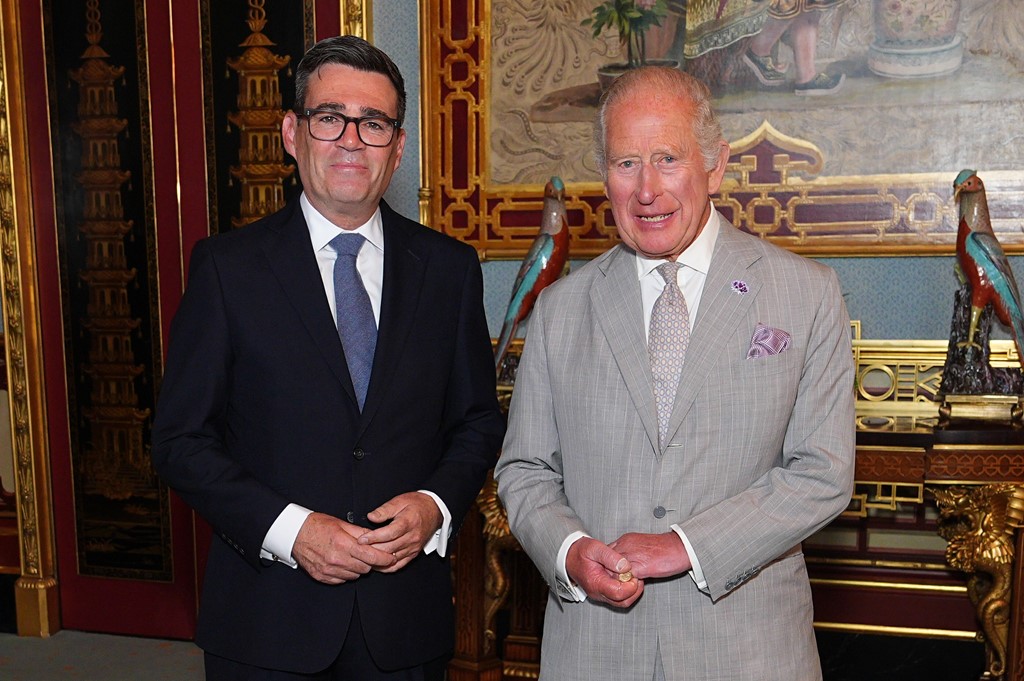
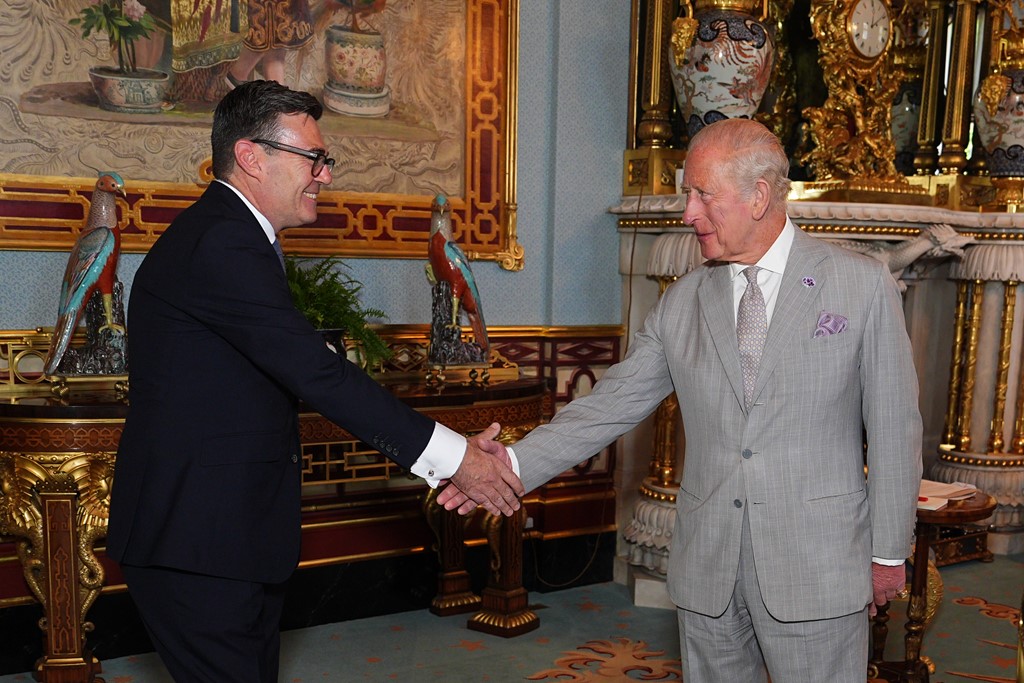
Burnham, 56, the former mayor of Greater Manchester who earned the nickname King of the North for standing up to central government during the pandemic, was formally appointed by King Charles III at Buckingham Palace following a smooth if now well-rehearsed handover of power that has become almost routine in modern British politics.
What We Know So Far
Keir Starmer delivered his farewell speech outside Downing Street Monday morning before traveling to Buckingham Palace to formally tender his resignation to the King. “My work is done,” Starmer said. “Since then, it has been the privilege of my life to serve you and this great country as prime minister. I am confident that Britain is now stronger and fairer than it was two years ago. I go with good grace, I go with a smile and I go proud of everything that we have achieved.”
Buckingham Palace confirmed the resignation in a brief statement: “Sir Keir Starmer MP had an audience of the King this morning and tendered his resignation as Prime Minister and First Lord of the Treasury which His Majesty was graciously pleased to accept.”
Burnham then traveled to the palace in his turn, where the King invited him to form a government. Burnham accepted, and in that moment became prime minister of Great Britain and Northern Ireland, the Associated Press confirmed.
He returned to Downing Street to deliver his first speech as prime minister, pledging to set out a path toward what his office described in advance as a more stable and responsible politics and promising to rewire the country to better focus on the issues that matter most to ordinary people, among them the cost-of-living crisis and consistently underperforming public services.
Burnham was the only candidate in the Labour leadership contest that followed Starmer’s resignation last month, securing nominations from 379 of the 403 Labour members of parliament in the House of Commons before being formally declared leader on Friday, the Associated Press confirmed. He succeeds Starmer as party leader and as prime minister simultaneously.
After his Downing Street address, Burnham was expected to receive a security briefing and write the letters of last resort to nuclear submarine commanders, a ritual performed by every incoming prime minister. Cabinet appointments, including widely anticipated changes to the most senior posts covering the Treasury, foreign affairs, and home affairs, were expected to follow throughout the day. His first full Cabinet meeting was scheduled for Tuesday.
Prisons minister Lord Timpson resigned Monday morning ahead of the transition, Sky News confirmed.
What Burnham And Others Are Saying
Burnham framed his arrival in explicitly reformist terms, describing the country as crying out for change after years of political instability and economic stagnation.
“I will work to build a new politics,” he said on Friday when he was declared Labour leader. “The government I lead will confidently lay that path out starting next week. It will take us to a country where life is more affordable and all people and places are lifted from where they are now.”
A spokesperson confirmed Burnham would tell the country in his first Downing Street address that he was acutely aware of how many prime ministers had come and gone in the past decade and would pledge to restore stability, Reuters confirmed.
Luke Tryl, director of pollster More in Common, offered a measured assessment of what Burnham faces. “Burnham is charismatic. When you play clips of him to focus groups, he can connect in a way that Keir Starmer perhaps could not,” Tryl told Sky News. “But what will determine whether he can get the electorate back on board is basically what happens in quite a narrow window. These next few weeks are going to be absolutely crucial, and what the public are going to want to see is immediate action on those big issues which they felt the Starmer government never seemed able to address.”
Joshi Herrmann, founder of Manchester news site The Mill, who has followed Burnham’s career closely, offered a structural warning. “Fundamentally, it will only work if you can generate significant economic growth, because it is the lack of growth that is really holding the country back,” Herrmann told the Associated Press.
Starmer, in his final Prime Minister’s Questions session on Wednesday, defended his record on support for Ukraine, child poverty reduction, worker protections, and defence spending. He left Downing Street hand in hand with his wife Victoria, and wished Burnham every success.
Why This Matters
Burnham’s arrival as the seventh prime minister in a decade is itself a measure of a political crisis that predates any individual leader’s failures. The root cause is structural. Brexit in 2016 fractured the Conservative Party and exposed deep divisions in British society that no subsequent government has successfully bridged. The succession of short-lived premierships that followed reflects not just personal inadequacy but the extraordinary difficulty of governing a country whose fundamental political consensus broke down nearly a decade ago.
The full list of those who preceded Burnham in the past ten years illustrates the scale of the churn. David Cameron resigned in 2016 after losing the Brexit referendum he had called. Theresa May lasted three years and could not get her Brexit deal through parliament. Boris Johnson resigned in 2022 amid scandal. Liz Truss lasted six weeks before her economic programme triggered a market meltdown. Rishi Sunak took over and lasted until Labour’s landslide victory in 2024. Starmer won that election with the largest parliamentary majority in modern Labour history but lost his party’s confidence within two years.
Burnham’s pitch to the country rests on a different kind of political biography. Unlike his recent predecessors, he has spent nine years governing a major metropolitan region rather than navigating Westminster’s internal feuds. His record in Greater Manchester, particularly his public confrontation with Boris Johnson’s government over inadequate pandemic compensation for the region, demonstrated a willingness to put regional interests above party loyalty that gave him a reputation as an authentic voice for ordinary people outside London.
His challenge now is converting that regional reputation into a national governing mandate. The economic fundamentals he inherits are difficult. Britain has experienced anaemic growth for years, public services remain under severe strain, the cost of living has eroded living standards across most income groups, and Reform UK under Nigel Farage continues to lead in national opinion polls, presenting a genuine electoral threat from the right that the next election in 2029 will force Labour to confront directly.
There are also early signs of potential policy ambition. BBC confirmed hints of a possible income tax cut, and Burnham’s published policy positions include radical reform of Britain’s political system, a commitment to devolution of power away from Westminster, and a focus on lifting economic performance in regions outside the southeast of England, priorities shaped directly by his years governing the north.
What Happens Next
Burnham’s immediate priority is assembling his Cabinet and signaling through those appointments what kind of Labour government he intends to lead. Changes to the Treasury, foreign office, and home office are widely expected and will be scrutinized for signals about his economic strategy and his approach to immigration, the issue on which Labour lost the most ground to Reform UK during Starmer’s tenure.
He is likely to make calls to key world leaders on Monday, with the relationship with Washington, strained under Starmer by the disagreements over the Iran war, among the most pressing diplomatic priorities.
The next national election does not have to be held until 2029, giving Burnham up to four years to demonstrate that his government can reverse the political turbulence that has defined the past decade and deliver the tangible improvements in living standards that polling experts say voters are demanding with unusual urgency.
Whether his promise of a more stable and responsible politics proves more durable than the same promises made by each of his predecessors, every one of whom arrived at Downing Street with broadly similar pledges, will be the central question British politics asks about Andy Burnham for the foreseeable future.
Sources: AP; Reuters; BBC; SkyNews





