

An overloaded ferry capsized on Zimbabwe’s Lake Kariba on Tuesday, killing at least 15 people and leaving 27 others missing, the country’s national disaster management agency said.
Zimbabwe’s Civil Protection Unit said 77 people had been rescued and taken to an island on the lake following the capsizing. The vessel, identified by local news outlet NewsDay as the Rural Infrastructure Development Agency’s Mbuyanehanda Ferry, went down near Long Island as it traveled toward the town of Kariba.
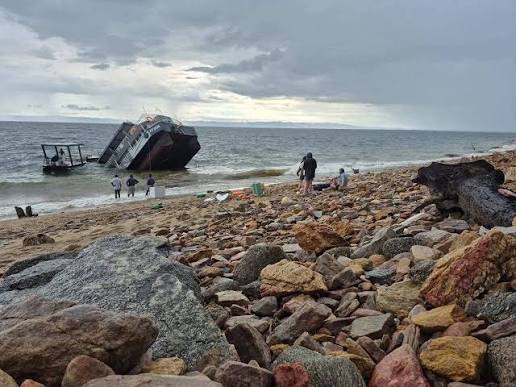
Bodies recovered from the wreck were brought to Andorra Harbour on Tuesday evening as families gathered to await word on missing loved ones, while police, army divers, the Civil Protection Unit and other rescue teams continued searching the surrounding waters.
What We Know So Far
Authorities gave conflicting figures for how many people were aboard the ferry, and the exact total remained unresolved as the search continued. Zimbabwe’s Civil Protection Unit said it could confirm only 114 adult passengers and five crew members based on ticket sales, while cautioning that an unknown number of children below ticketing age may also have been aboard and were not accounted for in that total. Cecilia Chitiyo, provincial director in Zimbabwe’s Ministry of Local Government and Public Works, cited the same figures of 114 adults and five crew members.
That count differs sharply from an earlier police statement, which said the ferry was carrying 90 passengers and five crew members, matching the vessel’s stated carrying capacity of 90 people. A witness involved in the rescue operation said the true number aboard may have been significantly higher than any of the official figures, since some passengers, including children and older people, did not require tickets and would not appear in ticketing records.
Chitiyo said 15 bodies had been retrieved and that two funeral service providers, Nyaradzo and Doves Funeral Parlours, had been engaged to collect and process the remains. Authorities said dozens of people had been rescued, though NewsDay reported that figures were still changing as the search operation continued, and it remained unclear whether the number of missing could ultimately prove higher than the initial count of 27.
Zimbabwean lawmaker Mutsa Murombedzi posted video she said showed people on shore waving off the aging ferry at the start of its journey, saying rural communities rely on the vessel to travel along the lake to Kariba. The video also showed onlookers expressing concern about whether the ferry would hold up against strong waves on the lake. State broadcaster ZBC aired footage of speedboats approaching what appeared to be the overturned vessel as a helicopter circled overhead.
What Authorities Are Saying
Zimbabwe police confirmed a rescue operation was underway shortly after the capsizing but initially provided limited additional detail. Chitiyo’s more detailed account, including the higher passenger count and confirmation of recovered bodies, came later as authorities gathered more information from the scene.
Why This Matters
The discrepancy between the ferry’s stated capacity of 90 people and the confirmed count of at least 119 ticketed passengers and crew, before accounting for any unticketed children, points to a significant overloading problem that likely contributed directly to the disaster. The gap between official passenger counts and the number of people who may have actually been aboard also highlights a broader challenge in verifying safety compliance on ferries serving rural communities, where ticketing systems may not capture the true number of travelers, particularly children and elderly passengers.
Lake Kariba, the largest human made lake in the world by volume, was formed in the late 1950s and early 1960s when a dam was built across the Zambezi River, creating a lake stretching more than 124 miles long and up to 25 miles wide in places. The lake forms part of the border between Zimbabwe and Zambia, and ferries like the one that capsized Tuesday remain a critical transportation link for rural communities with few alternative routes around the lake.
The incident is likely to renew scrutiny of vessel safety standards and capacity enforcement on Zimbabwe’s ferry routes, particularly regarding how authorities track and limit passenger numbers when tickets are not required for all travelers.
What Happens Next
Search and rescue teams, including army divers, remain active in the waters near Long Island as they continue looking for the 27 people still listed as missing. Authorities have not said when they expect the search to conclude or when a final, reconciled count of passengers and casualties will be available.
Given the unresolved questions over exactly how many people were aboard the ferry, the final death toll and number of missing could shift further as investigators verify passenger records and continue recovery efforts.
Reporting drawn from the Associated Press and NewsDay Zimbabwe





