

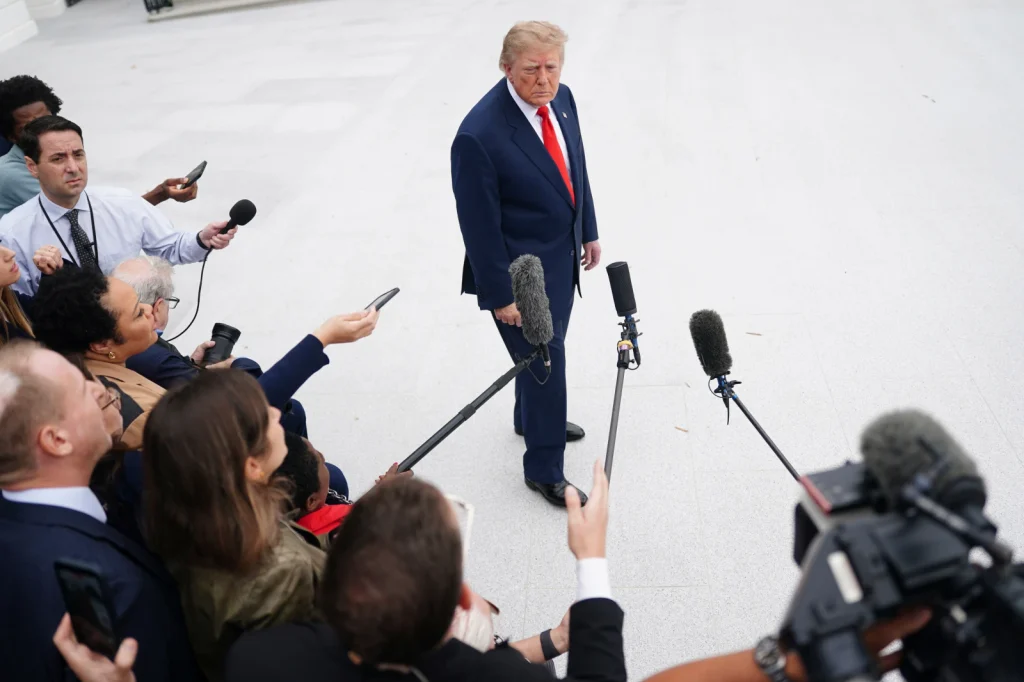
President Donald Trump said Saturday that Ukraine should choose a new leader, arguing Volodymyr Zelenskyy has not done enough to end the war with Russia and blaming him for high diesel prices in the United States, according to the Associated Press.
“I suggest they get a new leader who can make a deal because he could have made many deals,” Trump said, adding that Zelenskyy “for some reason” never does.
The comments came a day after Trump announced a deal with Russian President Vladimir Putin to buy Russian diesel, and hours after Russian strikes killed at least 20 people in Zaporizhzhia, Ukrainian officials said.
What We Know So Far
Trump spoke before leaving for Tennessee, where he was scheduled to rally Republican voters. He said Zelenskyy “wants to make problems for our farmers, our ranchers, with diesel fuel.”
Trump has pressed Zelenskyy for weeks to stop Ukrainian strikes on Russian energy infrastructure, which he says have pushed up global fuel prices. He has also pointed at Ukraine, rather than the U.S. led war in Iran, as a cause of record American diesel prices. Diesel costs have climbed on several fronts, including the difficulty of moving Middle East oil to market since the Iran war began.
Trump also said the war “would have never started” had he been president in 2022, calling it a product of “incompetence.” He said Zelenskyy has “lost 30% of your country” and that more than 2 million people have been killed.
Those figures differ from outside estimates. Independent assessments put the share of Ukrainian territory under Russian control at about 20%. British defense officials recently estimated that about half a million Russian soldiers have been killed, and there are no reliable recent estimates of Ukrainian deaths.
Trump announced Friday that Russia would immediately supply more than 300,000 tons of diesel, followed by 500,000 tons in November and 1 million tons “immediately thereafter.” Another 3 million tons would follow “within a short period of time,” he wrote.
Zaporizhzhia Strike Kills at Least 20
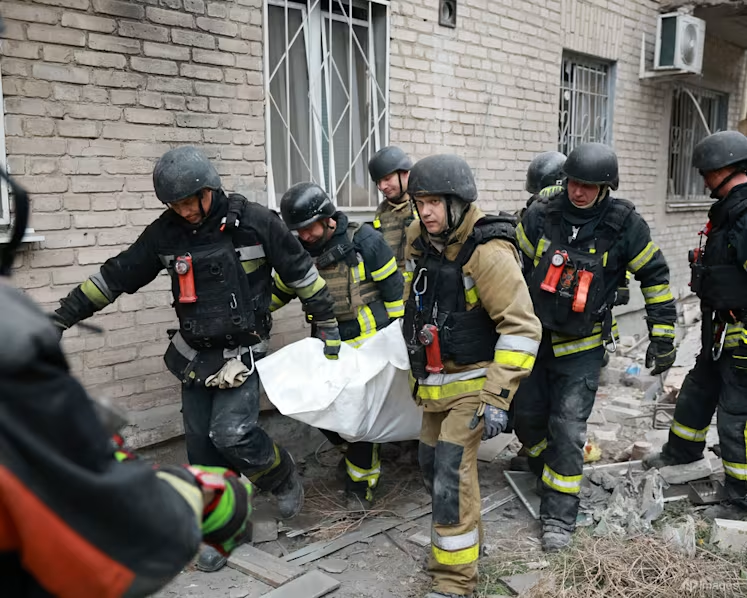
Russian aerial bombs hit residential buildings in the southern city of Zaporizhzhia on Saturday, killing at least 20 people, including three children, and wounding 18, Ukraine’s State Emergency Service said. Senior regional official Mykhailo Semikin said Russia struck several locations at once in the early hours.
Reuters reported that a 6 year old girl was among the dead after a strike reduced part of an apartment block to rubble. Her grandfather, Anatoliy Chumniy, sobbed over her body as rescuers lifted it from the wreckage. Her birthday “would have been at the end of the month,” he said.
Nataliia Malysheva, 49, whose parents died in a hospital after being pulled from the rubble, said that if Russia has money, “they’ll be able to carry on fighting us.”
Reuters also reported that a missile hit a restaurant in Kyiv on Saturday afternoon, wounding seven people, and that Russian drones flew over the capital throughout the day. Parts of Kyiv and the surrounding region lost power, halting the city’s metro for the second time this week. Russia’s Defense Ministry said its drones hit a data processing center in Kyiv and a cargo ship carrying military supplies to Odesa.
Anger in Kyiv, Doubt in Europe
Zelenskyy wrote on X that Russia had “expressed its thanks” for the lifted diesel sanctions by dropping five glide bombs on Zaporizhzhia homes. Each added billion dollars in Russian export income, he said, helps pay for weapons components, drone upgrades, missile production and mercenary recruitment. He said he spoke with French President Emmanuel Macron about strengthening air defenses and warned of more missile strikes in the coming days.
In Kyiv, people at a memorial on Independence Square reacted with anger and resignation. “Trump has once again shown his true face,” said Oleksandr Petrenko, 26. Financial adviser Oksana Yakunina said the deal “didn’t really come as a surprise.”
European governments said they would keep their sanctions in place. Swedish Prime Minister Ulf Kristersson said Stockholm regretted the deal because energy revenue is central to Russia’s war chest, and noted that the European Union would adopt its largest sanctions package yet on Monday, with 1,600 listings aimed at Russia’s military industrial complex. German government spokesperson Stefan Kornelius said Berlin remains committed to sanctions on Russia.
Polish Foreign Minister Radoslaw Sikorski questioned whether Russia could deliver at all, citing fuel shortages in Moscow and reports that Ukraine has damaged about half of Russia’s refining capacity. “So where will the surpluses for export come from?” he asked on X.
What Authorities Are Saying
A senior Ukrainian official, speaking to the AP on condition of anonymity, said Kyiv did not know of the diesel deal before Trump announced it and that it was unrelated to talks in Florida. Trump’s envoy Steve Witkoff and son in law Jared Kushner met Ukrainian officials in Miami on Friday on a proposal to end the war. The Ukrainian delegation has since left for home, presidential aide Dmytro Lytvyn said, according to Interfax Ukraine.
Putin said after a call with Trump that an immediate return to peace talks was unlikely, citing Ukrainian drone attacks on Moscow. Russia’s state news agency TASS, citing a source, reported that Witkoff and Kushner may visit Moscow within two weeks.
Russia’s installed governor in Luhansk said four civilians were killed and five wounded in Ukrainian attacks on the Russian controlled region. Reuters said it could not verify the report, and Ukraine did not immediately comment.
Differing Accounts
The sources gave different tolls for the week’s Russian strikes. The AP said bombardments have killed more than 60 people over the past four days. Reuters said nearly 80 civilians died in strikes on Wednesday and Thursday alone, including at least 30 in Kramatorsk and 22 in Pryluky.
Why This Matters
Calling publicly for another country’s president to be replaced is highly unusual for a sitting U.S. leader, and it lands as Washington and Kyiv try to agree on a path to end the war. It also follows the diesel deal, which cuts against a sweeping Russia sanctions law Trump signed last month to choke off Russian oil and gas revenue.
The domestic backdrop matters. An AP NORC poll published Oct. 1 found Americans disapprove of Trump’s handling of Iran and blame him for higher prices. Pointing to Zelenskyy as the cause of high diesel costs shifts attention from the Iran war just weeks before the midterm elections.
For Ukraine, the sequence has been punishing: a sanctions relief announcement, a mass casualty strike the next day, and a presidential call for new leadership. Kyiv has asked Washington to raise pressure on Moscow and has proposed a mutual halt to energy strikes while Russia pounds Ukraine’s power grid.
What Happens Next
The EU is set to adopt its new sanctions package Monday, setting up a contrast with Washington’s move. A possible Witkoff and Kushner trip to Moscow would show whether the U.S. peace effort is shifting toward the Kremlin. Whether Russia can actually deliver the promised diesel volumes, a point Sikorski raised, will determine how much the deal changes anything for American fuel prices or Russian revenue.
Reporting drawn from the Associated Press and Reuters




