Miguel Ángel Félix Gallardo, the founder of the Guadalajara cartel who helped build Mexico’s modern drug trade and was convicted in the 1985 killing of a U.S. Drug Enforcement Administration agent, died Sunday in a hospital in western Mexico. He was 80.
Félix Gallardo, nicknamed the “Boss of Bosses,” died at about 2 p.m. of multiple organ failure, the Jalisco state security department said in a statement cited by The Associated Press.
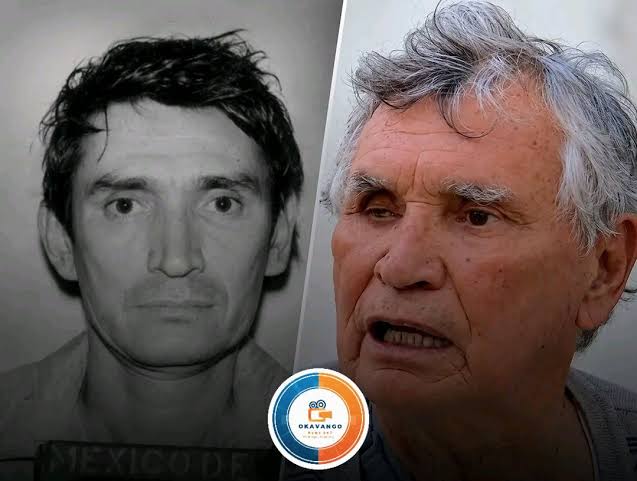
He had been rushed to a private hospital in Guadalajara on Friday from the Puente Grande maximum-security prison, where he had been held since his arrest in 1989, Reuters noted. He was serving a combined 77-year sentence for drug trafficking and the killing of DEA agent Enrique “Kiki” Camarena.
From police officer to kingpin
Born in 1946 in Culiacán, Sinaloa, a state that would later become synonymous with drug trafficking, Félix Gallardo worked as a police officer and as a bodyguard for a local governor before rising to become one of the most powerful criminal figures in Mexico’s history, Reuters said.
Alongside Rafael Caro Quintero and Ernesto Fonseca Carrillo, he founded the Guadalajara cartel in the Jalisco state capital. The organization dominated drug trafficking in Mexico during the 1980s and later fractured into several criminal groups in the country’s north, including the Sinaloa cartel, the AP said.
The cartel was the first to move cocaine into the United States on a massive scale and to forge alliances with Colombian drug lords, including Pablo Escobar’s Medellín cartel, Reuters said. Its operations expanded through bribes that bought protection from corrupt officials and innovations such as using light aircraft to move drugs across the continent.
Reuters described him as an architect of Mexico’s modern narcotics trade whose legacy includes turf wars that have since contributed to hundreds of thousands of deaths and disappearances.
The Camarena case
Félix Gallardo was arrested in 1989 and sentenced to 40 years on drug trafficking and weapons charges linked to the Guadalajara cartel.

While in prison, he faced a separate prosecution over the 1985 kidnapping and killing of Camarena and Mexican pilot Alfredo Zavala Avelar. Camarena was abducted and tortured before his body was found, the AP said. The killing sparked a diplomatic rift with Washington, which pressed Mexico hard to arrest those responsible.
In 2017, a federal court convicted Félix Gallardo in the case and added a 37-year sentence. He denied responsibility. All three cartel founders were convicted in Mexico in connection with the killing.
Caro Quintero was freed on procedural grounds in 2013, recaptured in July 2022 and extradited to the United States in February 2025 along with 28 other prisoners sought on drug charges, the AP said.
Failing health and a long fight for house arrest
Félix Gallardo spent his final years in poor health. By the time U.S. Spanish-language network Telemundo interviewed him in prison in 2021, he was blind in one eye, nearly deaf and unable to walk unassisted, Reuters said. He continued to insist he was innocent.
“Thirty-two years have passed… That’s an eternity for a man who did not commit any crime,” he said in that interview.
His lawyers sought house arrest from 2019 onward, citing his age and declining health, but courts initially refused. A judge granted the request in September 2022, but it was never implemented because of legal challenges from Mexico’s federal attorney general’s office, the AP said.
His rise and downfall reached a global audience through the 2018 Netflix series “Narcos: Mexico,” in which he was played by actor Diego Luna.
The end of an era, but not of its legacy
Félix Gallardo’s death closes the life of one of the founding figures of Mexico’s drug trade, but the industry he helped build has long outgrown him. The Guadalajara cartel’s breakup into rival factions laid the foundation for the organizations that dominate today, most notably the Sinaloa cartel, whose violent splits and conflicts with rivals continue to drive bloodshed across Mexico. In that sense, his most enduring impact lies less in his own operations than in the structure of fragmented, heavily armed groups that succeeded him.
The model the Guadalajara cartel pioneered, combining partnerships with South American suppliers, sophisticated logistics and systematic corruption of officials, became a template for later trafficking networks. The reliance on bribery to secure protection remains a central challenge for Mexican authorities and a recurring source of tension with the United States.
The Camarena killing was a turning point in U.S.-Mexico relations. The murder of a federal agent prompted Washington to escalate its pressure on Mexico and reshaped how the DEA operated in the country. With Félix Gallardo dead and Caro Quintero now in U.S. custody, the case’s surviving thread runs through American courts, where Caro Quintero’s prosecution is likely to keep the episode in the spotlight.
His long legal fight for house arrest also reflects debates over how justice systems treat aging, infirm prisoners convicted of grave crimes. Supporters of his release argued it was a humanitarian question; prosecutors who blocked the order saw no reason to ease the sentence of a man convicted in a notorious killing. His death in custody settles that dispute.
For many Mexicans and for families affected by decades of cartel violence, his passing is likely to be remembered less as the end of a criminal career than as a reminder of the long shadow cast by the organizations he helped create.
Sources: Reuters; The Associated Press (AP); Jalisco state security department; Telemundo.