

BAKERSFIELD, California — Federal agents shot and killed a man early Wednesday after he held 10 school employees hostage inside an office building in Bakersfield, bringing an end to a tense overnight standoff that stretched nearly 16 hours, authorities said.
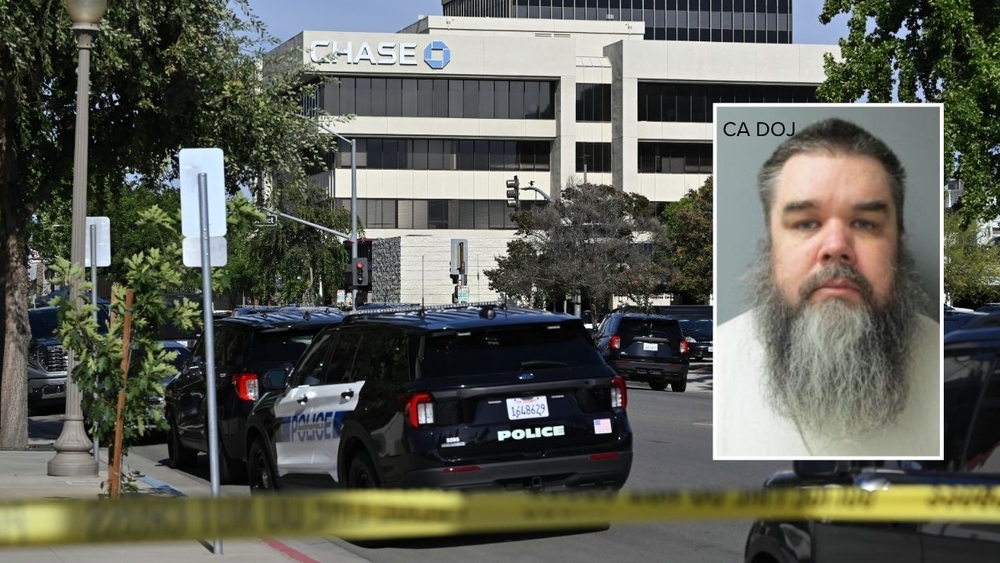
Law enforcement officers moved into the building shortly after dawn, confronting the suspect who had barricaded himself on the second floor and warned he was carrying explosives. Officials said the man, identified as 41 year old Anthony Scott Searles Harris, was killed around 4:20 a.m. during the operation led by the FBI.
All hostages, who worked for the Kern County Superintendent of Schools, were found unharmed despite being restrained for hours inside the building, which also houses a bank branch. Bakersfield Assistant Police Chief Jeremy Blakemore said the outcome brought relief after a night of uncertainty for families awaiting news.
“Throughout the night, their families questioned whether they would be seen again,” Blakemore said. “We are very grateful for the outcome.”
Authorities said the suspect claimed he had explosive devices attached to himself and possibly to some of the hostages. Investigators later examined the devices and determined they did not pose an immediate threat, according to FBI Sacramento field office chief Sid Patel.
The standoff began Tuesday afternoon when police responded to a bomb threat at the multi story office building in downtown Bakersfield. Officers discovered the suspect inside with several people and quickly established a perimeter, evacuating nearby buildings including City Hall and police headquarters.
Negotiators remained in contact with the man for hours. Two hostages were released during the evening, while others stayed inside as talks continued overnight. One hostage managed to communicate with law enforcement by phone until her battery died. Officials noted she had a medical condition and lacked access to her medication, raising concerns during the standoff.
Investigators said the suspect had a criminal history, including past convictions involving a minor and previous legal disputes. He had also served briefly in the U.S. Army before being discharged. Authorities indicated that some of his demands were tied to grievances over earlier legal cases, though a clear motive has not been established.
More than 100 federal personnel supported the operation, including specialized response teams, bomb technicians, and crisis negotiators. A hostage rescue unit was deployed as the situation escalated.
Witnesses described a heavy police presence surrounding the building throughout the ordeal. A local livestreamer, Jacob Davidson, said he watched officers enter from the rear while emergency teams set up medical triage areas nearby.
Officials said the suspect’s actions left emotional scars on those involved, even as the physical outcome remained positive. “There will be mental scars,” Patel said, noting that victim support services would be made available.
Schools Superintendent John Mendiburu praised the composure of employees during what he called a frightening and prolonged ordeal, emphasizing their resilience under extreme pressure.
The Bakersfield standoff underscores a growing challenge for law enforcement agencies confronting complex hostage situations involving threats of explosives. While such incidents remain rare, they require rapid coordination between local police and federal units, particularly when bomb threats are involved.
The swift deployment of specialized FBI teams reflects a broader trend in crisis response, where federal resources are increasingly integrated into local emergencies. This approach can improve outcomes, as seen in this case where all hostages survived, but it also raises questions about preparedness at the municipal level.
The suspect’s background, including prior criminal convictions and unresolved legal grievances, highlights a recurring pattern in high risk incidents where personal disputes escalate into public crises. Experts often point to gaps in monitoring individuals with histories of violence or instability, especially after release from custody.
The incident also illustrates the psychological toll such events take on victims. Even without physical injuries, prolonged captivity and exposure to threats can lead to lasting trauma. Authorities’ emphasis on post incident support reflects a growing recognition of these long term effects.
Finally, the case draws attention to security vulnerabilities in everyday public spaces such as office buildings that house schools and financial institutions. As urban areas continue to expand, ensuring rapid response capabilities and preventive measures remains a key concern for both policymakers and law enforcement agencies.
Source: AP





