Scripture Focus: “And Abraham built an altar there and called on the name of the Lord.” — Genesis 12:8 (NKJV)
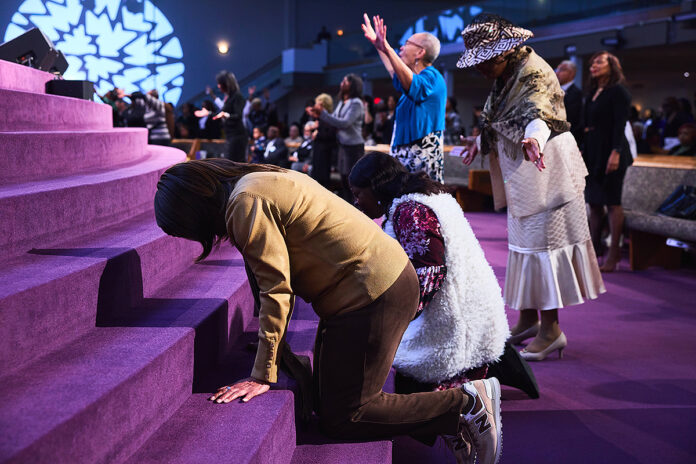
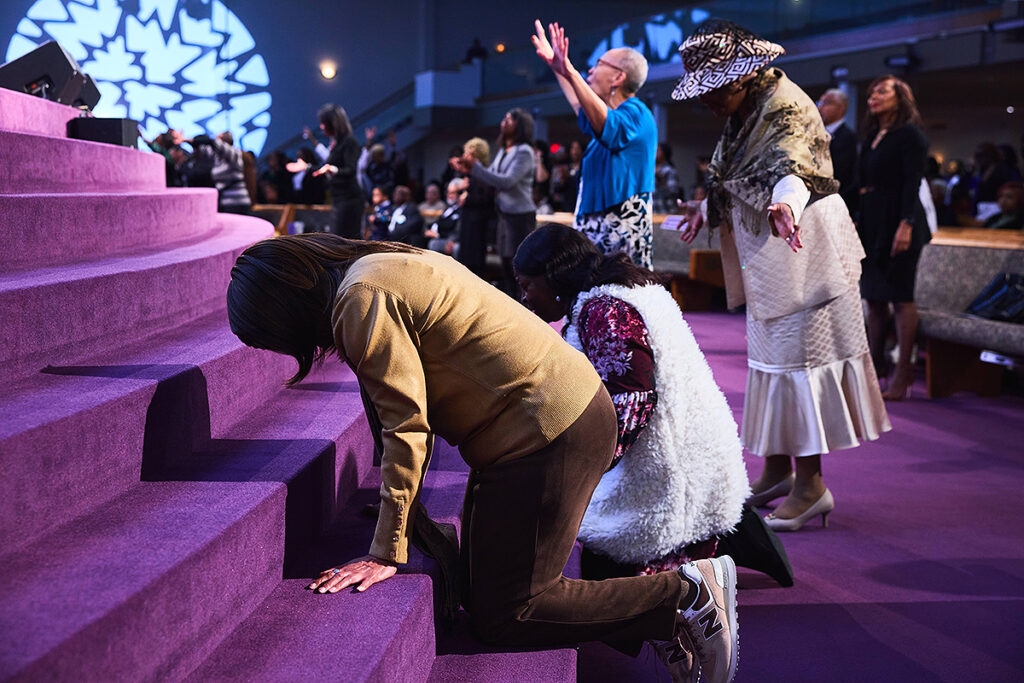
In every generation, God has sought people who would walk with Him, hear His voice, and partner with Him on earth. One consistent pattern we see throughout Scripture is this: wherever God revealed Himself, an altar was built. An altar represents a meeting point between heaven and earth. It is a place of surrender, communion, sacrifice, and divine encounter. Today, though the form has changed, the principle remains. Every believer needs a prayer altar.
A prayer altar is not merely a physical structure. It is a designated place and commitment to daily communion with God. It is where a believer consistently meets God in prayer, worship, and the Word. In a distracted, noisy, and spiritually hostile world, the prayer altar is no longer optional—it is essential.
The Biblical Foundation of the Altar
From Genesis to Revelation, altars play a central role in humanity’s relationship with God. Noah built an altar after the flood, and God responded with a covenant (Genesis 8:20–22). Abraham built altars wherever God appeared to him, and his life became marked by divine guidance and blessing (Genesis 12:7–8). Elijah repaired the broken altar on Mount Carmel before the fire of God fell (1 Kings 18:30–38).
In the New Testament, though we no longer offer animal sacrifices, our lives have become living sacrifices (Romans 12:1). Prayer becomes our spiritual incense, rising continually before God (Revelation 8:3–4). A prayer altar, therefore, is the place where our lives are continually yielded to God.
Why Every Believer Needs a Prayer Altar
First, a prayer altar establishes spiritual order. When prayer has a fixed place in your life, God takes His rightful position as Lord. Jesus Himself modeled this. Despite His busy ministry, He often withdrew to solitary places to pray (Luke 5:16). If the Son of God needed a prayer altar, how much more do we?
Second, a prayer altar sustains spiritual fire. In Leviticus 6:13, God commanded that the fire on the altar must never go out. Spiritual coldness does not begin suddenly; it begins when prayer becomes irregular. A maintained prayer altar keeps your heart sensitive, your faith strong, and your spirit alert.
Third, a prayer altar becomes a place of divine instruction and clarity. Many believers struggle with confusion because they make decisions without seeking God. At the altar, God gives direction, correction, and confirmation. “Call to Me, and I will answer you, and show you great and mighty things which you do not know” (Jeremiah 33:3).
The Altar as a Place of Power and Victory
Spiritual battles are not won in public—they are won at the altar. Jesus overcame temptation in the wilderness because He was full of the Spirit and anchored in prayer (Matthew 4:1–11). The early church prevailed in persecution because they continued steadfastly in prayer (Acts 2:42).
When the prayer altar is weak, spiritual defenses collapse. Families suffer, destinies stagnate, and believers become vulnerable. But when the altar is strong, grace flows, strength is renewed, and victories are enforced.
Repairing the Broken Altar
Many believers once had vibrant prayer lives but have allowed their altars to fall into disrepair. Like Elijah, the call today is to repair the altar of the Lord. This requires repentance, renewed discipline, and intentionality. Prayer is not sustained by feelings; it is sustained by commitment.
God is not looking for perfection—He is looking for consistency. Even short, sincere prayers offered daily at a dedicated altar will transform your spiritual life over time.
Practical Steps to Build a Prayer Altar
Building a prayer altar begins with choosing a place and a time. It may be a corner of your room, a chair, or a quiet space—what matters is consistency. Set aside daily time for prayer, worship, and Scripture meditation. Guard that time jealously.
Approach the altar with reverence, honesty, and expectation. Come not only to ask but also to listen. The altar is a place of dialogue, not monologue.
In a generation marked by distraction, prayerlessness, and spiritual fatigue, God is calling His people back to the altar. The prayer altar is where intimacy with God is cultivated, power is released, and destinies are shaped.
May you rebuild, protect, and prioritize your prayer altar. For it is there that heaven touches earth, weakness is exchanged for strength, and ordinary lives become vessels of extraordinary grace.
“Draw near to God and He will draw near to you.” — James 4:8
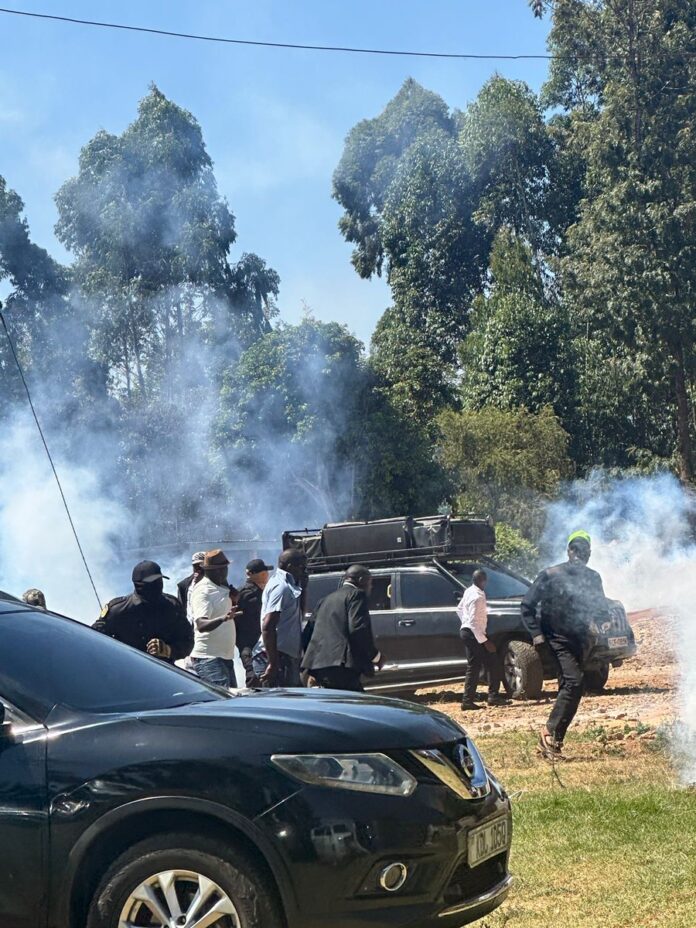
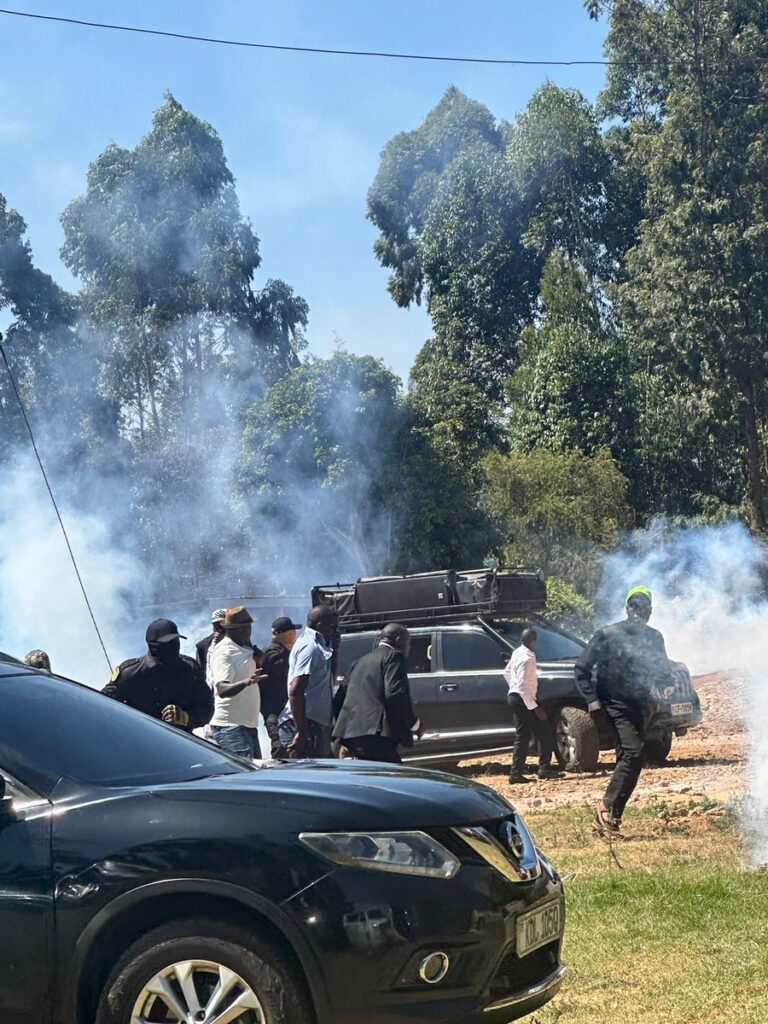
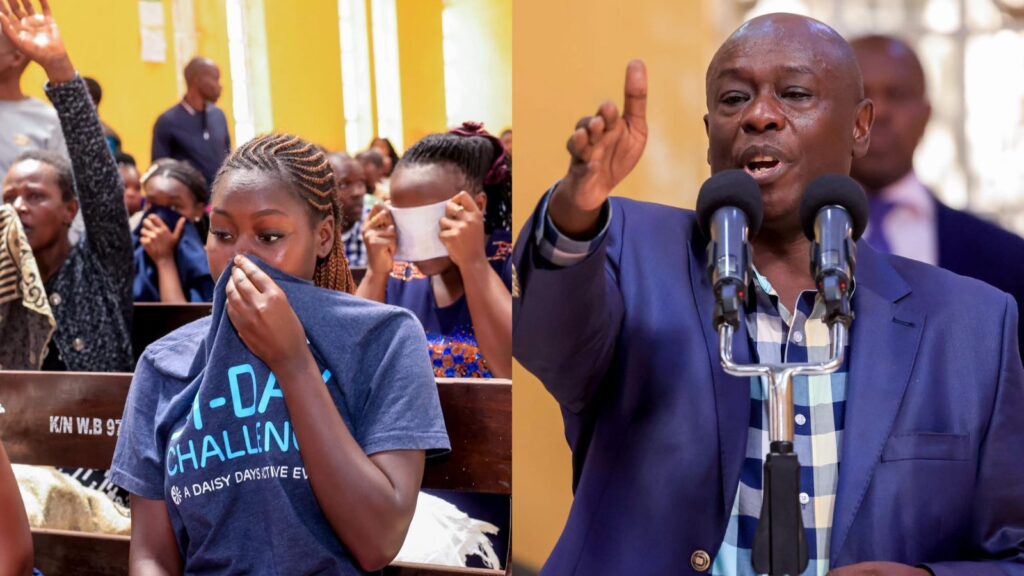
A Sunday church service in central Kenya descended into chaos after security forces fired tear gas into a packed sanctuary where former Deputy President Rigathi Gachagua was worshipping, sparking panic among congregants and triggering fresh accusations of political persecution against the government.
The incident unfolded at Wairima Anglican Church of Kenya (ACK) in Othaya, Nyeri County, where Gachagua was attending a morning service as an invited guest. Witnesses said the disruption occurred midway through prayers, forcing worshippers—including women and children—to flee the building as choking fumes spread through the church.
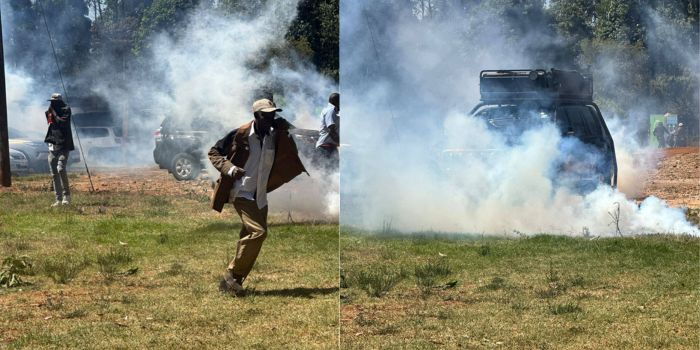
Video footage published by Kenyans.co.ke showed scenes of confusion as congregants rushed outside, some coughing and covering their faces, while others knelt in prayer amid the turmoil. In one clip, a young girl appeared to collapse and was carried out by members of the congregation as cries rang out. The service was halted as church leaders attempted to calm worshippers and assess the situation.
Other videos captured thick plumes of tear gas smoke drifting around the church compound, accompanied by loud bangs that several witnesses described as resembling gunfire. In one recording, a voice can be heard alleging that live ammunition was being used and calling on Kenyans to intervene, claims that heightened public alarm but could not be independently verified.
The disruption also cut short live media coverage of the service, with at least one broadcast ending abruptly as the tear gas took effect.
Gachagua, who was escorted from the church during the incident, accused the state of orchestrating the attack. In a statement circulated shortly afterward, he alleged that police officers and state-backed groups were responsible, claiming that live bullets were fired and that vehicles in his convoy were vandalised.
In a sharply worded message directed at President William Ruto, Gachagua said the operation was an attempt on his life.
“William Ruto has sent a killer squad to kill us inside Wairima ACK Church, Othaya,” Gachagua said. “We are trapped in church, under attack with live bullets and tear gas, and my vehicles have been torched. We ask Kenyans to pray for us so that we may come out alive.”
Government officials did not immediately respond to the accusations, and police had not issued a formal statement explaining the operation by the time of publication. The claims regarding live ammunition and arson had not been confirmed by independent authorities.
The Othaya incident is the latest flashpoint in a series of confrontations involving the former deputy president since his political fallout with President Ruto. Once a close ally, Gachagua has increasingly positioned himself as a critic of the administration, drawing large crowds at church appearances and political gatherings across central Kenya.
Earlier this month, Gachagua said his convoy was blocked by police in Kirinyaga County as he traveled to a rally in Kegio. Supporters were dispersed after officers reportedly sealed off roads and deployed tear gas, though Gachagua later proceeded with the event. A day before that, on January 8, armed individuals were said to have attempted to prevent him from entering Nyeri town ahead of another political meeting.
A similar disruption was reported in late November 2025 during a Thanksgiving service in Kariobangi North, Nairobi. On that occasion, police acknowledged using tear gas but said they were responding to clashes between rival groups—one backing Gachagua and another opposing him. Gachagua later rejected that explanation, insisting the intervention was politically motivated.
Sunday’s events have reignited debate over the use of security forces in politically sensitive settings, particularly houses of worship, which in Kenya often double as platforms for political messaging. Churches have historically played a central role in the country’s civic life, and security interventions during services are rare and deeply controversial.
Human rights advocates and legal analysts say the allegations—if substantiated—would raise serious constitutional questions. Kenya’s constitution guarantees freedom of worship and assembly, while also placing strict limits on the use of force by security agencies. The use of tear gas in enclosed spaces, especially where children are present, has previously drawn condemnation from medical professionals and rights groups due to the risk of injury.
Beyond the immediate safety concerns, the incident underscores the deepening political rift within the ruling establishment. Analysts note that confrontations involving Gachagua appear to be escalating in frequency and intensity, suggesting a hardening stance by authorities as political competition intensifies ahead of future electoral cycles.
At the same time, the lack of official clarification has fueled speculation and anxiety among Gachagua’s supporters. By late Sunday, unverified reports circulated on social media claiming that the former deputy president could not be immediately reached following the chaos in Othaya. His allies said they were attempting to confirm his whereabouts, though no formal statement on his status had been issued.
For residents of Othaya, the disruption left lingering shock. Several congregants interviewed in local media described the scene as “terrifying,” saying they had never witnessed security forces deploy tear gas during a church service. Some parents said their children remained distressed hours after the incident.
The Anglican Church leadership had not issued an official response by Sunday evening, though clergy members at the service urged calm and called for prayer in the aftermath.
As investigations—or official explanations—remain absent, Sunday’s church disruption is likely to deepen political tensions and sharpen scrutiny of how state power is exercised in Kenya’s increasingly charged political environment. Whether authorities address the allegations directly may determine whether the incident becomes another unresolved chapter or a turning point in the country’s political discourse.
Victor Osimhen added another chapter to his growing legend at Galatasaray on Saturday, becoming the fastest player to score 50 goals for the Turkish powerhouse after finding the net in a league victory over Fatih Karagümrük.
The Nigerian striker reached the milestone with Galatasaray’s third goal in a 3-1 win, a result that reinforced the club’s title ambitions and further cemented Osimhen’s status as one of the most prolific forwards in its modern history. Statistical data compiled by Transfermarkt shows Osimhen reached the 50-goal mark in just 59 appearances, the quickest by any Galatasaray player since the turn of the century.
The achievement came only days after Osimhen was held scoreless in a 1-1 Champions League draw against Atlético Madrid, a reminder that even elite scorers endure quieter nights. His response was immediate. Facing Karagümrük in domestic action, Osimhen struck decisively after midfielder Gabriel Sara had already given Galatasaray a firm grip on the match with two first-half goals.
The record places Osimhen ahead of a list that includes some of the most celebrated names in Galatasaray history. Mauro Icardi, the club’s current captain, needed 69 matches to reach the same total after arriving in 2022, while former France international Bafétimbi Gomis took 74 games following his move from Swansea City in 2017. According to Transfermarkt’s database, Osimhen surpassed Icardi’s pace by a full 10 matches.
Osimhen’s scoring numbers are remarkable not only for their speed but also for their consistency across competitions. He enjoyed a sensational debut season in Istanbul, scoring 37 goals in 41 matches, a return that played a central role in Galatasaray’s Süper Lig title run. This season, he has already added 13 goals to his tally, pushing him past the half-century mark before the campaign has reached its midpoint.
The 27-year-old striker joined Galatasaray permanently this summer after a loan spell from Napoli that proved transformative for both player and club. His arrival was greeted with scenes rarely witnessed even in Istanbul’s football-mad culture. Tens of thousands of supporters lined the streets to welcome him back, celebrating a forward whose goals had delivered silverware and restored a sense of European ambition.
Saturday’s milestone underscores why Osimhen has become such a focal point of Galatasaray’s identity. Beyond the raw numbers, his physical presence, relentless pressing and ability to score in decisive moments have reshaped the team’s attacking profile. Coaches and teammates frequently point to his work rate and leadership as qualities that elevate those around him.
While foreign stars dominate much of the top-scorers list this century, Osimhen’s achievement stands out in a ranking otherwise populated by club-developed players. Apart from Icardi and Gomis, Czech striker Milan Baroš is the only other overseas forward to feature prominently among Galatasaray’s fastest scorers in the modern era, with most remaining names drawn from the club’s youth system.
The broader significance of Osimhen’s record extends beyond Galatasaray. For Turkish football, his performances have helped raise the league’s international profile, drawing attention from global audiences accustomed to seeing elite strikers in Europe’s so-called “big five” leagues. His presence has coincided with stronger European campaigns by Galatasaray, reinforcing the idea that the Süper Lig can still attract and retain top-level talent.
From a tactical standpoint, Osimhen’s efficiency has allowed Galatasaray greater flexibility. Opponents often commit extra defenders to contain him, creating space for midfield runners like Sara and wide players to exploit. The Karagümrük match offered a clear example, with Osimhen’s movement opening channels that Galatasaray exploited before he delivered the decisive goal himself.
There is also a financial dimension to his rise. Players who reach scoring benchmarks at such speed typically command premium valuations, and Osimhen’s record is likely to intensify speculation about future interest from Europe’s wealthiest clubs. Galatasaray officials have repeatedly emphasized their desire to build around him, viewing his goals as central to sustained domestic dominance and deeper Champions League runs.
Historically, Galatasaray has measured its great forwards not just by goals but by their connection with supporters. Osimhen appears to have passed that test emphatically. His celebrations, frequent interaction with fans and willingness to embrace the club’s culture have resonated in a city where football loyalty borders on the sacred.
Saturday’s goal also carried symbolic weight. Scoring his 50th in a routine league fixture rather than a showcase European night highlighted the striker’s reliability across all stages, a trait that often defines the most revered figures in club history. For Galatasaray supporters, the number itself matters less than the feeling of inevitability that accompanies his presence in the penalty area.
Looking ahead, Osimhen’s pace suggests that further records are within reach. Should he maintain his current scoring rate, he could climb rapidly into the club’s all-time scoring lists, a prospect that would have seemed improbable just a few seasons ago. His challenge will be sustaining that output amid heavier defensive attention and the physical demands of competing on multiple fronts.
For now, Galatasaray’s focus remains on immediate goals: defending their league title and pushing deeper into European competition. With Osimhen leading the line, both ambitions appear increasingly realistic. His record-breaking strike against Karagümrük was not merely another goal; it was a marker of an era in which Galatasaray’s attack revolves around one of the most efficient scorers the club has seen in decades.
As the season unfolds, the question is no longer whether Osimhen will score, but how many more milestones await before his Istanbul story reaches its next chapter.
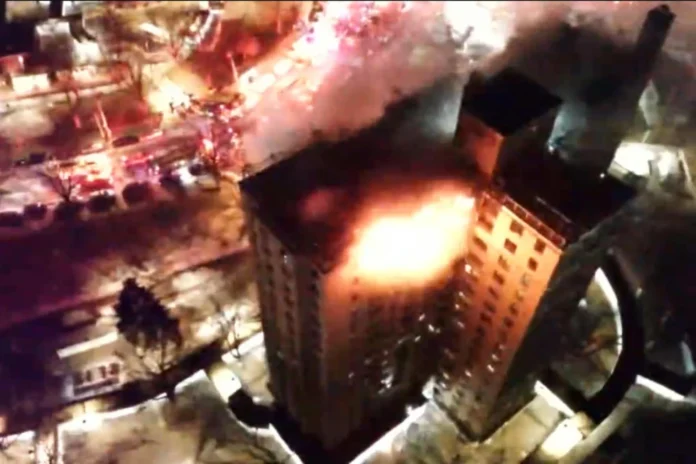
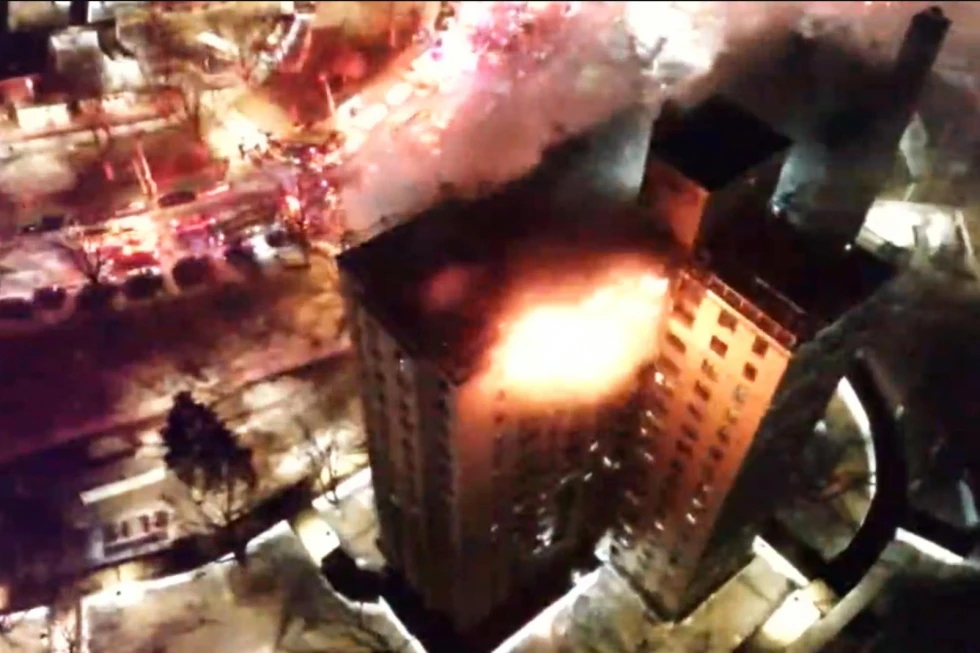
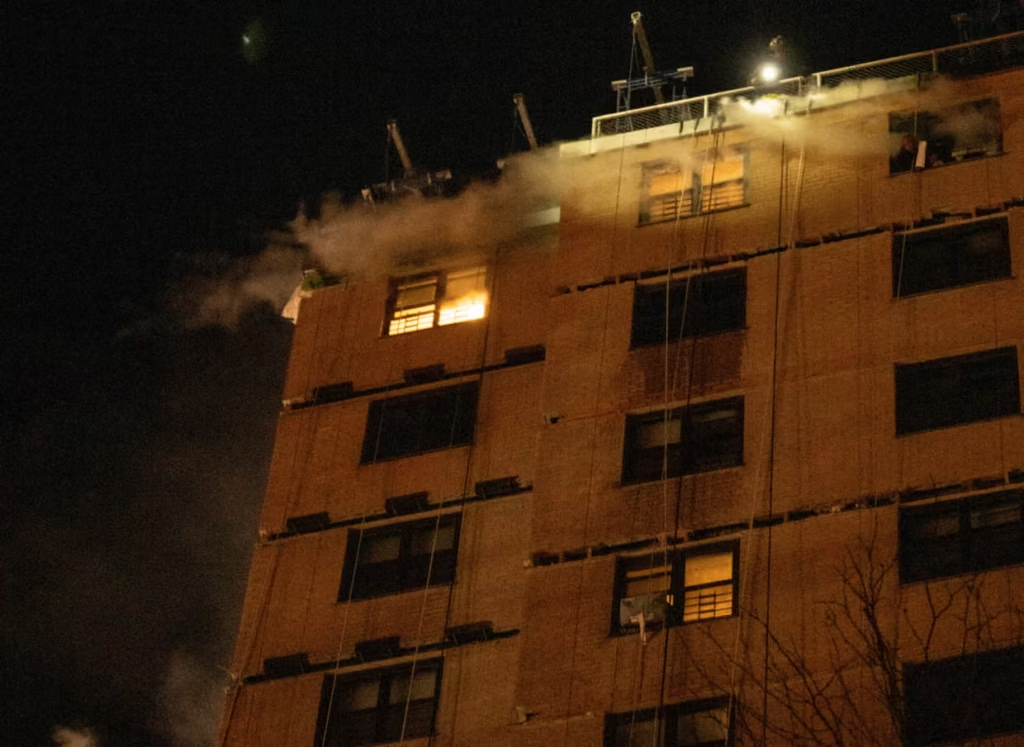
A powerful gas explosion tore through the upper floors of a Bronx high-rise apartment building early Saturday, triggering a fast-moving fire that killed one person, injured at least 14 others and forced the evacuation of nearly 150 apartments as temperatures dropped into the single digits, city officials said.
Fire crews were dispatched shortly before 12:30 a.m. to the 17-story residential building, where flames were visible on the upper floors and residents leaned from windows shouting for help, authorities told reporters at the scene. The blast damaged multiple apartments and left the structure unsafe for habitation, prompting officials to shut down utilities and clear the building.
Fire Department Chief of Department John Esposito said crews had been responding to concerns about a possible gas smell on the 15th and 16th floors when the explosion occurred. The blast caused extensive structural damage to roughly a dozen units and ignited fires in 10 apartments spanning the 16th and 17th floors, he said.
One resident died at the scene. Officials did not immediately release identifying details. Another person remained in critical condition, while five others sustained serious injuries and eight were treated for minor harm, according to emergency officials.
Investigators were working to determine what triggered the explosion. City officials said the building had recently undergone renovations, including work on its natural gas system, which had been completed and inspected before residents returned. The property was formerly operated by the New York City Housing Authority but has been under private management since 2024, according to city records.
Leila Bozorg, the city’s deputy mayor for housing and planning, called the incident a devastating loss. Speaking at a morning briefing, she said city agencies were focused on supporting affected families while investigators worked to establish the cause. “This is an incredible tragedy,” Bozorg said. “Our thoughts are with everyone impacted.”
Mayor Zohran Mamdani said the explosion displaced all residents of the building’s 148 apartments, leaving hundreds scrambling for shelter in the middle of a bitterly cold night. He said the city shut off gas, water and electricity to prevent further danger and opened a reception center at a nearby school to assist those forced from their homes.
“These residents woke up to fear, chaos and uncertainty,” Mamdani said at an afternoon news conference. “They are not alone. The city will stand with them and provide whatever help is necessary to get them through this.”
The American Red Cross said it had registered more than 100 households by early Saturday afternoon, representing at least 305 people, including 89 children, who needed emergency assistance. Volunteers were arranging temporary housing, food and basic supplies, the organization said.
More than 200 firefighters and emergency personnel responded to the blaze, according to the Fire Department of New York. The explosion complicated rescue efforts, officials said, briefly trapping several firefighters inside an elevator before they were freed.
Fire Commissioner Lillian Bonsignore described the overnight operation as particularly challenging given the weather. “There were injuries, and it was a very difficult night,” she said. “The extreme cold added another layer of danger for both residents and first responders.”
While officials emphasized that the investigation was still in its early stages, the incident has renewed scrutiny of safety conditions in New York City’s aging residential buildings, particularly those that were once under public housing oversight.
About half a million New Yorkers live in developments operated by the New York City Housing Authority, the largest public housing system in the United States. Many of its properties were constructed in the mid-20th century and have long struggled with deferred maintenance. A federal monitor was appointed in 2019 to address chronic issues including mold, lead paint and heating failures. When that oversight concluded in 2024, monitor Bart Schwartz warned that deteriorating infrastructure remained a fundamental challenge for residents.
Although the Bronx building involved in Saturday’s explosion is now privately managed, housing advocates say the transition of former NYCHA properties to private operators has raised questions about oversight, inspection rigor and long-term accountability. City officials have maintained that safety standards remain in force regardless of management structure, but incidents like this one highlight the risks inherent in older gas and boiler systems.
The blast also echoed a similar scare last fall, when a massive brick chimney attached to a Bronx housing authority building collapsed after an explosion. That incident sent tons of debris crashing to the ground but miraculously caused no injuries. Investigators later traced the collapse to a natural gas boiler, city officials said at the time.
Saturday’s explosion is likely to intensify calls for stricter inspections of gas infrastructure citywide, particularly during winter months when heating systems are under maximum strain. Experts say that while natural gas remains a common energy source in New York’s residential buildings, aging pipes and modifications during renovations can increase the risk of leaks if not carefully monitored.
For displaced residents, the road ahead remains uncertain. City officials said it was too early to say when, or if, tenants might be able to return. Structural engineers were expected to assess the damage in the coming days, while fire marshals and utility investigators continued their examination of the blast site.
As dawn broke over the Bronx, the charred upper floors of the building stood as a stark reminder of the night’s violence — and of the vulnerability of residents in a city where much of the housing stock is decades old.
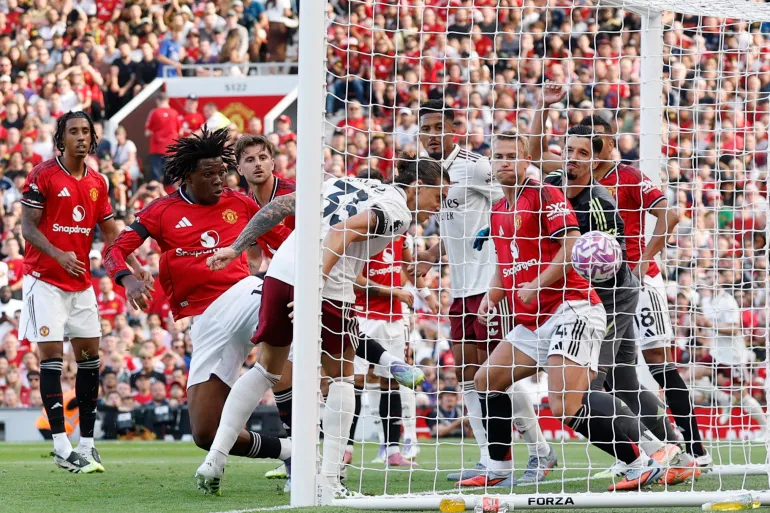
Arsenal will look to tighten their grip on the Premier League title race on Sunday when they host a resurgent Manchester United side at the Emirates Stadium, with the Gunners aiming to extend their advantage at the top and the visitors arriving buoyed by a derby win that has reshaped their season.
League-leading Arsenal enter the weekend with a four-point cushion over Manchester City and a game in hand, leaving them in position to move seven points clear if results fall their way. The north London club, unbeaten in its last 12 matches in all competitions, is increasingly viewed as the favorite to claim its first English league title since 2004, though manager Mikel Arteta insists his team remains “far from perfect.”
Manchester United, meanwhile, arrive in a markedly different mood from earlier in the campaign. Following the dismissal of Ruben Amorim, the Red Devils have shown renewed energy under interim manager Michael Carrick, climbing from last season’s 15th-place finish into contention for a Champions League return. Their 2-0 derby victory over Manchester City last weekend not only dented City’s title hopes but also handed Arsenal a timely boost at the summit.
The result has added edge to a fixture long synonymous with English football’s fiercest rivalries. According to BBC Sport, few Premier League games evoke the same historical weight as Arsenal versus United, and while both clubs’ golden eras may be in the past, Sunday’s contest carries significant implications for this season’s title and top-four races .
Arteta acknowledged that United pose a different challenge under Carrick, pointing to the aggression and tempo displayed in the derby win over City. He said United’s behavior and intensity had clearly shifted, warning that his side will be tested despite home advantage.
Arsenal’s form has been strong but not flawless. Consecutive scoreless draws recently slowed their momentum, and Arteta admitted his team must dominate every phase of play to sustain a title push. Despite that, the Gunners boast the league’s tightest defense, having conceded just 14 goals, a record Arteta hopes will underpin a championship run.
The London club also secured a morale-boosting 3-1 Champions League win over Inter Milan in midweek, ensuring a top-two finish in the league phase. However, Arteta has cautioned that European exertions have occasionally dulled Arsenal’s league sharpness this season.
Arteta faces key attacking decisions after Gabriel Jesus and Viktor Gyokeres both impressed against Inter. Jesus struck twice, while Gyokeres scored off the bench, leaving Arteta with a selection dilemma as fixtures pile up. The manager said the squad’s depth is crucial, with minutes and opportunities expected to be shared.
Defensively, Riccardo Calafiori and Piero Hincapie have returned to training after injuries, though their match readiness will be assessed late. Kai Havertz is nearing full fitness, leaving Max Dowman as Arsenal’s only confirmed absentee.
David Raya is expected to start in goal, with a back line likely featuring Jurrien Timber, William Saliba and Gabriel, while Hincapie could return if cleared. In midfield, Martin Odegaard, Martin Zubimendi and Declan Rice are set to anchor the side, supporting an attack led by Bukayo Saka, Gyokeres and Leandro Trossard.
Carrick has urged Manchester United not to be carried away by last weekend’s result, stressing balance and composure ahead of a demanding trip to north London. He said the City win delivered a major emotional lift but warned that a single performance does not define a team.
United’s revival has been driven by sharper attacking play and renewed confidence, highlighted by second-half goals from Bryan Mbeumo and Patrick Dorgu in the derby. Bruno Fernandes, who assisted the opener, continues to dictate United’s creativity, having now created more chances than any other Premier League player since joining the club, according to BBC Sport .
The visitors sit fifth, one point outside the top four. With Liverpool losing at Bournemouth on Saturday, United could climb into fourth place with victory at the Emirates, adding further significance to Sunday’s clash.
Carrick confirmed that Casemiro will leave United at the end of the season, with the club opting against triggering a one-year extension. Despite the impending departure, Carrick said the Brazilian remains fully committed and integral, pointing to his recent performances and leadership.
Attention has also turned to Kobbie Mainoo, whom Carrick believes can become a cornerstone of United’s future. The 20-year-old made his first league start of the season in the derby win after limited opportunities under Amorim. Carrick said Mainoo’s composure and impact in major matches at a young age underline his long-term importance.
United are expected to start with Bart Lammens in goal, supported by a defense of Diogo Dalot, Harry Maguire, Lisandro Martinez and Luke Shaw. Mainoo and Casemiro are likely to anchor midfield, with Fernandes operating ahead of them, flanked by Amad Diallo and Dorgu, and Mbeumo leading the line. Matthijs de Ligt remains sidelined, while Noussair Mazraoui is back from the Africa Cup of Nations. Joshua Zirkzee faces a late fitness test.
Arsenal edged the reverse fixture earlier this season with a 1-0 win at Old Trafford, where Riccardo Calafiori scored early despite United enjoying long spells of control. Overall, this will be the 255th meeting between the clubs, with United holding a narrow historical edge in victories.
United, however, have not beaten Arsenal in their last six Premier League encounters and have not won a league match at the Emirates since December 2017. That run adds further weight to Arsenal’s confidence, though Carrick’s previous interim spell included a rare victory over Arteta in 2021.
As Al Jazeera Sport noted in its buildup, Sunday’s meeting revives echoes of a rivalry that once defined English football, now reimagined within a modern title race and a renewed push for Champions League qualification .
For Arsenal, the equation is simple: protect their defensive dominance and capitalize on home advantage to edge closer to a long-awaited crown. For Manchester United, the task is to prove that last weekend’s revival was not a fleeting spark, but the foundation of a genuine resurgence.
Manchester City halted a frustrating Premier League winless run on Saturday with a controlled 2-0 victory over Wolverhampton Wanderers, as goals from Omar Marmoush and Antoine Semenyo restored momentum to Pep Guardiola’s title push and deepened the struggles of a Wolves side rooted to the bottom of the table.
Playing at the Etihad Stadium, City claimed their first league win in nearly a month, moving to 46 points from 23 matches and cutting the gap to league leader Arsenal to four points, at least temporarily. Arsenal can reestablish a seven-point cushion with a win over Manchester United on Sunday.
For Wolves, the defeat reinforced a bleak campaign. The Midlands club remains last in the standings on eight points, 14 adrift of safety, after failing to build on a brief run of improved results.
City struck early, with Marmoush opening the scoring in the sixth minute in his first Premier League appearance since returning from the Africa Cup of Nations with Egypt. Starting ahead of Erling Haaland, the forward capitalized on a delivery from Matheus Nunes, firing home from close range after the former Wolves midfielder surged down the right flank.
The goal marked Marmoush’s first league strike of the season and immediately eased the tension around a City side that had drawn three straight league matches and lost the Manchester derby since its last domestic win on Dec. 27.
“We fought until the end and showed a very good mentality from the beginning,” Marmoush said afterward. “The manager wanted us to put our hearts out there and fight for every ball.”
Marmoush said his return from international duty sharpened his hunger to contribute. “I’m very happy to be here after AFCON and help my team. It was a good finish, and I’m happy for the goal and the three points,” he said.
City doubled the lead just before halftime through Semenyo, who joined the club from Bournemouth two weeks ago. Bernardo Silva slipped the ball into his path on the right, and Semenyo took a settling touch before drilling a low shot beyond Wolves goalkeeper Jose Sa for his first league goal in City colors.
The timing of the second goal proved decisive, allowing City to manage the match with composure in the second half while Wolves struggled to generate sustained pressure.
Guardiola opted to rest Haaland for much of the afternoon, continuing to manage the workload of his top scorer after recently describing the Norway striker as “exhausted.” Haaland entered in the 74th minute but extended his goal drought to nine matches.
City’s defensive control was reinforced by the debut of center back Marc Guehi, signed earlier in the week from Crystal Palace. Guehi earned a warm reception from the home crowd, particularly after a key block that preserved the clean sheet.
“Really good,” Guardiola said of the defender. “When you captain Crystal Palace, you have to be something special. I’m really pleased for him. He’s demanding, and we need that demand to be better.”
Statistically, City dictated the contest, finishing with four shots on target to Wolves’ one. Semenyo came close to adding a second goal late on, meeting a Phil Foden cross but rattling the woodwork with his effort.
City also appealed strongly for a penalty shortly before halftime after a close-range handball, but a prolonged VAR review ended with the on-field decision standing and no spot kick awarded.
Wolves manager Rob Edwards said the early concession complicated his side’s plans but praised his players’ response. “It’s hard when you go 1-0 down so early,” Edwards said. “We tried to be brave, and we felt relatively comfortable for spells. They didn’t create too many moments.”
“We pushed and created some chances, but in the end we couldn’t break through,” he added.
The loss snapped Wolves’ recent stretch without defeat across competitions, with their previous loss also coming on Dec. 27, against Liverpool.
Beyond the immediate result, the win carried broader significance for Manchester City. After weeks of dropped points and visible fatigue, Guardiola’s rotation — resting Haaland and trusting Marmoush and Semenyo — suggested a recalibration aimed at sustaining performance across competitions.
Marmoush’s sharp return from AFCON and Semenyo’s early impact point to increased attacking depth, a factor that could prove critical as City balance domestic ambitions with European commitments. The integration of Guehi also hints at defensive evolution, particularly with City seeking greater resilience in tight matches.
For Wolves, the result underscored a familiar pattern: competitive spells undone by lapses in concentration and limited attacking output. With safety increasingly distant, Edwards faces mounting pressure to translate effort into points before the relegation gap becomes insurmountable.
City now turns its attention to Europe, hosting Galatasaray on Wednesday in a pivotal Champions League group-stage match. Sitting 11th in the overall standings, City needs a top-eight finish to avoid the knockout playoff round — another test of depth and momentum as the season intensifies.
Saturday’s win may not erase City’s recent inconsistencies, but it restored belief and breathing room in the title race, while reminding the league that Guardiola’s side remains capable of resetting when it matters most.
ABIDJAN, Ivory Coast — President Alassane Ouattara reshuffled his cabinet Friday, appointing his brother, Defense Minister Tene Birahima Ouattara, to the newly created position of vice prime minister while allowing him to retain his defense portfolio, elevating the younger Ouattara within the government hierarchy as succession questions loom.
The move came two days after Ouattara reappointed Robert Beugre Mambe as prime minister and followed the president’s re-election in October and his party’s December legislative election victory that secured a parliamentary majority.
Most senior ministers retained their key portfolios in the 35-member cabinet, signaling continuity rather than comprehensive overhaul following the Rally of Houphouetists for Democracy and Peace’s capture of nearly 80 percent of legislative seats.
A statement from the president’s office disclosed that Vagondo Diomande retained the Interior and Security Ministry position, Sansam Kambile remained justice minister, while Adama Coulibaly kept the budget portfolio. Niale Kaba was transferred from the Planning Ministry to head the Foreign Affairs Ministry with the rank of Minister of State.
Tene Birahima Ouattara, the president’s influential brother often mentioned among potential successors, assumes the vice prime minister title alongside his continuing defense responsibilities. The dual role positions him prominently within government structures as the 84-year-old president enters what the current Constitution specifies must be his final five-year term.
EDnews conveyed that the reshuffle maintained most senior ministers in key portfolios, indicating the president’s satisfaction with his administration’s performance during a period of sustained economic growth.
Six women remained in the cabinet, the same number as the previous government, according to the presidency statement cited by Seneweb quoting AFP. Approximately 30 of the 35 ministers were retained from the previous administration.
Four ministers departed the government team, including Agriculture Minister Kobenan Kouassi Adjoumani, who had served since 2011. The agriculture portfolio change comes as the cocoa sector, in which Ivory Coast functions as the world’s leading producer, experiences significant operational challenges.
Among five new appointees, Hien Sié, the head of Abidjan port, was designated to oversee Infrastructure and Road Maintenance, bringing private sector port management experience to the infrastructure portfolio.
The position of vice president, the constitutional successor to the head of state, was not affected by Friday’s reshuffle. Tiemoko Meyliet Koné continues holding that role, maintaining the formal succession structure even as the vice prime minister appointment elevates Tene Birahima Ouattara’s profile.
The main institutional change following legislative elections involved the selection of Patrick Achi, former prime minister, to head the National Assembly, positioning another potential successor in a key institutional role.
Ouattara, a former deputy managing director of the International Monetary Fund, has led the country since 2011 and has indicated his intention to prepare conditions for a new generation of political leaders during his tenure. However, the appointment of his brother to a newly created senior position raises questions about whether succession will occur within the Ouattara family or transition to unrelated political figures.
The changes unfold as Ivory Coast, the world’s largest cocoa producer, seeks to build on nearly 15 years of sustained economic growth that has positioned it among West Africa’s fastest-growing economies. Political stability has been credited with facilitating foreign investment and economic expansion following years of civil conflict that ended before Ouattara assumed office.
Ouattara was re-elected in October with nearly 90 percent of the vote, though opposition boycotts and low turnout raised questions about the election’s competitiveness. His fourth term sparked constitutional debates given that the charter was modified during his presidency, with supporters arguing the changes reset term limits while critics contended he exceeded constitutional authority.
The reshuffle’s timing, one month after legislative elections and two months after presidential polls, suggests Ouattara sought to reward loyal party members with cabinet positions while signaling continuity to reassure foreign investors and economic partners about policy stability.
For Tene Birahima Ouattara, the vice prime minister appointment represents a significant elevation that could position him for future leadership roles, though whether he will ultimately succeed his brother or whether other figures including Vice President Koné or National Assembly Speaker Achi emerge as successors remains uncertain.
The creation of the vice prime minister position itself appears designed to elevate Tene Birahima Ouattara’s standing without removing him from the strategically important defense portfolio, where he oversees security forces in a region experiencing persistent terrorism threats and occasional military coups.
The status quo cabinet composition suggests Ouattara is starting his fourth term prioritizing continuity over fresh approaches, a choice that postpones succession debates for several years but may intensify them as the constitutionally mandated final term progresses toward its 2031 conclusion.
For Ivory Coast’s cocoa sector, which generates substantial export revenue and employs millions, the departure of the long-serving agriculture minister amid operational challenges signals potential policy shifts, though the appointment of his replacement had not been announced in Friday’s statement.
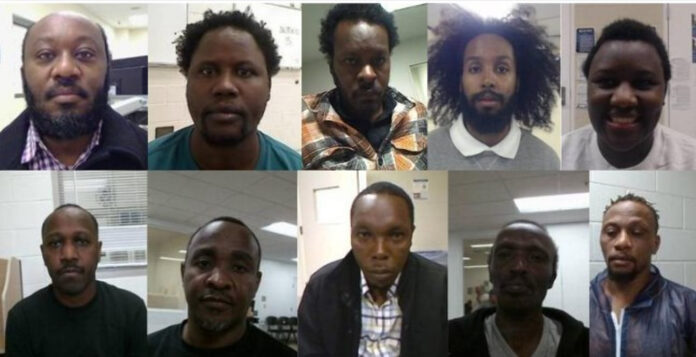
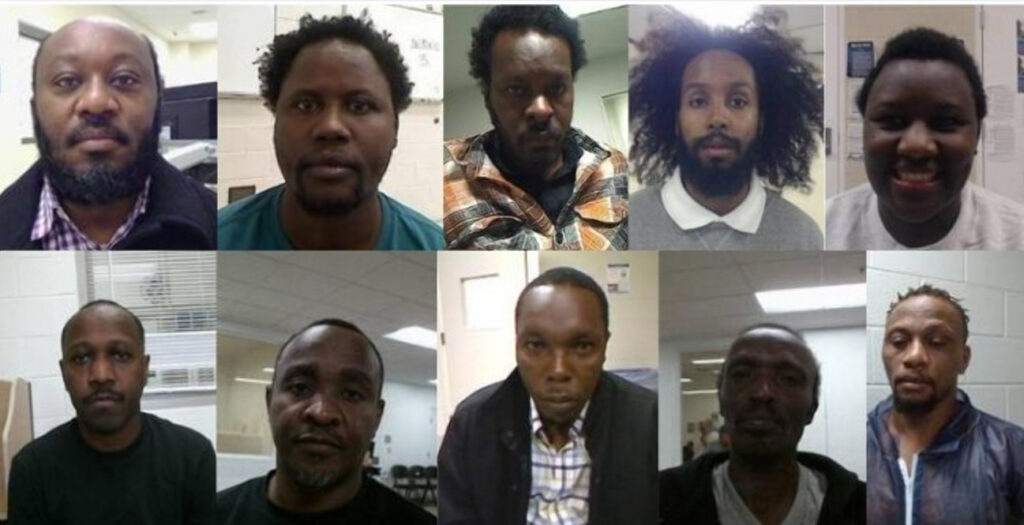
WASHINGTON — The United States Department of Homeland Security has expanded its deportation priority list targeting Kenyan nationals with criminal convictions from 15 to 28 individuals over approximately two months, officials disclosed, as the Trump administration intensifies enforcement operations against undocumented immigrants and foreign nationals convicted of crimes.
The expansion follows a heightened crackdown by President Donald Trump’s administration on immigrants who have been arrested and convicted of various offenses and are considered dangerous by federal authorities. Over the past 50 days, DHS has added 13 additional Kenyan nationals to what the agency characterizes as its “worst of the worst” list of undocumented immigrants facing deportation.
The phrase “worst of the worst” is terminology used by U.S. security agencies to refer to individuals believed to pose significant public safety threats based on criminal convictions or alleged activities.
The database was launched in December to track undocumented immigrants who have been arrested and convicted across all 50 states. Homeland Security said the platform is intended to increase transparency around immigration enforcement, particularly ahead of the World Cup tournament beginning in the United States this July.
The expanded list includes Kenyan nationals convicted of offenses including drug trafficking, armed robbery, homicide, assault, child molestation and cruelty toward children, DHS disclosed. Additional charges against listed individuals include aggravated assault with a weapon, flight to evade prosecution, simple assault, terror-related threats, money laundering and check forgery.
Some are accused of driving under the influence, domestic violence, robbery, fraud, kidnapping a minor, violation of court orders and receiving stolen property, according to the database.
In a statement on Jan. 20, 2026, the Department of Homeland Security said it has removed more than 670,000 undocumented immigrants, including individuals convicted of murder, child sexual abuse, rape, gang activity and terrorism-related offenses, from the United States.
“On President Trump’s first day in office, he unleashed ICE to target the worst of the worst criminal illegal aliens, including pedophiles, murderers, gang members, terrorists, and rapists,” Assistant Secretary Tricia McLaughlin said.
She added, “Today, we thank our law enforcement for a record-breaking first year of achievements, including more than 670,000 removals and two million self-deportations.”
The self-deportation figure of 2 million represents individuals who left the country voluntarily rather than through formal removal proceedings, though independent verification of that statistic was not immediately available.
To accelerate enforcement operations, the U.S. government launched a self-deportation application designed to facilitate voluntary departures. The Trump administration has also announced substantial increases in Immigration and Customs Enforcement funding, though the specific $9 trillion figure cited in some reports could not be independently confirmed and appears inconsistent with federal budget allocations.
On Monday, Jan. 19, the Department of Homeland Security announced it had increased compensation for voluntary departure from approximately $1,000 to $2,600 for undocumented immigrants willing to leave the country without contesting removal proceedings.
The announcement specified that payments would only be disbursed to individuals who register for voluntary departure through the Customs and Border Protection application. Homeland Security said that beyond the financial incentive, participants would receive complimentary transportation to their countries of origin.
The Kenyan nationals included on the expanded list face formal removal proceedings through immigration courts, where they can contest deportation orders, seek relief from removal or accept voluntary departure. The criminal convictions that placed individuals on the priority list do not automatically result in deportation but significantly increase enforcement focus on those cases.
For Kenya, the expanded list represents a relatively small portion of the estimated thousands of Kenyan nationals living in the United States without legal authorization, though the 28 individuals face the highest priority for removal given their criminal histories.
The database’s public accessibility creates transparency about enforcement priorities while raising privacy concerns about individuals who may contest charges or whose cases remain under judicial review. Whether all 28 Kenyan nationals have exhausted appeals or whether some retain legal options to remain in the United States could not be determined from available information.
The timing of the list expansion ahead of the World Cup tournament reflects DHS concerns about security during major international events that attract large crowds and global attention. Previous major sporting events in the United States have prompted temporary enforcement surges and enhanced vetting procedures for foreign visitors.
The self-deportation incentive program represents an attempt to reduce removal costs and immigration court backlogs by encouraging voluntary departures. The increased payment from $1,000 to $2,600 suggests the administration believes financial incentives can motivate departures more effectively than enforcement alone, though whether the program attracts significant participation remains to be determined.
For the Kenyan community in the United States, which includes both documented and undocumented immigrants, the expanded enforcement focus creates anxiety beyond the 28 individuals specifically targeted. Heightened ICE operations often affect broader immigrant populations through workplace raids, traffic stops and community enforcement actions that can ensnare individuals without criminal records.
The criminal offenses cited for the 28 Kenyan nationals range from serious violent crimes to relatively minor infractions, creating questions about prioritization criteria and whether inclusion on the “worst of the worst” list accurately reflects threat levels for all individuals designated.
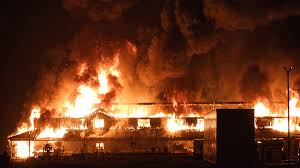
LAGOS, Nigeria — Firefighters battled a blaze Saturday at the Amuwo Odofin Industrial Estate in the Mile 2 area of Lagos State, Nigeria, with emergency officials urging residents and business owners to remain calm as crews worked to bring the fire under control.
Margaret Adeseye, Controller General of the Lagos State Fire and Rescue Service, confirmed the incident in a brief statement Saturday, saying firefighters had deployed to the scene and were actively combating the flames.
“The Lagos State Fire and Rescue Service is currently attending to a fire outbreak at Amuwo Odofin Industrial Estate, Mile 2, Lagos,” the statement read.
Adeseye assured the public that emergency responders had the situation under control, urging residents not to panic. “We’re assuring the public that we’re currently on top of the situation as the public need not to exercise fear,” she said.
The Guardian Nigeria conveyed the fire service’s response, with officials emphasizing that emergency operations were ongoing at the industrial complex.
The cause of the fire and the extent of damage had not been determined as of Saturday evening, officials said. Information about potential casualties or the number of structures affected remained unavailable as firefighters continued operations.
Industrial fires in Lagos, Nigeria’s commercial capital and most populous city, frequently pose significant challenges due to dense development, limited access routes for emergency vehicles and the presence of flammable materials in manufacturing and storage facilities.
The Amuwo Odofin Industrial Estate houses numerous businesses and manufacturing operations, creating potential for substantial economic losses when fires occur in such concentrated commercial zones. The Mile 2 area represents a key industrial corridor for Lagos, with factories, warehouses and distribution centers supporting the city’s economy.
Emergency response to industrial fires requires substantial water supplies, specialized equipment for chemical or electrical fires and coordination among multiple agencies to ensure public safety while protecting property. Whether the Amuwo Odofin fire involved hazardous materials or posed risks beyond immediate flame and smoke dangers remained unclear from initial official statements.
Lagos State Fire and Rescue Service has faced recurring challenges responding to fires across the sprawling metropolis of over 20 million people, where rapid urbanization and industrial development often outpace emergency service capacity and infrastructure development.
The service’s assurance that responders were “on top of the situation” suggests confidence in containing the blaze before it spread to adjacent structures or caused catastrophic damage, though the absence of specific information about fire scope or intensity left uncertainty about the incident’s severity.
For business owners operating in the industrial estate, the fire represents potential inventory losses, equipment damage and business interruption that could prove devastating particularly for smaller enterprises lacking comprehensive insurance coverage or financial reserves to absorb unexpected disasters.
Neighboring businesses face smoke damage risks, water damage from firefighting operations and potential structural impacts if the fire generated sufficient heat to affect adjacent buildings. Industrial areas’ typically shared walls or close proximity create conditions where individual fires can rapidly become multi-structure conflagrations without aggressive intervention.
As emergency operations continued Saturday evening, authorities had not disclosed whether evacuations of surrounding areas were necessary, whether major roadways near the industrial estate required closure or whether the fire posed environmental hazards from burning chemicals or materials.
The limited information available in initial statements reflects common patterns in developing fire incidents where emergency services prioritize operational response over public information, with detailed assessments typically emerging only after fires are extinguished and damage surveys completed.
For Lagos residents and business community, the incident serves as another reminder of fire risks inherent in densely developed urban and industrial areas where electrical infrastructure strain, inadequate fire safety systems and emergency response challenges create ongoing vulnerabilities that periodic disasters expose.
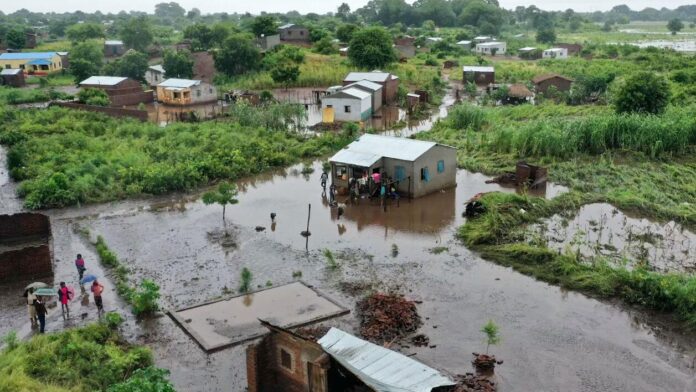
Devastating floods ravaging Mozambique have driven crocodiles from rivers into submerged towns, killing at least three people as authorities warned residents in heavily affected areas about heightened wildlife dangers while more than 700,000 people face a deepening humanitarian crisis.
In Xai-Xai, the provincial capital of Gaza province and one of the worst-affected areas in the country’s south, authorities have cautioned residents about elevated crocodile risks as floodwaters spread and evacuations to higher ground continue.
Of the 13 people who have died from floods in Mozambique, three were killed by crocodiles, authorities disclosed. The wildlife threat compounds an already catastrophic situation where torrential rains and severe flooding across southern Africa over the past month have killed more than 100 people in Mozambique, South Africa and Zimbabwe, destroying thousands of homes and damaging critical infrastructure including roads, bridges, schools and health facilities.
“The river levels are rising and are reaching urban areas or heavily populated areas,” Paola Emerson, head of the U.N. Office for the Coordination of Humanitarian Affairs in Mozambique, said this week after visiting the town. “So the crocodiles that are in the Limpopo river in this case are able to get into populated areas that are now submerged under water and that is the concern.”
The Limpopo River flows from South Africa through Mozambique on its route into the Indian Ocean, creating a natural corridor for wildlife displacement during flooding events.
Two people were killed in an attack that left three others injured in the Gaza region earlier this month. A man was “swallowed” by a crocodile in Moamba, a small town in Maputo province, local media quoted Henriques Bongece, the province’s secretary, as saying this week. Maputo serves as the impoverished country’s capital.
Authorities in Maputo indicated the crocodiles appeared to have been driven into the area by floodwaters from a park in neighboring South Africa, illustrating how the disaster’s effects cross international boundaries as river systems connect ecosystems across the region.
“We want to urge everyone not to approach still waters because crocodiles are drifting in these waters. The rivers have connected with all areas where there is water,” local media quoted Bongece as saying this week.
Beyond the immediate danger posed by wildlife, the floods have triggered a catastrophic humanitarian emergency affecting more than 700,000 people, more than half of them children, according to humanitarian organizations including the World Food Program and UNICEF. Weeks of heavy rainfall, compounded by dam releases to prevent structural failures, have left a trail of destruction across vast agricultural land.
The Associated Press conveyed that more than 300,000 people have been displaced by flooding in Gaza province alone, with Governor Margarida Mapandzene Chongo saying approximately 327,000 people were housed in dozens of temporary shelters including schools and churches. They had fled or been evacuated from flooded or flood-threatened areas of the southern province, which has a population of about 1.4 million.
Humanitarian organizations had anticipated earlier this month that around 200,000 people would be impacted by extreme weather in Mozambique, but conditions have exceeded those projections. Inocencio Impissa, a Cabinet minister and government spokesperson, said nearly 600,000 people had been affected in Gaza and neighboring Maputo provinces.
Chongo disclosed that authorities were calling for evacuation of everyone from lower portions of Xai-Xai as additional flooding threatens the city of approximately 115,000 people situated next to the Limpopo River. Streets in Xai-Xai resembled rivers as floodwater surged through parts of the city, videos on the city’s official Facebook page showed.
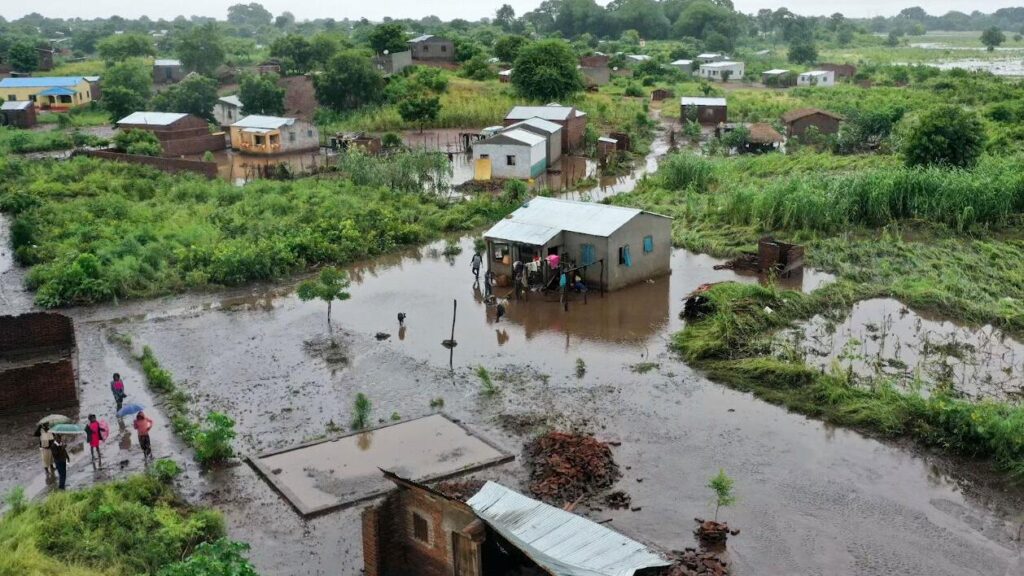
Images from the nearby town of Chokwe, site of earlier evacuations, show floodwater almost entirely covering houses and other buildings, with only the tips of some roofs visible above the inundation.
The World Health Organization warned Friday of severe disruptions to health services in Gaza and Maputo provinces following destruction of at least 44 health facilities, leaving tens of thousands without access to medical care. The U.N. agency said damage to critical infrastructure has interrupted service delivery, while more than 50,000 people forced to relocate to temporary shelters face limited or nonexistent basic health services.
WHO emphasized that displaced people requiring long-term medication face life-threatening interruptions and that urgent action is needed to restore essential services, deploy mobile health teams and ensure continuity of care for people with chronic conditions.
Across the three affected countries, humanitarian agencies warn that hunger and disease risks are escalating, with extreme weather wiping out crops that millions of small-scale farmers depend upon for sustenance, while the threat of water-borne diseases such as cholera looms large over crowded evacuation centers with inadequate sanitation.
Mozambican President Daniel Chapo canceled his trip to the World Economic Forum in Davos, Switzerland, because of severe flooding impacting central and southern regions of the country, the state-run daily newspaper Noticias conveyed.
Mozambican authorities indicated that severe flooding in northern South Africa was now affecting Gaza province, which borders South Africa, as rivers flowing into Mozambique burst their banks. Chongo said “the situation is likely to worsen” in Gaza because of heavy rains in southern Zimbabwe that would ultimately flow toward her province, creating a cascading crisis as weather systems impact multiple countries sequentially.
Mozambique, a nation of 34 million people on Africa’s southeastern coast, has endured devastating cyclones and crippling drought in recent years. Several provinces have been struck by current floods, with conditions in three described by authorities as “critical.”
A countrywide red alert warning, the highest level, has been issued over the weather conditions.
The National Institute for Disaster Risk Reduction, coordinating rescue operations, said approximately 110 people were rescued by helicopter Sunday while trapped in trees or other high points. Those rescued included children, elderly people and one pregnant woman about to go into labor, highlighting the crisis’s impact across vulnerable populations.
Minister of Transport and Logistics João Matlombe said approximately 40 percent of Gaza was submerged by water, 152 kilometers (94 miles) of roads across the country had been completely destroyed and more than 3,000 kilometers (1,864 miles) of roads were damaged, creating enormous challenges for relief operations and economic recovery.
The recovery cost for Mozambique could reach hundreds of millions of dollars. The premier of one affected province in South Africa estimated damage there at approximately $250 million, suggesting regional reconstruction costs will prove staggering.
The crocodile threat represents an unusual dimension of the flooding disaster, where wildlife displacement creates deadly encounters in areas where humans and predators typically maintain separation. Crocodiles that normally inhabit river channels and remote wetlands have been carried by floodwaters into residential neighborhoods and urban centers, creating danger zones where normal activities like walking through standing water or seeking temporary shelter become life-threatening.
The warning against approaching still waters reflects the difficulty of visually detecting crocodiles in murky floodwater, where the animals can remain submerged with only eyes and nostrils exposed. Displaced residents navigating flooded streets or attempting to salvage belongings from inundated homes face risks they have little experience assessing or avoiding.
The destruction of 44 health facilities creates cascading health crises beyond immediate flood injuries. Pregnant women require prenatal care and delivery services. People with diabetes, hypertension and other chronic conditions require consistent medication access. Children need vaccinations. The interruption of routine health services during disasters often produces mortality that exceeds deaths directly attributable to the triggering event.
Crowded evacuation shelters with inadequate water and sanitation create ideal conditions for cholera and other diarrheal disease outbreaks that can kill thousands if not rapidly contained. Mozambique’s recent experience with cyclone-related cholera outbreaks demonstrates how secondary health crises following natural disasters can prove as deadly as the initial event.
The agricultural devastation threatens food security for millions who practice subsistence farming, growing just enough to feed their families with minimal surplus for sale. When floodwaters destroy standing crops and wash away topsoil, recovery requires not just rebuilding homes but restoring agricultural productivity through new seeds, tools and the time required to bring new plantings to harvest.
For Mozambique’s government and international humanitarian community, the challenge involves simultaneously addressing immediate life-safety threats including crocodile dangers, providing shelter and food for hundreds of thousands of displaced people, preventing disease outbreaks in crowded conditions and beginning economic recovery that will require years and resources the impoverished nation lacks.