Home Blog

Lawyers Say Spain Kidnapped Scottish Crime Boss From Bali as Extradition Battle Opens in Amsterdam

0

A Scottish fugitive described by European law enforcement as one of the continent’s most wanted organized crime bosses appeared in a Dutch courtroom Thursday after being deported from Indonesia, as his lawyers accused Spanish and Indonesian authorities of effectively kidnapping their client through what they called an illegal cross-border seizure dressed up as lawful extradition.

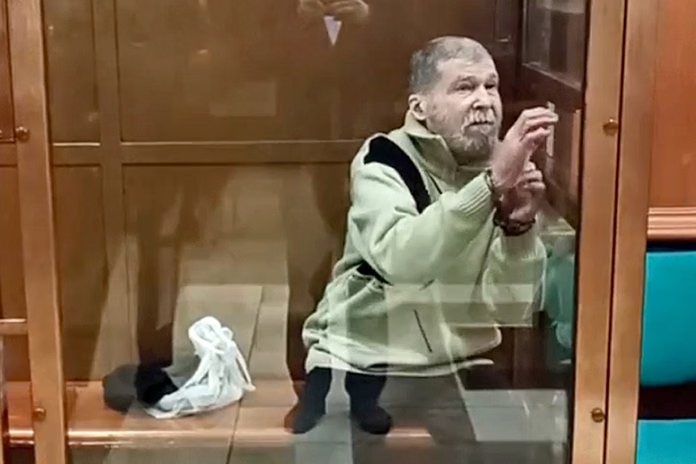
Steven Lyons, 46, sat in the Amsterdam courtroom wearing a blue hooded sweatshirt and jeans, flanked by his interpreter and three armed police officers, as Dutch judges heard arguments over whether he can legally be surrendered to Spain under a European Arrest Warrant. Lyons told the court he had spoken to almost no one since his deportation from Bali, had not been in contact with any member of his family, and said his health was declining.

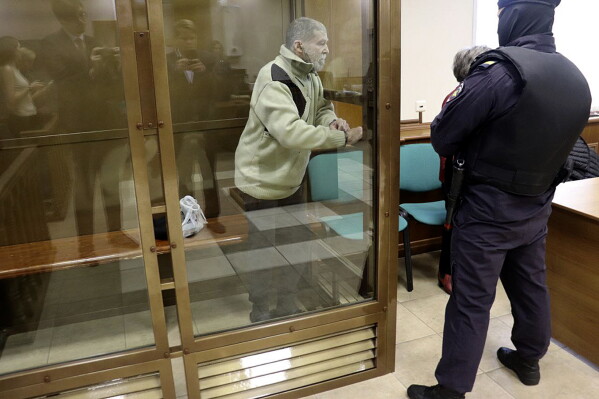
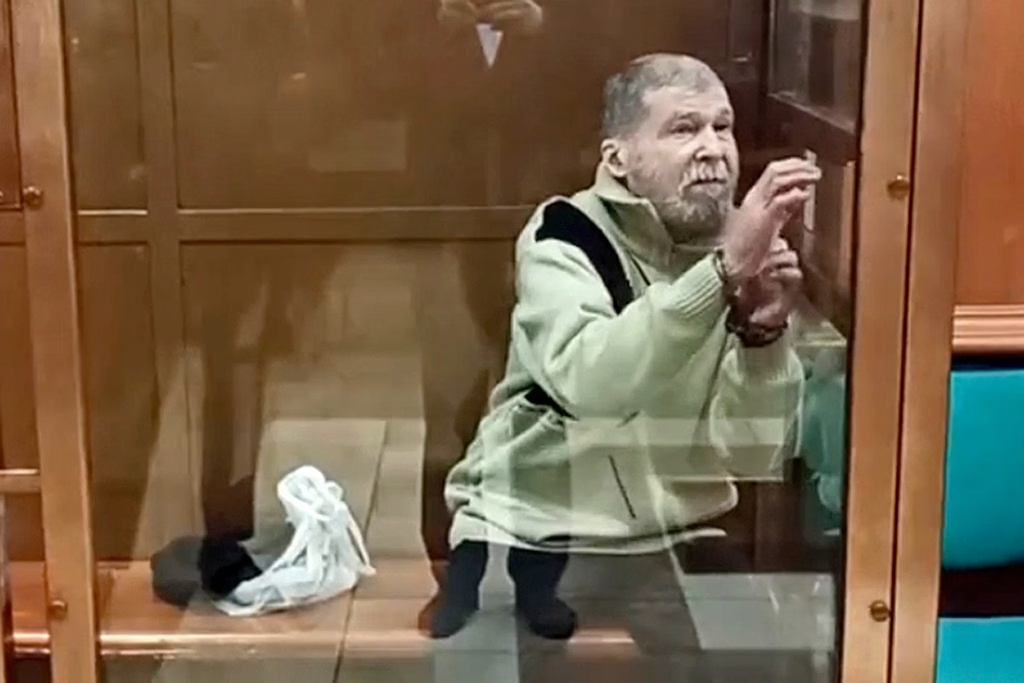
Indonesian authorities had paraded Lyons in an orange prison suit and handcuffs for cameras before his removal, publicly branding him a mafia fugitive in photographs that his legal team would later use in court as evidence of procedural misconduct.

His Dutch solicitor did not mince his position before the Amsterdam bench. “This is in reality a secretive extradition, basically kidnapping of my client,” the lawyer told the hearing, adding that the arrest paperwork lacked official court stamps, that Indonesian police had given thumbs up gestures in publicly circulated footage of the arrest, and that the choice of the Netherlands as a transit jurisdiction had been made by Spanish authorities without proper judicial oversight.

“Basically the Guardia Civil has kidnapped him from Bali,” the lawyer said. “They choose the beneficial environment of the Netherlands with a positive extradition climate.” He argued the matter should be referred to the European Court of Justice because no judicial authority had participated in the decision to route Lyons through Dutch jurisdiction, characterizing the maneuver as forum shopping by Spanish prosecutors.

Spain has no extradition treaty with Indonesia, meaning Lyons was sent to the Netherlands to enter the European legal framework before any potential transfer to Spanish custody. He is currently held in Vught prison, a high security facility that houses some of Europe’s most dangerous criminal figures.

Who Lyons Is and What He Is Accused Of

Lyons is regarded by Scottish and European investigators as the leading figure of the Lyons crime clan, a Glasgow-based organized crime organization that has been locked in a violent feud with the rival Daniel family for more than two decades. What began as a dispute over a drug debt on the streets of Glasgow has evolved into one of the most sustained and deadly gangland conflicts in Scottish history, marked by assassinations, attempted murders, fire bombings, and years of retaliatory violence.

In 2006, Lyons survived a gun attack at a garage in north Glasgow. His cousin Michael Lyons was killed in the same incident, dramatically intensifying tensions between the two factions. The violence has continued for years, with key figures from both organizations relocating to Spain and Dubai while expanding their criminal networks internationally.

The feud’s most recent and internationally visible episode came last year when Lyons’ brother Eddie Lyons Jr. was shot dead alongside associate Ross Monaghan at a beachfront bar in Fuengirola on Spain’s Costa del Sol. The double murder was carried out in front of tourists and sent a clear signal that what had started in Glasgow had become a cross-border organized crime conflict operating across Europe.

Spanish investigators allege that Steven Lyons oversaw a sophisticated criminal network involving shell companies, cryptocurrency movements, luxury asset acquisition, and large-scale drug trafficking routes across Europe, the United Arab Emirates, and Turkey. Police raids connected to the investigation have swept through Spain, Scotland, and other countries, with officers seizing high-end watches, cash, electronic devices, and cryptocurrency wallets. Investigators also seized a collection of images allegedly depicting mutilated human remains and severed body parts.

The investigation has involved the Spanish Guardia Civil, Police Scotland, Europol, and multiple other national law enforcement agencies working in coordination over several years.

What Happens Next

Dutch judges are expected to deliver a written ruling on June 18. If the court approves extradition, Lyons could be transferred to Spain quickly thereafter. If the ruling goes against surrender, the case may face a more complicated legal path that his lawyers are already trying to force toward European judicial review.

Vught prison, where Lyons is being held pending the ruling, is one of the Netherlands’ most secure facilities. It has previously housed Ridouan Taghi, a Dutch drug trafficking figure whose own lawyer was shot in a high-profile case that drew attention to the vulnerability of those associated with organized crime cases in the Netherlands.

The Amsterdam hearing, filmed by Sky News, focused narrowly on the legal question of whether extradition is permissible under the terms of the European Arrest Warrant and given the procedural circumstances of Lyons’ removal from Bali. For European law enforcement, however, the stakes are considerably wider. A successful extradition would deliver one of the most prominent fugitives in the continent’s organized crime landscape into Spanish prosecutorial custody, potentially unlocking years of investigative work into a network that authorities say stretches from Scotland through Spain to the Middle East.

When Extradition Law Meets Organized Crime Tactics

The Lyons hearing illustrates a specific and recurring tension in cross-border organized crime prosecution: the gap between what law enforcement believes to be operationally necessary and what the law permits in the method of achieving it.

The defense argument, that routing Lyons through the Netherlands without formal judicial authorization of that jurisdictional choice constitutes an unlawful seizure, is not frivolous. European legal frameworks governing extradition contain specific procedural requirements precisely because the history of law enforcement overreach in cross-border cases has been extensive enough to warrant those protections. If Spanish authorities exploited the absence of an extradition treaty between Spain and Indonesia to engineer a route through a more permissive legal environment, that is exactly the kind of forum shopping that European judicial oversight is designed to prevent.

At the same time, the practical reality is that fugitives with the resources and connections that authorities attribute to Lyons are exceptionally difficult to apprehend through purely procedural means. The fact that he was living in Bali while his alleged criminal network operated across multiple continents is itself a measure of how effectively high-level organized crime figures can place themselves beyond the reach of the jurisdictions seeking them. The Indonesian removal, whatever its procedural imperfections, ended that particular arrangement.

Whether those imperfections are significant enough to block extradition to Spain will depend on how the Amsterdam court reads the European Arrest Warrant framework and the specific paperwork deficiencies Lyons’ lawyers have identified. The defense has clearly telegraphed its strategy of fighting on procedural grounds rather than on the merits of the underlying criminal allegations, a standard approach when the factual case against a client is expected to be extensive and well-documented.

The June 18 ruling will determine whether one of Scotland’s most notorious alleged crime bosses faces Spanish prosecutors or whether his lawyers succeed in exploiting the legal seams in a cross-border capture that law enforcement clearly regarded as justified regardless of the process used to achieve it.

Skynews

Deadly Sri Lanka Care Home Fire: 12 Killed, Director Arrested

0

A fire tore through a nursing home in western Sri Lanka, killing at least 12 residents and injuring several others, as authorities launched an investigation into possible safety violations at the facility.

Police said the blaze erupted late Wednesday at an elders’ home in Anguruwatota, a town near Horana, where dozens of vulnerable residents were housed. Emergency teams, including firefighters, police officers and local volunteers, rushed to the scene and rescued dozens of occupants as flames spread rapidly through the building.

Officials confirmed that more than 50 people were evacuated, with at least seven to eight individuals hospitalized for burns and other injuries at Horana District Hospital. Initial accounts from local outlet Ada Derana indicated that as many as 72 residents were living in the facility at the time of the fire.

Search operations carried out in the aftermath led to the recovery of multiple bodies בתוך the charred structure, with early reports indicating that several residents had been unaccounted for before the death toll was confirmed.

Authorities said the fire was eventually brought under control after an intensive response effort, but the extent of the damage left sections of the home gutted. Visuals broadcast by local television and footage cited by The Associated Press showed burned out interiors and debris scattered across the premises.

Police spokesman Fredrick Wootler said 51 residents were rescued, adding that some occupants included individuals with mental health conditions. He confirmed that the director of the home had been taken into custody on suspicion of negligence contributing to the deaths. The individual was later produced in court and ordered held for one week as investigations continue.

Further scrutiny has focused on the status of the facility itself. Chathura Mihudum, head of the National Secretariat for Elders, said the home was not officially registered and had previously been warned to comply with regulatory requirements. He noted that the building was severely overcrowded, with space designed for about 15 people being used to accommodate more than 70 residents.

A magistrate’s inquest is expected to establish the precise cause of the fire, while a report from the Judicial Medical Officer will provide additional details on the victims.

Displaced residents have been relocated temporarily to a nearby school as authorities coordinate relief efforts.

The deadly fire has renewed concerns about oversight and enforcement in Sri Lanka’s elder care sector, where informal or unregistered facilities often operate under limited supervision. The revelation that the Anguruwatota home had been flagged previously but remained operational highlights gaps between regulatory warnings and enforcement action.

Overcrowding appears to have played a critical role in the scale of the tragedy. In confined environments with limited exits, fire hazards can escalate rapidly, leaving residents with little chance to escape. This risk is even greater in facilities housing elderly individuals or those with medical conditions, who may be unable to evacuate quickly without assistance.

The incident may also prompt broader policy questions about the availability and affordability of licensed care homes. Families often turn to unregulated facilities due to cost or accessibility, creating a parallel system that falls outside formal safeguards.

In the coming weeks, investigators are likely to examine whether fire safety equipment, emergency exits and staff preparedness met basic standards. The outcome of that inquiry could influence not only accountability in this case but also future regulation of care homes across the country.

For many observers, the tragedy underscores a familiar pattern in disaster response, where enforcement tends to follow loss rather than prevent it. Whether this incident leads to sustained reform remains a critical question for Sri Lanka’s public safety framework.

AP/Adaderana.lk

Bandits Kidnap 7 Students in Zamfara, Kill One and Abduct Two More in Kwara — Nigeria on Edge

0

Gunmen abducted seven students during a predawn raid in northwestern Nigeria, while a separate attack in another state left one person dead and two women kidnapped, authorities said, underscoring a widening wave of insecurity.

Police in Zamfara State said the students were taken from an off campus residence in the Kaura Namoda area early Wednesday. Spokesperson Yazid Abubakar said one of the victims managed to escape and is now in protective custody, while security teams intensified efforts to locate the remaining six.

Officials have not disclosed the whereabouts of the abducted students, a recurring challenge in a region where armed groups often retreat into remote forest enclaves after carrying out raids.

Zamfara has long been a center of violent activity by criminal gangs who rely on kidnapping for ransom. Figures compiled by Premium Times and cited by The Associated Press show that at least 1,900 students have been abducted from schools across Nigeria since the 2014 mass kidnapping of schoolgirls in Chibok, in Borno State.

In a separate development, violence also struck Kwara State, where armed assailants attacked a Fulani settlement near Lafiagi in the Edu local government area. Accounts published by Premium Times, citing The PUNCH, said the attackers stormed the community late Monday, firing shots and causing panic among residents.

Police commissioner Ojo Adekimi confirmed that one resident was killed during the assault and two women were abducted. He identified the victims as wives of a local Fulani leader who appeared to have been the intended target of the attackers.

“The attackers targeted the Fulani leader, Ardo, but could not locate him,” Adekimi said, adding that security forces were pursuing the assailants after they fled into nearby forested terrain. He noted that military personnel had earlier engaged the attackers before they retreated.

Community sources cited by The PUNCH described a chaotic scene as residents fled under gunfire. The attackers reportedly withdrew after abducting the women, leaving heightened fear among locals already grappling with repeated incursions.

Recent reporting by PREMIUM TIMES indicates that the Kwara North region has witnessed a string of similar attacks in recent weeks, including raids on villages, farmland and traditional institutions. In one earlier incident, armed groups set parts of a palace ablaze and abducted several people, including members of a royal household.

Authorities have responded with additional deployments and consultations with military leadership, but fresh attacks continue to test those measures.

The near simultaneous attacks in Zamfara and Kwara reflect a troubling expansion of organized armed violence beyond traditional hotspots in northwestern Nigeria. While Zamfara has long struggled with entrenched bandit networks, the growing frequency of incidents in Kwara suggests that these groups are extending their reach or inspiring copycat operations.

Kidnapping has evolved into a structured criminal enterprise, with victims often used as leverage for ransom payments that sustain further operations. Schools and rural communities remain especially vulnerable due to limited security presence and difficult terrain that complicates rapid response.

The data cited by Premium Times illustrates the scale of the crisis, but the broader implication is the normalization of abduction as a tactic. Each successful raid reinforces the perception of weak deterrence, potentially encouraging more attacks.

The situation also highlights coordination challenges among Nigeria’s security agencies. Although military and police units frequently respond to distress calls, the ability of attackers to escape into forests points to gaps in intelligence, surveillance and sustained ground operations.

Without a comprehensive strategy that combines enforcement with economic and social interventions, analysts warn that the cycle of violence may persist, leaving communities exposed and deepening public anxiety across affected regions.

AP/Punchng/PremuimTimes/DailyTrust

US Strike on Suspected Cartel Boat Kills 2 in Eastern Pacific

0

(AP/TheGuardian) — A U.S. military strike on a vessel suspected of drug trafficking in the eastern Pacific Ocean left two people dead Wednesday, marking the latest escalation in a sweeping campaign ordered by Donald Trump targeting criminal networks across Latin America.

United States Southern Command said the operation focused on a boat traveling along routes commonly used for narcotics smuggling. Officials did not present public evidence confirming the vessel was carrying illegal drugs. Footage circulated on social media appeared to show a speeding boat erupting in flames after being hit.

The strike adds to a growing death toll linked to the campaign, with figures compiled by The Guardian indicating at least 207 people have been killed since the operations began in early September. The Associated Press confirmed the latest incident and the broader scope of the effort.

The Trump administration has framed the campaign as part of what it describes as an armed conflict against drug cartels, arguing that aggressive action is necessary to curb the flow of narcotics into the United States and reduce overdose deaths. Officials have repeatedly referred to targeted groups as “narcoterrorists,” though detailed evidence supporting individual strikes has often not been disclosed.

Questions about the legality and effectiveness of the operations continue to intensify. Critics, including Democratic lawmakers and military law experts, have raised concerns about the use of lethal force in international waters without transparent proof of criminal activity. Some have also pointed to the nature of drug trafficking routes, noting that substances such as fentanyl typically enter the United States over land routes through Mexico rather than by sea.

Earlier operations have drawn particular scrutiny. In one case, survivors of an initial strike were reportedly killed in a subsequent attack on the same vessel. The White House maintained that the follow up action complied with the laws of armed conflict and was carried out in self defense, though legal scholars have challenged that interpretation.

Oversight efforts are now underway. A review by the Pentagon’s inspector general, announced in May, is expected to examine whether military planners adhered to established targeting procedures. The inquiry will assess the operational framework used in the strikes but is not set to determine their legality.

The expanding maritime campaign reflects a significant shift in how the United States is confronting transnational drug networks, moving beyond traditional law enforcement and intelligence cooperation toward direct military engagement. This approach carries strategic and legal implications that extend well beyond the immediate objective of disrupting trafficking routes.

One key concern is the potential precedent such operations set in international waters. Without clear and publicly available evidence linking targeted vessels to criminal activity, the strikes risk undermining established norms governing the use of force. This could invite similar actions by other nations under the justification of combating illicit trade.

There is also a question of effectiveness. While maritime interdictions can disrupt certain supply chains, much of the illicit drug flow into the United States is believed to move through land based corridors. That raises doubts about whether high risk military operations at sea can meaningfully reduce overdose rates at home.

At the same time, the campaign signals a broader policy direction that blends national security and law enforcement priorities. By framing drug cartels as wartime adversaries, the administration has opened the door to more aggressive tactics, but also to heightened scrutiny from lawmakers, legal experts and international observers.

As the operations continue, the balance between enforcement, legality and strategic impact is likely to remain at the center of debate.

Trump Says Military Ready to ‘Wipe Everybody Out’ as Iran and US Trade Fresh Strikes

0

Donald Trump warned that the United States military stands ready to “wipe everybody out” as American and Iranian forces exchanged fresh strikes across the Gulf, underscoring the fragile state of a ceasefire that continues to be tested.

Trump made the remarks Wednesday while addressing the ongoing hostilities with Iran, suggesting that the concept of a ceasefire in the region does not necessarily mean a complete halt in violence. He described the current situation as a reduced intensity of conflict rather than a full cessation.

“We’ve been hitting them pretty hard,” Trump said, adding that in parts of the Middle East, a ceasefire can amount to “shooting in a more moderate manner.”

Despite emphasizing a preference for a negotiated agreement, Trump pointed to the overwhelming strength of U.S. forces and indicated they are prepared for a broader military campaign if diplomacy fails. He said a deal would be preferable to avoid widespread destruction but stressed that military options remain readily available.

The president’s comments followed a wave of Iranian attacks targeting regional sites. Abbas Araghchi defended the strikes, describing them as defensive actions aimed at locations used by U.S. forces in Kuwait and Bahrain.

Kuwaiti officials said an Iranian strike on the country’s main airport left one person dead and more than 60 injured. The defense ministry added that air defense systems intercepted several incoming missiles and drones, though some managed to cause damage.

Bahrain also reported intercepting multiple projectiles aimed at the island nation, preventing casualties.

The Pentagon condemned the attack on Kuwait, calling it a deliberate and unjustified escalation. In response, United States Central Command confirmed that U.S. forces carried out retaliatory strikes, including targeting a control facility on Qeshm Island that officials linked to the Iranian operations.

Even as the exchanges intensified, Trump dismissed suggestions that diplomatic efforts had collapsed, insisting that communication with Tehran was ongoing.

Trump’s warning marks one of the most forceful public statements since the current phase of the conflict began, signaling both deterrence and political messaging. By emphasizing the capability to inflict overwhelming damage, the administration appears to be reinforcing its negotiating position while attempting to discourage further Iranian attacks.

Iran’s response strategy suggests a calculated approach aimed at demonstrating reach without provoking a full scale war. By targeting areas associated with U.S. military activity, Tehran is attempting to balance retaliation with restraint.

The involvement of Kuwait and Bahrain highlights the broader regional stakes. Both countries host critical U.S. military infrastructure, making them potential flashpoints in any escalation. This raises the risk that localized incidents could rapidly expand into a wider confrontation involving multiple states.

At the same time, Trump’s acknowledgment that negotiations are still underway points to a parallel diplomatic track that may ultimately shape the outcome. The contrast between aggressive rhetoric and continued dialogue reflects a familiar pattern in high stakes international conflicts, where pressure and negotiation move forward simultaneously.

The coming period will likely determine whether the current level of violence remains contained or evolves into a more sustained and destabilizing conflict across the Gulf region.

TheIndependent

US House Votes 215-208 to End Iran War in Bipartisan Rebuke as 4 Republicans Break With Trump

0

WASHINGTON — The House of Representatives voted Wednesday to order President Donald Trump to withdraw U.S. forces from Iran, passing a war powers resolution 215 to 208 in a rare bipartisan rebuke that exposed the growing fractures within Trump’s own party over a three-month conflict that has driven up fuel prices, stalled diplomatic negotiations, and consumed Washington’s attention with no clear end in sight.

Four Republicans broke with their party to side with Democrats on the vote: Representatives Tom Barrett of Michigan, Warren Davidson of Ohio, Brian Fitzpatrick of Pennsylvania, and Thomas Massie of Kentucky. No Democrats voted against the resolution. Seven members did not vote. When the final tally was announced, cheers erupted on the House floor.

The vote was a direct challenge to an administration that has insisted the Iran war is legally justified and militarily necessary. It was also a political signal that the war’s domestic costs — rising gasoline prices, food inflation, and midterm anxiety among Republican members in competitive districts — have accumulated to a point where the House’s slim Republican majority can no longer hold together in full support of the conflict.

“This reckless and costly war of choice needs to end today,” House Democratic Leader Hakeem Jeffries of New York said ahead of the vote.

Representative Gregory Meeks of New York, who sponsored the resolution and serves as ranking member of the Foreign Affairs Committee, called the outcome a turning point. “The passage of this WPR today signals a significant turning point: more and more Republicans are listening to their constituents who do not want another open-ended war in the Middle East,” Meeks said in a statement after the vote.

A Vote Delayed, Then Forced Through

Wednesday’s outcome was the fourth war powers resolution attempt in the House since the U.S. and Israel launched strikes on Iran on February 28. The previous three failed by increasingly narrow margins. Two weeks ago, House Speaker Mike Johnson abruptly halted floor action when a similar resolution appeared on the verge of passing, a procedural maneuver designed to protect Trump from a public congressional rebuke. The delay did not hold. Opposition within the Republican conference continued growing, and the resolution was brought back.

The 215-208 margin reflected exactly the dynamic Johnson had been trying to prevent: four Republicans willing to cross the aisle on a matter of constitutional principle and war costs, combined with unified Democratic support, producing a majority that Johnson’s procedural blocking could only delay, not stop.

What the Vote Does and Does Not Do

The practical effect of Wednesday’s House vote is, for now, limited. Legislation must pass both chambers of Congress to become binding, and the Senate has not yet scheduled further votes on a similar resolution that advanced procedurally last month after seven prior attempts failed. Even if both chambers passed matching resolutions, serious constitutional questions surround whether Congress can use war powers resolutions to override presidential military authority without a formal declaration of war.

Republican critics of the measure dismissed it as political theater. They argued Democrats were using the resolution to weaken the president and score midterm points rather than engage seriously with national security.

But the symbolic weight of the vote is real and consequential in ways that the legislative pathway does not fully capture. Three months into a conflict the president initially suggested would last four to six weeks, a majority of the House of Representatives has formally recorded that the war should end. That is the kind of institutional statement that shapes the political environment around negotiations, defense budget debates, and the November elections regardless of whether the resolution ever becomes law.

The Broader Republican Fracture

Wednesday’s Iran war powers vote was not the only sign of congressional Republican discomfort with Trump’s agenda. The same day, the House approved a procedural motion advancing the Ukraine Support Act, which would provide security assistance to Ukraine in its war against Russia. Six Republicans and one independent who typically votes with the party supported the Ukraine measure, another indication of movement in the Republican conference on foreign policy questions.

Republican lawmakers also publicly criticized Trump’s selection of Bill Pulte, a mortgage regulator with no national security background, to serve as acting director of national intelligence, signaling resistance to loyalty-based appointments in sensitive national security roles.

Republicans have also recently pushed back on Trump’s plan to create a compensation fund for political allies who claimed to have been targeted by the Biden administration’s Justice Department, a separate dispute that has generated its own internal party friction.

The cumulative picture is of a Republican majority in Congress that spent the first months of Trump’s term with near-total internal discipline beginning to show pressure points on issues where constituents’ direct economic interests, constitutional principles, and foreign policy instincts diverge from the White House’s positions.

The Economic Dimension

Democrats have leaned into the war’s domestic economic costs as a central message heading into November. U.S. producer prices posted their largest increase in four years in April, driven by higher costs for goods and services since the war began. Gasoline prices have been a particular focus, with the near-closure of the Strait of Hormuz reducing global oil flows and keeping fuel costs elevated in ways that every American driver experiences directly.

The constitutional argument Democrats have made alongside the economic one is straightforward: the U.S. Constitution assigns the power to declare war to Congress, not the president, and Trump launched the Iran conflict without congressional authorization. His administration has described the war as a national security necessity justified by the urgent need to prevent Iran from developing a nuclear weapon.

When Wars Outlast Their Political Coalitions

The House war powers vote illustrates a dynamic that has repeated itself in American military engagements across the postwar era: the political coalition that supports military action at its outset erodes as the conflict drags past its initially projected duration, the costs become visible, and the promised outcome remains elusive.

Trump predicted four to six weeks. The war is in its fourth month. He has periodically said a deal was days away. No deal has been signed. The Strait of Hormuz remains largely closed. Iran has not surrendered its nuclear program. Gas prices are up. Republican members in swing districts are hearing from constituents.

Four Republicans voting for a war powers resolution is not a revolt. It is a warning. If negotiations continue to stall, if the ceasefire continues to be violated, if gasoline prices stay high through summer and into the fall campaign season, that number will grow. The House majority that Johnson has been protecting by procedural delay may not be protectable much longer.

Trump’s administration insists the war is necessary and that congressional second-guessing undermines both the mission and American credibility. There is a version of that argument that carries weight, particularly when adversaries watch congressional votes for signs that American resolve is softening. But there is an equally strong version of the opposing argument: a war that Congress never authorized, fought for longer than the president promised, at a cost that American consumers are paying at every gas station in every congressional district, is precisely the kind of conflict the war powers framework was designed to constrain.

Wednesday’s vote did not end the war. It told the president, on the official record, that a majority of one chamber of Congress thinks it should.

Reuters/AP

Bakersfield Standoff Ends: FBI Kills Suspect After 15-Hour Hostage Crisis

0

BAKERSFIELD, California — Federal agents shot and killed a man early Wednesday after he held 10 school employees hostage inside an office building in Bakersfield, bringing an end to a tense overnight standoff that stretched nearly 16 hours, authorities said.

Law enforcement officers moved into the building shortly after dawn, confronting the suspect who had barricaded himself on the second floor and warned he was carrying explosives. Officials said the man, identified as 41 year old Anthony Scott Searles Harris, was killed around 4:20 a.m. during the operation led by the FBI.

All hostages, who worked for the Kern County Superintendent of Schools, were found unharmed despite being restrained for hours inside the building, which also houses a bank branch. Bakersfield Assistant Police Chief Jeremy Blakemore said the outcome brought relief after a night of uncertainty for families awaiting news.

“Throughout the night, their families questioned whether they would be seen again,” Blakemore said. “We are very grateful for the outcome.”

Authorities said the suspect claimed he had explosive devices attached to himself and possibly to some of the hostages. Investigators later examined the devices and determined they did not pose an immediate threat, according to FBI Sacramento field office chief Sid Patel.

The standoff began Tuesday afternoon when police responded to a bomb threat at the multi story office building in downtown Bakersfield. Officers discovered the suspect inside with several people and quickly established a perimeter, evacuating nearby buildings including City Hall and police headquarters.

Negotiators remained in contact with the man for hours. Two hostages were released during the evening, while others stayed inside as talks continued overnight. One hostage managed to communicate with law enforcement by phone until her battery died. Officials noted she had a medical condition and lacked access to her medication, raising concerns during the standoff.

Investigators said the suspect had a criminal history, including past convictions involving a minor and previous legal disputes. He had also served briefly in the U.S. Army before being discharged. Authorities indicated that some of his demands were tied to grievances over earlier legal cases, though a clear motive has not been established.

More than 100 federal personnel supported the operation, including specialized response teams, bomb technicians, and crisis negotiators. A hostage rescue unit was deployed as the situation escalated.

Witnesses described a heavy police presence surrounding the building throughout the ordeal. A local livestreamer, Jacob Davidson, said he watched officers enter from the rear while emergency teams set up medical triage areas nearby.

Officials said the suspect’s actions left emotional scars on those involved, even as the physical outcome remained positive. “There will be mental scars,” Patel said, noting that victim support services would be made available.

Schools Superintendent John Mendiburu praised the composure of employees during what he called a frightening and prolonged ordeal, emphasizing their resilience under extreme pressure.

The Bakersfield standoff underscores a growing challenge for law enforcement agencies confronting complex hostage situations involving threats of explosives. While such incidents remain rare, they require rapid coordination between local police and federal units, particularly when bomb threats are involved.

The swift deployment of specialized FBI teams reflects a broader trend in crisis response, where federal resources are increasingly integrated into local emergencies. This approach can improve outcomes, as seen in this case where all hostages survived, but it also raises questions about preparedness at the municipal level.

The suspect’s background, including prior criminal convictions and unresolved legal grievances, highlights a recurring pattern in high risk incidents where personal disputes escalate into public crises. Experts often point to gaps in monitoring individuals with histories of violence or instability, especially after release from custody.

The incident also illustrates the psychological toll such events take on victims. Even without physical injuries, prolonged captivity and exposure to threats can lead to lasting trauma. Authorities’ emphasis on post incident support reflects a growing recognition of these long term effects.

Finally, the case draws attention to security vulnerabilities in everyday public spaces such as office buildings that house schools and financial institutions. As urban areas continue to expand, ensuring rapid response capabilities and preventive measures remains a key concern for both policymakers and law enforcement agencies.

Source: AP

Bakersfield Bomb Threat: Second Hostage Released as Chase Bank Standoff Enters Critical Phase

0

A second hostage has been released as a tense standoff involving a bomb threat at a Chase Bank in Bakersfield stretched into its second day, with authorities continuing negotiations to secure the safe release of those still inside.

Police said a man barricaded inside the bank has threatened to detonate an explosive device, prompting a large scale emergency response that has shut down part of the city since Tuesday afternoon.

The Bakersfield Police Department confirmed that several people remain inside the branch located at the intersection of Chester Avenue and 17th Street. Officials said those still held are in stable condition as crisis negotiators maintain communication with the suspect.

The incident began shortly after 1 p.m. Tuesday and has drawn a heavy law enforcement presence, including federal agents from the Federal Bureau of Investigation and support from the Department of Homeland Security.

Authorities have not disclosed the identity of the suspect or detailed any demands.

Nearby government buildings, including city offices and police headquarters, were evacuated as a precaution, while surrounding streets were closed to traffic. Officials urged residents to avoid the area as tactical teams and emergency responders continued operations.

A spokesperson for JPMorgan Chase said the affected branch had been cleared of employees and is cooperating fully with law enforcement as the situation unfolds. The building also houses a local school district office.

Witnesses described an intense and highly coordinated response. Jacob Davison, a local livestreamer who was near the scene, said he saw officers moving into position within minutes of the initial alert.

“This is the largest police presence I have ever seen here,” he said, describing the deployment of tactical units and the setup of emergency triage tents nearby.

Officials said negotiators remain in direct contact with the suspect by phone, working to de escalate the situation. Sergeant Eric Celedon said every available resource is being used to reach a peaceful resolution.

Bakersfield Mayor Karen Goh called for calm, urging the public to stay clear of the area and allow authorities to carry out their work.

“We remain focused on the safety of everyone involved,” she said in a public statement, praising the coordination among responding agencies.

The standoff has extended for more than 12 hours, with law enforcement maintaining a perimeter around the building while awaiting further developments.

The prolonged nature of the Bakersfield standoff highlights the growing complexity of modern hostage situations, where authorities prioritize negotiation over immediate tactical intervention. The safe release of two hostages suggests that communication channels remain active, which is often a critical factor in reducing risk.

The deployment of federal agencies alongside local police reflects heightened concern over the bomb threat, even though details about the device remain unclear. Such responses are standard in incidents where explosives are suspected, given the potential for mass casualties.

The evacuation of nearby government facilities underscores the seriousness of the threat and the need to secure a wide perimeter, particularly in mixed use urban areas where public institutions share space with private businesses.

Situations like this also illustrate the balance law enforcement must strike between urgency and caution. While swift action is necessary to protect lives, premature escalation can endanger hostages.

If negotiations continue to yield progress, authorities may be able to resolve the standoff without further harm. However, the uncertainty surrounding the suspect’s motives and the presence of a potential explosive device keeps the situation highly volatile.

The outcome will likely influence future emergency response protocols in similar incidents, particularly in mid sized cities where large scale hostage crises are relatively rare.

The Independent

Iranian Drone Strike Hits Kuwait Airport, Injures Civilians as Regional Tensions Escalate

0

Kuwait suspended commercial air traffic Wednesday after an Iranian drone strike struck the country’s main airport, damaging infrastructure and injuring several people, authorities said, in a sharp escalation of hostilities across the Gulf.

Defense Ministry spokesperson Brig. Gen. Saud Abdulaziz Al Otaibi said multiple drones targeted the passenger terminal at Kuwait International Airport, leaving parts of the facility heavily damaged. Officials said several individuals were wounded, though the extent of injuries was not immediately detailed.

The airport, which had only recently resumed operations on June 1 after months of disruption linked to the regional conflict, halted flights indefinitely. State media said Kuwait Airways suspended all services as authorities assessed the damage.

The strike came hours after a new round of military exchanges between Iran and the United States, underscoring the fragility of ongoing diplomatic efforts to end the conflict involving Iran, Israel and allied forces.

The US military said it carried out strikes on Iranian positions following what it described as attempted missile attacks targeting Kuwait and Bahrain. According to US Central Command, two missiles launched toward Kuwait failed to reach their target, while air defense systems intercepted additional projectiles aimed at Bahrain.

Bahrain’s Defense Ministry said its forces, working alongside US units, destroyed three incoming missiles and several drones. US officials also said multiple drones targeting American positions in Kuwait were intercepted.

Iran’s Revolutionary Guard said it launched retaliatory operations against what it described as US military assets in the region, including the headquarters of the US Navy’s Fifth Fleet in Bahrain. Iranian officials did not directly acknowledge striking Kuwait but warned that further responses would follow any continued military pressure.

“We had previously warned that any aggression would be met with a more severe response,” the Guard said in a statement.

US Central Command said its forces responded by striking an Iranian ground control station on Qeshm Island in the Strait of Hormuz, a strategic waterway critical to global energy shipments.

The intensifying exchanges have unfolded alongside growing uncertainty around ceasefire negotiations. Iranian outlets Fars and Tasnim signaled that Tehran had halted communication with mediators, citing continued fighting involving Israel and the Iran backed Hezbollah group in Lebanon.

President Donald Trump dismissed those claims, insisting that diplomatic contacts remain active.

“The conversations between us have been ongoing continuously,” Trump said, adding that the outcome of negotiations remains uncertain.

US Secretary of State Marco Rubio, speaking before lawmakers in Washington, acknowledged progress in discussions related to Iran’s nuclear program but cautioned that reaching a comprehensive agreement remains far from guaranteed.

The broader conflict has increasingly drawn in multiple fronts, with fighting between Israel and Hezbollah intensifying despite parallel ceasefire efforts. Israeli forces have expanded operations deeper into Lebanon, while Hezbollah continues launching drones into Israeli territory.

Iran has linked any potential agreement with the United States to a halt in hostilities in Lebanon, further complicating diplomatic efforts.

Meanwhile, Iran’s control over the Strait of Hormuz has continued to disrupt global energy flows, raising fuel prices and heightening concerns about supply stability.

The strike on Kuwait’s airport marks a significant escalation, as it directly impacts civilian infrastructure in a Gulf state that hosts US military assets but has sought to avoid becoming a primary battlefield. Even if some Iranian missiles failed to hit their targets, the drone strike demonstrates an expanding operational reach that increases the risk of wider regional spillover.

The suspension of flights highlights the vulnerability of critical infrastructure and signals potential economic ripple effects, particularly for aviation and energy markets already strained by instability in the Strait of Hormuz.

The conflicting narratives surrounding ceasefire talks reveal a deep disconnect between diplomatic messaging and battlefield realities. While the Trump administration projects confidence in ongoing negotiations, Iran’s reported pause in communication suggests leverage tactics tied to developments in Lebanon and broader regional dynamics.

The growing linkage between the Iran conflict and Israel’s campaign in Lebanon adds another layer of complexity. Any escalation in one theater now risks triggering reactions across multiple fronts, reducing the likelihood of a contained conflict.

If strikes continue to target infrastructure in Gulf states, the conflict could shift from a primarily military confrontation into a broader economic and geopolitical crisis, with global implications for trade, energy security and regional alliances.

For now, the situation remains volatile, with each new exchange increasing the risk of miscalculation and a wider war.

AP/Reuters/Aljazeera

2 Dead in Kenya Protests as Court Extends Block on US Ebola Quarantine Facility

0

A Kenyan court on Tuesday extended its suspension of a proposed United States backed Ebola quarantine facility after protests against the project turned deadly, with at least two people reported killed during clashes in central Kenya.

High Court Judge Patricia Nyaundi ordered that the plan remain on hold for three more weeks while legal proceedings continue. The court also directed the government to release full details of its agreement with Washington within seven days and scheduled the next hearing for June 23.

The ruling follows unrest in the town of Nanyuki, where hundreds of residents took to the streets to oppose the planned facility. Protest organizers said two people died from gunshot wounds after police intervened. A security source confirmed fatalities but did not specify the cause, while police spokesperson Michael Muchiri said he had no immediate confirmation of the deaths.

The proposed 50 bed quarantine unit is intended to house Americans exposed to Ebola in the Democratic Republic of Congo and neighboring Uganda. The plan has sparked widespread concern among Kenyans, many of whom argue the project could expose the country to unnecessary health risks.

The court had already issued an earlier temporary halt last week after a petition was filed by a legal advocacy group. Despite that order, United States aircraft have continued transporting personnel and equipment into Kenya, according to a US official and diplomatic sources familiar with the developments.

Kenyan President William Ruto defended the agreement, describing it as part of a broader national preparedness strategy and an extension of long standing health cooperation with the United States.

“We are a responsible government. We know what we are doing,” Ruto said, adding that the facility would serve both Kenyan citizens and foreign nationals.

However, a US official indicated the center would primarily treat American citizens, with American medical teams overseeing operations. The official said the priority is to contain the spread of Ebola while ensuring high level clinical care for those exposed.

Senior US health official Mehmet Oz said during a White House briefing that the administration of President Donald Trump remains confident a workable arrangement with Kenya will be achieved.

“I think we are going to reach a favorable understanding,” Oz said, describing the plan as beneficial to both countries.

The controversy comes as an outbreak of the Bundibugyo strain of Ebola continues to spread in parts of central Africa. The World Health Organization said the Democratic Republic of Congo has recorded hundreds of confirmed and suspected cases, along with dozens of deaths, while Uganda has also reported infections.

The Trump administration has maintained that it will not allow Ebola cases to enter the United States, a stance that has fueled criticism among Kenyan activists who view the facility as shifting the burden of risk abroad.

Patients at the proposed site would be individuals exposed to the virus but not yet showing symptoms, with those who fall ill expected to be transferred to treatment centers in other countries.

Kenyan courts have a reputation for independence, and the latest ruling reinforces judicial oversight in high profile agreements involving foreign governments. Still, activists have often accused authorities of sidestepping court directives.

The deadly protests mark a turning point in the dispute, transforming what began as a legal and policy debate into a broader public crisis. Public anger reflects deeper concerns about transparency, national sovereignty and trust in government decisions involving foreign partnerships.

The extension of the court order suggests the judiciary is seeking to slow down implementation and force greater accountability. Requiring disclosure of agreements may reveal details that could either calm public fears or intensify opposition, depending on what emerges.

At a global level, the situation highlights a recurring tension in international health responses. Wealthy countries often attempt to manage infectious disease risks beyond their borders, especially when domestic political pressures limit options at home. In this case, the refusal to treat Ebola patients on US soil has amplified perceptions of unequal burden sharing.

The outcome of the case could influence how future cross border health arrangements are negotiated, particularly in regions where public trust and institutional transparency remain fragile.

For now, the project remains in limbo, caught between legal scrutiny, public resistance and an ongoing outbreak that continues to pose regional and international risks.

Reuters/Kenyans.co.ke