Senegal’s president announced generous cash bonuses and land allocations for players and officials after the national team captured the Africa Cup of Nations title with a dramatic final victory over Morocco.
Following a tense 1-0 win, Senegal were crowned AFCON champions for the second time. President Bassirou Diomaye Faye told the squad that their achievement reflected national unity and discipline, praising the players for honoring the country on the continental stage.
“Dear Lions, you have honoured the flag entrusted to you. You have honoured Senegal,” Faye said while addressing the team. “You have shown by example that when Senegalese people move forward together with discipline and confidence, no challenge is beyond their reach.”
Under the rewards package, each of the 28 squad members will receive 75 million CFA francs, roughly £106,000, along with a 1,500-square-meter plot of land. The total value of the players’ bonuses amounts to about 2.1 billion CFA francs, or approximately £3.1 million.
Additional incentives were announced for football administrators and officials. Members of Senegal’s football federation are set to receive 50 million CFA francs and 1,000-square-meter land plots, while the Senegalese delegation to Morocco will be awarded 20 million CFA francs and 500-square-meter plots. Staff of the sports ministry will also share in bonuses totaling 305 million CFA francs.
The final itself was marked by controversy and high drama. Senegal were awarded a penalty deep into stoppage time after West Ham defender El Hadji Malick Diouf was judged to have fouled Real Madrid’s Brahim Diaz. Tempers flared as a scuffle broke out between players from both teams, prompting Senegal’s coach to urge his side to leave the pitch.
Morocco failed to capitalize on the penalty, with a softly struck Panenka easily saved by former Chelsea goalkeeper Edouard Mendy. Senegal then sealed the title four minutes into extra time through a decisive strike by Pape Gueye.
Thousands of supporters gathered in Dakar on Tuesday to celebrate the team’s homecoming. Earlier in the day, the Lions of Teranga paraded through the capital aboard an “African champions” bus en route to the presidential palace, where the scale of the rewards was formally unveiled.
When Senegal last won the Africa Cup of Nations, defeating Egypt in the final, players were awarded 50 million CFA francs and 200-square-meter plots of land, highlighting the increased incentives offered for this latest triumph.
In December, Confederation of African Football President Patrice Motsepe announced that the AFCON champions would receive $10 million in prize money, adding to the financial significance of the tournament victory.
Nigerian troops have rescued dozens of kidnapped civilians in operations across the country’s northwest, even as the military suffered fresh losses in the northeast where Islamist Boko Haram insurgents killed at least eight soldiers in Borno State, underscoring the dual-front security challenge facing Africa’s most populous nation.
In the northwest, soldiers freed 62 hostages and killed two militants during separate operations in Kebbi and Zamfara states, the army said Wednesday. The raids form part of an ongoing offensive against armed gangs blamed for a surge in mass kidnappings across the region.
Lieutenant Colonel Olaniyi Osoba, an army spokesperson, said troops stormed a known bandit hideout in Zamfara State after receiving intelligence that captives were being held there. All 62 hostages were rescued alive and placed in safe custody, with arrangements underway to reunite them with their families, the army said. Reuters also reported the rescue.
In a separate operation, Nigerian troops ambushed Lakurawa militants near the border between Kebbi State’s Augie district and neighboring Sokoto State, killing two fighters after tracking the group’s movements through intelligence reports, Osoba said.
Northwestern Nigeria has been increasingly destabilized by criminal gangs operating from forest enclaves, carrying out attacks on villages, schools and places of worship. The violence has included high-profile abductions, such as the January 18 kidnapping of more than 160 worshippers from two churches in Kaduna State.
The security situation has drawn international attention. President Donald Trump has accused Nigeria of failing to adequately protect Christians from Islamist militants operating in parts of the country. The Nigerian government has rejected claims of religious persecution, insisting that security forces are targeting armed groups that attack both Christian and Muslim civilians.
The United States has also stepped up its involvement. U.S. forces carried out strikes against Islamic State targets in northwest Nigeria on Christmas Day, Nigerian and U.S. officials have said.
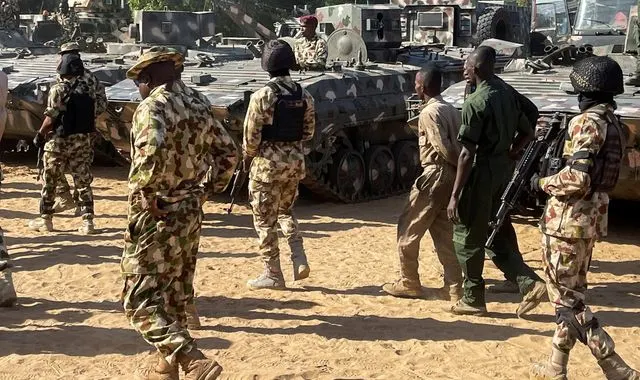
While troops recorded gains in the northwest, the military faced deadly setbacks in the northeast. In Borno State, at least eight Nigerian soldiers were killed and about 50 others wounded when Boko Haram insurgents attacked a military formation on Monday, security sources said Wednesday.
The militants arrived at the base on motorcycles and in armored vehicles, launching a coordinated assault that overwhelmed the position, according to the sources. Several of the wounded were evacuated for treatment, though the conditions of some remained unclear.
Borno State remains the epicenter of Boko Haram’s long-running insurgency, which began in 2009 and has killed tens of thousands of people while displacing millions across northeastern Nigeria and neighboring countries.
The Nigerian military said its latest operations highlight both the progress and the persistent risks facing troops as they battle multiple armed groups across vast and difficult terrain. Officials say efforts will continue to dismantle militant networks responsible for kidnappings, attacks on civilians and assaults on security forces.
NIAMEY, Niger — Gunmen attacked a village in western Niger over the weekend, killing at least 31 people and hospitalizing four others in critical condition, student organizations and a resident disclosed Tuesday, marking the latest massacre in a region where military governments have failed to curb escalating extremist violence despite seizing power on security promises.
The assault occurred Sunday in the commune of Gorouol in Tillabéri region, the Union of Students Originating from the Commune of Gorouol, the Union of Nigerien Students and other student organizations said in a joint statement.
“Thirty-one people were executed by lawless individuals, and four others were hospitalized in critical condition,” the statement read. The organizations did not identify who carried out the attack, and no group has claimed responsibility for the killings.
Hamidou Amadou, a Gorouol resident, confirmed to The Associated Press that at least 31 people were killed and attributed the attack to the Islamic State in the Greater Sahara militant group. The affiliate represents one of several armed factions targeting both civilians and military forces operating across Niger’s poorly governed territories.
The Tillabéri region borders Mali and Burkina Faso—two countries experiencing similar struggles with escalating insurgencies—and has functioned as a hotspot for extremist group attacks over the past decade. The border area’s remote terrain and porous boundaries create ideal conditions for militant operations and safe havens that government forces struggle to penetrate.
Niger’s military government assumed power in 2023 after deposing the country’s democratically elected administration, justifying the coup partly through promises to curb violence that civilian authorities had failed to contain. However, data demonstrates that attacks have increased following the military takeover, a pattern replicated in Mali and Burkina Faso where armed forces similarly seized control through coups while pledging enhanced security.
The Associated Press disclosed that Human Rights Watch documented in a September report that Islamic State forces have intensified attacks against civilians since March 2025. The rights organization recorded at least five assaults in Tillabéri where the militant group killed “over 127 villagers and Muslim worshippers, and burned and looted dozens of homes.”
The Sunday massacre in Gorouol continues this pattern of systematic civilian targeting that has characterized Islamic State operations across the Sahel, a semi-arid band stretching across Africa below the Sahara Desert where governance collapses have created opportunities for extremist expansion.
The execution-style killings—as described by student organizations—suggest calculated violence against defenseless populations rather than combat operations against security forces. Such tactics aim to terrorize communities, demonstrate state impotence and establish militant authority in contested territories where government presence remains minimal or nonexistent.
The hospitalization of four survivors in critical condition indicates some victims escaped immediate death despite the attackers’ apparent intent to kill all targeted individuals. Whether these survivors can provide testimony about the assault’s circumstances and perpetrators’ identities may assist investigations, though previous massacres in the region have rarely resulted in perpetrator identification or prosecution.
Student organizations’ role in publicizing the attack reflects broader breakdowns in official information systems across Sahel nations where military governments restrict press freedom and control public narratives about security failures. Civil society groups increasingly function as primary sources for massacre documentation when authorities delay acknowledgment or minimize casualty figures.
The Gorouol attack’s timing, occurring during the weekend when security force presence may be reduced and response times slower, follows patterns observed in previous extremist operations. Militants exploit predictable security gaps to conduct operations with reduced risk of encountering military resistance during the assault itself.
Niger’s membership in the Islamic State-affiliated violence zone alongside Mali and Burkina Faso creates regional dynamics where insurgents move fluidly across borders, launch operations from sanctuary areas in one country against targets in another, and evade pursuit by retreating into neighboring jurisdictions. This transnational mobility undermines individual nations’ counterinsurgency efforts and requires coordination that military governments have struggled to achieve.
The three countries’ 2023 formation of the Alliance of Sahel States represents an attempt to coordinate security responses after their military leaders withdrew from the Economic Community of West African States. However, the continued escalation of violence suggests this new security architecture has not improved protection for civilian populations despite member governments’ emphasis on sovereignty and security autonomy.
For Gorouol residents, the massacre represents catastrophic loss in a small community where 31 deaths likely means virtually every family has lost relatives or neighbors. The trauma extends beyond immediate casualties to encompass displacement fears, economic disruption as survivors flee to perceived safer areas, and psychological impacts that persist long after physical wounds heal.
The humanitarian consequences of Sahel violence have created millions of internally displaced persons across the region, overwhelming host communities’ capacity to provide shelter and assistance while straining already inadequate humanitarian resources. Each new massacre like Gorouol’s generates additional displacement waves that compound the crisis.
International responses to Sahel violence have proven ineffective despite years of military assistance, development aid and counterterrorism operations. French forces that operated in the region for a decade withdrew following deteriorating relationships with military governments, while United Nations peacekeeping missions have faced similar pressures to depart amid accusations of ineffectiveness.
The military governments’ pivot toward alternative security partners including Russia has not produced the promised improvements in civilian protection. Violence indicators across all three junta-led nations show deterioration rather than progress, suggesting that regime type matters less than fundamental governance challenges and militant group adaptability.
For the 31 victims killed in Gorouol, whether civilian or military authorities govern Niger, whether French or Russian forces provide assistance, and whether regional or international organizations attempt coordination matters far less than the basic security failures that permitted armed men to execute them in their own community. The inability or unwillingness of any authority to prevent such massacres represents the fundamental crisis confronting Sahel populations regardless of which uniforms their governments wear or which foreign partners they embrace.
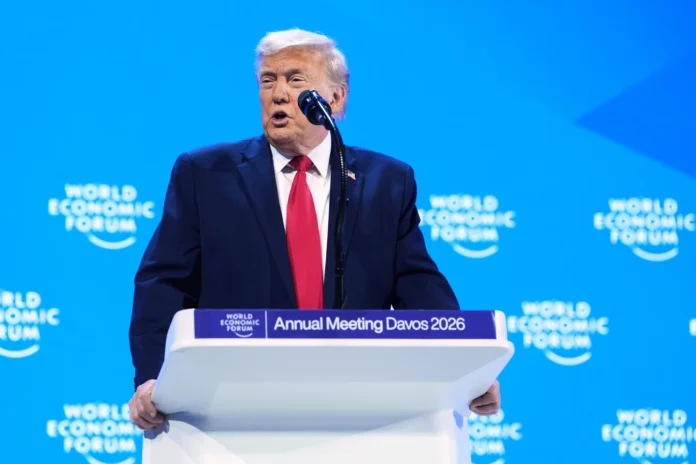
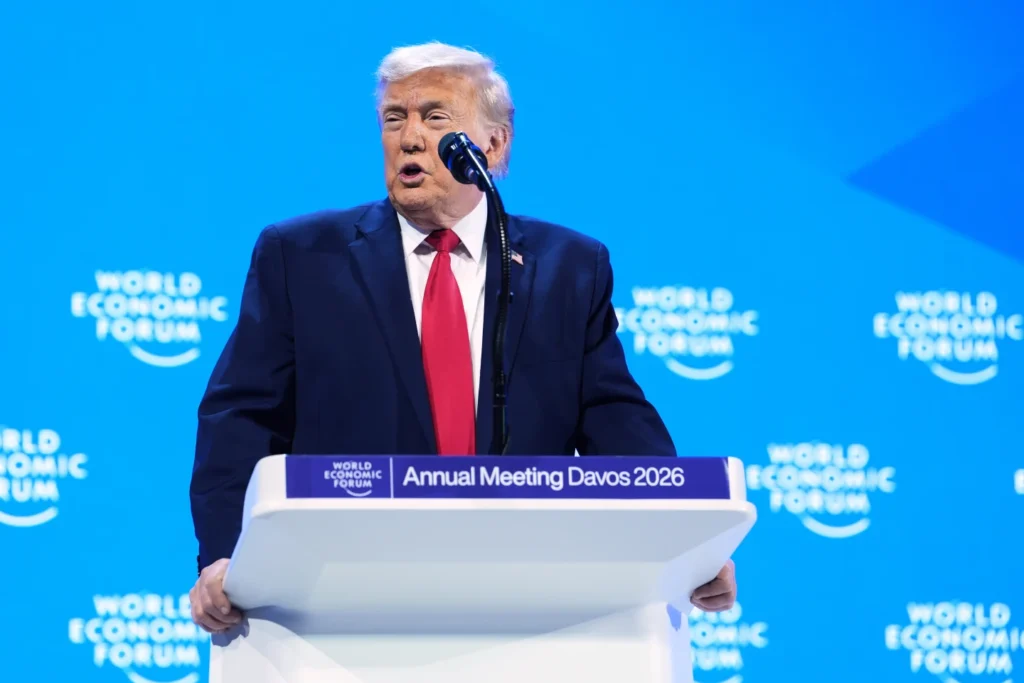
DAVOS, Switzerland — President Donald Trump abruptly abandoned his threatened tariffs against eight European nations Wednesday after reaching what he characterized as a “framework of a future deal” on Arctic security with NATO’s secretary general, pulling a dramatic reversal hours after using his World Economic Forum address to demand U.S. control over Greenland.
The president announced the tariff cancellation on his social media platform following a post-speech exchange with NATO Secretary General Mark Rutte, during which the alliance leader assured Trump that member nations would defend the United States if attacked. The reversal defused tensions that had threatened to rupture an alliance that has anchored Western security architecture since the early Cold War era.
“Additional discussions” on Greenland were proceeding concerning the Golden Dome missile defense program, a multilayered $175 billion system that for the first time will position U.S. weapons in space, Trump disclosed in his announcement. In a subsequent CNBC interview, the president offered limited details but described the agreement as a “forever deal” and claimed, “Now we’re going to have even better security than we would have had before.”
The tariff withdrawal represents the latest instance of Trump threatening trade penalties before backing away. In April, after initially vowing to impose massive import levies on nations worldwide—a declaration that triggered sharp negative market reactions—Trump eased off the threatened measures.
However, this reversal came only after Trump devoted his Davos address to Greenland and threatened to upend NATO, risking an alliance that has remained among the globe’s most durable since its 1949 founding by leading European nations, the United States and Canada to counter Soviet expansion.
Trump characterized Greenland as territory that was “cold and poorly located” and invoked U.S. contributions during World War II while declaring of NATO: “It’s a very small ask compared to what we have given them for many, many decades.”
“We probably won’t get anything unless I decide to use excessive strength and force, where we would be frankly unstoppable. But I won’t do that, OK?” Trump told the assembled global leaders, later adding, “I don’t have to” and “I don’t want to use force.”
The president has repeatedly expressed skepticism about whether NATO allies would defend Washington if attacked, suggesting that uncertainty partly motivated his aggressive posture toward Greenland. His comments prompted Rutte to provide explicit assurances during their post-speech exchange.
“You can be assured, absolutely,” Rutte told Trump. “Your allies will be with you.”
Trump’s social media post canceling the tariffs followed shortly after that exchange, suggesting Rutte’s security guarantee satisfied the president’s concerns about alliance reciprocity sufficiently to abandon the economic pressure campaign.
Trump maintains that the United States requires Greenland for national security purposes and to counter Russian and Chinese threats in the Arctic region, despite America already operating a large military installation there. He had threatened to impose steep import taxes on Denmark and seven other allies unless they negotiated transfer of the semi-autonomous territory.
The tariffs were scheduled to begin at 10 percent next month before escalating to 25 percent in June, creating economic pressure designed to force territorial negotiations that European leaders uniformly rejected as violations of Danish sovereignty.
Trump frequently employs tactics of escalating pressure when he believes such approaches can yield favorable agreements. His Davos threats appeared on the verge of fracturing NATO, whose other members remained steadfast in declaring Greenland not for sale and cannot be wrested from Denmark while angrily rejecting Trump’s promised tariffs.
A Danish government official told The Associated Press after Trump’s speech that Copenhagen stood ready to discuss U.S. security concerns. The official, who lacked authorization to comment publicly and spoke on condition of anonymity, emphasized that “red lines”—specifically Denmark’s sovereignty—must be respected. How Trump’s tariff cancellation might alter those calculations remained immediately unclear.
Greenland’s government responded to the initial threats by advising citizens to prepare for crisis scenarios. Authorities published a handbook in English and Greenlandic instructing residents on crisis management that urged them to maintain sufficient food, water, fuel and supplies at home to survive five days.
“We just went to the grocery store and bought the supplies,” Tony Jakobsen in Greenland’s capital Nuuk said, displaying bag contents that included candles, snacks and toilet paper. Jakobsen characterized Trump’s rhetoric as “just threats… but it’s better to be ready than not ready.”
Before reversing course, Trump urged Denmark and NATO members to acquiesce to U.S. demands, adding an ominous warning. “We want a piece of ice for world protection, and they won’t give it,” Trump said. “You can say yes, and we will be very appreciative. Or you can say no, and we will remember.”
He called for initiating “immediate negotiations” for U.S. acquisition of Greenland. In subsequent comments to reporters, he declined to specify a potential purchase price, explaining only, “There’s a bigger price, and that’s the price of safety and security and national security and international security.”
Trump’s Davos arrival was delayed after a minor electrical problem on Air Force One forced a return to Washington to switch aircraft. As his motorcade traveled down a narrow road to the speech venue, onlookers including some skiers lined the route. Several made obscene gestures, and one displayed a sign cursing the president.
Following his address, Trump met with leaders of Poland, Belgium and Egypt, discussions that presumably addressed European security concerns beyond the Greenland controversy.
Financial markets that had declined sharply on Trump’s threatened tariffs rebounded Wednesday. U.S. officials who had worried that Trump’s hard-line stance and bellicose rhetoric toward Greenland, Denmark and other NATO allies could damage broader foreign policy objectives also expressed relief at the reversal.
The Davos speech was intended to focus on lowering U.S. housing prices—part of a larger initiative to reduce living costs that could prove politically consequential for the president’s party in November’s midterm elections.
Greenland dominated the address instead, with Trump criticizing Denmark for being “ungrateful” for U.S. protection of the Arctic island during World War II. He also mistakenly referred to Iceland, confusing that country with Greenland four times during his speech and for the fifth time since Tuesday.
“This enormous unsecured island is actually part of North America,” Trump said. “That’s our territory.”
When he eventually addressed housing, Trump suggested he opposed measures to encourage affordability. He argued that reducing rising home prices damages property values and makes homeowners who previously felt wealthy because of housing equity feel poorer, an economic position that contradicts his stated goal of lowering living costs for Americans.
Johnny Hedemann, a Nuuk resident, characterized Trump’s remarks as “insulting” before the tariff reversal, saying the president “talks about the Greenlandic people and the Greenlandic nation as just an ice cube.” He spoke while purchasing a camping stove and instant mashed potatoes as crisis preparation.
“Living in this nature, you have to be prepared for almost anything. And now there’s another threat — and that’s Trump,” Hedemann said.
The episode illustrates Trump’s transactional approach to international relations and his willingness to employ extreme rhetoric and threatened economic punishment to extract concessions, even from longtime allies. Whether the Arctic security framework he claims to have secured represents substantive gains or face-saving language that allows retreat from an untenable position remains to be determined.
For NATO allies, the rapid escalation and reversal demonstrates the volatility inherent in Trump’s foreign policy approach, creating uncertainty about which threats represent genuine ultimatums versus negotiating tactics subject to abandonment when pressure generates diplomatic costs exceeding potential benefits.
The agreement’s specifics remain vague beyond Trump’s characterization of enhanced Arctic security cooperation. Whether the framework involves expanded U.S. military presence in Greenland, increased Danish defense spending, multilateral security coordination or simply repackages existing arrangements under new branding will become apparent as implementation proceeds.
For Greenland’s 57,000 residents, the crisis preparation measures may prove unnecessary if Trump’s reversal signals the end of immediate territorial pressure. However, his continued insistence that Greenland represents U.S. territory and his refusal to permanently renounce acquisition efforts suggest the issue may resurface when politically convenient.
The incident underscores broader questions about American leadership within NATO and whether alliance cohesion can survive a president who views partnerships through purely transactional lenses rather than shared values and collective security commitments. Trump’s willingness to threaten the alliance’s dissolution over territorial ambitions that allied nations unanimously reject tests whether institutional frameworks built over decades can withstand executive-level disruption.
Market recovery following the tariff cancellation reflects investor relief that economic warfare among Western allies has been avoided, at least temporarily. The swift reversal prevented potential trade conflicts that would have damaged both American and European economies while benefiting strategic competitors like China.
For Denmark, the episode demonstrates the challenges of maintaining sovereignty claims against pressure from a superpower ally. Copenhagen’s reported willingness to discuss security concerns while defending sovereignty red lines represents a diplomatic balancing act between accommodating American security interests and preserving territorial integrity.
The Golden Dome missile defense system Trump referenced provides context for his security arguments, representing a substantial investment in space-based weapons systems that require extensive infrastructure. Whether Arctic installations in Greenland prove essential for such systems or whether alternative locations could serve similar purposes remains a technical question beyond the political rhetoric.
As Trump concluded his Davos visit and returned to Washington, the Greenland crisis that had threatened to redefine NATO and European security architecture ended as abruptly as it began, resolved through vague assurances about future frameworks rather than the territorial transfer the president had demanded hours earlier.
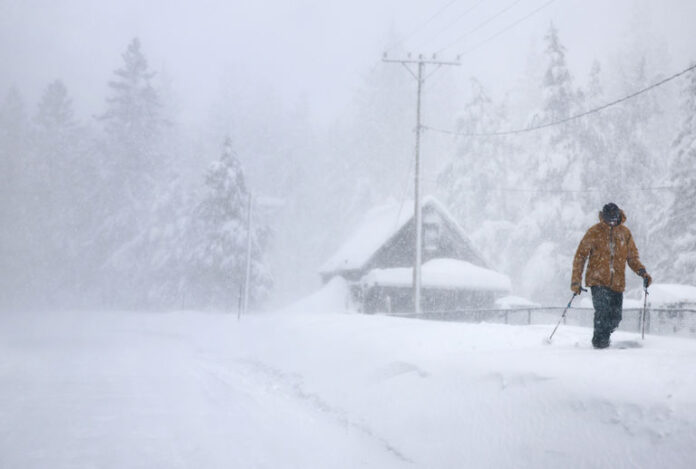
Meteorologists are warning that a powerful winter storm taking shape late this week could unleash a potentially catastrophic swath of ice, snow and freezing rain from Texas to the Carolinas, threatening power infrastructure, crippling travel and compounding the strain on communities already battered by weeks of extreme cold.
With much of the northern United States still digging out from repeated snowstorms and prolonged subfreezing temperatures, forecasters say this new system poses a distinct and dangerous threat to the South, where ice — rather than snow — is expected to be the dominant hazard.
“This is shaping up to be a widespread, potentially catastrophic event from Texas to the Carolinas,” Ryan Maue, a former chief scientist at the National Oceanic and Atmospheric Administration, said in an assessment shared this week. “I don’t know how people are going to deal with it.”
According to The Associated Press, the storm is expected to arrive late Friday and intensify through the weekend, spreading across the nation’s midsection before pushing eastward. Forecasters caution that even modest ice accumulations can have devastating consequences, particularly in regions with limited experience handling prolonged freezing rain.
“If you get a half inch of ice — or heaven forbid an inch of ice — that could be catastrophic,” said Keith Avery, chief executive of the Newberry Electric Cooperative in South Carolina, where power companies are bracing for the possibility of widespread outages.
The National Weather Service said forecasts point to “great swaths of heavy snow, sleet and treacherous freezing rain” beginning Friday across parts of the central United States and expanding eastward through Sunday. Unlike fast-moving winter systems, this storm is expected to linger, raising the risk that ice will accumulate faster than it can melt.
Temperatures across much of the affected region are projected to remain below freezing even after precipitation tapers off, increasing the likelihood that ice will cling to roads, sidewalks, trees and power lines for days, forecasters said.
Predicting exactly where the most dangerous icing will occur remains challenging. Small shifts in temperature profiles can mean the difference between rain, sleet or freezing rain — a distinction that can drastically alter impacts on the ground.
“This is a very difficult setup,” forecasters said, noting that uncertainty remains high about the precise track and timing of the storm.
At the heart of the threat is a collision between two powerful atmospheric forces: an exceptionally cold Arctic air mass plunging south from Canada and a stream of moisture surging north from the Gulf of Mexico.
National Weather Service meteorologist Bryan Jackson said the cold air expected later this week is unusually intense, even by midwinter standards.
“This is extreme, even for this being the peak of winter,” Jackson said, pointing to a sprawling vortex of low pressure centered over Hudson Bay that is funneling polar air deep into the United States. “This is dominating the weather over all of North America.”
As that cold air undercuts warmer, moisture-laden air moving east across the southern states, conditions become ripe for freezing rain — often the most destructive form of winter precipitation. When supercooled rain freezes on contact with cold surfaces, it can rapidly coat everything in ice.
Jackson said the clash of air masses could generate “a major winter storm with very impactful weather,” fueled by abundant Gulf moisture encountering entrenched cold air.
Forecasters are also monitoring the potential development of an atmospheric river — a long, narrow corridor of concentrated moisture — stretching across the southern United States.
If it materializes, the atmospheric river could sustain heavy precipitation from Texas through the Gulf Coast states and into Georgia and the Carolinas, significantly increasing the risk of damaging ice accumulations.
“Global models are painting a concerning picture of what this weekend could look like,” the National Weather Service office in Atlanta said, citing a strengthening signal for ice storm potential across north Georgia and parts of central Georgia.
In metro Atlanta, significant icing would pose particular challenges. Forecasts show overnight lows early Monday near 22 degrees Fahrenheit (minus 5.6 Celsius), with daytime highs struggling to reach the mid-30s. Such conditions could allow ice to persist well into the new week.
Transportation officials are bracing for widespread disruptions. Southern states typically have less equipment and fewer crews dedicated to snow and ice removal, making prolonged icing especially hazardous.
Extremely cold temperatures expected in the storm’s wake could also prevent melting, leaving roads treacherous for days. Earlier this week, winter weather contributed to a massive chain-reaction crash involving more than 100 vehicles on an interstate southwest of Grand Rapids, Michigan — a reminder of how quickly conditions can deteriorate.
Air travel is also expected to be affected. Major hub airports in Dallas, Atlanta, Memphis, Tennessee, and Charlotte, North Carolina, lie directly in the storm’s projected path, raising the risk of delays and cancellations that could ripple nationwide.
Texas is likely to experience some of the earliest effects, potentially serving as a preview of what lies ahead for the rest of the South.
National Weather Service forecaster Sam Shamburger said an Arctic air mass is expected to slide south through much of the state on Friday, while rain spreads across the region at the same time.
“That overlap is what concerns us,” Shamburger said during a briefing, noting that temperatures could plunge into the 20s — and even the teens — by Saturday in parts of the state.
Northern Texas could see a wintry mix of snow, sleet and freezing rain, though Shamburger emphasized that uncertainty remains high regarding how much ice or snow will accumulate.
“It’s going to be a very difficult forecast,” he said.
Signs of preparation are already visible in parts of the South. In Little Rock, Arkansas, customers streamed into hardware stores this week to stock up on winter supplies.
“Right now parents of young children are getting sleds,” said James Carter, director of operations at Fuller and Son Hardware. Others, he said, were buying shovels, ice-melting products and faucet covers as temperatures in the area are forecast to dip into the teens.
What makes this storm particularly dangerous is not just its scale, but its timing and geography. Ice storms in the South often cause outsized damage because infrastructure and emergency response systems are less adapted to prolonged freezing conditions. A half-inch of ice can snap tree limbs, topple power lines and leave communities without electricity for days or weeks.
Compounding the risk is the broader weather pattern gripping North America. With Arctic air already entrenched across the northern tier, resources and personnel are stretched thin, limiting the ability of utilities and transportation agencies to surge aid southward if outages and accidents mount.
Forecasters stress that while uncertainty remains, the ingredients for a high-impact storm are increasingly aligning. If worst-case scenarios materialize, the storm could rival some of the most damaging ice events in recent Southern history — a stark reminder that winter’s most dangerous storms are not always the snowiest.
The identities of 177 worshippers abducted during coordinated attacks on three churches in Kurmin Wali, a rural community in Kaduna State’s Kajuru Local Government Area, Nigeria, have been made public, sharply intensifying scrutiny of official denials and deepening fears in a region already battered by mass kidnappings.
The names, obtained by Vanguard, detail how gunmen swept through ECWA Church and Cherubim and Seraphim Churches 1 and 2 during Sunday services, hauling away entire families and leaving the community virtually deserted. Community leaders, church officials and rights advocates say the disclosure directly challenges claims by state authorities and police that no mass abduction occurred.
An examination of the list reveals that households were taken wholesale, underscoring the scale of the trauma. Twelve members of the Jonathan family were abducted, along with 13 from the Amos family, 10 from the Markus/Makudi household, seven each from the Ishaya and Danisa families, six from the Bawa family, and five each from the Danjuma and Musa families. Other families lost between two and four relatives in the raid.
The oldest victim identified is 71-year-old Augustina Matthew. The youngest is Salvation Idris, 6. Several other children under 10 were also named, including Likita Amos, 6; Jumota Idris, 7; Tessy Amos, 8; Yahaya Joshua, 9; and multiple 10-year-olds, among them Sussana Idris, Synthah Amos, Hezibah Jonathan and Hezikaiah Jonathan.
Residents say the abductions have hollowed out Kurmin Wali. By Monday, the village stood largely empty, with survivors fleeing to nearby towns to shelter with relatives. Those injured while escaping into surrounding forests were still in shock, locals said, while poor mobile network coverage and lost phones made it difficult to contact many victims’ families.
The attack came barely a week after the same community reportedly raised 2.6 million naira to secure the release of 20 residents kidnapped in an earlier incident, Vanguard reported, adding to a growing sense of despair over repeated ransom demands.
Although Kaduna State officials initially dismissed reports of a mass abduction, a police situation report obtained by Vanguard confirms that the attack took place during church services. The internal report states that information was received at about 5:45 p.m. Sunday indicating that the assault occurred around 11:25 a.m., when an unspecified number of armed assailants stormed the churches, firing sporadically and forcing worshippers to flee into nearby forested areas.
The report describes the attackers as “bandits armed with sophisticated weapons” and notes that the village is located in a remote area with poor road access, complicating a rapid security response. It adds that the Divisional Police Officer in Kajuru mobilized other security agencies and the military, and that efforts were under way to rescue the victims and apprehend those responsible.
Rights groups say official denials in the immediate aftermath have fueled mistrust. Christian Solidarity Worldwide Nigeria accused security personnel of obstructing independent verification of the attack. Its research and press officer, Reuben Buhari, said the group’s team was turned back by a military convoy while attempting to enter Kurmin Wali shortly after the incident, despite presenting identification.
“They later refused to allow our team entry, despite repeated pleas,” Buhari said, adding that the group was escorted back to the main road.
CSW-N said attackers arrived on motorcycles and on foot, split into three groups and struck the churches simultaneously. The organization said elderly women and young children were later released, while 11 people managed to escape, leaving at least 167 in captivity at the time it spoke with community sources.
The chairman of the Christian Association of Nigeria in the 19 northern states and the Federal Capital Territory, the Rev. Joseph Hayab, accused security agencies of failing to pursue the attackers promptly, allowing them to retreat with large numbers of captives.
“Had they pursued the attackers immediately, instead of arguing over whether anyone had been kidnapped, they would have chased them away,” Hayab said, contending that the delay enabled the gunmen to hide their victims and prepare ransom demands.
International reaction followed swiftly after the names emerged. U.S. Rep. Riley Moore described the abductions as “horrific news” and urged Nigerian authorities to secure the victims’ safe return. Former presidential candidate Peter Obi also condemned the incident, calling it unacceptable and pointing to a recurring pattern of mass abductions across the country.
“Can we continue waking up to news of mass abductions, disputed figures and denials while citizens live in fear?” Obi asked, urging swift action and stronger protection for communities.
The controversy unfolded as Kaduna police reiterated earlier denials. In a joint statement with local government officials, the state police commissioner described reports of abductions as false, challenging anyone to publish the names of victims — a demand now met by the disclosure of the 177 identities. A BBC report noted that while police dismissed the claims, a local official and a community leader in Kurmin Wali had confirmed to the broadcaster that gunmen abducted dozens of worshippers, with 11 escaping.
The mass abduction followed another kidnapping earlier Sunday in nearby Kujama community, where gunmen seized a nursing mother, another woman and a child, demanding a combined ransom of 150 million naira, according to relatives who spoke to Vanguard. Police said they were investigating those claims.
The release of the names marks a pivotal moment in Kaduna’s latest kidnapping crisis. By putting identities to disputed numbers, community leaders have effectively shifted the debate from whether the abduction occurred to how authorities respond. The presence of entire families on the list underscores a tactic increasingly seen in northern Nigeria: mass seizures designed to maximize ransom leverage and devastate communities.
The conflicting narratives — official denials versus police documents, community testimony and now named victims — highlight a chronic trust deficit between rural populations and security institutions. Analysts say such gaps not only delay rescue efforts but also embolden criminal networks that exploit confusion and fear.
Beyond Kurmin Wali, the episode reflects a broader national challenge. Nigeria has witnessed a surge in mass kidnappings affecting both Christians and Muslims, often in remote areas with limited security presence. While ransom payments sometimes secure releases, they also reinforce the economics of abduction, creating a cycle that communities struggle to escape.
For families awaiting news of loved ones, the publication of names offers grim validation rather than closure. Whether it also forces a more coordinated and transparent security response may determine not just the fate of the 177 abducted worshippers, but the confidence of countless other vulnerable communities watching closely.
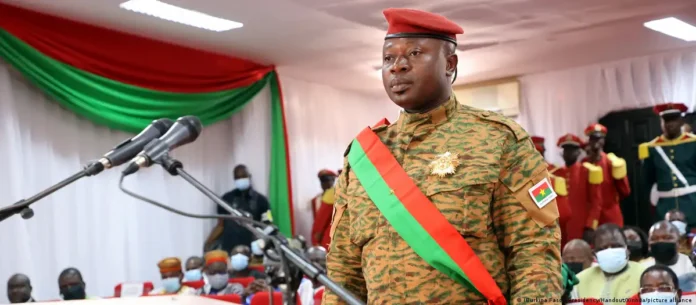
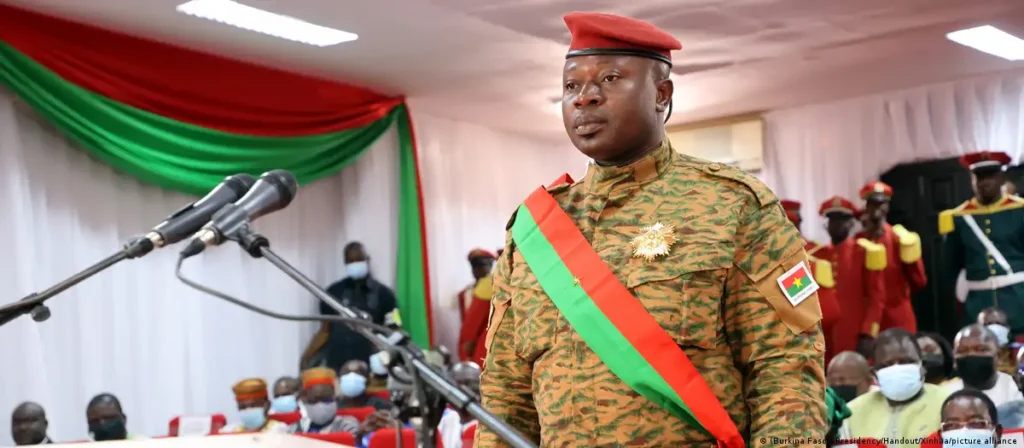
Togo has expelled Burkina Faso’s former transitional president, Paul-Henri Sandaogo Damiba, following his arrest in Lomé over allegations that he was involved in plotting to destabilize the military-led government in Ouagadougou, according to regional security and diplomatic sources.
Damiba, a former lieutenant colonel who briefly ruled Burkina Faso after a 2022 coup, was detained last week in the Togolese capital and later escorted to the airport, an associate familiar with the case said Monday. He was accused of “attempted destabilisation” linked to Burkina Faso, the associate said, though the precise legal basis for the expulsion has not been publicly detailed.
A regional security official and a Togolese source close to the matter independently confirmed the arrest and expulsion. His final destination was not immediately clear, although several sources suggested he may have been sent back to Burkina Faso. As of late Monday, authorities in Ouagadougou had not issued any official comment.
Damiba rose to power in January 2022 after leading a military takeover that ousted elected President Roch Marc Christian Kabore, citing the government’s failure to contain a growing Islamist insurgency. His rule, however, proved short-lived. Eight months later, he was himself removed in another coup that brought Captain Ibrahim Traore to power, deepening the country’s cycle of military interventions.
Since Traore’s ascent, Burkina Faso’s ruling junta has repeatedly accused Damiba of orchestrating or supporting multiple coup attempts and assassination plots from exile. Earlier this month, authorities in Ouagadougou alleged that Damiba and unnamed accomplices had planned a series of “targeted assassinations” of civilian and military officials on Jan. 3, beginning with what they described as the intended “neutralisation” of Traore.
Reuters reported that Damiba had sought refuge in Lomé following his ouster and that his arrest came amid heightened security tensions in the Sahel nation. According to the news agency, a security source and a person close to Togo’s presidency said Damiba was arrested on Saturday and flown to Ouagadougou, though other sources said his destination remained uncertain. Reuters said it was unable to reach Damiba for comment and could not confirm whether he had legal representation in Togo.
The governments of both Togo and Burkina Faso declined to respond to requests for comment. A source close to the Togolese presidency told Reuters that while Damiba had previously been warned about involvement in destabilization efforts against his home country, he was not directly linked by Togolese authorities to a specific coup plot at the time of his arrest.
Burkina Faso’s political turmoil has unfolded against the backdrop of a widening security crisis across the Sahel, where militant violence linked to al-Qaida and the Islamic State group has displaced millions and eroded state authority. Damiba’s failure to stem attacks by armed extremist groups contributed to growing frustration within the ranks of the military, Reuters previously reported, setting the stage for his removal by Traore later in 2022.
Traore, who continues to lead the country’s military-run government, has announced the foiling of several coup attempts since taking power, often accusing former allies and exiled officers of conspiring against him. Earlier this month, Burkina Faso’s authorities said they had disrupted a plot to assassinate the junta leader, again pointing to Damiba as the alleged mastermind.
The episode underscores the fragile political environment in West and Central Africa, regions that have experienced at least nine coups since 2020. Countries including Mali, Guinea, Niger and Burkina Faso have all seen elected governments replaced by military juntas, often amid popular frustration over insecurity and economic hardship.
Damiba’s expulsion from Togo highlights the increasingly narrow options available to exiled military leaders accused of plotting against incumbent juntas in the Sahel. Once a common refuge for political figures fleeing upheaval at home, neighboring states now face growing pressure to cooperate with regional security demands, particularly as coups and counter-coups destabilize borders.
For Togo, the decision to detain and expel Damiba reflects a delicate balancing act. Lomé has sought to present itself as a mediator and stable actor in a volatile region, but harboring a figure accused of repeated coup plots against a neighboring government risked diplomatic fallout and security complications.
In Burkina Faso, the allegations against Damiba also serve a political purpose. By framing ongoing instability as the result of external conspiracies led by former elites, the Traore government reinforces its narrative that continued military rule is necessary to safeguard the state. Critics, however, argue that repeated claims of foiled plots — often without transparent judicial proceedings — raise concerns about due process and the consolidation of power.
More broadly, the case illustrates how the cycle of coups in the Sahel has created a self-perpetuating pattern: leaders who seize power citing insecurity are later accused of the same failures, only to be replaced by new juntas facing similar challenges. As militant violence persists and economic pressures mount, the region’s reliance on military solutions continues to strain political institutions and regional trust.
Whether Damiba’s expulsion will deter future plots or further inflame tensions remains unclear. What is evident is that the Sahel’s instability now extends beyond national borders, drawing neighboring states into the consequences of unresolved power struggles at home.
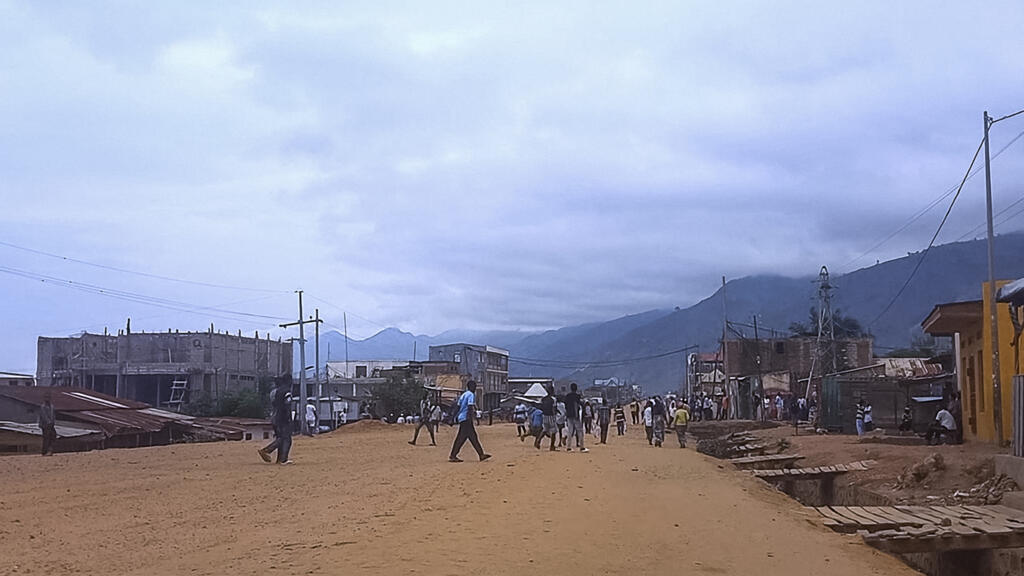
The Congolese army on Monday declared it had fully reestablished control over the strategic eastern city of Uvira after fighters from the Rwanda-backed AFC/M23 armed group withdrew, ending weeks of rebel dominance in a key lakeside hub near the Burundi border as regional tensions remain high despite a U.S.-brokered peace agreement.
Army spokesperson Mak Hazukay said government forces entered Uvira following the phased departure of AFC/M23 elements, allowing the Armed Forces of the Democratic Republic of the Congo, known by its French acronym FARDC, to resume authority in the city and surrounding areas. The announcement followed days of fluid troop movements and conflicting reports from residents and officials as the balance of power shifted on the ground.
“The Armed Forces of the Democratic Republic of the Congo are continuing their deployment in the city of Uvira and its surroundings in order to consolidate their positions and secure people and their property,” Hazukay said in a statement.
Uvira, home to several hundred thousand people, sits along the northern shore of Lake Tanganyika and serves as a critical commercial and security gateway between eastern Congo and Burundi. The city was seized in early December during a renewed AFC/M23 offensive in South Kivu province, part of a broader push that has redrawn front lines across mineral-rich eastern Congo.
France24 reported that the takeover came shortly after the Democratic Republic of the Congo and Rwanda signed a peace agreement overseen by U.S. President Donald Trump, raising immediate doubts about the deal’s durability. Congo, the United States and United Nations experts have repeatedly accused Rwanda of backing M23, allegations Kigali denies.
On Dec. 17, AFC/M23 announced it would withdraw its troops from Uvira, describing the move as a response to a request from the United States. Despite that declaration, rebel police and military units remained visible in the city for days, maintaining de facto control of key sites, according to local residents and officials.
The group later said it intended to pull out all remaining forces and place the city “under the full and entire responsibility of the international community.” Local sources cited by French and regional media described rebel convoys leaving Uvira over the weekend, signaling that the withdrawal was underway.
By Sunday morning, fighters from the “Wazalendo,” a loose coalition of pro-government militias aligned with Kinshasa, moved into southern neighborhoods of the city. Government sources and residents said elements of the Congolese special forces followed later in the day, restoring an official military presence after more than a month.
Residents described a mix of relief and anxiety as government-aligned fighters arrived. Cheers greeted the returning soldiers, but sporadic gunfire echoed through parts of the city, and several local sources said shops and homes were looted amid the transition.
Hazukay acknowledged the unrest, saying about 20 civilians suspected of looting were arrested. He said FARDC units were continuing their deployment to stabilize the area and prevent further disorder.
On Sunday, South Kivu Governor Jean Jacques Purusi warned that AFC/M23 fighters had repositioned themselves on hills overlooking Uvira and in nearby localities, allowing them to keep the city within firing range. His comments, circulated to the media, underscored lingering security concerns even as government forces moved in.
The Associated Press reported that Congolese soldiers and Wazalendo fighters reentered Uvira on Sunday, about a month after it was seized by M23 rebels, as clashes continued elsewhere in the region despite the U.S.-mediated peace process. The army said it took control of the city after the rebels’ announced withdrawal last month.
“Since yesterday, we have welcomed our soldiers back after more than a month away,” Alain Ramazani, a resident of Uvira, told The Associated Press by phone. He said government troops were patrolling alongside Wazalendo fighters.
Still, uncertainty persisted. Ghislain Kabamba, director of the Observatory for Human Rights, Justice and Local Governance for Social Cohesion in Congo, said sporadic gunfire continued on Monday morning, with no clear indication of who was responsible. Uvira, he said, has been flooded with weapons during weeks of fighting.
M23’s capture of Uvira followed a rapid offensive that, according to Congo’s government spokesperson Patrick Muyaya, has left more than 1,500 people dead and displaced roughly 300,000 civilians. The city had been the Congolese government’s last major stronghold in South Kivu province after the provincial capital, Bukavu, fell to rebels in February, allowing M23 to consolidate a broad corridor of influence across eastern Congo.
The rebel advance toward Uvira also brought the conflict dangerously close to Burundi, which has maintained troops in eastern Congo for years. Regional analysts warned the city’s fall raised the risk of a wider spillover involving neighboring states.
The seizure occurred days after Congolese President Félix Tshisekedi and Rwandan leader Paul Kagame met with President Donald Trump in Washington to reaffirm a U.S.-brokered peace deal aimed at de-escalating years of fighting. Despite those diplomatic efforts, violence has continued across multiple fronts.
According to the United Nations, M23 has expanded dramatically, growing from a few hundred fighters in 2021 to roughly 6,500 today. More than 100 armed groups are operating in eastern Congo, competing for control of territory and lucrative mineral resources. The conflict has produced one of the world’s largest humanitarian crises, with more than 7 million people displaced, the U.N. refugee agency says.
While the Congolese army’s return to Uvira marks a symbolic victory for Kinshasa, analysts caution that control of the city remains fragile. The reported repositioning of AFC/M23 fighters on surrounding high ground suggests the withdrawal may be tactical rather than a definitive retreat. Such maneuvers have been seen repeatedly in eastern Congo, where armed groups cede urban centers only to maintain leverage from nearby rural or elevated positions.
The continued involvement of Wazalendo militias also complicates the security picture. Though aligned with the government, these groups operate autonomously and have been accused by rights organizations of abuses, raising concerns that their presence could undermine civilian protection and complicate command-and-control efforts by FARDC.
Diplomatically, the events in Uvira test the credibility of the U.S.-brokered peace framework. The rebels’ claim that their withdrawal was prompted by a U.S. request suggests Washington retains some leverage, but the persistence of clashes elsewhere indicates that agreements at the presidential level have yet to translate into sustained calm on the ground.
For residents, the immediate priority is security and accountability. The looting reported during the transition highlights the risk that power vacuums — even brief ones — can deepen civilian suffering. Whether FARDC can consolidate control, restrain allied militias, and prevent a renewed rebel incursion will likely shape not only Uvira’s fate but the broader trajectory of the conflict in South Kivu.
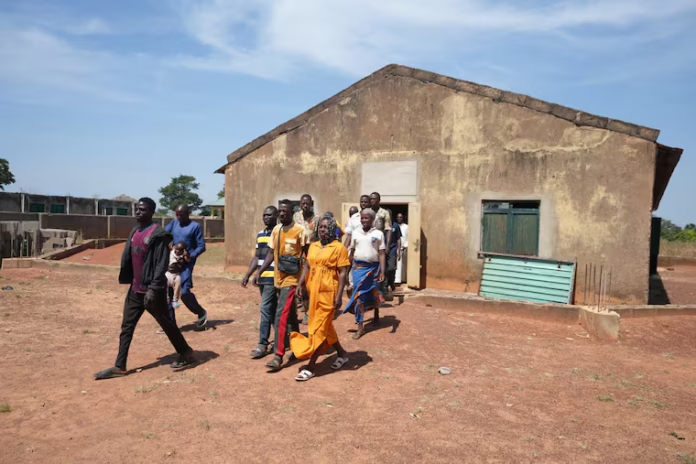
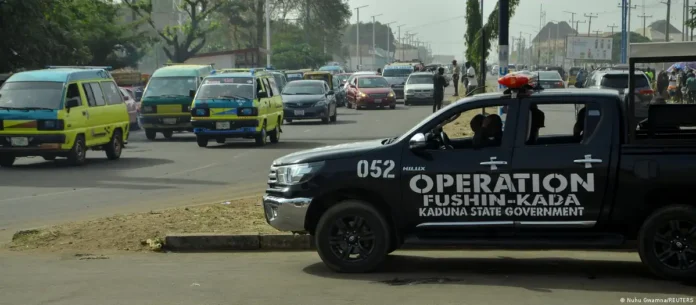
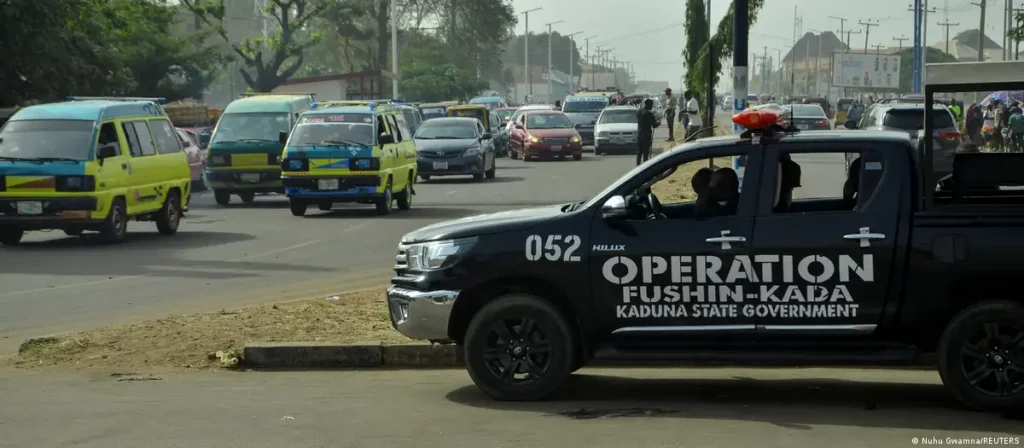
Gunmen stormed multiple churches during Sunday worship services in Nigeria’s northern Kaduna State, abducting more than 160 worshippers in coordinated attacks that have intensified fears over the country’s escalating kidnapping crisis and renewed debate over security failures in remote communities.
Church leaders, local officials and security sources offered varying figures, but all confirmed that the abductions ranked among the largest mass kidnappings from places of worship in recent months. The attacks unfolded in Kurmin Wali, a forested and hard-to-reach community in Kajuru district, an area long plagued by armed raids and weak state presence.
Reverend Joseph Hayab, chairman of the Christian Association of Nigeria (CAN) in the country’s north, said armed men arrived in large numbers, sealed off church entrances and forced congregants into surrounding bushland.
“They came heavily armed, blocked the churches and drove the worshippers out,” Hayab said Monday. He said elders from the affected churches informed him that 172 people were initially taken, but nine later managed to escape, leaving 163 still in captivity.
Accounts from local leaders suggested the violence may have spanned more than two church locations. Ishaku Dan’azumi, a traditional chief in Kurmin Wali, said attackers struck three churches during Sunday services and seized about 166 people. A lawmaker representing the area in the Kaduna State House of Assembly, Usman Danlami Stingo, told The Associated Press that 168 worshippers remained unaccounted for following what he described as three separate attacks.
Kaduna State police acknowledged the assaults but said officers were still working to verify the exact number of abducted victims. A police spokesperson said gunmen armed with what he described as “sophisticated weapons” carried out the raids at about 11:25 a.m. Sunday. The spokesperson said Kurmin Wali’s remoteness and poor road access were complicating efforts to gather immediate and reliable information.
Reuters quoted the police spokesperson as saying that troops and other security agencies had been deployed to the area and that search-and-rescue operations were underway to track the abductors and secure the release of the captives. German broadcaster DW also cited police confirmation of the attacks while noting uncertainty over the final figures.
Africanews, citing Agence France-Presse, reported that at least 163 Christian worshippers were kidnapped after gunmen stormed two churches in Kaduna State. The outlet quoted Reverend Hayab describing how worshippers were rounded up and taken into the surrounding forests.
Initial figures following mass kidnappings in Nigeria often vary sharply, a pattern security analysts attribute to confusion in the immediate aftermath, limited communications and the vast terrain involved. Police typically release conservative early estimates, while community leaders and religious organizations often rely on headcounts from families and congregations that may later be adjusted.
The Kaduna attacks come amid a broader surge in kidnappings-for-ransom across central and northern Nigeria, where armed gangs — commonly referred to as bandits — operate from forest enclaves, striking villages, highways, schools and religious centers.
In November, gunmen seized more than 300 students and teachers from a Catholic school in neighboring Niger State, which borders Kaduna. Fifty escaped during the attack, while the remaining captives were released weeks later in two phases, following negotiations that authorities did not publicly detail.
A recent report by Nigeria-based consultancy SBM described kidnapping as having evolved into a “structured, profit-seeking industry,” estimating that armed groups generated about $1.66 million in ransom payments between June 2024 and July 2025. The report said proceeds from abductions are often used to purchase weapons, recruit fighters and exert control over rural communities.
While the attackers in Kurmin Wali targeted churches, security experts caution against framing the violence solely as a religious campaign. Kajuru district has been a recurring flashpoint for attacks tied to competition over land, grazing routes and dwindling natural resources, conflicts that frequently take on ethnic and religious overtones but are rooted in longstanding economic and governance failures.
Nigeria is roughly divided between a predominantly Muslim north and a largely Christian south, with significant religious minorities in both regions. Experts note that armed gangs in the northwest have kidnapped Muslims and Christians alike, often selecting targets based on vulnerability rather than faith.
Still, the optics of mass abductions from churches have fueled international attention and political rhetoric. U.S. President Donald Trump has repeatedly highlighted violence against Christians in Nigeria, while Nigerian authorities have rejected claims that the country is experiencing a “Christian genocide,” arguing that the security crisis affects all communities.
In December, the United States carried out airstrikes in northwestern Sokoto State against what U.S. and Nigerian officials described as militants linked to the Islamic State group, underscoring growing international concern about instability in the region.
Security analysts say the Kaduna church attacks underscore the persistent challenge facing Nigerian authorities: vast rural areas with limited policing, poor infrastructure and armed groups that can mobilize quickly and disappear into dense forests. The lack of mobile phone coverage in places like Kurmin Wali further delays emergency response and complicates coordination.
The psychological impact on communities is also profound. Places of worship have traditionally been seen as sanctuaries, and repeated attacks on churches, mosques and schools erode public confidence in the state’s ability to protect civilians. Religious leaders warn that such assaults risk deepening mistrust and fear, particularly if rescue efforts stall.
Despite repeated military operations and security initiatives, northwest Nigeria has seen no sustained decline in mass abductions. Analysts argue that without a coordinated strategy combining intelligence-driven security operations, judicial accountability, economic development and dialogue with affected communities, kidnapping will remain a lucrative and low-risk enterprise for armed groups.
For families of those taken in Kurmin Wali, the immediate concern remains the safe return of their loved ones. As negotiations and rescue efforts unfold, the attacks stand as another stark reminder of the human cost of Nigeria’s prolonged insecurity — and of the fragile line between everyday life and sudden violence in many rural communities.
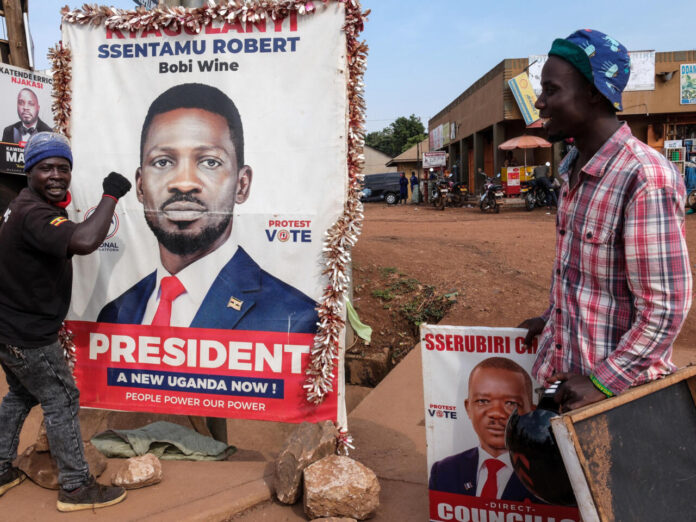
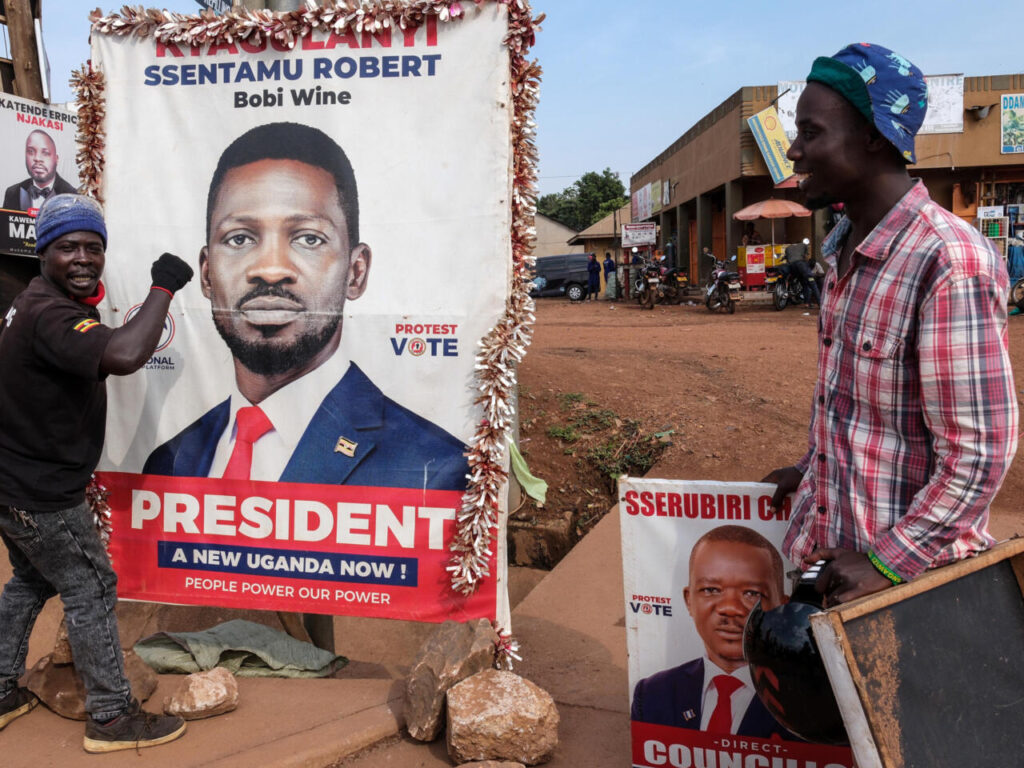
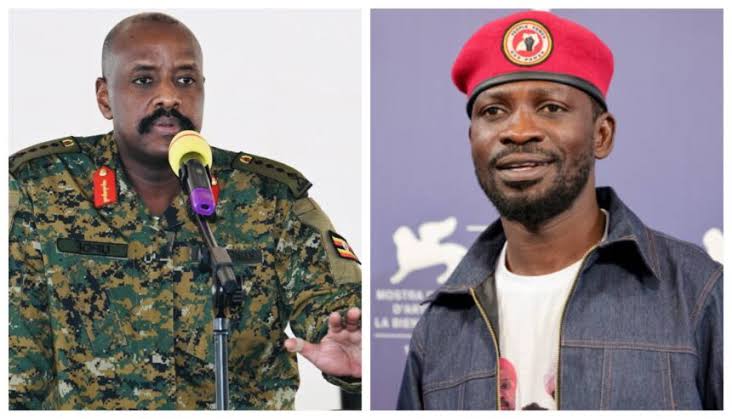
Uganda’s military chief openly threatened opposition leader Bobi Wine with death and issued a 48-hour surrender ultimatum Monday, dramatically escalating post-election tensions as authorities intensified their crackdown on dissent following President Yoweri Museveni’s disputed victory last week.
Gen. Muhoozi Kainerugaba, Museveni’s outspoken son who commands Uganda’s armed forces, brazenly declared on the social media platform X that he was praying for Wine’s death, days after the opposition leader disclosed he had been forced into hiding following a security raid on his residence that he narrowly escaped.
“We have killed 22 NUP terrorists since last week. I’m praying the 23rd is Kabobi,” Kainerugaba wrote late Monday, employing a derogatory nickname for Wine and referencing his National Unity Platform party. The acknowledgment that security forces have killed nearly two dozen opposition supporters represents a rare public admission of lethal force against political opponents in the aftermath of elections international observers characterized as deeply flawed.
In a subsequent post, Kainerugaba gave Wine “48 hours to surrender” to police, threatening to treat him as an outlaw if he failed to comply. The military chief attempted to shield his father from responsibility for the ultimatum, stating, “I exonerate my great and venerable father from what I’m going to do to Kabobi (Bobi Wine).”
The general expressed dissatisfaction with the death toll his forces have inflicted. “Personally, I’m embarrassed by our record. 22 killed in one week is too low. I promise to do better,” he wrote, a chilling declaration that suggests systematic killing of opposition supporters rather than isolated incidents of violence.
Wine, whose legal name is Robert Kyagulanyi, quickly responded to the threats, accusing Kainerugaba of ordering the raid on his Magere home designed to harm or capture him. “You ordered the raid on my house to harm me,” Wine wrote, describing how he narrowly avoided capture during what he characterized as a military operation involving power cuts, interference with CCTV cameras and helicopters hovering above his residence.
“Anyway, I will resurface when I decide. Then you and your father can do whatever you want to me. But make no mistake – You will never escape the inevitable consequences of your atrocities against the people of Uganda. This is our country,” Wine added, defying the military chief’s ultimatum while acknowledging his precarious situation.
The 43-year-old opposition leader detailed the Friday night operation, describing a coordinated military and police raid. “Last night (Friday night) was very difficult at our home in Magere. The military and police raided us. They switched off the power and cut off some of our CCTV cameras. Helicopters were hovering over,” he disclosed.
Wine’s wife remains under apparent house arrest while his whereabouts remain unknown following Saturday’s escape. In a televised message aired Monday night on NTV Uganda, Wine accused police of vandalizing his home and explained that leaving the premises allowed him “to speak to the world,” though he declined to reveal his location.
The confrontation follows Museveni’s announcement as winner of last week’s presidential election with 71.6 percent of the vote, securing an eighth consecutive term for the 81-year-old leader who has governed Uganda since 1986. Wine finished second with 24 percent, Citizen.digital disclosed, citing official results that election observers and human rights organizations have widely criticized as fraudulent.
Kainerugaba, the 51-year-old general widely believed to be his father’s preferred successor, escalated his rhetoric further by claiming prophetic status and hurling dehumanizing insults at Wine. “I told you all that Mzee would win by the biggest percentage since 1996, and it happened. Now I tell you that NUP will be removed and extinguished from our land like a bad dream!” he wrote, using an honorific term for his father while threatening to eliminate the opposition party entirely.
The army chief has established a pattern of provocative online statements. Last year he openly threatened to behead Wine and boasted about holding the opposition leader’s bodyguard in his basement, threatening castration. The bodyguard was subsequently charged with robbery, suggesting the claims were not merely rhetorical but reflected actual detention and potential torture.
Kainerugaba remained unusually quiet during the campaign period but returned to social media immediately following his father’s victory, posting frequently and aggressively. The general has spoken openly about his ambition to succeed Museveni, though the president has publicly denied grooming his son for succession despite elevating him to the military’s top position.
Police spokesperson Kituma Rusoke said Monday night that Wine was not being sought by authorities, a statement that directly contradicts Kainerugaba’s 48-hour surrender demand and illustrates either poor coordination between military and police forces or deliberate ambiguity designed to create confusion about the opposition leader’s legal status.
The crackdown on opposition has expanded substantially since the election. At least 118 National Unity Platform members faced charges in Kampala courts Monday on offenses including unlawful assembly, conspiracy and possession of election materials, court documents and party officials confirmed.
NUP secretary-general David Rubongoya denied accusations that party supporters engaged in violence, asserting that many arrested individuals were accredited polling agents. “They even had letters confirming that they were polling agents of NUP. They were targeted and arrested violently,” Rubongoya told NTV Uganda.
Scattered protests erupted in portions of the capital Saturday after electoral officials announced Museveni’s victory, but police swiftly dispersed crowds using tear gas and mass detentions. Reuters disclosed that several incidents of post-election violence occurred, including police killings of multiple opposition supporters in central Uganda under disputed circumstances.
However, the widespread violence that killed hundreds and possibly thousands in neighboring Tanzania following its October elections did not materialize in Uganda, though whether this reflects restraint by authorities or successful suppression of dissent remains unclear.
Ahead of the vote, the United Nations Human Rights Office accused Uganda’s military and police of deploying live ammunition against peaceful rallies, conducting arbitrary arrests and abducting opposition supporters. The pattern of intimidation and violence during the campaign created an environment where genuine democratic competition became impossible.
Wine and his party have rejected the election results, alleging ballot stuffing, intimidation, enforced disappearances of polling agents and widespread repression that prevented fair electoral competition. The opposition’s claims find support from international observers who documented systematic irregularities favoring the incumbent.
Museveni’s latest victory positions him to rule Uganda for nearly half a century by the time his new term ends in 2031, assuming he completes the full period. The 81-year-old leader ranks as Africa’s third-longest-serving head of state, having maintained power through constitutional amendments that removed term limits and age restrictions that would have forced his retirement.
Kainerugaba’s public death threats against a prominent opposition leader represent an extraordinary escalation even by Ugandan standards, where political repression has intensified during Museveni’s four decades in power. The military chief’s willingness to openly advocate killing political opponents on social media suggests either confidence that no accountability will follow or a deliberate strategy to intimidate the broader opposition movement into silence.
The general’s history of inflammatory social media posts includes a 2022 threat to invade neighboring Kenya, an outburst that prompted diplomatic tensions before being dismissed as personal views rather than official policy. The pattern demonstrates how Kainerugaba uses his social media presence to advance positions too extreme for official government channels while maintaining plausible deniability through claims that his statements represent personal opinions.
For Wine, the dilemma involves balancing personal safety against political leadership responsibilities. Remaining in hiding protects him from immediate arrest or worse but potentially undermines his credibility as a leader willing to face consequences for challenging authoritarian rule. Surrendering to authorities as Kainerugaba demands would likely result in detention on manufactured charges, effectively removing him from politics.
The international community faces its own calculations about how forcefully to condemn Kainerugaba’s threats and the broader crackdown. Uganda receives substantial foreign aid and maintains strategic partnerships with Western nations on counterterrorism and regional stability, creating competing interests that often result in muted criticism of Museveni’s authoritarian governance.
For ordinary Ugandans who supported Wine’s candidacy, hoping his youthful energy and reformist platform might end Museveni’s long tenure, the post-election repression confirms their fears that the entrenched regime will use any means necessary to maintain power. The acknowledgment of 22 opposition supporters killed in one week provides chilling evidence of the costs associated with political dissent in contemporary Uganda.
As the 48-hour ultimatum expires, attention will focus on whether Kainerugaba follows through on his threats if Wine remains at large. The military chief’s credibility within security forces may depend on demonstrating that his ultimatums carry consequences, creating pressure to escalate violence against the opposition leader regardless of international condemnation.
For Uganda’s fragile democracy, the episode illustrates how military involvement in politics and dynastic succession ambitions combine to transform electoral competition into existential conflicts where losing power means facing potential death rather than simply entering opposition. This dynamic virtually guarantees continued authoritarian rule as incumbents cannot risk democratic transitions that might expose them to accountability for decades of repression.