Home Blog Page 11

19 More Nigerians Added to US Deportation List as Total Rises to 113 Under DHS Crackdown

0

The United States Department of Homeland Security has added 19 more Nigerian nationals to a list of convicted offenders slated for removal, bringing the total number of Nigerians facing deportation to 113, according to figures posted Sunday on the agency’s website.

Photo: NewsGhana

Information published by DHS indicates that the newly identified individuals were convicted of crimes including sexual assault of a minor, fraud, assault, drug trafficking and money laundering. U.S. Immigration and Customs Enforcement officers took the individuals into custody, and they are expected to be removed from the country once immigration processing is completed.

In a statement accompanying the updated list, the department said it is “highlighting the worst of the worst criminal aliens arrested by U.S. Immigration and Customs Enforcement.” The statement added that under the leadership of Homeland Security Secretary Kristi Noem, DHS and ICE personnel are carrying out President Donald Trump’s directive to prioritize deportations of noncitizens with serious criminal convictions.

“The hardworking men and women of DHS and ICE are fulfilling Donald Trump’s promise and carrying out mass deportations — starting with the worst of the worst,” the statement read.

Among the 19 individuals newly added to the deportation roster are Adeolu Solabu, Oladayo Agboola, Chinonso Ochie, Oluchi Jennifer Chimdimma Chime, Samuel Omorodion, Sunday Adediora, Sunday Kunkushi and Mkpouto Etukudoh. Others include Marcus Unigwe, Kehinde James, Blessing Uchanma, Victor Adebisi, Richard Ugbah, Olaniyi Ojikutu, Oluwamuyiwa Olawoye, Okechukwu Amadi, Femi Jolayemi, Anthony Asanya, Izuchukwu Okoye and Ebele Agbasiele.

Data available on the DHS website show that the Nigerian deportation tally has risen sharply in recent weeks. In early February 2026, 79 Nigerians appeared on the list following ICE enforcement operations. Within days, that number increased to 97 after additional arrests. With the latest update, the total now stands at 113.

News Ghana also referenced the DHS data in a Sunday report, noting that the expansion reflects a broader enforcement strategy targeting foreign nationals with criminal convictions.

The escalation comes amid an intensified immigration enforcement campaign by the Trump administration, which has pledged to expand removals of undocumented migrants and lawful permanent residents who commit serious crimes. Federal authorities have emphasized that the current phase of deportations focuses on individuals convicted of what officials describe as grave offenses.

Original analysis: The rapid increase in the number of Nigerians listed for deportation highlights the administration’s emphasis on publicizing enforcement actions as part of its broader immigration agenda. By releasing names and framing the list under the “worst of the worst” label, DHS appears to be reinforcing a message that removal efforts are centered on individuals with criminal records rather than on broader categories of undocumented migrants. This messaging strategy may serve both domestic political objectives and international signaling, particularly to governments whose nationals are affected.

For Nigeria, Africa’s most populous country, the growing deportation figures could have diplomatic and socioeconomic implications. While deportations of Nigerian nationals from the United States are not unprecedented, the pace and scale of the recent increase — from 79 to 113 within three weeks — may prompt discussions between U.S. and Nigerian authorities regarding repatriation logistics, reintegration support and bilateral cooperation on law enforcement.

The offenses cited by DHS span a wide range of criminal conduct, from financial crimes to violent offenses and drug-related convictions. Immigration attorneys note that noncitizens convicted of aggravated felonies or crimes involving moral turpitude are typically subject to mandatory removal under U.S. immigration law. Once criminal sentences are completed, individuals are transferred to ICE custody for immigration proceedings, which can culminate in deportation if relief from removal is not granted.

At the same time, immigration advocates often caution that deportation proceedings involve legal complexities, including appeals and claims for protection under asylum or other humanitarian grounds. DHS has not detailed the individual procedural status of those listed, beyond stating that deportations will occur after immigration formalities are finalized.

The absence of an official public response from Nigerian authorities as of Sunday leaves open questions about how the receiving country will manage the influx of returnees. In previous deportation waves, Nigerian officials have coordinated with U.S. counterparts to facilitate travel documentation and reception processes at ports of entry.

The updated deportation figures also reflect a broader national trend. Under President Donald Trump, federal immigration agencies have expanded workplace raids, community enforcement actions and data-sharing initiatives with local law enforcement to identify removable noncitizens with criminal convictions. By spotlighting specific nationalities, DHS underscores the international dimension of U.S. immigration enforcement while maintaining that its primary focus is on criminality rather than nationality.

As ICE continues its operations, further updates to the deportation list remain possible. Federal officials have indicated that enforcement efforts are ongoing and that additional names could be added as investigations and immigration proceedings advance.

Punchng/NewsGhana

Gunman Shot Dead by Secret Service at Mar-a-Lago Was Obsessed With Epstein Files, Family Says He Never Used a Gun

0

A 21-year-old North Carolina man fatally shot by law enforcement after breaching the perimeter of President Donald Trump’s Mar-a-Lago estate early Sunday had recently expressed fixation on the so-called “Epstein files” and urged others to “raise awareness,” according to messages obtained by TMZ and accounts from family members.

Authorities identified the man as Austin Tucker Martin. Law enforcement officials in Florida said Martin was shot and killed after he entered the inner security perimeter of Mar-a-Lago around 1:30 a.m. while carrying a shotgun and a gas canister. Security personnel confronted him, and officers responded after he allegedly raised the weapon into what authorities characterized as a “shooting position.”

President Donald Trump and First Lady Melania Trump were in Washington at the time of the incident.

The Moore County Sheriff’s Office in North Carolina indicated that a relative had approached a deputy shortly before 2 a.m. Sunday to report Martin missing. In a statement, the office said that at approximately 1:38 a.m., a family member informed authorities that Martin had disappeared. He was entered into a national missing persons database before North Carolina officials were notified that federal authorities were conducting an active investigation in Florida involving him. At the request of federal investigators, local officials transferred the missing persons case information to them.

Family members expressed shock at the chain of events. Martin’s cousin, Braeden Fields, 19, told The Associated Press that his cousin was “very quiet” and had never shown interest in firearms. Fields emphasized that Martin “doesn’t even know how to use a gun” and had been around weapons during hunting trips without ever firing one beyond a BB gun. In remarks to ABC station WTVD, Fields reiterated that Martin disliked guns, saying they hurt his ears and that he refused to handle them even when given the opportunity.

“He wouldn’t even hurt an ant,” Fields told The Associated Press, describing the behavior alleged by authorities as entirely out of character.

Martin worked at Pine Needles Lodge & Golf Club in North Carolina, roughly 15 miles from his hometown of Cameron, where he lived with his parents. Colleagues cited by TMZ described him as preoccupied in recent weeks with what he believed was government concealment of files related to convicted sex offender Jeffrey Epstein. In text messages dated Feb. 15 and reviewed by the outlet, Martin wrote to a coworker that “evil is real and unmistakable” and encouraged sharing information about the Epstein files to inform others about what “the government is doing about it.”

The coworker did not respond to the message at the time. On Sunday morning, before news of Martin’s death became public, the coworker sent a follow-up message asking his whereabouts.

Additional coworkers told TMZ that Martin had voiced frustration about economic pressures facing young people and had unsuccessfully attempted to organize a union at his workplace to advocate for higher wages. They also characterized him as a vocal supporter of President Donald Trump.

Fields told ABC that the family broadly supports Trump and said Martin rarely engaged in political discussions. “He didn’t want to get into politics,” Fields said, adding that there had been no indication Martin would travel approximately 700 miles to Florida on any political mission.

A website registered to Martin featured watercolor and ink artwork of golf courses and described a mission focused on evoking “the hopeful feeling of being on a golf course.” Fields said Martin often donated portions of his paycheck to charity and had been preparing golf courses for the upcoming season.

Federal and local authorities have not publicly detailed a motive. The investigation remains ongoing, and officials have asked residents in South Florida to review security camera footage that might show Martin’s movements before the breach.

The security response unfolded swiftly. Florida authorities said Mar-a-Lago security detected an individual within the inner perimeter and confronted him before law enforcement discharged their weapons. The Secret Service, responsible for protective operations at sites associated with the president, has not released additional specifics about the engagement, citing the continuing inquiry.

The episode marks the latest security scare involving high-profile political properties in the United States, underscoring the challenges facing federal protective services amid a polarized political climate and the proliferation of conspiracy theories online.

Original analysis: While authorities have not established a definitive motive, the intersection of conspiracy-driven narratives and personal grievance appears to form part of the broader context surrounding Martin’s actions. References to the Epstein files — a subject that has generated sustained online speculation and distrust of government institutions — illustrate how unresolved public controversies can become focal points for individuals grappling with frustration or alienation. Experts who study radicalization have noted that fixation on perceived cover-ups, combined with economic dissatisfaction, can contribute to a distorted sense of urgency or mission, even among individuals without prior histories of violence.

At the same time, the stark contrast between Martin’s alleged actions and his family’s depiction of him highlights the complexities investigators often face in reconstructing intent. Relatives and coworkers frequently describe suspects in such cases as quiet or apolitical, a dynamic that can obscure internal turmoil or escalating online engagement. The rapid shift from a missing persons report in North Carolina to a fatal confrontation in Florida within hours underscores how quickly such situations can unfold, leaving families and communities struggling for answers.

As federal investigators continue to examine Martin’s communications, travel history and digital footprint, officials have refrained from drawing conclusions about whether the breach was politically motivated, personally driven or influenced by online content. For now, authorities have emphasized that the protective response was triggered by an armed individual inside a restricted perimeter, and that the matter remains under active review.

NYPost/ABC7

Bus Packed With Dozens Plunges Off Nepal’s Prithvi Highway, Killing 19 and Injuring 25

0

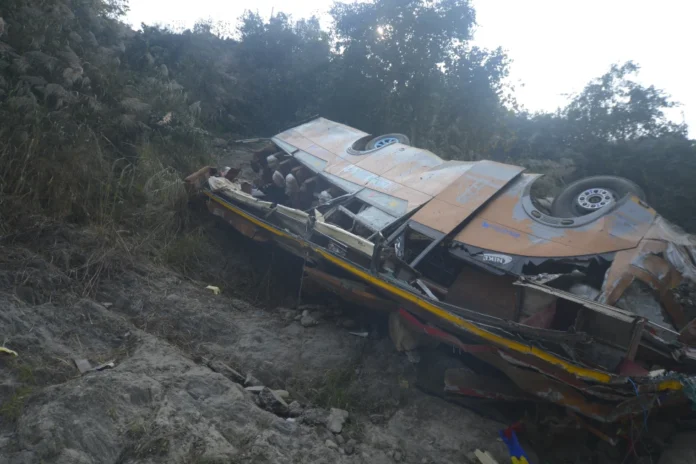
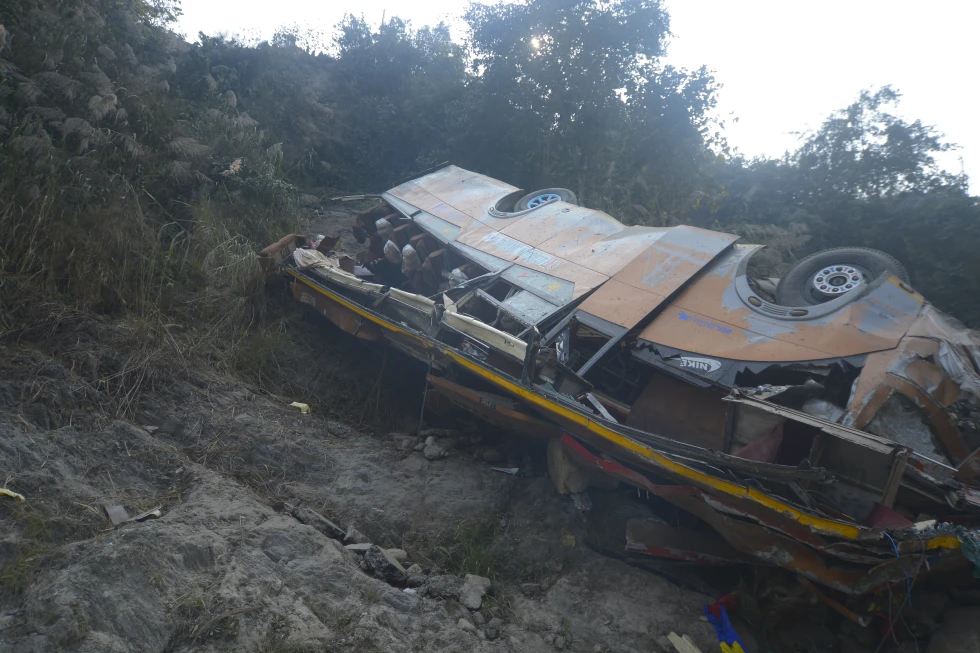
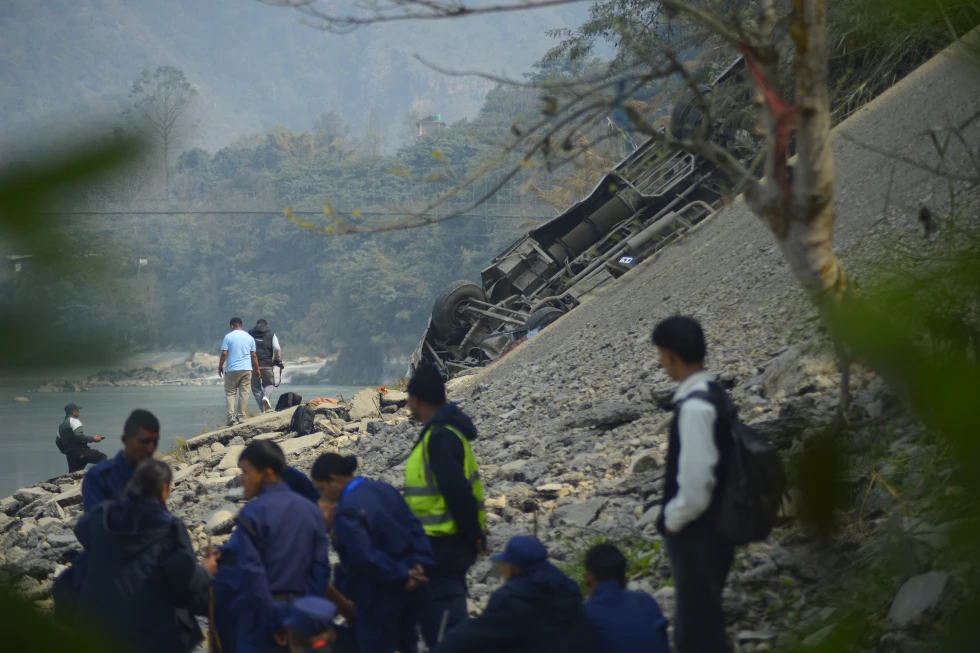
 (AP) — A passenger bus carrying dozens of travelers veered off a mountain highway in central Nepal shortly after midnight Monday, tumbling down a steep slope before coming to rest along the banks of the Trishuli River, killing 19 people and injuring at least 25 others, authorities said.

The bus was traveling from the lakeside resort city of Pokhara to the capital, Kathmandu, when it left the Prithvi Highway near Benighat in Dhading district, roughly 80 kilometers (50 miles) west of Kathmandu, police confirmed. Rescue crews arrived at the crash site soon after the accident and worked through the darkness to pull survivors from the wreckage.

District police identified one of the victims as a 24-year-old British national. Officials said nine of the 19 fatalities had been formally identified by Monday afternoon, while efforts were underway to confirm the identities of the remaining victims.

Among the injured were a Chinese national receiving treatment at the National Trauma Center in Kathmandu and a 27-year-old woman from New Zealand who sustained minor injuries and was being treated at a nearby hospital. China’s official Xinhua News Agency, citing the Chinese Embassy in Nepal, indicated earlier that another Chinese national had been reported missing.

Government administrator Mohan Prasad Neupane said emergency responders transported the injured to area hospitals after extracting them from the damaged vehicle. Police have launched an investigation to determine what caused the bus to leave the roadway.

The Prithvi Highway, a critical link between Kathmandu and Pokhara, winds through steep hills and narrow corridors carved into mountainous terrain. Accidents along the route are not uncommon, particularly during nighttime travel when visibility is reduced and fatigue may be a factor. Officials have not yet indicated whether weather, road conditions, mechanical failure or driver error contributed to Monday’s crash.

Nepal’s rugged topography poses persistent challenges for transportation. Much of the Himalayan nation is defined by sharp gradients, tight curves and roads that cling to cliffsides above fast-moving rivers. Infrastructure constraints, aging vehicles and inconsistent enforcement of safety standards have compounded risks for travelers.

The crash site near the Trishuli River carries painful resonance. In 2024, two buses carrying 65 people plunged into the same river during separate incidents, leaving most of those aboard dead or missing. The wreckage of one of those vehicles was discovered only this year, buried beneath deep sand deposits along the riverbank.

Authorities have not released the total number of passengers on Monday’s bus but described it as heavily occupied. Survivors were treated for fractures, lacerations and internal injuries, hospital officials said, though they declined to provide further details pending family notification.

Nepal has struggled for years to reduce its rate of road fatalities. Government data show that traffic accidents claim hundreds of lives annually, with buses frequently involved because they remain the primary mode of long-distance transport for many residents and tourists alike.

Pokhara, the departure point of the ill-fated bus, is one of Nepal’s most visited destinations, known for its lakes, trekking routes and proximity to the Annapurna mountain range. The highway connecting it to Kathmandu is a lifeline for commerce and tourism, but it is also notorious for congestion and hazardous conditions.

Police said forensic teams were examining the wreckage to determine whether mechanical malfunction played a role. Investigators are also reviewing the driver’s background and travel logs.

While authorities focus on determining the immediate cause of the crash, the broader safety concerns facing Nepal’s transportation system are again in the spotlight.

Road infrastructure development in the country has lagged behind growing demand. As tourism rebounds and domestic travel increases, highways such as the Prithvi corridor are seeing heavier traffic volumes. Yet many sections remain narrow, uneven and vulnerable to landslides, especially during the monsoon season. Although Monday’s accident occurred outside the peak rainy period, geological instability and aging guardrails remain ongoing hazards.

Enforcement of vehicle maintenance standards has also been inconsistent. Transport unions and safety advocates have long called for stricter inspections of commercial buses, citing worn brake systems and overloading as recurring issues. Previous crash investigations have highlighted similar factors.

International visitors are often among those affected. Nepal’s adventure tourism sector attracts travelers from Europe, Asia and Oceania, and bus travel is frequently the most accessible way to move between cities. Fatalities involving foreign nationals can carry diplomatic sensitivities, prompting embassies to coordinate closely with local authorities.

The Trishuli River tragedies in 2024 prompted renewed pledges from officials to strengthen oversight, including proposals to install more protective barriers along high-risk stretches and introduce digital monitoring of bus routes. However, implementation has been gradual.

Transportation analysts note that mountainous countries face inherent constraints, but policy measures — including improved driver training, regulated driving hours and enhanced roadside emergency response systems — can significantly reduce fatalities.

Monday’s crash may intensify pressure on policymakers to accelerate reforms. Public frustration often spikes after high-casualty incidents, though momentum for long-term structural change has historically waned over time.

For families awaiting identification of victims, immediate concerns are more personal. Officials in Dhading district said support services were being coordinated for relatives, and foreign embassies were notified regarding their citizens.

As investigations proceed, authorities have urged motorists traveling the Prithvi Highway to exercise caution and comply with traffic advisories. The government has not yet announced whether additional inspections or temporary restrictions will be imposed along the corridor.

The accident stands as another stark reminder of the risks inherent in navigating Nepal’s dramatic terrain — a landscape that draws visitors from around the world, yet demands sustained investment to ensure safer passage for those who travel its winding roads.

Barcelona Reclaims La Liga Summit with 3-0 Victory After Real Madrid Slip

0

MADRID (BN24) — FC Barcelona responded to rival Real Madrid’s weekend setback by cruising to a 3-0 victory over Levante UD on Sunday, climbing back to the top of La Liga.

Goals from Marc Bernal, Frenkie de Jong and Fermín López at Camp Nou halted Barcelona’s two-match skid and lifted the Catalan club one point above Madrid, which fell 2-1 at Osasuna a day earlier.

Madrid had entered the weekend on an eight-game league winning streak before its stumble. Barcelona, meanwhile, had been searching for stability after a 2-1 league loss to Girona and a 4-0 defeat against Atletico Madrid in the first leg of the Copa del Rey semifinals.

“We know it isn’t easy to start winning again after two defeats, but the team gave a very good response,” Barcelona coach Hansi Flick said afterward.

The result restored momentum for a side that had managed only one clean sheet in its previous six matches across all competitions.

Barcelona wasted little time asserting control. Bernal, the 18-year-old midfielder, struck from close range in the fourth minute, capitalizing on early pressure to settle the hosts.

Levante had threatened briefly in the opening moments, but Bernal’s finish shifted the rhythm decisively. “They had an early chance but my goal helped us settle and gain some confidence,” Bernal said.

The teenager’s goal followed his first senior-team strike two rounds earlier in a victory over Mallorca, underscoring his growing influence in Flick’s rotation.

De Jong doubled the advantage in the 32nd minute, finishing from inside the area after a fluid passing sequence. Barcelona dictated possession and tempo, limiting Levante’s opportunities to counter.

López capped the afternoon with an emphatic long-range effort in the 81st minute. His shot ricocheted off the post before crossing the line, extinguishing any lingering doubt about the outcome.

Levante goalkeeper Mathew Ryan prevented the scoreline from widening further. Ryan produced back-to-back saves in the closing minutes first denying Raphinha with a header, then blocking López’s close-range rebound attempt.

For Levante, the defeat marked a fourth consecutive loss and deepened relegation concerns. The club sits 19th in the standings, one point above last-place Oviedo, which has a game in hand. Levante has secured just one victory in its past eight league matches.

The visitors’ defensive organization faltered under Barcelona’s sustained pressure, and their limited attacking threat rarely troubled the hosts after the opening minutes.

The match also featured a landmark moment for Lamine Yamal, who recorded his 100th official win with Barcelona, becoming the youngest player in club history to reach that total.

The 18-year-old winger has amassed 139 appearances for the club, compiling 16 draws and 23 defeats alongside his century of victories. Flick dismissed suggestions that Yamal appeared frustrated when substituted late in the game, framing the change as routine squad management.

Pedri returned to action in the 66th minute, marking his first appearance in nearly a month following injury. His reintroduction offers an additional boost as Barcelona prepares for a demanding stretch that includes a league meeting with Villarreal.

Elsewhere in the league, Villarreal Barcelona’s next opponent rallied to defeat Valencia 2-1 at home, maintaining a three-point cushion over Atletico Madrid in the race for Champions League places. Atletico had beaten Espanyol 4-2 on Saturday.

Celta Vigo overcame Mallorca 2-0 with veteran forward Iago Aspas scoring twice late, while Sevilla edged Getafe 1-0 despite playing against 10 men for much of the match following Djene Dakonam’s early red card.

Barcelona’s resurgence arrives at a pivotal juncture in the title race. With Madrid demonstrating vulnerability after its defeat at Osasuna, the margin for error narrows for both sides. The psychological dimension may prove as decisive as tactical execution.

Flick’s team had appeared unsettled in recent weeks, particularly in defense. Sunday’s clean sheet, though against a struggling opponent, could serve as a stabilizing force. Bernal’s emergence offers depth and youthful energy, while De Jong’s composure in midfield restored balance.

Equally significant is the return of Pedri, whose creativity and control often shape Barcelona’s tempo in high-pressure fixtures. If he regains full fitness, Barcelona’s attacking patterns could regain the fluidity that characterized its strongest performances earlier in the campaign.

For Madrid, the challenge will be responding swiftly to prevent momentum from shifting. Eight consecutive wins had built a cushion; one defeat has now reignited the contest.

Levante’s outlook, by contrast, appears increasingly precarious. Defensive lapses and inconsistent finishing have undermined efforts to climb clear of the bottom three. Without an immediate turnaround, relegation looms.

Barcelona’s ability to convert opportunity into advantage reflects a broader theme of elite competition: championships are frequently decided not only by brilliance, but by resilience after setbacks. Sunday’s display suggested a team determined to steady itself at a crucial stage.

As the season enters its final stretch, the battle for La Liga supremacy promises heightened intensity. For now, Barcelona stands alone at the summit once more its response timely, its ambitions intact.

EPL: Mac Allister’s Stoppage-Time Strike Lifts Liverpool to 1-0 Win Over Nottingham Forest

0

NOTTINGHAM, England (BN24) — Alexis Mac Allister struck deep into stoppage time to hand Liverpool FC a dramatic 1-0 Premier League victory over Nottingham Forest at the City Ground on Sunday, rescuing a performance that had lacked fluency for much of the afternoon.

The Argentina international reacted quickest in the 97th minute after a downward header from Virgil van Dijk was parried by Forest’s goalkeeper. Mac Allister forced the rebound over the line from close range, igniting celebrations among the traveling supporters.

Moments earlier, another Liverpool effort had been disallowed, heightening tension inside the stadium. According to BBC Sport, fans first erupted, then paused amid a video review, before celebrating again when the goal stood.

The breakthrough arrived in a match defined more by physical duels and fragmented passages of play than sustained attacking quality.

Liverpool’s preparations were unsettled even before kickoff. Florian Wirtz sustained an injury during the warm-up and was withdrawn from the starting lineup, watching from the bench in visible frustration.

The late change prompted manager Arne Slot to reshuffle his side. Curtis Jones was drafted into the XI, while Dominik Szoboszlai initially slotted in at right-back before roles were adjusted again later in the contest.

The alterations contributed to a lack of cohesion. Liverpool struggled to maintain possession or establish consistent links between midfield and attack. Clear-cut opportunities were scarce, and the tempo often felt disjointed.

Forest appeared the sharper side for extended stretches, winning second balls and unsettling Liverpool’s build-up. If asked which team had benefited from a full week’s rest, observers might have pointed to the home side.

Liverpool’s attacking threats were muted. Mohamed Salah was replaced in the second half, departing with a wry smile and shake of the head after a quiet outing. Cody Gakpo likewise found limited space to operate.

Teenager Rio Ngumoha provided a brief spark off the bench, injecting urgency that had been missing for much of the match.

Liverpool’s bench lacked proven game-changers in a fixture crying out for invention. The absence of attacking sharpness underscored how reliant the team can be on moments of individual quality when collective rhythm falters.

Mac Allister, 27, supplied that decisive touch. Beyond his winning goal, he contributed defensively, recording six recoveries and two successful tackles — a statistical reflection of the match’s scrappy character rather than controlled dominance.

The second half unfolded in a stop-start fashion, punctuated by fouls and interruptions. Clear chances were rare, and tension mounted as the clock ticked toward full time.

Then came the chaos.

Van Dijk’s header forced a reflex save, and Mac Allister capitalized instantly, bundling the ball home amid a crowded six-yard box. The strike marked one of the final actions of the game and shifted the narrative from frustration to relief.

The victory moves Liverpool level on points with teams clustered around the Champions League qualification places, tightening an already congested race.

While the performance may not linger in memory, the result could carry significant weight in the season’s final reckoning. Matches decided in narrow, late fashion often prove pivotal in campaigns defined by fine margins.

From a broader perspective, Liverpool’s display exposed vulnerabilities. The side struggled to dictate tempo and appeared fatigued despite its squad depth. Tactical reshuffles disrupted structure, and the absence of a clear attacking focal point was evident.

Yet elite teams often separate themselves through resilience rather than artistry. Mac Allister’s intervention illustrated how opportunism can compensate for an otherwise uneven showing.

Forest, meanwhile, may draw encouragement from its competitiveness. The home side matched Liverpool physically and limited clear chances, though it ultimately lacked the cutting edge to secure a point.

For Slot, the match reinforces both concern and confidence. Concern, because rhythm and balance were elusive; confidence, because his side found a way to prevail under pressure.

As the Premier League season advances, the distinction between stylish victories and grinding wins becomes less significant than accumulation of points. Liverpool’s latest triumph belonged firmly to the latter category.

It was not a performance that will headline highlight reels for years to come. But if Liverpool secures a return to Europe’s top competition, the 97th-minute touch from Mac Allister at the City Ground may be remembered as one of the moments that shaped the journey.

Cartel Gunmen Attack Guadalajara International Airport After CJNG Leader’s Death

0

Armed members of the Jalisco New Generation Cartel launched coordinated attacks around Guadalajara International Airport and across parts of western Mexico on Sunday, unleashing panic among travelers and prompting shelter-in-place warnings after security forces killed the cartel’s leader in a military operation.

Videos shared on social media showed passengers running through terminals at Guadalajara’s Miguel Hidalgo y Costilla International Airport as reports of gunfire and nearby violence spread. Some travelers were seen crouching behind counters while others fled with luggage in hand.

The violence erupted hours after Mexican forces fatally wounded Nemesio Rubén Oseguera Cervantes, known as “El Mencho,” during a raid in the town of Tapalpa in Jalisco state. Mexico’s Ministry of Defense said in a statement on X that Oseguera Cervantes was injured during the operation and died while being transported by air to Mexico City.

The Pacific Airport Group, which operates the Guadalajara airport, said the Mexican National Guard had been deployed to the facility but that no confirmed violent incidents had occurred inside the terminal. The company attributed online reports of chaos within the airport to “panic among passengers,” emphasizing that there was no direct threat inside the facilities.

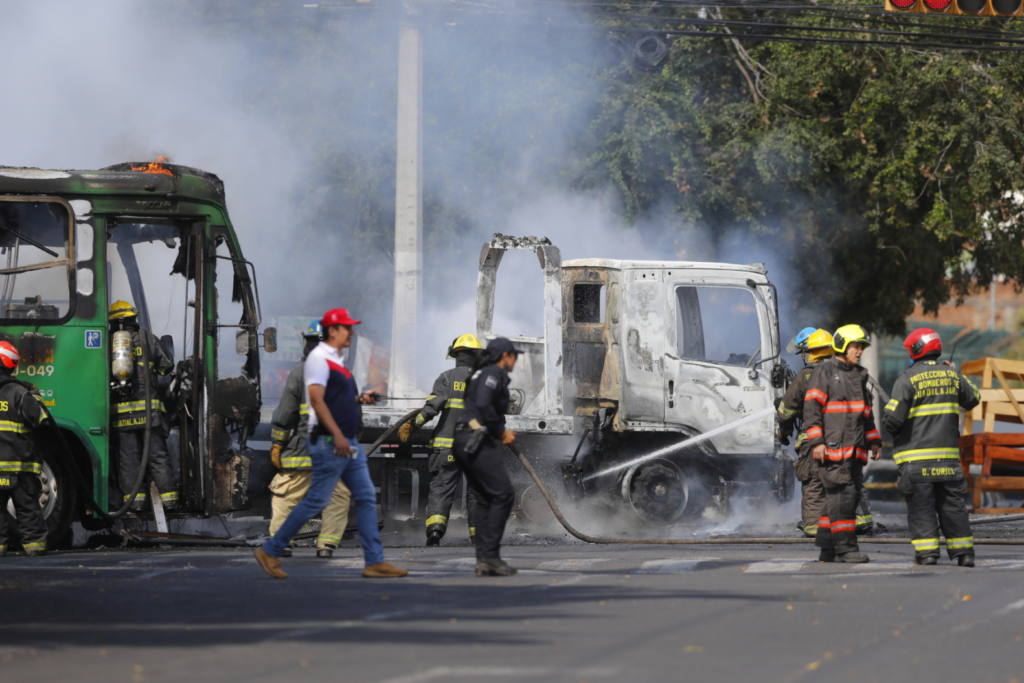
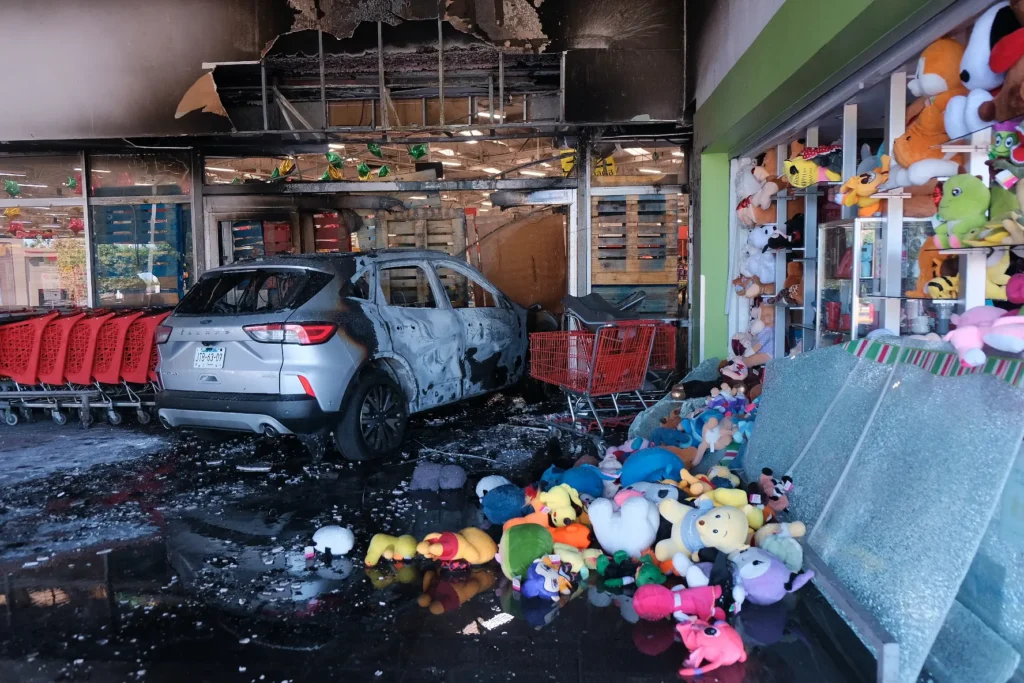
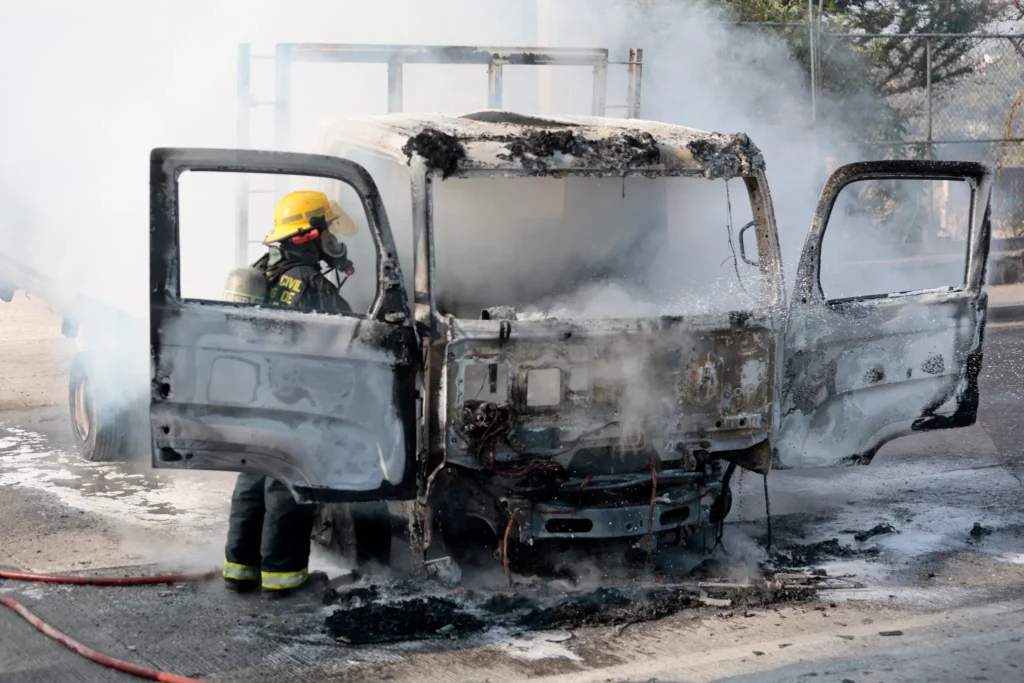
Still, authorities acknowledged that cartel members had set vehicles ablaze and blocked roadways throughout Jalisco in an apparent effort to disrupt federal security operations following the death of their leader.

Jalisco Gov. Pablo Lemus Navarro wrote on X that federal forces carried out an operation in Tapalpa that led to armed confrontations. He said individuals retaliating against the crackdown ignited vehicles and erected roadblocks in multiple areas of the state “with the aim of hindering the actions of authorities.” The governor described conditions in much of Jalisco as a “code red” and urged residents to remain indoors.

The unrest extended beyond Guadalajara. In the Pacific resort city of Puerto Vallarta, hotels advised guests to shelter in place as smoke rose from burning barricades. Travelers reported being confined to hotels while local authorities worked to restore order.

Mexican officials said the flare-up followed the military’s confrontation with CJNG members in Tapalpa. In a statement, defense authorities said troops were attacked during the operation and responded in self-defense. Four alleged cartel members were killed at the scene, and three others, including Oseguera Cervantes, later died of their injuries while being transported.

Spanish-language outlets including El Universal and Milenio detailed scenes of burning vehicles and gunfire across the region. Footage circulating online showed a gas station engulfed in flames in Tala, Jalisco, underscoring the scale of the retaliation.

Air Canada announced it had suspended flights into Puerto Vallarta “due to an ongoing security situation,” advising passengers not to travel to the airport. Merchants in Jalisco and neighboring states shuttered businesses as smoke drifted over highways and city streets.

International governments issued advisories as the situation unfolded. The U.S. State Department urged Americans in several Mexican states — including Jalisco, Tamaulipas, Michoacán, Guerrero and Nuevo León — to shelter in place because of ongoing security operations, road blockages and criminal activity.

Australia updated its travel guidance, warning that serious security incidents had been reported across Jalisco, including in Guadalajara and Puerto Vallarta, and advising visitors to stay alert and follow local authorities’ instructions. Canada likewise cautioned its citizens about roadblocks involving burning vehicles, shootouts with security forces and explosions in southwestern Mexico.

President Claudia Sheinbaum called for calm, writing on X that there was coordination among federal and state governments and urging citizens to remain informed and composed.

Oseguera Cervantes, 53, rose from relative obscurity to become one of Mexico’s most feared cartel leaders after the arrest and conviction of Joaquín “El Chapo” Guzmán. Under his leadership, the Jalisco New Generation Cartel, or CJNG, expanded rapidly and developed a reputation for confronting security forces with military-style tactics.

The U.S. government had offered a reward of up to $15 million for information leading to his capture. He faced multiple indictments in Washington, D.C., tied to drug trafficking and firearms offenses. President Donald Trump designated the cartel a foreign terrorist organization last year, intensifying bilateral pressure to dismantle its operations.

Sunday’s attacks underscored the cartel’s capacity to mount swift and disruptive retaliation. Analysts say such coordinated actions — particularly near critical infrastructure like airports and major tourist destinations — are designed to demonstrate strength and challenge state authority.

Guadalajara’s airport is Mexico’s third-busiest, handling nearly 19 million passengers annually. Puerto Vallarta ranks among the country’s top tourist destinations, making the unrest particularly disruptive during peak travel periods.

While airport authorities insisted no confirmed violence occurred inside the terminal, the fear alone proved enough to halt operations temporarily and send travelers scrambling. The psychological impact of visible smoke, gunfire reports and viral footage can reverberate far beyond the immediate scene, affecting tourism, investment and public confidence.

Security forces remained deployed across Jalisco late Sunday as roadblocks smoldered and authorities worked to reopen highways. Schools in parts of the state were ordered closed Monday as a precaution.

The long-term implications of Oseguera Cervantes’ death remain uncertain. CJNG’s decentralized structure could allow regional commanders to continue operations, and leadership transitions in criminal organizations often spark further violence as factions jockey for control.

For now, the airport and surrounding communities remain on heightened alert, a stark reminder of the volatile aftermath that can follow the takedown of a powerful cartel figure.

NYPost/NBC

St. Francis of Assisi’s Remains Unveiled to Public in Rare Display Marking 800 Years Since His Death

0

ASSISI, Italy (BN24) — The skeletal remains of St Francis of Assisi have been placed on public display in central Italy in a rare exhibition marking eight centuries since the death of one of Christianity’s most revered figures.

Church authorities in Italy indicated that roughly 400,000 pilgrims and visitors from across the globe have secured reservations to view the remains in Assisi, the saint’s birthplace. The display opened Sunday in the lower church of the Basilica of St Francis of Assisi and will continue through March 22.

The unveiling offers an extraordinary opportunity for the faithful. According to church officials, the remains have been publicly exhibited only once before for a single day in 1978, when access was restricted to a limited number of viewers.

Born in Assisi in either 1181 or 1182, Francis became known for abandoning his family’s wealth to embrace a life of poverty and service. He went on to establish the Franciscan religious order, emphasizing humility, compassion and devotion to the marginalized. Over the centuries, he has been recognized as the patron saint of animals and the environment, a reflection of his teachings about the interconnectedness of all creation.

The Catholic Church commemorates the Feast of St. Francis each year on Oct. 4, the anniversary of his death in 1226.

The display of his remains is unfolding at a moment of renewed interest in the saint’s legacy. The late Pope Francis, who led the Roman Catholic Church for more than a decade before his death last year, chose his papal name in tribute to the 13th-century saint. Vatican observers often noted that the pontiff sought to mirror Francis’ radical humility and concern for the poor.

Church representatives have framed the exhibition as both a spiritual milestone and a cultural event of global resonance. Pilgrims have traveled from Europe, Latin America, Asia and the United States, underscoring the enduring appeal of a figure whose message continues to shape Catholic identity.

Security and crowd-control measures have been heightened in Assisi to accommodate the anticipated influx of visitors. Local authorities are coordinating with church officials to manage reservations and ensure orderly access to the basilica’s lower church, where the remains are housed.

The basilica itself, a UNESCO World Heritage site, has long been a focal point of devotion. Constructed shortly after Francis’ canonization in 1228, it contains frescoes and artworks chronicling his life and spiritual journey. The current exhibition centers on the saint’s bones, presented in a manner intended to balance reverence with historical context.

For many of the faithful, the opportunity to witness the remains is viewed as a rare spiritual encounter. Pilgrims interviewed by Italian media described feelings of gratitude and solemn reflection as they prepared to enter the basilica.

Enduring Legacy in a Modern World

While the exhibition marks a historical anniversary, it also arrives at a time when Francis’ teachings appear particularly relevant. His embrace of poverty and his critique of material excess resonate in an era marked by economic inequality and environmental strain.

Francis’ writings and example have increasingly been invoked in discussions about climate change and ecological responsibility. His reverence for nature inspired the naming of Pope Francis’ 2015 encyclical on the environment, “Laudato Si’,” after the saint’s canticle praising creation. Though separated by centuries, the themes of humility and stewardship remain intertwined.

Scholars note that public displays of saints’ relics have historically served to reinforce communal identity within the Catholic tradition. Such events often draw believers seeking spiritual renewal, while also attracting historians and cultural tourists interested in medieval religious history.

The exhibition may also carry economic implications for Assisi and the surrounding Umbria region. With hundreds of thousands of visitors expected over the coming weeks, local businesses from hotels to restaurants stand to benefit from the influx of pilgrims. Religious tourism has long been a pillar of the town’s economy, and this milestone anniversary could provide a measurable boost.

At the same time, church leaders have emphasized that the commemoration is intended to foster reflection rather than spectacle. In homilies and public remarks, clergy have encouraged visitors to contemplate Francis’ message of peace and simplicity.

A Rare Glimpse into History

The limited prior public viewing in 1978 heightened anticipation for the current exhibition. That earlier display was brief and accessible to only a small audience, making this year’s extended viewing period highly unusual.

Historians observe that relic veneration dates back to early Christianity, when the physical remains of saints were believed to connect the faithful to sacred history. Over time, many relics were concealed or safeguarded to prevent damage or theft. The decision to unveil Francis’ remains reflects careful deliberation by church authorities, balancing preservation concerns with pastoral outreach.

As the exhibition continues, Assisi has once again become a focal point for global Catholicism. For some visitors, the journey is deeply personal a pilgrimage undertaken after years of devotion. For others, it is an opportunity to witness a piece of medieval history rarely accessible to the public.

Eight centuries after his death, Francis’ influence shows little sign of fading. His life story that of a merchant’s son who relinquished privilege to serve the destitute remains embedded in Christian teaching and cultural memory.

The public display of his bones, though temporary, underscores the enduring power of that narrative. As pilgrims file quietly through the basilica’s lower church, they participate in a tradition that links the present with the distant past a testament to the lasting imprint of a saint whose message continues to echo far beyond the stone walls of Assisi.

Mexico Suspends Liga MX Matches After Cartel Leader’s Killing Triggers Violence

0

MEXICO CITY (BN24) — Multiple professional football matches across Mexico were suspended Sunday after violence erupted in several regions following the reported killing of an alleged cartel leader by Mexican armed forces.

Fixtures affected included seventh-round matches in Liga MX’s Clausura tournament, several women’s league contests and an international friendly between Mexico and Iceland. League officials moved to postpone the games as security concerns intensified.

Mexican authorities confirmed the death of Nemesio “El Mencho” Oseguera, identified as the head of the Jalisco New Generation Cartel, one of the country’s most powerful criminal organizations. In the hours that followed, retaliatory violence was reported in multiple areas, prompting heightened security measures and public safety advisories.

President Claudia Sheinbaum appealed for calm, stating that the federal government was coordinating closely with state officials to stabilize affected regions. She emphasized that security forces were deployed to prevent further escalation.

Football authorities did not immediately announce rescheduled dates for the postponed matches but indicated that decisions were taken in consultation with local officials to prioritize public safety.

The suspensions underscore the extent to which security developments can reverberate beyond law enforcement operations, disrupting major public events and sporting competitions in a country where football holds deep cultural significance.

Liga MX, Mexico’s top-tier professional league, is among the most followed sports competitions in the Americas. Matchdays regularly draw large stadium crowds and national television audiences. The cancellation of multiple fixtures on short notice represents a rare and significant interruption.

Women’s league matches were also affected, reflecting the broad geographic scope of the unrest. The international friendly between Mexico and Iceland — intended as preparation for upcoming competitions was likewise postponed amid concerns about travel and venue security.

Authorities have not publicly detailed the exact locations or scale of the retaliatory incidents but confirmed that disturbances occurred following the operation targeting Oseguera. The Jalisco New Generation Cartel, commonly referred to by its Spanish initials CJNG, has been linked by security officials to extensive drug trafficking operations and violent confrontations with rival groups and state forces.

The reported killing of Oseguera, widely known by his alias “El Mencho,” marks a potentially significant development in Mexico’s ongoing campaign against organized crime. Security analysts have long described him as one of the country’s most influential cartel figures.

Broader Security Implications

The decision to suspend football matches reflects both precaution and precedent. In previous instances of high-profile security operations, authorities have temporarily halted public gatherings to reduce the risk of civilian harm.

Sporting events in Mexico often serve as communal focal points, drawing tens of thousands of supporters. In volatile circumstances, such gatherings can pose logistical challenges for security forces already stretched by unfolding incidents elsewhere.

President Sheinbaum’s remarks emphasized coordination between federal and state governments, signaling an effort to project institutional control. Public appeals for calm are a common feature of official responses to security crises, particularly when developments risk spreading across multiple jurisdictions.

Sport and Security Intersect

The suspension of football matches highlights the delicate balance between public life and security in regions confronting organized crime. While Mexico has made high-profile arrests and pursued military operations against cartel leaders over the past decade, retaliatory violence has frequently followed such actions.

For Liga MX and associated competitions, the episode serves as a reminder of vulnerabilities that extend beyond the pitch. Clubs must consider not only sporting logistics but also evolving security assessments that can shift rapidly in response to national developments.

The economic ramifications may also be notable. Matchday revenues, broadcast schedules and sponsorship obligations can all be disrupted by sudden postponements. For players and coaching staff, uncertainty complicates preparation cycles and competitive rhythm.

At the same time, authorities may view decisive action against cartel leadership as a long-term investment in public safety, even if short-term instability follows. Historically, the removal of high-ranking figures has sometimes triggered internal power struggles within criminal organizations, with unpredictable consequences.

Football’s temporary pause illustrates how deeply intertwined societal institutions can be. In Mexico, where the sport commands widespread loyalty, its suspension signals the seriousness of the security situation.

Officials have not indicated when normal scheduling will resume. Much will depend on the containment of unrest and assessments from local and federal security agencies in the coming days.

For now, stadium lights remain dimmed in several cities an unusual quiet underscoring the broader tensions unfolding beyond the touchlines.

Arsenal Thrash Tottenham 4-1 as Eze and Gyökeres Ignite Title Push; Liverpool Edge Forest Late

0

LONDON (BN24) — Arsenal FC restored their five-point advantage at the top of the Premier League with a commanding 4-1 victory over Tottenham Hotspur on Sunday, as Eberechi Eze and Viktor Gyökeres delivered decisive performances in the north London derby.

The pressure had intensified on Mikel Arteta’s side after consecutive draws against Brentford and Wolves allowed Manchester City to narrow the gap. Arsenal responded emphatically, capitalizing on home advantage and inflicting a difficult start on interim Tottenham manager Igor Tudor.

Eze, who had previously tormented Spurs earlier in the season, opened the scoring shortly after the half-hour mark, hooking the ball home from close range. Tottenham replied almost immediately through Randal Kolo Muani, whose equalizer briefly unsettled the hosts.

Arsenal regained control early in the second half when Gyökeres struck to restore the lead. The forward, whose influence has grown steadily, seized on defensive hesitation to put the Gunners back in front.

Eze added his second of the afternoon after Guglielmo Vicario parried a shot from Bukayo Saka into his path, calmly rolling the rebound into the net. Gyökeres completed the scoring in stoppage time, sealing a comprehensive result.

The victory provides Arsenal with renewed breathing room in their pursuit of a first league crown in 22 years. City retain a game in hand and will host Arsenal in April in a match that could shape the title race.

Tottenham, meanwhile, remain just four points above the relegation zone, underscoring the scale of the challenge facing Tudor as he attempts to steady the club’s campaign.

Liverpool Snatch Late Win

Elsewhere, Liverpool FC required a stoppage-time intervention from Alexis Mac Allister to secure a 1-0 win over Nottingham Forest.

Mac Allister struck in the 97th minute, converting a rebound after Virgil van Dijk’s header was saved. The Argentina midfielder had earlier seen a goal disallowed when the ball was adjudged to have struck his arm after blocking a clearance from Ola Aina.

Forest, under new manager Vítor Pereira, appeared poised to claim a point before conceding late. The defeat leaves them two points clear of the relegation zone.

Liverpool remain sixth but draw level on points with Chelsea FC and Manchester United, closing to within six points of Aston Villa in the race for European qualification.

“I love scoring, I love winning, so in that sense I think it’s a really good day,” Mac Allister said. “But on the other hand, I don’t think we played very well. There are plenty of things we need to improve.”

Movement Across the Table

Fulham FC climbed into the top half of the standings with a 3-1 victory at Sunderland, becoming just the second visiting team to win at the Stadium of Light this season. Raúl Jiménez scored twice for Marco Silva’s side.

Crystal Palace eased mounting frustration at Selhurst Park by defeating 10-man Wolverhampton Wanderers 1-0. Evann Guessand netted in the 90th minute, while Dean Henderson earlier saved a penalty from Tolu Arokodare. Wolves’ Ladislav Krejčí was sent off after the hour mark.

Arsenal’s response to mounting pressure may prove significant in the broader title narrative. After two draws that exposed vulnerability, Arteta’s side rediscovered attacking fluency and defensive resolve in the derby.

Eze’s resurgence adds another dimension to Arsenal’s front line. Having struggled for consistent minutes in recent weeks, he seized his opportunity emphatically. Gyökeres’ brace, meanwhile, suggests a growing partnership capable of sustaining the club’s momentum.

For Tottenham, defensive frailties and inconsistency persist. With relegation concerns lingering, stabilizing performances not just results — will be essential.

Liverpool’s narrow victory illustrates a different dynamic: resilience over dominance. While Arsenal dazzled, Liverpool endured. Both approaches, however, yielded three points — currency that matters most as the season enters its decisive stretch.

With City still within striking distance and possessing a game in hand, the title race remains finely poised. Yet on this weekend, Arsenal reclaimed initiative, combining urgency with execution in a fixture that rarely lacks consequence.

Western Mexico Descends Into Chaos Following Cartel Leader’s Death in Military Operation

0

Western Mexico plunged into violent chaos Sunday as drug cartel gunmen launched coordinated retaliatory attacks across multiple states following a military raid that killed Nemesio “El Mencho” Oseguera Cervantes, the feared leader of the Jalisco New Generation Cartel, trapping tourists in resort hotels and sending panicked travelers fleeing through one of the nation’s busiest airports.

Authorities warned residents and visitors to shelter indoors throughout the state of Jalisco as narco gangs ignited vehicles, erected burning barricades, and engaged security forces in response to Oseguera Cervantes’s death during a confrontation with Mexican army personnel in Tapalpa. 

The 53-year-old drug kingpin, who commanded one of Mexico’s most powerful and brutal criminal organizations, died while being transported by helicopter to Mexico City after sustaining injuries during the military operation.

“Federal forces carried out an operation in Tapalpa a few hours ago, which has led to clashes in the area,” Jalisco Governor Pablo Lemus Navarro announced via social media platform X. “Also as a result of said operation in various points of that region and in other parts of Jalisco, individuals have burned and blocked vehicles with the aim of hindering the actions of authorities.”

The governor declared much of Jalisco under “code red” emergency status and implored residents to remain home as violence spread. “We reiterate the recommendation to avoid leaving your homes,” Navarro warned. “The clashes are occurring in several federal entities.”

The U.S. State Department issued urgent advisories instructing American citizens to shelter in place, while some tourists reported finding themselves trapped as the security situation deteriorated throughout western Mexico’s popular vacation destinations.

Scott Posilkin, a 36-year-old marketing technology professional from Colorado stranded in Puerto Vallarta, described terrifying scenes as violence erupted across the resort city. “It looked like the whole city was on fire,” Posilkin told The Post, conveying the scope of destruction visible from his location.

“We saw a bus in the middle of the road with people running out of it,” he recounted. “At first we thought it was an accident, but then a man with a gun came around the other side of the bus and waved it at us and told us to go back.”

Posilkin and other stranded tourists awaited guidance from American diplomatic authorities while remaining confined to their accommodations. “We’re all processing. I think we’re all a little anxious. We’re just waiting to hear what the State Department tells us to do,” he said. “Right now we’re sheltering in place, and we’re all just happy to be together and be safe.”

Another tourist posted online from a hotel in Puerto Vallarta’s tourist zone: “Staying put until we get the all clear. All of the businesses in the area have closed.” 

The message captured the widespread lockdown affecting Mexico’s fourth-largest tourism destination, where thousands of international visitors found their vacations transformed into survival situations.

Spanish-language news outlet El Universal confirmed that cartel operatives systematically ignited fires throughout Jalisco to impede federal forces during and after the military raid, creating widespread infrastructure damage and public terror. Black smoke billowed from burning vehicles and barricades well into Sunday evening as authorities struggled to restore order.

Dramatic video footage obtained by The Post showed dozens of luggage-carrying passengers running through Guadalajara International Airport—Mexico’s third-busiest aviation facility serving 18.7 million travelers annually—while others crouched behind counters seeking protection. 

The chaotic scenes illustrated how panic spread beyond immediate conflict zones to critical transportation hubs as frightened travelers attempted to escape the deteriorating situation.

The Pacific Airport Group, which operates Guadalajara International Airport, issued a statement acknowledging deployment of Mexican National Guard personnel to the facility while insisting operations continued normally. “It is important to clarify that no incidents have been reported inside the facilities, and there is no risk to passengers, staff or visitors,” the organization declared.

“The information and material circulating on social media do not correspond with any danger at the terminals, rather to the panic among passengers,” the statement continued, attributing airport chaos to fear rather than actual violence within the terminal complex. However, the massive security response and passenger evacuation footage suggested genuine concerns about potential cartel attacks on the aviation facility.

Air Canada canceled scheduled flights into Puerto Vallarta “due to an ongoing security situation,” advising passengers to remain at their departure locations rather than attempt traveling to airports. The cancellations reflected international carriers’ assessments that western Mexico had become too dangerous for normal commercial aviation operations.

The violence paralyzed a vast, heavily populated region encompassing multiple Mexican states. Beyond Jalisco, cartel gunmen launched assaults in Michoacán, Tamaulipas, Colima, Guanajuato, Aguascalientes, and Veracruz—a coordinated campaign demonstrating the Jalisco New Generation Cartel’s extensive geographic reach and organizational capacity to mobilize armed forces across hundreds of miles.

Merchants shuttered businesses throughout affected regions as uncertainty about security conditions made commercial activity impossible. Jalisco government officials announced school closures for Monday and indefinitely postponed all large community events until authorities could guarantee public safety. The disruptions will impose substantial economic costs on regions heavily dependent on tourism and commerce.

Mexican defense officials confirmed that military personnel conducting the Tapalpa operation came under attack, prompting defensive engagement that killed four Jalisco New Generation Cartel members at the scene. 

Three additional cartel operatives sustained serious injuries and died during helicopter evacuation to Mexico City—a group that included Oseguera Cervantes himself.

“During this operation, military personnel were attacked, so in defense of their integrity, they repelled the aggression, resulting in four members of the CJNG criminal group being killed at the scene and three seriously injured who lost their lives during their transfer by air to Mexico City,” Mexican defense authorities stated, using the cartel’s Spanish acronym.

Oseguera Cervantes rose from modest origins—a sixth-grade dropout who briefly worked as a police officer—to become Mexico’s most feared cartel boss following the arrest and conviction of Joaquín “El Chapo” Guzmán by American authorities. 

His Jalisco New Generation Cartel gained notoriety for extreme violence, territorial expansion, and sophisticated operations spanning drug trafficking, extortion, kidnapping, and fuel theft.

President Donald Trump designated the cartel as an international terrorist organization last year, pressuring Mexican authorities to intensify enforcement operations against the organization. 

The United States maintained a $15 million reward for information leading to Oseguera Cervantes’s capture—one of the highest bounties ever offered for a drug trafficker.

American prosecutors indicted Oseguera Cervantes multiple times in Washington, D.C., since 2017, most recently in April 2022 on charges including conspiracy and distribution of controlled substances for illegal importation into the United States. 

The indictments detailed his leadership of a criminal enterprise responsible for flooding American communities with methamphetamine, fentanyl, heroin, and cocaine while corrupting Mexican institutions through bribery and intimidation.

Sunday’s military operation represents a significant victory for Mexican security forces that have struggled for years to combat the Jalisco New Generation Cartel’s expansion across the country. 

However, the immediate violent backlash demonstrates the organization’s capacity to inflict severe disruption even after losing its supreme leader, raising questions about whether Oseguera Cervantes’s death will weaken the cartel or simply trigger succession battles that could prove even more violent.

Historically, Mexican cartel decapitation strategies—removing top leaders through arrest or killing—have produced mixed results. While eliminating experienced leadership can disrupt operations temporarily, power vacuums frequently trigger internal conflicts as lieutenants compete for control, often escalating violence as rival factions battle for supremacy. 

The Jalisco New Generation Cartel’s extensive resources, territorial control, and military capabilities suggest it will remain a formidable threat regardless of leadership changes.

The coordinated retaliatory attacks across multiple states indicate the organization maintains robust command-and-control structures capable of rapidly mobilizing forces in response to leadership losses. 

This operational resilience suggests the cartel will continue functioning under new leadership, potentially with intensified violence as it seeks to demonstrate strength and deter further government operations.

For tourists trapped in Puerto Vallarta and other affected regions, the immediate priority involves safely evacuating once Mexican authorities restore sufficient order to guarantee secure passage to airports and border crossings. 

The State Department will likely coordinate with Mexican counterparts to establish protected corridors enabling foreign nationals to depart conflict zones without encountering cartel violence.

The incident highlights persistent security challenges confronting Mexico as powerful drug trafficking organizations maintain quasi-military capabilities rivaling government forces in affected regions. Despite substantial American financial and intelligence support, Mexican authorities continue struggling to establish territorial control in areas where cartels operate with near-impunity, corrupting local officials and intimidating civilian populations into silence.

As smoke continued rising from burning barricades Sunday evening and federal reinforcements deployed across western Mexico, the full consequences of Oseguera Cervantes’s death remained uncertain. 

Whether his elimination reduces the Jalisco New Generation Cartel’s power or simply initiates a violent transition to new leadership will determine whether Sunday’s military operation ultimately enhances Mexican security or merely shuffles criminal hierarchies while civilians continue suffering the consequences of narco violence that has claimed hundreds of thousands of lives across two decades of drug war.

NYPost

DON'T MISS ANY OF OUR UPDATE