Home Blog Page 13

Police Officer Killed in Lviv Bomb Blasts as Russia Launches Massive Missile and Drone Assault on Ukraine

0

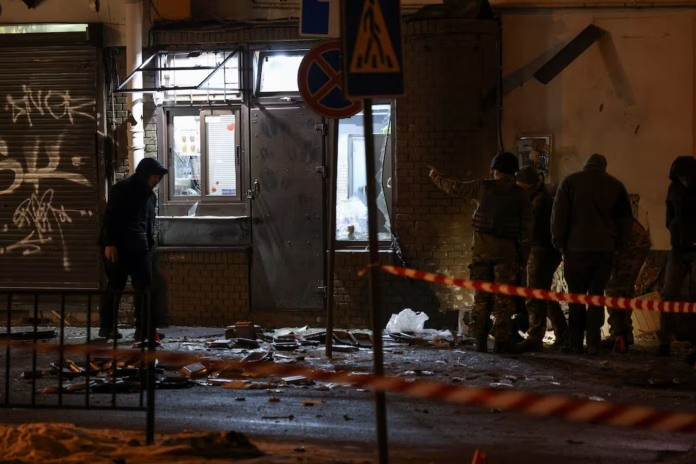
A police officer was killed and 24 people were injured after multiple explosive devices detonated around midnight in the western Ukrainian city of Lviv, authorities said Sunday, as Russia unleashed a sweeping barrage of missiles and drones across the country targeting energy infrastructure.
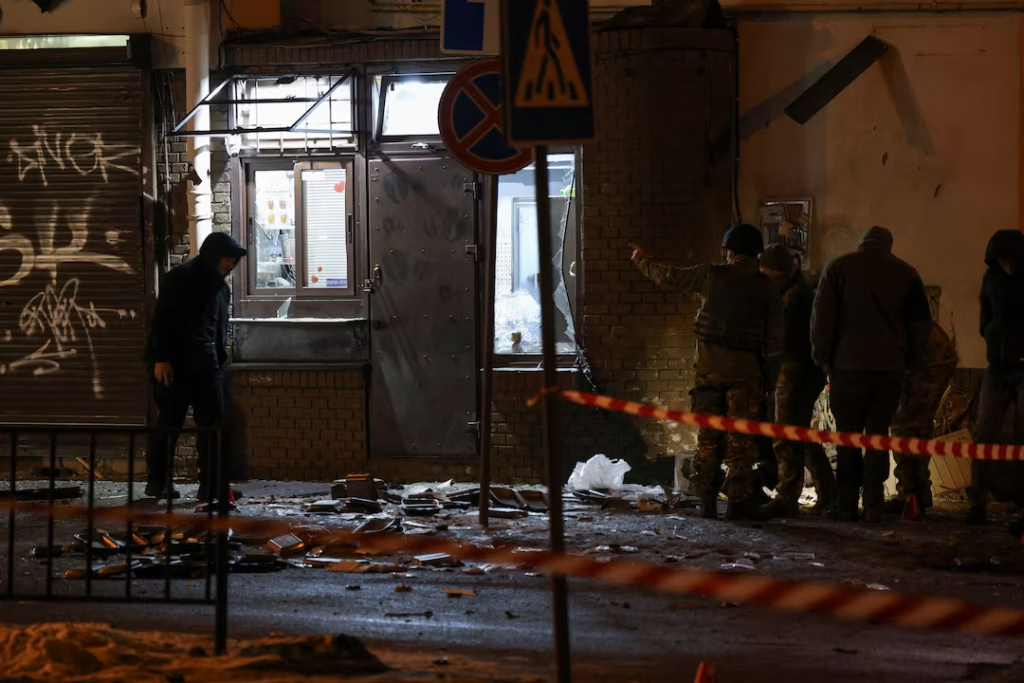
Ukraine’s National Police announced that several improvised explosive devices went off in Lviv shortly after midnight. Investigators have preliminarily determined that the blasts were caused by homemade explosives, police said in a statement posted on the Telegram messaging platform.

Lviv Mayor Andriy Sadovyi described the explosions as a terrorist act, signaling that authorities are treating the incident as deliberate sabotage rather than an accident.

President Volodymyr Zelenskiy said on X that a suspect had been detained in connection with the Lviv blasts. He did not disclose further details about the individual or possible motives.

The western city, located far from the front lines in eastern and southern Ukraine, has frequently served as a logistical hub and a refuge for civilians displaced by fighting. Though largely shielded from the most intense combat, Lviv has been targeted by missile and drone strikes throughout the war.

As authorities responded to the deadly explosions in Lviv, Russia launched dozens of ballistic and cruise missiles along with hundreds of drones in a coordinated overnight assault, Ukrainian officials said.

Ukraine’s military and regional authorities said the strikes focused heavily on energy facilities but also damaged residential buildings and railway infrastructure.

The attacks struck Kyiv and the surrounding region, as well as the Black Sea port city of Odesa and parts of central Ukraine. President Zelenskiy said on X that additional regions targeted included Dnipro, Kirovohrad, Mykolaiv, Poltava and Sumy.

“The main target was the energy sector,” Zelenskiy wrote, adding that homes and rail lines also sustained damage. He accused Moscow of prioritizing continued military pressure over diplomatic engagement.

“Moscow continues to invest in strikes more than in diplomacy,” Zelenskiy said, noting that in the past week alone Russia launched more than 1,300 drones, over 1,400 guided aerial bombs and 96 missiles against Ukraine.

There was no immediate response from Russian officials.

At least one person was killed and five others were injured in the Kyiv region, regional Gov. Mykola Kalashnyk said on Telegram. He said damage was recorded in five districts, with more than a dozen homes affected.

In Odesa, Gov. Oleh Kiper said a nighttime drone strike targeted regional energy infrastructure, sparking fires that were later extinguished.

Ukraine’s air force said Russia launched 50 missiles and 297 drones in the overnight assault. Air defense systems intercepted or otherwise neutralized 33 missiles and 274 drones, the air force said, indicating that some projectiles penetrated defenses.

Ukrainian Foreign Minister Andrii Sybiha called for intensified international sanctions against the Kremlin, writing on X that the continued bombardment amounted to terror.

“This terror cannot be normalized; it must be stopped,” Sybiha said. “Russia cannot wag the world, just as the tail cannot wag the dog.”

Strikes on Ukraine’s energy network have become a near-daily occurrence in recent months. Russia has repeatedly targeted thermal power plants, electrical substations and gas facilities in an effort to degrade Ukraine’s infrastructure.

Since launching its full-scale invasion in February 2022, Moscow has denied intentionally targeting civilians. Russian officials maintain that Ukraine’s civilian infrastructure constitutes a legitimate military objective because it supports the country’s war effort. Ukrainian authorities reject that characterization, arguing that the sustained attacks are intended to terrorize civilians and undermine morale.

The latest wave of bombardment unfolded as U.S.-brokered diplomatic efforts aimed at securing a ceasefire have struggled to gain traction. Talks held in Geneva on Feb. 17 and 18 failed to produce a breakthrough. Russia has demanded that Ukraine withdraw from areas of the eastern Donbas region that remain contested, a condition Kyiv has firmly rejected.

The twin developments — the deadly explosions in Lviv and the large-scale missile campaign — illustrate the multifaceted pressure facing Ukraine as the war grinds into another year.

The Lviv blasts, if confirmed as an act of sabotage, underscore the vulnerability of cities far from active battlefields. Western Ukraine has functioned as a key transit corridor for military supplies and humanitarian aid. Disruptions there could complicate logistics and strain already stretched security services.

Simultaneously, Russia’s continued targeting of the energy grid appears aimed at exhausting Ukraine’s resilience. Energy facilities are not only vital to civilian life but also to industrial production and military operations. Repeated strikes increase repair costs, complicate winter preparedness and amplify economic strain.

Despite high interception rates reported by Ukraine’s air force, even a small percentage of missiles and drones breaching defenses can inflict significant damage. The scale of the latest barrage — nearly 300 drones and 50 missiles in one night — signals Russia’s sustained capacity to mount complex, coordinated attacks.

Diplomatically, the lack of progress in Geneva suggests that both sides remain entrenched. Moscow’s insistence on territorial concessions remains unacceptable to Kyiv, while Ukraine’s leadership continues to seek broader international backing and stronger sanctions.

The simultaneous emergence of internal security threats, such as the Lviv bombings, and intensified external assaults may test Ukraine’s capacity to maintain stability across its territory. Yet officials have emphasized swift arrests, rapid repairs to infrastructure and continued air defense coordination as evidence of resilience.

As winter approaches and energy consumption rises, the durability of Ukraine’s power grid and the effectiveness of its air defenses will remain central to both the humanitarian situation and the broader military balance.

Reuters
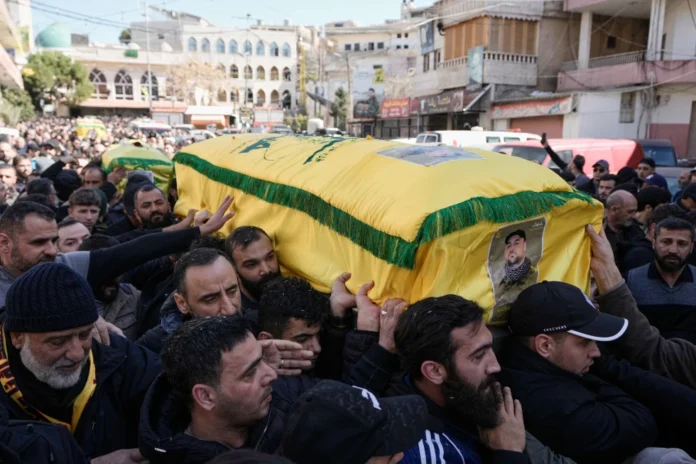
Israeli Airstrikes Kill 8 Hezbollah Members in Eastern Lebanon as Regional Tensions Escalate

0

Israeli airstrikes in eastern Lebanon killed eight members of the militant group Hezbollah, including several local commanders, group officials said Saturday, in one of the deadliest escalations since a fragile ceasefire curbed months of open warfare along the border.

Two Hezbollah officials, speaking on condition of anonymity because they were not authorized to brief the media, told The Associated Press that the militants were killed late Friday near the village of Rayak in northeastern Lebanon. Among the dead were three local commanders identified as Ali al-Moussawi, Mohammed al-Moussawi and Hussein Yaghi, one of the officials said.

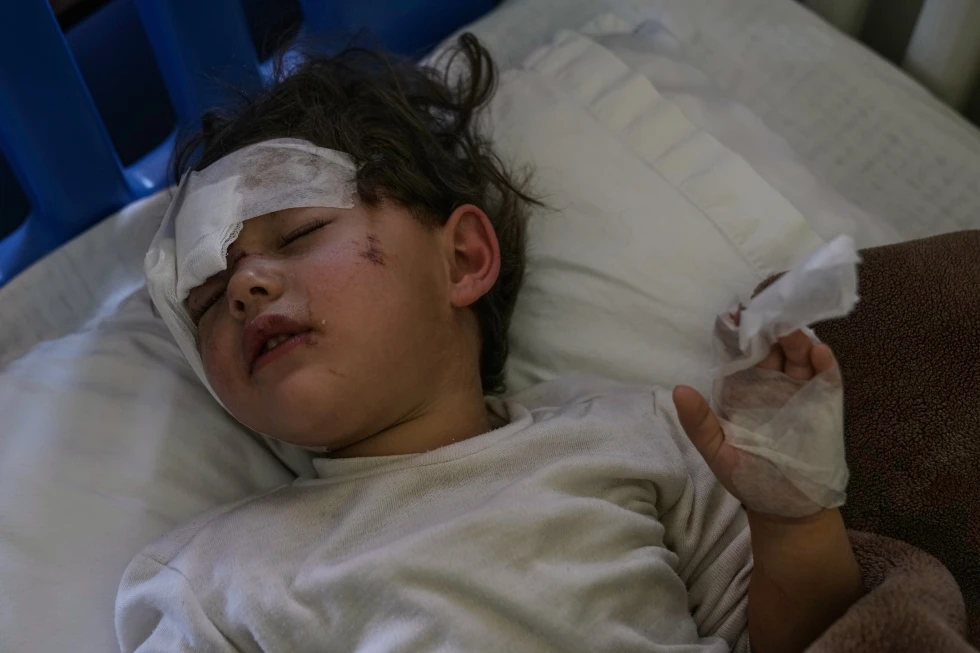
Lebanon’s Health Ministry announced that 10 people were killed and 24 others wounded in Israeli strikes across eastern Lebanon, including three children. The ministry did not distinguish between combatants and civilians.

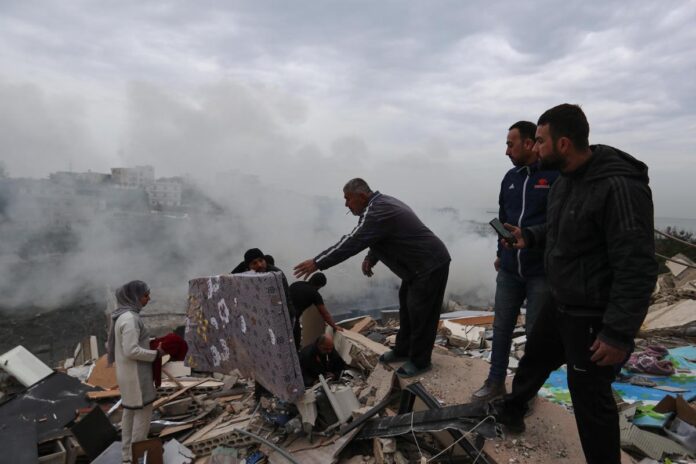
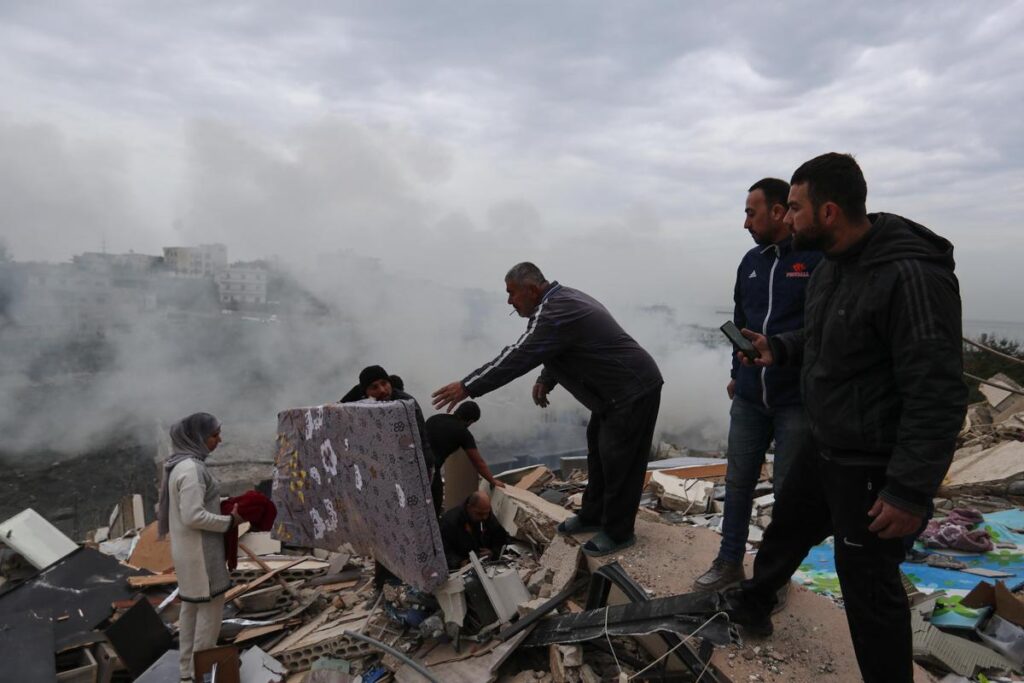
An Associated Press crew that visited the strike site early Saturday observed that the upper level of a three-story residential building had been destroyed, its top floor sheared off and debris scattered across nearby streets. Rescue workers and residents combed through the rubble amid lingering smoke.

The Israeli military confirmed it conducted operations in the Baalbek region, stating that several members of Hezbollah’s missile unit were “eliminated” at three separate command centers. The army asserted that those targeted had been engaged in accelerating operational readiness and planning attacks toward Israel.

One Hezbollah official said that Hussein Yaghi was the son of Mohammed Yaghi, a prominent Hezbollah figure and founding member who died in 2023. The elder Yaghi had been a close associate of longtime Hezbollah leader Hassan Nasrallah, who was killed in an Israeli airstrike in September 2024.

Ali Abdullah, executive director of Rayak Hospital, told the AP that the bombardment occurred shortly after sunset. The hospital received 10 bodies and treated 21 wounded, he said. Among those killed were two non-Lebanese nationals — a Syrian man and an Ethiopian woman — while the injured included five Syrians and three Ethiopians. Many Ethiopians in Lebanon are employed as migrant domestic workers.

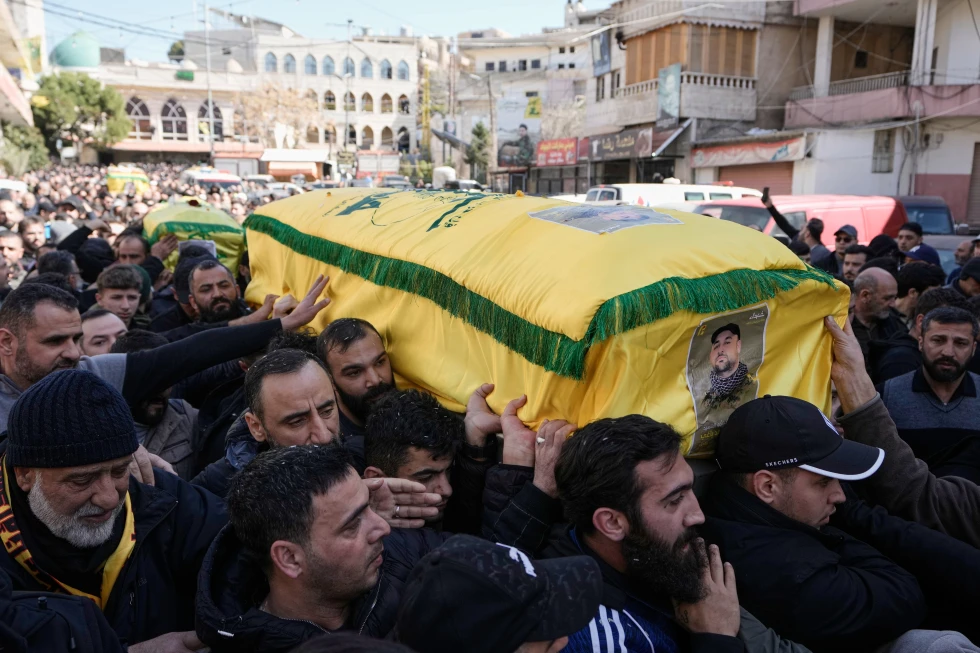
Funeral rites were held Saturday in the eastern village of Nabi Chit for two Hezbollah members killed in the strikes, as mourners gathered under heavy security.

The latest violence unfolds against the backdrop of heightened cross-border tensions that began after the Oct. 7, 2023, Hamas-led attack on Israel ignited war in Gaza. Shortly afterward, Hezbollah initiated rocket fire from Lebanon into northern Israel, describing its actions as solidarity with Palestinians in Gaza.

Israel responded with sustained airstrikes and artillery barrages. What began as limited exchanges escalated into full-scale war in September 2024 before a U.S.-brokered ceasefire two months later curbed the most intense fighting. Although large-scale hostilities subsided, sporadic strikes and retaliatory actions have persisted.

Since the truce, Israel has repeatedly accused Hezbollah of attempting to reconstitute its military infrastructure and missile stockpiles. Israeli forces have carried out near-daily strikes in Lebanon, asserting that the operations target militants and weapons facilities. Hezbollah has acknowledged at least one retaliatory strike into Israel since the ceasefire.

The death toll from Friday’s strikes was unusually high compared with recent incidents, underscoring the volatility of the current phase.

A day earlier, The Associated Press detailed additional Israeli strikes in Lebanon’s eastern Bekaa Valley that left at least 10 dead and 24 wounded, including three children, as cited by the Lebanese Health Ministry. Another Israeli strike on the Palestinian refugee camp of Ein el-Hilweh in the port city of Sidon killed two people.

The Israeli military said the Sidon strike targeted a Hamas command center within the camp. Hamas confirmed that two of its members were killed but dismissed Israel’s assertion about a command hub, describing it as unfounded. The group said the building struck belonged to a joint Palestinian security force responsible for maintaining order in the camp.

Television footage from the Bekaa region showed an apartment building ablaze, with emergency crews battling flames and sifting through debris for survivors.

The renewed escalation comes as tensions between Israel and Iran simmer over Tehran’s nuclear program. The United States has warned of possible military action against Iran should diplomatic negotiations collapse. Iran is a principal backer of both Hezbollah and Hamas.

During last year’s Israel-Iran confrontation, Hezbollah largely avoided direct involvement, a decision many analysts viewed as calculated restraint. Yet residents across Lebanon fear that any renewed Israel-Iran conflict could draw the country into another devastating war.

The Israel-Hezbollah war of 2024 inflicted widespread destruction across southern and eastern Lebanon and displaced tens of thousands of residents. Though the ceasefire reduced open warfare, reconstruction has been uneven, and economic pressures have compounded Lebanon’s ongoing financial crisis.

The Rayak strikes signal a shift toward more precise and high-profile targeting of Hezbollah’s mid-level command structure. By naming missile unit personnel and describing the sites as command centers, Israel appears intent on demonstrating that its intelligence apparatus remains active inside Lebanon despite the ceasefire.

Such strikes may aim to degrade Hezbollah’s capacity to rebuild its arsenal, particularly its missile infrastructure, which Israel regards as a strategic threat. However, the inclusion of civilian casualties — including migrant workers — underscores the difficulty of conducting military operations in densely populated or mixed-use areas.

The targeting of figures connected to Hezbollah’s founding generation also carries symbolic weight. The killing of Hussein Yaghi, linked to a senior historical figure within the movement, may resonate deeply among Hezbollah’s support base and could intensify calls for retaliation.

At the same time, Hezbollah’s relatively restrained response since the ceasefire suggests the group is balancing deterrence with caution. Lebanon’s fragile economy and political paralysis limit the country’s appetite for renewed full-scale conflict. A broader war would likely exacerbate already severe humanitarian and financial challenges.

The interplay between Israeli operations in Lebanon and U.S.-Iran tensions adds another layer of unpredictability. Should diplomatic efforts on Iran’s nuclear program falter, regional proxies could once again become conduits for escalation.

For now, the Rayak airstrikes illustrate how the Israel-Hezbollah confrontation has evolved from overt battlefield clashes into a shadow conflict marked by targeted operations and calibrated responses. Whether that dynamic holds — or unravels — may depend less on events in Rayak and more on decisions made in Jerusalem, Tehran and Washington in the weeks ahead.

AP

Migrant Tragedy in Libya: 5 Bodies Wash Ashore Near Tripoli as Mediterranean Crisis Deepens

0

At least five migrants, including two women, were found dead along Libya’s coastline east of the capital, Tripoli, on Saturday, a local police official said, in the latest grim reminder of the dangers facing those attempting the Mediterranean crossing to Europe.

Hassan Al-Ghawil, head of investigations at the Qasr al-Akhyar police station, told Reuters that residents discovered the bodies on Emhamid Al-Sharif shore, in the western part of the coastal town. Authorities were alerted after bystanders spotted the victims lying along the sand.

Al-Ghawil indicated that community members also saw the body of a child wash ashore before high waves carried it back into the sea. Libya’s coast guard has been asked to search for the missing child, he added.

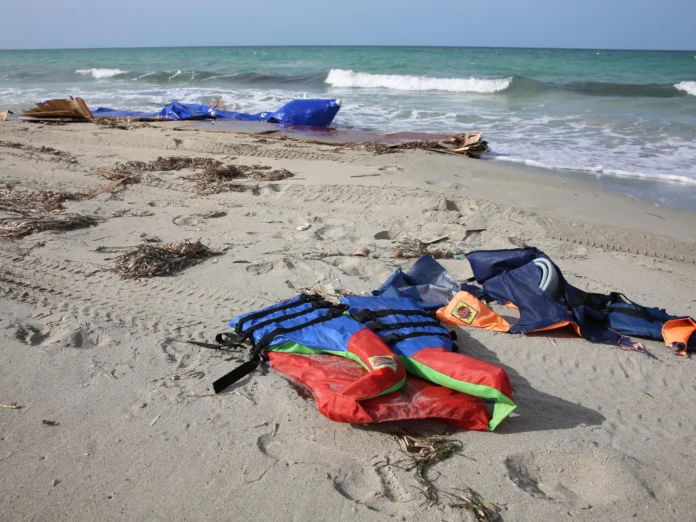
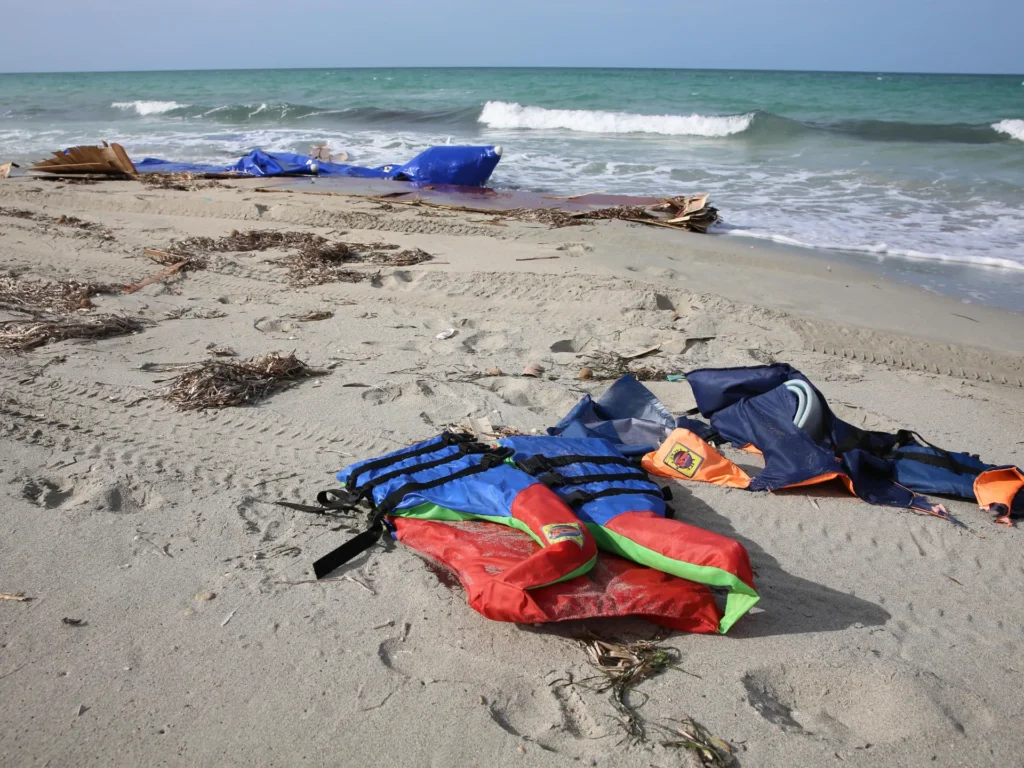
The recovered victims were described as dark-skinned migrants. Images circulated online — and viewed by Reuters — showed several bodies still partially encircled by black inflatable lifebuoys, suggesting they had been traveling aboard a small rubber craft commonly used by smugglers ferrying migrants across the Mediterranean.

“We notified the Red Crescent to retrieve the remains,” Al-Ghawil said, adding that the bodies were intact and that additional victims may yet surface as tides shift.

Qasr al-Akhyar lies roughly 73 kilometers (45 miles) east of Tripoli and has long been one of several points along Libya’s sprawling coastline where migrant boats depart or are intercepted.

Libya has served as a principal transit hub for migrants and asylum-seekers fleeing war, persecution and economic hardship in sub-Saharan Africa and parts of the Middle East. The surge in crossings intensified after the 2011 NATO-backed uprising that toppled longtime ruler Muammar Gaddafi, plunging the country into prolonged instability.

Since 2014, Libya has been divided between rival administrations in the east and west, each backed by armed factions. The fragmentation of state authority has enabled human trafficking networks to flourish, with smugglers operating detention warehouses and launching overcrowded boats from remote beaches.

The International Organization for Migration has repeatedly warned that Libya remains one of the most hazardous migration corridors in the world. Earlier this month, the IOM disclosed that 53 migrants, including two infants, were dead or missing after a rubber boat carrying 55 people capsized off the coast of Zuwara in western Libya.

Those figures underscore the persistent volatility of the Mediterranean route — a stretch of sea that has claimed thousands of lives over the past decade.

Last week, a United Nations report detailed systemic abuses faced by migrants inside Libya, including killings, torture, sexual violence and forced labor. The report urged governments to suspend the practice of returning intercepted migrant boats to Libyan shores until safeguards for human rights can be guaranteed.

International agencies say many migrants intercepted at sea are transferred to detention centers where conditions are often described as dire. Human rights monitors have documented overcrowding, inadequate food and medical care, and violence perpetrated by both state-affiliated units and armed groups.

Libyan authorities maintain that they are working to curb smuggling operations and stabilize coastal regions, though limited resources and competing power centers have complicated enforcement.

The discovery in Qasr al-Akhyar follows a pattern seen repeatedly along Libya’s coastline: small craft launched under cover of darkness, often overloaded and poorly equipped, capsizing before reaching international waters. Many passengers lack life jackets, and inflatable boats frequently deflate or rupture during the journey.

The presence of lifebuoys around some of the recovered victims suggests attempts were made to prevent drowning, though such measures offer little protection against high swells and prolonged exposure.

Migration experts note that departures often spike during favorable weather windows, even as seasonal storms increase unpredictability. The Mediterranean crossing from Libya to Italy can span more than 300 kilometers (186 miles), depending on the launch point.

While European Union naval patrols and Libyan coast guard interceptions have reduced some flows in recent years, smuggling networks continue to adapt routes and tactics.

The latest fatalities highlight not only the perilous maritime conditions but also the structural factors driving migration through Libya. Political fragmentation has left large swaths of territory beyond consistent government control, creating fertile ground for trafficking rings. Without a unified security apparatus or comprehensive judicial oversight, dismantling smuggling operations remains challenging.

The repeated discovery of bodies along Libya’s eastern and western shores suggests that enforcement measures alone have not deterred departures. Many migrants weigh the immediate dangers of the sea against prolonged detention or exploitation on land — a calculus that often leads them to risk the crossing despite well-documented hazards.

The U.N.’s call for a moratorium on returning migrants to Libya reflects a broader debate within Europe and North Africa over burden-sharing and accountability. Critics argue that European migration agreements with Libyan authorities effectively outsource border control without ensuring humane treatment. Supporters contend such arrangements are necessary to manage irregular flows and prevent further drownings.

The Qasr al-Akhyar tragedy also underscores the absence of comprehensive regional solutions. Efforts to address root causes — including economic collapse, armed conflict and climate stress in migrants’ countries of origin — remain uneven. Until those drivers are mitigated, Libya’s coastline is likely to remain both a launching point and a graveyard.

Humanitarian organizations say improved search-and-rescue coordination, expanded legal migration pathways and stronger oversight of detention facilities could reduce fatalities. Yet diplomatic tensions and resource constraints continue to stall sustained reform.

For now, the images of lifebuoys resting beside silent waves serve as a stark emblem of a crisis that has become tragically routine.

Reuters

Cameroon Military Court Sentences Soldiers in 2020 Ngarbuh Civilian Killings Amid Ongoing Anglophone Conflict

0

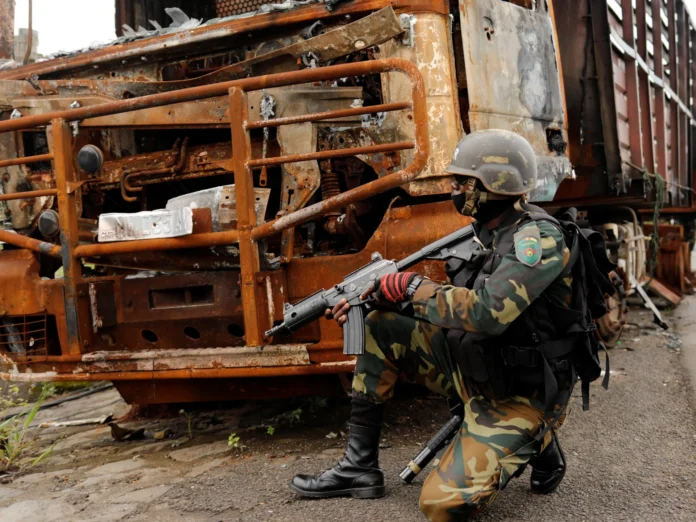
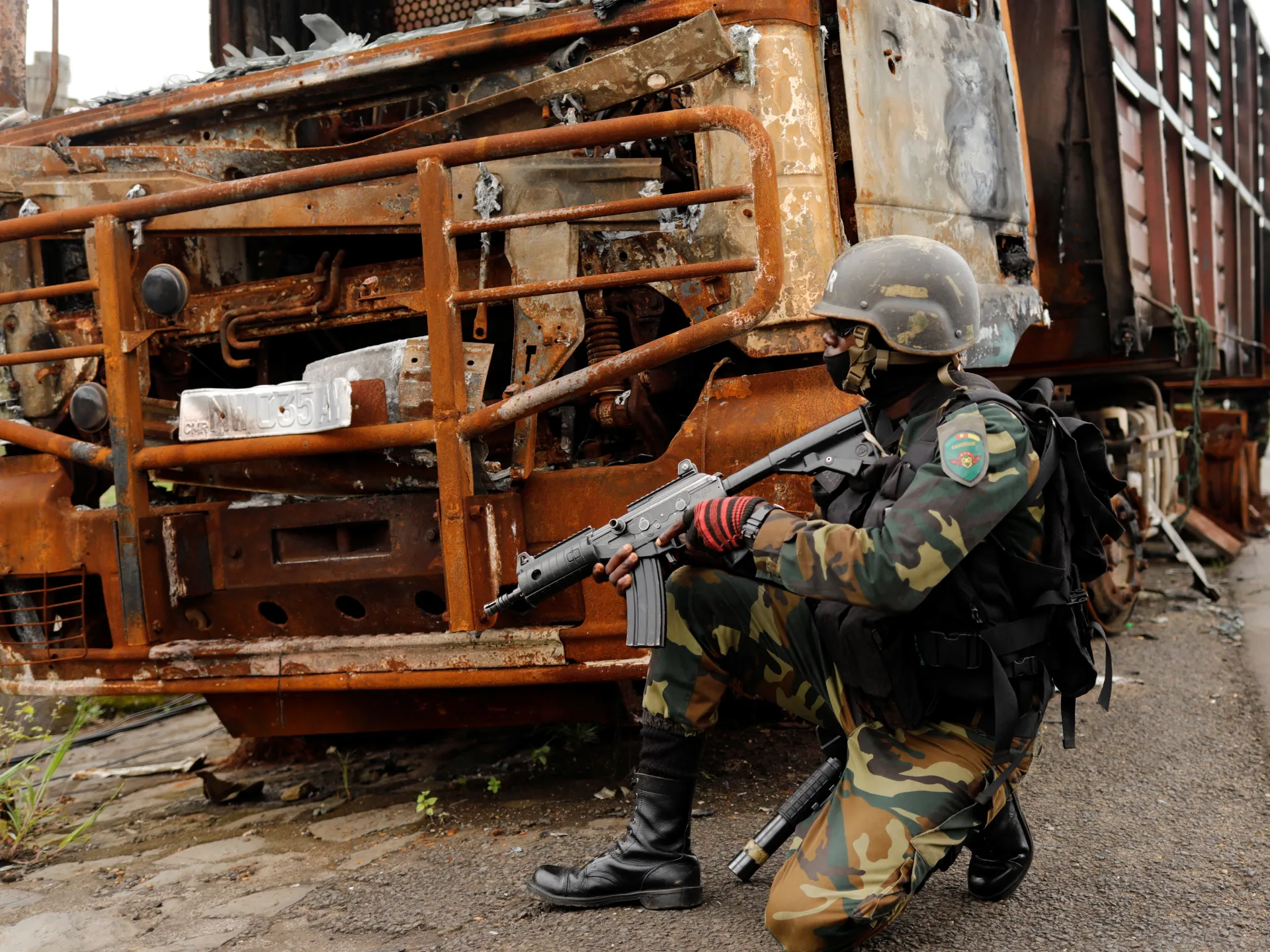
YAOUNDE, Cameroon (BN24) — A military tribunal in Cameroon has sentenced three soldiers to prison terms ranging from five to 10 years for their role in the killing of at least 21 civilians in the country’s troubled Northwest region, marking one of the few instances in which members of the security forces have been convicted for abuses against civilians.

The convictions stem from a Feb. 14, 2020, operation in the village of Ngarbuh, where government troops, supported by a local militia made up of ethnic Fulanis, carried out a raid that left dozens dead. The victims included 13 children, as documented by Human Rights Watch, which also detailed accounts of homes set ablaze and residents beaten during the assault.

The military court found the soldiers guilty of murder, arson, and destruction of property. In addition to the three soldiers, a member of the allied militia was also sentenced on similar charges. The court delivered its ruling Thursday evening after proceedings that extended over six years, marked by repeated delays.

The case has drawn international scrutiny and domestic criticism in a country where prosecutions of military personnel for crimes against civilians remain rare.

In the immediate aftermath of the killings, Cameroonian authorities denied responsibility for the attack. Officials initially characterized the deaths as collateral damage from a confrontation with separatist fighters.

That position shifted months later, following mounting diplomatic pressure and the findings of a government-ordered inquiry initiated by President Paul Biya. The investigation acknowledged that government troops and militia members were involved in the civilian deaths — a rare public admission by the state amid the ongoing separatist crisis in the country’s English-speaking regions.

The Anglophone conflict, now approaching a decade, pits government forces against armed separatists seeking to establish an independent state in Cameroon’s Northwest and Southwest regions. Since 2017, clashes have intensified, with both sides facing accusations of serious human rights violations.

The United Nations estimates that at least 6,000 people have been killed and more than half a million displaced by the violence.

Lawyers representing the victims expressed dissatisfaction with the length of the sentences imposed by the court.

Sother Menkem, one of the legal representatives for the families, described the punishment as inadequate in remarks to the BBC. He argued that under Cameroonian law, serious felonies such as murder and arson carry a minimum sentence of 10 years and suggested that significantly longer prison terms were warranted given the scale of the killings.

“The sentence was so mild, I even qualify it as friendly because we are talking of a massacre,” Menkem told the BBC.

He maintained that the soldiers’ actions instilled lasting fear among residents of the area and contended that prison terms of 30 years or more would have been more proportionate to the gravity of the crimes.

Another lawyer for the victims, Richard Tamfu, criticized the court’s decision to reject demands for financial compensation for survivors and bereaved families. The ruling leaves affected families without court-ordered restitution despite the acknowledgment of wrongdoing.

Defense attorneys for the soldiers countered that their clients were performing their official duties during a security operation in a volatile conflict zone.

A man who lost several relatives in the attack told the BBC he needed time to process the court’s verdict. He has since relocated from the Northwest region for safety, underscoring the continuing instability in the area.

Human rights advocates have long argued that accountability in the Ngarbuh case should extend beyond those directly involved in the operation. Human Rights Watch and lawyers for the victims have maintained that the soldiers were acting under orders from superiors and have criticized the absence of senior military officers among the defendants.

The lack of prosecutions higher up the chain of command remains a point of contention and reflects broader concerns about structural impunity within Cameroon’s security apparatus.

The violence in Cameroon’s Anglophone regions traces back to grievances over political marginalization, language rights, and perceived inequities in governance. Protests in 2016 by lawyers and teachers in the English-speaking regions were met with force, escalating into armed confrontation the following year.

Since then, armed separatist groups have targeted security forces, schools, and civilians accused of cooperating with the government. State forces, in turn, have faced allegations of extrajudicial killings, arbitrary arrests, and the burning of villages.

The Ngarbuh killings became emblematic of the conflict’s brutality and fueled international calls for accountability. The rare admission of responsibility by the government was seen by observers as a potential turning point. However, critics argue that the limited scope of prosecutions and relatively short sentences suggest that systemic reform remains elusive.

The sentencing of the three soldiers carries symbolic weight in a country where convictions of security personnel are uncommon. It signals that, under sustained domestic and international pressure, the government is willing to pursue at least some measure of judicial action in high-profile cases.

Yet the modest prison terms and the absence of senior officers among those convicted may reinforce perceptions that accountability stops at lower ranks. In conflicts marked by hierarchical command structures, prosecutions limited to frontline personnel often raise questions about whether justice addresses the broader decision-making framework that enabled the abuses.

The case also reflects the delicate political calculus facing President Biya’s administration. Acknowledging wrongdoing may help ease diplomatic strain and bolster Cameroon’s international standing. At the same time, expanding prosecutions to senior officials could expose the military leadership to deeper scrutiny and potentially unsettle internal power dynamics.

For communities in the Northwest region, however, the verdict’s practical impact may be limited. Displacement remains widespread, and sporadic violence continues. Without comprehensive reforms including transparent investigations, reparations mechanisms, and credible oversight of security operations the trial may be viewed as an isolated response rather than a turning point.

As the Anglophone crisis endures, the Ngarbuh case stands as both a rare instance of judicial action and a reminder of the broader challenges facing Cameroon in reconciling security imperatives with human rights obligations.

Gunmen Kill at Least 50 in Night Assault on Zamfara Village as Insecurity Deepens in Northwest Nigeria

0

ANKA, Nigeria (BN24) — Armed assailants killed at least 50 residents in a prolonged overnight attack on Dutsin Dan Ajiya village in Zamfara State, witnesses and a local lawmaker said Friday, in one of the deadliest assaults reported this year in Nigeria’s troubled northwest.

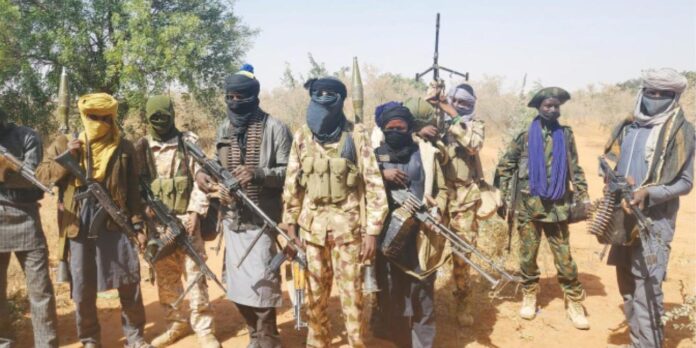
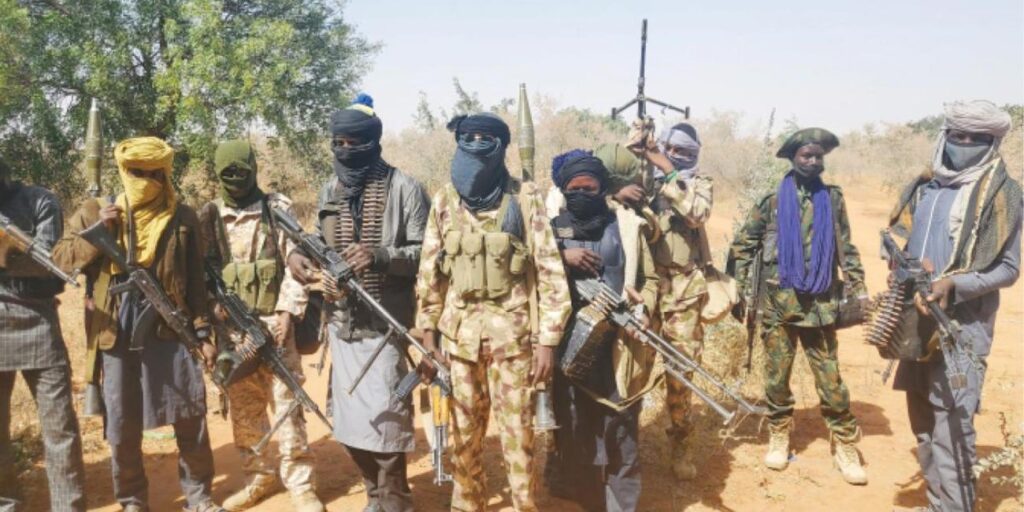
Residents described scenes of chaos as heavily gunmen stormed the rural community in Anka Local Government Area late Thursday, firing indiscriminately and setting buildings ablaze. The attackers allegedly sealed off access roads to prevent escape, trapping villagers inside.

A resident who requested anonymity for security reasons recounted that the gunmen arrived carrying sophisticated weapons and began shooting sporadically after blocking major routes leading in and out of the village.

“After blocking all the roads, the bandits started to shoot at sight, and the villagers ran helter-skelter,” the resident said. He added that an initial count after the attack showed at least 30 people killed, with several others wounded or missing.

However, the death toll may be significantly higher. Reuters cited local officials who placed the number of fatalities at no fewer than 50.

Hamisu Faru, a lawmaker representing Bukkuyum South, told Reuters that the assailants launched the raid around 5 p.m. Thursday and continued until approximately 3:30 a.m. Friday. During that time, he said, buildings were torched, and residents attempting to flee were gunned down.

“They have been moving from one village to another … leaving at least 50 people dead,” Faru said.

A 41-year-old resident, Abdullahi Sani, told Reuters that three of his family members were among those killed. Sani said villagers had alerted security forces and local authorities after spotting more than 150 motorcycles transporting the attackers toward the community, but no immediate assistance arrived.

Images circulating on social media showed bodies wrapped in white cloth ahead of a mass burial, underscoring the scale of the tragedy.

In addition to the reported fatalities, several residents were abducted during the raid, which extended into the early hours of Friday. The number of those taken remains unclear.

Zamfara State has endured years of attacks by armed groups locally referred to as bandits. The groups frequently raid villages, kidnap residents for ransom, loot livestock, and burn homes. Despite repeated security operations, rural communities remain vulnerable.

The latest assault comes amid growing concern about the deteriorating security landscape across northwest Nigeria, where criminal gangs operate across vast forested areas with limited state presence.

The attack followed another security incident in Zamfara earlier this week. SaharaReporters indicated Friday that a Nigerian Army armored personnel carrier was destroyed by an explosive device along the Keta–Dangibga road in the state.

A source familiar with the development told the outlet that the blast occurred while soldiers were escorting civilian motorists along the route, which has been repeatedly targeted by armed groups.

According to the source, the convoy encountered an improvised explosive device that detonated, scattering the armored vehicle. “Army APCs were escorting motorists to Dangibga and encountered an explosive device … blast and scattered the said APCs,” the source was quoted as saying.

Casualty figures from the explosion were not immediately available, but the incident reportedly triggered panic among travelers and nearby residents.

The Keta–Dangibga axis has become notorious for ambushes and roadside bombs planted by armed groups seeking to disrupt military patrols and civilian movement.

The violence in Zamfara reflects a broader pattern of insecurity across northern Nigeria. Armed groups in the northwest operate differently from insurgent factions in the northeast, though the lines have occasionally blurred. While some gangs are primarily motivated by financial gain through kidnapping and extortion, authorities have warned of increasing collaboration between criminal networks and extremist organizations.

In January 2026, SaharaReporters detailed an operation by troops under Operation Hadin Kai in northeastern Nigeria. According to the outlet, soldiers killed three individuals suspected of planning suicide attacks along the Guduf–Pulka axis in Gwoza Local Government Area of Borno State.

Operation Hadin Kai is the Nigerian military’s counterinsurgency campaign primarily targeting extremist groups in the northeast. The operation highlights the country’s dual security challenges: insurgency in the northeast and banditry in the northwest.

The attack on Dutsin Dan Ajiya underscores persistent gaps in rural security coverage despite repeated assurances from authorities. Reports that villagers alerted security forces after spotting large numbers of motorcycles raise concerns about response times and operational readiness.

The use of over 150 motorcycles suggests a high level of coordination and mobility. Motorcycles have become a tactical hallmark of armed groups in northwest Nigeria, allowing rapid movement across difficult terrain and facilitating surprise raids.

The alleged destruction of an armored personnel carrier by an improvised explosive device further complicates the security equation. If confirmed, such an incident would indicate that armed groups in Zamfara are increasingly deploying more sophisticated weaponry and tactics traditionally associated with insurgent warfare.

The combination of mass-casualty village raids and targeted attacks on military convoys signals a troubling escalation. For rural communities, the pattern erodes confidence in state protection and may fuel displacement, economic disruption, and long-term instability.

Moreover, repeated large-scale attacks can have cascading effects: agricultural production declines as farmers abandon fields, local markets shut down, and humanitarian needs increase. Zamfara, already grappling with poverty and limited infrastructure, faces compounded strain as insecurity persists.

While security operations have been intensified in parts of the northwest, the recurrence of such attacks suggests that enforcement strategies alone may be insufficient. Analysts have highlighted the need for improved intelligence coordination, rural policing reforms, economic interventions, and community-based conflict-resolution mechanisms.

As Zamfara mourns another devastating loss, the latest assault adds to mounting pressure on authorities to deliver durable solutions. For residents of Dutsin Dan Ajiya and neighboring communities, the immediate priority remains safety, but the broader challenge lies in reversing a cycle of violence that has entrenched fear across much of northwest Nigeria.

Chelsea, Aston Villa Stumble in Late Premier League Drama as Burnley and Leeds Snatch Crucial Draws

0
Chelsea's English midfielder #10 Cole Palmer (C) vies with Burnley's English midfielder #20 James Ward-Prowse (R) during the English Premier League football match between Chelsea and Burnley at Stamford Bridge in London on February 21, 2026. (Photo by Ben STANSALL / AFP) / RESTRICTED TO EDITORIAL USE. NO USE WITH UNAUTHORIZED AUDIO, VIDEO, DATA, FIXTURE LISTS, CLUB/LEAGUE LOGOS OR 'LIVE' SERVICES. ONLINE IN-MATCH USE LIMITED TO 120 IMAGES. AN ADDITIONAL 40 IMAGES MAY BE USED IN EXTRA TIME. NO VIDEO EMULATION. SOCIAL MEDIA IN-MATCH USE LIMITED TO 120 IMAGES. AN ADDITIONAL 40 IMAGES MAY BE USED IN EXTRA TIME. NO USE IN BETTING PUBLICATIONS, GAMES OR SINGLE CLUB/LEAGUE/PLAYER PUBLICATIONS. /

LONDON (BN24) — Chelsea’s bid to secure Premier League football next season faltered Saturday after Burnley struck deep into stoppage time to claim a 1-1 draw at Stamford Bridge, while Aston Villa also needed a late intervention to avoid defeat against Leeds United in another dramatic Premier League encounter.

Chelsea appeared poised to strengthen their grip on a top-four position after João Pedro found the net just four minutes into the match. The early breakthrough settled the home side and set the tone for a dominant first half in which Chelsea dictated possession and tempo.

Yet the contest shifted decisively in the 72nd minute when defender Wesley Fofana received his second yellow card, forcing Chelsea to navigate the closing stages with 10 men. Burnley, sensing an opportunity, pushed forward with urgency. Their persistence was rewarded in the third minute of stoppage time when Zian Flemming rose highest to head home from a corner, silencing the home crowd and rescuing a crucial point for the visitors.

The result leaves Chelsea clinging to a Champions League berth only on goal difference. For Burnley, the draw narrows the gap to safety to eight points, preserving faint hopes of avoiding relegation.

At Villa Park, Aston Villa’s recent struggles on home soil continued in a 1-1 stalemate with Leeds United. Despite having mounted credible challenges to Arsenal and Manchester City in recent weeks, Villa again faltered in front of their own supporters.

Leeds spectacularly opened the scoring. Anton Stach unleashed a swerving free kick from 40 yards (37 meters) that caught goalkeeper Emiliano Martínez off guard at his near post. The audacious strike underscored Leeds’ growing confidence under manager Daniel Farke, whose side has been beaten just twice in its last 16 league outings, a run that has steadied nerves after earlier relegation concerns.

Villa responded with urgency in the closing stages, pressing high and committing numbers forward. Their pressure paid dividends in the 88th minute when Tammy Abraham converted to level the match, sparing Villa a damaging defeat but doing little to halt concerns about their home form.

The broader implications of Saturday’s results extend beyond individual fixtures. With five Premier League clubs poised to qualify for next season’s Champions League due to English teams’ strong performances in European competition, the margin for error among contenders remains slim. Liverpool and Manchester United have opportunities to tighten the race further when they meet Nottingham Forest and Everton, respectively, in upcoming matches.

Elsewhere, James Milner etched his name into Premier League history by making his 654th appearance as Brighton defeated Brentford 2-0. The 40-year-old midfielder’s landmark outing helped Brighton secure its first victory in seven matches, easing scrutiny surrounding manager Fabian Hürzeler.

Diego Gómez opened the scoring before Ferdi Kadioglu nearly doubled the advantage with a powerful effort that struck the crossbar. Danny Welbeck capitalized on defensive lapses just before halftime to seal the win, delivering a much-needed boost for the Seagulls.

Attention now turns to the title race. Manchester City can move within two points of leaders Arsenal with a victory over Newcastle in Saturday’s late kickoff. Arsenal, meanwhile, prepares for a high-stakes north London derby against Tottenham Hotspur on Sunday. Recent draws against Brentford and Wolverhampton Wanderers have trimmed City’s momentum, intensifying scrutiny on the defending champions as the campaign enters its decisive stretch.

Saturday’s results reflect the increasing volatility at both ends of the Premier League table. Chelsea’s inability to convert dominance into a comfortable victory highlights a recurring vulnerability: defensive lapses under pressure. The dismissal of Fofana not only altered the tactical balance of the match but also exposed concerns about discipline at critical junctures of the season

For Burnley, the equalizer could prove psychologically transformative. While the eight-point deficit remains steep, momentum often reshapes relegation battles in unexpected ways. A single result can galvanize belief within a squad fighting for survival, particularly when earned against a top-four opponent.

Aston Villa’s situation presents a different dilemma. Having briefly entered conversations surrounding the title race, the club now finds itself grappling with inconsistency at home. Villa Park was once considered a fortress, but recent dropped points may undermine confidence as rivals close in. If Villa cannot convert home fixtures into victories, their European ambitions could slip from reach despite an otherwise competitive campaign.

Leeds’ resurgence under Farke illustrates the importance of managerial stability during turbulent periods. Sustained form over 16 matches suggests structural improvement rather than short-term fortune. Their disciplined defensive shape and willingness to attempt ambitious efforts, such as Stach’s long-range strike, indicate a side playing with renewed conviction.

The expanded Champions League qualification adds complexity to the standings. While it provides additional opportunity, it also intensifies competition among mid-table contenders. Clubs previously targeting Europa League positions now perceive a realistic path to Europe’s elite competition, raising stakes across the board.

In the title race, the margin separating Arsenal and Manchester City remains razor-thin. Arsenal’s recent draws have introduced tension into a campaign that once appeared firmly under their control. City’s experience in navigating late-season pressure could again prove decisive, especially if Arsenal falter in emotionally charged fixtures such as the north London derby.

As the season approaches its climax, Saturday’s late goals serve as a reminder that no lead is secure and no position guaranteed. The Premier League’s defining characteristic, relentless unpredictability, continues to shape both the pursuit of glory and the fight for survival.

Israeli Strikes Kill at Least 12 in Lebanon’s Bekaa and Sidon as Regional Tensions Escalate

0

 Israeli airstrikes in eastern and southern Lebanon killed at least 12 people Friday, Lebanese officials said, marking one of the deadliest days since a U.S.-brokered ceasefire slowed but did not end months of cross-border fighting.

Lebanon’s Health Ministry said at least 10 people were killed and 24 wounded — including three children — in strikes targeting the Bekaa Valley. Two others died earlier in the day when an Israeli strike hit the Ein el-Hilweh Palestinian refugee camp in the southern port city of Sidon.

The Israeli military said it targeted “command centers” belonging to Hezbollah in the Bekaa Valley. There was no immediate response from Hezbollah.

Footage aired by local television from one of the strike sites in Bekaa showed an apartment building reduced to rubble as emergency crews battled flames and searched debris for survivors.

Earlier Friday, the Israeli military said it struck a “Hamas command center” in Ein el-Hilweh. Hamas acknowledged that two of its members were killed but rejected Israel’s description of the site, calling the allegation of a command center a “flimsy pretext.” The group said the building housed a joint Palestinian security force tasked with maintaining order in the camp.

The latest strikes come against the backdrop of sustained hostilities that began after the Oct. 7, 2023, Hamas-led attack on Israel ignited war in Gaza. The day after that assault, Hezbollah began launching rockets from Lebanon into northern Israel in what it described as solidarity with Palestinians.

Israel responded with airstrikes and artillery fire. The tit-for-tat exchanges eventually escalated into a broader conflict in September 2024 before a U.S.-brokered ceasefire two months later curtailed — but did not eliminate — the fighting.

Since that agreement, Israel has carried out near-daily airstrikes in Lebanon, asserting they target Hezbollah fighters and infrastructure. Hezbollah has claimed only one strike against Israel during that period.

Friday’s toll stands out as unusually high in the months since the truce took effect.

In a separate development earlier this week, Israeli forces seized a local official affiliated with al-Jamaa al-Islamiya, a Sunni Islamist group allied with Hamas, during an operation in southern Lebanon, Lebanese state media reported. The Israeli military confirmed it detained an Islamic Group official during what it described as a targeted intelligence operation but did not release the individual’s name.

Lebanon’s National News Agency identified the detainee as Atwi Atwi, a local figure within al-Jamaa al-Islamiya, taken from the village of Hebbarieh near the Israeli border.

The Islamic Group condemned the detention, accusing Israel of ongoing violations of Lebanese sovereignty and urging the Lebanese government to secure his release.

Also Monday, a drone strike in the southern village of Yanouh killed three people, including a 3-year-old child, Lebanon’s Health Ministry said. The Israeli military later stated it had targeted Hezbollah artillery official Ahmad Salami and acknowledged it was reviewing claims that civilians were among the dead.

The violence unfolds amid rising regional strain as the United States weighs possible military action against Iran if negotiations over Tehran’s nuclear program collapse. Iran provides support to both Hezbollah and Hamas, and any escalation involving Tehran could have cascading effects across Lebanon.

During last year’s direct hostilities between Israel and Iran, Hezbollah largely refrained from entering the conflict in full force. However, many Lebanese fear renewed confrontation could draw the country deeper into a broader regional war.

The previous Israel-Hezbollah war killed more than 4,000 people in Lebanon, including hundreds of civilians, and caused an estimated $11 billion in damage, according to the World Bank. In Israel, 127 people were killed, including 80 soldiers.

Friday’s strikes underscore how fragile the current ceasefire remains. Although large-scale ground combat has subsided, Israel’s continued air campaign suggests a strategy aimed at preventing Hezbollah from reconstituting its capabilities along the border.

For Hezbollah, calibrated responses have allowed it to signal defiance without triggering a return to full-scale war. That balance, however, is increasingly delicate. High-casualty incidents risk provoking retaliatory action that could spiral beyond the contained exchanges seen in recent months.

The targeting of sites in both the Bekaa Valley and a Palestinian refugee camp also illustrates the interconnected nature of militant networks in Lebanon. Hamas maintains a presence in camps such as Ein el-Hilweh, while Hezbollah operates extensively in eastern Lebanon. Israeli operations appear designed to disrupt both groups simultaneously.

At the same time, the detention of an Islamic Group official broadens the scope of Israel’s actions beyond Hezbollah, potentially complicating Lebanon’s internal political dynamics. Al-Jamaa al-Islamiya, Lebanon’s branch of the Muslim Brotherhood, has an armed wing known as the Fajr Forces, which joined Hezbollah in launching cross-border rockets after the Gaza war began.

With the Trump administration signaling potential military action against Iran, developments in Lebanon take on heightened importance. Any strike on Iranian targets could prompt Hezbollah or allied factions to intensify attacks against Israel, placing Lebanon once again at the center of a regional confrontation.

For civilians in border towns and refugee camps, the renewed violence revives memories of last year’s devastation. Despite diplomatic efforts, the pattern of targeted strikes, retaliatory threats and fragile restraint suggests that the line between contained hostilities and renewed war remains perilously thin.

The Associated Press original

INTERPOL-Led Operation Nets 651 Arrests in $45 Million Cyber Scam Crackdown Across Nigeria, 15 African Nations

0

LAGOS, Nigeria (BN24)— INTERPOL announced that coordinated law enforcement operations across 16 African countries have led to 651 arrests and the recovery of more than $4.3 million in assets tied to online fraud schemes.

The international policing body disclosed the figures in a statement issued Thursday, detailing the outcome of Operation Red Card 2.0, an eight-week campaign that ran from Dec. 8, 2025, through Jan. 30, 2026. Authorities say the crackdown targeted networks behind high-yield investment fraud, mobile money scams and deceptive digital loan applications.

The agency indicated that investigations during the operation linked criminal activity to more than $45 million in financial losses. Officials identified at least 1,247 victims, primarily across Africa but also in other parts of the world.

“Law enforcement agencies from 16 African countries have made 651 arrests and recovered more than USD 4.3 million in an international cybercrime operation against online scams,” the organization said in its release.

Authorities reported seizing 2,341 electronic devices and disabling 1,442 malicious internet protocol addresses, domains and servers, along with associated digital infrastructure used to facilitate fraudulent activity.

Nigeria Dismantles Investment Fraud Ring

In Nigeria, investigators broke up what officials described as a high-yield investment syndicate that allegedly recruited young individuals to execute cyber-enabled crimes. The network relied on phishing tactics, identity theft, social engineering and fabricated digital asset investment platforms to deceive victims.

More than 1,000 fraudulent social media accounts connected to the operation were removed. Authorities also uncovered a residential property allegedly constructed by the suspected ringleader to function as the group’s operational headquarters.

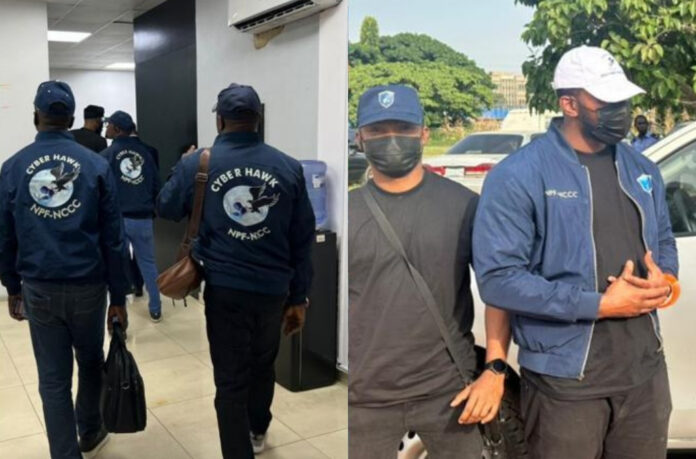
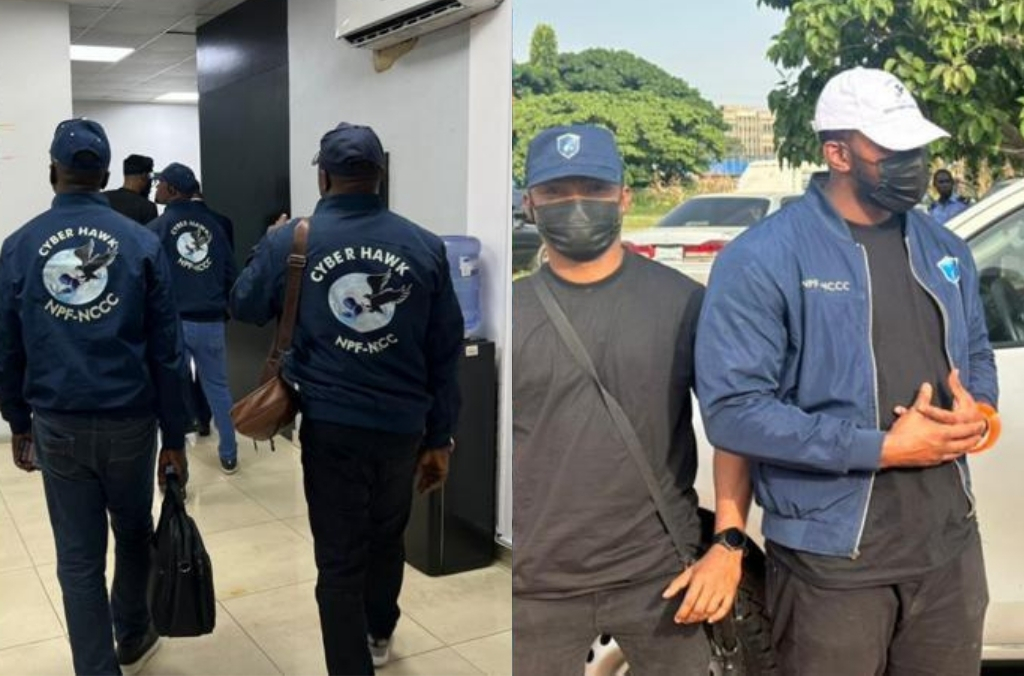
In a separate case within Nigeria, law enforcement officers detained six individuals accused of infiltrating the internal systems of a major telecommunications provider using compromised employee login credentials. Investigators say the suspects siphoned substantial volumes of airtime and data, which were then resold illegally.

Kenya Targets Social Media Investment Scams

Kenyan authorities detained 27 individuals suspected of orchestrating online investment fraud schemes. Officials said the suspects used messaging applications, social media platforms and fabricated testimonials to lure victims into making deposits purportedly tied to reputable international corporations.

Victims were persuaded to invest modest sums sometimes as little as $50 with promises of high returns. Fraudulent account dashboards were allegedly presented to create the illusion of profit, while withdrawal attempts were consistently blocked.

Côte d’Ivoire Cracks Down on Mobile Loan Fraud

In Côte d’Ivoire, law enforcement officers apprehended 58 suspects and confiscated 240 mobile phones, 25 laptops and more than 300 SIM cards during a focused operation targeting fraudulent mobile lending applications.

Authorities said the schemes preyed on financially vulnerable individuals by advertising fast, unsecured loans. Victims were later subjected to unauthorized fees, aggressive debt collection tactics and unauthorized harvesting of personal and financial data.

Intelligence Partnerships and International Support

INTERPOL said it facilitated intelligence coordination and real-time information exchange throughout the operation. The agency also provided digital forensic training to participating countries to strengthen investigative capabilities.

“These organized cybercriminal syndicates inflict devastating financial and psychological harm on individuals, businesses and entire communities with their false promises,” said Neal Jetton, director of INTERPOL’s Cybercrime Directorate. “Operation Red Card highlights the importance of collaboration when combatting transnational cybercrime. I encourage all victims of cybercrime to reach out to law enforcement for help.”

The campaign was conducted under the African Joint Operation against Cybercrime, an initiative financed by the United Kingdom’s Foreign, Commonwealth & Development Office. Operational assistance was also provided through the Global Action on Cybercrime Enhanced project, a partnership between the European Union and the Council of Europe.

Private-sector collaborators included Cybercrime Atlas, Team Cymru, Trend Micro, TRM Labs and Uppsala Security, which contributed technical data and threat intelligence to support enforcement efforts.

Participating countries included Angola, Benin, Cameroon, Côte d’Ivoire, Chad, Gabon, Gambia, Ghana, Kenya, Namibia, Nigeria, Rwanda, Senegal, Uganda, Zambia and Zimbabwe

A Growing Digital Battlefield

The scale of Operation Red Card 2.0 underscores the accelerating sophistication of cybercriminal networks operating across Africa. While online fraud has long posed challenges to regional economies, the cross-border coordination demonstrated in this operation signals a strategic shift toward dismantling infrastructure rather than simply apprehending low-level perpetrators.

By targeting IP addresses, servers and digital payment pathways, authorities appear to be focusing on the backbone of transnational fraud operations. That approach may yield longer-term disruption compared with isolated arrests.

The $45 million in linked losses highlights the economic toll cybercrime continues to exact on individuals and small businesses. For many victims, especially those targeted through mobile loan applications and investment platforms, financial losses are compounded by reputational harm and psychological stress.

Nigeria’s dual enforcement successes dismantling both an investment fraud ring and a telecommunications infiltration scheme illustrate the evolving nature of cyber threats. The alleged exploitation of telecom infrastructure for airtime and data resale reveals vulnerabilities within corporate cybersecurity frameworks, suggesting that private-sector resilience will be as critical as law enforcement action.

At the continental level, collaboration among 16 countries represents a notable milestone. Historically, fragmented legal systems and limited technological capacity have hampered coordinated responses. The inclusion of digital forensic training and intelligence-sharing partnerships may strengthen long-term deterrence.

Still, analysts caution that enforcement operations alone cannot eliminate online fraud. Preventive public awareness campaigns, stronger financial oversight and improved cybersecurity standards across telecom and banking sectors will likely be necessary to curb future scams.

As African economies deepen their digital integration through mobile money platforms and online financial services, the stakes continue to rise. Operation Red Card 2.0 demonstrates that multinational enforcement frameworks are evolving but so too are the tactics of cybercriminal syndicates.

For now, authorities say the latest operation has delivered a significant blow. Whether it produces sustained deterrence remains to be seen.

Lionel Messi Eyes Five Historic MLS Records as 2026 Season Kicks Off

0

MIAMI (BN24) — When Lionel Messi signed with Inter Miami CF in 2023, the move reshaped the commercial and competitive landscape of Major League Soccer. Two seasons later, the Argentine star stands on the verge of rewriting the league’s statistical record book.

Messi, who has already delivered a surge in attendance, television viewership and global attention for MLS, enters the 2026 season positioned to challenge several longstanding league marks. Football publication Planet Football recently identified five achievements within reach if the 38-year-old maintains his recent scoring pace.

The milestones range from individual scoring honors to club history benchmarks and even league-wide MVP recognition.

No player in MLS history has captured the Golden Boot award in back-to-back seasons. Five prominent figures Preki, Taylor Twellman, Jeff Cunningham, Chris Wondolowski and Bradley Wright-Phillips each lifted the award twice during their careers, yet none managed to defend the honor the following year.

Messi claimed the Golden Boot last season after scoring 29 goals, reinforcing his status as the league’s most lethal finisher. Should he repeat the feat in 2026, he would stand alone as the first consecutive winner since MLS began play in 1996.

The task is formidable. Opposing defenses now design game plans specifically to contain him, and the physical toll of a long North American schedule can weigh heavily. Still, Messi’s positional intelligence and playmaking instincts have enabled him to remain productive even as he adapts his game.

Among Argentine players in MLS, Diego Valeri holds the career scoring standard with 93 goals in 288 appearances. Messi enters the new season with 57 league goals, leaving him 36 short of matching Valeri’s mark.

Reaching that total within a single campaign would require sustained health and a scoring rate comparable to his 2025 output. While ambitious, such a target is not implausible given Messi’s central role in Inter Miami’s attack.

Valeri’s record has long symbolized Argentine excellence in MLS, particularly during his tenure with the Portland Timbers. For Messi to eclipse that figure would signal not only personal achievement but also a generational shift in the league’s Argentine hierarchy.

Messi already tops Inter Miami’s MLS charts in both goals and assists, compiling 50 goals and 28 assists for 78 direct goal contributions in league play. He requires 22 more combined goals and assists to become the first player in club history to reach 100.

Given his dual-threat profile equally adept as scorer and provider the milestone appears attainable. His chemistry with Miami’s attacking corps has grown with each season, and his deeper playmaking role has broadened his statistical impact beyond pure scoring.

Such a benchmark would further cement Messi’s imprint on a franchise still in its formative years.

Messi has collected the MLS Most Valuable Player award in each of the past two seasons, becoming the first player to secure the honor consecutively. He now shares two MVP titles with Preki.

A third award would make Messi the only three-time MVP in league history and the only player to win it three years in succession.

Voter fatigue often complicates repeat MVP campaigns in professional sports, yet Messi’s influence extends beyond numbers. His presence has altered tactical approaches league-wide, compelled clubs to invest more aggressively, and heightened global scrutiny of MLS competition.

Messi has produced two hat-tricks in MLS competition, leaving him five shy of the all-time league record held by Josef Martínez.

While that gap presents the steepest climb among the five categories, MLS history has shown that prolific scoring streaks can rapidly transform record books. Martínez himself assembled multiple hat-tricks during peak seasons.

If Messi were to replicate the explosive form, he displayed during his 2018 campaign with Barcelona — when he routinely recorded multi-goal outings the pursuit could intensify.

Beyond individual accolades, Messi’s chase underscores a broader transformation within MLS. Since his arrival, average ticket prices have climbed, international broadcast partnerships have expanded, and league marketing campaigns have centered on global reach.

His sustained excellence at age 38 challenges conventional assumptions about player longevity in MLS, a competition often viewed as a destination for stars nearing retirement. Instead, Messi has delivered elite production.

There are competitive ramifications as well. Inter Miami’s ambitions extend beyond personal milestones; domestic trophies and continental qualification remain primary objectives. Should Messi prioritize team success over statistical pursuits, some records may prove secondary.

Moreover, defensive schemes across MLS have evolved in response to his presence. Clubs frequently deploy compact midfield lines and aggressive pressing patterns designed to limit his space. That tactical arms race has elevated the league’s strategic complexity.

Still, the numbers place history within sight. If Messi maintains his current trajectory, 2026 could become another landmark year — not only for Inter Miami, but for MLS as a whole.

As the season unfolds, the spotlight will remain fixed on whether the Argentine icon can again redefine what is possible in North American soccer.

One thing is certain: the league’s record book is under threat.

Trump Banner Unveiled at Justice Department Headquarters Fuels Questions Over Agency Autonomy

0

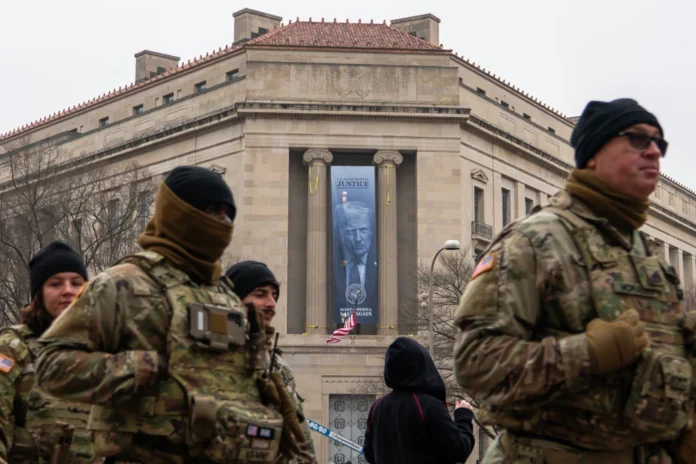
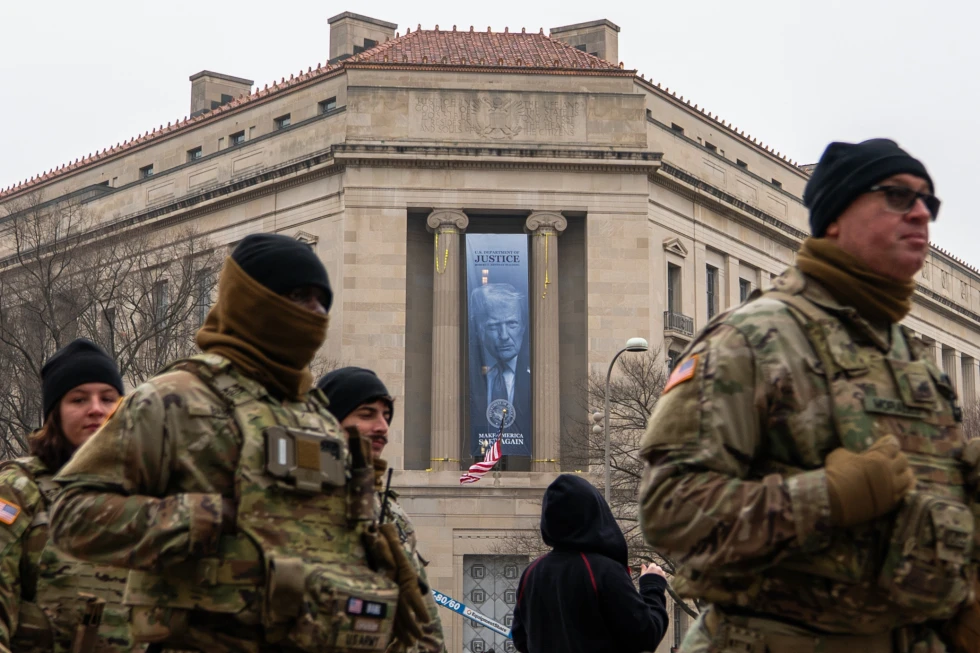
WASHINGTON (BN24) — A massive banner bearing President Donald Trump’s image was fastened Thursday to the exterior of the Justice Department’s headquarters, an unmistakable visual statement underscoring the administration’s imprint on the nation’s top law enforcement agency.

The display, positioned between two towering columns on a corner of the Robert F. Kennedy Building, features the slogan “Make America Safe Again,” a phrase the White House has adopted to frame its immigration crackdown and anti-crime agenda.

Though banners spotlighting Trump have appeared at other federal buildings across the capital, the decision to place one on the Justice Department carries particular symbolism. The department has long sought to maintain a buffer between its prosecutorial functions and direct political influence from the White House, preserving public confidence in impartial enforcement of federal law.

In a statement released Thursday, the Justice Department said it was proud to commemorate “250 years of our great country and our historic work to make America safe again at President Trump’s direction.”

Attorney General Pam Bondi has emerged as one of Trump’s most visible allies within the Cabinet. Her approach diverges from that of several predecessors who emphasized operational distance from the Oval Office as a safeguard against perceptions of political interference in criminal investigations and prosecutions.

Senior administration officials have forcefully rejected claims that the department is being steered to advance political objectives. They maintain that accusations of politicization are misplaced and contend that the prior administration under President Joe Biden injected politics into law enforcement by pursuing two federal criminal cases against Trump. Those cases were later dropped after Trump prevailed in the 2024 presidential election.

Even so, the banner’s installation has reignited debate over the department’s trajectory.

In recent weeks, federal authorities have initiated inquiries involving figures publicly critical of Trump. Among them are New York Attorney General Letitia James and former FBI Director James Comey. Charges were filed in both matters but ultimately dismissed. Separately, prosecutors sought indictments against several Democratic lawmakers connected to a video encouraging U.S. military personnel to resist what they described as unlawful orders.

Comey responded on social media, calling the banner “sickening to see.” He added that the administration appeared to have overlooked a long-standing inscription carved into the building’s façade: “Where law ends tyranny begins.”

The department has also opened investigations into Federal Reserve Chair Jerome Powell related to congressional testimony and into Democratic officials in Minnesota over whether their public remarks impeded federal immigration enforcement efforts.

Taken together, these actions have intensified scrutiny in Washington over whether the Justice Department is upholding its tradition of independence or more closely aligning its work with presidential priorities.

For decades, administrations of both parties have publicly recognized the importance of insulating prosecutorial decisions from overt political direction. That principle gained renewed emphasis following historical controversies that tested executive authority and prompted reforms aimed at strengthening institutional guardrails.

The Trump administration asserts that its law enforcement initiatives reflect a mandate from voters to restore public safety, particularly at the southern border and in communities grappling with violent crime. The “Make America Safe Again” slogan, now prominently displayed on the building, encapsulates that message.

Critics argue, however, that affixing the president’s image to the department’s headquarters risks blurring the distinction between political leadership and prosecutorial discretion. They contend that symbolism alone can influence public perception, especially when investigations involve political opponents.

The installation of a presidential banner on the Justice Department’s exterior represents more than a decorative change; it signals a recalibration of executive visibility over federal law enforcement. Historically, federal buildings have emphasized institutional identity rather than individual officeholders. Portraits of presidents typically reside inside government facilities, not draped across their façades.

By placing Trump’s likeness alongside a campaign-style slogan, the administration is communicating a direct linkage between the presidency and the department’s operational priorities. Supporters view the move as a transparent acknowledgment of executive authority. In their assessment, voters elected Trump on a platform centered on immigration enforcement and crime reduction, and the banner simply reflects that mandate.

Yet institutional norms often function as stabilizing forces in American governance. The Justice Department’s credibility rests heavily on public belief that prosecutorial decisions are driven by evidence and legal standards rather than political considerations. Even absent demonstrable interference, visible signs of presidential branding could shape perceptions domestically and abroad.

Legal analysts note that the president possesses broad constitutional authority over the executive branch. However, modern practice has evolved to include informal guardrails designed to protect the appearance and reality of fairness in law enforcement. Attorneys general from both parties have traditionally articulated a commitment to impartiality as essential to the rule of law.

The juxtaposition of the banner with the building’s engraved maxim “Where law ends tyranny begins” adds a historical dimension to the current debate. That inscription reflects a long-standing aspiration to separate lawful governance from arbitrary power. Its renewed visibility amid the banner controversy highlights broader questions about how executive power should be exercised.

The episode also unfolds against a backdrop of heightened political polarization. Investigations involving high-profile officials, whether Republicans or Democrats, inevitably draw partisan scrutiny. In that environment, visual symbols can take on amplified meaning.

Whether the banner becomes a defining emblem of the administration’s approach to federal law enforcement may depend on how ongoing investigations are resolved and whether courts uphold prosecutorial decisions as legally sound. Judicial review, rather than symbolism, will ultimately shape the department’s institutional legacy.

For now, the banner stands as a prominent feature of the Washington skyline a vivid representation of presidential influence and a catalyst for renewed discussion about the delicate balance between democratic accountability and the independence of those entrusted with enforcing the law.

DON'T MISS ANY OF OUR UPDATE