MONTEVIDEO, Uruguay (BN24) — Uruguay has become the first nation in Latin America to fully legalize euthanasia, following Senate approval of a landmark bill that allows terminally ill patients to choose an assisted death performed by medical professionals.
The legislation, formally known as the “Dignified Death” bill, passed with 20 votes in favor out of 31 senators on Tuesday. The lower house had already approved the measure in August with overwhelming support, signaling broad political and societal backing for the controversial but long-debated issue.
Under the new law, euthanasia will be available to adult Uruguayan citizens who are of sound mind and suffering from an irreversible, terminal illness that causes intolerable pain. A licensed healthcare professional must carry out the procedure, and patients must meet strict criteria to qualify.
The legislation explicitly excludes assisted suicide, in which patients self-administer lethal medication. Instead, it mandates that the act be performed by a medical provider under regulated conditions, ensuring oversight and ethical standards are upheld.
Senator Daniel Borbonet, speaking after the vote, reflected on testimonies from patients facing unbearable suffering. “We all believe and feel that life is a right, both in health and in sickness,” he said. “But it should never be an obligation because others don’t understand such unbearable suffering.”
Public support in Uruguay has been a driving force behind the bill. A recent national poll shows that more than 60% of Uruguayans support legal euthanasia, with just 24% opposed.
The move solidifies Uruguay’s status as a regional leader in socially liberal reforms. The small South American country has previously broken ground by legalizing same-sex marriage, abortion, and cannabis, all in a region where Catholic cultural influence has traditionally stymied such legislation.
Elsewhere in Latin America, countries like Colombia and Ecuador have decriminalized euthanasia through court rulings, but have not enacted formal laws to govern the practice. Cuba, meanwhile, permits terminally ill patients to decline life-prolonging treatment but stops short of authorizing medically assisted death.
Uruguay’s new euthanasia law is expected to take effect following publication in the official government gazette, after which the Ministry of Public Health will draft and implement regulatory guidelines to govern its application.
The passage of the law marks a historic shift in Latin America’s approach to end-of-life care, setting a precedent that may reverberate across the region in years to come.
WASHINGTON — The admiral who leads U.S. military forces in Latin America will step down at the end of this year, two years ahead of schedule, Defense Secretary Pete Hegseth announced Thursday, in a surprise move amid escalating tensions with Venezuela.
A source familiar with the matter told Reuters that there had been tension between Admiral Alvin Holsey and Hegseth over operations in the Caribbean and questions about whether he would be fired in the days leading up to the announcement.
Senator Jack Reed, the top Democrat on the Senate Armed Services Committee, called Holsey’s unexpected resignation troubling given mounting fears of a potential U.S. confrontation with Venezuela.
“Admiral Holsey’s resignation only deepens my concern that this administration is ignoring the hard-earned lessons of previous U.S. military campaigns and the advice of our most experienced warfighters,” Reed said in a statement.
Hegseth, in a social media post, did not disclose the reason for the departure of Holsey, who is one of two Black four-star officers leading a U.S. combatant command.
On X, Holsey said he would retire December 12 but did not give a reason. “It’s been an honor to serve our nation, the American people and support and defend the Constitution for over 37 years,” he said.
Holsey’s departure comes against the backdrop of a military buildup in the Caribbean that includes U.S.-guided missile destroyers, F-35 fighter jets, a nuclear submarine and around sixty-five hundred troops as President Donald Trump escalates a standoff with the Venezuelan government.
U.S. military strikes against suspected drug boats off Venezuela have killed at least twenty-seven people, raising alarms among some legal experts and mostly Democratic lawmakers, who question whether they adhere to the laws of war. The Trump administration argues it is in a war with narcoterrorist groups from Venezuela, making the strikes legitimate.
On Wednesday, Trump disclosed that he had authorized the Central Intelligence Agency to conduct covert operations inside Venezuela, adding to speculation in Caracas that the United States is attempting to topple President Nicolas Maduro.
Holsey is the latest in a series of flag officers to leave their positions since Hegseth took over the Pentagon. Some firings have been abrupt, including those of the chairman of the Joint Chiefs of Staff, C.Q. Brown, who was Black, and the top naval officer, Lisa Franchetti, who was the first woman to hold the position.
“The Department thanks Admiral Holsey for his decades of service to our country, and we wish him and his family continued success and fulfillment in the years ahead,” Hegseth said on X.
Less than a week ago, the Pentagon announced its counter-narcotics operations in the region would not be led by the Miami-based Southern Command, but by II Marine Expeditionary Force, a unit capable of rapid overseas operations that is based at Camp Lejeune in North Carolina.
That decision came as a surprise to U.S. military watchers, since a combatant command like Southern Command would normally lead any high-profile operations.
The reorganization of Caribbean operations away from Southern Command raised questions about Holsey’s authority and the military’s chain of command in the region. The move effectively sidelined the traditional geographic combatant command structure in favor of a deployable expeditionary force.
U.S. Southern Command is responsible for military operations and security cooperation in Central America, South America and the Caribbean. The command has historically played a key role in counter-narcotics operations, disaster relief and security partnerships with Latin American militaries.
Holsey assumed command of U.S. Southern Command in a ceremony that typically comes with an expected tenure of three to four years. His early departure leaves uncertainty about succession planning at a critical moment for U.S. military operations in the region.
The admiral’s resignation adds to broader concerns about military leadership stability under the Trump administration. Critics have questioned whether political considerations are influencing personnel decisions at the highest levels of military command.
The timing of Holsey’s departure, combined with the restructuring of counter-narcotics operations and escalating military activity near Venezuela, has prompted questions from lawmakers about strategic planning and civilian-military relations.
Defense Department officials have not announced a successor for the Southern Command position or clarified how the leadership transition will affect ongoing operations in Latin America and the Caribbean.
The departure of multiple senior military leaders in recent months has raised concerns among some former defense officials and members of Congress about continuity in military planning and the preservation of institutional knowledge at combatant commands.
Washington (BN24) – President Donald Trump on Thursday issued a stark warning to Hamas, saying “we will have no choice but to go in and kill them” if internal bloodshed in Gaza continues, marking a sharp shift in tone days after a ceasefire and hostage deal took effect.
Trump made the remarks after previously downplaying the internal violence between rival factions inside the enclave following the ceasefire agreement between Israel and Hamas last week in the two-year war.
Speaking to reporters, Trump later clarified that he does not intend to deploy U.S. forces to Gaza. “It’s not going to be us,” he said. “We won’t have to. There are people very close, very nearby that will go in and they’ll do the trick very easily, but under our auspices.” While he did not name the country, his comments were widely interpreted as a reference to Israel. Any direct Israeli military action, however, could risk violating the terms of the ceasefire.
Trump’s tough new rhetoric contrasted sharply with his earlier comments on Tuesday, when he appeared unconcerned about Hamas cracking down on rival gangs in the territory. “They took out a couple of gangs that were very bad,” Trump said then. “That didn’t bother me much, to be honest with you.”
The president did not elaborate on how the U.S. would act on his threat, posted on Truth Social, and the White House has not provided further details. However, Trump underscored that his administration has little patience for ongoing killings within Gaza. “They will disarm, and if they don’t do so, we will disarm them, and it’ll happen quickly and perhaps violently,” he said.
For nearly two decades, Hamas-run police maintained internal control in Gaza, but their presence has diminished in recent months as Israeli forces seized large areas and targeted Hamas security personnel with airstrikes. In their absence, powerful families and armed gangs, including anti-Hamas factions allegedly backed by Israel, have filled the void. Many of these groups have been accused of hijacking humanitarian aid and reselling it for profit, worsening the territory’s starvation crisis.
Under Trump’s ceasefire plan, Hamas was required to hand over all hostages—living and dead—by Monday’s deadline. If unable to return all bodies, Hamas was to provide information and return remains as soon as possible.
Israeli Prime Minister Benjamin Netanyahu said Wednesday that Israel “will not compromise” and demanded Hamas comply fully with the deal regarding the return of hostages’ bodies. Hamas’s armed wing said it has honored the ceasefire terms by handing over the remains of those it could access.
The U.S. announced last week that around 200 troops will be sent to Israel to help monitor the ceasefire as part of a multinational team, but U.S. officials have emphasized that no American forces will enter Gaza.
Israeli officials have voiced frustration at the slow pace of body returns. Hamas agreed to hand over 28 bodies in addition to the 20 living hostages already released. Senior U.S. advisers, speaking anonymously, said they believe Hamas is working through intermediaries to return the remaining bodies and does not appear to have violated the agreement.
Trump’s warning raises pressure on Hamas to end the internal bloodshed and fully comply with the ceasefire terms, even as tensions remain high over humanitarian access and hostage returns.
WASHINGTON (BN24) — A federal grand jury indicted former national security adviser John Bolton on Thursday, making him the third critic of President Donald Trump to face criminal charges in recent weeks.
Bolton was indicted in federal court in Maryland, where he lives and where prosecutors have been investigating whether he improperly retained classified materials following his acrimonious departure from the first Trump administration.
The indictment charges him with eight counts of transmission of national defense information and ten counts of retention of national defense information.
Asked about the indictment during a White House event Thursday, Trump said he did not know about the charges but called Bolton “a bad person.” “I think he’s a bad guy, yeah, he’s a bad guy. Too bad, but that’s the way it goes,” Trump said.
The other two prominent Trump adversaries to face charges in recent weeks are former FBI Director James Comey and New York Attorney General Letitia James.
Attorney General Pamela Bondi said in a statement after Bolton was charged that “there is one tier of justice for all Americans.” “Anyone who abuses a position of power and jeopardizes our national security will be held accountable. No one is above the law,” Bondi said.
FBI Director Kash Patel said charges came after the bureau’s “investigation revealed that John Bolton allegedly transmitted top secret information using personal online accounts and retained said documents in his house in direct violation of federal law.”
Bolton in a statement denied any wrongdoing and said the indictment was politically motivated. “Donald Trump’s retribution against me began then [during Trump’s first administration], continued when he tried unsuccessfully to block the publication of my book, The Room Where It Happened, before the 2020 election, and became one of his rallying cries in his re-election campaign,” Bolton said. “Now, I have become the latest target in weaponizing the Justice Department to charge those he deems to be his enemies with charges that were declined before or distort the facts.”
Bolton’s lawyer, Abbe Lowell, said his client, who was U.S. ambassador to the United Nations during the George W. Bush administration, did not break the law. “The underlying facts in this case were investigated and resolved years ago. These charges stem from portions of Amb. Bolton’s personal diaries over his 45-year career — records that are unclassified, shared only with his immediate family, and known to the FBI as far back as 2021,” Lowell said in a statement. “We look forward to proving once again that Amb. Bolton did not unlawfully share or store any information.”
The indictment alleges Bolton “abused his position” in the first Trump administration by “sharing more than a thousand pages of information about his day-to-day activities as the National Security Advisor including information relating to the national defense which was classified up to the TOP SECRET/SCI level with two unauthorized individuals, namely Individuals 1 and 2.”
The two were relatives of Bolton’s to whom he messaged and emailed the information, although they did not have security clearances, the court filing said. Bolton, seventy-six, “also unlawfully retained documents, writings, and notes relating to the national defense, including information classified up to the TOP SECRET/SCI level, in his home in Montgomery County, Maryland,” the filing said.
The Justice Department said in a press release that Bolton faces a maximum of ten years in prison on each count if convicted, but any sentence handed down by a judge would be far less than that and in line with federal sentencing guidelines and other statutory factors.
The FBI conducted searches of Bolton’s Maryland home and his Washington office in August. Redacted search warrant applications showed law enforcement cited Bolton’s “2020 Book Pre-Publication Review” and the “Hack of Bolton AOL Account by Foreign Entity” as a basis for probable cause to search his residence and office.
The foreign entity’s name was redacted in filings that were made public, but the indictment says it was “a cyber actor believed to be associated with the Islamic Republic of Iran.” “A representative for Bolton notified the U.S. Government of the hack in or about July 2021, but did not tell the U.S. Government that the account contained national defense information, including classified information, that BOLTON had placed in the account from his time as National Security Advisor,” the indictment said.
The book referred to in the search warrant was Bolton’s “The Room Where It Happened,” chronicling his tumultuous time as Trump’s national security adviser. The 2020 book became problematic for Trump even before it was released during his first impeachment.
The case involved allegations that the president withheld military aid to Ukraine to force it to announce an investigation into Joe Biden and his son Hunter. Bolton said in the book that Trump had explicitly told him that was why he was withholding the aid, an account Trump denied.
Trump was acquitted in his Senate trial and called for Bolton to be prosecuted after his book was released. “He released massive amounts of classified, and confidential, but classified information. That’s illegal and you go to jail for that,” Trump told Fox News in an interview at the time. Bolton denied that the book included classified information.
Court filings related to the search warrant show the FBI had been investigating Bolton for years. Agents had interviewed him eight times between October 2020 and June 2025 at his office, according to the application.
An inventory of items investigators took from Bolton’s office included several documents described as “classified,” “confidential” or “secret.” Some were described as “Weapons of Mass Destruction Classified Documents” and “U.S. Government Strategic Communications Plan — Confidential documents.”
The charges brought against Bolton, Comey and James largely mirror charges and claims that were brought against Trump between his first and second terms. Trump was indicted in June 2023 on charges of retaining and mishandling classified documents from his time in the White House. He pleaded not guilty, and the case was thrown out on technical grounds by a Trump-appointed judge in 2024.
Two of the other charges against Trump in the documents case were of making false statements and conspiracy to obstruct justice. The two charges against Comey are of making false statements and obstruction of a congressional proceeding. He has pleaded not guilty.
James, meanwhile, was charged with bank fraud and making false statements to a financial institution. The indictment alleges she falsely claimed that a home in Norfolk, Virginia, was her second residence, allowing her to obtain favorable loan terms she was not entitled to. The alleged scheme saved her about fifty dollars a month.
James’ office sued Trump and his company in 2022, alleging they were filing misleading financial statements with banks and insurers, overvaluing and undervaluing his assets when it was to his financial benefit, and exaggerating his net worth to the tune of billions of dollars. The scheme enabled Trump and his company to obtain bank loans and insurance policies at rates they were not entitled to, and as a result he “reaped hundreds of millions of dollars in ill-gotten gains,” James’ office has said.
The case resulted in a four hundred sixty-four million dollar civil judgment against Trump last year. A divided state appeals court upheld the fraud finding in August but tossed the financial penalty entirely, finding it was “excessive.” Trump has denied wrongdoing in the case.
James has called the charges against her “baseless, and the president’s own public statements make clear that his only goal is political retribution at any cost.”
The charges against Comey and James came after a September 20 post on Truth Social by Trump urging Bondi to take action against the two, as well as Senator Adam Schiff, a California Democrat. “They’re all guilty as hell, but nothing is going to be done,” the post said. “We can’t delay any longer.” An administration official told NBC News the public posting was meant to be sent to Bondi as a direct message.
ANTANANARIVO, Madagascar (BN24) — The African Union on Wednesday moved swiftly to suspend Madagascar’s membership following a dramatic military takeover that culminated in the removal of President Andry Rajoelina. The bloc, in an emergency session of its Peace and Security Council, said the island nation would be barred from AU bodies “with immediate effect … until constitutional order is restored.”
At the heart of the upheaval is Colonel Michael Randrianirina, commander of the elite CAPSAT military unit. In a statement broadcast via state television, the new military leadership announced that Randrianirina would assume the presidency during a solemn session of Madagascar’s High Constitutional Court on October 17. He is to take office as “President of the Refoundation of the Republic of Madagascar.”
The takeover, which the AU described as an “unconstitutional change of government,” was met with condemnation from the union’s leadership. AU Commission Chairperson Mahmoud Ali Youssouf warned that the rule of law must prevail over the rule of force and reiterated the bloc’s insistence on a return to civilian governance.
Rajoelina, who secured power himself in 2009 via a military-backed transition and later won multiple elections, fled the capital amid mounting street protests and defections within the security forces. From an undisclosed location, he denounced his removal as illegitimate, calling the turn of events “null and void.”
The coup came after weeks of youth-led demonstrations, dubbed the “Gen Z protests,” in the capital of Antananarivo. Frustration had boiled over as young people confronted long-standing problems: electricity and water blackouts, rising cost of living, limited access to higher education, and systemic corruption. According to the World Bank, roughly 75 percent of Madagascar’s 30 million inhabitants live in poverty, conditions that fueled the unrest.
The crisis reached its tipping point when CAPSAT troops, long seen as loyal to the presidency, withdrew from orders to suppress protestors and instead marched into the streets, aligning themselves with the demonstrators. Parliament responded by impeaching Rajoelina, and on October 14, the military moved decisively, declaring that it had suspended the constitution and dissolved all state institutions except the lower house of parliament.
In a press briefing, Randrianirina defended the intervention as an act of necessity: “We took responsibility yesterday,” he said. He pledged a transitional period lasting between 18 months and two years, during which a referendum would be held to draft a new constitution, followed by elections. The military said it would establish committees drawn from the army, gendarmerie, and national police to manage the transition.
The AU was not alone in sounding alarms. Neighboring states and regional bodies, including the Southern African Development Community (SADC), called for de-escalation and negotiations. The United Nations expressed deep concern over Madagascar’s sudden constitutional rupture.
Some analysts see parallels to Madagascar’s political past: the CAPSAT unit had played a central role in the 2009 coup that first brought Rajoelina to power. Randrianirina himself had previously broken with the president over orders to suppress protestors, stepping into the national spotlight at a moment of crisis.
For the public, the coup elicited mixed reactions. Street supporters cheered CAPSAT troops entering the city, while protest leaders cautioned against ignoring democratic safeguards. As Madagascar stands suspended from the African Union and faces an uncertain path ahead, the question remains: will the transition restore constitutional rule or entrench military control?
BARCELONA, Spain (BN24) — Barcelona midfielder Frenkie de Jong signed a contract extension with the club through 2029, the Spanish champions announced Wednesday, reaffirming his place at the heart of their long-term plans.
The Dutch international, who turned 28 earlier this year, joined Barcelona from Ajax in 2019 in a high-profile move and has since become a mainstay in midfield. He has made over 250 appearances for the Catalan club, winning two La Liga titles and two Copa del Rey trophies during his six full seasons at Camp Nou.
“Barca are confident that the midfielder can be a pivotal part of the current sporting project due to his quality and experience,” the club said in a statement announcing the deal.
De Jong, speaking at a news conference, described the extension as the continuation of a childhood dream.
“I always dreamed of playing for Barca, and now that I am living that dream, I want to continue pursuing it for many more years,” he said. “I am eager to win more titles with this club.”
The midfielder has faced fluctuating form since his arrival, but solidified his role under coach Hansi Flick last season, forming a key partnership with Spain international Pedri Gonzalez in midfield.
His contract extension comes after prolonged speculation about his future, including attempts by the club to sell him in 2022 as part of a broader financial restructuring. De Jong opted to stay, resisting offers from other clubs.
Spanish media reported that De Jong has agreed to a salary reduction in his new deal, effective from the 2026–27 season. The player, however, addressed past reports about his wages, calling them exaggerated and misleading.
“I will not tell you what I will earn,” he said. “They’ve always talked about it a lot, but I think the numbers reported before have been exaggerated. I think that has affected how people see me. If they read in newspapers that Frenkie earns this, that he’s the highest-paid player in Europe, it has an impact.”
De Jong, who joined under former club president Josep Maria Bartomeu, was at one point one of Barcelona’s highest earners amid the club’s financial struggles. Despite speculation about his cost to the club, he insisted that he has never felt undervalued within the team.
“I don’t feel under-valued by my teammates, coaches, or anyone inside the club,” he said. “That’s more of a media thing.”
Barcelona, currently undergoing a rebuild under Flick, sees De Jong as a central figure in their efforts to return to European prominence. His new contract is expected to give the club greater financial flexibility while securing the services of one of its most experienced players.
WETHERBY, West Yorkshire (BN24) — David Barral, the former CEO of Aviva Life and Pensions, was tragically killed in a fiery crash on Tuesday, October 8, after his Aston Martin DBX veered off the road and struck a tree near Wetherby in West Yorkshire. Barral, 63, died at the scene of the crash, which occurred shortly after 2 p.m. on the A58 Leeds Road, between the villages of Bardsey and Collingham.
The crash, described by onlookers as a “fireball,” has prompted an investigation by local police, who have appealed to the public for any witnesses to come forward. Authorities are working to determine the cause of the collision, which left the luxury SUV severely damaged.
Barral’s family issued a heart-wrenching statement, mourning the loss of a man they described as “the most wonderful man.” The statement read: “We are all absolutely devastated at the loss of David. Rest in peace, David. We will all miss you so, so much, and you will always fill our hearts. We love you.”
Barral’s career spanned several decades and saw him hold pivotal leadership roles in the business world. He was best known for his time at Aviva, where he led the company’s Life and Pensions division from 1999 to 2015, and served as the UK and Ireland CEO starting in 2011. His legacy within the company is remembered as one of immense impact, with a spokesperson for Aviva stating, “We are devastated by the loss of David. His contributions to the company and the broader business world were immeasurable. Our thoughts are with his family during this incredibly difficult time.”
Outside of his work at Aviva, Barral held numerous high-profile business positions. He served as non-executive chairman at Virgin Wines and investment platform Embark Group, and was also a senior independent director at the insurance firm LV=. In his later years, Barral worked as a strategic adviser at Harwood Capital, an investment group.
His humble beginnings marked Barral’s career in the insurance industry. He often spoke about his early days as a door-to-door salesman with Abbey Life, a job he recalled as particularly tough. “Abbey was a really tough job, I was only 18 and I was probably too young to sustain it,” Barral once said in an interview. “I did get my wife’s engagement ring with my third month’s salary, though.”
He later transitioned to roles with Guardian Royal Exchange, where he worked as a claims negotiator, before moving to Andrew Yule Insurance. His early insurance career was characterized by his persistence and willingness to seek out clients, even walking the streets during lunch hours to generate business.
Barral’s death has left a profound impact on the business community, where he was widely respected not only for his leadership but also for his mentorship and contributions to the growth of the industry. His loss has been deeply felt by colleagues, friends, and business partners alike, many of whom have expressed their shock and sadness at the news.
As police continue to investigate the circumstances surrounding the crash, Barral’s family and the business world reflect on the life of a man who built an enduring legacy in the financial sector.
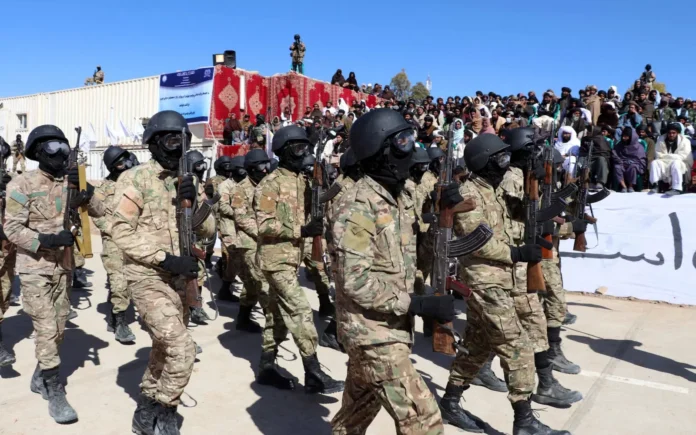
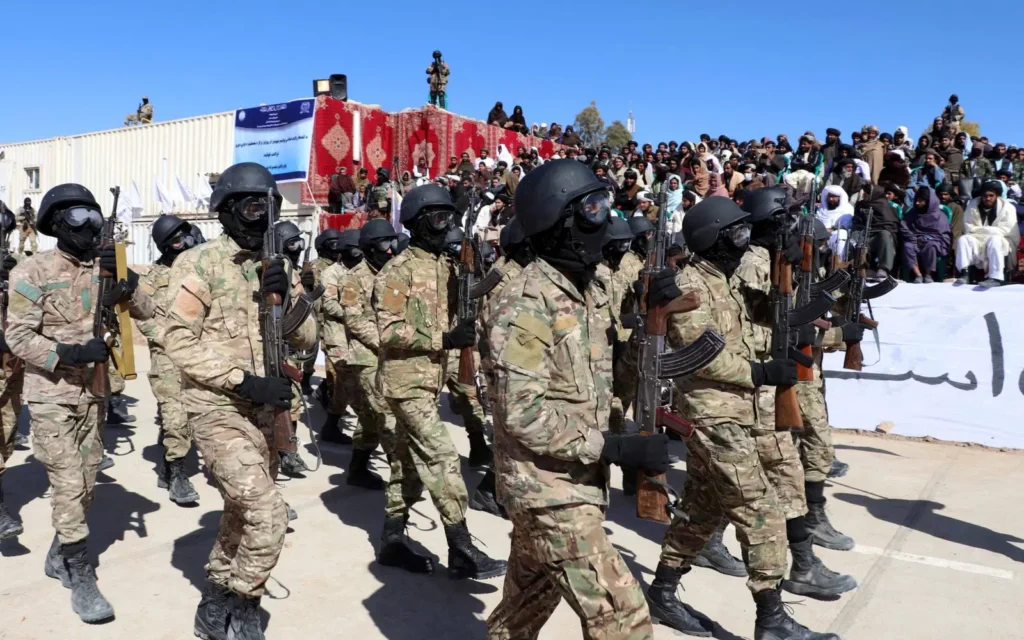
KABUL, Afghanistan (BN24) — Taliban authorities executed a man in public on Thursday in western Afghanistan after convicting him of killing two people, marking the latest use of capital punishment under the group’s interpretation of Islamic law since their return to power.
The execution took place in a sports stadium in Qala-i-Naw, the capital of Badghis province, before thousands of spectators, according to a statement from the Taliban-controlled Supreme Court.
The court said the man had been sentenced to “retaliatory punishment” a form of retributive justice, for fatally shooting a man and a woman. His case was reviewed “very precisely and repeatedly,” the statement added.
Witnesses told AFP that the man was shot three times by a relative of the victims, in keeping with the principle of qisas, or retribution, which permits the family of murder victims to execute the murderer under Islamic law. The families of the victims were reportedly offered an opportunity to grant amnesty but declined, according to the court.
Official notices inviting the public to attend were widely circulated on Wednesday. Large crowds gathered in the stadium on Thursday morning as the execution was carried out.
The man’s identity was not publicly released, and Taliban officials have not commented further on the nature of the crime or the date of his arrest and conviction.
This marks at least the 11th known public execution in Afghanistan since the Taliban seized control of the country in August 2021, according to a tally by Agence France-Presse. It underscores the group’s commitment to enforcing its strict interpretation of Islamic law despite widespread condemnation from international human rights organizations.
Public executions and corporal punishments were common during the Taliban’s first rule from 1996 to 2001. After regaining control, the group promised a more moderate approach, but observers say public punishments, floggings, and executions have resumed in several provinces over the past two years.
The United Nations and human rights groups have criticized the return of public executions as violations of international law and fundamental human rights. The Taliban, however, argue that such punishments serve as a deterrent and reflect religious and cultural traditions.
There was no immediate reaction from international observers or human rights watchdogs following Thursday’s execution.
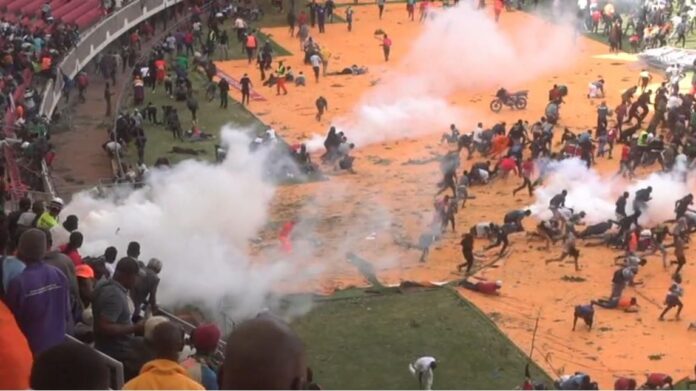
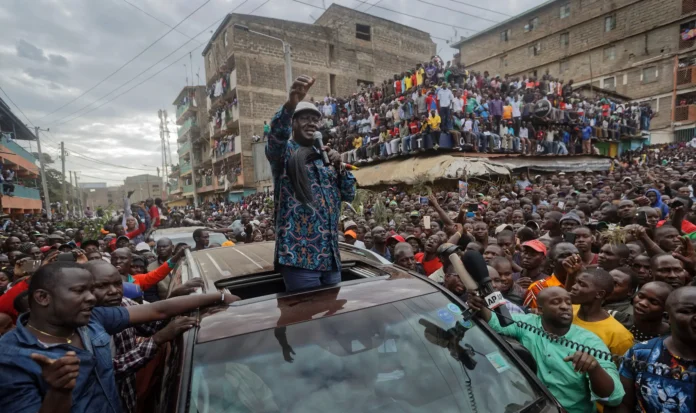
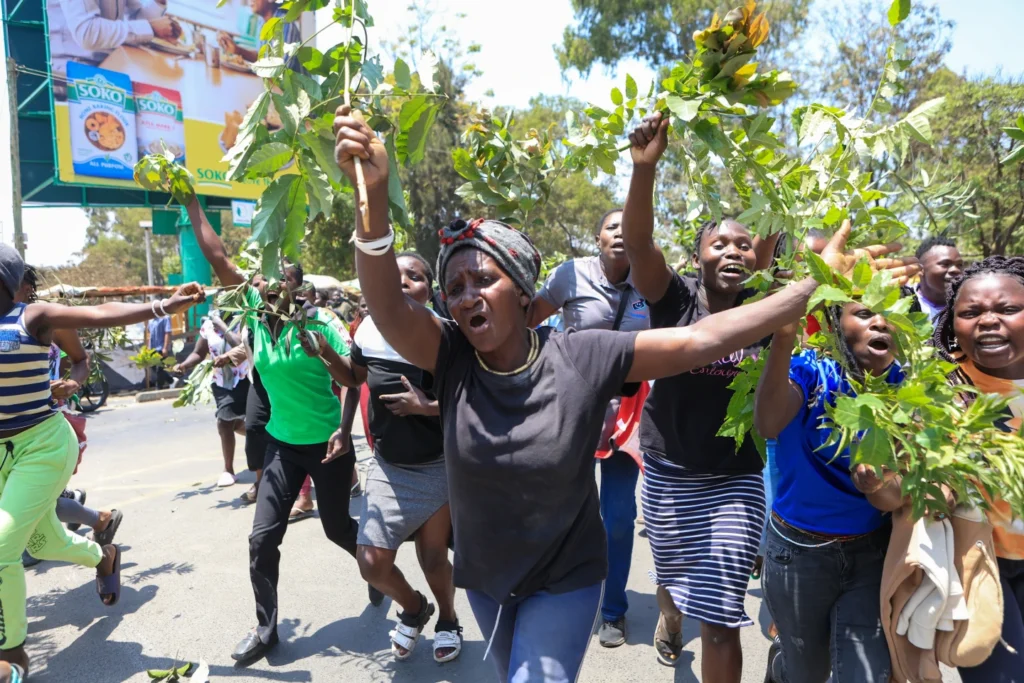
NAIROBI, Kenya (BN24) — Four people were killed in Kenya’s capital Thursday after security forces fired shots and teargas to disperse huge crowds at a stadium where the body of opposition leader Raila Odinga was lying in state, sparking chaotic scenes that also forced a temporary shutdown of Nairobi’s international airport.
Odinga, a major figure in Kenyan politics for decades who was once a political prisoner and ran unsuccessfully for president five times, died Wednesday aged eighty in India, where he had been receiving medical treatment.
Chaos erupted when a huge crowd breached a gate at Nairobi’s main stadium, prompting soldiers to fire in the air, a Reuters witness said. A police source told Reuters that two people were shot dead at the stadium. KTN News and Citizen TV later said the death toll had increased to four, with scores injured.
After security forces fired shots, police used teargas to disperse thousands of mourners, the two broadcasters reported, leaving the stadium deserted. Local news footage showed tear gas canisters being hurled into the crowds, leading to scenes of chaos as thousands fled the stadium.
Earlier Thursday, thousands of mourners briefly stormed Nairobi’s international airport, interrupting a ceremony for President William Ruto and other officials to receive Odinga’s body with military honors. The incident prompted a two-hour suspension of airport operations.
Crowds also flooded nearby roads and tried to breach parliament, where the government had originally scheduled the public viewing.
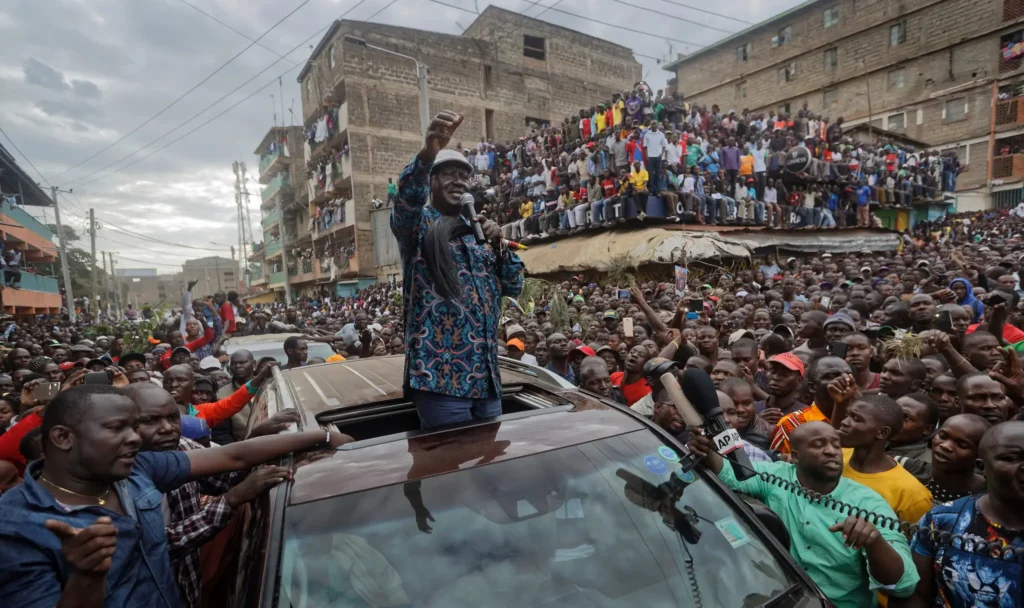
Odinga’s body arrived in Nairobi early Thursday morning, where tens of thousands of supporters had gathered in anticipation of viewing it at the Nyayo National Stadium. The procession turned violent when crowds overwhelmed the stadium’s gates, breaching security perimeters and pushing past barriers meant to manage the large numbers of mourners.
A police source, speaking to Reuters under condition of anonymity, confirmed that at least two people were killed when security forces opened fire in an effort to regain control of the situation. The situation escalated further when soldiers fired warning shots into the air, prompting crowds to scatter.
Though mainly known as an opposition figure, Odinga became prime minister in 2008 and also struck a political pact with Ruto last year in a career marked by shifting alliances. He commanded passionate devotion among supporters, especially in his Luo community based in western Kenya, many of whom believe he was denied the presidency by electoral fraud.
Many of Odinga’s mourners, who were not yet born in 1991 when Kenya became a multi-party democracy, paid tribute to Odinga’s efforts as an activist.
Felix Ambani Uneck, a university student, said at the stadium: “He fought tirelessly for multi-party democracy, and we are enjoying those freedoms today because of his struggle.”
As a central figure in Kenya’s political landscape for decades, Odinga had earned a deep and loyal following for his outspoken advocacy on issues such as democratic reforms and social justice. His political legacy includes a history of imprisonment during Kenya’s more authoritarian periods and five unsuccessful bids for the presidency.
The government has yet to issue an official statement on the deaths. The events underscore deep political divisions in Kenya, with many supporters frustrated by what they perceived as inadequate handling of the mourning process.
Many of Odinga’s supporters have expressed anger at what they view as the government’s mishandling of the public funeral and mourning process. Critics have pointed to heavy-handed tactics in dealing with a grieving public, particularly the use of force in controlling crowds.
For many supporters, Odinga’s death represents the loss of a leader who embodied their aspirations for a more equitable and just Kenya. His political journey, marked by years of imprisonment under previous regimes and later battles for democratic reforms, made him an icon for many, especially among marginalized communities.
The body of former Kenyan Prime Minister Raila Odinga, who had been receiving medical treatment in India when he died, arrives at the Jomo Kenyatta International Airport in Nairobi, Kenya October 16, 2025. REUTERS/Thomas Mukoya
The shooting deaths and subsequent chaos at the stadium have sparked calls for greater accountability and transparency from the government. As the country remains on edge, it remains unclear how the government will address growing public discontent surrounding the handling of Odinga’s death and the mourning process.
The violence raises broader concerns about the state of political and civil unrest in Kenya, a nation that has long grappled with political polarization. In recent years, tensions have been exacerbated by allegations of electoral malpractice and the continued marginalization of opposition groups.
How the government responds to these events in the coming days will be crucial in determining whether the situation will escalate further or whether a peaceful resolution can be found.
Kenya has experienced periodic episodes of political violence, particularly surrounding elections and the deaths of prominent political figures. The country’s 2007-2008 post-election violence left more than one thousand people dead and hundreds of thousands displaced, leading to the power-sharing agreement that made Odinga prime minister.
The massive turnout for Odinga’s viewing demonstrates his enduring influence on Kenyan politics and the deep emotional connection many citizens felt to his decades-long struggle for democratic reforms. His supporters see him as a champion of the marginalized who never stopped fighting for political and economic justice despite repeated setbacks.
Thousands of Kenyans gathered Thursday at Nairobi’s main airport to receive the body of former Prime Minister Raila Odinga, one of Africa’s most prominent political figures, a day after his death in India.
Odinga’s body arrived on a chartered flight and received a ceremonial water salute on the runway. Crowds of mourners lined the airport grounds to pay their respects before the body was transported to the national parliament for a public viewing scheduled in the afternoon.
Odinga, widely revered for his decades-long struggle for democracy and political reform, died Wednesday after collapsing during a morning walk in India’s Kerala State. Efforts to revive him at a local hospital were unsuccessful.
The Kenyan government announced that Odinga will be honored with a state funeral, including final rites on Sunday in his hometown of Bondo, located in the country’s western region. In accordance with his wishes, the burial will take place within 72 hours — an unusual practice for a national leader in Kenya.
Friday has been declared a public holiday to allow Kenyans to attend a state funeral service at a football stadium in Nairobi. A second public viewing is planned for Saturday in Kisumu County, near Odinga’s rural home.
President William Ruto, who defeated Odinga in the 2022 election but later formed a political pact with him that brought opposition figures into the Cabinet, led the nation in mourning. He declared seven days of national mourning, describing Odinga as “a patriot of uncommon courage, a pan-Africanist, a unifier who sought peace and unity above power and self-gain.”
Odinga’s political career spanned more than three decades, during which he ran for president five times. His closest bid came in 2007, when he narrowly lost to incumbent President Mwai Kibaki in a disputed election that triggered widespread ethnic violence.
From 2008 to 2013, Odinga served as Kenya’s prime minister in a unity government brokered by the international community. He remained a central figure in Kenyan politics, challenging electoral outcomes and pushing for reforms. In 2017, Kenya’s Supreme Court nullified a presidential election for the first time in Africa following his petition, though he boycotted the subsequent rerun.
Despite never winning the presidency, Odinga was widely regarded as a statesman whose activism and leadership helped shape Kenya’s transition to a vibrant multiparty democracy. His death marks the end of an era in the nation’s political landscape, drawing tributes from across Africa and beyond.