Home Blog Page 20

Ugandans Allegedly Recruited to Fight for Russia in Ukraine as Investigations Expose Covert Network

0

(AP) — A video circulating online last month shows a group of men in military fatigues standing in a snow-covered forest, singing a Ugandan song. Off camera, a voice speaking Russian derides them as “disposable.”
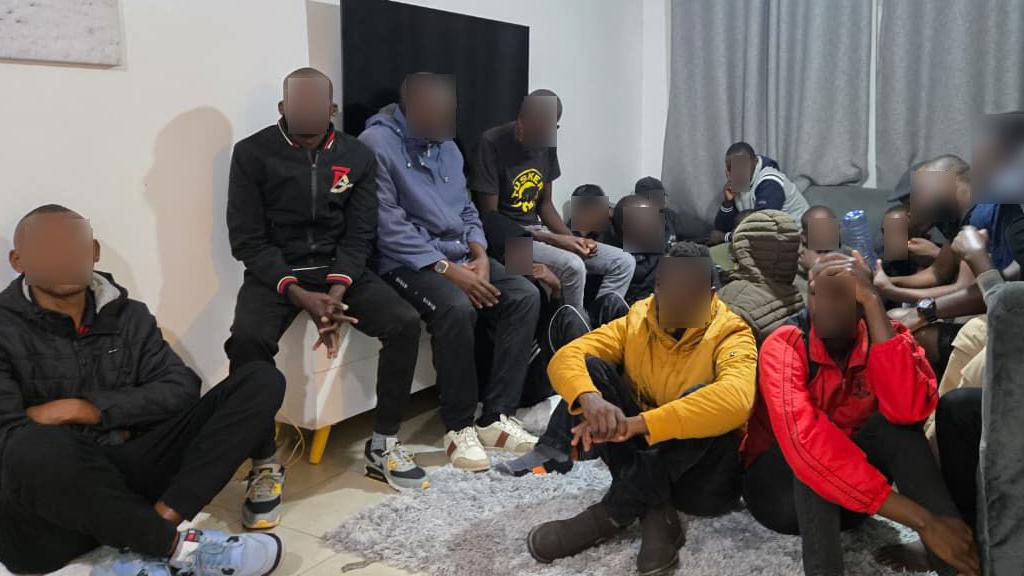
The footage has intensified scrutiny over allegations that Ugandan citizens — including military veterans — have been recruited and sent to fight alongside Russian forces in Ukraine, sometimes under false pretenses.

Media investigations, including one published Monday by AFP, have highlighted what they describe as a covert recruitment pipeline funneling Ugandans into the conflict. The revelations follow similar reporting that stirred debate in Kenya and South Africa over African nationals joining the war.

Uganda has long maintained close diplomatic and military ties with Russia during the nearly four decades of President Yoweri Museveni’s leadership. Kampala has acquired Russian military equipment and abstained from United Nations votes condemning Moscow’s invasion of Ukraine.

In March 2023, Museveni’s son, Muhoozi Kainerugaba, then a senior military commander and now Uganda’s army chief, publicly voiced support for Moscow on social media, writing that Uganda would defend Russia if it were threatened by “imperialists.”

Uganda is widely regarded as having one of East Africa’s most capable militaries. Its troops have formed a substantial part of international peacekeeping forces in Somalia, and many veterans have gone on to work with private security firms in Afghanistan and Iraq.

An official with the Special Returnees Association, a Ugandan veterans’ group, told AFP that recruiters had recently approached some of its estimated 20,000 members with overseas job offers. The official, who spoke on condition of anonymity due to security concerns, indicated that the recruits were initially promised employment in Israel but were instead routed to Russia.

He said he was aware of “more than ten” individuals who traveled to Russia under such arrangements, including three who later died. The official described warnings issued to veterans about the risks, saying they feared the men would be killed and buried in harsh winter conditions.

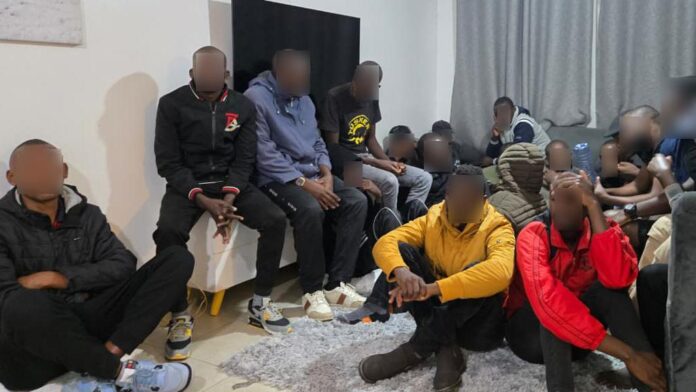
Ugandan intelligence sources quoted by AFP said that in August nine men were stopped at Entebbe International Airport while preparing to board a flight to Russia. The men were reportedly part of a larger group — estimated at more than 100 Ugandans with prior military experience — who had been leaving the country in stages.

One intelligence source indicated that a Russian national arrested in connection with the case was later released and that the inquiry has since stalled. Another security official suggested some recruits have since begun departing via neighboring Kenya.

Ugandan authorities have not publicly detailed the scope of the investigation, nor have they announced prosecutions tied to the alleged network.

The authenticity and precise location of the widely shared forest video have not been independently verified. In the clip, a Russian voice comments that the men will “sing differently” once sent to the front lines.

Ugandan broadcaster NTV recently aired an interview with the widow of Edson Kamwesigye, who was killed in Ukraine last month. Images of his body and identification documents circulated on social media shortly after his death.

Uganda’s state minister for foreign affairs, Okello Oryem, told NTV that the government could not intervene directly in the repatriation of bodies from the conflict zone.

In another development, a Ugandan man identified as Richard Akantoran appeared in a video published by Ukraine’s military, saying he had been rescued after fleeing a Russian unit. He described being promised employment in Russia as a supermarket worker or security guard.

Once in Russia, he alleged, he and others were compelled to sign military contracts under threat.

“A soldier pointed a gun at us and said, ‘You sign these papers,’” Akantoran said in the recording.

In February 2024, Uganda’s government shared a message on X from Russia’s ambassador describing “unlimited opportunities for young people in Russia.” The post drew renewed attention after the AFP investigation.

Akantoran used the Ukrainian video to caution others. “To my fellow Africans… do not fall into the trap,” he said. “They promise you well-paid jobs in Russia… it’s a lie.”

The allegations underscore the expanding global footprint of the war in Ukraine, now entering its third year. While foreign fighters have joined both sides since the conflict escalated, recruitment efforts targeting economically vulnerable populations in Africa raise additional ethical and geopolitical questions.

African governments face a delicate balance. Many, including Uganda, maintain historical ties with Russia dating back to Cold War-era alliances. Moscow has cultivated influence through arms sales, security partnerships and diplomatic outreach. At the same time, Western nations have pressed African states to distance themselves from Russia over the invasion.

If substantiated, the recruitment of Ugandan veterans through deceptive contracts could strain Kampala’s diplomatic positioning. It may also prompt closer scrutiny of private recruiters operating across borders, particularly where employment offers mask military enlistment.

The episode further highlights the economic pressures that can make overseas job promises appealing. High youth unemployment and underemployment among veterans create fertile ground for recruiters offering stable pay abroad.

Analysts note that while foreign recruitment is not new in global conflicts, the use of intermediaries and misleading employment contracts complicates accountability. Determining whether recruits joined voluntarily or under coercion could shape potential legal consequences.

For families of those killed, however, the geopolitical ramifications offer little solace. As investigations continue, questions remain over how many Ugandans may have been drawn into the war — and whether oversight mechanisms can prevent further departures.

Ugandan officials have not announced new policy measures, and Russia has not publicly addressed the allegations in detail.
 4 Killed in Epic E1000 Plane Crash Near Steamboat Springs, Colorado, Authorities Confirm

0

(AP) — Four people were killed early Friday when a small turboprop aircraft went down in rugged terrain on a mountain overlooking this northwestern Colorado resort community, authorities said.

The single-engine Epic E1000, configured to seat up to six passengers, crashed around 12:20 a.m. with four people aboard, the Federal Aviation Administration said in a statement. All four occupants were pronounced dead at the scene, according to Routt County Coroner Mitch Locke.

The aircraft came to rest on a remote section of Emerald Mountain, a prominent peak crisscrossed by hiking and biking trails just across the Yampa River from downtown Steamboat Springs. Routt County Sheriff Doug Scherar described the crash site as difficult to access, noting the mountainous terrain and limited nighttime visibility at the time of the accident.

Preliminary information indicates the plane struck mountainous terrain under circumstances that remain unclear, the National Transportation Safety Board said. Investigators from both the NTSB and the FAA have launched a joint inquiry to determine what led to the crash.

The airplane is registered to ALS Aviation LLC of Franklin, Tennessee. Tennessee business filings do not publicly identify a company contact.

Emergency crews were dispatched shortly after the crash was detected, but reaching the wreckage required navigating steep and rugged ground. Authorities have not disclosed how the crash was initially reported, though aircraft tracking data and emergency locator transmitters often aid search efforts in such incidents.

Emerald Mountain rises above Steamboat Springs and is a popular year-round recreation area. In winter months, snow and freezing temperatures can further complicate rescue and recovery operations. Officials did not immediately indicate whether weather conditions played a role in the accident.

The FAA confirmed the aircraft departed with four people aboard but did not release the flight’s origin or intended destination. That information is expected to emerge as investigators examine flight plans, radar data and onboard instrumentation.

The NTSB, which leads civil aviation accident investigations in the United States, will analyze wreckage patterns, engine components and flight data to determine the probable cause. Investigators typically examine weather conditions, pilot qualifications, aircraft maintenance history and communications with air traffic control.

A preliminary report is usually released within weeks, though a final determination of cause can take a year or more.

The Epic E1000 is a high-performance, single-engine turboprop manufactured in Bend, Oregon. Known for its speed and advanced avionics, the aircraft is often used for personal and business travel. While generally regarded as technologically advanced, like all aircraft it remains subject to the risks associated with mountainous flying, especially during nighttime operations.

Colorado’s mountainous terrain presents unique challenges for pilots, particularly in winter when icing, strong downdrafts and rapidly shifting winds are common. Even experienced aviators must account for high-elevation performance limits and limited emergency landing options.

Nighttime operations in remote terrain add another layer of complexity. Reduced visibility can obscure ridgelines and terrain features, and visual illusions are more likely when flying over dark, sparsely lit areas. If mechanical issues arise, pilots may have little margin for maneuvering in confined mountain valleys.

While authorities have not cited weather or mechanical failure as factors, aviation safety experts note that controlled flight into terrain — when a functioning aircraft inadvertently flies into the ground — remains a leading cause of fatal small-plane accidents in mountainous regions.

The coming investigation will determine whether terrain awareness systems were active and functioning, and whether any distress calls were transmitted before the crash.

Steamboat Springs, best known for its ski slopes and outdoor recreation, has experienced occasional aviation incidents due to its alpine setting and fluctuating weather conditions. The crash site’s proximity to residential neighborhoods and recreational trails has heightened local attention, though officials emphasized there was no danger to people on the ground.

Authorities have not yet released the identities of the victims pending family notification.

As investigators continue to document the wreckage and collect evidence, officials urged the public to avoid the area to allow recovery operations to proceed safely.

The FAA and NTSB said updates will be provided as more information becomes available.

Trump Says Change in Power in Iran Would Be ‘Best Outcome’ as U.S. Sends Second Carrier to Middle East

0

(AP) — President Donald Trump said Friday that a shift in Iran’s governing structure “would be the best thing that could happen,” delivering one of his most direct endorsements yet of political change in Tehran as his administration weighs possible military action.

Trump made the remarks following a visit with U.S. troops at Fort Bragg in North Carolina and after confirming that a second U.S. aircraft carrier strike group will head to the Middle East.

“It seems like that would be the best thing that could happen,” Trump told reporters when pressed on whether he favors ending Iran’s Islamic clerical leadership. “For 47 years, they’ve been talking and talking and talking.”

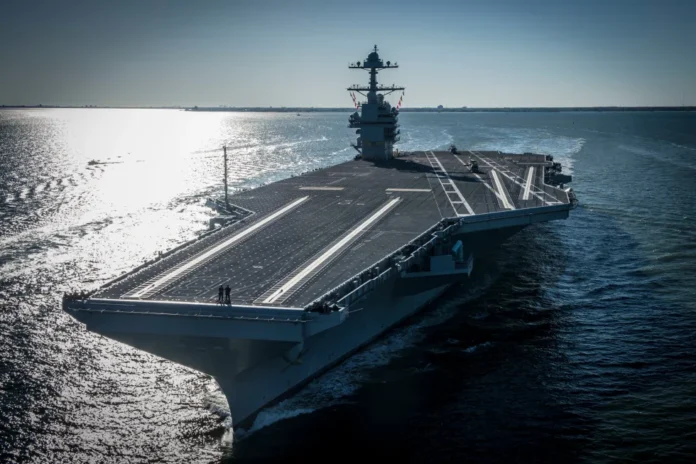
The president’s comments came hours after he disclosed that the USS Gerald R. Ford, the Navy’s newest and largest aircraft carrier, is departing from the Caribbean Sea for the Middle East. The Ford will join the USS Abraham Lincoln and its guided-missile destroyers, which have operated in the region for more than two weeks.

“In case we don’t make a deal, we’ll need it,” Trump said of the additional carrier group. “It’ll be leaving very soon.”

The reinforced naval presence marks a sharp escalation at a moment when diplomacy appears stalled but not entirely abandoned. Indirect discussions between U.S. and Iranian representatives took place in Oman last week, though no formal breakthrough emerged. Trump said Friday he believes negotiations “will be successful,” but cautioned that failure would mean “a bad day for Iran, very bad.”

Tehran, for its part, has maintained that its nuclear program serves peaceful objectives. Prior to the brief but intense conflict last June — a 12-day confrontation that included U.S. strikes on Iranian nuclear sites — Iran had enriched uranium to 60% purity, just below weapons-grade levels.

The current deployment follows an incident last week in which U.S. forces downed an Iranian drone that approached the Lincoln. On the same day, Iranian authorities attempted to halt a U.S.-flagged vessel transiting the Strait of Hormuz, underscoring the volatility of the waterway that handles a significant portion of global energy shipments.

Regional governments have expressed concern that a direct clash could ignite a broader Middle East war, particularly as the region continues to absorb the aftershocks of the Israel-Hamas conflict in Gaza.

Trump conferred Wednesday with Israeli Prime Minister Benjamin Netanyahu, emphasizing that diplomatic channels with Iran should remain open. Netanyahu has urged Washington to demand that Iran curb its ballistic missile development and sever support for militant organizations such as Hamas and Hezbollah in any agreement.

The decision to redirect the Ford from the Western Hemisphere represents a rapid shift in force posture. The carrier had been part of a substantial U.S. presence in the Caribbean last fall during operations tied to Venezuela. Its redeployment to the Middle East appears to contrast with the administration’s stated defense priority of strengthening security partnerships closer to home.

U.S. Southern Command said operations in Latin America would continue uninterrupted. Col. Emanuel Ortiz, a spokesperson, said American forces remain “fully ready to project power, defend themselves, and protect U.S. interests in the region” even as global positioning evolves.

The Ford strike group will add more than 5,000 sailors and aviators to the region. While it does not introduce entirely new capabilities beyond those already present with the Lincoln, two carriers effectively double available aircraft and munitions, expanding military options available to planners.

Given its current position, naval analysts expect the Ford could take weeks to reach waters near Iran.

The extended deployment has also drawn scrutiny within the Navy. The Ford first sailed in late June 2025, meaning its crew is approaching eight months at sea. Standard carrier deployments typically last six to seven months.

Adm. Daryl Caudle, the Navy’s top officer, said last month that prolonged extensions can be “highly disruptive” for service members and their families. Extended missions affect maintenance schedules and increase wear on critical systems.

A recent example underscores those risks. The aircraft carrier USS Dwight D. Eisenhower completed a nine-month deployment to the Middle East in 2024, much of it focused on Iran-backed Houthi militants in Yemen. The ship entered scheduled maintenance in early 2025 but exceeded its anticipated completion timeline and remains in overhaul.

Caudle recently told The Associated Press he favors deploying smaller, newer vessels when feasible rather than relying repeatedly on large carriers.

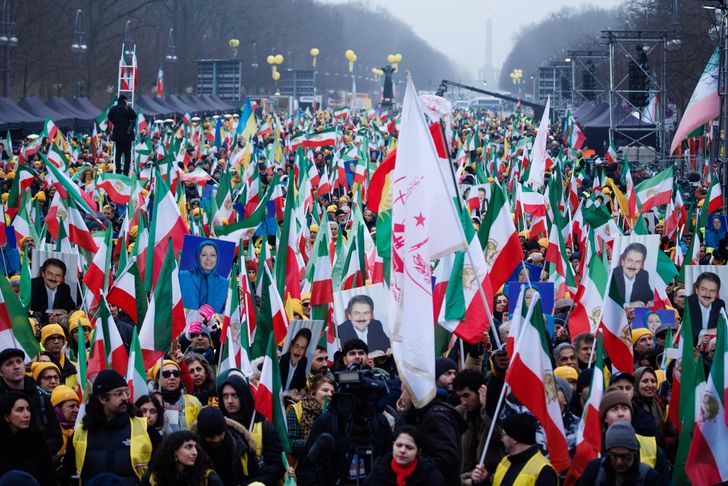
The military developments unfold as Iran confronts internal unrest. Families of those killed during last month’s nationwide protests have begun holding traditional 40-day mourning ceremonies, gatherings that historically have served as flashpoints for renewed dissent.

Online videos circulating this week show mourners assembling at gravesites, some singing the patriotic song “Ey Iran,” a piece dating to the 1940s under Shah Mohammad Reza Pahlavi. The song, once banned after the 1979 Islamic Revolution, has periodically resurfaced at moments of national tension.

Iran’s leadership faces mounting economic pressure from sanctions layered atop domestic dissatisfaction. Analysts note that Trump’s public endorsement of political change could embolden opposition voices while simultaneously hardening resistance among ruling elites.

Trump’s comments signal a rhetorical shift from pressing for policy concessions to openly welcoming systemic change. While he stopped short of outlining a strategy to achieve that outcome, the message aligns with a broader pattern of using economic sanctions and military positioning to force diplomatic concessions.

Whether the dual-track approach of negotiation and force projection yields results remains uncertain. Two carrier groups provide a visible deterrent, yet their presence also increases the risk of miscalculation in crowded maritime corridors.

The coming weeks may prove decisive. If talks resume and produce tangible limits on Iran’s nuclear activities, the military buildup could be framed as leverage that succeeded. If diplomacy falters, Washington may face a stark choice between sustained containment and direct confrontation.

For now, Trump has made clear that he views change in Tehran as desirable. How — or whether — that change unfolds may depend as much on internal dynamics within Iran as on aircraft carriers positioned just beyond its shores.

Journalist Don Lemon to Be Arraigned in Federal Case Over Minnesota Church Protest Amid Immigration Crackdown

0

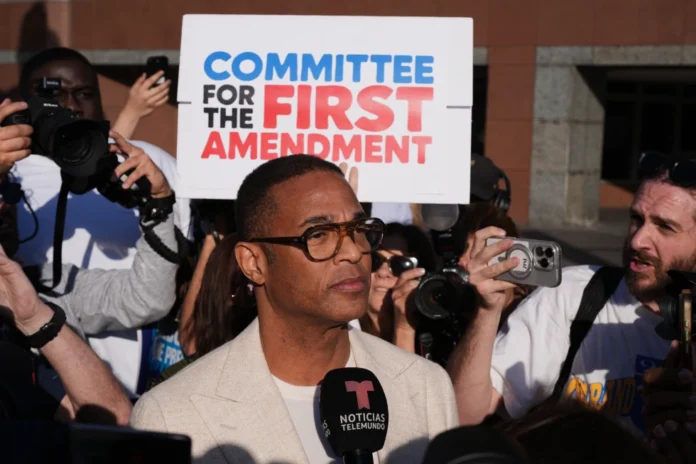
Independent journalist Don Lemon is scheduled to appear in federal court Friday for arraignment on charges stemming from a protest at a Minnesota church that unfolded during heightened tensions over the Trump administration’s immigration enforcement campaign.

Lemon, the former CNN anchor who now hosts an independent livestream news program, was indicted along with four others for their alleged involvement in disrupting a January worship service at Cities Church in St. Paul. Federal prosecutors allege the defendants interfered with religious services while an Immigration and Customs Enforcement official — who serves as a pastor there — was presiding.

Also slated for arraignment is civil rights attorney Nekima Levy Armstrong, whose arrest gained national attention after an altered image circulated on an official White House social media account purporting to show her crying. The image was later identified as digitally manipulated, one of several AI-altered visuals that have spread online since federal officers fatally shot Renee Good and Alex Pretti during enforcement operations in Minneapolis.

Arraignments in federal court typically involve the formal reading of charges, the entry of pleas and the scheduling of future proceedings. It was not immediately clear whether Lemon would attend in person or appear through counsel. His attorney, Joe Thompson, did not respond to inquiries seeking comment.

Two additional defendants, including independent journalist Georgia Fort, are scheduled to face arraignment next week. In total, nine individuals have been charged in connection with the protest.

Through prior counsel, Marilyn Bednarsk, Lemon signaled that he intends to contest the charges and enter a plea of not guilty. The indictment alleges violations of the federal Freedom of Access to Clinic Entrances Act, a 1994 statute that prohibits the use of force, threats or physical obstruction to interfere with individuals exercising their First Amendment right to worship at a place of religious assembly. Convictions under the statute can carry penalties of up to one year in prison and fines of up to $10,000.

The demonstration at Cities Church took place Jan. 18. Protesters interrupted the service with chants of “ICE out” and “Justice for Renee Good,” invoking the 37-year-old mother of three who was fatally shot by an ICE officer during a Minneapolis enforcement operation weeks earlier.

Lemon has maintained that he attended as a journalist covering the event for his livestream broadcast and was not affiliated with protest organizers.

“I have spent my entire career covering the news. I will not stop now,” Lemon said following his arrest. “There is no more important time than right now for a free and independent media that shines a light on the truth and holds those in power accountable.”

The protest drew swift condemnation from conservative religious leaders and political officials. White House press secretary Karoline Leavitt wrote on social media at the time that “President Trump will not tolerate the intimidation and harassment of Christians in their sacred places of worship.” Even some clergy critical of federal immigration tactics expressed unease about staging demonstrations inside sanctuaries.

The case unfolds against the broader backdrop of President Donald Trump’s immigration crackdown in Minnesota, where thousands of federal agents were deployed in what the Department of Homeland Security described as its largest enforcement operation to date. The surge led to more than 4,000 arrests, according to federal officials, and sparked widespread protests after the fatal shootings of Good and Pretti.

Joe Thompson, now part of Lemon’s defense team, recently resigned from the Minnesota U.S. Attorney’s Office. He had been leading complex investigations into public program fraud cases before stepping down. Several former prosecutors have left the office in recent weeks, citing disagreements over how the Justice Department handled aspects of the immigration surge and its response to the shootings.

The Trump administration has pointed to alleged fraud cases — many involving defendants from Minnesota’s Somali community — as part of its justification for intensifying immigration enforcement in the state.

The prosecution of Lemon and other defendants underscores the legal and constitutional tensions emerging from protests that blur the line between civil disobedience and protected journalistic activity. The Freedom of Access to Clinic Entrances Act, enacted primarily to safeguard abortion clinics and houses of worship from blockades or violence, is being applied here in a politically charged immigration context.

Legal scholars note that while the statute clearly protects worshippers from intimidation, cases involving journalists who claim they were present for coverage rather than participation can complicate prosecutions. The court will likely examine whether Lemon’s actions constituted active obstruction or fell within protected newsgathering.

The circulation of altered images of Armstrong adds another dimension, reflecting how digital misinformation can inflame already polarized debates. AI-manipulated content has increasingly accompanied high-profile arrests and protests, shaping public perception before facts are established in court.

Politically, the case may further entrench divisions. Supporters of the administration argue that places of worship must remain insulated from protest activity. Critics contend that houses of worship have historically served as venues for moral and political expression, particularly during civil rights struggles.

The Minnesota crackdown itself has already prompted national scrutiny, with an AP-NORC poll indicating that many Americans believe immigration enforcement has exceeded reasonable bounds. Legal proceedings tied to protests could become symbolic battlegrounds over the scope of dissent in the Trump era.

For Lemon, the arraignment marks a pivotal moment in his transition from network anchor to independent journalist operating in volatile political terrain. For federal authorities, the case represents a test of how aggressively to enforce statutes designed to protect religious freedom while navigating the constitutional protections afforded to speech and press.

As the court process begins, broader questions linger about the intersection of immigration policy, protest rights and media freedom — issues that are likely to reverberate well beyond Minnesota.

Pentagon Deploys Second Aircraft Carrier to Middle East as Trump Intensifies Iran Nuclear Pressure Campaign

0

(AP)– The United States will dispatch the world’s largest aircraft carrier to the Middle East to reinforce another already stationed there, a person familiar with deployment plans disclosed Friday, positioning additional American firepower behind President Donald Trump’s efforts to coerce Iran into negotiations over its nuclear program.

The USS Gerald R. Ford’s planned Middle East deployment arrives after Trump suggested just days earlier that another round of talks with Iranian officials was imminent. Those negotiations failed to materialize despite one of Tehran’s senior security officials visiting Oman and Qatar this week and exchanging messages with U.S. intermediaries attempting to facilitate dialogue.

Gulf Arab nations have cautioned that any military strike could spiral into another regional conflict in a Middle East still recovering from the Israel-Hamas war in the Gaza Strip. Meanwhile, Iranians are beginning to conduct 40-day mourning ceremonies for the thousands killed in Tehran’s brutal suppression of nationwide protests last month, intensifying internal pressure facing the sanctions-battered Islamic Republic.

The Ford’s deployment, first disclosed by The New York Times, will position two carriers and their accompanying warships in the region. The USS Abraham Lincoln and its accompanying guided-missile destroyers are already operating in the Arabian Sea, providing substantial naval power projection capabilities.

The individual who confirmed the deployment to The Associated Press did so on condition of anonymity to discuss military movements that had not been publicly announced by the Pentagon.

The deployment marks a rapid turnaround for the Ford, which Trump sent from the Mediterranean Sea to the Caribbean last October as the administration assembled massive military presence preceding last month’s surprise raid that captured then-Venezuelan President Nicolás Maduro. The carrier had been designated part of the Venezuela strike force before being redirected toward the Middle East.

The redeployment also appears inconsistent with Trump’s national security strategy, which emphasized the Western Hemisphere over other global regions. The strategic pivot back to the Middle East suggests Iran tensions have become the administration’s dominant foreign policy priority despite previous hemispheric focus.

Trump warned Iran Thursday that failure to reach agreement with his administration would prove “very traumatic.” Iran and the United States held indirect talks in Oman last week, though those discussions produced no apparent breakthrough on nuclear program constraints or sanctions relief.

“I guess over the next month, something like that,” Trump responded when questioned about his timeline for striking a deal with Iran regarding its nuclear program. “It should happen quickly. They should agree very quickly.”

Trump told Axios earlier this week that he was contemplating sending a second carrier strike group to the Middle East, a consideration that has now materialized into concrete deployment orders. The announcement follows lengthy Wednesday talks with Israeli Prime Minister Benjamin Netanyahu, during which Trump said he insisted to Israel’s leader that negotiations with Iran needed to continue.

Netanyahu is urging the administration to pressure Tehran to scale back its ballistic missile program and terminate its support for militant organizations including Hamas and Hezbollah as components of any nuclear agreement. These demands substantially expand the scope of potential negotiations beyond nuclear constraints alone.

The USS Ford commenced deployment in late June 2025, meaning the crew will have been deployed eight months by mid-February. While the duration of the ship’s Middle East assignment remains unclear, the redeployment establishes conditions for an unusually long deployment that could strain crew morale and operational readiness.

The White House did not immediately respond to requests for comment regarding the deployment decision or its strategic implications.

Iran confronts still-simmering domestic anger over its wide-ranging suppression of dissent throughout the Islamic Republic. That rage may intensify in coming days as families of the deceased begin marking traditional 40-day mourning periods for loved ones. Online videos have already shown mourners gathering in different parts of the country, holding portraits of their dead.

One video purportedly depicted mourners at a graveyard in Iran’s Razavi Khorasan province, home to Mashhad, on Thursday. There, with a large portable speaker, people sang the patriotic song “Ey Iran,” which dates to 1940s Iran under Shah Mohammad Reza Pahlavi’s rule. While initially prohibited after the 1979 Islamic Revolution, Iran’s theocratic government has subsequently played it to generate nationalist support.

“Oh Iran, a land full of jewels, your soil is full of art,” they sang. “May evil wishes be far from you. May you live eternal. Oh enemy, if you are a piece of granite, I am iron.”

The Pentagon has deployed numerous U.S. military assets into the Middle East over recent weeks, including aircraft carrier groups with their thousands of troops, as Trump indicates he maintains the possibility of strikes against Iran if diplomatic efforts fail.

“We have a lot of very big, very powerful ships sailing to Iran right now, and it would be great if we didn’t have to use them,” Trump declared Thursday, framing military buildup as leverage for diplomatic breakthrough rather than inevitable conflict.

Trump initially threatened military action if Iran executed mass numbers of prisoners or killed peaceful demonstrators, but later claimed that Iran halted the hangings of 800 detained protesters. Iran’s top prosecutor subsequently characterized Trump’s claim as “completely false,” disputing both the planned execution numbers and any American influence over judicial decisions.

Trump asserted this week that Iran must conclude a nuclear program agreement. He suggested that if the Islamic Republic refuses, he would order an attack “far worse” than last year’s U.S. strikes on Iranian nuclear sites—a threat intended to convey escalating consequences for continued intransigence.

The aircraft carrier USS Abraham Lincoln and three guided-missile destroyers are positioned in the Arabian Sea, U.S. Central Command confirmed. The carrier strike group departed the South China Sea last week and arrived in the Middle East on Monday, joining three other U.S. Navy destroyers in the region—two currently sailing near the Strait of Hormuz and another in the Red Sea.

The carrier strike group’s arrival brought approximately 5,700 additional service members to the region. The United States maintains several bases in the Middle East, including Al Udeid Air Base in Qatar, which hosts thousands of American troops and serves as forward headquarters for U.S. Central Command.

The aircraft carrier deployment follows the Trump administration’s earlier shift of resources from the region to the Caribbean Sea as part of a pressure campaign against former Venezuelan President Nicolás Maduro that culminated in last month’s capture operation.

The USS Gerald R. Ford—the world’s largest aircraft carrier—was ordered in October to sail from the Mediterranean Sea to the Caribbean alongside several destroyers. The carrier USS Nimitz, which helped conduct June strikes on Iran’s nuclear sites, also departed the region in October as resources concentrated on Venezuela operations.

Central Command disclosed via social media that Air Force F-15E Strike Eagles now maintain presence in the Middle East, noting the fighter jet “enhances combat readiness and promotes regional security and stability.” Similarly, the U.K. Ministry of Defense announced last week it deployed Typhoon fighter jets to Qatar “in a defensive capacity,” demonstrating allied coordination in regional military buildup.

Analysts monitoring flight-tracking data have identified dozens of U.S. military cargo planes heading to the region, suggesting substantial equipment and supply movements supporting expanded operations. The activity parallels last year’s deployments when the United States positioned air defense hardware including Patriot missile systems anticipating Iranian counterattacks following bombing of three key nuclear sites. Iran launched over a dozen missiles at Al Udeid Air Base days after those strikes.

Defense Secretary Pete Hegseth emphasized Thursday that the U.S. military “will be prepared to deliver whatever the president expects,” one day after Trump warned he wants progress toward a nuclear program deal and that “time is running out.”

“They have all the options to make a deal,” Hegseth stated at a Cabinet meeting, referencing Iran. “They should not pursue nuclear capabilities.”

Hegseth cited the military raid capturing then-Venezuelan President Nicolás Maduro in his Iran warning, asserting the military was ready to deliver Trump’s demands “just like we did this month.” This invocation of successful Venezuela operations serves as implicit threat that similar decisive action could target Iranian leadership or facilities.

Secretary of State Marco Rubio characterized the increasing military presence as an effort “to defend against what could be an Iranian threat against our personnel.” He explained during Wednesday congressional testimony that maintaining forces capable of “if necessary, preemptively preventing attacks against thousands of American servicemen and other facilities in the region and our allies” represented prudent precaution.

Trump declared Thursday night that his message to Iran was “no nuclear” and “stop killing protesters,” linking nuclear negotiations to human rights concerns about Tehran’s violent suppression of dissent.

Iran suppressed nationwide protests sparked by economic hardships that broadened into challenges against theocratic governance. Activists calculate at least 6,479 people were killed in the crackdown, though precise casualty figures remain difficult to verify given governmental information restrictions.

The Trump administration and European Union this week imposed new sanctions targeting high-ranking Iranian officials over the violent suppression, demonstrating coordinated Western pressure on Tehran combining military deployments with economic penalties.

The dual-carrier deployment represents substantial American military commitment to the Middle East despite Trump’s previous rhetoric emphasizing disengagement from costly overseas military commitments. Whether this pressure campaign succeeds in compelling Iranian concessions or escalates into military conflict will significantly shape regional stability and Trump’s foreign policy legacy.

AP

Health Secretary RFK Jr. Declares He’s ‘Not Scared of a Germ’ After Snorting Cocaine Off Toilet Seats

0

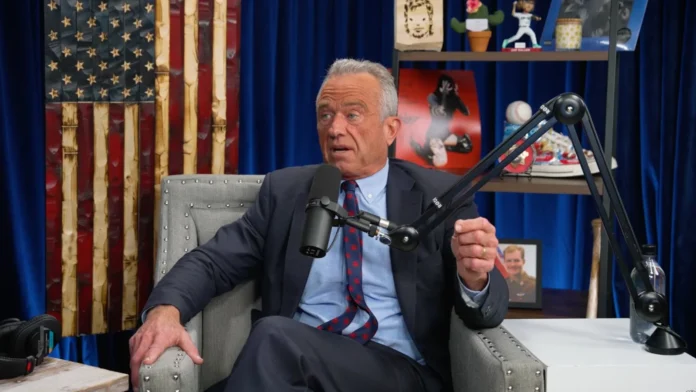
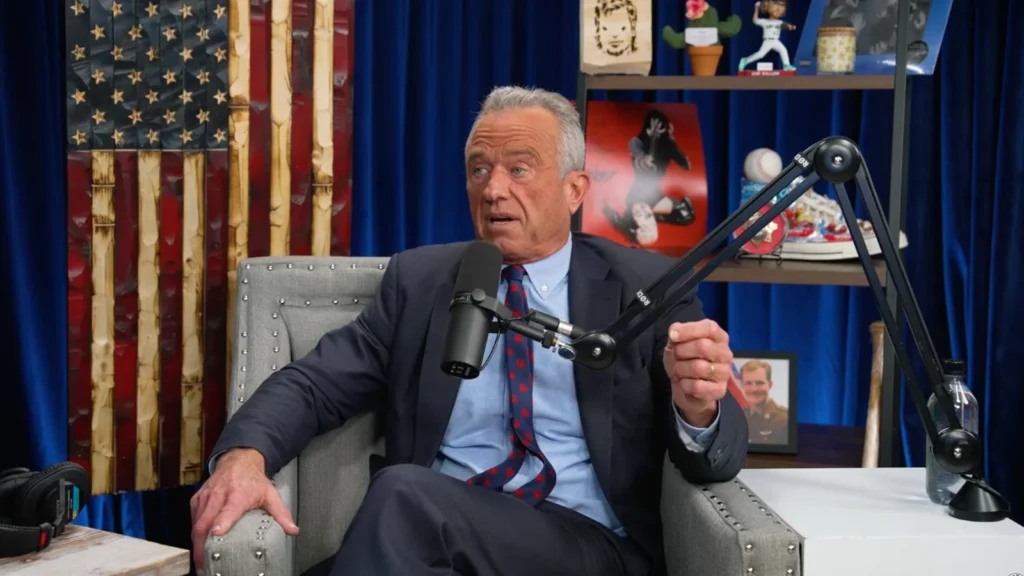
 U.S. Health Secretary Robert F. Kennedy Jr. told podcaster Theo Von that he remains unafraid of germs because he previously “snorted cocaine off toilet seats” during his years of active drug addiction, drawing sharp criticism from political figures questioning his fitness to oversee the nation’s major health agencies.

The health secretary made the candid remarks during a recent episode of “This Past Weekend,” during which the pair discussed their shared histories of substance abuse—a topic Kennedy has addressed openly in previous public forums. He detailed continuing to attend recovery meetings throughout the COVID-19 pandemic despite governmental restrictions on gatherings.

“They shut [the rehabilitation meetings] down during Covid,” Kennedy explained. “We still did live meetings every day during Covid, but it was kind of a pirate group… I said, ‘I don’t care what happens. I’m going to a meeting every day.'”

“I said, ‘I’m not scared of a germ.’ You know, I used to snort cocaine off a toilet seat, and I know this disease [addiction] will kill me, right? If I don’t treat it, which means, for me, going to meetings every day. It’s just bad for my life. So for me, it was survival,” Kennedy continued, framing his defiance of pandemic restrictions within his personal recovery priorities.

Kennedy has established a family history of substance abuse and has spoken publicly about his addiction to heroin. Last April, he recounted how he encountered addiction’s path at age 15 after experimenting with LSD, initiating a pattern of substance abuse that persisted for years before he achieved recovery.

The comments surfaced after the health secretary announced $100 million in funding for new grants as part of a pilot program targeting homelessness and substance use recovery in eight cities earlier this month. The funding followed an executive order signed by President Donald Trump titled “The Great American Recovery Initiative” late last month, positioning addiction treatment as a priority for the administration.

Social media users expressed disapproval of Kennedy’s candidness regarding his prior experiences using drugs in unsanitary bathroom environments. “It shows,” wrote the official X account of New York Governor Kathy Hochul in response to the podcast clip, suggesting Kennedy’s past behavior manifests in his current judgment.

“For some reason I don’t trust this guy on public health,” wrote Malcolm Kenyatta, a Democratic representative from Pennsylvania, voicing skepticism about Kennedy’s qualifications. Another social media user added: “The man who oversees our nation’s major health agencies,” highlighting the incongruity between Kennedy’s past risky health behaviors and his current responsibilities.

Elsewhere in the podcast, Von mentioned he had recently encountered Kennedy with musician Kid Rock in Nashville, Tennessee, adding that he had heard stories of the MAGA supporter snorting cocaine while eating oysters—an anecdote Kennedy did not explicitly confirm or deny.

“Yeah, I’m saving a seat for him still [at rehabilitation meetings],” Kennedy replied, suggesting Kid Rock may benefit from addiction recovery support.

Kennedy’s appointment as health secretary generated controversy given his history of promoting vaccine skepticism, his lack of traditional medical or public health credentials, and his past admissions of substance abuse. Critics argue that someone who engaged in extremely risky health behaviors—including using narcotics in bathroom facilities where pathogenic exposure risks are substantial—may lack appropriate judgment for overseeing federal health policy.

Supporters counter that Kennedy’s personal recovery experience provides valuable perspective on addiction treatment and that his willingness to discuss struggles openly demonstrates authenticity. They note that many effective addiction counselors and recovery advocates have personal histories of substance abuse, using their experiences to help others.

The toilet seat cocaine admission specifically raises health concerns beyond addiction itself. Bathroom surfaces, particularly in public facilities, harbor numerous pathogens including E. coli, norovirus, hepatitis A and various respiratory viruses. Kennedy’s assertion that he’s “not scared of a germ” after such exposures seems to contradict basic public health principles that his department is charged with promoting.

His defiance of COVID-19 gathering restrictions to attend recovery meetings also generated mixed reactions. While many addiction specialists emphasize that maintaining recovery support systems during crises is essential to preventing relapse, Kennedy’s characterization of authorized pandemic restrictions as obstacles he ignored aligns with his broader skepticism of governmental public health measures.

The Kennedy family’s well-documented struggles with addiction extend across multiple generations, with various family members experiencing substance abuse issues and related tragedies. Robert F. Kennedy Jr.’s openness about his personal battles continues this pattern of public acknowledgment while raising questions about how personal experiences inform his policy perspectives.

As health secretary, Kennedy oversees the Department of Health and Human Services, which includes the Centers for Disease Control and Prevention, the Food and Drug Administration, the National Institutes of Health and other agencies responsible for protecting public health and advancing medical research. His unconventional background and statements continue generating debate about appropriate qualifications for health leadership positions.

The podcast appearance demonstrates Kennedy’s willingness to discuss personal vulnerabilities in casual media contexts, an approach that contrasts with traditional governmental officials’ tendency toward carefully managed public communications. Whether this transparency serves public interests or undermines confidence in health leadership remains contested.

theindependent

Ukrainian Intelligence Confirms Deaths of Two Nigerian Mercenaries Fighting for Russia After Drone Strike

0

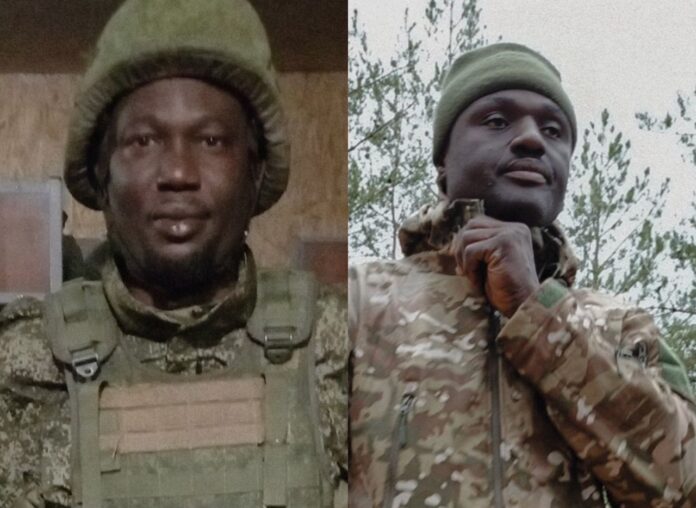
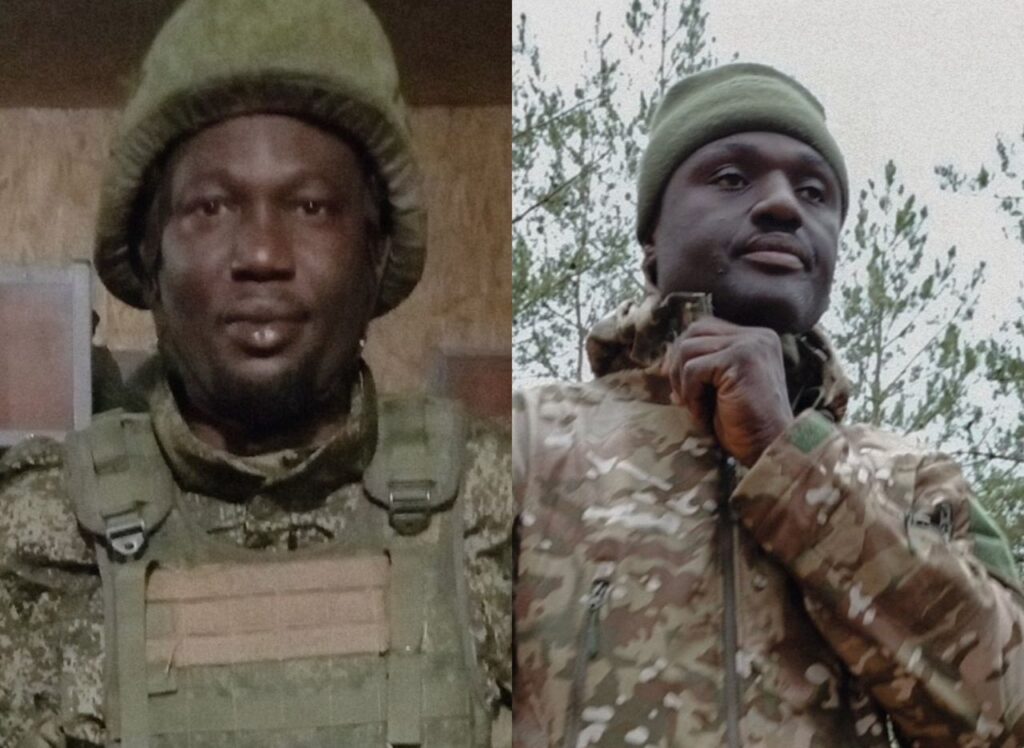
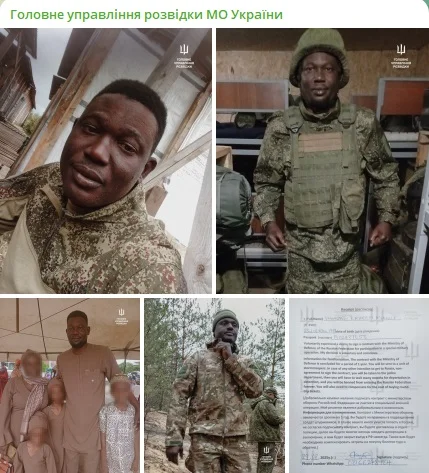
Ukrainian military intelligence confirmed Thursday the deaths of two Nigerian nationals who were fighting for Russian forces in eastern Ukraine, identifying them as victims of a drone strike during a late November assault on Ukrainian positions in Luhansk Oblast.

Photo: Main Intelligence Directorate of the Ministry of Defense of Ukraine / Telegram

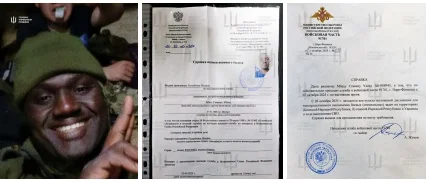
The Main Directorate of Intelligence of Ukraine disclosed that Hamzat Kazeen Kolawole and Mbah Stephen Udoka both served in the 423rd Guards Motor Rifle Regiment of the Russian Federation’s armed forces before being killed in combat operations. The deceased men signed contracts with the Russian military during the second half of 2025—Kolawole on August 29 and Udoka on September 28.

Neither man received substantive military training before deployment to combat zones, Ukrainian intelligence emphasized. Kolawole is survived by a wife and three children in the West African nation, while Udoka’s family circumstances were not immediately disclosed.

The bodies were discovered in Luhansk, an area within the Donbas region of eastern Ukraine that has experienced intense fighting since Russia launched its full-scale invasion in February 2022. The region remains partially under Russian occupation as the conflict continues to devastate local communities and infrastructure.

“Both Nigerians were killed in late November during an attempt to storm Ukrainian positions in the Luhansk region. They never engaged in a firefight — the mercenaries were eliminated by a drone strike,” the intelligence organization stated, highlighting the increasingly lethal role of unmanned aerial systems in contemporary warfare.

Ukrainian Defense Intelligence provided additional detail regarding the circumstances surrounding both men’s recruitment and deployment. The two Nigerian nationals served in the 423rd Guards Motor Rifle Regiment, designated as military unit 91701, part of the 4th Guards Tank Kantemirov Division of the Russian Armed Forces.

“Udoka essentially received no training — just five days later, on Oct. 3, he was enrolled in the unit and sent to temporarily occupied territories of Ukraine the same day,” Ukrainian intelligence disclosed, revealing the extraordinarily abbreviated preparation period before combat deployment.

The five-day gap between Udoka’s September 28 contract signing and October 3 deployment to occupied Ukrainian territory underscores what Ukrainian officials characterize as Russia’s negligent approach to foreign recruit preparation. This minimal training period likely contributed to the men’s vulnerability during combat operations.

Ukrainian intelligence assessed a high probability that Kolawole also received no meaningful military training, noting that documents related to his preparation have not been preserved. This absence of training records suggests either that training never occurred or that Russian military administration failed to maintain proper documentation.

Photo: Main Intelligence Directorate of the Ministry of Defense of Ukraine / Telegram

Kolawole, born April 3, 1983, was 42 years old at the time of his death. Udoka, born January 7, 1988, was 37. Both men were killed during late November 2025 while participating in an attempted assault on Ukrainian defensive positions.

“They never entered small-arms combat — the mercenaries were eliminated by a drone strike,” Ukrainian intelligence reiterated, suggesting the men died before engaging Ukrainian forces directly through conventional infantry combat. The drone strike likely occurred as Russian assault forces maneuvered toward Ukrainian positions, eliminating them before close-quarters engagement.

“The number of identified Russian mercenaries from Africa who have been killed is growing,” the Main Directorate of Intelligence stated, positioning these deaths within broader patterns of African recruitment by Russian military and private military contractors.

Ukrainian intelligence issued stark warnings to foreign nationals considering travel to Russia or accepting employment within its territory. “Traveling to Russia is a real chance of ending up in an assault ‘suicide’ detachment and ultimately rotting in Ukrainian soil,” the agency cautioned, using blunt language designed to deter potential recruits from African nations and elsewhere.

Russia has faced persistent accusations of recruiting men from developing nations to fight in its Ukraine war under false pretenses of offering lucrative employment opportunities. Recruits from India, Nepal, Kenya, South Africa and other countries have complained of being deceived by recruiters who promised civilian jobs while actually directing them toward military contracts obligating combat service.

The recruitment patterns suggest systematic exploitation of economically vulnerable populations in nations where employment opportunities remain limited and wages substantially lower than promised Russian compensation. Young men seeking better economic prospects become trapped in military obligations they may not have fully understood when signing contracts in foreign languages.

In July 2025, Ukrainian intelligence disclosed that fighters of the Freedom of Russia Legion—a unit operating under Main Directorate of Intelligence authority—captured a Nigerian national fighting in the 503rd Guards Motor Rifle Regiment of the Russian Armed Forces on the Zaporizhzhya front. This capture provided additional confirmation of Nigerian participation in Russian military operations.

The Main Directorate of Intelligence also emphasized that Russia is expanding its propaganda network throughout Africa to facilitate recruitment and shape continental perceptions of the Ukraine conflict. State media resources—particularly the TASS news agency and RT television channel—are actively employed to promote Kremlin narratives, Ukrainian intelligence added.

Russian propaganda media broadcast in more than 40 African countries across six languages, the intelligence agency calculated, demonstrating the sophisticated information operations supporting physical recruitment efforts. This media presence enables Russia to present military service opportunities while minimizing discussion of casualties and combat conditions.

The Russia-Ukraine conflict has evolved into a grinding war of attrition with both sides experiencing substantial casualties and deploying increasingly sophisticated weapons systems including drones, long-range missiles and electronic warfare capabilities. The war remains largely contained to eastern and southern regions of Ukraine, though periodic strikes occur throughout the country.

Russia’s full-scale invasion has strained global food and energy markets, displaced millions of Ukrainians whose homes and businesses have been destroyed, and created ripple effects throughout international economic and security systems. The conflict shows minimal signs of resolution as both nations maintain incompatible territorial and political objectives.

Photo: Main Intelligence Directorate of the Ministry of Defense of Ukraine / Telegram

For Nigeria and other African nations, the deaths of citizens fighting in distant conflicts raise difficult questions about governmental responsibilities to protect nationals from predatory foreign recruitment, regulate international labor migration, and provide economic opportunities that reduce vulnerability to exploitative schemes.

The Kolawole and Udoka deaths illustrate the human cost of Russia’s reliance on foreign recruits to sustain military operations amid substantial casualties among Russian contract soldiers and conscripts. By recruiting from economically disadvantaged nations, Russia attempts to maintain force levels without expanding politically sensitive domestic mobilization that could generate internal opposition.

Ukrainian forces’ increasing proficiency with drone warfare—demonstrated by the strike that killed both Nigerian men—represents a significant tactical evolution that has altered battlefield dynamics. Drones provide Ukrainian defenders with surveillance, targeting and strike capabilities that partially offset Russia’s advantages in artillery and manpower.

As the conflict continues, the number of foreign nationals killed fighting for Russia will likely increase, generating diplomatic complications between Moscow and nations whose citizens die in combat they may have been deceived into joining. Whether these deaths will deter future recruitment remains uncertain given the economic pressures driving vulnerable populations toward risky employment opportunities.

AP/VoiceofUkraine

Trump Administration Winds Down Minnesota Immigration Crackdown After Protests and 2 Fatal Shootings

0

(AP)-The Trump administration is scaling back a sweeping immigration enforcement campaign in Minnesota that federal officials had described as the largest operation of its kind, a move that follows weeks of mass protests, political blowback and two fatal shootings that intensified scrutiny of federal tactics.

Border czar Tom Homan announced Thursday that the operation, known as Operation Metro Surge, is concluding after resulting in more than 4,000 arrests since it began in December. Speaking to reporters, Homan characterized the effort as a success and argued that the surge had reduced criminal activity in the state.

“The surge is leaving Minnesota safer,” Homan said. “I’ll say it again: It’s less of a sanctuary state for criminals.”

The Department of Homeland Security had earlier branded the initiative its “largest immigration enforcement operation ever,” deploying thousands of federal officers across the Minneapolis-St. Paul metropolitan area and other communities. Convoys of unmarked vehicles and heavily armed agents became a common sight in neighborhoods with large immigrant populations, altering daily life in the Twin Cities.

The operation quickly became one of the most visible test cases of President Donald Trump’s pledge to carry out mass deportations. It also emerged as a political liability after federal officers fatally shot two U.S. citizens, Renee Good and Alex Pretti, during confrontations in Minneapolis that triggered days of demonstrations.

A new AP-NORC poll found that a majority of U.S. adults believe Trump’s immigration policies have gone too far, adding national pressure as the Minnesota crackdown dominated headlines.

Homan did not provide a detailed timeline for the withdrawal but indicated that officers would begin leaving immediately. Democratic Gov. Tim Walz said he had been assured that the drawdown would start at once.

“We will help you get to the airport,” Walz said at a news conference, signaling his frustration with the federal presence. “We will clear the road to get to the airport. I will pack your damn bags if that’s what it takes.”

Walz condemned what he described as an “unnecessary, unwarranted and in many cases unconstitutional assault” on the state and proposed a $10 million aid package to help businesses that suffered losses during the enforcement surge. He also urged Congress to attach reforms to any future funding for the Department of Homeland Security.

The crackdown rippled through immigrant communities. Some families kept children home from school or shifted to remote learning. Businesses in predominantly immigrant corridors temporarily closed. Churches reported sparse attendance as fear of detention spread.

Russ Adams of the Lake Street Council, which represents businesses in a largely immigrant neighborhood of Minneapolis, estimated that commercial losses in December and January alone reached tens of millions of dollars. He cautioned that economic recovery would not be swift even if federal agents depart.

While administration officials described those targeted as dangerous offenders, local leaders and advocates said many detainees had no criminal histories and included working parents and children, among them 5-year-old Liam Conejo Ramos and other U.S. citizens swept up in enforcement actions.

The heavy federal presence fueled an organized resistance effort. Volunteer networks monitored the movements of immigration agents and alerted communities to enforcement activity. Street confrontations at times escalated, with protesters throwing snowballs and spray-painting slogans while officers deployed tear gas and pepper spray.

The two fatal shootings became flashpoints. After the second death, of Pretti, Homan assumed direct oversight of the operation amid mounting criticism over its execution by senior Border Patrol official Gregory Bovino. The deaths reshaped the public debate, with some Republicans acknowledging that trust had eroded.

Sen. Rand Paul of Kentucky said during a Senate hearing that the incidents altered perceptions of the crackdown. “It’s clearly evident that the public trust has been lost,” he said, calling for transparency in rules of engagement and reforms within ICE and Border Patrol.

Todd Lyons, acting director of U.S. Immigration and Customs Enforcement, told lawmakers that the agency is still seeking approximately 16,840 individuals in Minnesota who have final orders of removal, underscoring that enforcement efforts will continue even as the surge ends.

In Minneapolis, reactions to Homan’s announcement were mixed. City Council Member Aurin Chowdhury expressed cautious skepticism, saying that any remaining ICE presence would continue to generate fear. Activists gathered at makeshift memorials honoring those killed.

Sheila Rzepecki, visiting a memorial for Good, described the anxiety felt by immigrant families, including a health aide who assists her disabled son and has been reluctant to leave home despite lawful status. “This is the fear they put into such wonderful people in our community,” Rzepecki said.

Mayor Jacob Frey met with New York Mayor Zohran Mamdani to discuss strategies for protecting immigrant communities. Frey wrote on social media that standing with neighbors was “deeply American,” framing the episode as a test of civic solidarity.

The federal withdrawal comes amid a broader funding dispute in Washington. Democratic lawmakers have demanded limits on immigration enforcement practices before approving additional DHS funding, while the administration seeks congressional support to prevent a lapse in federal appropriations.

Homan emphasized that ending the surge does not signal a retreat from the administration’s broader deportation strategy. “President Trump made a promise of mass deportation, and that’s what this country is going to get,” he said.

The Minnesota operation illustrates both the reach and the political risks of large-scale immigration enforcement in densely populated urban areas. By concentrating thousands of agents in a single region, the administration achieved high arrest numbers but also created a visible and sustained federal footprint that galvanized opposition.

Historically, immigration enforcement has relied on more dispersed operations that attract limited local attention. Operation Metro Surge departed from that model, producing daily visual reminders of federal authority — armored vehicles, tactical gear and mass detentions — that became catalysts for organized resistance.

The fatal shootings shifted the calculus. Even supporters of aggressive enforcement have expressed concern about the optics and legality of lethal force during immigration operations. As public opinion data reflects growing discomfort with the scope of deportation efforts, the administration faces the challenge of balancing campaign promises with political sustainability.

Economically, the episode may have lasting consequences. Neighborhoods dependent on immigrant-owned small businesses experienced abrupt revenue declines. Even if enforcement subsides, consumer confidence may lag, particularly among communities that felt targeted.

Nationally, the Minnesota crackdown may serve as a template — or cautionary tale — for future enforcement campaigns. If similar operations are launched elsewhere, federal officials will likely confront heightened scrutiny, demands for transparency and closer congressional oversight.

For now, Minnesota enters a period of recovery, with questions lingering about accountability, economic restitution and the long-term impact on trust between immigrant communities and government institutions. Whether the drawdown signals tactical recalibration or merely a pause remains to be seen as the broader immigration debate continues to define the national political landscape.

House Republicans Pass Citizenship Proof Requirement for Midterm Voters Despite Democratic Opposition

0
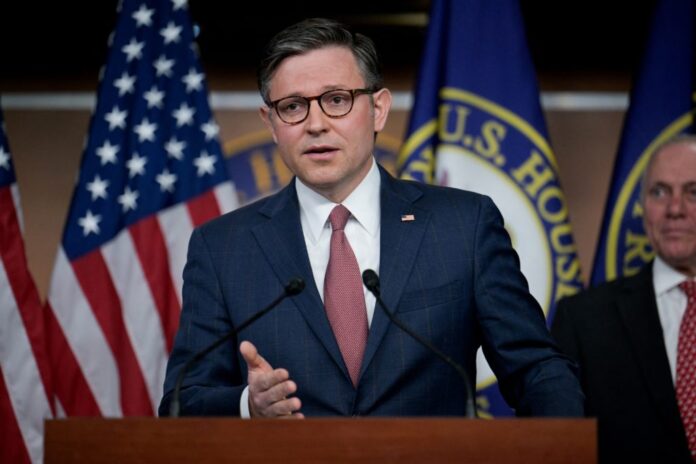
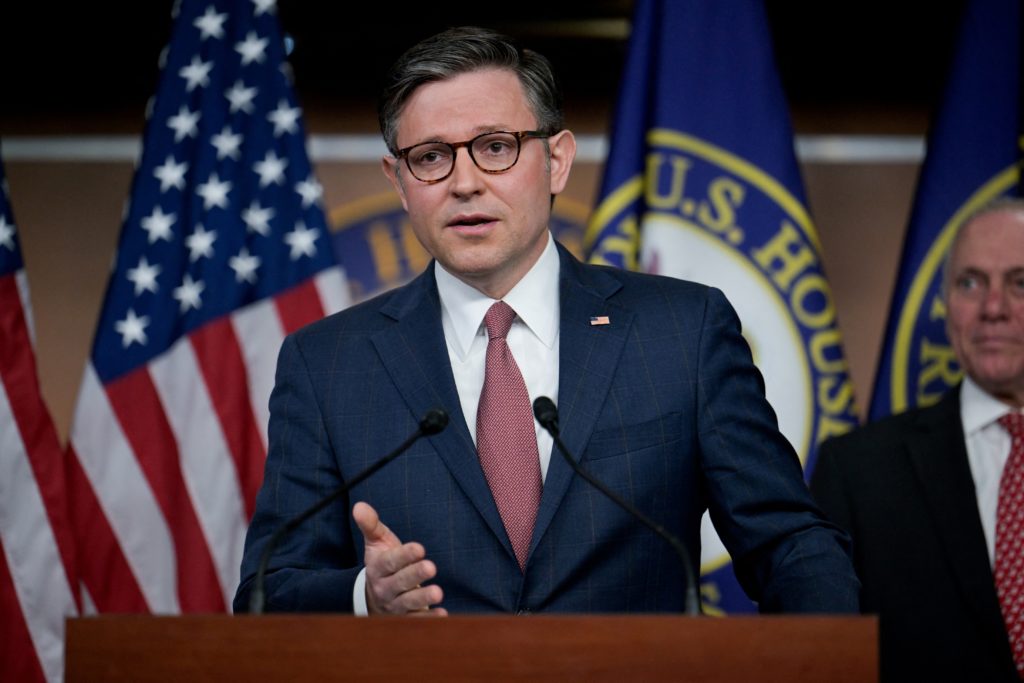
U.S. House Speaker Mike Johnson (R-LA) speaks at a House Republicans press conference on Capitol Hill in Washington, U.S., June 12, 2024. REUTERS/Craig Hudson

WASHINGTON — The Republican-controlled House of Representatives approved legislation Wednesday requiring Americans to provide proof of U.S. citizenship when registering to vote in November midterm elections, advancing a controversial measure that Democrats characterize as voter suppression designed to concentrate electoral power in President Donald Trump’s administration.

U.S. House Speaker Mike Johnson (R-LA) speaks at a House Republicans press conference on Capitol Hill in Washington, U.S., June 12, 2024. REUTERS/Craig Hudson

Lawmakers voted 218-213 to pass the SAVE America Act, with only one Democrat—Representative Henry Cuellar of Texas—joining Republicans to support the measure. The narrow partisan vote sends the legislation to the Republican-led Senate, where it faces uncertain prospects of securing the 60-vote supermajority necessary to overcome a filibuster.

The bill represents the latest iteration of election legislation that emerged during the 2024 presidential campaign, driven by Trump’s unsubstantiated claims that large numbers of people residing illegally in the country have been voting in federal elections. Similar measures passed the House twice—in April 2025 and during 2024—only to die in the Senate without receiving floor votes.

The House vote occurred barely a week after Trump called for Republicans to “take over” elections in more than a dozen locations, comments that Democrats cite as evidence of coordinated efforts to manipulate electoral processes. The legislation would require citizenship proof when registering to vote in midterm elections and would impose criminal penalties on election officials who register anyone without required documentation.

Republicans added a photo identification requirement for people casting ballots at polling places or via mail-in ballots in subsequent federal elections. They cited surveys including a Pew Research Center poll showing that 83 percent of voters—including 71 percent of Democrats—support photo identification requirements for voters.

House Speaker Mike Johnson characterized the bill as “common sense legislation to just ensure that American citizens decide American elections,” framing the measure as addressing legitimate integrity concerns rather than creating voting obstacles.

However, Democratic Party leaders contend the legislation attempts to suppress voter turnout and undermine their electoral prospects at a moment when independent political analysts favor Democrats to capture House control. Republicans have been rattled by a series of Democratic special election victories, including one for the Texas state Senate that GOP strategists view as a warning signal heading into midterms.

“The SAVE America Act is part of a comprehensive Republican strategy to cement power this year. Speaker Johnson wants to make it harder for Americans to vote, easier for Washington Republicans to control how elections are run,” declared Representative Joe Morelle, the ranking Democrat on the House committee overseeing elections.

Federal law already prohibits non-citizens from voting in federal elections. Independent organizations across the political spectrum, along with state election officials, have consistently found such voting to be extraordinarily rare—contradicting Republican rhetoric suggesting widespread illegal voting represents a significant problem.

The left-leaning Brennan Center for Justice at New York University School of Law has cautioned that the SAVE America Act could deny voting rights to millions of U.S. citizens who lack ready access to passports, birth certificates and other documents proving their citizenship. This disproportionately affects low-income Americans, minorities, elderly citizens and those born in rural areas where documentation requirements were historically less rigorous.

Democracy advocates position the legislation within a larger confrontation between the Trump administration and state governments that has encompassed withholding federal funds, deploying National Guard troops and conducting an FBI search of a county election office in Georgia—actions critics characterize as federal overreach into traditionally state-controlled electoral administration.

“We have checks and balances in place that include state and local officials acting as a check against federal overreach,” explained Mai Ratakonda, program director of election protection at States United Democracy Center, a nonpartisan organization safeguarding free and fair elections. “That’s what the federal government is trying to undermine.”

Representative Chip Roy, the Texas Republican who authored the SAVE America Act, positioned the legislation as essential following what he characterized as an influx of millions of illegal immigrants entering the United States during the four-year Biden administration. The bill updates Roy’s earlier Safeguarding American Voter Eligibility (SAVE) Act that passed the House in April 2025 but never received Senate consideration.

Whereas the original SAVE Act would create a federal proof of citizenship mandate in voter registration processes and impose requirements for states to maintain voter rolls free of ineligible voters, the updated version additionally requires photo identification to vote in any federal elections.

The legislation would mandate information-sharing between state election officials and federal authorities when verifying citizenship on current voter rolls and enable the Department of Homeland Security to pursue immigration cases if non-citizens were discovered listed as eligible voters—provisions Democrats argue inappropriately federalize traditionally state-controlled election administration.

“If we want to rebuild confidence again in American elections, we need to pass the SAVE Act,” Representative Mike Haridopolos, a Florida Republican, told Fox News Digital. “What better way to eliminate that distrust than to make sure that whoever votes is an American citizen who is truly eligible to vote?”

House Minority Whip Katherine Clark, a Massachusetts Democrat, accused Republicans of attempting to suppress women’s votes specifically. She argued the legislation would complicate ballot-casting for married women whose surnames differ from their maiden names on birth certificates.

“Republicans aren’t worried about non-citizens voting. They’re afraid of actual American citizens voting. Why? Because they’re losing among women,” Clark asserted during House floor debate. “This is a minefield of red tape that you have put in front of women and American citizens and their right to vote.”

House GOP Policy Committee Chairman Kevin Hern, an Oklahoma Republican, emphasized that the legislation targets preventing illegal immigrants from voting in U.S. elections. “This really is about feeding the narrative that Democrats want illegals from all over the world to come here to support them,” Hern claimed regarding Democratic opposition.

Republican Study Committee Chairman August Pfluger, a Texas Republican, told Fox News Digital: “The American people did not give Republicans a mandate to make excuses. They gave us one to deliver wins, and the SAVE America Act is exactly that. Every single Democrat who voted no today proved they would rather let illegal aliens tip the scales in our national elections than protect your vote.”

If implemented, the bill could impose new requirements on voters participating in November midterm elections. However, Senate passage appears unlikely given current procedural rules requiring at least several Democrats to join Republicans in reaching the 60-vote threshold necessary to overcome a filibuster.

Republicans are simultaneously preparing a second, broader election bill designated the Make Elections Great Again Act, which would mandate paper ballot usage, restrict mail-in voting and prohibit ranked-choice voting in federal general elections. The House Administration Committee examined the legislation during a Tuesday hearing, suggesting Republicans intend pursuing comprehensive electoral system changes beyond citizenship verification alone.

The SAVE America Act’s partisan vote underscores the profound ideological divide regarding voting rights and election administration. Republicans frame the measure as common-sense integrity protections ensuring only eligible citizens participate in democracy, while Democrats characterize it as discriminatory suppression tactics designed to advantage Republican candidates by creating barriers disproportionately affecting constituencies likely to support Democratic candidates.

The citizenship proof requirement particularly affects Americans born before widespread hospital birth certificate issuance, those adopted or born overseas to American parents, individuals whose records were destroyed in natural disasters, and citizens who changed names through marriage or other legal processes. Obtaining replacement documentation often requires fees, travel to government offices during business hours, and bureaucratic navigation that creates obstacles for low-income workers and elderly citizens.

Critics note the ironic timing of Republicans advancing voting restrictions amid special election losses rather than after electoral victories, suggesting the legislation responds to political calculations about upcoming competitive races rather than evidence of actual voting irregularities.

As the legislation advances to the Senate, the fundamental question remains whether concerns about theoretical non-citizen voting—for which little evidence exists—justify imposing documentation requirements that voting rights advocates warn will disenfranchise eligible American citizens lacking easy access to required papers.

Foxnews/Reuters

Activists Say Iran Protest Death Toll Surpasses 7,000 as Nuclear Tensions With U.S. Escalate

0

The number of people killed in Iran’s sweeping suppression of nationwide protests has climbed to at least 7,002, activists said Thursday, marking a dramatic escalation in one of the deadliest crackdowns in the Islamic Republic’s history.

The U.S.-based Human Rights Activists News Agency (HRANA), which has tracked casualties during previous waves of unrest, published the updated figure after weeks of verification through contacts inside Iran. The organization relies on a network of sources within the country to cross-check identities amid severe communication restrictions.

Iranian authorities have offered a significantly lower official figure. On Jan. 21, the government announced that 3,117 people had died. In past episodes of unrest, the theocratic leadership has been accused by rights groups of minimizing casualty counts or withholding them entirely.

The Associated Press has not been able to independently confirm the number of fatalities because Iranian officials have restricted internet access and disrupted international phone lines since the protests intensified.

The rising toll underscores mounting domestic pressure on Iran’s leadership even as the country navigates a high-stakes diplomatic standoff with the United States over its nuclear program. A second round of negotiations remains uncertain, particularly after Israeli Prime Minister Benjamin Netanyahu pressed President Donald Trump to harden Washington’s demands on Tehran.

Following discussions with Netanyahu, President Donald Trump wrote on Truth Social that he insisted talks with Iran continue “to see whether or not a Deal can be consummated.” He added that reaching an agreement would be preferable but warned that previous refusals had brought consequences for Tehran. “Hopefully this time they will be more reasonable and responsible,” Trump said.

Inside Iran, grief is expected to intensify as families begin marking the traditional 40-day mourning period for loved ones killed during the unrest. In Iranian culture, the fortieth day after a death often becomes a focal point for remembrance gatherings, which in previous protest movements have evolved into renewed demonstrations.

Diplomatic maneuvering has continued in parallel with domestic turmoil. Senior Iranian security official Ali Larijani met Wednesday in Qatar with Foreign Minister Sheikh Mohammed bin Abdulrahman Al Thani. Qatar hosts a major U.S. military installation that Iran attacked in June after U.S. forces struck Iranian nuclear facilities during a 12-day Iran-Israel conflict. Larijani also held discussions with Hamas officials and met Tehran-aligned Houthi representatives in Oman.

In remarks to Qatar’s Al Jazeera satellite network, Larijani acknowledged an “exchange of messages” with Washington but indicated no formal proposal had been delivered during talks in Oman. Qatar’s state-run Qatar News Agency said Emir Sheikh Tamim bin Hamad Al Thani later spoke with President Donald Trump about regional de-escalation and security efforts.

Iranian Foreign Minister Abbas Araghchi, speaking to Russian state broadcaster RT, emphasized Tehran’s distrust of Washington. He recalled that negotiations last June were interrupted by military action. “We need to make sure that that scenario is not repeated,” Araghchi said, adding that responsibility for avoiding escalation “is mostly up to America.” Despite skepticism, he suggested it might be possible to reach “a better deal than Obama,” referencing the 2015 nuclear agreement that Trump withdrew from during his first term.

The United States has increased its military footprint in the region. The aircraft carrier USS Abraham Lincoln and accompanying vessels have deployed to the Middle East. U.S. forces have shot down a drone that approached the carrier and intervened when Iranian forces attempted to stop a U.S.-flagged vessel in the Strait of Hormuz. Trump told Axios he is weighing the possibility of dispatching a second carrier strike group, stating, “We have an armada that is heading there and another one might be going.”

Vice President JD Vance, during a visit to Azerbaijan, said Washington remains focused on diplomacy but retains alternatives. “He’s going to have a lot of options, because we have the most powerful military in the world,” Vance said.

Meanwhile, the Norwegian Nobel Committee voiced alarm over the treatment of 2023 Peace Prize laureate Narges Mohammadi. The committee said it was “deeply appalled” by accounts describing her arrest, alleged physical abuse and continued denial of adequate medical care. It urged her immediate release, noting reports that she has fainted repeatedly and suffers from dangerously high blood pressure. Mohammadi, 53, was recently sentenced to more than seven additional years in prison.

Iran marked the 47th anniversary of its 1979 Islamic Revolution this week amid stark contrasts. State television broadcast images of large pro-government rallies featuring chants of “Death to America!” and displays of missiles and debris said to be from Israeli drones. President Masoud Pezeshkian addressed supporters at Tehran’s Azadi Square, asserting that Iran is “not seeking nuclear weapons” and stands ready for verification, although the International Atomic Energy Agency has been unable for months to conduct full inspections.

Simultaneously, witnesses in Tehran described hearing nighttime chants of “Death to the dictator!” from residential neighborhoods. Pezeshkian acknowledged that the crackdown beginning Jan. 8 had “caused great sorrow,” saying the government is “obligated to assist all those who were harmed.” He did not directly address the casualty figures cited by activists.

HRANA’s higher death count reflects the cumulative impact of security operations involving the Revolutionary Guard and other forces. Activists say tens of thousands have been detained. Iran’s population of roughly 85 million includes both staunch supporters of the theocracy and citizens increasingly vocal in opposition. Economic hardship, sanctions pressure and generational divides have compounded frustration.

The expanding casualty figures could further complicate diplomatic calculations. Western governments face growing scrutiny over engagement with Tehran while human rights conditions deteriorate. Conversely, Iranian leaders may view negotiations as a means to relieve sanctions pressure and stabilize the economy amid domestic unrest.

Whether nuclear talks advance or collapse may determine the trajectory of tensions across the Middle East. Regional governments fear that a breakdown could trigger broader confrontation, particularly given the military assets now concentrated in the Persian Gulf.

For many Iranians, however, the immediate concern remains accountability for the bloodshed. As mourning ceremonies approach, the country stands at a volatile intersection of grief, political dissent and international brinkmanship — a convergence that could shape Iran’s future well beyond the current crisis.

The Associated Press original

DON'T MISS ANY OF OUR UPDATE