Home Blog Page 22

Tumbler Ridge School Shooter Killed Mother Who Defended Transgender Rights Before Teen’s Deadly Rampage

0

The mother of the teenage school shooter who killed eight people in Tumbler Ridge, British Columbia was herself among the victims, authorities confirmed Wednesday, revealing that Jennifer Strang, 39, had publicly defended transgender rights and urged online critics to cease hateful rhetoric targeting transgender youth in social media posts published less than two years before her son’s deadly rampage.

The slain mother of the transgender high school dropout who murdered her and his stepbrother before gunning down six at a British Columbia school defended trans rights in a resurfaced Instagram post.

RCMP Deputy Commissioner Dwayne McDonald, speaking from Surrey approximately 670 kilometers southwest of Tumbler Ridge, confirmed the identity of the suspect found dead inside Tumbler Ridge Secondary School as 18-year-old Jesse Van Rotselaar, formerly known as Van Rootselaar. The teenager died from what authorities characterized as a self-inflicted gunshot wound following the Tuesday afternoon attack.

Strang, who described herself as a “conservative leaning libertarian,” unleashed a profanity-fueled plea in a July 2024 Instagram post urging her followers to abandon hatred targeting transgender individuals. The post resurfaced following revelations that her child had transitioned and subsequently carried out the massacre that claimed her life along with seven others including her 11-year-old son, Van Rotselaar’s stepbrother.

“As a conservative leaning libertarian who lives in the north and loves living in a small town. I really hope the hate I see online is just bored old people and not true hatred,” Strang wrote, urging people to “evolve” and “do better and educate yourself before spewing bulls–t online.”

Her impassioned message continued: “I normally don’t say anything and I normally don’t go on s–tbook to see the keyboard warriors and I know I can’t control everything or shield my kids from everything but please for the love of f–k can you get your sh–t together so we don’t have to bring our kids up in a world full of hatred.”

Strang specifically referenced suicide risks facing transgender youth subjected to hateful rhetoric. “Do you have any idea how many kids are killing themselves over this kind of hate. Please STOP the bulls–!” she implored, demonstrating awareness of mental health vulnerabilities her own child may have experienced.

The tragic irony that Strang’s defense of transgender rights preceded her murder by her transgender child has generated intense discussion about family dynamics, mental health intervention failures and the complex factors contributing to mass violence. The posts reveal a mother attempting to create supportive environment for her child while confronting community prejudices in a small conservative town.

Van Rotselaar launched the horrifying attack at a private residence on Fellers Avenue in the sleepy rural community Tuesday afternoon before continuing the carnage at Tumbler Ridge Secondary School. Authorities discovered two bodies at the family home—Strang and her 11-year-old son—before finding six additional victims deceased inside the school building.

CBC News identified Strang as one of the two individuals killed at the residence, with police confirming the 11-year-old boy was Van Rotselaar’s stepbrother. The familial murders preceding the school attack suggest the rampage may have begun with domestic violence before expanding to target the educational institution.

McDonald disclosed that among those killed are a 39-year-old female educator, three 12-year-old female students and two male students aged 12 and 13. The concentration of young victims—multiple 12-year-olds and one 13-year-old—underscores the particular horror of violence targeting children barely into adolescence.

Two additional victims—a 12-year-old girl and 19-year-old woman—were airlifted to hospital where police confirmed they remain in serious condition Wednesday. Approximately 25 more individuals sustained physical injuries ranging from minor to moderate severity, overwhelming the small community’s limited medical resources.

Van Rotselaar had dropped out of Tumbler Ridge Secondary School four years earlier and was not enrolled as a student at the time of the shooting, police revealed. The four-year gap between school departure and the attack raises questions about what experiences during that period may have contributed to the decision to target the educational institution specifically.

McDonald emphasized that police are continuing to notify loved ones, noting that whether victims’ identities are made public will be determined by individual families. This cautious approach reflects sensitivity to privacy concerns while acknowledging public interest in understanding the tragedy’s full scope.

Tumbler Ridge, home to approximately 2,400 people, is located about 660 kilometers northeast of Vancouver and just over 500 kilometers west of Edmonton. The small population means virtually every resident experiences the tragedy through personal connections to victims, survivors or the shooter’s family.

Tumbler Ridge pastor George Rowe characterized the community as “very closely knit,” explaining: “We all share this tragedy as if it was my family, or my neighbour’s family.” This intimacy intensifies collective trauma as residents process losses affecting people they know personally rather than abstract victims.

Town councillor Chris Norbury, whose wife teaches at the school and survived the attack, told CBC News he personally knew every victim. “I’ve seen them grow up,” he disclosed. “We sang stories together, we read books together … I saw them everywhere. And knowing that I can’t see them anymore, that we won’t see them anymore, that their family has to live with this incredible loss … is almost unbearable.”

The killer killed his mother and stepbrother before his massacre at the school.

Norbury’s anguished statement captures the devastating reality of small-town mass violence where perpetrators, victims and survivors often share years of shared history and interconnected relationships. The loss resonates through multiple social networks as residents confront grief for children they watched mature from infancy.

The revelation of Van Rotselaar’s transgender identity and Strang’s public advocacy adds complex dimensions to understanding the massacre’s origins. Whether the teenager experienced bullying related to gender identity, struggled with mental health challenges exacerbated by social rejection, or faced family tensions despite maternal support remains under investigation.

Strang’s Instagram posts demonstrate parental acceptance and active defense of transgender rights, suggesting she attempted to create supportive home environment. However, the family murders indicate profound dysfunction or conflict that remains unexplained. Whether the stepbrother’s death represented collateral damage or deliberate targeting also requires clarification.

The concentration of young female victims—three 12-year-old girls among the school dead—may indicate gender-specific targeting or simply reflect random victim selection within a small school population. Investigators will examine whether the shooter harbored particular grievances against specific individuals or attacked indiscriminately.

Van Rotselaar’s four-year absence from school complicates efforts to identify institutional warning signs or intervention opportunities. If the teenager had remained enrolled, school counselors and administrators might have observed concerning behaviors enabling preventive action. The dropout status removed that potential safety net.

The case raises uncomfortable questions about transgender youth mental health support in small, conservative communities where acceptance may lag behind urban areas. Strang’s July 2024 post suggesting she hoped online hatred came from “bored old people” rather than “true hatred” indicates she perceived community hostility her child may have experienced directly.

Whether Van Rotselaar received adequate mental health treatment, had access to gender-affirming care, or experienced social isolation contributing to violent ideation will likely emerge as investigation progresses. Small communities like Tumbler Ridge often lack specialized transgender healthcare resources, potentially leaving vulnerable youth without appropriate support.

The family dynamics preceding the massacre—including relationships among Strang, Van Rotselaar and the 11-year-old stepbrother—may illuminate immediate triggers for the violence. Domestic disputes, family conflicts or recent crises could have precipitated the attack, though such factors rarely fully explain mass casualty events.

For Tumbler Ridge residents processing the tragedy, the revelation that the shooter’s mother actively advocated for acceptance and warned against hatred’s consequences adds cruel irony to already incomprehensible violence. Strang’s efforts to combat prejudice and protect her child ultimately could not prevent the catastrophic outcome she apparently feared.

As investigators piece together Van Rotselaar’s path from troubled teenager to mass killer, the broader Canadian public confronts difficult conversations about transgender youth wellbeing, rural mental health resources, firearm access despite strict regulations, and early intervention strategies for individuals exhibiting warning signs.

The approximately 25 injured survivors face lengthy physical and psychological recovery, while Tumbler Ridge’s entire population must navigate collective grief and trauma. The small town’s close-knit nature that typically provides strength during hardship now means virtually everyone experiences direct personal loss or knows those who do.

CBC/NYPost
At Least 15 Dead After Passenger Ferry Capsizes on Nile River in Northern Sudan

0

(AP)- A passenger ferry carrying dozens of people overturned on the Nile River in northern Sudan on Wednesday, leaving at least 15 people dead and several others missing, a medical monitoring group confirmed.

The vessel sank in the Shendi district of Nile River province, an area north of the capital, Khartoum, as it transported at least 27 passengers, including women and children. The Sudan Doctors Network, a medical organization that monitors casualties linked to Sudan’s ongoing conflict, indicated that recovery teams had retrieved 15 bodies from the river.

The group further indicated that at least six people survived the accident, while search operations continued for others believed to be missing. Residents and volunteer rescuers joined emergency teams along the riverbanks in an effort to locate the unaccounted passengers.

The Sudan Doctors Network appealed to authorities to dispatch specialized rescue units equipped with proper diving gear and search tools to accelerate recovery efforts, emphasizing the urgency of coordinated intervention.

Details surrounding the cause of the capsizing were not immediately available. Local officials had not issued a comprehensive statement by late Wednesday regarding the circumstances leading to the incident, including whether the vessel was overloaded or whether mechanical failure or strong currents contributed to the disaster.

River transport remains a vital means of travel across large parts of Sudan, particularly in rural and semi-urban regions where infrastructure has been degraded by years of economic hardship and armed conflict. In many communities, ferries provide the only practical route across the Nile and its tributaries, linking markets, schools and medical facilities.

Fatal boat accidents are not uncommon in Sudan and other African nations where aging vessels, minimal regulatory enforcement and overcrowding frequently combine to create hazardous conditions. Safety standards are often loosely applied, and passengers sometimes board boats without life jackets or adequate emergency provisions.

Wednesday’s tragedy unfolded against the backdrop of Sudan’s protracted internal conflict, which has strained public institutions and weakened oversight across key sectors, including transportation and emergency response. The Sudan Doctors Network has emerged as one of the few independent groups consistently documenting casualties and humanitarian developments amid limited access to official data.

The Nile River, one of the world’s longest waterways, serves as a lifeline for millions in Sudan. It supports agriculture, trade and daily commuting. However, the river’s significance also brings risk, particularly in areas where ferry services operate without stringent safety inspections or modern navigation systems.

Residents in the Shendi district described scenes of panic as word spread that the vessel had gone down. Families gathered along the banks awaiting updates as divers and volunteers searched the waters. With limited equipment available locally, rescue efforts often depend heavily on community participation.

The call by the Sudan Doctors Network for specialized rescue teams underscores broader concerns about Sudan’s emergency preparedness capacity. Prolonged instability and resource shortages have hindered investment in disaster response infrastructure. In many regions, first responders lack modern boats, sonar devices or trained divers capable of conducting swift underwater searches.

While authorities have not formally attributed a cause to the capsizing, analysts note that overcrowding frequently plays a role in similar incidents across the region. Economic pressures often compel ferry operators to maximize passenger loads, sometimes exceeding recommended capacity limits. Combined with fluctuating water levels and unpredictable currents, such conditions can quickly become deadly.

The humanitarian dimension of the tragedy is compounded by Sudan’s fragile health system. Hospitals in parts of the country continue to grapple with shortages of medical supplies and personnel, a situation worsened by ongoing violence between rival military factions. Survivors of the accident may face challenges accessing sustained medical and psychological support.

Beyond the immediate loss of life, the incident highlights the broader infrastructure vulnerabilities confronting Sudan. Years of political upheaval have left regulatory institutions under-resourced. River transportation oversight, in particular, has received limited attention amid competing national priorities.

International maritime and river safety experts have long emphasized the need for improved vessel inspections, mandatory life jacket distribution and stricter passenger capacity enforcement to reduce fatalities. In countries where waterways serve as primary transportation corridors, modest investments in safety training and equipment can significantly lower accident rates.

For families affected by Wednesday’s disaster, however, such reforms come too late. As search operations continue, community leaders in Shendi have urged both national and provincial authorities to launch a thorough inquiry into the circumstances surrounding the sinking.

The Sudan Doctors Network reiterated its appeal for coordinated rescue deployment, warning that delays could reduce the chances of recovering missing passengers. The group’s involvement reflects the growing role of civil society organizations in filling information gaps during Sudan’s ongoing crisis.

The capsizing serves as a stark reminder of the risks embedded in everyday travel for many Sudanese citizens. As long as river crossings remain essential and safety enforcement remains inconsistent, similar tragedies may continue to occur.

In the aftermath of the accident, attention is likely to focus not only on the immediate recovery operation but also on systemic reforms aimed at preventing future losses along the Nile. Whether those reforms materialize will depend largely on political stability and the availability of resources in a nation already grappling with profound challenges.

For now, residents of Shendi await further developments as rescue teams press on along the riverbanks, searching for the missing and mourning those whose lives were cut short in the waters of the Nile.

AP

Death Toll Climbs to 31 as Tropical Cyclone Gezani Devastates Madagascar’s Port City

0

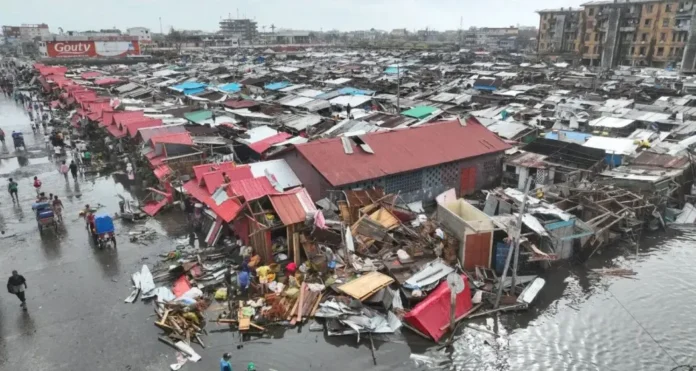
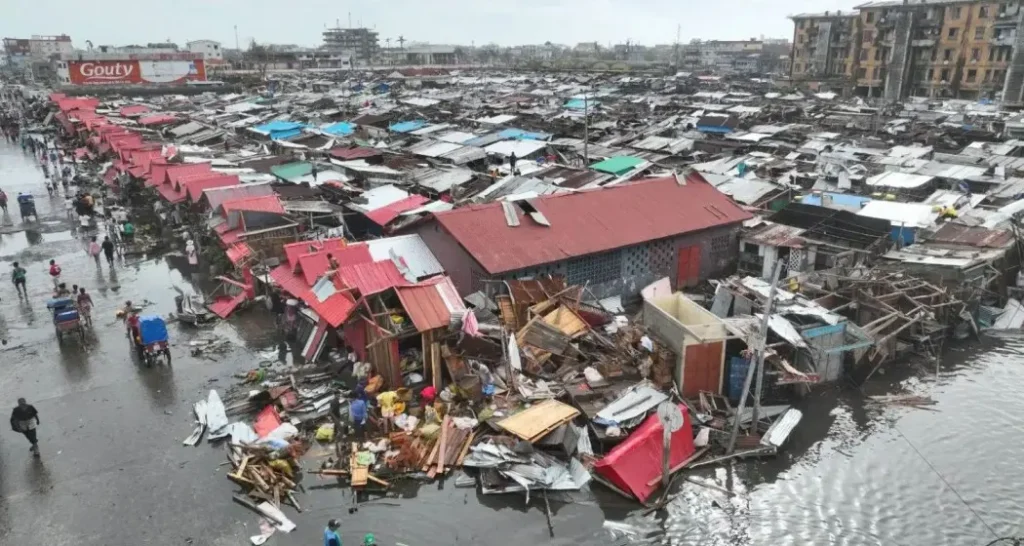
Tropical Cyclone Gezani tore across Madagascar’s eastern coastline, collapsing homes and crippling infrastructure in the country’s principal port city, leaving at least 31 people dead and thousands displaced, authorities confirmed Wednesday.

Madagascar’s National Office for Risk and Disaster Management attributed many of the fatalities to building collapses as the powerful storm made landfall late Tuesday in Toamasina, a coastal city of roughly 300,000 residents. At least 36 people sustained serious injuries, and four others were reported missing. More than 6,000 residents have been forced from their homes.

The national weather service placed multiple regions under red alert ahead of the cyclone’s arrival, cautioning that torrential rain and high winds could trigger flooding and landslides. Gezani struck the island with sustained winds exceeding 195 kilometers per hour (121 miles per hour), sweeping inland across a nation of about 31 million people, many of whom live in vulnerable housing structures ill-equipped to withstand severe storms.

Officials said the majority of the deaths occurred in and around Toamasina, where widespread destruction was visible across neighborhoods. Power outages have persisted in the city since Tuesday, compounding the challenges for emergency responders and residents attempting to assess the damage.

President Michael Randrianirina, who assumed office following a military takeover in October, traveled to Toamasina to inspect affected areas and meet with displaced families. Footage released on his office’s Facebook page showed inundated streets, homes with torn-off roofs, shattered storefronts and debris strewn across major thoroughfares. Uprooted trees and downed utility poles lined sections of the city, underscoring the scale of the destruction.

In a statement, the president’s office indicated that approximately 75% of Toamasina’s infrastructure had sustained damage or been destroyed.

“It’s devastation,” said a resident identified only as Michel, speaking by telephone. “Roofs have been blown away, walls have collapsed, power poles are down, trees have been uprooted. It looks like a catastrophic landscape.”

Gezani weakened to a tropical storm as it moved westward across Madagascar on Wednesday, passing roughly 100 kilometers (62 miles) north of the capital, Antananarivo. The capital remained under a red alert due to the risk of flooding as heavy rainfall continued.

Forecast models issued by the national weather service indicated that the system was expected to move into the Mozambique Channel between Madagascar and Africa’s east coast on Thursday. Meteorologists cautioned that Gezani could regain strength over warm ocean waters and potentially redevelop into a tropical cyclone before curving back toward Madagascar’s southwestern coastline next week.

Regional authorities are closely monitoring the storm’s path. In Mozambique, where severe flooding last month affected more than 700,000 people, officials issued precautionary weather advisories for three coastal provinces that could feel Gezani’s impact if the storm intensifies again.

Madagascar remains acutely vulnerable to tropical systems forming over the Indian Ocean. Less than two weeks ago, Tropical Cyclone Fytia struck the island on Jan. 31, killing 14 people and displacing more than 85,000 residents, according to the country’s disaster management agency. The back-to-back storms have strained already limited resources and deepened humanitarian concerns.

The United Nations earlier this week released $3 million from its emergency response fund to support preparedness and relief efforts ahead of Gezani’s landfall. U.N. spokesperson Stéphane Dujarric confirmed Monday that the funding was intended to help authorities reinforce response capacity in anticipation of the cyclone’s impact.

Madagascar’s cyclone season, which typically runs from November through March, regularly subjects the island to destructive weather systems. As the world’s fourth-largest island, Madagascar sits directly in the path of storms that gather strength over the warm waters of the Indian Ocean. Since 2020, more than a dozen tropical storms and cyclones have struck the country.

The United Nations Office for Disaster Risk Reduction estimates that such storms cause roughly $85 million in infrastructure damage annually, undermining development in one of the world’s poorest nations. Repeated destruction of roads, bridges, schools and hospitals hampers recovery efforts and leaves communities exposed when the next storm arrives.

Analysts note that Madagascar’s vulnerability stems not only from its geographic position but also from chronic underinvestment in resilient infrastructure. Rapid urban growth in coastal cities such as Toamasina has led to the expansion of informal settlements where housing is often constructed from lightweight materials unable to withstand hurricane-force winds. In rural areas, deforestation has exacerbated the risk of landslides during heavy rainfall, increasing the human toll of cyclones.

Climate scientists have also warned that warming ocean temperatures can intensify tropical systems, raising concerns that storms striking the southwest Indian Ocean basin may become more destructive over time. While no single cyclone can be directly attributed to climate change, experts say the trend toward heavier rainfall and stronger winds aligns with broader global patterns observed in other cyclone-prone regions.

For Madagascar, the immediate priority remains emergency relief and restoring essential services. Aid organizations are coordinating with local authorities to provide temporary shelter, clean water and medical assistance to displaced families. Restoring electricity and clearing blocked roads will be critical to reopening supply lines to affected communities.

As residents begin to sift through debris and account for losses, the rising death toll underscores the fragile balance between survival and vulnerability in a country repeatedly battered by extreme weather. With cyclone season still underway and forecasts suggesting Gezani could re-intensify, Madagascar faces the prospect of continued uncertainty in the days ahead.

British Columbia School Shooting Claims 10 Lives Including Female Suspect in Canada’s Deadliest Rampage Since 2020

0

A shooting at a northeastern British Columbia secondary school left ten people dead including a female suspect whom authorities believe died from a self-inflicted injury, marking Canada’s deadliest mass casualty incident since a 2020 Nova Scotia rampage claimed 22 lives, the Royal Canadian Mounted Police confirmed Tuesday.

The Royal Canadian Mounted Police disclosed that more than 25 people sustained injuries, including two individuals airlifted to hospital with life-threatening conditions, following the attack at Tumbler Ridge Secondary School in the small mountain community located more than 1,000 kilometers north of Vancouver near the Alberta border.

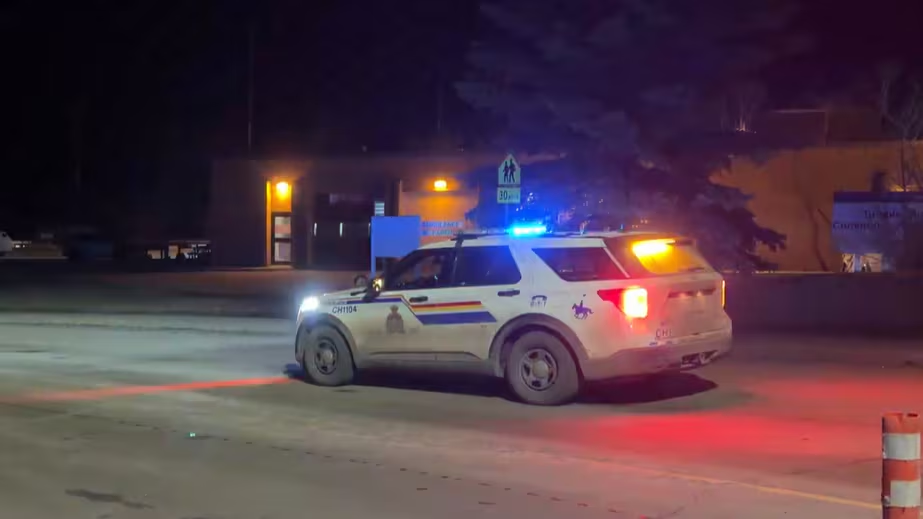
An active shooter alert was issued at 3:15 p.m. Mountain Time by RCMP, covering an extensive area including Chetwynd and Dawson Creek. Residents were instructed to remain indoors and shelter in place. That alert was lifted at 6:45 p.m. MT after authorities determined no ongoing threat to public safety existed.

Police officers arrived at the school within two minutes of the initial emergency call, British Columbia Premier David Eby disclosed to reporters. They discovered seven people deceased inside the educational facility, including a suspect who appeared to have succumbed to a “self-inflicted injury,” local police detailed in a statement. An eighth person died while being transported to hospital, while two additional individuals were found dead at a residence authorities believe was connected to the attack.

RCMP Superintendent Ken Floyd told reporters that investigators had identified a female suspect but declined to release her name, emphasizing that the shooter’s motive remained unclear. He added that police continue investigating how the victims are connected to the shooter, suggesting the attack may not have involved random target selection.

Six people were found deceased inside the school building, while another died en route to medical facilities. The two people discovered dead at a nearby home represent a separate but connected crime scene that investigators are examining to determine relationships among all victims and the perpetrator.

Tumbler Ridge Mayor Darryl Krakowka expressed profound grief for the community of approximately 2,400 to 2,700 residents, characterizing the town as a “big family” where interconnections run deep. “I broke down,” he acknowledged, describing it as “devastating” to learn how many had perished. “I have lived here for 18 years. I probably know every one of the victims.”

The mayor’s personal knowledge of likely all victims underscores the intimate nature of small communities where tragedies affect virtually every resident either directly through personal relationships or indirectly through social networks. In towns where everyone knows everyone, mass casualty events generate collective trauma that urban communities with greater anonymity may not experience as intensely.

Pastor George Rowe of the Tumbler Ridge Fellowship Baptist Church went to the recreation center where victims’ families awaited information about their loved ones’ fates. “It was not a pretty sight. Families are still waiting to hear if it’s their child that’s deceased and because of protocol and procedure the investigating team is very careful in releasing names,” Rowe recounted.

“The big thing tonight was my having to walk away and the families still waiting to find out. It is so difficult. Other pastors and counselors are there so they are not alone,” he continued, highlighting the agonizing limbo families endure while authorities methodically confirm identities before official notifications.

Rowe once taught at Tumbler Ridge Secondary School and his three children graduated from the institution, providing him intimate familiarity with the facility and community now traumatized by violence. “To walk through the corridors of that school will never be the same again,” he reflected, acknowledging how violent events permanently alter perceptions of previously safe spaces.

The provincial government website lists Tumbler Ridge Secondary School as serving 175 students from Grades 7 to 12, suggesting the attack occurred in a relatively small educational facility where students and staff likely knew one another personally. This intimacy potentially intensifies trauma as survivors process losses of individuals they knew well rather than abstract victims.

Canadian Prime Minister Mark Carney declared in a social media post that he was devastated by the shooting. “I join Canadians in grieving with those whose lives have been changed irreversibly today, and in gratitude for the courage and selflessness of the first responders who risked their lives to protect their fellow citizens,” he wrote.

Carney’s office announced he is suspending a planned trip to Halifax, Nova Scotia and Munich, Germany, where he was scheduled to unveil a long-awaited defense industrial strategy Wednesday before attending the Munich Security Conference. The cancellation demonstrates how mass casualty events compel governmental leaders to abandon routine activities to focus on crisis response and national mourning.

Premier Eby disclosed he had spoken with Carney following what he characterized as an “unimaginable tragedy.” “I know it’s causing us all to hug our kids a little bit tighter tonight,” Eby expressed. “I’m asking the people of British Columbia to look after the people of Tumbler Ridge tonight,” appealing to provincial solidarity with the grieving community.

School shootings remain rare in Canada compared to the United States, where such incidents occur with tragic frequency. Canadian gun control measures—significantly more restrictive than American regulations—have historically limited access to firearms that enable mass casualty attacks, though Tuesday’s violence demonstrates that determined individuals can still obtain weapons and inflict catastrophic harm.

Canada’s government has responded to previous mass shootings with enhanced gun control measures, including a recently expanded prohibition on all firearms it classifies as assault weapons. Whether Tuesday’s tragedy prompts additional legislative action remains uncertain, though the political pattern suggests further restrictions may be considered.

Tuesday’s shooting represents Canada’s deadliest rampage since April 2020, when a gunman in Nova Scotia killed 13 people through shootings and set fires that claimed another nine lives over a 13-hour period. That incident shocked Canada and prompted governmental examination of firearms regulations and law enforcement response protocols.

The 2020 Nova Scotia shooter had acquired firearms illegally, complicating policy responses since existing laws theoretically should have prevented his weapon access. The case illustrated limitations of regulatory approaches when determined individuals exploit black markets or other illicit channels to obtain prohibited items.

North District Chief Superintendent Ken Floyd emphasized in a statement that “this was a rapidly evolving and dynamic situation, and the swift co-operation from the school, first responders, and the community played a critical role in our response.” The rapid police arrival within two minutes likely prevented additional casualties by shortening the timeframe during which the shooter could continue attacking unimpeded.

“Our thoughts are with the families, loved ones, and all those impacted by this tragic incident,” Floyd continued. “This has been an incredibly difficult and emotional day for our community, and we are grateful for the co-operation shown as officers continue their work to advance the investigation.”

RCMP Major Crime Unit investigators are examining the scene and gathering evidence to construct a comprehensive timeline of events, determine motive, and understand relationships among all individuals involved. The investigation will likely examine the shooter’s background, mental health history, weapon acquisition, and any warning signs that might have been detected through intervention mechanisms.

Tumbler Ridge, situated in the Canadian Rockies approximately 176 kilometers northeast of Prince George, is a former mining community that has diversified economically while retaining its small-town character. The 2021 census recorded a population of about 2,400, though some estimates place current population closer to 2,700.

The town’s remote location and small size create challenges for emergency response and trauma support services. While the two-minute police arrival time demonstrates effective local law enforcement, the community likely lacks extensive mental health resources necessary to address collective trauma following such catastrophic violence.

The airlift of two critically injured victims to advanced medical facilities reflects the limited local healthcare capacity typical of small, remote communities. These patients likely required surgical interventions or intensive care unavailable at Tumbler Ridge’s medical facilities, necessitating dangerous winter helicopter transport to larger urban hospitals.

For families awaiting notification about loved ones’ fates, the careful identification protocols that Pastor Rowe referenced—while necessary to ensure accuracy—extend agonizing uncertainty. The tension between rapid information release and methodical confirmation creates unavoidable suffering for those desperate to know whether their children, spouses or parents survived.

As investigators work to establish motive and reconstruct events, the Canadian public confronts difficult questions about violence prevention, mental health intervention, firearm regulation effectiveness, and school security measures. Each mass casualty event generates renewed debate about whether additional policy responses could prevent future tragedies or whether such incidents represent irreducible risks in any society.

The female suspect’s identity and background will likely emerge in coming days, potentially illuminating warning signs that were missed or ignored before she carried out the attack. Whether she had documented mental health struggles, faced recent crises, or exhibited concerning behaviors observable to family, friends or authorities will inform discussions about intervention opportunities.

For Tumbler Ridge residents, the immediate focus remains on supporting grieving families, treating injured survivors, and beginning the lengthy process of collective healing. The corridors Pastor Rowe said “will never be the same again” represent physical spaces now haunted by violence, requiring both practical decisions about the school’s future use and psychological work to reclaim safe spaces from traumatic associations.

CBC/AP

Democratic Congressman Publicly Identifies 6 Men Whose Names Were Redacted from Epstein Files

0

Democratic Representative Ro Khanna publicly disclosed Tuesday the identities of six men whose names were redacted from Jeffrey Epstein documents, including billionaire retail magnate Leslie Wexner whom the FBI appears to have designated as a co-conspirator, marking a significant revelation in the ongoing controversy over governmental transparency regarding the deceased sex offender’s criminal network.

Democratic Representative Ro Khanna

The California congressman identified the individuals during a House floor speech following a visit to the Department of Justice where he and Republican Representative Thomas Massie of Kentucky spent two hours reviewing unredacted documents that remain largely concealed from public view despite legislative mandates for disclosure.

The six men identified by Khanna are Wexner, the Victoria’s Secret founder; Sultan Ahmed bin Sulayem, chief executive of DP World and an Emirati billionaire businessman; and four others designated as Nicola Caputo, Salvatore Nuara, Zurab Mikeladze and Leonic Leonov. Khanna provided no evidence of criminal wrongdoing against any of them, nor have they been charged with offenses connected to Epstein’s crimes.

“If we found six men that they were hiding in two hours, imagine how many men they are covering up for in those 3m files,” Khanna declared during his floor speech, challenging Justice Department redaction practices that he characterized as protecting wealthy and powerful individuals from public scrutiny.

“Why are they protecting these rich and powerful men? People I call part of the ‘Epstein class’. Why are we in a country where there is no elite accountability for people who do the most heinous things?” Khanna demanded, framing the redactions as systemic protection of privileged wrongdoers.

Khanna revealed that when he and Massie identified the redactions for Justice Department officials during their Monday visit, “they acknowledged their mistake” and disclosed the identities. However, he emphasized that the vast majority of the files remain redacted despite congressional legislation specifically requiring comprehensive disclosure.

The Justice Department made its most recent document release available for members of Congress to review in-person rather than publishing unredacted versions publicly. Khanna and Massie told reporters Monday that the pair had to conduct “some digging” before discovering the redacted names, suggesting the documents were not organized to facilitate easy identification of improperly concealed information.

Epstein pleaded guilty in 2008 to soliciting a minor for prostitution and served a 13-month sentence under a controversial non-prosecution agreement that generated outrage when its lenient terms became publicly known years later. He died in an apparent suicide in a New York jail cell in August 2019 while awaiting trial on federal sex trafficking charges.

Being named in the Epstein files does not establish guilt, as individuals may appear simply through email correspondence, contact information or other documentation referencing the disgraced financier. However, the redaction of certain names while others remained public raises questions about which criteria determined concealment and whether powerful individuals received preferential privacy protection.

Leslie “Les” Wexner, 88, established a retail empire encompassing Victoria’s Secret, Abercrombie & Fitch and Bath & Body Works while maintaining a lengthy financial relationship with Epstein, who managed his investments for many years. A November New York Times investigation attributed Wexner as the individual who elevated Epstein’s financial status from millionaire to plutocrat, noting that beyond monetary benefits, his “greatest value to Epstein was that he imbued him with new credibility and credentials.”

Though Wexner’s ties to Epstein were already publicly documented and his name had surfaced in previous releases, it has now been revealed that he appears to have been labeled a co-conspirator with Epstein by the FBI—a designation carrying significant legal implications despite Wexner facing no criminal charges in connection with Epstein’s offenses.

The co-conspirator designation suggests federal investigators possessed evidence implicating Wexner in criminal activity related to Epstein’s sex trafficking operation, though prosecutors apparently determined insufficient grounds existed for charges or chose not to pursue prosecution for undisclosed reasons. This gap between investigative findings and prosecutorial action exemplifies the accountability failures Khanna highlighted in his floor speech.

Sultan Ahmed bin Sulayem, the Dubai-based businessman leading DP World—a multinational ports and logistics enterprise with operations spanning more than 80 countries—is also the brother of Mohammed Ben Sulayem, head of the FIA governing body for world motorsport championships including Formula One.

Recently disclosed documents reveal that Sultan Ahmed bin Sulayem emailed Epstein in 2015 describing meeting a girl “two years ago” who attended an American university in Dubai and constituted “the best sex I ever had amazing body.” He added: “She got engaged but now she back with me.”

Massie disclosed that since the names were unredacted, it appears the Justice Department confirmed that Sulayem was the recipient of an email from Epstein stating: “I loved the torture video.” The context and content of this referenced video remain unclear, though the terminology raises disturbing questions about material Epstein shared with associates.

A man named Nicola Caputo served as an Italian politician representing his country in the European Parliament between 2014 and 2019 before assuming a senior position in Campania’s regional administration. However, no verified evidence confirms this individual is mentioned in officially released documents, and established news organizations have not corroborated any connection between him and the files. The identification remains tentative pending further confirmation.

Leslie Wexner, CEO of of the parent company of Victoria’s Secret, Bath & Body Works and other businesses, and Sultan Ahmed bin Sulayem, DP World CEO. Composite: AP, Reuters (TheGuardian)

The identities and Epstein connections of Salvatore Nuara, Zurab Mikeladze and Leonic Leonov remain unknown as of Tuesday evening. The lack of immediately available information about these individuals suggests they may be less prominent public figures or operate in jurisdictions where biographical information is less accessible through standard internet searches.

The congressional visit to review unredacted documents occurred following passage of the Epstein Files Transparency Act, legislation co-led by Massie requiring the Justice Department to release redacted versions of all materials related to the Epstein investigation. The law emerged after months of delays and public pressure demanding transparency about Epstein’s criminal network and the wealthy, powerful individuals who associated with him.

The Justice Department published three million pages of documents in recent weeks, though extensive redactions have frustrated transparency advocates and congressional oversight efforts. The department has cited privacy protections for victims, ongoing investigative interests and other exemptions as justifications for concealing names and details.

However, Khanna’s floor speech suggests that at least some redactions protected individuals whose privacy interests may not legitimately outweigh public accountability concerns, particularly if FBI designations like “co-conspirator” accurately characterized their roles. The acknowledgment of “mistakes” when congressmen identified redacted names indicates the department may have applied exemptions too broadly.

The bipartisan nature of the congressional investigation—with Democrat Khanna and Republican Massie jointly reviewing documents and publicly challenging redactions—demonstrates rare cross-partisan agreement that elite accountability for Epstein-related crimes has proven insufficient. This unity suggests the transparency issues transcend typical ideological divisions.

Khanna’s concept of an “Epstein class”—wealthy, powerful individuals allegedly protected from consequences through systemic mechanisms including prosecutorial discretion, privacy redactions and social connections—resonates with broader public frustration about differential justice for elites versus ordinary citizens. Whether this frustration translates into meaningful accountability mechanisms remains uncertain.

The revelation of six previously redacted names discovered in two hours of document review validates concerns that Justice Department disclosure compliance has been incomplete. If congressional investigators can identify improperly redacted information so quickly, comprehensive review might expose numerous additional cases where privacy exemptions were inappropriately applied to shield powerful individuals.

The Wexner co-conspirator designation particularly raises questions about prosecutorial decision-making. If federal investigators possessed sufficient evidence to designate him as Epstein’s co-conspirator, what factors prevented criminal charges? Did evidentiary insufficiency explain the decision, or did Wexner’s wealth, legal resources and social connections enable him to avoid prosecution that might have proceeded against less privileged individuals?

As the three million pages of Epstein documents continue generating revelations and raising accountability questions, the tension between legitimate privacy protections and public transparency demands will persist. Khanna’s floor speech and the bipartisan congressional pressure it represents suggest that blanket redactions concealing powerful individuals’ connections to a convicted sex trafficker will face intensifying scrutiny and resistance.

TheGuardian

Bandits Abduct 14 Bus Passengers, Kill Two in Fresh Benue Night Attack, Nigeria

0

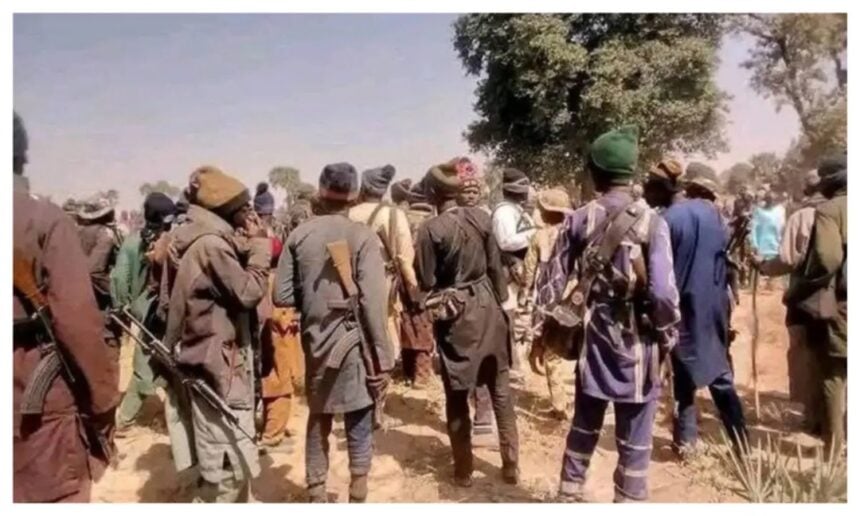
Suspected bandits launched another deadly attack in Nigeria’s Benue State, abducting at least 14 passengers and killing two others during a night-time ambush on a major road, authorities and local officials said Tuesday, as fears mounted over escalating insecurity in the region.

The passengers were traveling from communities in the Igede axis of Oju and Obi local government areas toward southwestern Nigeria when their vehicle was intercepted around 7 p.m. Monday along the Utonkon–Ojapo/Okpoga road in the Okpokwu area of the state, local sources and officials said.

Witness accounts indicated the assailants opened fire after the driver attempted to evade the attackers, triggering panic among those onboard. Two passengers were shot during the confrontation and died at the scene, while the remaining victims were forced off the road and taken into nearby bushland, residents and local officials said.

The latest abduction came less than 48 hours after armed men stormed St. John’s Catholic Church in Ojije, Utonkon, during a night vigil and kidnapped nine worshippers, underscoring what community leaders describe as a deteriorating security situation across central Benue.

A local resident in Makurdi, the state capital, said the vehicle departed Iheijwo Market in Oju Local Government Area early Monday evening before encountering the attackers.

“They left Iheijwo Market around 7 p.m. and passed through the Utonkon-Ojapo/Okpoga road when gunmen stopped them,” the source said by phone. “When the driver tried not to stop, one person was shot dead. The attackers later took the passengers into the bush.”

Another passenger later succumbed to gunshot wounds at the scene, the source added.

The Chairman of Oju Local Government Area, Jackson Ominyi, confirmed the incident, saying he received briefings from security aides shortly after the attack.

“My security officer informed me that some of our people were abducted around the Okpokwu axis,” Ominyi said Tuesday. “I learned that two passengers were killed and the remaining passengers were taken away.”

Ominyi said he had contacted officers of the Department of State Services in the area and was attempting to coordinate with neighboring local government officials to gather more details and support rescue efforts.

Efforts to obtain immediate confirmation from the Benue State Police Command were unsuccessful. The state’s Police Public Relations Officer, Udeme Edet, neither confirmed nor denied the incident when contacted earlier, saying only that she would revert with details. No further response had been received as of publication time.

The attack mirrors details published by Daily Post Nigeria, which also cited local sources describing a coordinated ambush in which the attackers blocked the roadway and fired at the vehicle when the driver attempted to escape.

Benue State, long plagued by communal clashes and criminal violence, has in recent years witnessed a surge in kidnappings along highways, particularly in rural corridors linking local government areas. While such attacks were once sporadic, residents say they have become increasingly frequent and brazen, often occurring in early evening hours when traffic thins and security patrols are scarce.

Security analysts note that the Utonkon–Ojapo/Okpoga corridor has emerged as a recurring hotspot for abductions, due in part to dense vegetation that allows armed groups to retreat quickly after attacks. The road also serves as a critical transit route for travelers moving between central Nigeria and the southwest, making it an attractive target for ransom-seeking gangs.

The recent spate of violence has heightened anxiety among residents, particularly following the abduction of worshippers from a Catholic church — an incident that shattered assumptions that religious spaces offered relative safety.

Community leaders warn that the cumulative effect of repeated attacks is disrupting economic activity and daily life, as residents increasingly avoid night travel and transport operators suspend services on high-risk routes. Some transport unions have reportedly begun advising drivers to travel only in convoys or limit movement after dusk, though enforcement remains inconsistent.

While ransom demands are common in such cases, officials have not disclosed whether contact has been made with the abductors or whether negotiations are underway. Authorities have also not released details on any search or rescue operations, though local officials say security agencies have been alerted.

Beyond the immediate tragedy, the latest incident raises broader questions about the capacity of security forces to secure highways and protect rural communities. Analysts say the persistence of such attacks reflects gaps in intelligence coverage, limited patrol resources, and slow emergency response times in remote areas.

For families of the abducted passengers, the focus remains on survival and safe return. Residents in Oju and surrounding communities said they were bracing for possible ransom demands while urging authorities to act swiftly.

As night attacks continue to ripple across Benue State, the latest ambush adds to growing pressure on security agencies and state leaders to stem a wave of criminal violence that residents fear is becoming the new normal.

Punchng/DailyPostng

Gaza Ceasefire Fractures Further as Israeli Strikes Kill Five Palestinians, Health Officials Confirm

0

 Israeli airstrikes and gunfire killed five Palestinians in Gaza on Tuesday, health officials confirmed, marking the latest violence eroding a four-month-old U.S.-brokered truce in the enclave as both sides repeatedly trade accusations of ceasefire violations threatening the fragile peace agreement.

In Deir Al-Balah in central Gaza, an airstrike killed two individuals riding an electric bike, medics disclosed. Subsequently, Israeli drone fire killed a woman in Deir Al-Balah while troops shot dead a man in Khan Younis in the southern region, medical personnel detailed. Another man perished from Israeli gunfire in Jabalia in northern Gaza, Palestinian medics confirmed.

The Tuesday violence followed a deadly Monday encounter when Israeli forces killed four militants in the southern city of Rafah after they emerged from an underground tunnel and opened fire on troops. Without commenting directly on the four people killed Tuesday, the Israeli military asserted it carried out attacks targeting what it characterized as Hamas militants in response to Monday’s incident in Rafah.

In Gaza City, dozens of Palestinians rallied at funeral services for three people killed by an Israeli airstrike on an apartment building in the area Monday night. One body was draped in a Hamas green flag, while another displayed a green Hamas ribbon on his forehead, signaling that the two were members of the militant organization. Reuters was unable to ascertain the identities of those killed.

Israel and Hamas have repeatedly traded blame for violations of the ceasefire agreement, a cornerstone element of President Donald Trump’s plan to terminate the Gaza war—the deadliest and most destructive conflict in the generations-old Israeli-Palestinian struggle. The mutual accusations of treaty violations threaten to collapse entirely a truce that has proven fragile since its October implementation.

The next phase of Trump’s peace plan requires Hamas disarmament, Israeli troop withdrawal from Gaza territory, and deployment of an international peacekeeping force. Hamas has consistently rejected demands to surrender its weapons, while Israeli officials indicate they are preparing for a return to full-scale warfare should the ceasefire completely disintegrate.

At least 580 Palestinians have been killed by Israeli fire since the October ceasefire deal was finalized, Gaza’s health ministry calculates. Israel maintains that four soldiers have been killed by militants in Gaza over the identical period, highlighting the asymmetric casualty patterns that have characterized the conflict throughout.

The Gaza war commenced with the October 7, 2023 Hamas attack on southern Israel that killed more than 1,200 people, Israeli tallies indicate. Israel’s subsequent air and ground war in Gaza has killed more than 72,000 people since then, Palestinian health ministry data shows—a staggering death toll that underscores the conflict’s catastrophic humanitarian impact.

Arab News disclosed that Israeli military strikes Monday killed three people west of Gaza City, the hospital receiving the casualties confirmed. Shifa Hospital reported the deaths amid the months-old ceasefire that has witnessed continued fighting despite its nominal existence.

The Israeli army asserted Monday it is striking targets in response to Israeli troops coming under fire in Rafah, which it characterized as a ceasefire violation. The army emphasized it is striking targets “in a precise manner,” framing operations as measured responses rather than indiscriminate attacks.

The four-month-old U.S.-backed ceasefire followed stalled negotiations and included Israel and Hamas accepting a 20-point plan proposed by President Trump aimed at ending the war unleashed by Hamas’ October 7, 2023 attack into Israel. At the time, Trump proclaimed it would lead to a “Strong, Durable, and Everlasting Peace”—a characterization that now appears optimistic given persistent violence.

Hamas freed all living hostages it still held at the deal’s outset in exchange for thousands of Palestinian prisoners held by Israel and the remains of others. This prisoner exchange represented the ceasefire’s most tangible achievement, reuniting families separated by the conflict’s brutal dynamics.

However, the larger issues the agreement sought to address—including Gaza’s future governance structure—were met with substantial reservations from both sides, and the United States offered no firm implementation timeline. This ambiguity has enabled both parties to interpret ceasefire terms selectively while continuing military operations they characterize as defensive or responsive.

U.N. Secretary-General Antonio Guterres expressed grave concern Monday about the Israeli security cabinet’s decision to deepen the country’s control over the occupied West Bank. Spokesperson Stéphane Dujarric warned in a statement that the Israeli decision could erode prospects for a two-state solution.

“Such actions, including Israel’s continued presence in the Occupied Palestinian Territory are not only destabilizing but – as recalled by the International Court of Justice – unlawful,” Dujarric declared, invoking international legal frameworks that Israel’s policies allegedly violate.

Israel’s security cabinet on Sunday approved measures aiming to deepen Israeli control over the occupied West Bank and weaken the already limited powers of the Palestinian Authority. Far-right Finance Minister Bezalel Smotrich asserted the measures would facilitate Jewish settlers forcing Palestinians to relinquish land, adding that “we will continue to bury the idea of a Palestinian state.”

Israel captured the West Bank, Gaza and east Jerusalem in the 1967 Middle East war. Palestinians demand all three territories for a future state—a national aspiration that Israeli policies increasingly render impossible through settlement expansion and territorial control measures.

Ali Shaath, head of the National Committee for the Administration of Gaza, told Egypt’s Al-Qahera News Monday that passage through the Rafah crossing with Egypt is beginning to improve after a chaotic first week of reopening marked by confusion, delays and limited crossings. The Palestinian official designated to oversee day-to-day affairs in Gaza disclosed that operations at the crossing were improving, with 88 Palestinians scheduled to travel through Rafah on Monday—more than have crossed in the initial days since reopening.

The European Union border mission at the crossing indicated in a Sunday statement that 284 Palestinians had crossed since reopening. Travelers included people returning after fleeing the war and medical evacuees with their escorts. In total, 53 medical evacuees departed during the first five days of operations.

These figures remain substantially below the negotiated target of 50 medical evacuees exiting and 50 returnees entering daily—quotas established by Israeli, Egyptian, Palestinian and international officials. The shortfall reflects administrative obstacles, security screenings and the overwhelming demand from Gaza residents seeking passage.

Shaath and other committee members remain in Egypt without Israeli authorization to enter the war-battered enclave, limiting their capacity to facilitate operations and address problems as they arise. This administrative limbo reflects broader complications of establishing governance structures in a territory still technically under ceasefire rather than peace agreement.

The Rafah crossing opened last week for the first time since mid-2024, constituting one of the main requirements for the ceasefire between Israel and Hamas. It was closed Friday and Saturday due to confusion around operational procedures—disruptions that stranded travelers and highlighted coordination failures.

Palestinian officials estimate nearly 20,000 people are seeking to leave Gaza for medical care unavailable in its largely destroyed health system. The territory’s healthcare infrastructure sustained catastrophic damage during the conflict, leaving facilities unable to provide complex treatments for conditions including cancer, cardiac problems and trauma requiring specialized surgery.

Palestinians who returned to Gaza in the first days after the crossing reopened described hours-long delays and invasive searches by Israeli authorities and an Israeli-backed Palestinian armed group, Abu Shabab. Israel denied allegations of mistreatment, though multiple testimonies suggest screening processes extend far beyond security necessity into harassment territory.

Gaza’s Health Ministry disclosed Monday that five people were killed over the previous 24 hours, elevating the death toll to 581 since the October ceasefire. The truce led to the return of remaining hostages—both living captives and bodies—from the 251 abducted during the October 7, 2023 attack that triggered the war.

Hamas-led militants killed around 1,200 people, mostly civilians, in the attack. Israel’s military offensive has since killed over 72,000 Palestinians, the ministry calculates—an entity operating under the Hamas-run government and staffed by medical professionals. The United Nations and independent experts consider it the most reliable source on war casualties despite Israeli allegations of inflated figures.

The persistent violence since October’s ceasefire implementation demonstrates that neither side has genuinely committed to peace rather than merely accepting tactical pauses before resumed conflict. Hamas continues maintaining armed presence and capability, while Israel conducts operations it frames as defensive but Palestinians experience as continued occupation and violence.

Trump’s peace plan architecture assumed mutual war-weariness would compel compromise on fundamental issues including governance, security and territorial control. However, both sides appear to view the ceasefire as opportunity to reposition rather than reconcile, preparing for eventual hostilities renewal rather than building sustainable peace foundations.

The international peacekeeping force envisioned in Trump’s plan remains non-existent, with no nation volunteering troops for deployment into a volatile situation where they would face fire from both sides depending on their perceived neutrality. Without external enforcement mechanisms, the ceasefire depends entirely on Israeli and Hamas restraint—a fragile foundation given mutual distrust and incompatible objectives.

As casualties accumulate and ceasefire violations multiply, the question shifts from whether the truce will collapse to when collapse occurs and what triggers the final breakdown. Tuesday’s five deaths represent incremental steps toward that inevitable outcome absent genuine diplomatic breakthrough addressing root causes rather than merely managing symptoms of the Israeli-Palestinian conflict.

Albanian Capital Erupts in Violent Protests Demanding Deputy Prime Minister’s Resignation Over Corruption Charges

0
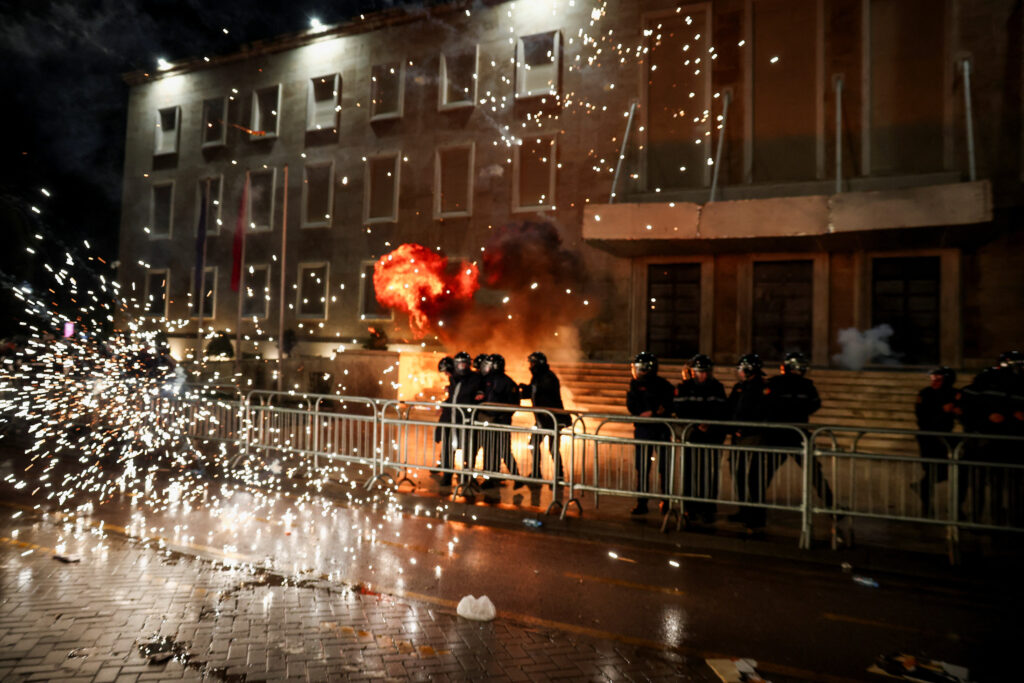
Police members operate during an anti-government protest, triggered by a corruption investigation into Deputy Prime Minister Belinda Balluku, in front of the Prime Minister's office in Tirana, Albania, February 10, 2026. REUTERS/Florion Goga

Thousands of anti-government demonstrators clashed violently with riot police in Albania’s capital Tuesday evening, hurling petrol bombs at governmental buildings and demanding the deputy prime minister’s resignation over corruption allegations that have plunged the nation into political crisis threatening Prime Minister Edi Rama’s thirteen-year grip on power.

Police members operate during an anti-government protest, triggered by a corruption investigation into Deputy Prime Minister Belinda Balluku, in front of the Prime Minister’s office in Tirana, Albania, February 10, 2026. REUTERS/Florion Goga

Protesters flooded streets near Rama’s office, waving national flags and chanting “Rama go home, this corrupted government should resign” as special police forces in riot gear deployed water cannons and tear gas to disperse crowds that had sealed off large portions of central Tirana. The confrontation represents the latest in escalating violent demonstrations that challenge the stability of Rama’s administration, which has governed since 2013 while positioning Albania as a candidate for European Union membership.

Political tensions have intensified dramatically since December when a special prosecution unit indicted Deputy Prime Minister Belinda Balluku for allegedly interfering in public tenders for major infrastructure projects and favoring certain companies in exchange for political or financial benefits. Balluku has categorically denied all wrongdoing, characterizing the accusations as politically motivated attacks.

The Special Prosecution Office—tasked with combating corruption and organized crime—requested that parliament lift Balluku’s immunity this week to enable her arrest and interrogation. However, the timing of any parliamentary vote remains uncertain, and whether legislators will vote at all appears doubtful given that Rama’s ruling Socialist Party controls a majority that could block the immunity removal.

By late evening Tuesday, broken glass, burned debris and abandoned protest banners littered the main square as smoke drifted across central Tirana. Several individuals sustained injuries as violence spread throughout the capital, with hospitals confirming treatment of patients suffering breathing problems from tear gas exposure and minor wounds from projectiles.

Riot police wearing helmets and carrying shields established defensive perimeters around government buildings as demonstrators attempted breaching barricades. Bottles, stones and firecrackers flew from the crowd toward security forces, who responded with coordinated water cannon deployments. Authorities have not released official casualty figures or arrest statistics.

Opposition leader Sali Berisha addressed thousands gathered outside the Prime Minister’s Office, accusing Rama of “declaring war on justice” to protect his inner circle from legal accountability. He alleged the government attempted manipulating courts and prosecutors to shield Balluku from prosecution.

“We were close to a coup within the state,” Berisha told the crowd, claiming popular mobilization prevented authoritarian consolidation. “The people stopped it.” He characterized Rama as “the most dangerous enemy of Albanians” and urged supporters to maintain street demonstrations until “corruption is defeated.”

His speech elicited loud chants and whistles as protesters pledged to continue nightly demonstrations, signaling sustained civil unrest rather than isolated protest events. The commitment to prolonged mobilization threatens governmental stability and potentially undermines Albania’s EU accession negotiations, which require demonstrating rule of law and anti-corruption effectiveness.

While Balluku’s indictment triggered the current protest wave, demonstrators emphasize their grievances extend far beyond one official’s alleged misconduct. Many protesters accuse the government of systemic corruption, misuse of public funds and systematically shielding senior officials from accountability regardless of evidence suggesting criminal conduct.

Opposition leaders contend Rama has repeatedly defended close allies facing legal scrutiny, eroding public trust in governmental institutions and the independence of Albania’s justice system. This pattern allegedly creates an atmosphere of impunity for well-connected officials while ordinary citizens face full legal consequences for infractions.

Protesters claim alleged corruption has contributed directly to high unemployment rates, rising living costs and mass emigration, with thousands of Albanians abandoning the country seeking better economic opportunities abroad. These economic grievances provide explosive fuel for political protests, as citizens attribute their deteriorating living standards to governmental malfeasance rather than global economic forces.

The corruption allegations against Balluku center on claims she interfered in procurement processes for major infrastructure development projects—investments critical to Albania’s modernization and EU integration objectives. Prosecutors allege she steered lucrative contracts toward favored companies, potentially in exchange for kickbacks or political support, corrupting processes designed to ensure competitive bidding and optimal value for public expenditures.

Such infrastructure tender manipulation, if proven, would represent serious violations of procurement regulations and potentially criminal abuse of office. The allegations strike at core governance failures that international institutions including the European Union monitor closely when evaluating candidate countries’ readiness for membership.

Albania has pursued EU accession for years, with the integration process requiring extensive reforms to judicial systems, anti-corruption mechanisms and democratic governance structures. The Balluku scandal and government response test whether Albania has genuinely implemented reforms or merely adopted superficial compliance while preserving corrupt practices beneath institutional facades.

Rama’s government faces a credibility crisis precisely when demonstrating clean governance matters most for EU aspirations. If parliament refuses lifting Balluku’s immunity despite prosecutorial requests backed by evidence, international observers will question Albania’s commitment to fighting high-level corruption regardless of political connections.

The Special Prosecution Office’s willingness to pursue a sitting deputy prime minister represents either genuine institutional independence or sophisticated political theater designed to create accountability appearances while ultimately protecting the accused through parliamentary obstruction. Which interpretation proves accurate will significantly influence Albanian and international perceptions of justice system integrity.

Rama has governed Albania since 2013, establishing himself as a dominant political figure who has presided over economic growth and infrastructure development while critics accuse him of authoritarian tendencies and tolerance for corruption among allies. His longevity in power provides stability that some Albanians value while others view as stagnation preventing necessary leadership renewal.

The prime minister positioned himself as instrumental to Albania’s EU integration efforts, cultivating relationships with European leaders and championing reforms ostensibly aligning Albanian governance with European standards. Tuesday’s violent protests threaten this carefully constructed image by highlighting persistent corruption allegations and public anger that contradicts narratives of successful reform implementation.

The demonstrations also reflect broader patterns across the Balkans where citizens increasingly mobilize against entrenched political elites perceived as corrupt and unresponsive. Similar protests have erupted in Serbia, Montenegro and Bosnia-Herzegovina, suggesting regional trends toward popular challenges of governmental authority when economic conditions deteriorate and corruption perceptions intensify.

For Albania specifically, the protests occur amid economic pressures including inflation affecting food and energy prices, infrastructure deficits despite construction projects, and brain drain as educated young Albanians emigrate seeking opportunities unavailable domestically. These material grievances combine with corruption outrage to fuel sustained mobilization.

The violence Tuesday evening—including petrol bomb attacks on government buildings—represents escalation beyond peaceful demonstration into civil disorder that could justify governmental crackdowns. However, aggressive police responses risk martyring protesters and galvanizing broader public sympathy for anti-government movements.

Rama’s government confronts difficult choices: lifting Balluku’s immunity and allowing prosecution might placate protesters but would sacrifice a close ally and potentially encourage further legal challenges against other officials; maintaining immunity protections validates corruption accusations and fuels continued unrest.

The parliamentary vote, if it occurs, will reveal whether Rama prioritizes protecting his deputy or attempting to defuse political crisis through accountability gestures. His Socialist Party’s majority provides the votes to block immunity removal, but exercising that power amid massive protests carries substantial political costs.

International observers including EU officials will scrutinize how Albania resolves this crisis as indicator of genuine anti-corruption commitment versus continued elite impunity. The outcome influences not only domestic stability but also Albania’s EU accession timeline and regional reputation.

As smoke cleared from Tuesday’s confrontations, the fundamental question remains whether Albanian institutions possess sufficient independence to hold powerful officials accountable or whether political connections provide effective immunity regardless of allegations. The answer will shape Albania’s political trajectory and determine whether current protests represent temporary unrest or the beginning of sustained civic mobilization demanding transformative change.

Reuters/IndiaToday

Passenger Plane Skids Off Runway Into Shallow Sea During Emergency Landing at Somalia’s Main Airport

0

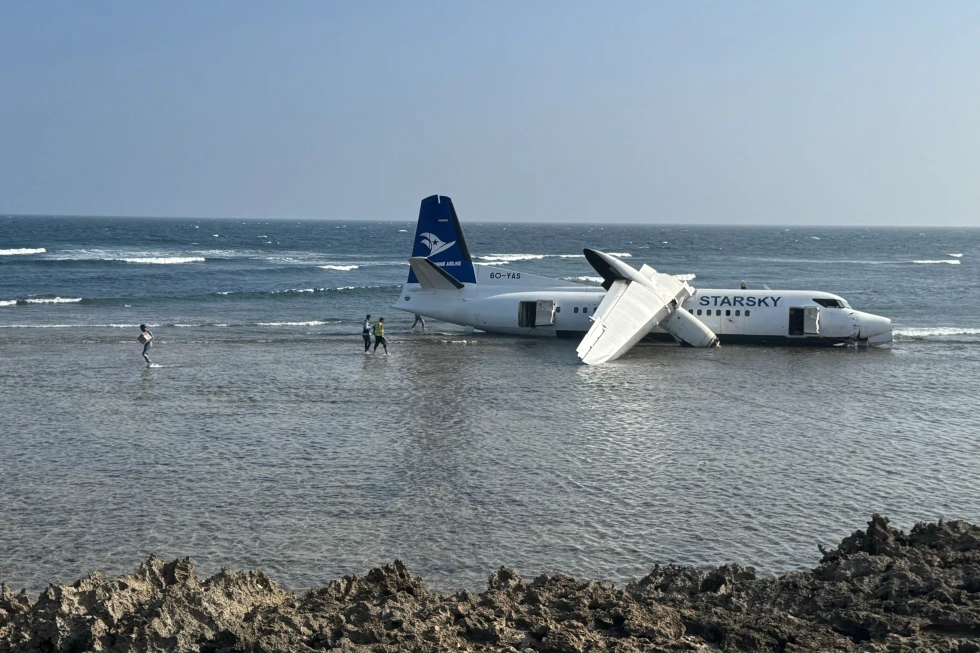
(AP)-A passenger aircraft carrying 55 people overshot the runway at Somalia’s main international airport on Tuesday and came to rest in shallow seawater along the Indian Ocean shoreline after an emergency landing triggered by a technical malfunction shortly after takeoff, Somali authorities and airline officials said. All passengers and crew escaped unharmed.

The Starsky Aviation flight, which had departed Mogadishu’s Aden Abdulle International Airport bound for the northern city of Gaalkacyo, encountered mechanical trouble approximately 15 minutes into the journey, prompting the flight crew to return to the capital, aviation officials said.

During the attempted emergency landing, the aircraft failed to stop within the designated runway area, crossed beyond the paved surface and rolled into shallow water near a public beach adjacent to the airport perimeter, officials confirmed.

“There were no injuries and no fatalities,” Starsky Aviation Chief Executive Officer Ahmed Nur said in a statement, confirming that all 50 passengers and five crew members were safely evacuated from the aircraft. “The aircraft overran the runway and came to rest by the shoreline.”

Somalia’s Minister of Transport and Civil Aviation, Mohamed Farah Nuh, said rescue teams and airport emergency personnel responded immediately, securing the scene and accounting for everyone on board.

“All passengers and crew have been rescued safely, and only the aircraft sustained damage,” Nuh said, adding that authorities have opened a full investigation into the incident to determine the precise cause of the malfunction and runway overrun.

Ahmed Moalim, director of Somalia’s Civil Aviation Authority, said the flight developed technical problems shortly after takeoff, forcing the pilot to abort the journey and attempt a return landing in Mogadishu. As the aircraft touched down, it veered off course and was unable to decelerate in time, ultimately leaving the runway environment.

Airport operations were briefly disrupted as emergency crews worked to evacuate passengers, secure the aircraft and assess potential environmental risks from fuel leakage. Officials said normal flight operations later resumed after safety checks were completed.

While no injuries were reported, the dramatic landing drew attention to aviation safety challenges in Somalia, a country that has worked in recent years to rebuild and modernize its civil aviation sector after decades of conflict and infrastructure damage.

Aden Abdulle International Airport, Somalia’s busiest aviation hub, sits close to the coastline, with limited buffer space between runways and the ocean. Aviation analysts note that this geographic layout can heighten the consequences of runway overruns, particularly during emergency landings or adverse weather conditions.

Tuesday’s incident underscores the critical role of pilot decision-making and emergency response readiness in mitigating potentially catastrophic outcomes. Aviation safety experts say the fact that the aircraft came to rest in shallow water, rather than deeper ocean or densely populated areas, likely contributed to the absence of injuries.

In recent years, Somalia has recorded steady growth in domestic air travel, with regional carriers connecting Mogadishu to cities such as Gaalkacyo, Hargeisa, Kismayo and Baidoa. The expansion has increased scrutiny of aircraft maintenance standards, pilot training and airport infrastructure, especially as passenger volumes rise.

Although Somali aviation authorities have made progress through international partnerships and oversight reforms, incidents like this highlight persistent vulnerabilities, including aging aircraft fleets, limited runway safety areas and constrained emergency resources at some airports.

Transport Minister Nuh said investigators will examine the aircraft’s maintenance records, pilot reports and air traffic communications to establish whether mechanical failure, runway conditions or operational factors played a role in the overrun. Findings from the inquiry are expected to guide any safety recommendations.

Starsky Aviation did not disclose the specific nature of the technical issue but said it is cooperating fully with regulators. The airline also emphasized that emergency procedures were followed and credited the flight crew and first responders for preventing loss of life.

Passengers described moments of fear as the aircraft struggled to stop, followed by relief when evacuation began. Airport staff assisted passengers as they exited the plane and were later transported back to the terminal for medical checks and debriefings.

Globally, runway overruns remain one of the most common types of aviation accidents, according to international aviation safety data. While most result in minor damage, overruns can become deadly when aircraft encounter obstacles, steep drop-offs or water beyond runway limits.

The Mogadishu incident is likely to fuel renewed discussion about runway safety enhancements, such as engineered materials arrestor systems (EMAS), extended safety areas or improved drainage and surface conditions. However, implementing such measures can be costly, particularly in developing aviation markets.

For Somalia, which continues to balance infrastructure development with security and economic recovery, the event serves as both a warning and a testament to progress. Despite the mechanical failure and runway excursion, coordinated emergency response and evacuation procedures prevented what could have been a major aviation disaster.

As investigators work to determine what went wrong, officials reiterated that passenger safety remains the government’s priority.

“We are grateful that no lives were lost,” Nuh said. “The investigation will ensure we understand exactly what happened and take steps to prevent a recurrence.”

Engine Failure Forces Small Plane Onto Busy Georgia Road, Striking Three Vehicles; Injuries Minor

0

A single-engine aircraft suffering an apparent mechanical failure made a dramatic emergency landing on a heavily traveled roadway in northeast Georgia, colliding with three vehicles but sparing motorists and passengers from serious injury, authorities said.

The Hawker Beechcraft Bonanza went down Monday on Browns Bridge Road in Gainesville, roughly 50 miles northeast of Atlanta, after the pilot determined the plane lacked sufficient power to reach a nearby airport, officials with the National Transportation Safety Board said. Two people were taken to a hospital with minor injuries, while no fatalities were reported.

The incident unfolded shortly after takeoff from Lee Gilmer Memorial Airport in Gainesville. The aircraft had been en route to Cherokee County Regional Airport in Canton when the pilot detected engine trouble moments after departure and attempted to reverse course.

Investigators said the pilot initially tried to glide the aircraft back to the departure airport but soon realized the loss of engine power made that impossible. With altitude rapidly diminishing and no clear runway within reach, the pilot opted to land on Browns Bridge Road, one of the region’s primary traffic corridors.

Air traffic control recordings captured the gravity of the moment. In audio archived by LiveATC.net, the pilot is heard telling controllers that the plane was unlikely to make it safely to an airport and asking them to relay a message of love to his wife and parents.

“I think we’re not going to make it,” the pilot said over the radio. “Please tell my wife, Molly, I love her, and my parents. I love them so much.”

More than 10 minutes later, the tone of the transmission shifted, with the pilot calmly telling controllers, “We’re going to be fine,” after the aircraft had come to rest on the roadway.

The pilot, identified by local media as Thomas Rogers, later described the decision-making process during an interview with WAGA-TV.

“We lost our engine taking off out of Gainesville,” Rogers said. “We tried to glide back, did everything by the book, but realized we weren’t going to make it back with how far out we were, so we came down on the road.”

Police said the plane struck three vehicles as it descended, pushing a fuel tank into one of the cars. Gainesville police Capt. Kevin Holbrook said the impact could have been far worse given the volume of traffic on the road at the time.

“The fact that they were able to land in the middle of hundreds of vehicles and only hit three of them, no power lines, is very remarkable,” Holbrook said. “The fact that no one was seriously injured or killed is just astonishing.”

Emergency responders quickly shut down the roadway as firefighters and police secured the scene and assessed the risk of fuel leaks or fire. Traffic was diverted for several hours while crews removed the aircraft and investigators began documenting the crash site.

The NTSB said it has opened an investigation into the incident, which will focus on the cause of the reported engine failure, the aircraft’s maintenance history and the pilot’s actions during the emergency. Federal Aviation Administration officials are assisting.

While the factual investigation remains ongoing, aviation experts say the outcome underscores how critical pilot training and quick decision-making can be when mechanical failures occur at low altitude.

Engine failures shortly after takeoff are among the most dangerous scenarios for pilots, leaving little time or margin for error. In such situations, pilots are trained to prioritize control of the aircraft and select the safest available landing area, even if that means using unconventional surfaces such as roads or open fields.

In this case, Browns Bridge Road’s straight stretch and relatively open sightlines may have contributed to the pilot’s ability to bring the plane down without catastrophic consequences. Authorities noted that the aircraft avoided power lines, utility poles and dense roadside structures, factors that often turn emergency landings into fatal crashes.

The incident also highlights the risks posed by aging general aviation aircraft. Many single-engine planes operating across the United States are decades old, and while they remain safe when properly maintained, mechanical issues remain a concern. According to federal aviation data, engine failures account for a significant share of emergency landings involving small planes.

At the same time, the outcome is likely to renew discussion about how local infrastructure intersects with aviation safety. As cities and suburbs expand closer to small airports, pilots facing emergencies may have fewer open spaces to choose from, increasing the likelihood that roads or populated areas become last-resort landing zones.

For motorists who witnessed the plane descending onto the roadway, the event was both shocking and surreal. Police said several drivers narrowly avoided being struck, and some stopped immediately to assist those involved until emergency crews arrived.

Officials credited a combination of pilot skill, favorable conditions and luck for preventing a tragedy on what is normally one of northeast Georgia’s busiest thoroughfares.

The aircraft was later removed from the scene, and the road was reopened after authorities determined there was no remaining hazard. Investigators are expected to issue a preliminary report in the coming weeks, though a full NTSB investigation could take months.

As the probe continues, aviation officials emphasized that emergency landings involving small aircraft are rare and that commercial air travel remains statistically safer than most other forms of transportation. Still, the incident serves as a stark reminder of how quickly routine flights can turn into life-or-death situations.

For the pilot and those on the ground, the outcome offered a measure of relief amid the chaos. What began as a routine hop between two Georgia airports ended with twisted metal on asphalt — but also with lives spared, a result authorities described as nothing short of extraordinary.

AP

DON'T MISS ANY OF OUR UPDATE