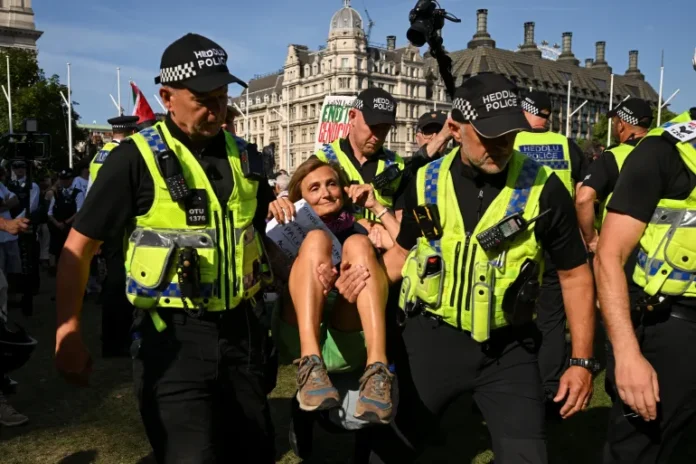
London (BN24) – London’s Metropolitan Police arrested more than 466 people during a large protest on Saturday opposing Britain’s ban on the activist group Palestine Action, authorities said.
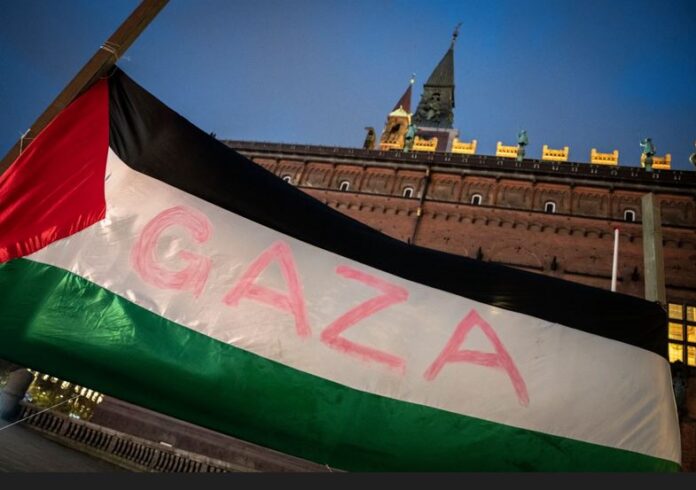
The demonstration, which took place in Parliament Square near the Houses of Parliament, drew hundreds of protesters wearing traditional Palestinian keffiyehs and waving flags. Many chanted “hands off Gaza” and carried placards reading “I oppose genocide. I support Palestine Action,” according to Reuters footage from the scene. Police were seen carrying away demonstrators as the crowd shouted “shame on you” at officers.
Parliament banned Palestine Action in July under anti-terrorism legislation, following a series of high-profile protests in which members broke into a Royal Air Force base and damaged military aircraft. The group accuses the UK government of enabling what it calls Israeli war crimes in Gaza.
Israel has been accused of genocide by human rights organizations and at the International Court of Justice over its military campaign in Gaza, which began after a deadly October 2023 Hamas attack. Israel rejects the allegations, saying its actions are self-defense.
In a post on X, police confirmed that 466 people were detained for supporting a proscribed organization. An additional eight were arrested for unrelated offenses, including five for assaulting officers. No serious injuries were reported.
Under the ban, membership in Palestine Action is a criminal offense punishable by up to 14 years in prison. The group’s co-founder, Huda Ammori, recently secured court approval to challenge the government’s decision to outlaw the organization.
cartridges and cartridges lie on the ground, danger and fear in people
JOHANNESBURG, South Africa (BN24) — Two police detectives were shot dead Friday morning in Florida, Johannesburg, while transporting a suspect following a court appearance, South African authorities confirmed.
The officers, members of the South African Police Service (SAPS) trio task team, had collected the suspect for a scheduled appearance at Roodepoort Magistrate’s Court related to a 2023 business robbery case, according to police spokesperson Lt-Col Mavela Masondo.
The shooting occurred at approximately 10:30 a.m. Masondo said the detectives were ambushed and fatally shot while returning the suspect to custody after the court proceedings. Their service firearms were taken during the attack.
The suspect was later spotted driving the unmarked police vehicle used during the transport. That vehicle was later recovered abandoned just a few kilometers from the scene of the shooting.
A manhunt is now underway to locate the escaped suspect and identify the assailants responsible for the deadly ambush.
“We have launched a manhunt,” said Masondo.
The names of the fallen detectives have not yet been released, and no arrests had been reported by late Friday.
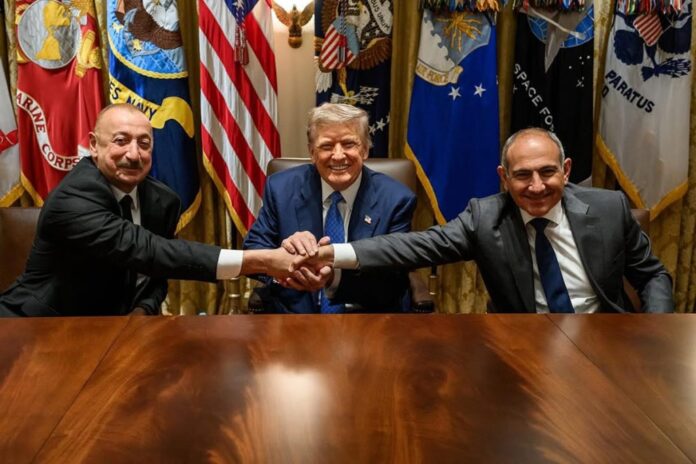
WASHINGTON, D.C. (BN24) — After nearly four decades of bitter conflict over Nagorno-Karabakh, Armenia and Azerbaijan formally ended hostilities Friday by signing a historic peace agreement in a ceremony presided over by U.S. President Donald Trump. The deal signals a dramatic geopolitical shift in the South Caucasus, sidelining Russia as the dominant regional power broker.
Azerbaijani President Ilham Aliyev and Armenian Prime Minister Nikol Pashinyan inked the accord on August 8, 2025, officially declaring a ceasefire and pledging to build a peaceful future. “We are today establishing peace in the South Caucasus,” Aliyev said. “Today we are writing a great new history.” Pashinyan echoed the sentiment, calling the agreement “opening a chapter of peace” and a foundation for “a better story than the one we had in the past.”
Trump hailed the deal as a “historic success,” highlighting the failure of prior mediators, including the European Union and Russia, to resolve the long-standing dispute. “They suffered greatly for so many years… but with this accord, we finally succeeded in making peace,” Trump said.
The breakthrough follows Azerbaijan’s rapid military campaign in September 2023, which restored Baku’s control over the contested Nagorno-Karabakh region. Over the past year, the two nations engaged in direct negotiations without third-party mediation, culminating in Friday’s signing in the U.S. capital.
A cornerstone of the agreement is the establishment of the “Trump Route for International Peace and Prosperity,” a transit corridor connecting Azerbaijan’s mainland to its Nakhchivan exclave through Armenian territory. Operated under Armenian law, the corridor is expected to enhance trade, attract investment, and strengthen regional connectivity while respecting Armenian sovereignty.
The accord marks a clear pivot away from Moscow’s influence. Both countries agreed to dissolve the OSCE Minsk Group, which was created in 1992 to mediate the Karabakh conflict. By signing the agreement alongside the U.S. president, Armenia and Azerbaijan underscore their shift toward Western engagement and reduced dependence on Russian mediation.
Russia has responded with hostility, launching disinformation campaigns against Pashinyan and accusing him of compromising Armenian sovereignty. Moscow has revived baseless claims about U.S.-run bioweapons labs in the region, mirroring similar narratives it has deployed against Ukraine and Georgia.
Relations between Baku and Moscow have also deteriorated after an investigation found that Russian air defense fire caused an Azerbaijani passenger jet crash in Kazakhstan last December. Aliyev vowed to pursue justice through international courts, even if it takes “10 years” to achieve.
The European Union welcomed the peace agreement, calling it “a path to lasting, sustainable peace,” and urged both nations to implement the accord’s provisions to normalize relations fully.
This landmark signing not only ends a decades-long war but also reshapes the balance of power in the South Caucasus, positioning the United States as the central peacekeeper in the region.
OGBOMOSO, Nigeria (BN24) — A fire incident late Friday night destroyed goods and properties worth millions of naira at Radex variety store in Bolanta Area, Oja-Igbo, Ogbomoso, Oyo State, Nigeria. The blaze, believed to have been caused by a power surge, swept through the store at approximately 10 p.m., according to local sources.
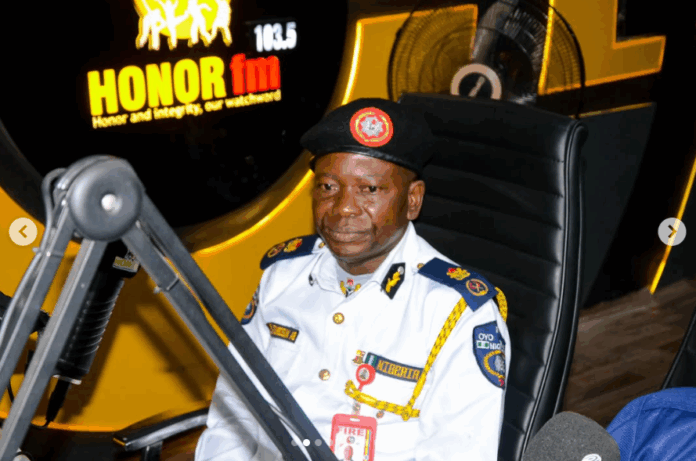
The Chairman of Oyo State Fire Service, Maroof Akinwande, confirmed the incident in a statement issued Saturday. Firefighters responded promptly upon arrival and were able to extinguish the fire quickly, preventing it from spreading to other shops in the complex.
Akinwande noted that no lives were lost during the incident. “On getting to the scene of the incident, we met a variety store that was engulfed by fire. We quickly swung into action and doused the fire within the shortest period of time, and educated people on fire prevention in our community,” he said.
The fire affected only one shop in the area, with the fire service returning to the station by 10:50 p.m. and remaining on standby to prevent further incidents. Investigations point to a power surge as the likely cause of the devastating fire.
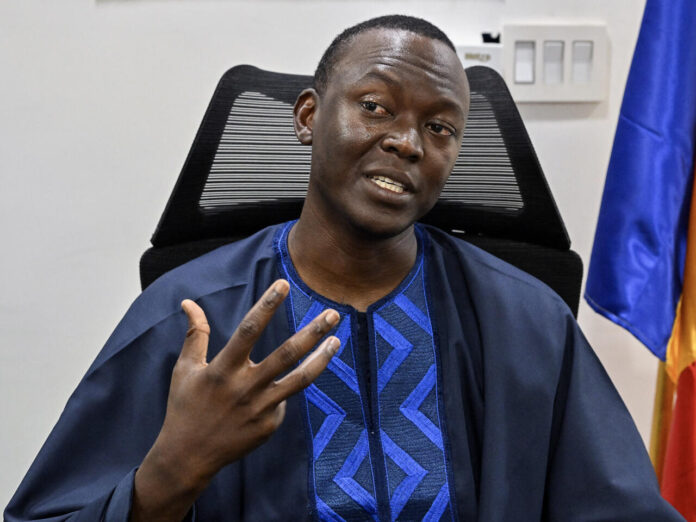
N’DJAMENA, Chad (BN24) — Former Chadian Prime Minister Succes Masra, a prominent opposition figure and vocal critic of President Mahamat Idriss Deby Itno, has been sentenced to 20 years in prison after being convicted of inciting ethnic violence, hate speech, and xenophobia. The ruling was handed down Saturday by a court in the capital, N’Djamena, following deadly intercommunal clashes in the country’s southwest that left 42 people dead, most of them women and children.
The court found Masra guilty of fueling tensions that erupted on May 14 in the village of Mandakao, where ethnic conflict between Fulani nomadic herders and Ngambaye farmers escalated into a massacre. Masra, a southern native from the Ngambaye ethnic group, was arrested just two days later and charged with inciting hatred and revolt, forming and aiding armed gangs, as well as complicity in murder, arson, and desecration of graves. Nearly 70 other defendants were tried alongside him for their alleged roles in the violence.
Chad’s public prosecutor had sought a 25-year prison term for Masra, who served briefly as prime minister from January to May 2024 after entering a reconciliation agreement with Deby’s administration. His legal team condemned the verdict, calling the trial politically motivated and lacking in substantive evidence.
“Our client has just been the object of a humiliation,” said lead defense attorney Francis Kadjilembaye. “He has been convicted based on assumptions, not facts. What we saw was a blatant weaponization of the judicial system.”
Masra’s allies from the Transformers Party said they would issue a formal statement, while rights groups and civil society activists raised concerns over judicial fairness and due process. Masra’s defense highlighted the absence of direct links between their client and the Mandakao killings, pointing out that no concrete evidence was presented during the trial. They also revealed that Masra endured a hunger strike in detention throughout much of June.
The conviction marks a dramatic reversal for Masra, who returned to Chad in early 2024 under a political amnesty after years in exile following a brutal crackdown on his movement in 2022. Though he later accepted the post of prime minister, his tenure was short-lived, ending just months before he challenged Deby in the May 2024 presidential election. Masra secured 18.5 percent of the vote, compared to Deby’s declared 61.3 percent, but disputed the results and claimed victory.
The deadly clash that triggered the legal proceedings was rooted in a long-standing conflict over land use in southern Chad, where tensions between pastoralist Fulani herders and sedentary Ngambaye farmers have intensified in recent years. According to the International Crisis Group, these disputes have claimed more than 1,000 lives and left over 2,000 injured in Chad between 2021 and 2024.
The ruling against Masra underscores growing concerns about political repression and interethnic strife under Deby’s government, as Chad navigates a fragile post-conflict transition following the death of longtime ruler Idriss Deby Itno in 2021.
MILAN (BN24) — UEFA has fined Barcelona forwards Lamine Yamal and Robert Lewandowski €5,000 each for breaching post-match anti-doping procedures following the club’s Champions League semi-final defeat to Inter Milan. The European football governing body announced the penalties on Friday, citing a failure by both players to report immediately to the doping control station as mandated by competition rules.
The breach occurred after Barcelona’s 4–3 loss at San Siro, which marked their elimination from the tournament. Spanish outlets Marca and AS reported that the infraction was procedural, involving a delay in reporting rather than a failed drug test or any use of banned substances.
The Control, Ethics and Disciplinary Body of UEFA, responsible for ensuring compliance with tournament regulations, issued the sanctions as part of a wider disciplinary decision involving the club and its coaching staff.
Barcelona head coach Hansi Flick and assistant Marcus Sorg were also penalized, receiving €20,000 fines and one-match suspensions for misconduct and violations of UEFA’s general principles of conduct. According to the ruling, both coaches acted improperly during and after the match in Milan.
In addition to individual sanctions, FC Barcelona was fined a total of €7,750 for supporter-related offences. The club was ordered to pay €5,250 for objects thrown onto the pitch and €2,500 for fireworks set off by fans during the high-stakes semi-final clash.
UEFA confirmed that all suspensions and fines are effective immediately and will be applied during the club’s next European competition fixture.
The disciplinary action adds to the growing scrutiny surrounding Barcelona’s European campaign and managerial conduct following their narrow exit from the 2024–25 Champions League.
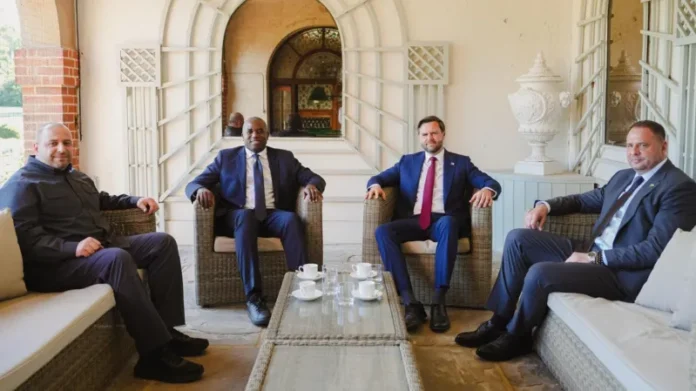
LONDON (BN24) — US Vice-President JD Vance and UK Foreign Secretary David Lammy hosted a crucial meeting of security officials near London on Saturday to discuss the ongoing war in Ukraine, ahead of the highly anticipated summit between US President Donald Trump and Russian President Vladimir Putin in Alaska next week.
The talks, reportedly convened at the request of the United States, brought together Ukrainian officials alongside senior national security advisers from the UK, US, European Union, France, Germany, Italy, Finland, and NATO. The meeting took place at Chevening, Lammy’s official country residence in Kent, where Vance and his family are currently staying.
Lammy reaffirmed the UK’s unwavering support for Ukraine, stating, “The UK’s support for Ukraine remains ironclad as we continue working towards a just and lasting peace.” The dialogue comes amid mounting international pressure for a resolution to the war, which has devastated Ukraine since Russia launched a full-scale invasion in February 2022.
Key Ukrainian participants included Rustem Umerov, secretary of Ukraine’s National Security and Defence Council, and Andriy Yermak, head of President Volodymyr Zelensky’s office. Ahead of the meeting, UK Prime Minister Keir Starmer spoke with Zelensky, describing the forthcoming forum as “vital” to discuss progress toward peace.
The summit between Trump and Putin, scheduled for August 15, has generated considerable tension. Trump has suggested that Ukraine may have to cede some territory to secure an end to the conflict, stating on Friday that “there will be some swapping of territories, to the betterment of both.” He cited the heavy casualties on both sides and the prolonged nature of the fighting as justification for territorial compromises.
Russia has consistently demanded Ukraine recognize Russian sovereignty over occupied regions, agree to demilitarization, and abandon its aspirations to join NATO. Trump’s position aligns with these demands, advocating territorial concessions as a path to peace.
However, Zelensky has firmly rejected any notion of ceding land. In a Telegram post on Saturday, he emphasized, “Ukrainians will not give their land to the occupier,” and insisted that Ukraine must be part of any peace negotiations. He added, “We are ready, together with President Trump, together with all partners, to work for a real, and most importantly, lasting peace — a peace that will not collapse because of Moscow’s wishes.”
European leaders share Ukraine’s concerns. French President Emmanuel Macron warned on social media that Ukraine’s future “could not be decided without the Ukrainians,” and underscored the importance of European involvement, stating that “Europeans will also necessarily be part of the solution, as their own security is at stake.”
While Trump’s rhetoric on Russia has hardened in recent months, critics note a lack of concrete actions. A US-imposed deadline for Russia to agree to a ceasefire or face intensified sanctions passed without apparent consequences.
Planning for the Trump-Putin summit remains fluid, and US officials have not ruled out some form of Ukrainian participation. Still, many observers worry that early peace talks may exclude Ukraine, raising fears of a deal made at Kyiv’s expense.
On the ground, Ukrainian soldiers and civilians express a deep yearning for peace amid ongoing Russian drone and missile attacks. Yet, there is a resolute refusal to accept any peace agreement that sacrifices Ukraine’s sovereignty or sidelines its voice.
MANCHESTER, England (BN24) — Manchester United announced the signing of Slovenian striker Benjamin Sesko from Germany’s RB Leipzig on Saturday, securing the 22-year-old on a contract running until 2030. The transfer fee reportedly stands at €76.5 million ($89 million), with an additional €8.5 million ($9.9 million) in potential bonuses.
Sesko, who moved to Leipzig from Austrian side RB Salzburg in 2023, scored 39 goals in 87 appearances across all competitions for the German club. The towering 1.95-meter forward has also made his mark on the international stage, netting 16 goals in 41 appearances for Slovenia.
“The history of Manchester United is obviously very special, but what really excites me is the future,” Sesko said upon completing the transfer. “When we discussed the project, it was clear that everything is in place for this team to continue to grow and compete for the biggest trophies again soon.”
Sesko praised the club’s environment and expressed eagerness to work under new manager Ruben Amorim. “From the moment that I arrived,I could feel the positive energy and family environment that the club has created. It is clearly the perfect place to reach my maximum level and fulfil all of my ambitions,” he said.
The signing comes as Manchester United look to strengthen their attacking options after a disappointing 15th-place finish in last season’s Premier League. Current forwards Rasmus Hojlund and Joshua Zirkzee combined for only 18 goals last term, contributing to the club’s record 18 losses and lowest points total (42) in the Premier League era.
Jason Wilcox, Manchester United’s director of football, described Sesko as a rare talent with a blend of pace and physical dominance. “We have followed Benjamin’s career closely; all of our data analysis and research concluded that he has the required qualities and personality to thrive at Manchester United,” Wilcox said. “Working under the guidance of Ruben and our excellent performance team, Benjamin is joining the perfect environment to support him to reach his world-class potential.”
Sesko has drawn comparisons to former Manchester United and Paris Saint-Germain striker Zlatan Ibrahimovic, not only for his height but also for flashes of technical skill. He scored six goals in 28 Champions League appearances for Leipzig and Salzburg combined.
United’s new season begins at home against Arsenal on August 17. Alongside Sesko, the club has also secured forwards Matheus Cunha and Bryan Mbeumo to bolster their attack.
GAZA CITY (BN24) — At least 34 people were killed Saturday in Israeli military strikes across Gaza, including more than a dozen civilians waiting to collect humanitarian aid, according to Gaza’s civil defence agency.
Spokesman Mahmud Bassal told AFP that nine people were killed and 181 wounded when Israeli forces opened fire near a northern Gaza border crossing frequently used for aid deliveries. Another six people were killed and 30 injured after Israeli troops targeted civilians gathered near an aid distribution point in central Gaza.
Further strikes in central Gaza caused multiple casualties, while a drone attack near the southern city of Khan Yunis killed at least three people and wounded several others, Bassal said. Due to media restrictions and limited access in Gaza, independent verification of the death toll and details remains difficult.
Thousands of Palestinians daily gather near food distribution sites across Gaza, including those managed by the US- and Israeli-backed Gaza Humanitarian Foundation. Since late May, Israeli forces have repeatedly been reported firing on aid recipients in the territory, worsening the already dire humanitarian situation.
Israeli restrictions on essential supplies entering Gaza, imposed since the war began nearly two years ago, have created severe shortages of food, medicine, and fuel critical for hospital generators. Prime Minister Benjamin Netanyahu faces increasing international pressure to agree to a ceasefire to prevent widespread famine and to secure the release of hostages held by Palestinian militants.
Despite global condemnation and rumored dissent within Israeli military leadership, Israel’s security cabinet approved plans early Friday for a major ground operation to seize Gaza City. Netanyahu remains resolute, stating on social media, “We are not going to occupy Gaza — we are going to free Gaza from Hamas.”
Hamas, the Palestinian militant group responsible for the October 7, 2023, attack that ignited the current war, condemned the planned escalation as a “new war crime.”
The ongoing conflict has exacted a heavy toll. According to Gaza’s health ministry, run by Hamas, over 61,000 Palestinians have been killed—a figure the United Nations considers credible. The Hamas attack on Israel in 2023 resulted in the deaths of 1,219 people, based on AFP tallies using official sources.
TEHRAN, Iran (BN24) — Iranian authorities are investigating 20 individuals arrested for allegedly collaborating with Israel, the country’s judiciary confirmed Saturday, following weeks of escalating tensions and direct conflict between the two regional adversaries.
Judiciary spokesperson Asghar Jahangir said the cases were opened under the supervision of senior investigators and are actively progressing. “These cases were immediately filed under the supervision of the esteemed investigators and are being investigated,” Jahangir told reporters in Tehran. He noted that additional details would be released as the process continues.
The arrests stem from an intelligence operation disclosed in late July, when Iran’s intelligence ministry claimed to have detained 20 individuals described as spies, Mossad operatives, and support agents allegedly connected to Israeli intelligence. The detentions occurred in Tehran and across multiple provinces.
The crackdown follows Israel’s mid-June airstrikes on Iranian territory — an unprecedented military campaign that targeted nuclear sites, military installations, and residential areas. The attacks reportedly killed senior Iranian commanders, nuclear scientists, and hundreds of civilians. Iran retaliated with missile and drone strikes, marking a rare period of open warfare between the two countries.
Iranian officials have vowed swift and harsh judicial responses to those accused of espionage. “The judicial system will not show any mercy in dealing with spies and Zionist agents and will teach a lesson to all spies… with firm rulings,” Jahangir said.
Earlier this week, Iran executed Roozbeh Vadi, a former employee of the Nuclear Science and Technology Research Institute, for allegedly passing sensitive information about nuclear facilities and scientists to Israel. State-linked Fars News Agency reported that Vadi had collaborated with two scientists — Ahmad Zolfaghar and Abdolhamid Minouchehr — who were later killed during the Israeli strikes.
State media published a screenshot of a research paper co-authored by Vadi and the two slain scientists, reinforcing Tehran’s allegations of a deep-rooted Israeli intelligence network operating inside the country.
Iran has not indicated when the remaining suspects might be formally charged or brought to trial, though officials have said the process will be expedited in light of national security concerns.