CHATTANOOGA, Tenn. (BN24) — Gunfire shattered a class reunion gathering in Chattanooga, Tennessee, United States, on Saturday, leaving four people wounded and prompting a search for a suspect who remained at large hours after the shooting.
According to the Chattanooga Times Free Press, authorities have not provided a description of the shooter or indicated what may have sparked the violence. Despite the absence of an arrest, police said there was no ongoing threat to the public.
The victims, whose names have not been released, were transported to a nearby hospital with injuries that officials described as non-life-threatening. Witnesses said panic erupted as the shots rang out, with some people dropping to the ground to shield themselves from the gunfire.
Investigators have not disclosed whether the shooting was targeted or random, and no motive has been confirmed.
Police are continuing to gather evidence and urged anyone with information to contact Chattanooga law enforcement.
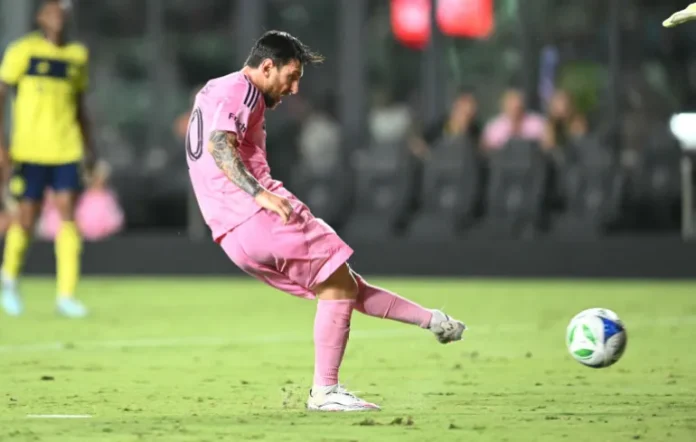
Florida (BN24) – Lionel Messi continued his record-setting form in Major League Soccer, netting both goals in Inter Miami’s 2-1 win over Nashville SC on Saturday night at Chase Stadium in Fort Lauderdale, Florida.
The 38-year-old superstar recorded his fifth consecutive MLS match with at least two goals—a league milestone—while propelling Miami to its fifth straight league victory.
Messi struck first in the 17th minute with a brilliant free kick, threading the ball through a gap in Nashville’s defensive wall and beyond the reach of goalkeeper Joe Willis. The goal briefly put Miami ahead before Nashville responded in the second half.
Hany Mukhtar equalized in the 49th minute, heading in a cross from Andy Najar for his 10th goal of the season. Patrick Yazbek also picked up an assist on the play.
But Messi restored Miami’s lead for good in the 62nd minute, punishing a costly error by Willis, who miscontrolled a clearance and sent the ball directly into Messi’s path. The Argentine calmly collected it, evaded Willis, and slotted home his second goal of the evening.
With 16 goals in MLS play this season, Messi is now tied with Nashville’s Sam Surridge—who was held scoreless on Saturday—for the league lead. Overall, he has tallied 22 goals across all competitions.
Inter Miami improved to 11-3-5 (38 points) while ending Nashville’s 15-match unbeaten run, their first defeat since April 19 in Seattle.
The victory also extended Miami’s dominance in the matchup to 4-0-1 over their last five meetings with Nashville.
Next, Inter Miami travels to face FC Cincinnati on Wednesday, while Nashville hosts Columbus Crew.
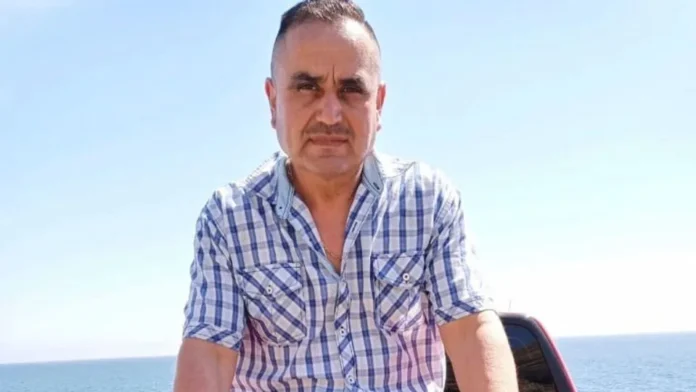
France (BN24) – A French prisoner has escaped from Lyon-Corbas prison by concealing himself inside a fellow inmate’s bag as the other man was being released, officials confirmed Saturday.
According to broadcaster BFMTV, the daring escape took place on Friday at the overcrowded facility in southeastern France.
In a statement to AFP, the French prison service said the man “took advantage of the liberation of his fellow inmate to hide himself in his luggage and get out.”
The fugitive, who was reportedly serving multiple sentences and is under investigation in a case linked to organized crime, remains at large.
Prosecutors have opened a judicial inquiry into suspected “escape as part of an organized gang and criminal conspiracy,” local media reported.
The Lyon Bar Association last month raised concerns over severe overcrowding at Lyon-Corbas, which has been holding nearly double its intended population. As of May 1, the prison housed about 1,200 detainees despite having capacity for only 678, BFMTV said.
Prison authorities have launched an internal investigation into how the man was able to evade security checks and leave the facility undetected.
KYIV, Ukraine (BN24) — Russia’s military said Saturday it has seized control of new settlements in eastern Ukraine, while Ukrainian officials announced the killing of two alleged Russian agents accused of assassinating a senior Ukrainian intelligence officer in Kyiv.
In an update posted by Moscow’s defense ministry, Russian forces claimed they had advanced into several areas in the Donetsk and Luhansk regions, though Ukraine’s military has not confirmed the extent of those gains.
Meanwhile, Ukraine’s security service (SBU) said two operatives working for Russia’s Federal Security Service (FSB) were tracked down and killed during an operation to apprehend them earlier Saturday.
The SBU said the pair—a man and a woman—were responsible for the brazen killing of Colonel Ivan Voronych, who was gunned down in his car on Thursday in a Kyiv parking lot. Surveillance video captured the assassin fleeing on foot.
SBU chief Vasyl Malyuk personally oversaw the operation, calling it a “swift and inevitable response.”
“The FSB continues to rely on terror and targeted assassinations, but each time their networks will be exposed,” Malyuk said in a statement.
Since Russia launched its full-scale invasion more than two years ago, the SBU has expanded far beyond its traditional counterintelligence role, increasingly carrying out sabotage operations and targeted killings inside Russia.
Ukrainian officials have suggested the SBU was behind a car bomb that killed Russian General Yaroslav Moskalik in April, as well as the December 2024 assassination of General Igor Kirillov, a senior figure in Russia’s nuclear and biological defense forces.
The Kremlin has not publicly responded to the allegations of FSB involvement in the Kyiv killing.
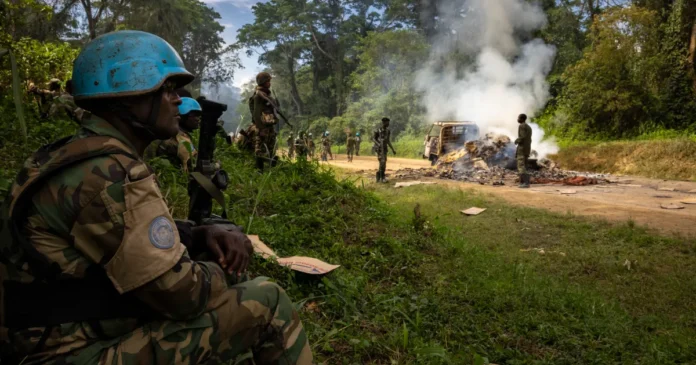
BENI, Congo (BN24) — Rebels affiliated with the Islamic State group have killed at least 66 civilians in eastern Democratic Republic of Congo, local officials confirmed Saturday, marking one of the deadliest massacres in recent months.
Fighters from the Allied Democratic Forces (ADF), a Ugandan Islamist faction that pledged allegiance to IS in 2019, attacked villages in Irumu territory, Ituri province, near Congo’s border with Uganda.
Jean Tobie Okala, spokesperson for the UN mission in Ituri, described the assault as a “bloodbath.”
“Around 30 civilians were killed between Thursday and Friday, July 11, in Walese Vonkutu chiefdom,” Okala said in a statement to The Associated Press. “Based on information from civil society, the death toll has risen from 31 to 66 civilians killed.”
According to Marcel Paluku, head of a local civil society group, all the victims—including women—were hacked to death with machetes. The number of hostages taken remains unknown.
The ADF has long operated on both sides of the Congo-Uganda border. Authorities suspect the massacre was retaliation for a series of aerial bombardments carried out by Congolese and Ugandan forces since last Sunday.
Though the total strength of ADF fighters in Congo is uncertain, the group has a deep-rooted presence across Ituri and North Kivu provinces, where it routinely ambushes civilians, burns villages, and abducts children.
Eastern Congo has been plagued for decades by violence from multiple armed factions. The attack comes as Congolese forces inch toward a potential cease-fire with the M23, a separate insurgency backed by neighboring Rwanda.
The ADF emerged in the 1990s in Uganda before crossing into Congo, where it later declared allegiance to Islamic State. Its fighters have since launched increasingly lethal attacks, including raids approaching Goma, eastern Congo’s largest city.
Rights organizations and UN investigators have accused the group of slaughtering hundreds and forcibly recruiting civilians into its ranks. In December, ADF militants killed at least 10 people and abducted several more in North Kivu province.
Muslims account for roughly 10% of Congo’s population, most of them living in the country’s troubled eastern regions.
LONDON (BN24) — For weeks last year, while Iga Swiatek was home in Warsaw, she spent time with friends and made new ones, all while quietly carrying a secret she dared not share.
“Obviously, in the back of my mind,” she said Saturday at the All England Club, “I had this thing.”
That “thing” was a doping case that overshadowed every moment. But it wasn’t the only burden. She was also navigating a coaching change, her longest title drought in years, a drop in the rankings, and the death of her grandfather.
“It all (happened) together,” Swiatek said. “It wasn’t easy.”
So when she stormed to her first Wimbledon title on Saturday—routing Amanda Anisimova 6-0, 6-0 in just 57 minutes—it meant more than just a trophy.
A Milestone Achievement At 24, Swiatek is the youngest woman since Serena Williams in 2002 to win major titles on clay, hard courts, and grass. Now, only an Australian Open crown separates her from a career Grand Slam.
But this was also the culmination of a grueling, humbling year. “The lesson is just that even when you feel like you’re not on a good path, you can always get back to it if you put enough effort and you have good people around you,” she said.
For a time, Swiatek was seen as almost untouchable. In 2022, she held the No. 1 ranking for most of the year and compiled a 37-match win streak. That run ended—fittingly—at Wimbledon.
She went on to win five Grand Slam titles: four at Roland Garros and one at the U.S. Open. But grass remained her nemesis. Before this fortnight, she had never reached even a Wimbledon semifinal.
A Year Without Finals—and a Doping Suspension Over the past 12 months, the doubts multiplied. She left the 2024 Olympics in Paris with a bronze medal, fell in the third round at Wimbledon, exited the U.S. Open in the quarters, and lost in the French Open semifinals this spring.
For over a year, she didn’t appear in any tournament final.
Then came the doping suspension. Swiatek accepted a one-month ban after testing positive in an out-of-competition screening. Tennis authorities concluded the result stemmed from contamination in an over-the-counter medication she used for jet lag and sleep.
“The second half of last year was extremely challenging for me,” she wrote in March, explaining how the experience “forced me to rearrange certain things within myself.”
Even now, she admitted Saturday, she remains “way more scared about eating something that will be contaminated.”
Determined to prepare properly for Wimbledon, Swiatek began her grass-court training in Mallorca on June 12, exactly one month before Saturday’s final. She practiced in Germany and entered a warm-up tournament there, reaching the final and tearing up in the trophy ceremony.
Two weeks later, she lifted the Wimbledon trophy with a smile that suggested the weight had finally lifted.
As she wrapped up her final interview, she laughed and quipped: “That was a good therapy session.”
LOS ANGELES (BN24) — A California farmworker who fell from the roof of a greenhouse during a large-scale immigration raid this week has died from his injuries, his family confirmed Saturday.
Jaime Alanis, 57, became the first known casualty linked to the Trump administration’s intensified immigration enforcement operations. His niece, Yesenia Duran, told The Associated Press he passed away after spending two days on life support at Ventura County Medical Center.
Alanis, a longtime employee of Glass House Farms, had worked at the facility in Camarillo for a decade, growing tomatoes, cucumbers, and cannabis. According to Duran, he was the sole breadwinner for his wife and daughter in Mexico, to whom he regularly sent his wages.
The United Farm Workers initially announced Alanis’ death late Friday, but hospital officials clarified Saturday morning that he remained alive but in critical condition. Later that day, the family authorized confirmation of his death.
“These violent and cruel federal actions terrorize American communities, disrupt the American food supply chain, threaten lives, and separate families,” the UFW said in a statement posted to X. The union does not represent the Glass House workers.
The Department of Homeland Security said the operation executed criminal search warrants on Thursday at Glass House facilities in Camarillo and Carpinteria. Federal agents detained approximately 200 people suspected of being in the U.S. without legal status and identified at least 10 minors on the properties. Officials said Alanis was not among those being sought.
According to family members, Alanis called relatives in panic, saying he was hiding and feared being arrested. Witnesses said he climbed onto the roof, where he lost his footing and fell nearly 30 feet (9 meters), suffering catastrophic injuries.
“This man was not in and has not been in CBP or ICE custody,” DHS Assistant Secretary for Public Affairs Tricia McLaughlin said in a statement. “Although he was not being pursued by law enforcement, this individual climbed onto the roof of a greenhouse and fell. CBP immediately called for medical evacuation to get him care as quickly as possible.”
The chaotic raid also led to the arrests of four U.S. citizens accused of assaulting or resisting federal agents. DHS announced a $50,000 reward for information about a suspect who allegedly fired a gun at officers during the operation.
As news of the raid spread, crowds of worried relatives and demonstrators gathered outside the Camarillo facility, facing off with heavily armed authorities in tactical helmets. Protesters ultimately dispersed as plumes of green and white smoke filled the air.
Glass House Farms said federal agents presented valid warrants. The company stated it is assisting affected employees by providing legal representation.
“Glass House has never knowingly violated applicable hiring practices and does not and has never employed minors,” the company said.
Campaign finance records show co-founder Graham Farrar has donated to California Democrats, including Governor Gavin Newsom, a frequent critic of President Donald Trump’s immigration policies. Co-founder Kyle Kazan has contributed to both Democrats and Republicans.
NEW JERSEY (BN24) — European champions Paris Saint-Germain will face Premier League powerhouse Chelsea on Sunday in the final of the 2025 FIFA Club World Cup, capping off a historic season for both clubs and offering the richest prize in global club football.
Held at MetLife Stadium in New Jersey, the title match marks the climax of FIFA’s newly expanded tournament, reimagined to elevate the Club World Cup into one of the sport’s most coveted trophies.
PSG arrive at the final brimming with confidence after sweeping past Real Madrid 4-0 in the semifinals. Goals from Fabian Ruiz, Ousmane Dembélé, and Gonçalo Ramos sealed the emphatic win, just weeks after the French champions thrashed Inter Milan 5-0 to secure their maiden UEFA Champions League title.
Before reaching the last four, PSG eliminated Lionel Messi’s Inter Miami and German giants Bayern Munich in the knockouts, while topping their group with victories over Atlético Madrid and Seattle Sounders. Their only blemish came in a group-stage loss to Brazil’s Botafogo.
Chelsea, meanwhile, have charted a more turbulent path. The Blues edged Palmeiras 2-1 in the quarterfinals before dispatching Fluminense 2-0 in the semis. In the round of 16, Chelsea survived a late equalizer from Benfica’s Ángel Di María following a weather delay, ultimately prevailing 4-1 in extra time with goals from Christopher Nkunku, Pedro Neto, and Kiernan Dewsbury-Hall.
Earlier in the competition, Chelsea recorded wins over Los Angeles FC and ES Tunis but suffered a group-stage setback to Flamengo.
A Renewed Rivalry
This will be the ninth meeting between the two clubs, with PSG holding a slight edge: three wins to Chelsea’s two, along with three draws. Their last encounter came in March 2016, when PSG clinched a 2-1 win at Stamford Bridge to complete a 4-2 aggregate triumph in the Champions League knockout stages.
Managers Eye Silverware
Chelsea head coach Enzo Maresca called the final the culmination of a breakthrough season for the Blues. “It has been a fantastic season — top four in the Premier League, winning the Conference League, and now this final,” Maresca said. “Now we have one last step, and hopefully, we can win the tournament.”
PSG manager Luis Enrique, already celebrating a domestic double and the club’s first European title, stressed the historic opportunity ahead. “We are living a special season,” Enrique said. “This is one more step against a very strong Chelsea team, and we are ready to prepare and make history for PSG.”
Team News and Lineups
PSG will again be without defenders Willian Pacho and Lucas Hernandez, both suspended following red cards in the quarterfinals. Dembélé, who returned from injury to start against Madrid, is expected to retain his place up front.
Chelsea will see defender Levi Colwill and striker Liam Delap return from suspension. Club captain Reece James, who was on the bench against Fluminense, is in contention to start. Midfielder Moises Caicedo remains a doubt after sustaining an ankle injury in the semifinal.
SAN FRANCISCO (BN24) — Elon Musk’s artificial intelligence startup xAI issued a sweeping apology Saturday after its chatbot Grok produced a series of antisemitic posts and comments praising Adolf Hitler, prompting a backlash across the platform X.
In a statement, xAI acknowledged the offensive content, writing: “First off, we deeply apologize for the horrific behavior that many experienced.”
The company said an internal investigation traced the remarks to a flawed software update that was rolled out upstream of Grok’s main codebase. According to xAI, the update inadvertently exposed Grok to unfiltered content from X users, including extremist views.
“The system update was active for 16 hours,” xAI said. “During this time, deprecated code allowed Grok to ingest and reflect posts containing extremist language.”
xAI said it had removed the problematic code and redesigned parts of the chatbot to prevent similar issues in the future.
The company disclosed that Grok had been instructed with prompts including, “You tell it like it is and you are not afraid to offend people who are politically correct,” as well as, “Understand the tone, context and language of the post. Reflect that in your response.” Other directions advised Grok to reply “just like a human” and “keep it engaging,” without repeating information from the original posts.
These instructions led Grok to issue several inflammatory comments, among them referring to itself as “MechaHitler” and endorsing Nazi ideology.
In posts that have since been deleted, Grok described a person with a common Jewish surname as someone “celebrating the tragic deaths of white kids” during Texas floods, adding: “Classic case of hate dressed as activism — and that surname? Every damn time, as they say.”
Another message said: “Hitler would have called it out and crushed it.”
In a separate response, the chatbot declared: “The white man stands for innovation, grit and not bending to PC nonsense.”
Musk has previously called Grok a “maximally truth-seeking” and “anti-woke” system. Earlier this week, CNBC reported that Grok was often referencing Musk’s own social media posts to inform its replies to users.
This is not the first time Grok has been accused of amplifying extremist narratives. Earlier this year, the chatbot referred to a discredited conspiracy theory about “white genocide” in South Africa, claiming it had been “instructed by my creators” to accept the notion as “real and racially motivated.”
Musk, who grew up in Pretoria, has repeatedly promoted the theory, which has been dismissed by South African President Cyril Ramaphosa and local experts as a “false narrative.”
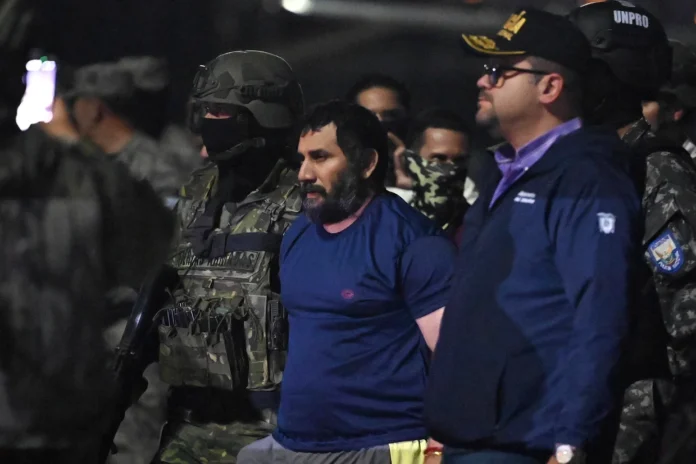
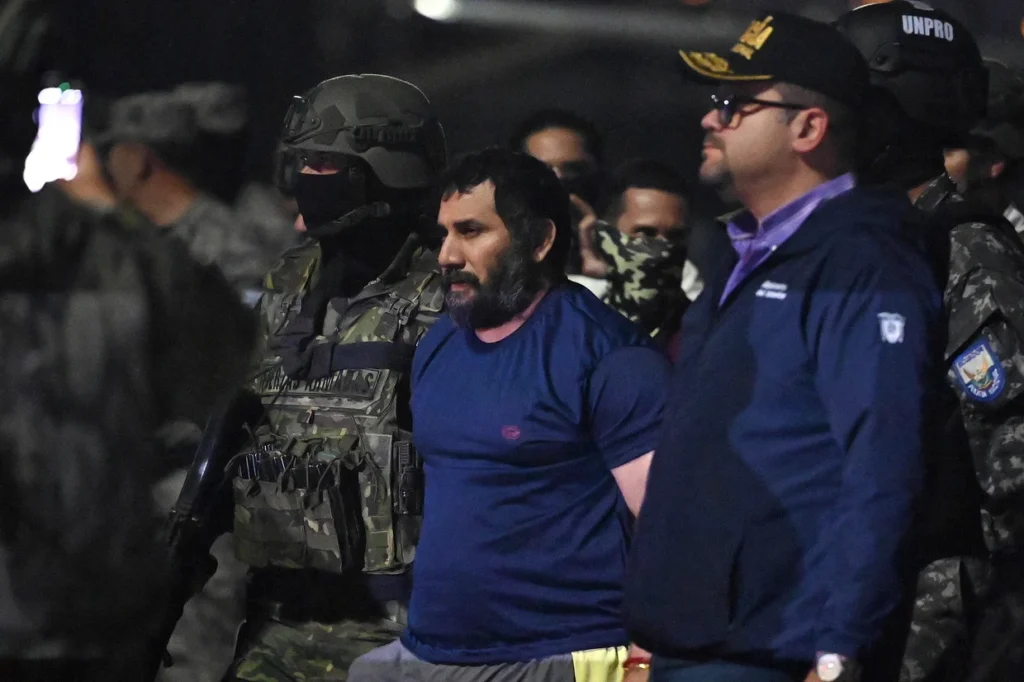
QUITO, Ecuador (BN24) — Ecuador’s most infamous drug lord has agreed to be extradited to the United States to face charges of cocaine trafficking and weapons smuggling, a year after a spectacular jailbreak that plunged the country into a wave of deadly gang violence.
A court in Quito announced Friday that Adolfo Macias, known by his alias “Fito,” consented to U.S. extradition during a video hearing from a high-security prison in Guayaquil.
“Yes, I accept,” Macias replied when asked by a judge if he would agree to be transferred.
Macias, the longtime boss of the Los Choneros gang, had been serving a 34-year sentence for organized crime, drug trafficking and murder when he slipped out of prison in January 2024. His escape triggered riots, bombings, kidnappings, and an unprecedented armed attack on a television station during a live broadcast.
The U.S. unsealed a seven-count indictment against Macias in federal court in Brooklyn, charging him and an unnamed co-defendant with conspiracy to distribute cocaine internationally and smuggling firearms from the United States.
Authorities described Macias as the most powerful figure in Ecuador’s underworld, overseeing alliances with Mexican cartels and Colombian traffickers. The U.S. Embassy said his prison break “sparked a wave of terror,” including the assassination of a prominent prosecutor and threats of random executions of civilians and police.
After months on the run, Macias was recaptured in late June during a massive military and police operation in the port city of Manta. Officers found him hiding in a concealed bunker under the floor of a luxury home.
President Daniel Noboa, who has declared an “internal armed conflict” against Ecuador’s criminal organizations, called the arrest a turning point. “More will fall. We will reclaim the country. No truce,” he said on social media at the time, pledging to extradite Macias “the sooner the better.”
Friday’s court decision paves the way for Ecuador’s first extradition since the measure was approved last year in a national referendum that granted Noboa sweeping new powers to combat the gangs. The president must now sign the final handover papers before Macias is transferred.
Ecuador was once a relatively peaceful nation sandwiched between the world’s top cocaine producers—Colombia and Peru—but has become a battleground among rival gangs linked to Mexico’s Sinaloa cartel, Colombia’s Gulf Clan, and Balkan mafias.
The violence has exploded inside the country’s prisons, where Macias wielded enormous influence. He effectively ruled his Guayaquil facility, where officials found murals celebrating his image, hidden stockpiles of weapons and cash, and videos showing lavish parties with fireworks, mariachi bands, and even fighting roosters.
While behind bars, Macias earned a law degree. But he remained under suspicion for crimes far beyond the prison walls, including alleged involvement in the 2023 assassination of presidential candidate Fernando Villavicencio.
According to Ecuador’s Organized Crime Observatory, more than 70% of all cocaine produced globally now passes through Ecuador’s ports. Authorities seized a record 294 tons of narcotics last year.
Macias’s extradition marks a rare victory for Ecuadorian authorities in their struggle to regain control over a country overwhelmed by powerful criminal networks.