Home Blog Page 343

Trump Begins Middle East Tour With High-Stakes Visit to Saudi Crown Prince Mohammed bin Salman

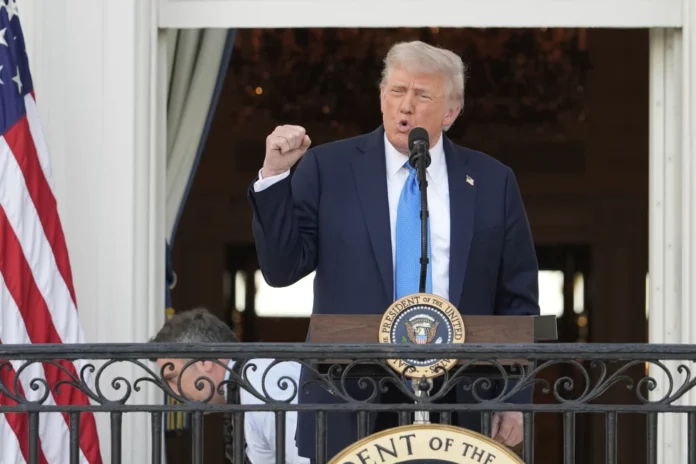
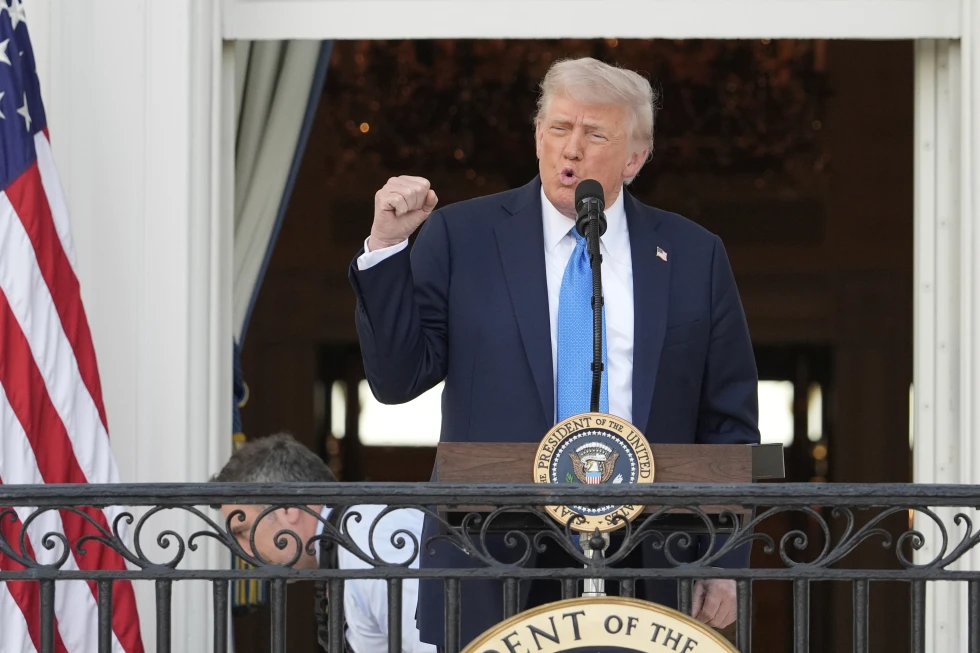
RIYADH, Saudi Arabia — President Donald Trump began a pivotal four-day diplomatic mission across the Middle East on Tuesday, landing in Saudi Arabia for high-level talks with Crown Prince Mohammed bin Salman aimed at curbing Iran’s nuclear ambitions, resolving the Gaza conflict, and bolstering economic ties through energy cooperation and investment.

Trump was met with a warm reception as he stepped off Air Force One at King Khalid International Airport, where the Saudi crown prince personally welcomed him — a symbolic gesture underscoring the strong personal rapport between the two leaders. The welcome was marked by royal pageantry, with Saudi F-15 fighter jets escorting the presidential aircraft into Riyadh’s airspace in a ceremonial display of alliance.

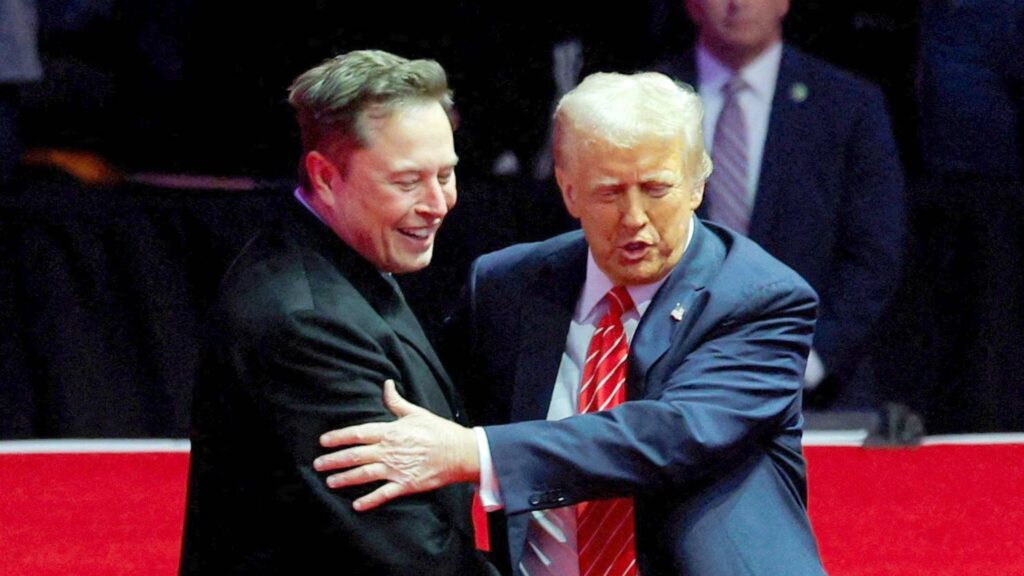
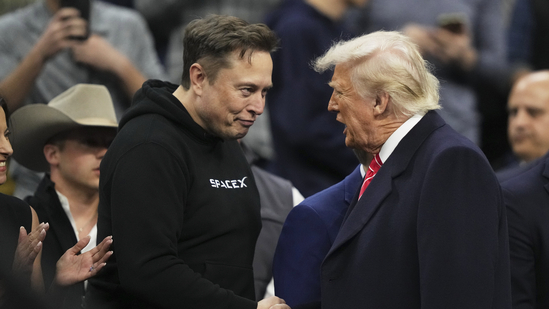
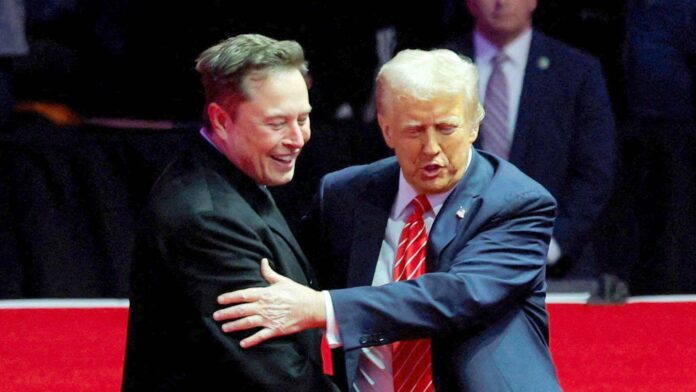
Shortly after landing, Trump joined the crown prince in a grand reception hall at the airport where traditional Arabic coffee was served by attendants in ceremonial attire. The gathering included a private lunch at the Royal Court, where Trump, bin Salman, and senior advisors were joined by top American business leaders, including Blackstone CEO Stephen Schwarzman, BlackRock CEO Larry Fink, and Tesla and SpaceX CEO Elon Musk — who also leads the U.S. Department of Government Efficiency, a signature Trump initiative to cut waste and bureaucratic excess.

The day’s agenda underscored the transactional nature of Trump’s foreign policy. He was set to attend a U.S.-Saudi investment forum and formal state dinner later in the evening, as his administration seeks to deepen economic and military cooperation with Gulf allies. “When Saudis and Americans join forces, very good things happen — more often than not, great things happen,” said Saudi Investment Minister Khalid al-Falih, hailing the strategic alliance.

Energy and Economic Tensions Underpin Talks

Trump’s second-term energy strategy has emphasized keeping oil prices low to reduce inflation and accelerate resolution of the Russia-Ukraine war. Saudi Arabia, a key OPEC+ leader, has temporarily increased oil production to aid Trump’s domestic economic agenda. However, analysts note the kingdom requires oil prices near $96 per barrel to balance its budget — nearly 50% above Monday’s Brent crude closing price of $64.77.

“Lower oil prices don’t derail Gulf economic diversification plans, but they make them harder,” said Jon Alterman, a senior Middle East analyst at the Center for Strategic and International Studies. Trump’s ability to secure continued cooperation on oil output remains uncertain amid Saudi Arabia’s fiscal pressures.

Trump’s Omission of Israel Raises Eyebrows

Notably, Trump chose Saudi Arabia as his first stop, bypassing Israel entirely at a time of intense regional conflict. This move — criticized as a snub by some observers — comes amid growing frustration in Jerusalem over what officials see as a lack of communication from Washington on major policy shifts.

Trump recently announced a suspension of U.S. airstrikes against Yemen’s Iran-backed Houthi rebels without prior consultation with Israel, even though the Houthis continue to target Israeli assets. Similar omissions occurred in March, when Israeli Prime Minister Benjamin Netanyahu was left out of early discussions on Gaza negotiations with Hamas, and again during Trump’s surprise revelation of resumed nuclear talks with Iran.

“Israel will defend itself by itself,” Netanyahu said in response to Trump’s Houthi ceasefire declaration. “If others join us — our American friends — all the better.”

William Wechsler of the Atlantic Council called Trump’s decision to skip Israel “remarkable,” noting that “the Gulf governments appear to be stronger friends to President Trump than the current government of Israel.”

Trump’s Broader Strategic Goals: Real Estate, AI, Arms Deals

Trump’s itinerary — which includes Qatar and the United Arab Emirates after Saudi Arabia — reflects a convergence of diplomacy and private interests. The Trump Organization, now run by the president’s sons, has active real estate ventures in all three countries: a luxury high-rise in Jeddah, a hotel in Dubai, and a golf resort in Qatar.

Administration officials previewed announcements on new arms deals, expanded energy partnerships, and agreements related to artificial intelligence. Earlier this month, the U.S. approved the potential sale of $3.5 billion in air-to-air missiles for Saudi fighter jets — a signal of continued defense ties despite tensions elsewhere in the region.

Hurdles to Israel-Saudi Normalization

A major long-term objective for Trump is to revive his first-term push to normalize relations between Saudi Arabia and Israel — a capstone effort of the Abraham Accords. Yet the current geopolitical landscape presents major roadblocks. Riyadh has made clear that normalization is contingent on U.S. security guarantees, support for its nascent nuclear program, and credible steps toward Palestinian statehood.

The ongoing war in Gaza and Israel’s hardline stance undercut any immediate prospect for diplomatic breakthroughs. In a move widely interpreted as a message to Trump, Crown Prince Mohammed last week hosted Palestinian Vice President Hussein Sheikh in Jeddah — the sheikh’s first foreign visit since taking office in April.

Hussain Abdul-Hussain of the Foundation for Defense of Democracies said the crown prince was sending a clear signal: “Knowing how the Saudis telegraph their intentions, that’s a preemptive, ‘Don’t even think of asking us to show any goodwill toward normalization.’”

Balancing Strategy With Reality

As Trump moves through the Gulf states, he faces both opportunity and friction. The visit is designed to showcase that his transactional, investment-focused foreign policy remains viable — and even lucrative — despite criticism from political opponents who say his approach alienates traditional allies.

Whether this trip results in concrete diplomatic wins or merely reinforces the image of deepening ties between Trump and wealthy Gulf monarchies remains to be seen. What is clear is that regional powers are recalibrating their strategies — and Trump is betting that he remains the indispensable figure to broker their future.

Kim Kardashian’s Friend Testifies Star Pleaded for Her Life During Violent $6M Paris Heist

PARIS — Kim Kardashian’s longtime friend and former stylist told a Paris courtroom Tuesday that she heard the reality star sobbing and begging for her life during the 2016 hotel-room robbery that left Kardashian bound, held at gunpoint, and traumatized for years to come.

Simone Harouche, who shared the two-story hotel suite with Kardashian during Paris Fashion Week, recounted the terrifying moments from the night masked assailants stormed their residence and stole more than $6 million worth of jewelry. “She kept screaming, ‘I have babies and I need to live. Take everything. I need to live,’” Harouche told the court. “I was scared she had been raped or violated. I feared the worst.”

Kardashian, one of the most recognizable celebrities in the world, is scheduled to testify later Tuesday in what is expected to be the most emotionally charged moment of the trial. She will confront 10 men accused of orchestrating the robbery that marked a turning point in her life — and in the public’s understanding of celebrity vulnerability in the digital age.

The October 2016 robbery, which occurred inside a private luxury residence while Kardashian was alone in her room, remains one of France’s most notorious crimes against a foreign celebrity. The suspects, many now in their 60s and 70s and dubbed by local media as les papys braqueurs — or “the grandpa robbers” — have been described by investigators as a seasoned and coordinated criminal group. Though two of the defendants admitted to being at the scene, the rest deny involvement, with some claiming they didn’t even know who Kardashian was.

Police maintain that the group tracked Kardashian’s movements through her own social media posts, which flaunted her high-end jewelry, pinpointed her location, and left her vulnerable to attack.

In her testimony, Harouche said the robbery had left Kardashian with profound emotional scars. “She now lives a completely different life. She doesn’t go anywhere alone,” Harouche said. “Losing your sense of freedom like that… it’s horrible.”

Harouche also pushed back against suggestions that Kardashian’s visible display of wealth made her complicit in the robbery. When lead judge David De Pas asked whether the star had turned herself into a target by sharing images of her lavish lifestyle online, Harouche firmly replied: “No. Just because a woman wears jewelry, that doesn’t make her a target. That’s like saying a woman in a short skirt deserves to be raped.”

The trauma extended beyond Kardashian. Harouche, who had locked herself in a bathroom during the heist, said the experience forced her to step away from her work in celebrity styling. “I didn’t want to travel with them anymore. That experience was very stressful for me,” she testified, adding that she later sought therapy for PTSD and shifted her career to interior design.

Kardashian’s upcoming courtroom appearance will revisit harrowing details: how the robbers zip-tied her hands, demanded her ring, and locked her in a marble bathroom. At the time, she feared she would never see her children again.

Following the incident, Kardashian withdrew from the public eye, struggled with severe anxiety, and later revealed symptoms of agoraphobia. “I hated to go out,” she said in a 2021 interview. “I didn’t want anybody to know where I was … I just had such anxiety.”

Her lawyers said Kardashian is fully prepared to appear in court, expressing her gratitude to French authorities and her commitment to justice. “She has tremendous appreciation and admiration for the French judicial system,” her attorneys said in a statement, adding that she hopes the trial proceeds “with dignity and respect for all parties.”

The heist not only reshaped Kardashian’s personal life but also redefined the discussion around celebrity exposure and personal safety in an age dominated by social media visibility. Her testimony is expected to underscore those risks — and close a painful chapter that has haunted her for nearly a decade.

AP

Freed Israeli-American Hostage Leaves Gaza, Joins Family, as Israel Resumes Strikes, Rejects Ceasefire

TEL AVIV, Israel — Edan Alexander, a 21-year-old Israeli-American soldier held hostage by Hamas for over 19 months, was released Monday during a brief pause in hostilities, marking a dramatic breakthrough amid one of the longest hostage crises in the Israel-Hamas war. His release, however, did not signal an easing of tensions, as Israeli airstrikes resumed soon after and Prime Minister Benjamin Netanyahu firmly rejected any talk of a ceasefire.

Alexander was transferred to Israeli custody by the International Committee of the Red Cross, which mediated the handover from Hamas. He was taken to a military base where he emotionally reunited with his family. In video released by Israeli officials, Alexander appeared visibly frail but smiling as he embraced his tearful mother, Yael Alexander, and other family members. He was later airlifted to a hospital for medical evaluation.

According to Israel’s Channel 12, Alexander’s condition was described as “low,” though official details were limited. Images showed him pale but conscious and holding a handwritten sign in a military helicopter reading, “Thank you, President Trump,” a gesture underscoring the political weight of the release.

Hamas framed Alexander’s release as a goodwill gesture to President Donald Trump, who is visiting Gulf nations this week. Trump celebrated the news on social media, writing, “Edan Alexander, American hostage thought dead, to be released by Hamas. Great news!”

Netanyahu credited Alexander’s freedom to “persistent military pressure” and diplomatic efforts led by Trump. “Israel has not committed to a ceasefire of any kind,” the prime minister’s office said, signaling continued military escalation in Gaza.

Indeed, within hours of Alexander’s release, Palestinian officials reported new Israeli tank shelling and airstrikes. One airstrike on a shelter in Khan Younis reportedly killed three and wounded several. In northern Gaza’s Tuffah neighborhood, a woman was killed and others injured when tank fire struck a school housing displaced families.

The hostage release followed four-party negotiations involving Hamas, the U.S., Egypt, and Qatar. Though seen by mediators as a hopeful step toward broader talks, no formal truce has been agreed upon. Netanyahu’s office confirmed a delegation would travel to Qatar Thursday to explore new proposals for freeing the remaining 58 hostages still believed to be held by Hamas.

Alexander, who grew up in New Jersey and joined the Israeli military before being captured during Hamas’ October 7, 2023, attack, was the last known living American hostage. That assault killed 1,200 Israelis and resulted in 251 hostages being taken, according to Israeli authorities.

Back in his hometown of Tenafly, New Jersey, videos showed jubilant crowds dancing and cheering upon learning of his release.

Meanwhile, growing frustration among families of other hostages erupted publicly. Critics accused the Netanyahu government of prioritizing high-profile cases, particularly those involving foreign backing. Einav Zangauker, whose son Matan remains captive, accused the government of acting out of political interest.

Addressing Trump directly, Zangauker said in a statement with other hostage families: “The Israeli people are behind you. End this war. Bring them all home.”

Despite international pressure, including from humanitarian organizations, Israel’s government continues its military campaign in Gaza. A previous ceasefire in January had led to the release of 38 hostages in exchange for Palestinian prisoners but collapsed in March when hostilities resumed.

Since October, over 52,000 Palestinians have been killed, according to Gaza’s health authorities, and much of the densely populated enclave has been reduced to rubble. Israel has blocked large-scale aid deliveries, exacerbating the humanitarian crisis.

On Monday, the Integrated Food Security Phase Classification (IPC), a leading global hunger monitor, warned that more than 500,000 people in Gaza are facing starvation, with a “critical risk of famine” looming by September if conditions persist.

Special U.S. envoy Steve Witkoff, who reportedly played a key role in securing Alexander’s release, arrived in Israel Monday to continue discussions. The freed soldier’s family expressed gratitude to both Trump and Witkoff and urged negotiators to persist in efforts to bring the remaining hostages home.

Trump Defends Qatar’s Potential Gift of Boeing 747 as Cost-Saving Move Amid Ethics Concerns

WASHINGTON — President Donald Trump has come under fire after defending the prospect of accepting a luxury Boeing 747-8 jet from the Qatari royal family during his upcoming Middle East trip, arguing the aircraft could serve as a temporary replacement for the aging Air Force One fleet at no cost to U.S. taxpayers.

The gift — which Trump lauded as “fiscally smart” in a social media post late Sunday — has not been finalized, but the Qatari government confirmed discussions are underway between its Ministry of Defense and the U.S. Department of Defense. If approved, the aircraft would be transferred for presidential use until near the end of Trump’s second term in 2029, before being handed over to his planned presidential library’s foundation, according to an ABC News report.

“So the fact that the Defense Department is getting a GIFT, FREE OF CHARGE, of a 747 aircraft to replace the 40-year-old Air Force One, temporarily, in a very public and transparent transaction, so bothers the Crooked Democrats that they insist we pay, TOP DOLLAR, for the plane,” Trump wrote.

The aircraft’s transfer — expected to be announced during Trump’s visit to Qatar, Saudi Arabia, and the United Arab Emirates — has stirred sharp criticism from ethics watchdogs and lawmakers. Critics argue it would represent an unprecedented and potentially unconstitutional gift from a foreign government to a sitting U.S. president.

Senate Minority Leader Chuck Schumer, D-N.Y., mocked Trump’s embrace of the offer. “Nothing says ‘America First’ like Air Force One, brought to you by Qatar,” he said, calling it “premium foreign influence with extra legroom.”

Experts point to the U.S. Constitution’s Emoluments Clause, which prohibits officeholders from accepting gifts or payments from foreign states without congressional approval. “Trump seems committed to exploiting the federal government’s power not for policy goals, but to accumulate personal wealth,” said Kathleen Clark, a government ethics expert at Washington University in St. Louis.

Despite the scrutiny, White House officials are reportedly preparing a legal defense to justify accepting the plane, arguing the transaction can be structured to comply with federal ethics rules.

The aircraft in question is a version of the Boeing 747 Trump toured earlier this year at Palm Beach International Airport. Although it lacks the advanced survivability and security features of the current Air Force One fleet, defense officials believe it could be outfitted with secure communications and limited countermeasures in time for presidential use.

Still, the plane would fall short of the current VC-25A models — both of which are over 30 years old — and the long-delayed VC-25B replacements. Notably, neither the Qatari aircraft nor the VC-25Bs will include air-to-air refueling capability, which allows the president to stay airborne indefinitely during emergencies.

Critics have also raised questions about the Trump Organization’s expanding ties in the Middle East. The president’s family business, now managed by sons Donald Jr. and Eric Trump, is developing a luxury golf resort in Qatar in partnership with Qatari Diar, a state-backed real estate firm. Qatar is also home to Qatar Airways and holds significant influence through its sovereign wealth fund.

While administration officials downplayed concerns about conflicts of interest, pointing to a voluntary ethics agreement that bars direct deals with foreign governments, the pact still allows business dealings with foreign private companies — a looser standard than Trump’s first-term ethics policy.

Jordan Libowitz, of Citizens for Responsibility and Ethics in Washington, said the gift would be without precedent. “The totality of gifts given to a president over their term doesn’t get close to this level,” he said. “You have to ask, if he makes foreign policy — especially in regards to the Middle East — how much is he being influenced by his gifts and his business deals.”

Trump previously faced multiple lawsuits accusing him of violating the Emoluments Clause during his first term. Those cases were dismissed as moot in 2021 after the Supreme Court ruled that the issue was no longer relevant once Trump left office.

The current debate reignites long-standing concerns about the intersection of Trump’s political power and his global business interests, especially in regions where his administration is now heavily engaged in diplomacy and defense strategy.

Hamas Frees Israeli-American Soldier in Apparent Gesture Toward Trump Administration Amid Gaza Ceasefire Push

TEL AVIV — Hamas on Monday freed Israeli-American soldier Edan Alexander after more than 19 months in captivity, in what appeared to be a calculated goodwill gesture toward the Trump administration as efforts intensify to broker a new ceasefire between Israel and Hamas.

The release marks the first hostage freed since Israel ended an eight-week ceasefire in March, launching a new round of punishing air and ground strikes in Gaza that have killed hundreds of Palestinians. Alexander, 21, was transferred to the International Committee of the Red Cross before being handed over to Israeli forces. He was airlifted to a Tel Aviv hospital, where he was reunited with his family in an emotional scene captured on video.

Photos released by Israeli authorities showed Alexander pale but smiling as he embraced his mother and relatives for the first time since being captured during Hamas’ October 7, 2023 cross-border assault on his military base in southern Israel. That attack triggered the ongoing war in Gaza, now in its 19th month.

In Tel Aviv’s Hostage Square, where weekly rallies have demanded action for the remaining captives, hundreds erupted in cheers at the news. His extended family gathered nearby, wearing shirts emblazoned with his name and chanting as Israeli officials confirmed his release.

“He seemed like a man. He has really matured,” said his grandmother, Varda Ben Baruch, who praised her grandson’s resilience. She was not surprised to hear reports that Alexander cracked a joke during his first phone call with his mother. “He’s got such a sense of humor,” she said.

Alexander was 19 when he was taken, one of 250 hostages abducted during the 2023 Hamas-led offensive. While many were freed during temporary truces, Israel says 58 hostages remain in Gaza, with 23 believed to be alive.

The timing of his release has sparked speculation about shifting dynamics in ceasefire negotiations, as President Donald Trump’s administration intensifies diplomatic efforts in the region. U.S. officials have reportedly backed a framework that would include a phased release of hostages in exchange for a pause in fighting and expanded humanitarian access to Gaza.

Despite the breakthrough, Israel has continued its military pressure on Hamas, vowing to seize more of Gaza and displace its population again if necessary. In the days leading up to the March ceasefire collapse, Israeli officials imposed a full blockade, halting all imports into the besieged enclave. Aid agencies have warned of looming famine and deepening humanitarian catastrophe if restrictions are not lifted.

In Alexander’s hometown of Tenafly, New Jersey, hundreds gathered to celebrate his return. Waving Israeli flags and singing along to music, supporters watched the live coverage of his release on a large screen. The community had held weekly marches since his abduction, advocating for the hostages’ freedom.

The Trump administration has yet to formally respond to the development, but senior officials signaled optimism that the release could be a turning point in the stalled ceasefire process.

Macron ‘Cocaine’ Conspiracy Discredited as Kremlin Disinformation Amid Kyiv Visit with Starmer and Merz

PARIS — The French government has forcefully rejected a Kremlin-fueled conspiracy theory falsely claiming President Emmanuel Macron was concealing a bag of cocaine during his high-profile visit to Kyiv alongside British Labour leader Keir Starmer and German opposition leader Friedrich Merz.

The rumor, spread by pro-Russian social media accounts and amplified by Russian Foreign Ministry spokesperson Maria Zakharova, falsely alleged that Macron discreetly pocketed a “bag of white powder” while aboard a night train to Kyiv. The Élysée Palace swiftly responded, labeling the video-based claims as fabricated disinformation and confirming the object in question was merely a tissue.

“When European unity becomes inconvenient, disinformation goes so far as to make a simple tissue look like drugs,” the presidential office wrote on X, formerly Twitter. “This fake news is being spread by France’s enemies, both abroad and at home. We must remain vigilant against manipulation.”

The grainy footage that ignited the online storm shows Macron picking up a tissue from a train table while seated beside Starmer and Merz. The video quickly circulated with false commentary from pro-Kremlin users, some of whom suggested the French president was hiding drug paraphernalia. One viral post falsely stated: “Macron, Starmer and Merz caught on video on their return from Kiev. A bag of white powder on the table. Macron quickly pockets it, Merz hides the spoon.”

Zakharova seized on the narrative, invoking an old propaganda tactic used by the Kremlin against Ukrainian President Volodymyr Zelensky and other Western leaders. “A Frenchman, an Englishman, and a German spotted with cocaine paraphernalia on a train,” she wrote on Telegram. “The fate of Europe is being decided by utterly (drug) dependent individuals.”

The French government dismissed the comments as part of an escalating digital smear campaign led by Russia’s military intelligence services, designed to sow distrust in democratic institutions and fracture European solidarity. “It infiltrates French digital networks with two aims: collecting intelligence for the benefit of the Kremlin and destabilising our society by creating distrust,” said France’s Foreign Ministry.

In response to the false claims, Macron’s official account shared a photo of him shaking hands with Starmer and Merz, captioned: “This is European unity” — underscoring the leaders’ joint mission in Ukraine to call for a 30-day ceasefire from Russia and express unwavering support for Kyiv.

While in Kyiv, the trio joined a conference call with President Donald Trump, reinforcing their unified stance. “So all of us here together with the US are calling Putin out,” Starmer said following the meeting. “If he is serious about peace, then he has a chance to show it.”

Kremlin spokesman Dmitry Peskov downplayed the message from Kyiv, accusing Europe of sending “contradictory statements” and insisting they were “confrontational in nature.”

The baseless allegations against Macron are part of a long-running strategy by Moscow to delegitimize European leaders with claims of drug use — a tactic it has previously used against Zelensky. Experts warn such efforts are designed to weaken public confidence in Western institutions and distract from Russia’s ongoing war in Ukraine.

Russia Launches Drone Strikes Across Ukraine, Undermining Ceasefire Appeal from Kyiv and Allies

KYIV, Ukraine — Russia launched a massive wave of drone attacks across Ukraine overnight, effectively dismissing Ukraine’s appeal — backed by key Western allies — for a 30-day ceasefire aimed at facilitating peace talks.

Ukrainian military officials reported that Russian forces fired 108 Iranian-made Shahed drones starting around 11 p.m. Sunday, targeting multiple regions across the country. The Ukrainian Air Force said it successfully shot down more than half of the drones. An additional 30 decoy drones reportedly malfunctioned and failed to reach their targets.

The strikes caused damage in several areas, including Odesa, Mykolaiv, Donetsk, and Zhytomyr, with emergency services confirming at least 22 civilians injured in the latest wave of Russian aggression.

The overnight barrage came just hours before a Western-backed ceasefire initiative was set to take effect. Over the weekend, European leaders from the United Kingdom, France, Germany, and Poland visited Kyiv to meet with President Volodymyr Zelensky, urging Russian President Vladimir Putin to agree to a 30-day truce or face intensified sanctions.

U.S. Secretary of State Marco Rubio reiterated Washington’s call for an immediate halt to the fighting during a call Sunday with British Foreign Secretary David Lammy. “Our top priority remains bringing an end to the fighting and an immediate ceasefire,” the U.S. State Department said in a readout of the call.

Putin, however, had already signaled reluctance to accept the ceasefire. In a televised address Sunday night timed for maximum visibility in the U.S., he proposed direct peace negotiations with Ukraine in Istanbul on Thursday — an apparent effort to reframe the diplomatic momentum on Moscow’s terms.

Zelensky responded swiftly on social media, challenging Putin to meet him face-to-face in Türkiye. “I will be waiting for Putin in Türkiye on Thursday. Personally,” Zelensky wrote. A senior Ukrainian official told Axios the president intends to travel to Istanbul regardless of Russia’s stance on the proposed ceasefire.

Kremlin aide Yuri Ushakov clarified Monday that any direct negotiations would resume based on the framework discussed in Istanbul shortly after the full-scale invasion began in February 2022. At that time, Russia’s demands included Ukrainian neutrality and territorial concessions, conditions Kyiv has consistently rejected as tantamount to surrender.

Though Putin ordered a symbolic 72-hour unilateral truce last week to coincide with Russia’s Victory Day, Ukrainian officials denounced the move as a propaganda stunt. Both sides accused the other of breaching that brief pause.

With no let-up in hostilities and Russia pressing forward militarily, prospects for a meaningful ceasefire appear increasingly dim, even as diplomatic pressure mounts for a negotiated end to the war.

Ghana Father Jailed 10 Years for Impregnating 15-year-old Daughter

AFLAO, Ghana — A 36-year-old Ghanaian father has been sentenced to 10 years imprisonment with hard labor after being found guilty of impregnating his 15-year-old daughter, a case that has shocked residents in the Ketu South Municipality.

Kofitse Zigah, an electrician from Adoteykope, a suburb of Aflao, was convicted after pleading guilty to charges of defilement. The Circuit Court at Tokor, presided over by Judge Joseph Ofosu Behome, handed down the sentence after determining that Zigah had sexually assaulted his daughter on multiple occasions.

According to court documents, Zigah drugged his daughter before committing the acts. During his birthday celebration in February, he gave the victim a non-alcoholic beverage that caused her to lose consciousness. Upon waking, the girl discovered suspicious bodily fluids on her clothing, which her father refused to explain when confronted.

The court heard that a second assault occurred on April 15, 2025, during the victim’s birthday celebration. Police Inspector Albert Kombor, who prosecuted the case, told the court that Zigah again provided his daughter with a soft drink suspected to contain sedatives before taking her to a bedroom and sexually assaulting her.

“The victim later experienced unusual fatigue and headaches, symptoms consistent with early pregnancy,” Inspector Kombor explained during the proceedings.

The crime came to light on May 1 when the victim encountered Miss Faustina Elikplim Korwu, the Assembly member for Avoeme West Electoral Area, while running an errand. Upon questioning, the teenager revealed her ordeal, prompting Korwu to immediately report the matter to the Aflao Police Station.

Medical examination at the Ketu South Municipal Hospital confirmed that the victim was 15 weeks and 4 days pregnant, providing irrefutable evidence of the assault.

Zigah was first arraigned before the court on May 5, 2025, where he pleaded guilty “simpliciter” (unconditionally). The court delivered its sentence during his second appearance.

Miss Korwu expressed satisfaction with the swift administration of justice, though she had hoped for a more severe sentence. “While I expected a longer jail term, I believe the judge may have considered his complete admission of guilt and his apparent poor health condition,” she said, adding, “The man didn’t look healthy to me.”

Ghana’s Criminal Code of 1960 (ACT 29) stipulates that sexual intercourse with a child under 16 years, regardless of consent, carries a prison term ranging from seven to 25 years. This legislation reflects Ghana’s commitment to protecting minors from sexual exploitation and abuse.

The case underscores ongoing challenges in combating child sexual abuse in Ghana, particularly when perpetrators are family members who exploit positions of trust and authority.

Local child protection advocates have called for increased community vigilance and support systems for vulnerable children in the wake of this disturbing case.

Dembele Crowned Ligue 1 Player of the Year After Stellar Season with PSG

PARIS — Paris Saint-Germain forward Ousmane Dembele was named Ligue 1’s Player of the Year on Sunday, capping a brilliant season in which he helped lead the French champions to their 13th domestic title and a spot in the UEFA Champions League final.

Dembele finished as Ligue 1’s top scorer with 21 goals and tallied 33 goals in 46 appearances across all competitions, including eight strikes in Europe. His electric form proved pivotal in PSG’s dominant campaign both domestically and on the continental stage.

The 26-year-old France international succeeds former PSG teammate Kylian Mbappe, who had won the prestigious UNFP (National Union of Professional Footballers) award five years in a row before his high-profile move to Real Madrid last summer.

The UNFP Trophies gala also honored PSG manager Luis Enrique with the Coach of the Year award following a campaign that has the club eyeing a treble. Midfielder Désiré Doué of Rennes was named Ligue 1’s Best Young Player, signaling the rise of a new generation of French talent.

Lille’s Lucas Chevalier interrupted PSG’s sweep of the individual awards by edging Gianluigi Donnarumma to claim Best Goalkeeper honors.

PSG, who have already clinched their 11th Ligue 1 title in the past 13 seasons, are still in contention for a historic treble. They face Reims in the Coupe de France final next week before taking on Inter Milan in the UEFA Champions League final on May 31.

Dembele’s resurgence after past injury struggles has made him a central figure in PSG’s post-Mbappe era, providing both goals and leadership as the club aims to finally conquer Europe.

Argentina’s Supreme Court Uncovers Hidden Trove of Nazi Materials in Basement

BUENOS AIRES, Argentina — Argentina’s Supreme Court revealed Sunday that it has uncovered 83 boxes of Nazi materials in its basement, rediscovering a cache that was originally seized during World War II amid fears it could threaten the country’s neutrality.

According to a court statement, the boxes were originally shipped from the German embassy in Tokyo to Buenos Aires aboard the Japanese steamship Nan-a-Maru in June 1941. At the time, the unusually large shipment alarmed Argentine customs officials, who suspected it might contain materials capable of swaying the nation’s stance in the global conflict.

Though German diplomats claimed the boxes contained only personal belongings, customs agents searched five boxes and found postcards, photographs, propaganda documents, and thousands of Nazi Party notebooks. A federal judge quickly ordered the materials confiscated and referred the matter to the Supreme Court, where the trail seemingly went cold—until now.

Eighty-four years later, the boxes were rediscovered by court workers preparing for a new museum dedicated to the judiciary’s history. Upon opening one of the containers, staff found clear evidence of Nazi propaganda intended to promote Adolf Hitler’s ideology within Argentina during World War II.

“Upon opening one of the boxes, we identified material intended to consolidate and propagate Adolf Hitler’s ideology in Argentina during the Second World War,” the Supreme Court said in its official statement.

The court has since moved the boxes to a secure facility and invited the Buenos Aires Holocaust Museum to assist in preservation, cataloging, and historical analysis. Experts are expected to examine the contents for insights into the global operations of the Nazi regime, including any clues related to international financial support networks used during the Holocaust.

It remains unclear why the materials were initially sent to Argentina, or what, if any, legal actions the court may have taken after receiving them in the 1940s.

Argentina, which maintained neutrality for much of World War II, only severed ties with the Axis powers in 1944 and declared war on Germany and Japan the following year. During that period, the country received a significant influx of Jewish refugees—about 40,000 people fleeing persecution in Europe between 1933 and 1954, according to the Holocaust Museum.

The rediscovery has sparked renewed interest in Argentina’s complex wartime history, including its role as both a sanctuary for Nazi fugitives after the war and a refuge for Jews escaping genocide.