Home Blog Page 349

 Israel Approves Plan to Fully Seize Gaza in Expanded Military Operation

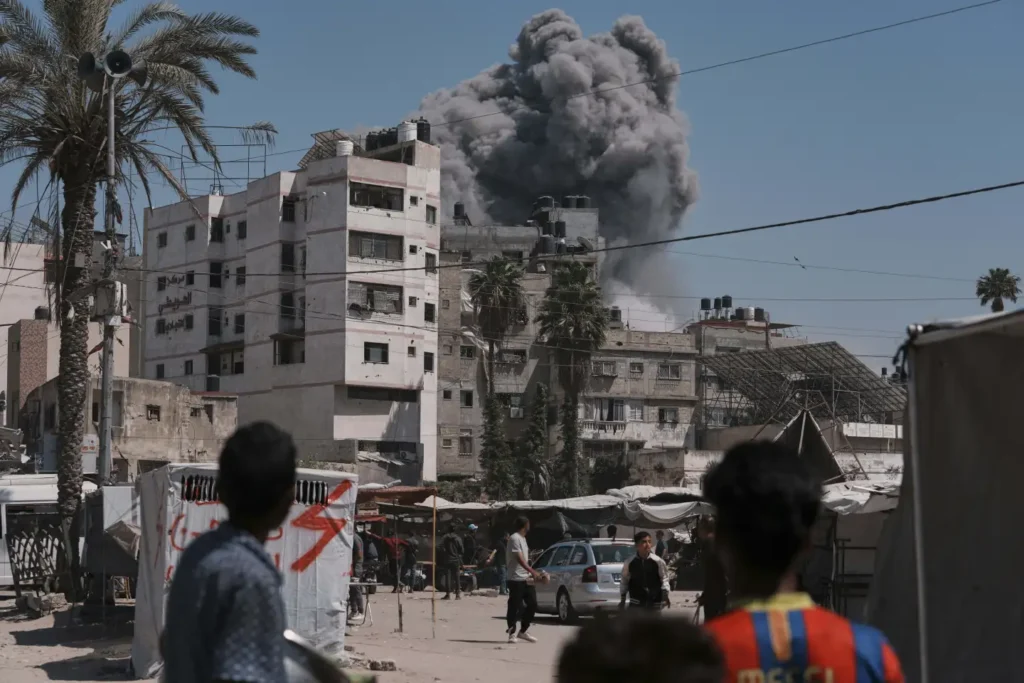
JERUSALEM — Israeli Prime Minister Benjamin Netanyahu has announced an expanded and “intensive” military operation to seize full control of the Gaza Strip, a dramatic escalation in the months-long war against Hamas. The decision, confirmed by Israeli officials, follows the breakdown of ceasefire negotiations and comes as President Donald Trump prepares for a high-profile visit to the Middle East.

The operation, reportedly approved by Israel’s security cabinet, is expected to unfold gradually over several months and could see the Israeli military take over all of Gaza. Netanyahu said the new offensive aims to push more Palestinians south “for their own safety” while eliminating Hamas’s grip on humanitarian aid. “This will not be a hit-and-run operation,” Netanyahu said in a May 5 video statement, suggesting Israeli forces will remain on the ground in areas they capture.

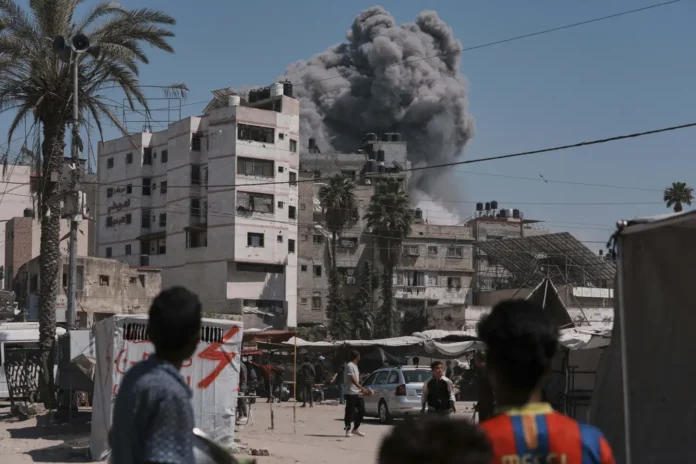
Israeli troops already occupy roughly a third of the Gaza Strip, where they have established surveillance posts and “security zones.” Under the expanded plan, those zones will be solidified and expanded across the enclave. One senior Israeli official said the goal is to move Gaza’s population further south and cut Hamas off from aid supplies.

Currently, international aid groups and U.N. agencies coordinate the distribution of humanitarian relief in Gaza, but Israeli officials said private contractors will take over the process, with aid redirected to the Rafah region near Egypt. Israel has accused international groups of failing to prevent Hamas from seizing supplies meant for civilians.

The timing of the offensive remains closely tied to Trump’s diplomatic visit. A senior Israeli defense official said no action will begin before the visit concludes and that a “window of opportunity” remains for a ceasefire and hostage release deal. “If there is no hostage deal, Operation Gideon Chariots will begin with great intensity and will not stop until all its goals are achieved,” the official said.

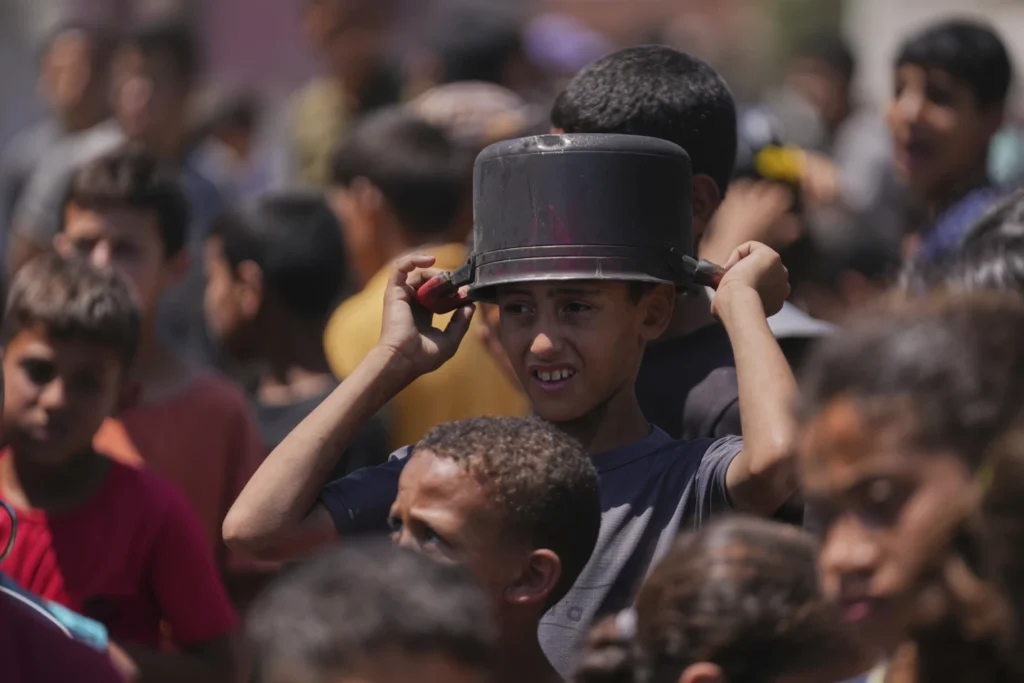
Israel resumed its offensive in March following the collapse of a U.S.-brokered truce. Since then, it has imposed a blockade that aid agencies warn has brought Gaza’s 2.3 million residents to the brink of famine. The United Nations has sounded repeated alarms over the humanitarian catastrophe.

Hamas has rejected the Israeli strategy, demanding a complete ceasefire, total withdrawal of Israeli forces, full reconstruction of Gaza, and a mutual release of prisoners. “No deal except a comprehensive one,” said senior Hamas official Mahmoud Mardawi, rejecting what he called “pressure and blackmail.”

Israel’s lack of a post-war vision for Gaza has drawn scrutiny from both international observers and domestic critics. While government ministers have pressed for sidelining the U.N. and other global NGOs in favor of Israeli-managed aid systems, aid leaders have pushed back. On Monday, Jan Egeland, head of the Norwegian Refugee Council, confirmed Israel has demanded the shutdown of current aid distribution operations in Gaza.

Hardline members of Netanyahu’s coalition, including Finance Minister Bezalel Smotrich, have welcomed the new plan as a path to permanent Israeli control of Gaza. “We are finally going to conquer Gaza. We are no longer afraid of the word ‘occupation’,” Smotrich declared during a virtual pro-settler conference.

Yet public sentiment in Israel appears to be shifting. A growing number of Israelis are demanding a deal to bring home the 59 remaining hostages held in Gaza. Demonstrators clashed with police outside parliament this week, with relatives of the hostages expressing frustration at the government’s strategy. “All the families are tired,” said Ruby Chen, whose son was killed in the October 7 Hamas attack. “This new maneuvering brings no guarantee.”

That attack — in which 1,200 people, mostly civilians, were killed and 251 taken hostage — triggered Israel’s military campaign. Since then, more than 52,000 Palestinians have died, according to Gaza health authorities, and vast sections of the territory have been reduced to rubble.

Despite mounting international criticism, Israeli military leaders have begun calling up tens of thousands of reservists to prepare for an expansion of operations in Gaza. Chief of Staff Lt. Gen. Eyal Zamir has reportedly pushed back against proposals to halt all aid, warning the government that humanitarian access must resume soon. Still, a government spokesperson insisted that the purpose of the reserve mobilization is to widen military activity, not to establish long-term occupation.

Israel now faces mounting security pressures beyond Gaza, including missile threats from Iran-backed Houthi rebels in Yemen and growing instability in neighboring Syria and the West Bank. Whether Israel can sustain an open-ended military operation in Gaza amid these broader challenges remains uncertain — especially as the international community calls for de-escalation and humanitarian access.

Cardinals Enter Conclave at Vatican as Secretive Papal Election Begins Following Pope Francis’ Death

VATICAN CITY  – The world’s most secretive election is underway as 133 cardinals from around the globe entered the Vatican today for the historic 2025 Conclave, gathering beneath Michelangelo’s frescoed ceiling in the Sistine Chapel to select the next pope following the death of Pope Francis.

The solemn proceedings mark a centuries-old tradition dating back to 1276. From the moment the doors to the chapel close and the command extra omnes (“everyone out”) is declared, the cardinal electors are cut off from the outside world until a successor to Pope Francis is chosen.

Cardinals from 70 countries arrived under intense media scrutiny, waving to onlookers but remaining silent, in keeping with the strict code of secrecy that governs the Conclave. Each will stay within the Vatican grounds, mostly at the Santa Marta guesthouse and, for the first time due to crowding, some at the adjacent Santa Marta Vecchia.

Preparations for this election began swiftly after the April 21 death of Pope Francis, whose 12-year papacy was marked by sweeping reforms and polarizing decisions. Though Francis appointed roughly 80% of the current voting cardinals, Vatican observers caution that the next pope may not continue his progressive legacy. With no time limit set on the process, the cardinals could remain locked in deliberation for days or even weeks.

The word “Conclave” stems from the Latin cum clave, meaning “with a key”—a nod to the physical and symbolic seclusion of the electors. Communication is strictly prohibited. As of Wednesday at 3 p.m., all phone signals within the Vatican were jammed. No recording devices or phones are permitted; any breach of this protocol results in immediate excommunication.

The Voting Process

The formal Conclave begins Wednesday afternoon after the cardinal electors celebrate Mass in St. Peter’s Basilica. Dressed in traditional scarlet and white vestments, they process into the Pauline Chapel and then the Sistine Chapel, invoking the Holy Spirit to guide their decision.

Inside the Sistine Chapel—swept for bugs and shielded from surveillance—the election begins with an oath of secrecy. Ballots inscribed with Eligo in Summum Pontificem (“I elect as Supreme Pontiff”) are distributed. Electors write the name of their chosen candidate and, one by one, cast their votes into a silver urn after swearing their intent before God.

The voting follows strict protocol. Scrutineers count the votes and string the ballots together. If no one receives a two-thirds majority, the ballots are burned, releasing black smoke from the chapel’s chimney to signal no decision. White smoke signals the successful election of a new pope.

The process continues with up to four voting sessions daily. If no pope is elected after several rounds, the cardinals pause for prayer and reflection, with additional procedures allowing for a final run-off between the two leading candidates if needed.

Historical Context and Expectations

This Conclave is the most international in Church history, reflecting Catholicism’s global reach. While many cardinals were chosen by Pope Francis, the choice for his successor may pivot toward conservatism amid calls for doctrinal clarity and a firmer stance on traditional teachings.

Historically, conclaves have varied in duration. The 2013 election of Francis lasted two days; the longest on record, in 1268, stretched to nearly three years. That delay led to the tradition of locking up cardinals—locals in Viterbo once removed the roof of the church to force a decision.

As the cardinals now deliberate in silence and prayer, Catholics around the world wait in anticipation. The moment the white smoke rises, signaling Habemus Papam (“We have a pope”), a new chapter in the history of the Roman Catholic Church will begin.

Halle Berry Sparks Controversy at Met Gala 2025 With Sheer Gown That Bares All

NEW YORK  – Halle Berry turned heads and triggered a wave of social media backlash at the Met Gala 2025 on Monday night after arriving in a sheer black gown that exposed parts of her midriff and pubic area.

The 58-year-old Oscar winner appeared at the high-profile fashion event in a custom LaQuan Smith creation—an audacious beaded, striped design with deep plunges and transparent panels. The look, which Berry wore without underwear, revealed significant skin and ignited debate online over taste, body confidence, and red carpet boundaries.

Berry accessorized the look with a cropped black blazer featuring exaggerated shoulder pads, a fascinator hat, and statement jewelry. The ensemble was in line with the event’s theme, “Superfine: Tailoring Black Style,” which emphasized bold self-expression and tailored elegance.

The bold fashion choice drew a polarized response. Some social media users applauded Berry for embracing her body and defying age stereotypes, while others criticized the outfit as “inappropriate” for its revealing nature.

“Halle… my girl. I expected more from you,” wrote one user. “We get it—the body is bodying. But this is not the move.” Another added, “Halle Berry is still hot, but doesn’t need to dress like that.”

Designer LaQuan Smith defended the gown, telling Vogue that it was meant to capture the theme’s message of confidence and identity through sharp tailoring and daring design. “Halle wasn’t just wearing the garment—she helped shape it,” he said. “She pushed for cuts that enhanced her movement and experimented with sheer panels to balance elegance and edge.”

Smith, who also dressed singer Ciara for the event, drew inspiration from Harlem Renaissance fashion, ’80s tailoring, and the fearlessness of icons like Josephine Baker.

The annual gala, hosted by the Costume Institute at the Metropolitan Museum of Art, featured a guest list of about 600 and was co-chaired by Colman Domingo, Lewis Hamilton, A$AP Rocky, and Pharrell Williams, with LeBron James serving as honorary chair.

Other standout moments included singer Diana Ross upstaging Zendaya in a sweeping white cape, Rihanna revealing a baby bump, and Kylie Jenner walking solo while boyfriend Timothée Chalamet was noticeably absent.

While Berry’s outfit may have drawn the night’s fiercest reactions, it undeniably ensured her place among the most talked-about attendees of Met Gala 2025.

UK Considers Student Visa Restrictions Amid Pressure to Curb Migration

LONDON — Britain may impose new restrictions on student visas from countries whose nationals are statistically more likely to seek asylum, as Prime Minister Keir Starmer’s government faces growing political pressure to reduce net migration following disappointing local election results.

A government official confirmed Monday that the proposal is part of a broader strategy to address migration concerns ahead of the release of a key immigration policy document next week. The planned “white paper” will outline Labour’s efforts to overhaul the country’s immigration system and reduce net migration, which hit 728,000 in the year ending June 2023.

“Our upcoming Immigration White Paper will set out a comprehensive plan to restore order to our broken immigration system,” the Home Office said in a statement.

The potential visa restrictions target students from nations deemed most likely to use temporary entry routes, such as study, work, or visitor visas, to later apply for asylum. While official data does not identify nationalities of student visa holders who claimed asylum, the government said applicants from Pakistan, Nigeria, and Sri Lanka accounted for a significant share of such cases last year. Of the 108,000 total asylum applications in 2023, 16,000 came from individuals who initially arrived on student visas.

The proposal emerges just days after Starmer’s Labour Party suffered voter backlash in local elections across England, with immigration cited as a top concern among disillusioned constituents. The defeats reignited tensions within Labour, particularly among lawmakers representing former strongholds in northern England, known as the “Red Wall.”

Jo White, a prominent Labour MP from the group, criticized the government’s slow response on immigration. “We need to stop pussyfooting around,” she said. “Voters are demanding firm action.”

Legal migration — particularly through student and work visa pathways — has been a flashpoint in UK politics for over a decade and played a central role in the 2016 Brexit referendum. Since then, successive governments have struggled to strike a balance between economic needs and voter concerns over border control.

The expected white paper could set the stage for contentious debate within Parliament, as Labour seeks to reassure voters it is serious about immigration enforcement while avoiding accusations of discriminatory or overly harsh policies. It also remains unclear whether any proposed restrictions would pass legal scrutiny or international obligations related to asylum rights.

Analysts say the government is walking a political tightrope. “Restricting student visas from select countries risks damaging the UK’s reputation as a global education hub,” said migration policy expert Sara Hall of the London School of Economics. “But with net migration numbers this high, the pressure to act decisively is mounting.”

The full details of the plan are expected to be made public in the coming week, potentially reshaping how the UK balances its international education sector with domestic political demands.

Germany’s Merz Stumbles in Shocking First-Round Defeat for Chancellor Vote

BERLIN  — Conservative leader Friedrich Merz failed in his first bid to become Germany’s chancellor on Tuesday, falling short of a parliamentary majority in a surprise result that exposed cracks in his newly formed coalition and plunged Europe’s largest economy back into political uncertainty.

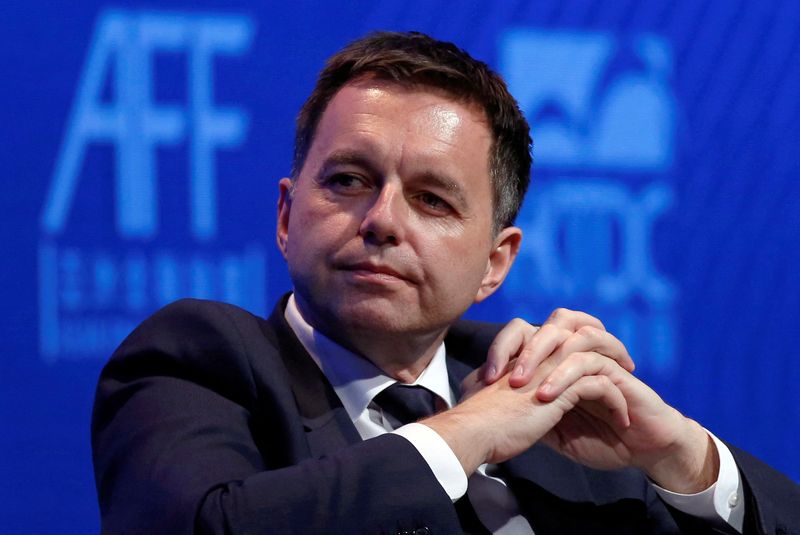
Merz, 69, who led the center-right CDU/CSU alliance to a narrow victory in February’s federal election and just signed a coalition deal with the center-left Social Democrats (SPD), secured only 310 votes in the Bundestag — six votes short of the 316 needed for an absolute majority. At least 18 coalition lawmakers either abstained or broke ranks, an unprecedented setback for a chancellor-designate in post-war German politics.

Bundestag President Julia Kloeckner announced that 307 lawmakers voted against Merz while nine abstained. The surprise defeat triggered immediate political fallout, with Merz canceling planned visits to France and Poland and retreating for emergency consultations with party leaders.

“This is a historic failure. It underscores the fragile unity of the coalition and raises deep concerns about Merz’s mandate to govern,” said Jens Suedekum of the Düsseldorf Institute for Competition Economics.

Despite the blow, Merz remains the likely candidate for chancellor, but the failed first vote has thrown the coalition’s cohesion into doubt at a moment of mounting global and domestic challenges. The Bundestag now has 14 days to elect a chancellor before other constitutional mechanisms are triggered.

Merz had campaigned on restoring fiscal discipline while expanding defense and infrastructure spending, including a controversial proposal to ease Germany’s strict borrowing rules. Some members of his own bloc were uneasy about the policy shift, and analysts said internal dissent likely contributed to Tuesday’s defeat.

“The government still needs to convince its own supporters that it will be able to deliver,” said Carsten Brzeski, ING’s chief economist for Germany. “The failed vote is clearly a sign that not everyone in the CDU agrees with the fiscal U-turn.”

German financial markets reacted nervously, with shares extending earlier losses and bond yields slipping amid renewed uncertainty.

Merz’s CDU/CSU bloc won just 28.5% in the February election and needed to bring the SPD, which captured only 16.4%, into a coalition to form a majority. The two-party pact was seen as fragile from the outset, especially as both parties have lost further ground in recent polls. The far-right Alternative for Germany, which finished second, has surged in popularity, capitalizing on disillusionment with the political establishment.

“Merz failing to get elected in the first round casts a dark shadow over the future of the coalition,” said Philipp Koeker, a political scientist at the University of Hanover. “Even if he wins the second round, the damage to inter-party trust is done.”

Germany has been governed by a caretaker administration since Olaf Scholz’s SPD-led three-party coalition collapsed last November. With no majority government in place, key legislative efforts have stalled.

The political chaos comes amid a looming global trade war triggered by President Donald Trump’s latest round of tariffs, which threatens to prolong Germany’s economic slump into a third consecutive year. Trump has also rattled NATO allies by questioning America’s defense commitments, prompting European capitals to accelerate military spending.

For Merz, the failure to secure a mandate on the first ballot is a deeply symbolic blow that calls into question his ability to steer Germany through mounting economic and geopolitical turbulence.

Rwanda Confirms Early Talks to Host US-Deported Migrants

KIGALI, Rwanda  — Rwanda’s government confirmed Monday that it has entered early discussions with the United States about potentially hosting migrants deported from American soil, signaling a new chapter in the East African country’s growing role in global migration policy.

Foreign Minister Olivier Nduhungirehe said the talks are in the preliminary stages and declined to provide specifics, but local media reports suggest the agreement would involve U.S. financial support to help integrate the migrants into Rwandan society, including through stipends and employment programs.

“We are indeed in early-stage discussions with the United States,” Nduhungirehe told The Associated Press, following remarks he made to state-run media over the weekend.

The U.S. State Department did not confirm the existence of a deal but noted that cooperation with foreign governments remains a critical part of the Biden administration’s strategy to curb illegal migration and provide humane solutions for migrants facing deportation.

If finalized, the deal would mark the second major migration partnership for Rwanda, which previously reached a high-profile agreement with the United Kingdom to receive deported asylum-seekers. That plan, which included construction of specialized accommodations, was scrapped in 2024 after the Labour Party came to power and abandoned the initiative.

Rwanda has long positioned itself as a willing partner for humanitarian migration programs, despite international criticism of its human rights record. The country has faced scrutiny from rights groups over allegations of suppression and arbitrary detention and is also entangled in a volatile regional conflict involving the Democratic Republic of Congo.

Rwanda is currently participating in U.S.-backed peace talks with Congo, where Kigali is accused of supporting M23 rebels operating in the resource-rich eastern provinces. Nduhungirehe said on Sunday that both nations had submitted draft proposals for a peace agreement, with a final document expected to be signed in the United States next month.

The foreign minister framed the migrant talks with Washington as consistent with Rwanda’s “long-standing commitment to humanitarian cooperation and global migration solutions,” though no timeline for a final deal was given.

Polish Teen Arrested in Greece Over Brutal Killing of 16-Year-Old Girl

THESSALONIKI, Greece  — A 17-year-old Polish student was arrested in Greece and appeared in court Monday in connection with the brutal killing of a 16-year-old girl in northeastern Poland, authorities said, in a case that has gripped both countries.

The teenage suspect, who had traveled to Greece as part of a school exchange program, was detained in the northern city of Thessaloniki after Polish authorities issued a European arrest warrant. During a court hearing, he refused to consent to extradition, citing fears for his family’s safety if he returned to Poland. Greek officials said he will remain in police custody until a panel of judges rules on the extradition request.

The arrest follows a weeklong search for the victim, who vanished on April 23 after telling her mother she was going to meet a friend nearby in Mlawa, a town in northeastern Poland. On May 1, police using drones and scent-tracking dogs discovered her body concealed in dense shrubbery near railroad tracks.

“We considered various scenarios — including the worst and most tragic possibility. Sadly, that’s the one that turned out to be true,” said police spokeswoman Katarzyna Kucharska. “A breakthrough came around 5 a.m. when a search-and-recovery dog led us to the location where officers discovered the body.”

Details surrounding the girl’s death have not been publicly released, but authorities confirmed she was killed with what they described as “excessive brutality.” Under Polish law, minors can face adult murder charges in such cases if the crime meets specific thresholds of violence.

Polish officials have formally initiated extradition proceedings. If approved, the suspect will face trial in Poland, where the killing has stirred widespread public outrage and renewed debate about youth violence and legal accountability for teenage offenders.

Despite his age, prosecutors say the suspect could face significant prison time if convicted.

What the New Pope’s Name Could Reveal About the Church’s Future

VATICAN CITY  — The first sign of where the Catholic Church is headed under a new pope may come in the form of a single, symbolic choice: the name he takes.

When the cardinal protodeacon steps onto the balcony of St. Peter’s Basilica to proclaim “Habemus Papam!”“We have a pope!” — the world hears two things in Latin: the new pontiff’s birth name and the name he will carry as pope. That chosen name is more than tradition — it often offers a glimpse into the theological and pastoral vision that will guide the new papacy.

If the next pope calls himself Francis II, it would likely signal a continuation of Pope Francis’ emphasis on social justice, environmental stewardship, and advocacy for the marginalized. But a choice like Pius — historically linked to traditionalist leadership — could suggest a decisive shift back toward conservative doctrine and liturgical orthodoxy.

“In the deepest recesses of their mind, when they start the conclave, everyone will walk in there with a name in their head,” said Natalia Imperatori-Lee, a theologian at Manhattan College.

The tradition of papal name changes dates to the sixth century, when a Roman named Mercurius — named after a pagan god — became Pope John II to avoid pagan association. By the 11th century, newly elected popes regularly adopted names to signify continuity with past pontificates, particularly the names of the popes who made them cardinals.

Some names have remained popular: John, the most used papal name, has been chosen 23 times. Benedict and Gregory follow closely behind with 16 each. Yet since the mid-20th century, the trend has shifted toward names that reflect personal vision rather than simple homage.

“Even now, as we are waiting for the new pope, the name with which he will present himself will help us to understand the horizon towards which he wants to proceed,” said Rev. Roberto Regoli, a historian at Rome’s Pontifical Gregorian University.

Francis, elected in 2013, was the first pope to take the name of St. Francis of Assisi, the patron saint of humility, poverty, and peace. In doing so, he aligned his papacy with outreach to the poor, immigrants, and marginalized communities — including the LGBTQ+ faithful — while championing environmental care.

Benedict XVI, chosen by German Cardinal Joseph Ratzinger in 2005, reflected a return to European spiritual identity. He cited both Benedict XV, who served during World War I, and St. Benedict, founder of Western monasticism. That name, some theologians say, could reappear if cardinals want to reset from the Francis era.

“If we get a Benedict, then we will know that the cardinals chose to see Francis as an anomaly,” said Imperatori-Lee.

John Paul was a hybrid name first used in 1978 by John Paul I, who sought to honor the two Vatican II-era reformers, John XXIII and Paul VI. John Paul II kept the name, signaling continuity with reforms that embraced vernacular Masses and interfaith outreach.

Some papal names now carry complex legacies. Pius, once dominant, has become associated with hardline conservatism. Pius IX ordered the controversial abduction and forced conversion of a Jewish child in 1858. Pius X fueled the anti-modernist movement, and Pius XII has been criticized for silence during the Holocaust.

“It is now a name that is hostage to some Catholic groups that can be considered traditionalists,” Regoli said.

Names like Innocent and Urban, once common in the medieval church, are unlikely to be revived in the modern era. “I don’t think anyone will pick Innocent,” Imperatori-Lee said, noting the name’s tone amid modern scandals. “I don’t think that would be the right choice.”

A new pope isn’t bound to history. Francis proved that in 2013 when he broke centuries of precedent by choosing a name never used before. A wholly new papal name would suggest a bold new direction, a deeply personal agenda, or a break from both progressives and traditionalists alike.

“This would open a new season and could mean that his program is not in line with any of his predecessors,” Regoli said.

One speculative possibility: Ignatius, in honor of St. Ignatius of Loyola, founder of the Jesuit order. Such a choice would signal direct homage to Pope Francis’ roots and Jesuit values of education, discernment, and global outreach.

“It would be interesting,” Imperatori-Lee said. “We’ve never had one of those.”

Copied: AP

Sean ‘Diddy’ Combs Says He’s ‘A Little Nervous’ as Federal Sex Trafficking Trial Opens in New York

NEW YORK  — Sean “Diddy” Combs appeared visibly unsettled Monday as jury selection began in his high-profile federal sex trafficking trial, briefly interrupting court proceedings to admit to the judge, “I’m a little nervous.”

The 55-year-old music mogul, seated beside his legal team in a gray sweater and slacks instead of jail-issued clothing, was allowed a bathroom break shortly after the questioning of potential jurors got underway. Combs has been held at a federal detention center in Brooklyn since his arrest last September and appeared with gray hair and a matching goatee — the result of restrictions on personal grooming products behind bars.

The proceedings in Manhattan federal court marked the start of a potentially explosive trial centered on allegations that Combs led a sprawling criminal enterprise involving sexual exploitation, coercion, and violence spanning two decades. The first day was limited to jury screening, with Judge Arun Subramanian warning candidates that evidence would include graphic, sexually explicit content and violent acts.

Despite the serious charges — which include sex trafficking and racketeering — much of Monday’s courtroom attention focused on the demeanor of the defendant himself, a global celebrity long surrounded by both acclaim and controversy.

“He looked worried,” one observer noted as Combs repeatedly conferred with his attorneys.

By day’s end, roughly half of the initial 36 prospective jurors had been dismissed, including individuals who cited financial hardship or admitted bias. Several acknowledged having seen media coverage, particularly a 2016 surveillance video showing Combs physically assaulting R&B singer Cassie in a hotel hallway — footage expected to be key evidence for the prosecution.

Combs has admitted to the assault but denies all criminal wrongdoing in the broader case. His legal team insists that all sexual activity was consensual and that no one was coerced or trafficked.

The indictment portrays Combs as the leader of a calculated, violent sex ring that prosecutors allege used drugs, threats, and promises of career advancement to manipulate women into “Freak Off” sex parties. If convicted, Combs could face up to life in prison.

Opening arguments are expected to begin next week, but jury selection will continue into Tuesday and likely through midweek. Federal rules prohibit live coverage of the trial, leaving sketch artists and courtroom transcripts as the public’s only access to developments inside.

AP

Drone Attack Forces Closure of All Major Moscow Airports, Russia Blames Ukraine

MOSCOW  — Russia temporarily shut down all four of Moscow’s major airports early Tuesday following what it called a large-scale Ukrainian drone attack, marking the second such strike on the capital region in as many nights.

Russia’s aviation authority, Rosaviatsia, announced the emergency closures on Telegram, citing safety concerns amid incoming drones. Moscow Mayor Sergei Sobyanin said at least 19 drones were intercepted and destroyed as they approached the city “from different directions.” He added that while debris from the downed drones fell on a key highway leading into Moscow, no injuries were reported.

The Kremlin has blamed Kyiv for the overnight attack, which came amid renewed fighting along the Russia-Ukraine border in the Kursk region. Ukrainian officials have not publicly responded to the latest accusations, but Kyiv has previously asserted that drone and cross-border operations are part of a broader military strategy to disrupt Russian control and defend northeastern Ukraine.

As tensions flared in the skies over Moscow, Ukrainian forces intensified activity in Russia’s Kursk region, targeting key infrastructure and engaging in heavy fighting near the village of Tyotkino, according to military sources and Russian officials.

The Ukrainian General Staff said its forces struck a drone command unit in the area over the weekend, challenging Moscow’s April claim that it had re-established full control over Kursk, nine months after a surprise Ukrainian incursion in August 2024. Kyiv maintains it still has soldiers operating within Russian territory.

In the town of Rylsk, two transformers at an electrical substation were reportedly damaged in a drone or artillery attack attributed to Ukraine, according to Alexander Khinshtein, acting governor of the Kursk region. Two teenagers were reportedly injured by shrapnel from the blast, he said in a Telegram post.

Russian military bloggers reported that Ukrainian troops attempted to cross the border near Tyotkino on Monday, with armored vehicles pushing through tank traps and minefields. Photos circulating online — yet to be independently verified — showed vehicles entering Russian territory.

According to a widely followed Russian war blog, RVvoenkor, “The enemy blew up bridges with rockets at night and launched an attack with armored groups in the morning. The mine clearance vehicles began to make passages in the minefields, followed by armored vehicles with troops. There is a heavy battle going on at the border.”

Ukraine’s Defense Ministry issued a statement asserting that its forces “maintain a military presence on the territory of Russia’s Kursk region,” emphasizing that operations are ongoing nine months after the initial incursion.

Some Russian analysts and pro-war channels shared unconfirmed battlefield maps depicting two points of attempted Ukrainian advances toward Tyotkino. The intensified cross-border campaign appears aimed at creating a buffer zone around Ukraine’s Sumy region, located just 12 kilometers from the Russian border.

Local authorities in Sumy, northeastern Ukraine, urged residents in two settlements to evacuate, citing the escalating hostilities, Reuters reported.

Ukraine’s operation in Kursk — launched in August 2024 — was initially framed as a tactical maneuver to shield Sumy and its surrounding areas from Russian artillery fire. However, Ukrainian officials have since hinted the region could also serve as a bargaining chip in future negotiations.

Russia has not officially commented on Tuesday’s drone attack or the ground incursions in Kursk, but the events signal a sharp escalation in tactics on both sides. If confirmed, Kyiv’s ongoing ground presence inside Russia marks one of the most assertive moves in the war to date.