Home Blog Page 355

Two Killed, One Injured in Cessna Plane Crash Near Nanwalek, Alaska

NANWALEK, Alaska — Two people were killed and a third seriously injured Monday afternoon when a small aircraft crashed near the remote village of Nanwalek on Alaska’s southern Kenai Peninsula, state officials confirmed.

The Alaska Department of Public Safety said in a statement that the Alaska State Troopers responded to the crash site and found two adults dead at the scene. A third adult was critically injured and was airlifted to a hospital in the Anchorage area for emergency treatment.

The single-engine Cessna 207 went down near Nanwalek, a coastal village accessible only by air or water, according to local reporting from Alaska’s News Source. The exact time of the crash has not been publicly disclosed, and no information has yet been released regarding the identities of the victims or the cause of the crash.

State and federal agencies are now working to determine what led to the fatal incident. The Federal Aviation Administration (FAA) and the National Transportation Safety Board (NTSB) have launched an investigation into the circumstances surrounding the crash.

As of Monday evening, officials had not commented on possible weather conditions or mechanical issues contributing to the accident. Nanwalek, home to fewer than 300 residents, is located approximately 120 miles southwest of Anchorage and is known for its reliance on small aircraft for transportation, deliveries, and emergency services.

The incident comes as U.S. aviation safety remains under heightened scrutiny. The FAA and NTSB have recorded dozens of aviation-related incidents across the country in the first four months of 2025. While most have been non-fatal, several have raised serious concerns about equipment safety and air traffic control systems.

Among the year’s deadliest incidents so far was a midair collision on Jan. 29 involving a PSA Airlines Bombardier CRJ700 jet, operating as American Airlines Flight 5342, and a U.S. Army Sikorsky UH-60 Black Hawk helicopter over the Potomac River. All 67 individuals aboard both aircraft were killed in the crash, prompting renewed calls for stronger oversight of both military and commercial airspace integration.

Small aircraft accidents, such as the crash near Nanwalek, remain a persistent concern in rural and remote regions of Alaska, where terrain, weather conditions, and limited infrastructure often make aviation the most viable means of travel. The NTSB has long noted that Alaska has a disproportionately high rate of general aviation accidents compared to the rest of the United States.

As investigators comb through the wreckage on the Kenai Peninsula, the focus will now turn to recovering the aircraft’s flight data—if available—and interviewing witnesses or anyone with knowledge of the aircraft’s flight plan. The FAA said it will release a preliminary report within days, though final findings may take months.

The identities of the deceased and the condition of the injured survivor have not been released pending notification of family members.

Power Restored Across Spain and Portugal After Massive Blackout Cripples Cities

MADRID — Power is gradually returning across Spain and Portugal after a massive blackout on Monday brought cities including Madrid and Lisbon to a standstill, disrupting transportation, communications, and daily life for millions across the Iberian Peninsula.

The widespread outage struck shortly after 12:30 p.m. local time, halting train services, grounding flights, disabling internet and mobile networks, blacking out traffic lights, and suspending some hospital operations. Spain’s interior ministry declared a national emergency, and both governments convened emergency cabinet meetings to address the crisis and investigate the cause.

By Monday evening, approximately half of Spain’s electricity supply had been restored, Prime Minister Pedro Sánchez announced during a televised address, adding that full restoration was expected by Tuesday. In Portugal, Prime Minister Luís Montenegro assured citizens that power would return across the country within hours.

Authorities have yet to determine the cause of the outage. Sánchez urged the public to avoid speculation and to reserve calls to emergency services for urgent matters only.

“This event is exceptional and extraordinary,” said Eduardo Prieto, head of operations for Spain’s national grid operator Red Eléctrica, during a news conference.

Portuguese grid operator REN indicated that the blackout likely stemmed from a fault within Spain’s electricity network, triggered by a “rare atmospheric phenomenon.” REN attributed the disruption to extreme temperature fluctuations that caused “anomalous oscillations” in very high-voltage lines, warning that complete network normalization could take up to a week.

Meanwhile, French grid operator RTE reported that parts of France also experienced brief power losses connected to the outages in Spain and Portugal.

The effects of the blackout rippled across major urban centers. In Madrid, portions of the subway system were evacuated, and non-functioning traffic lights created widespread congestion. Local media reported that hospitals in Madrid and Catalonia had to suspend routine medical procedures, although critical care continued with the aid of backup generators.

The Madrid Open tennis tournament was also forced to suspend play when the outage knocked out power to scoreboards and the overhead camera system. Britain’s Jacob Fearnley was taken off court mid-match during a crucial third-round tie against Grigor Dimitrov. Tournament organizers later announced that all Monday afternoon and evening sessions would be canceled.

Aena, which operates Spain’s international airports, confirmed disruptions at multiple airports. While contingency generators kept critical systems running, the company urged travelers to check with their airlines for potential delays or cancellations.

Madrid Metro passenger Maddie Sephton, visiting from West London, recounted being trapped in a dark train for 20 minutes before staff manually opened the doors. With elevators inoperative, Sephton and others had to climb 15 flights of stairs with their luggage to reach street level.

“Everyone is just standing around, waiting,” she told Sky News. “Bars can’t take card payments, ATMs are down, and traffic lights aren’t working. I have no internet service and only €15 in cash.”

Sephton added that a couple had offered to share a taxi to the airport. “They’re relaxed because their flight is later, but my flight to London was scheduled for 3 p.m., and I’m getting nervous,” she said.

In Barcelona, thousands of metro passengers were evacuated as the blackout halted services citywide. The city’s tram network and numerous traffic lights were also disabled.

The urban rail network Metrovalencia reported major service disruptions in Valencia due to the outage, while parts of Lisbon and areas across northern and southern Portugal were similarly impacted. Portuguese officials confirmed that the source of the disruption appeared to lie outside the country, likely within Spain’s grid infrastructure.

Cabinet Minister Leitão Amaro told national news agency Lusa that while investigations were ongoing, preliminary information suggested the blackout stemmed from “a problem with the distribution network, apparently in Spain.”

As emergency crews and technicians worked through the night, government leaders in both countries reassured citizens that full recovery of the electricity network was underway. Still, the unprecedented scope of the blackout served as a stark reminder of the vulnerability of modern urban life to sudden infrastructure failures.

Fire Severely Damages Historic Clayborn Temple, Key Site of Martin Luther King Jr.’s Final Campaign

MEMPHIS, Tenn. — Clayborn Temple, the historic Black church in downtown Memphis that served as a crucial organizing center for Martin Luther King Jr.’s final civil rights campaign, was heavily damaged by fire early Monday morning, dealing a devastating blow to an icon of American history.

Memphis Fire Chief Gina Sweat confirmed that the blaze left the interior of the Romanesque revival church a “total loss,” though officials remain cautiously optimistic that parts of the façade can be salvaged. Fire crews were alerted to the fire at 1:39 a.m. by a commercial alarm service. The cause of the blaze remains under investigation by local fire and police authorities, as well as the U.S. Bureau of Alcohol, Tobacco, Firearms and Explosives.

“It’s way too early to determine anything,” Sweat said during a news conference Monday morning.

Clayborn Temple holds a revered place in the American civil rights movement. It became the organizing hub in 1968 when King came to Memphis to support the city’s sanitation workers—predominantly Black men protesting dangerous working conditions and low wages. The workers had galvanized after the tragic deaths of Echol Cole, 36, and Robert Walker, 30, who were crushed by a malfunctioning garbage compactor. Lacking basic employment protections such as workers’ compensation and life insurance, the men’s deaths became a rallying cry for the movement.

City officials at the time deemed the sanitation workers’ strike illegal, leading to mass arrests and heightened tensions.

Before Monday’s fire, Clayborn Temple was in the midst of a $25 million restoration effort, aimed at preserving its historic architecture and reviving its role as a community cornerstone. Scheduled for completion in 2026, the project included plans to restore a 3,000-pipe grand organ, launch a museum, and provide cultural programming and neighborhood outreach.

“This morning we woke up to heartbreaking news: a devastating fire has ravaged one of our city’s greatest treasures, Clayborn Temple,” Memphis Mayor Paul Young wrote in a statement posted to social media. “Clayborn is more than a historic building. It is sacred ground. It is the beating heart of the civil rights movement, a symbol of struggle, hope, and triumph that belongs not just to Memphis but to the world.”

Built in 1892 as the Second Presbyterian Church, Clayborn Temple originally served an all-white congregation before it was sold to an African Methodist Episcopal Church congregation in 1949 and renamed Clayborn Temple.

FILE – In this April 8, 1968, file photo, people gather at the Clayborn Temple as they prepare to march in honor of Dr. Martin Luther King in Memphis, Tenn., four days after the civil rights leader was assassinated. (AP Photo/File)

A Center for Protest and Resilience

During the sanitation strike of 1968, Clayborn Temple was the site of nightly strategy meetings and the birthplace of the iconic “I AM A MAN” signs carried by strikers. It served as a staging ground for marches to City Hall, including the pivotal march on March 28, 1968, led by King. That protest descended into violence after clashes between demonstrators and police erupted along Beale Street, resulting in the death of a 16-year-old boy.

Police later fired tear gas into the temple itself as demonstrators fled, breaking the church’s stained-glass windows to escape. Determined to lead a peaceful march to correct the violence, King remained in Memphis—but was tragically assassinated on April 4, 1968, while standing on the balcony of the Lorraine Motel.

Following King’s assassination and the eventual resolution of the sanitation strike, Clayborn Temple’s influence diminished. The building fell into disrepair and sat vacant for years until the revival project, launched in earnest in 2017 with the help of a $400,000 grant from the National Park Service.

In 1979, Clayborn Temple was added to the National Register of Historic Places, cementing its legacy as a key site in the story of civil rights in America.

Hope Amid the Ashes

Anasa Troutman, executive director of Historic Clayborn Temple and leader of the restoration initiative, reaffirmed her commitment to rebuilding the church in a Monday statement.

“To everyone who has loved, supported, and prayed for Historic Clayborn Temple, we are still committed to her restoration,” Troutman wrote, encouraging supporters to contribute financially to the rebuilding effort.

Architect Jimmie Tucker, who has long worked on the restoration project, spent Monday developing plans to stabilize what remains of the structure.

“As a native Memphian, this project is personal,” Tucker said. “It has so much meaning.”

Tucker noted that he consulted with individuals involved in restoring the First United Methodist Church after a major fire in 2006. Their experience, he said, provides a measure of hope that Clayborn Temple can rise again.

Mayor Young echoed that sentiment in his social media statement, pledging that the city will “help ensure this sacred place rises again.”

For now, Memphis mourns the damage to one of its most cherished landmarks, but community leaders and citizens alike vow that the spirit of Clayborn Temple — and all it represents — will endure.

Conclave to Elect Pope Francis’ Successor Set to Begin May 7

0

VATICAN CITY — Catholic cardinals have scheduled May 7 as the official start date for the conclave to elect a new pope, allowing themselves additional time to deliberate informally before entering the Sistine Chapel for the solemn, secret balloting. The decision came Monday, two days after the funeral of Pope Francis, as cardinals gathered for preliminary meetings marked by solemnity, lingering tensions, and calls for unity.

The conclave could have opened as early as May 5, but the College of Cardinals opted for a two-day delay to facilitate greater dialogue among themselves. The informal meetings, which also include cardinals over 80 years old — who are barred from voting once the conclave begins — are seen as crucial for forging consensus in an increasingly globalized Church.

“There is the hope of unity,” said Cardinal Ángel Sixto Rossi, the 66-year-old archbishop of Córdoba, Argentina, and one of Pope Francis’ most recent appointees. Many electors expressed the desire to continue Francis’ emphasis on outreach to the marginalized and advocacy against war, though conservative voices hinted at steering the Church back to a stronger focus on doctrinal purity, reminiscent of the papacies of St. John Paul II and Benedict XVI.

Cardinal Baldassare Reina, in a homily during a Mass at St. Peter’s Basilica marking the third official day of mourning, urged the cardinals to embrace Francis’ spirit of reform and to resist “power alliances” and retaliatory politics in choosing his successor.

British Cardinal Vincent Nichols, 79, emphasized that the new pope’s primary role would be to preserve unity within the Church. “The role of the pope is to essentially hold us together, and that’s the grace we’ve been given from God,” Nichols said.

Venezuelan Cardinal Baltazar Enrique Porras Cardozo expressed optimism that the selection process would not be prolonged, predicting a decision within “two to three days” once the conclave formally begins.

The College of Cardinals set to elect the next pontiff reflects the global footprint that Francis cultivated during his 12-year papacy. Of the 135 eligible voting cardinals, 108 were appointed by Francis, representing diverse regions far beyond the Church’s traditional European strongholds. However, many have little personal familiarity with one another, adding an element of unpredictability to the proceedings.

“We’ve got all week,” said Cardinal Nichols, acknowledging the limited relationships among the cardinals, especially after the most recent consistory in December added 20 new members.

Only cardinals under the age of 80 are permitted to vote, though it remains unclear if all 135 electors will be present. A Spanish cardinal has already announced he will not travel to Rome for health reasons.

One unresolved issue facing the cardinals involves Cardinal Angelo Becciu, the disgraced former prefect of the Congregation for the Causes of Saints. Becciu was stripped of his rights as a cardinal in 2020 amid accusations of financial misconduct and was convicted in December 2023 by the Vatican’s criminal court on finance-related charges. He is currently appealing his conviction.

Despite participating in the pre-conclave meetings, Becciu’s eligibility to vote remains in question. Official Vatican records list him as a “non-elector,” but Becciu has insisted on his right to participate. Canon lawyers are reportedly reviewing conclave regulations to determine his status. Discussions among the cardinals on Monday yielded no definitive resolution.

Although Pope Francis shaped the College of Cardinals, it remains uncertain whether the majority of his appointees will seek to continue his legacy.

Among the names circulating is Italian Cardinal Matteo Zuppi, a leading contender, who humorously dodged a throng of reporters outside the Vatican walls Monday, joking that he was “holding his breath” under the scrutiny.

Journalists scrambled for insights from every cardinal who ventured near St. Peter’s Square, eager to detect any signs of emerging alliances or leading candidates.

Nigerian Cardinal John Olorunfemi Onaiyekan, 81, noted that while African cardinals have voiced strong opposition to some of Francis’ more progressive initiatives — notably the recent Vatican guidance permitting blessings of same-sex couples — the conclave would not devolve into a political battle.

“We have not come here for a political rally. We have come to get a pope out,” said Onaiyekan, who, despite being over 80 and ineligible to vote, will nonetheless influence discussions.

With 18 voting cardinals from Africa, analysts suggest they could play a pivotal role, particularly in blocking any candidate perceived as too progressive.

Indian Cardinal Anthony Poola, 61, said he sensed a spirit of unity among his fellow cardinals, though he acknowledged the unpredictability inherent to the conclave. As one of four Indian cardinal-electors — three of whom were appointed by Francis — Poola emphasized the hope that the next pope would faithfully continue the mission of St. Peter.

“There’s a sense of unity, but anything could happen,” Poola said.

Back in Argentina, Cardinal Rossi expressed his hope that the spirit of “mercy, closeness, charity, tenderness, and faith” championed by Francis would guide the cardinals in their decision. When asked about the prospect of participating in his first conclave, he responded with a chuckle: “Afraid.”

As the clock ticks toward May 7, cardinals are bracing for a monumental decision that will shape the future of the Catholic Church for decades to come.

AP

5-Year-Old Girl and Her Parents Among Victims in Vancouver Vehicle Ramming at Filipino Festival

VANCOUVER, British Columbia — What was meant to be a joyful celebration of Filipino heritage turned into a devastating tragedy Saturday when a vehicle plowed into a crowded street festival in South Vancouver, killing 11 people, including a 5-year-old girl and her parents.

The Le family — father Richard Le, stepmother Linh Hoang, and young Katie Le — were among those killed when a black Audi SUV sped through the Lapu Lapu Day festivities, honoring the Filipino chieftain who resisted Spanish colonization in the 16th century. Richard’s 16-year-old son had opted to stay home to complete homework, escaping the tragedy but now grappling with unimaginable loss, said Richard’s brother, Toan Le.

Katie Le, who was preparing to graduate from kindergarten, was remembered as a “vibrant and joyful child” on a GoFundMe page set up by her uncle. The shocking event marked one of the deadliest mass-casualty incidents in the city’s recent history.

Among the other victims was Kira Salim, a beloved teacher and counselor at the New Westminster School District. Her friend, Makayla Bailey, recounted their final conversation, expressing disbelief that an ordinary greeting could be their last. Salim was known for her lively drag king performances and her vibrant spirit.

The attack unfolded just minutes after Filipino-American artist Apl.de.ap of the Black Eyed Peas performed, according to a statement he posted on Instagram, urging his followers to pray for the victims.

Authorities identified the suspect as 30-year-old Kai-Ji Adam Lo, who now faces eight counts of second-degree murder. Lo, who appeared briefly by video before a judge on Sunday, has not yet entered a plea. Investigators ruled out terrorism as a motive, noting Lo’s significant history of mental health issues. Additional charges are pending, officials said.

At least 32 people were injured, 17 of whom remained hospitalized late Sunday, some in critical condition, according to British Columbia’s Health Ministry. Victims ranged in age from five to 65 years old.

The suspect was detained by bystanders immediately following the attack. Video circulating on social media shows a young man in a black hoodie pressed against a chain-link fence while surrounded by security personnel and an angry crowd. In the footage, the man is seen holding his head and apologizing. Vancouver Interim Police Chief Steve Rai confirmed the suspect’s apprehension but declined to comment on the video.

“This was intended to be a safe, fun, family-friendly community block party,” said police spokesperson Sgt. Steve Addison. “The actions of one person stole that away from them.”

Investigators spent Monday collecting evidence at the scene and executing a search warrant at a related Vancouver property. Officials are also reviewing bystander videos, which could be key to understanding the full sequence of events.

Prime Minister Mark Carney visited Vancouver on Sunday, canceling his final campaign events before Monday’s national election to stand with victims’ families. “Last night, families lost a sister, a brother, a mother, a father, a son or a daughter. Those families are living every family’s nightmare,” Carney said, lighting a candle at a growing memorial site.

British Columbia Premier David Eby and other leaders joined mourners across several vigils citywide, emphasizing the shared grief and resilience of the community. Vancouver Mayor Kenneth Sim said, “The Filipino community and our entire city are heartbroken, sad, scared — and yes, there’s some anger too.”

The attack bore painful echoes of a 2018 tragedy in Toronto, where a man used a van to kill 10 pedestrians.

Festivalgoers described scenes of chaos and heartbreak. Witness Carayn Nulada, attending with her grandchildren, pulled the children off the street and shielded them with her body as the SUV barreled through the crowd. Her daughter narrowly escaped serious injury after being struck on the arm.

“I can still hear the screams,” Nulada said, speaking from Vancouver General Hospital, where she was awaiting updates on her brother, who was seriously injured.

Vendor Kris Pangilinan, who was selling clothing and lifestyle goods at the festival, witnessed the SUV slowly bypass a barricade before accelerating. “It looked like a bowling ball hitting bowling pins,” he said, describing bodies being thrown into the air.

Business owner James Cruzat initially mistook the loud sounds for gunshots before witnessing the horrifying aftermath. “There were people crying, others running and shouting for help,” he said.

As Vancouver mourns and authorities continue their investigation, questions remain about how future community celebrations can be protected against such unimaginable acts of violence.

Suspect in $10M Kim Kardashian Paris Robbery Vows to Apologize as Trial Opens

PARIS — A gang member involved in the infamous $10 million armed robbery of Kim Kardashian vowed Monday to personally apologize to the reality television star as their long-awaited trial gets underway.

Yunice Abbas, 71, who has admitted to taking part in the 2016 Paris heist, said he intends to offer Kardashian a sincere apology when he faces her in court. “I mean it sincerely,” Abbas told reporters ahead of the proceedings.

He is among ten defendants charged with armed robbery, kidnapping, and other related offenses stemming from the high-profile crime that sent shockwaves through the entertainment world nearly a decade ago.

Kardashian, 44, is expected to testify about the harrowing night when she was held at gunpoint inside her luxury penthouse suite at the Hôtel de Pourtalès. At the time of the attack, she was dressed in a bathrobe and pleaded for her life, telling the armed men, “Don’t kill me, I have babies.”

The case has taken a dramatic turn following the recent death of one of the accused, 72-year-old Marceau Baum-Gertner. Sources confirmed Baum-Gertner “died suddenly” in Paris on March 6, amid reported threats from criminals believed to have purchased Kardashian’s stolen jewelry. There were suggestions he might have cooperated with authorities to lessen his potential sentence by naming others involved in the criminal network.

According to prosecutors, the robbery was meticulously planned. Three members of the gang, dressed as cyclists in bright yellow safety vests, arrived at the hotel courtyard and parked their bicycles. Two additional accomplices approached on foot. All wore black balaclavas and police armbands to disguise themselves as law enforcement officers.

Once inside, the gang confronted the property’s sole concierge, Abderrahmane Ouatiki, threatening him with an antique Mauser 7.65mm pistol. Under duress, the concierge led the robbers to Kardashian’s penthouse suite, where she was resting alone — her bodyguard, Pascal Duvier, having left earlier to accompany her sisters on a night out.

The attackers spent 49 minutes inside the penthouse, during which they bound and gagged Kardashian before making off with an estimated $10 million haul of jewelry, including her prized 20-carat engagement ring. Duvier was later dismissed from Kardashian’s security team following the incident.

Another key defendant, Ait Khedache, 68, known as “Old Omar,” has also admitted his role in the robbery but disputes the prosecution’s claim that he masterminded the operation.

French investigators pieced together the case through a combination of security footage, DNA evidence, and confessions from some of the accused. The crime was notable not only for its brazenness but also because it exposed vulnerabilities in the celebrity security world and dramatically altered Kardashian’s public life and personal sense of safety.

Security has been heightened around the Paris courthouse as the trial begins, with Kardashian’s testimony expected to be a pivotal moment. Sources close to the legal proceedings say the star remains determined to confront her attackers in court, despite the traumatic memories the case may reopen.

If convicted, the defendants face lengthy prison sentences under French law. The trial is expected to last several weeks.

Massive Power Outage Hits Spain and Portugal: Russian Cyberattack Suspected as Cities Plunge Into Chaos

MADRID — Vast swaths of Spain and Portugal were plunged into darkness Monday after a massive power outage disrupted electricity, internet services, and transportation across the Iberian Peninsula, sparking fears of a cyberattack possibly linked to Russia.

The outage, which also affected parts of southwestern France, left airports, hospitals, supermarkets, and public transport systems paralyzed. Spanish officials confirmed that the country’s entire train network ground to a halt, while Madrid’s metro system was evacuated and city streets descended into gridlock as traffic lights failed.

Emergency responders were deployed across major urban centers to manage the cascading chaos. In hospitals, surgeries were canceled, and medical staff scrambled to safeguard patients reliant on oxygen machines, whose lives were at immediate risk.

Spain’s national electricity operator, Red Eléctrica, reported a precipitous drop in the national power supply shortly after midday, indicating a sudden and massive system disruption. The company said full restoration of services could take between six and ten hours, and vowed to commit all available resources to the recovery effort.

Spanish Prime Minister Pedro Sánchez rushed to Red Eléctrica’s headquarters in Madrid to oversee the response personally. Officials have not ruled out the possibility of a cyberattack, and both Spanish and Portuguese cybersecurity agencies have launched urgent investigations.

Juanma Moreno, president of Andalusia’s regional government, said that early signs point to a “deliberate cyberattack,” warning that hospital generators might only sustain operations for 24 hours without additional support.

The Portuguese Ministry of Internal Administration similarly stated that it was not excluding the possibility of a cyberattack. The Spanish Cybersecurity Coordination Office said it was “too early” to identify the cause but confirmed that a cyberattack was among the scenarios being examined.

The blackout paralyzed daily life. In Madrid and Lisbon, thousands of traffic lights went dark, resulting in severe traffic congestion and numerous accidents. Drivers in Barcelona navigated intersections without guidance, while Valencia suspended all metro services.

Hospitals in Madrid prioritized transferring chronically ill patients dependent on oxygen supplies, as some could not survive more than an hour without power. Healthcare workers described a race against time to protect the most vulnerable.

Shoppers in Portugal and Spain rushed to ATMs as card payment systems collapsed, creating long queues at cash machines. Many supermarkets shuttered for “safety reasons” amid the uncertainty.

Eyewitness accounts captured the scale of the disruption. Lottie Feist, a British student in Lisbon, described the streets as “absolute carnage” with no working traffic lights or public services. “It’s terrifying,” she said. “People are trapped in elevators and nobody knows what’s happening.”

Another resident, Pius Bentgens, reported that a tram in Lisbon suddenly halted mid-journey as the air conditioning system cut out, signaling a broader failure. “It felt eerily quiet,” he said. “Then messages started pouring in from friends across the city — the power was out everywhere.”

The outage also disrupted major events. At the Madrid Open tennis tournament, British player Jacob Fearnley’s match was interrupted by a loud “bang” before play was suspended entirely.

Airports across Spain reported significant disruptions, with air traffic reduced to “half capacity” as flights were canceled or delayed. Passengers were stranded as terminals lost power and emergency lighting systems took over.

The European Commission said Monday it was in contact with Spanish and Portuguese authorities to “understand the underlying cause” of the blackout.

Speculation about Russian involvement mounted quickly. European security officials pointed to recent incidents, including a fire last month at London’s Heathrow Airport, where cyberattack suspicions had also surfaced. While no evidence has yet been made public, experts note that large-scale cyberattacks on critical infrastructure have long been a part of Moscow’s toolkit.

As recovery efforts continue, Spanish and Portuguese authorities are under intense pressure to determine the cause and bolster defenses against future incidents. For millions across the peninsula, Monday’s outage served as a chilling reminder of the vulnerabilities of modern infrastructure.

Russia Declares Ceasefire in Ukraine for May 8–10 to Mark Victory Day

0

MOSCOW — Russia on Monday announced a full ceasefire in Ukraine from May 8 through May 10 to commemorate Victory Day, a major national holiday marking the defeat of Nazi Germany during World War II.

The Kremlin said the truce would begin at 12:00 a.m. on May 8 (2100 GMT on May 7) and continue through the end of May 10. Russian President Vladimir Putin ordered the cessation of hostilities on what officials described as “humanitarian grounds” tied to the May 9 holiday.

The move comes amid heightened diplomatic efforts by U.S. President Donald Trump to broker a comprehensive peace agreement between Russia and Ukraine. Until now, Putin had resisted calls for an unconditional ceasefire, instead tying any truce to a halt in Western military support for Ukraine and a suspension of Kyiv’s mobilization efforts.

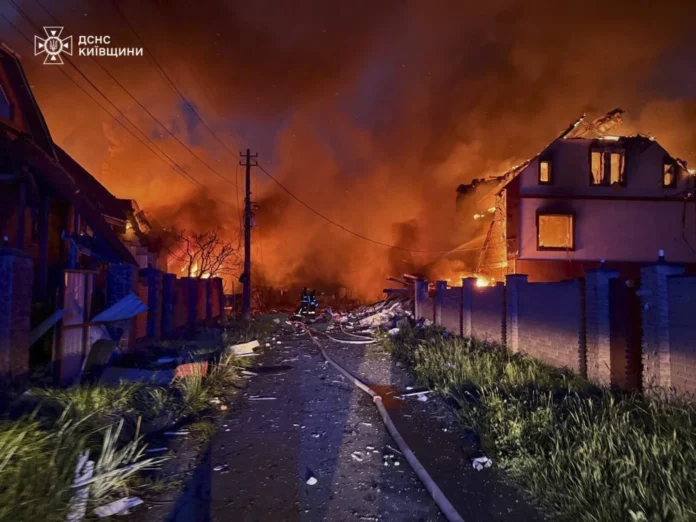
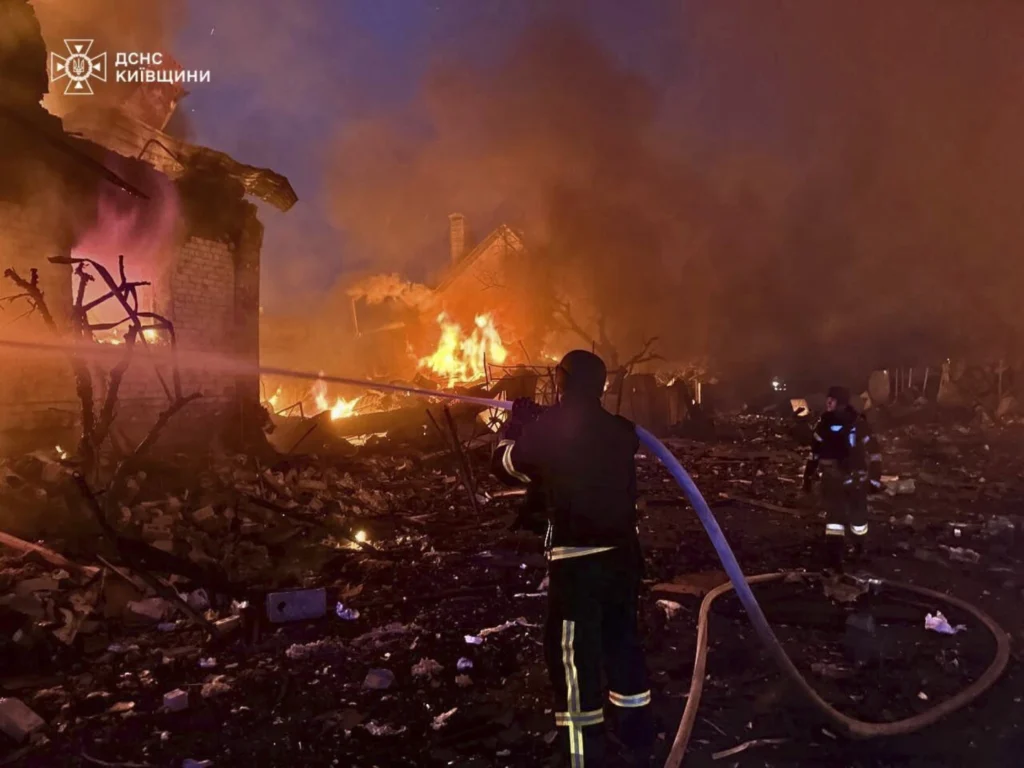
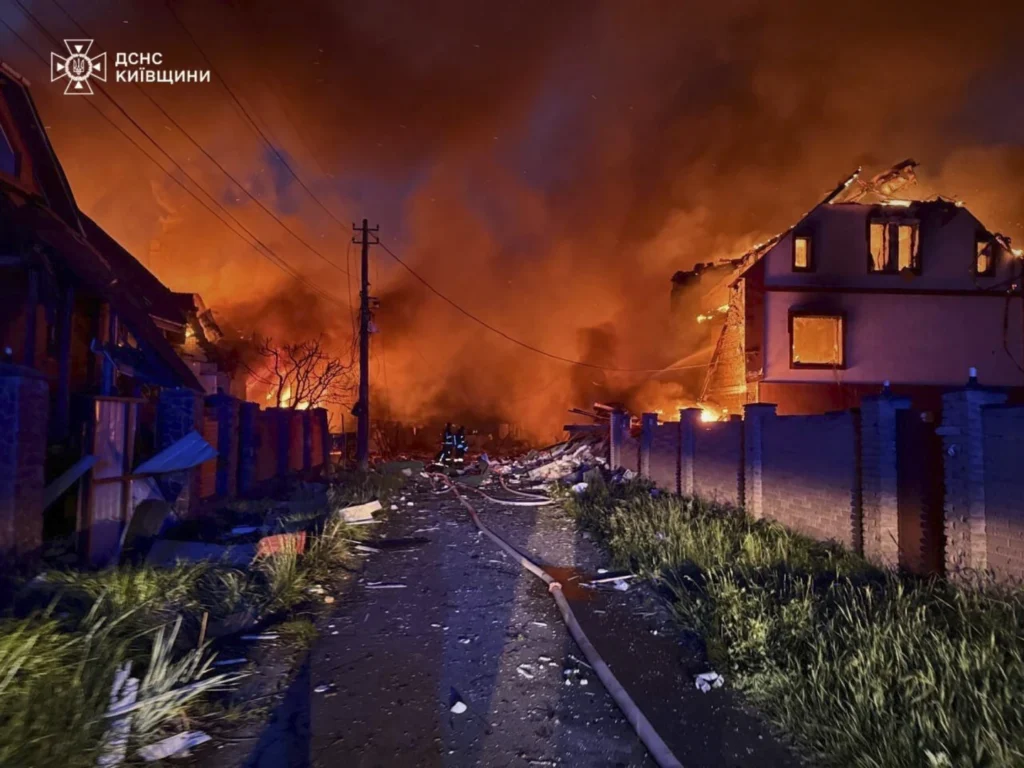
The ceasefire declaration followed another night of intense long-range strikes between the warring sides. Russian officials said their forces downed 119 Ukrainian drones overnight, primarily over the Bryansk region along Russia’s border. In Ukraine, air raid sirens sounded across multiple regions early Monday, though no immediate reports of casualties or significant damage were available.

Despite the announcement of a ceasefire, questions remain about the durability of any peace effort. U.S. Secretary of State Marco Rubio emphasized on Sunday that this week would be “very critical” in determining whether the Trump administration continues to invest in mediation efforts.

“We need to make a determination about whether this is an endeavor that we want to continue to be involved in,” Rubio said on NBC’s “Meet the Press,” warning that future American military aid to Ukraine could hinge on the outcome of negotiations.

Trump, speaking over the weekend, cast doubt on Putin’s sincerity in the peace talks, criticizing Russia for continuing attacks on civilian areas even as negotiations progressed. Nevertheless, Trump suggested a settlement was “close” to being reached.

European officials have accused Moscow of deliberately prolonging the war to allow Russian forces to capture more territory before agreeing to any terms. Western diplomats insist that a durable ceasefire is essential before formal peace talks can proceed.

Russian Foreign Minister Sergey Lavrov held a phone call with Rubio on Sunday to discuss the situation. According to the Russian Foreign Ministry, the conversation centered on “consolidating emerging prerequisites for negotiations,” though specific details were not disclosed.

Moscow has so far resisted a U.S. proposal calling for an unconditional, 30-day cessation of hostilities. Ukraine has indicated its willingness to accept the American plan, President Volodymyr Zelenskyy confirmed, although both sides remain deeply distrustful of each other’s motives.

While peace negotiations continue, Ukraine remains firm on not ceding territory to Russia as part of any settlement, a stance Washington has suggested might need to soften. A potential leverage point for Ukraine is an emerging agreement with the United States over access to Ukraine’s critical mineral resources.

Ukrainian Prime Minister Denys Shmyhal said Sunday after meetings in Washington that Kyiv and Washington had made “good progress” on a minerals agreement. Crucially, he emphasized that American aid already provided to Ukraine would not count against the terms of the new deal.

“We clearly defined our red lines: The agreement must comply with Ukraine’s Constitution, legislation, and European commitments, and must be ratified by Parliament,” Shmyhal said.

The Russia-Ukraine conflict, which erupted with Russia’s full-scale invasion in February 2022, has grown into Europe’s largest war since World War II, involving a growing web of international alliances.

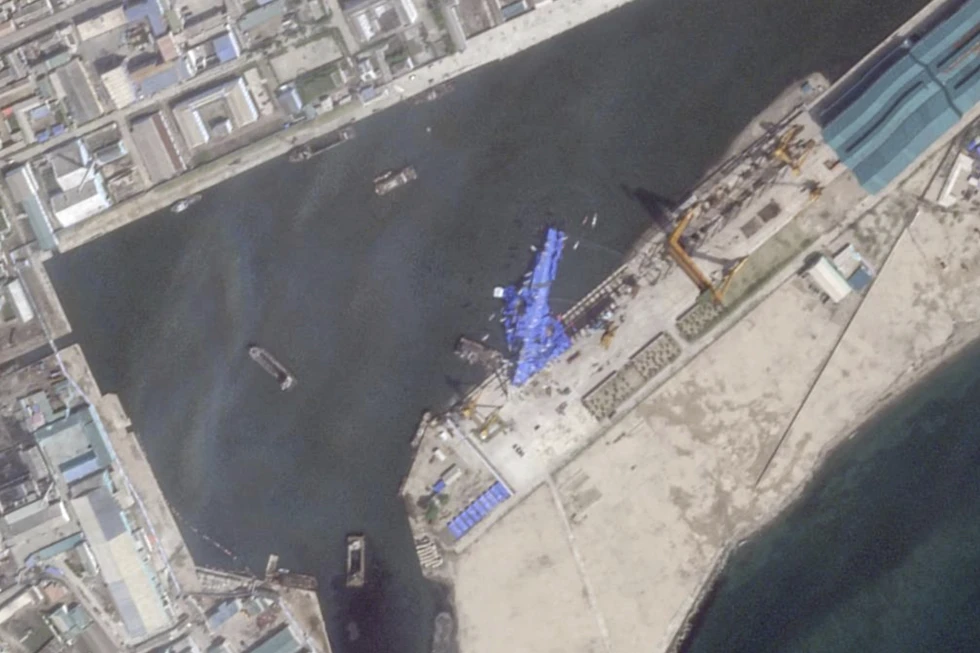
Putin on Monday publicly thanked North Korea for sending thousands of troops to support Russia’s operations against Ukraine, according to U.S. estimates. Western officials have also accused Iran of supplying Russia with Shahed drones and China of providing machinery and microelectronics used to manufacture weapons.

Despite these alliances, Ukraine’s primary support continues to come from the United States and European nations, whose military and economic aid have been crucial to Kyiv’s defense.

As Russia prepares to celebrate Victory Day, the announced ceasefire offers a temporary pause in hostilities. However, it remains unclear whether it will serve as a bridge toward a lasting peace or merely a brief respite in an increasingly brutal war.

Putin Thanks North Korea for Troop Support in Kursk as Pyongyang Confirms Deployment

MOSCOW — Russian President Vladimir Putin on Monday publicly thanked North Korean leader Kim Jong Un for deploying troops to assist Russian forces in reclaiming territory in Ukraine’s Kursk region, in a move that underscores deepening military ties between Moscow and Pyongyang.

“The Korean friends acted, guided by sentiments of solidarity, justice, and real camaraderie,” the Kremlin quoted Putin as saying during a televised address. “We appreciate it greatly and are deeply thankful to Comrade Kim Jong Un personally, and to the North Korean people.”

Putin’s remarks came just hours after North Korea officially confirmed for the first time that it had dispatched troops to Russia. The admission, reported by the state-run Korean Central News Agency (KCNA), revealed that North Korean soldiers had actively participated in combat operations aimed at recapturing areas in Kursk that Ukrainian forces had seized during a surprise offensive last August.

General Valery Gerasimov, Chief of the Russian General Staff, also praised the North Korean forces over the weekend, lauding their “heroism” and crediting them with playing a “significant role” in Russia’s battlefield successes in the contested region.

The KCNA report quoted North Korea’s Central Military Commission as stating that its soldiers “participated in the operations for liberating the Kursk areas,” confirming months of speculation and intelligence reports. Western and South Korean intelligence agencies had previously estimated that Pyongyang deployed more than 10,000 troops to support Russian operations in Ukraine late last year.

Kim Jong Un framed the deployment as fulfilling obligations under a mutual defense treaty signed between North Korea and Russia. In his comments, Kim described the North Korean soldiers as “heroes and representatives of the honor of the motherland,” according to KCNA. He announced that a monument honoring their “battle feats” would soon be erected in Pyongyang.

In a rare acknowledgment of casualties, Kim also referred to “the tombstones of the fallen soldiers,” and pledged to “take important national measures to specially honor and care for the families of war veterans.”

The deployment of North Korean forces marks a significant development in the ongoing Russia-Ukraine conflict, further isolating Pyongyang internationally and heightening tensions on the Korean Peninsula. South Korea’s Defense Ministry swiftly condemned North Korea’s admission, calling it a clear violation of United Nations Security Council resolutions that prohibit the dispatch of military forces abroad without UN authorization.

“North Korea has admitted to its own criminal acts,” the South Korean Defense Ministry said in a statement Monday, warning that the move could trigger additional sanctions and further destabilize regional security.

The news of North Korean boots on the ground in Ukraine highlights the increasing strain faced by Russian forces as the war grinds on into its third year. It also signals a tightening of strategic alliances between nations sanctioned by the West, with Moscow and Pyongyang expanding both military and economic cooperation under growing international pressure.

Neither Russia nor North Korea has disclosed the exact number of troops deployed, the length of their deployment, or the scope of their engagement beyond the operations in Kursk. However, analysts suggest that the involvement of North Korean forces could set a troubling precedent for expanded military collaboration between the two nations.

As the conflict continues, Western leaders are expected to raise the issue of foreign troop deployments at upcoming sessions of the United Nations and the G7, where discussions about tightening sanctions on both Russia and North Korea are already underway.

Trump Urges Russia to Halt Attacks, Hints Zelenskiy May Cede Crimea for Peace Deal

BEDMINSTER, N.J. — President Donald Trump on Sunday called on Russia to immediately halt its military offensive in Ukraine and suggested that Ukrainian President Volodymyr Zelenskiy might be prepared to concede Crimea as part of a broader peace settlement with Moscow.

Speaking to reporters at his New Jersey golf club, Trump expressed disappointment that Russia had continued its assaults despite ongoing negotiations. His remarks came a day after he met privately with Zelenskiy at the Vatican while attending the funeral of Pope Francis, a meeting Trump described as “going well.”

Asked directly whether Zelenskiy might be willing to give up Crimea — the Black Sea peninsula annexed by Russia in 2014 — Trump replied, “Oh, I think so, yeah. Look, Crimea was 12 years ago.” Trump then turned his criticism toward his Democratic predecessors, blaming former Presidents Barack Obama and Joe Biden for allowing Russia to seize Crimea “without a shot being fired.”

“So, don’t talk to me about Crimea. Talk to Obama and Biden about Crimea,” Trump said. “And remember, this is Biden’s war. This isn’t Trump’s war. I came in to try and solve a problem. And the problem is so many people are being killed.”

Current U.S. proposals for ending the nearly three-year conflict reportedly involve offering de facto recognition of Russian control over Crimea and other occupied Ukrainian territories. This contrasts sharply with Ukrainian and European proposals, which insist on postponing any discussion of territorial status until after a ceasefire is established.

Trump, who has emphasized the need for a swift resolution, portrayed Zelenskiy as increasingly pragmatic. “I see him as calmer,” Trump said. “I think he understands the picture, and I think he wants to make a deal.”

Meanwhile, U.S. Secretary of State Marco Rubio signaled growing impatience with the stalled negotiations. Speaking on NBC’s Meet the Press Sunday, Rubio warned that the United States could pull back from its mediation efforts if significant progress is not made soon. “It needs to happen soon,” Rubio said. “We cannot continue to dedicate time and resources to this effort if it’s not going to come to fruition.”

Trump’s face-to-face with Zelenskiy marked their first meeting since a tense encounter at the White House in February, and comes amid urgent international efforts to halt the bloodshed. Their meeting at a Vatican basilica was seen as a critical step in reviving peace talks that have faltered in recent months.

Following the Vatican talks, Trump issued a rare public rebuke of Russian President Vladimir Putin, criticizing ongoing missile strikes against Ukrainian civilian areas. “There is no reason for Russia to shoot missiles into civilian areas,” Trump wrote on social media Saturday night.

Despite Trump’s appeal, Russian Foreign Minister Sergei Lavrov defended Moscow’s military strategy during a pre-taped interview aired on CBS’s Face the Nation. Lavrov insisted Russia targets only sites with military relevance, even in cases where civilian casualties have occurred. Referring to a deadly strike on Kyiv last week, Lavrov claimed, “The target attacked was not something absolutely civilian.”

On Sunday, Zelenskiy reported that Russia had conducted nearly 70 attacks in a single day, underlining the intensity of the ongoing conflict. “The situation at the front and the real activity of the Russian army prove that there is currently insufficient pressure on Russia from the world to end this war,” Zelenskiy wrote on Telegram.

European allies, including Germany, have voiced skepticism about the U.S. approach to ending the war. German Defense Minister Boris Pistorius warned Sunday that Ukraine should not agree to Washington’s proposal, saying it risked sacrificing too much Ukrainian territory for the sake of a ceasefire.

Inside the Trump administration, officials continued to express frustration with both sides. National Security Adviser Mike Waltz said Trump remains determined to broker a deal, despite setbacks. Waltz also indicated that discussions between the United States and Ukraine would eventually address access to Ukraine’s rich reserves of rare earth minerals, seen as critical to future economic stability.

Democrats in Washington, meanwhile, raised alarms about Trump’s stance toward Russia. Senate Majority Leader Chuck Schumer said he fears Trump could “cave in to Putin,” warning that abandoning Ukraine would be a “moral tragedy” after years of Western support and sacrifice.

“To just abandon Ukraine, after all the sacrifice that they made, after so much loss of life, and with the rallying of the whole West against Putin, it would just be a moral tragedy,” Schumer said during an appearance on CNN’s State of the Union.

As Russia’s offensive grinds on and international pressure mounts, the path forward for Ukraine remains fraught — with Trump, now at the center of peace efforts, navigating a fragile and deeply contentious diplomatic landscape.