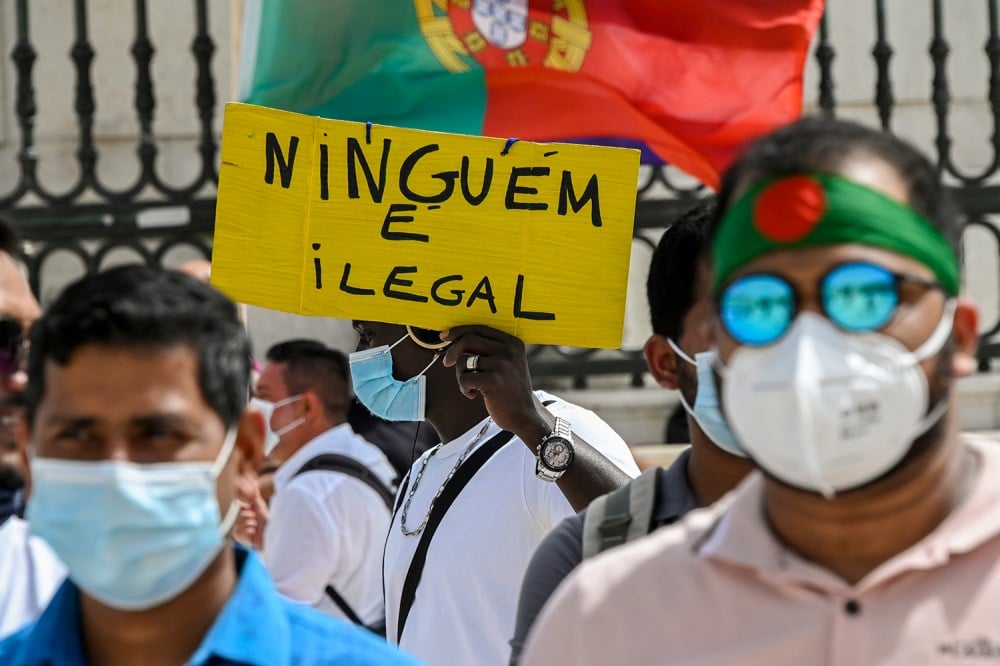
LISBON, Portugal — Portugal’s caretaker government announced Saturday its intention to expel approximately 18,000 foreign nationals living in the country without legal authorization, a move that comes amid heightened political tensions and ahead of a crucial national election next month.
Minister of the Presidency António Leitão Amaro confirmed that the center-right administration will issue deportation notifications to individuals residing illegally in the country. The initial phase of the plan will begin next week, targeting around 4,500 undocumented migrants with voluntary departure requests, giving them 20 days to leave Portugal.
The announcement comes as the country prepares for an early general election set for May 18. Prime Minister Luis Montenegro, who heads the conservative Social Democratic Party, called for the snap vote in March after his minority government lost a confidence vote in Parliament, forcing its resignation.
The issue of immigration has become a flashpoint in Portuguese politics, mirroring broader European trends where concerns over border control and national identity have fueled the rise of populist and far-right movements. Portugal’s Chega party, known for its hardline stance on immigration, has surged in popularity, securing third place in last year’s election and further shifting the political landscape.
Leitão Amaro emphasized that the expulsions are part of a broader effort to reassert control over immigration enforcement and maintain public order. The minister did not specify how the government will handle migrants who refuse to leave voluntarily or whether forced deportations would follow the 20-day window.
The policy has drawn criticism from immigrant rights advocates, who argue the move risks stigmatizing vulnerable communities and undermining Portugal’s historically more tolerant approach to migration. Nonetheless, government officials insist the action is legally grounded and necessary to uphold the rule of law.
Portugal’s immigration debate is unfolding against the backdrop of a broader European reckoning with unauthorized migration, as governments from Germany to Italy pursue stricter border policies in response to increasing asylum applications and unauthorized entries.
The expulsion plan and its political ramifications are expected to be key issues as parties enter the final weeks of campaigning ahead of the May 18 vote.
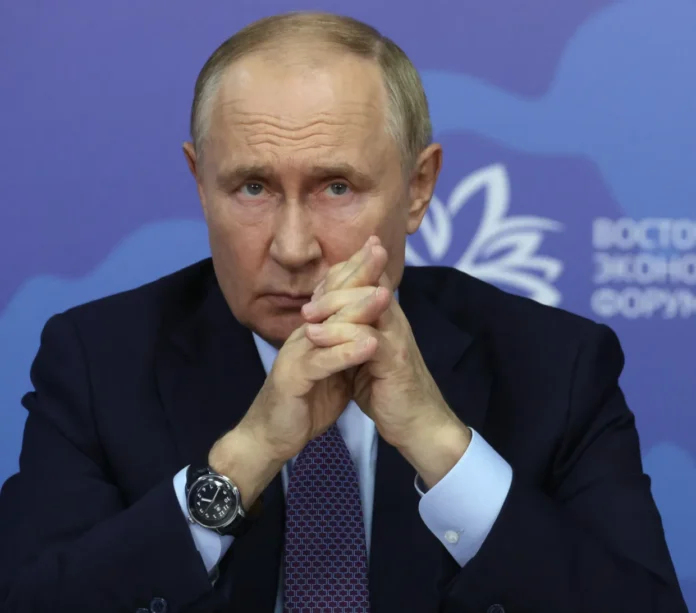
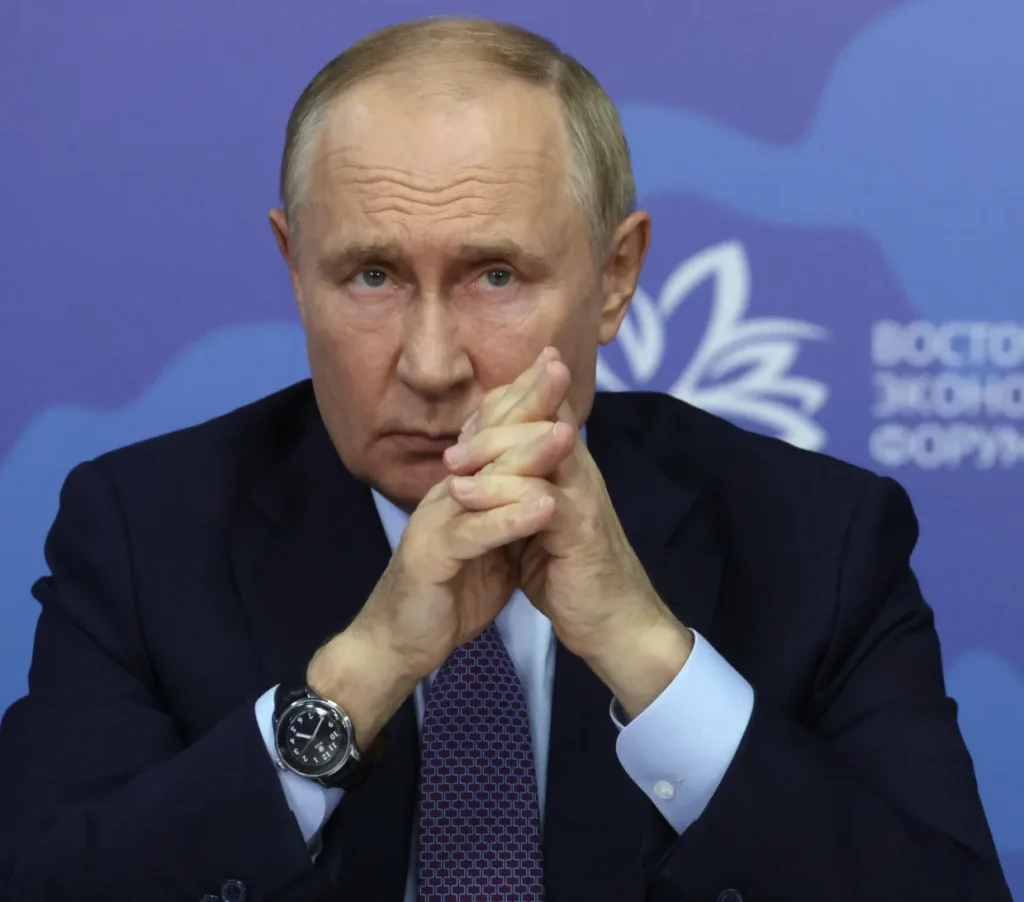
Russian President Vladimir Putin stated Sunday that the need to use nuclear weapons in Ukraine “has not arisen” and expressed hope that such a scenario will not materialize in the future, according to comments broadcast on state television.
“Russia has the strength and means to bring the conflict in Ukraine to a logical conclusion,” Putin said during the broadcast, signaling confidence in conventional military capabilities while addressing growing international concerns about potential nuclear escalation.
The statements come months after Putin signed a revamped version of Russia’s nuclear doctrine in November that expanded the circumstances under which Russia might consider using its nuclear arsenal. The updated doctrine notably includes the option of nuclear warfare in response to conventional attacks if they are backed by a nuclear power.
Meanwhile, Ukraine’s military reported it successfully shot down 69 of 165 drones launched by Russia in overnight attacks. Officials said an additional 80 drones were “lost” – meaning they were either redirected through electronic warfare or were drone simulators without warheads.
These latest aerial assaults injured at least 11 people, including two children, and ignited fires at residential buildings in Kyiv’s Obolonskyi and Sviatoshynskyi districts, according to Timur Tkachenko, head of Kyiv’s military administration.
Debris from destroyed drones caused property damage as Russia continues its campaign of aerial bombardment against Ukrainian civilian infrastructure, which has been a consistent feature of the conflict since its escalation in 2022.
LONDON — British counter-terrorism authorities arrested eight men, including several Iranian nationals, during two separate investigations carried out on Saturday across multiple regions in England, the Metropolitan Police confirmed. Though the two operations are unrelated, both involved Iranian suspects and were conducted as part of broader efforts to address evolving national security threats.
In the first investigation, officers from the Met’s Counter Terrorism Command apprehended five men during a coordinated operation linked to what authorities described as a “suspected plot to target a specific premises.” While details of the alleged target remain undisclosed due to operational sensitivity, police said the site’s operators had been contacted and offered support and guidance. Of the five individuals arrested, four are confirmed to be Iranian nationals. The arrests occurred in various locations including Swindon, west London, Stockport, Rochdale, and Manchester, and searches are currently underway at multiple addresses in Greater Manchester, London, and Swindon in connection with the investigation.
Commander Dominic Murphy, head of the Met’s Counter Terrorism Command, emphasized that the case remains in its early stages, with officers pursuing several lines of inquiry to determine possible motivations and assess any additional threats to public safety. He acknowledged public concern and urged vigilance, encouraging anyone with relevant information to come forward. Murphy also thanked local police forces across the country for their ongoing assistance.
In a separate and unrelated counter-terrorism probe, three more Iranian nationals were detained in London under Section 27 of the National Security Act 2023. This statute allows police to arrest individuals suspected of participating in activities that pose threats from foreign powers. Authorities did not elaborate on the nature of the alleged foreign threat, but confirmed the suspects remain in custody as investigations continue.
Home Secretary Yvette Cooper expressed strong support for law enforcement and intelligence agencies, stating that protecting the UK’s national security remains a top government priority. She commended the rapid response of the Metropolitan Police and security services, noting that the arrests highlight the continuing need to adapt and strengthen national defenses against sophisticated and emerging threats.
These developments underscore the heightened vigilance among UK counter-terror agencies amid growing concerns over foreign influence operations and domestic plots. Investigations into both cases are ongoing.
A religious celebration in western India turned deadly Saturday when a stampede broke out near a Hindu temple in Goa, killing at least six people and injuring dozens more, authorities said.
The crush unfolded in the early morning hours as tens of thousands of worshipers flooded into Shirgao village, roughly 40 kilometers from the state capital, Panaji. Devotees had gathered for the annual festival at the Sree Lairai Devi temple, a popular pilgrimage event drawing crowds from across Goa and neighboring states such as Maharashtra and Karnataka.
Police said the stampede erupted when people standing on a sloped pathway leading to the temple lost their footing and fell, causing others behind them to stumble in a cascading collapse. The narrow lanes leading to the temple could not accommodate the volume of pilgrims, exacerbating the danger.
Director General of Police Alok Kumar confirmed the sequence of events, noting that the confined area and early morning rush contributed to the fatal incident. Those injured were quickly transported to nearby hospitals for emergency care. The state government has launched an investigation into the cause of the stampede and the crowd control measures in place at the time.
Prime Minister Narendra Modi expressed his condolences to the victims’ families, saying in a post on social media that he was deeply saddened by the tragedy. He added that local authorities were assisting those affected by the incident.
The stampede in Goa adds to a series of fatal crowd surges that have occurred during religious festivals in India, where large gatherings in confined spaces are common. In January, more than 30 people died in a stampede at the Maha Kumbh Mela, one of the largest religious events in the world. In July, 116 people, mostly women and children, were killed during a stampede at a religious camp in Hathras, Uttar Pradesh.
TRINIDAD, Bolivia — Five people, including a young child, miraculously survived a plane crash and endured 36 terrifying hours in an alligator-infested swamp deep within the Amazon rainforest before being rescued by authorities.
The small aircraft, en route from Baures to Trinidad in northeastern Bolivia, was forced to make an emergency landing over the Itanomas River after experiencing sudden engine failure. Upon impact, the plane flipped in the murky waters, thrusting its occupants into immediate danger—not only from drowning but also from the lurking predators that dominate the swamp.
Pilot Pablo Andrés Velarde, 29, recounted the harrowing ordeal that followed. Alongside three women and a child, Velarde was able to escape the partially submerged wreckage and cling to the upturned belly of the aircraft, which floated precariously in the water. The group remained stranded in the dense, isolated region for a day and a half, surrounded by what Velarde described as “huge” alligators that came within 10 feet of them.
“We saw an anaconda circling the area and the alligators never left us alone. They stayed close all night,” Velarde told local media. He believes it was the smell of leaking aviation fuel from the wreck that may have deterred the predators from attacking.
With limited resources on board due to the short-haul nature of the flight, the survivors had no drinking water and only cassava flour to sustain themselves—salvaged hastily from the plane’s cabin. As night fell on their second day stranded, they resorted to using their cell phones as makeshift torches to keep predators at bay and to signal for help.
Fortune struck when they heard the distant hum of a fishing boat. Velarde used the last of his phone’s battery to flash a signal at the vessel’s crew, who quickly contacted emergency responders. Bolivian authorities launched a swift rescue operation, airlifting the group to safety via helicopter. Dramatic aerial footage captured the survivors huddled together on the battered fuselage, visibly fatigued but alive.
“They were all in excellent condition considering what they endured,” said Wilson Ávila, head of the Beni Department’s emergency operations center. Health officials, including regional director Rubén Torres, praised the rapid response team and confirmed that none of the survivors sustained life-threatening injuries.
Reflecting on the trauma, Velarde admitted the group would not have survived another night. “We were exhausted and couldn’t remain standing anymore. But we had to stay alert for the animals,” he said. He added that mechanical failure left him with no viable landing zone, forcing him to ditch the plane into a swamp near a lagoon in one of Bolivia’s most treacherous environments.
The crash has since prompted speculation, with authorities probing the cause of the engine failure and whether the aircraft met all operational standards. For now, though, the story is one of survival—against nature, fatigue, and time—in the heart of one of the world’s most unforgiving regions.
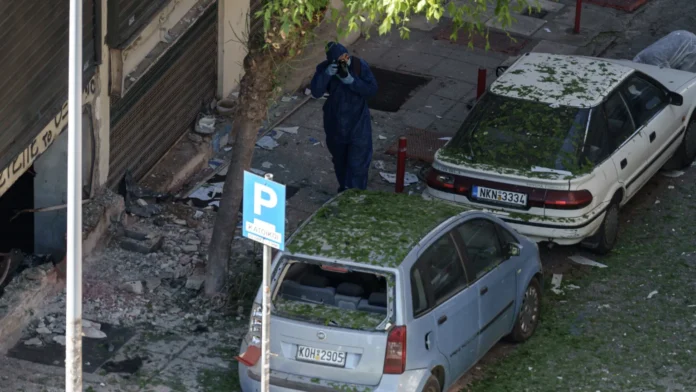
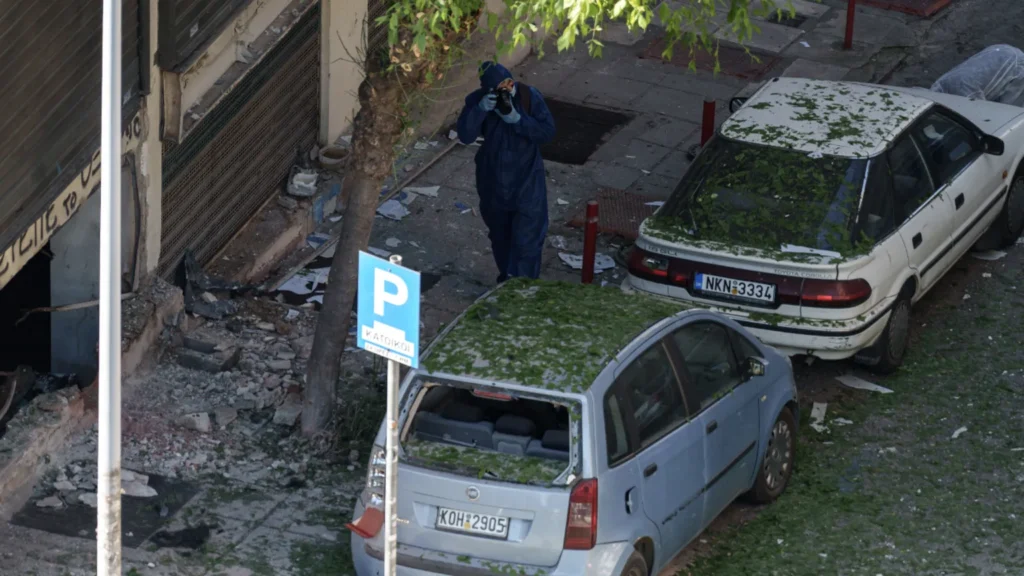
THESSALONIKI, Greece — A 38-year-old woman died early Saturday in a powerful explosion outside a bank in central Thessaloniki, in what authorities believe was a failed attempt to plant a bomb near a cash machine.
The woman, who remains unnamed by police, suffered catastrophic injuries to her hands when the device detonated while she was standing in front of a bank branch in a residential neighborhood of Greece’s second-largest city. She was transported to a local hospital in critical condition but succumbed to her injuries shortly afterward.
Greek police say the circumstances surrounding the blast indicate the woman may have been in the process of planting the explosive device near an ATM when it went off prematurely. A police spokesperson confirmed to national broadcaster Skai TV that the woman had previously served a prison sentence for her involvement in a bank robbery.
Investigators are now probing whether the woman had connections to extremist or anarchist networks. Some Greek media outlets have reported possible ties between the deceased and a left-wing militant currently imprisoned for a series of violent attacks and armed robberies. However, law enforcement has not officially confirmed any affiliations.
The explosion occurred in the early hours of the morning in a relatively quiet area of Thessaloniki. Video footage from the scene shows visible damage to nearby vehicles and the building’s exterior, underscoring the force of the blast. No other injuries were reported.
The incident has reignited concerns about the presence and activities of underground militant cells in Greece, where anarchist and far-left groups have a decades-long history of violence dating back to the 1970s. Though such attacks have become less frequent in recent years, authorities remain on high alert amid fears of resurgent political extremism and criminal operations.
Greek police say they are treating the explosion as a serious criminal investigation and are analyzing the remains of the device to determine its composition and origin. Surveillance footage from the area is being reviewed to identify any potential accomplices or unusual activity prior to the blast.
The woman’s body will undergo a full forensic examination, and her past criminal record is being scrutinized for any connections that might help determine her motive or affiliations.
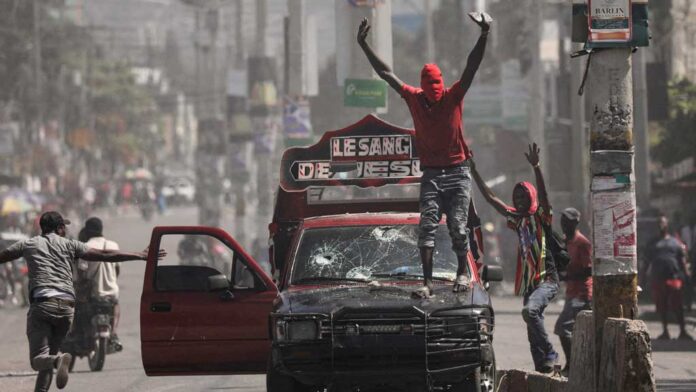
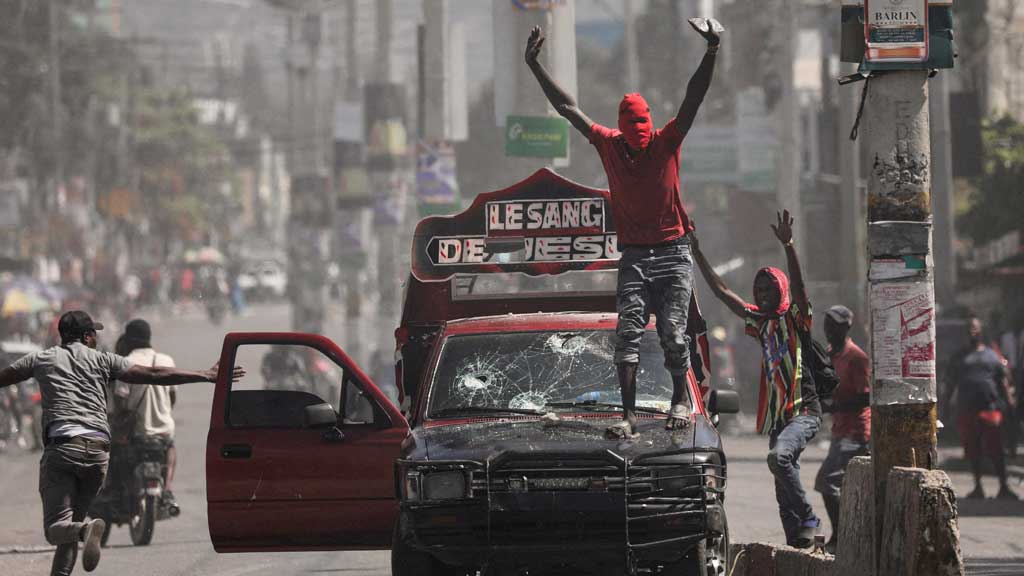
WASHINGTON — The United States has formally designated two of Haiti’s most notorious armed groups, Viv Ansanm and Gran Grif, as foreign terrorist organizations, citing their central role in escalating violence and political destabilization across the crisis-stricken Caribbean nation.
Secretary of State Marco Rubio made the announcement Friday, declaring that the era of impunity for Haiti’s violent gangs “is over.” The designation marks a sharp escalation in the U.S. response to Haiti’s spiraling security crisis and positions the two gangs among the most dangerous transnational threats to American interests in the region.
“Haitian gangs, including the Viv Ansanm coalition and Gran Grif, are the primary source of instability and violence in Haiti,” Rubio said in a statement. “They are a direct threat to U.S. national security interests in our region. Their ultimate goal is to dismantle Haiti’s transitional government and establish a lawless state where they can operate with total impunity.”
The move follows months of intensifying gang activity in Haiti, where heavily armed groups now control an estimated 85 percent of the capital, Port-au-Prince. The United Nations reported earlier this week that more than 1,600 people — the majority of them gang members — were killed in the first three months of 2025 alone. The humanitarian toll is staggering, with over one million residents forcibly displaced due to gang-related violence, the UN said.
Gangs like Viv Ansanm and Gran Grif have carried out widespread killings, kidnappings, sexual assaults, and other atrocities while exploiting the country’s chronic political vacuum. Their expanding power has overwhelmed Haiti’s underfunded and outgunned police force and paralyzed key sectors of society.
The U.S. has previously designated several transnational criminal groups as terrorist organizations, including Mexico’s Sinaloa Cartel, Venezuela’s Tren de Aragua, and the El Salvador-rooted MS-13. The addition of Haitian gangs to this list reflects growing alarm in Washington over the broader regional consequences of Haiti’s collapse into lawlessness.
Haiti has not held a national election since 2016. The country plunged into further turmoil following the assassination of President Jovenel Moïse in 2021, and efforts to restore political stability have faltered. A transitional governing council, formed nearly a year ago, has failed to regain control from the gangs or organize new elections, sparking mass protests in April by residents demanding a return to democratic rule.
Despite the recent deployment of a UN-authorized international security force led by Kenya, there has been little measurable progress on the ground. The force currently includes around 1,000 police officers from six contributing countries—less than half of the 2,500 personnel initially pledged. Experts warn that without a sustained international effort, Haiti’s security forces will remain too weak to confront entrenched criminal networks.
As Washington increases pressure on Haitian gangs through terrorism designations, the Biden administration is also calling for deeper international cooperation and more robust security assistance to help stabilize the country. The designations enable the U.S. government to freeze gang-related assets, ban material support to the groups, and impose travel restrictions on individuals tied to them.
Still, analysts caution that legal sanctions alone will not dismantle Haiti’s criminal infrastructure without a parallel investment in long-term governance, law enforcement, and humanitarian aid.
“The designation of Viv Ansanm and Gran Grif sends a strong signal,” said one regional analyst. “But unless it’s backed by real support for Haiti’s recovery, it risks being symbolic rather than transformative.”
OMAHA, Neb. — Warren Buffett, the billionaire investor known as the “Oracle of Omaha,” shocked shareholders Saturday by announcing he will step down as chief executive of Berkshire Hathaway at the end of the year, concluding a legendary six-decade career at the helm of the multinational conglomerate.
The 94-year-old icon made the announcement during Berkshire’s widely anticipated annual shareholder meeting in Omaha, drawing a standing ovation from thousands of attendees. Buffett revealed that Greg Abel, the company’s vice chairman of non-insurance operations, will succeed him as CEO — a transition long speculated but never formally confirmed until now.
“I think the time has arrived where Greg should become the Chief Executive Officer of the company at year end,” Buffett said, adding that only his children — board members Howard and Susie Buffett — had prior knowledge of the decision. Abel, seated beside Buffett on stage, appeared visibly surprised by the news.
Buffett emphasized he would not be leaving Berkshire entirely, noting he plans to “hang around” in a supporting role, while Abel will have the final say on company decisions. He and Abel are expected to meet Sunday to discuss Buffett’s future responsibilities.
Despite his departure from the CEO role, Buffett vowed to keep his vast fortune invested in Berkshire, pledging not to sell a single share. “I have no intention — zero — of selling one share of Berkshire Hathaway,” he said. “The decision to keep every share is an economic decision because I think the prospects of Berkshire will be better under Greg’s management than mine.”
Buffett’s endorsement comes amid growing questions over how Berkshire will manage its sizable cash reserves and future investments without him. At the end of 2024, the company held a staggering $334 billion in cash — more than triple the amount it reported just two years earlier. While Buffett has made several strategic global investments in recent years — including Japanese trading houses, a Mexican beverage conglomerate, and a satellite radio firm — his cautious accumulation of capital reflects growing market skepticism.
The succession announcement was preceded by a stark warning from Buffett about the global risks of President Donald Trump’s protectionist trade policies. During his remarks, Buffett criticized the use of tariffs as a geopolitical tool and warned of long-term economic fallout.
“Trade should not be a weapon,” Buffett said. “There’s no question that trade can be an act of war.” He added, “It’s a big mistake in my view when you have 7.5 billion people who don’t like you very well, and you have 300 million who are crowing about how they have done.”
Buffett called for global cooperation over confrontation, stating, “We should be looking to trade with the rest of the world. We should do what we do best and they should do what they do best.”
The veteran investor has long used his platform to advocate for balanced economic policy and philanthropic giving. Despite an estimated net worth of $168 billion, according to Forbes, Buffett has pledged to donate 99% of his fortune rather than pass it to future generations.
“I’ve never wished to create a dynasty,” Buffett once said, citing uncertainty over how future generations might steward extraordinary wealth in a shifting philanthropic landscape.
Buffett’s life story has become part of American financial lore. Born in Omaha in August 1930, he filed his first tax return at age 13 and bought his first stock at 11. After studying at Columbia Business School, he began buying shares of Berkshire Hathaway in 1962 and assumed control in 1965. Over the next six decades, he transformed the former textile manufacturer into a trillion-dollar powerhouse with holdings in insurance, media, energy, and consumer goods.
Alongside the late Charlie Munger — who served as Berkshire’s vice chairman from 1978 until his death in 2023 — Buffett turned the company into a global investment titan. Their partnership defined an era of value investing rooted in discipline, long-term thinking, and deep financial insight.
Buffett is also famous for his unorthodox habits. He famously avoids alcohol, consumes large quantities of Coca-Cola — accounting for roughly 25% of his daily caloric intake — and is a fan of Dairy Queen, another Berkshire holding. His indulgence in salty fast food has become the stuff of business lore; Wells Fargo’s former CEO once remarked, “It’s a snowstorm when Warren salts his food.”
He married Susan Thompson in 1952, with whom he had three children. After Susan’s death in 2004, Buffett married longtime companion Astrid Menks in 2006.
The end of Buffett’s tenure at Berkshire marks the close of a monumental chapter in global finance. While the future of Berkshire Hathaway under Greg Abel’s leadership remains to be seen, the groundwork Buffett laid over 60 years continues to define one of the most successful corporate legacies in history.
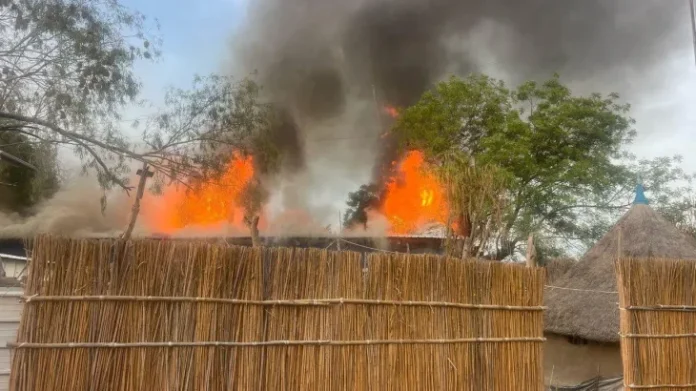
JUBA, South Sudan — At least seven people were killed and 20 others injured in a series of bombings that obliterated the last remaining hospital and pharmacy in South Sudan’s remote Fangak County, the international medical aid group Médecins Sans Frontières (Doctors Without Borders) said Saturday.
According to MSF, an airstrike initially targeted and incinerated the area’s only pharmacy, followed by a drone strike on the town of Old Fangak, located in the Greater Upper Nile region. The second attack caused further devastation and resulted in the confirmed deaths of seven people, with more casualties feared as local medical infrastructure has been left in ruins.
The bombings devastated Old Fangak Hospital, a lifeline for more than 110,000 people in the county who already faced dire access to healthcare. MSF, which has long operated in the region, said the destruction has plunged the area into a critical humanitarian crisis. “Old Fangak Hospital is the only hospital in Fangak County, serving a population of over 110,000 people who already had extremely limited access to healthcare,” the organization said in a statement.
The circumstances surrounding the bombings remain murky. There was no immediate claim of responsibility, and both government and military officials have yet to respond to requests for comment. The attacks have raised concerns about escalating violence in a region still recovering from years of civil conflict.
While South Sudan has officially been at peace since a 2018 agreement ended a brutal five-year civil war between forces loyal to President Salva Kiir and those aligned with First Vice President Riek Machar, tensions have remained high. Fears of renewed unrest have intensified following the March arrest of Machar on allegations of inciting rebellion—an act that has drawn international concern over the potential collapse of the fragile peace deal.
The loss of Old Fangak’s medical infrastructure threatens to accelerate a growing humanitarian emergency in the Greater Upper Nile region, where displaced populations and vulnerable communities now face life-threatening shortages of medical supplies and emergency care.
CAIRO — An Egyptian court has sentenced two Israeli citizens to five years in prison following their conviction for assaulting hotel employees during a violent altercation last year in the Red Sea resort town of Taba, according to a security source speaking Saturday.
The incident, which unfolded in August 2023 near the Israel-Egypt border, escalated into a brawl involving three Arab Israeli tourists and hotel staff, leaving five people injured. According to Egyptian security officials at the time, tensions erupted after one of the Israeli tourists allegedly insulted a hotel employee, sparking a physical confrontation.
Two Egyptian hotel workers and three Israeli tourists were hurt during the clash, which occurred at a hotel frequented by international guests. The identities of those sentenced were not immediately released by authorities, but the case drew attention in both Egypt and Israel due to its sensitive cross-border implications.
The court’s ruling marks a rare instance of Israeli citizens being jailed in Egypt, where diplomatic ties exist but remain cautious. Taba, a small but popular vacation destination just across the border from Eilat, has long served as a point of interaction for Egyptian hospitality workers and Israeli tourists.
Egyptian officials have not commented publicly on whether the convicted individuals will serve their full sentences within Egypt or be eligible for any future diplomatic negotiation. Israeli authorities have also not issued an official statement in response to the court’s decision.
The ruling underscores ongoing tensions in tourist-heavy regions where cultural misunderstandings or disputes can quickly escalate. While Egypt and Israel maintain a formal peace treaty signed in 1979, occasional incidents involving citizens from both countries continue to test the delicate balance of bilateral relations, particularly in border areas like Taba.