Home Blog Page 383

House Speaker Mike Johnson Warns Congress Can ‘Eliminate’ District Courts Amid Judicial Disputes

WASHINGTON – U.S. House Speaker Mike Johnson declared Tuesday that Congress holds the authority to eliminate entire district courts, intensifying tensions between the legislative and judicial branches. His remarks come as the White House criticizes “activist” judges who have blocked key policies under Republican President Donald Trump. 

Johnson, the top Republican in the House of Representatives, condemned what he called a “dangerous trend” of nationwide injunctions issued by federal judges that have obstructed Trump’s initiatives. 

“It violates separation of powers when a judge thinks they can enjoin something that a president is doing—something the American people voted for,” Johnson stated at his weekly press conference. 

The House Judiciary Committee, he added, will hold a hearing next week to highlight “judicial abuses” and recently advanced legislation to restrict district judges from issuing nationwide injunctions against federal policies. 

“We do have authority over the federal courts,” Johnson said. “As you know, we can eliminate an entire district court. We have power over funding, over the courts, and all these other things. But desperate times call for desperate measures, and Congress is going to act.” 

Nationwide injunctions have been used frequently in recent years, affecting policies enacted by presidents of both parties. However, any House-passed legislation seeking to limit judicial authority would face significant hurdles in the Democrat-controlled Senate. 

Following criticism, Johnson later clarified that his remarks were not intended as a direct threat but rather to illustrate Congress’ broad authority over the judiciary. 

Senate Democratic Leader Chuck Schumer swiftly rebuked the comments, calling it “outrageous to even think of defunding the courts.” The Administrative Office of the U.S. Courts declined to comment. 

Johnson’s remarks also addressed impeachment resolutions filed by conservative House members targeting six judges who blocked actions by Trump and Elon Musk’s Department of Government Efficiency. Among them is U.S. District Judge James Boasberg, who drew Trump’s ire after halting the removal of hundreds of Venezuelan migrants. 

Trump called for Boasberg’s impeachment—a move met with a rare rebuke from U.S. Supreme Court Chief Justice John Roberts, who stated, “Impeachment is not an appropriate response to disagreement concerning a judicial decision,” noting that judicial rulings can be appealed through legal channels. 

Trump Signs Executive Order Mandating Proof of U.S. Citizenship for Voting

WASHINGTON – U.S. President Donald Trump signed an executive order Tuesday requiring voters to provide proof of U.S. citizenship, aiming to prevent states from counting mail-in ballots received after Election Day. The order also threatens to withhold federal funding from states that fail to comply. 

Trump, who has repeatedly questioned the integrity of U.S. elections, continues to claim—without evidence—that widespread fraud led to his 2020 loss to President Joe Biden. The order aligns with Republican efforts to tighten voting laws, particularly regarding non-citizen voting, which is already illegal. 

The GOP-controlled House of Representatives previously passed the Safeguard American Voter Eligibility Act to ban non-citizen voter registration in federal elections, though the bill failed in the Democratic-led Senate. Voting rights groups argue that Trump’s order could disenfranchise eligible voters, particularly those without passports or other identification proving citizenship. 

“We’ve got to straighten out our elections,” Trump said at the White House signing ceremony. “This country is so sick because of the elections, the fake elections and the bad elections. We’re going to straighten that out one way or the other.” 

The order is expected to face legal challenges. Lisa Gilbert, co-president of advocacy group Public Citizen, called it “a blatant attack on democracy and an authoritarian power grab.” 

Republicans have increasingly sought voting restrictions, while Democrats advocate for expanded mail-in ballot access and early voting. Public Citizen reports that 146 million Americans lack passports, and research from the Brennan Center indicates that 9% of eligible voters—about 21.3 million people—do not have immediate access to proof of citizenship. 

The order mandates the inclusion of a citizenship question on federal voting forms and conditions federal election-related funds on states enforcing proof-of-citizenship requirements. Additionally, it criticizes mail-in ballot policies that allow votes to be counted after Election Day, stating that Trump’s policy is to “require that votes be cast and received by the election date established in law.” 

According to the National Conference of State Legislatures, 18 states, Puerto Rico, the Virgin Islands, and Washington, D.C., currently accept ballots postmarked by Election Day, even if they arrive later. 

The order also directs the Department of Homeland Security to ensure states have access to databases verifying voter citizenship or immigration status. Additionally, the newly created Department of Government Efficiency, overseen by Elon Musk, will work with DHS to audit state voter registration lists and issue subpoenas if necessary. 

The Republican National Committee (RNC) has requested public records from 48 states and Washington, D.C., to investigate voter roll maintenance. “Voters have a right to know that their states are properly maintaining voter rolls and quickly acting to clean voter registration lists by removing ineligible voters,” RNC Chairman Michael Whatley said in a statement. 

Belarus’ Lukashenko Sworn in for 7th Term, Dismisses Critics Amid Opposition Protests

MINSK, Belarus – Belarusian President Alexander Lukashenko was sworn in Tuesday for a seventh term, reaffirming his grip on power while dismissing opposition critics, stating, “You have no future.” The 70-year-old leader, often labeled “Europe’s last dictator,” claimed in his inauguration speech that Belarus has “more democracy than those who cast themselves as its models.” 

The ceremony at the Independence Palace in Minsk was attended by thousands of Lukashenko’s supporters. Meanwhile, hundreds of opposition activists living abroad staged anti-Lukashenko protests to mark the anniversary of Belarus’ brief independence in 1918. 

Lukashenko’s reelection in the tightly controlled Jan. 26 election, declared a landslide victory by the Central Election Commission with nearly 87% of the vote, has been widely condemned by opponents as fraudulent. The ballot featured four nominal challengers, all of whom expressed support for his rule. 

Opposition figures, independent journalists, and activists have been imprisoned or forced into exile under Lukashenko’s years-long crackdown on dissent. Following the disputed 2020 election, Belarus saw its largest protests in history, with over 65,000 arrests, reports of police brutality, and the shutdown of independent media and NGOs. Western nations imposed sanctions in response. 

Human rights groups estimate that Belarus currently holds over 1,200 political prisoners, including Nobel Peace Prize laureate Ales Bialiatski, founder of the Viasna Human Rights Center. In a joint statement, Viasna and 10 other rights organizations condemned the election, calling it illegitimate and conducted “in an atmosphere of total fear.” 

Lukashenko, in power since 1994, has relied on political and financial backing from Russian President Vladimir Putin, an alliance that helped him withstand the 2020 uprising. He also permitted Russia to use Belarusian territory to launch its invasion of Ukraine in 2022 and later hosted Russian tactical nuclear weapons. 

Exiled opposition leader Sviatlana Tsikhanouskaya, who fled Belarus after challenging Lukashenko in 2020, vowed to continue the fight for democracy. “Our goal is to break away from the Russian occupation and Lukashenko’s tyranny, and to return Belarus into the European family of nations,” she said in a speech at the Lithuanian parliament. 

Some analysts suggest Lukashenko may attempt to improve relations with the West during his seventh term. “He has been signaling a willingness to engage in dialogue and normalize ties in order to reduce dependence on the Kremlin and ease Western sanctions,” said independent political analyst Valery Karbalevich. 

Wildfires Devastate Southern South Korea, Killing 18 and Destroying Historic Buddhist Temple

SEOUL, South Korea – Massive wildfires fueled by dry weather and strong winds have ravaged southern South Korea, killing 18 people, injuring 19, and forcing 27,000 residents to evacuate. The fires have destroyed more than 200 structures, including the 1,300-year-old Gounsa Buddhist temple, officials confirmed Wednesday. 

The wildfires have burned approximately 43,330 acres across six southeastern regions, with the hardest-hit areas including Andong, Uiseong, Sancheong, and Ulsan, according to the Interior Ministry. Strong winds and dry conditions have intensified the spread, making containment efforts difficult. 

Authorities issued mass evacuation orders Tuesday as firefighters worked to battle multiple blazes. While officials initially reported progress, worsening conditions reignited the fires. Nearly 9,000 firefighters, supported by over 130 helicopters and hundreds of emergency vehicles, have been deployed, but efforts were partially suspended overnight due to high winds. 

In Uiseong, the fire completely destroyed Gounsa, a historic Buddhist temple built in the 7th century. The Korea Heritage Service confirmed that some temple treasures, including a stone Buddha statue, were rescued before the wooden structures were consumed by flames. 

As of Wednesday morning, the Korea Forest Service reported at least five active wildfires nationwide. On Tuesday, the agency raised the wildfire warning to the highest “serious” level, prompting increased emergency response measures, restricted access to forests and parks, and a recommendation for military units to suspend live-fire exercises. 

Four firefighters and government workers died in Sancheong on Saturday after being trapped by rapidly advancing flames. Officials suspect human error, including burning grass near family tombs and sparks from welding, may have contributed to several of the fires. 

Prime Minister Han Duck-soo pledged an all-out effort to contain the wildfires and urged public caution as dry conditions persist. Authorities continue monitoring the situation as emergency crews work to control the flames. 

ISWAP Overruns Nigerian Military Base in Borno, Kills Soldiers, Injures Brigade Commander

BORNO, Nigeria – Suspected Islamic State West Africa Province (ISWAP) insurgents launched an attack on a Forward Operating Base (FOB) in Wajiroko, Borno State, Nigeria, resulting in the deaths of at least three Nigerian soldiers and injuries to several others, including a brigade commander. 

According to military intelligence, drone surveillance detected fire at the base, with troops retreating toward Sabongari, suggesting the insurgents overran the position. The assault, which occurred late Monday night, prompted a rapid military response, including air support and reinforcement deployment. 

A military communication obtained Tuesday indicated that the first reinforcement team encountered an improvised explosive device (IED) along the main supply route, leading to delays. A second team, led by Brigadier General UF Abubakar, was subsequently dispatched toward Azir Bridge. 

During the mission, the brigade commander’s convoy hit another IED between Damboa and Azir Bridge, resulting in fatalities and multiple injuries. Those wounded include Private Mohammed Hashim and Corporal Ibrahim Musa, who were evacuated for medical treatment. 

Authorities have yet to provide a full assessment of the attack, though sources report continued security concerns in the area. The Nigerian military has not issued an official statement on the incident, but reinforcement operations are ongoing to secure the region. 

New York Times Accuses Trump of Intimidation Tactics Against Reporters

WASHINGTON  – The New York Times on Monday accused President Donald Trump of employing “intimidation tactics” against its journalists following days of criticism from his administration over the newspaper’s reporting on Elon Musk and the Defense Department. 

In a statement posted on X, the social media platform owned by Musk, the Times reaffirmed its commitment to holding powerful figures accountable, stating that its journalists, including Peter Baker and Maggie Haberman, maintain an “unrivaled record” of fair and thorough coverage of multiple administrations. 

The response followed Trump’s Sunday post on Truth Social, where he singled out Haberman—whose name he misspelled as “Hagerman”—and Baker, along with Baker’s wife, New Yorker writer Susan Glasser. Trump called them “sick, deranged editors” and accused them of working to “rig the election” against him. 

Trump has previously criticized media organizations and individual journalists. The Times emphasized that it would not be deterred by such attacks, with spokesman Charles Stadtlander stating that the administration’s goal was to “undermine public confidence in journalists who ask difficult questions and publish uncomfortable truths.” 

The newspaper recently published a report alleging that Musk was set to receive a classified military briefing on potential conflicts involving China. The Defense Department refuted the claims, calling the Times a “propaganda machine” and demanding a retraction. The Times defended its reporting, later stating that the briefing was canceled after news of it emerged. 

Trump dismissed the report as “fake news” but asserted that Musk should not be given access to such intelligence. Haberman, who has extensively covered Trump, is also the author of the 2022 book *Confidence Man: The Making of Donald Trump and the Breaking of America*. 

AP

Israel Strikes Military Bases in Syria, Killing Four in Border Clashes

DAMASCUS/JERUSALEM  — Israeli shelling killed four people in southern Syria on Tuesday after border clashes between Israeli forces and militants, Syria’s state news agency reported. 

The escalation underscores rising tensions between Israel and Syria, where an Islamist-led government took control in December after rebels ousted longtime leader Bashar al-Assad. 

Israel has vowed to prevent Islamist militants from establishing a presence near its border and has deployed troops into Syria’s border zone. Syria’s leadership, however, has denied any intention of engaging in direct conflict with Israel. 

on its troops, but it did not clarify whether Israeli forces were inside Syrian territory at the time. Israeli forces returned fire, and an Israeli warplane conducted a precision strike on the attackers, confirming “hits were identified” but providing no casualty figures. 

Syria’s state news agency reported that Israeli tank fire struck the town of Koya in Daraa province, killing four people and wounding others, including a woman. A Syrian security official told Reuters the death toll could rise. 

Earlier in the day, Israel confirmed airstrikes on two military bases in Homs province, central Syria. 

“Earlier today, the IDF targeted military capabilities at the Syrian military bases of Tadmur and T4,” an Israeli military statement said. 

For years, Israel conducted airstrikes against Iran-linked military installations and weapons shipments destined for Hezbollah, a Lebanese armed group active in Syria. However, following Assad’s removal, Israel has continued targeting key Syrian military facilities. 

European Union foreign policy chief Kaja Kallas warned that Israel’s continued strikes on Syria “risk further escalation” in the region. 

Speaking at a joint press conference with Israeli Foreign Minister Giden Saar, Kallas emphasized the EU’s position that these military actions are “unnecessary, as Syria is not currently attacking Israel.” 

Despite growing international pressure, Israel remains firm in its security stance, maintaining that preemptive military action is necessary to secure its borders.

Russia Says Ukrainian Strike Kills Two Journalists, Driver in Luhansk

MOSCOW — A Ukrainian artillery strike in Moscow-controlled eastern Ukraine killed six people, including two journalists and their driver, Russian authorities said Monday. 

The attack in Luhansk region claimed the lives of Alexander Fedorchak, a war correspondent for Russia’s Izvestia media outlet, as well as Zvezda television channel’s camera operator Andrei Panov and driver Alexander Sirkeli, according to the Russian foreign ministry. 

Another Zvezda correspondent, Nikita Goldin, was seriously wounded. 

Maria Zakharova, a spokeswoman for Russia’s foreign ministry, labeled the strike “a targeted artillery shelling by Kyiv,” adding that high-precision MLRS munitions struck a civilian vehicle carrying journalists. She provided no evidence to support the claim. 

Reuters could not independently verify the reports. Ukraine’s presidential office and foreign ministry did not immediately respond to requests for comment. 

The attack came as Russian and American negotiators met in Saudi Arabia to discuss a potential partial ceasefire in the three-year-old war sparked by Russia’s full-scale invasion of Ukraine. 

Leonid Pasechnik, the Russian-appointed governor of Luhansk, confirmed six deaths but did not identify the other victims. Nearly all of Luhansk region is now under Russian control as Moscow continues its push to seize the broader Donbas region, one of Ukraine’s industrial strongholds. 

Luhansk, along with three other partially occupied Ukrainian regions, has been illegally annexed by Russia—a move condemned by Kyiv and its Western allies.   

With the Kremlin maintaining tight control over information about its military actions, Russian war correspondents have played a key role in reporting from the front lines. 

Izvestia reported that Fedorchak had been covering Russian advances in Kupiansk, in neighboring Kharkiv region, before traveling to Luhansk. He was reportedly preparing a story on drone crews when his vehicle was hit. 

“His last report was released on March 23, detailing how our troops were tightening the semicircle around Kupiansk,” Izvestia said. 

Earlier this year, a freelance journalist working for Izvestia was also killed in Ukraine. 

Meanwhile, Zakharova reported that a separate Ukrainian attack on Russia’s Kursk region on Monday injured a correspondent for the state-run TASS news agency. 

According to the Committee to Protect Journalists, at least 15 reporters have been killed since Russia launched its full-scale invasion in February 2022. 

Zakharova called on the Organization for Security and Cooperation in Europe and the United Nations to condemn the attack. 

Postmaster General Louis DeJoy Resigns Amid Ongoing USPS Overhaul

WASHINGTON — Postmaster General Louis DeJoy, who spearheaded efforts to restructure the struggling U.S. Postal Service (USPS) for nearly five years, resigned effective immediately, the agency announced Monday. 

WASHINGTON, DC – DECEMBER 20: Louis DeJoy, the U.S. Postmaster General, speaks to reporters after announcing the Postal Service’s plan on implementing electric vehicles, at the Postal Service Headquarters on December 20, 2022 in Washington, DC. The U.S. Postal Service announced it intends to deploy over 66,000 electric vehicles by 2028. (Photo by Kevin Dietsch/Getty Images)

DeJoy, a former logistics executive and major Republican donor, took the helm of the Postal Service in 2020 under then-President Donald Trump. His tenure was marked by fierce clashes with lawmakers over sweeping reforms to the agency, which has lost more than $100 billion since 2007. 

Trump, who in February described USPS as a “tremendous loser for this country,” had floated the idea of merging the Postal Service with the Commerce Department—an idea that Democrats warned would violate federal law. 

Earlier this month, DeJoy revealed that he had sought assistance from the government efficiency team led by billionaire Elon Musk to tackle USPS financial and operational challenges. He signed an agreement for reform assistance, though details remained sparse. 

Despite previously asking the USPS governing board to identify his successor, DeJoy had not indicated plans for an abrupt departure. Musk recently voiced support for privatizing the Postal Service, a stance that has fueled further debate. 

“Much work remains that is necessary to sustain our positive trajectory,” DeJoy said in his resignation statement, adding that Monday was his final day. Deputy Postmaster General Doug Tulino will serve as interim chief while the postal board searches for a permanent replacement. 

Democratic lawmakers had long called for DeJoy’s removal but ultimately backed a $50 billion financial relief package for USPS in 2022. Under his leadership, the agency aggressively restructured operations, cutting projected 10-year losses from $160 billion to $80 billion despite mail volumes dropping to their lowest level since 1968. 

In May, DeJoy agreed to temporarily pause further consolidation of the USPS processing network after senators raised concerns about potential mail delivery delays. His cost-cutting strategies mirrored tactics used by Musk’s Department of Government Efficiency (DOGE), including workforce reductions and contract renegotiations. 

USPS, which employs 635,000 people and reported a $9.5 billion loss last year, had been exempt from DOGE-mandated federal job cuts. However, DeJoy announced earlier this month that the agency plans to shrink its workforce by 10,000 employees in the next month through a voluntary retirement program.   

Last month, multiple media reports indicated that Trump was preparing an executive order to fire the USPS Board of Governors, a move that could have further reshaped the agency’s leadership. Commerce Secretary Howard Lutnick has since suggested that USPS could play a role in reducing federal costs by assisting with the U.S. census and taking over some tasks performed by 20,000 Social Security employees. 

DeJoy’s tenure was also marred by controversy over the agency’s handling of election mail. In 2020, he faced intense scrutiny from Democrats over mail delays, while in 2024, USPS processed at least 99.2 million ballots in the presidential election. 

The White House has not commented on whether it played a role in DeJoy’s sudden resignation. Last week, the administration forced out the CEO of Amtrak, raising speculation about broader leadership changes across federal agencies. 

Trump Adviser Accidentally Adds Journalist to Secret Yemen Strike Planning Group Chat

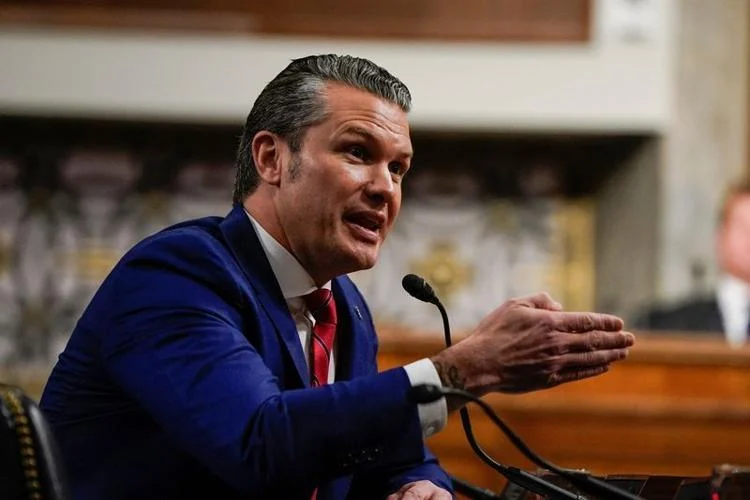
WASHINGTON  — A senior Trump administration official mistakenly included a journalist in a Signal group chat discussing highly classified U.S. military plans for a strike on Houthi targets in Yemen, the White House confirmed Monday. The chat, which reportedly involved top national security and defense officials, was first revealed in a report by The Atlantic. 

The unsecure conversation reportedly included Defense Secretary Pete Hegseth, Vice President JD Vance, National Security Adviser Mike Waltz, and Secretary of State Marco Rubio. White House National Security Council spokesman Brian Hughes acknowledged the authenticity of the chat and said the administration was investigating how an unauthorized number was added. 

“At this time, the message thread that was reported appears to be authentic, and we are reviewing how an inadvertent number was added to the chain,” Hughes said. “The thread is a demonstration of deep and thoughtful policy coordination between senior officials. The ongoing success of the Houthi operation demonstrates that there were no threats to our servicemembers or our national security.” 

When asked about the incident, President Donald Trump said he was unaware of it, stating, “I don’t know anything about it,” and adding that he was hearing about it for the first time from the reporter posing the question. 

The Pentagon declined to comment on Defense Secretary Hegseth’s involvement, referring inquiries to the National Security Council and the White House. Meanwhile, Democratic lawmakers voiced alarm over the apparent breach and called for a formal investigation. 

Sen. Jack Reed, the top Democrat on the Senate Armed Services Committee, condemned the incident as “stunning and dangerous.” 

“If true, this represents one of the most egregious failures of operational security and common sense I have ever seen,” Reed said in a statement. “Military operations must be handled with the utmost discretion, using only secure communication channels.” 

Senate Democratic Leader Chuck Schumer urged Republican leaders to support a full congressional investigation, calling the mishap “one of the most stunning breaches of military intelligence in recent history.” 

“This kind of carelessness is how people get killed,” Schumer said on the Senate floor. “It’s how our enemies take advantage of us and how our national security is put at risk.” 

Other lawmakers echoed similar concerns. Sen. Tammy Duckworth, a retired Army National Guard lieutenant colonel, criticized Defense Secretary Hegseth, calling him “the most unqualified Secretary of Defense in history” and accusing him of “literally leaking classified war plans in a group chat.” 

Sen. Chris Coons suggested the participants may have “committed a crime—even if accidentally,” while Rep. Ruben Gallego called the blunder “amateur hour.” 

“These are the same geniuses who are selling out Ukraine and destroying our alliances worldwide,” Gallego said. “No wonder Putin is embarrassing them at the negotiation table.”   

House Speaker Mike Johnson downplayed the breach, suggesting the issue was being addressed internally. 

“The administration is looking into what happened, apparently an inadvertent phone number was added to the thread,” Johnson said. “They’re going to track that down and make sure it doesn’t happen again.” 

When pressed on whether conducting sensitive discussions on an unsecure app was irresponsible, Johnson declined to characterize the incident. He also said he did not believe Waltz or Hegseth should face disciplinary action. 

Former Secretary of State Hillary Clinton, who endured years of Republican criticism over her use of a private email server while in office, weighed in on X (formerly Twitter), writing simply: “You have got to be kidding me.” 

abcnews