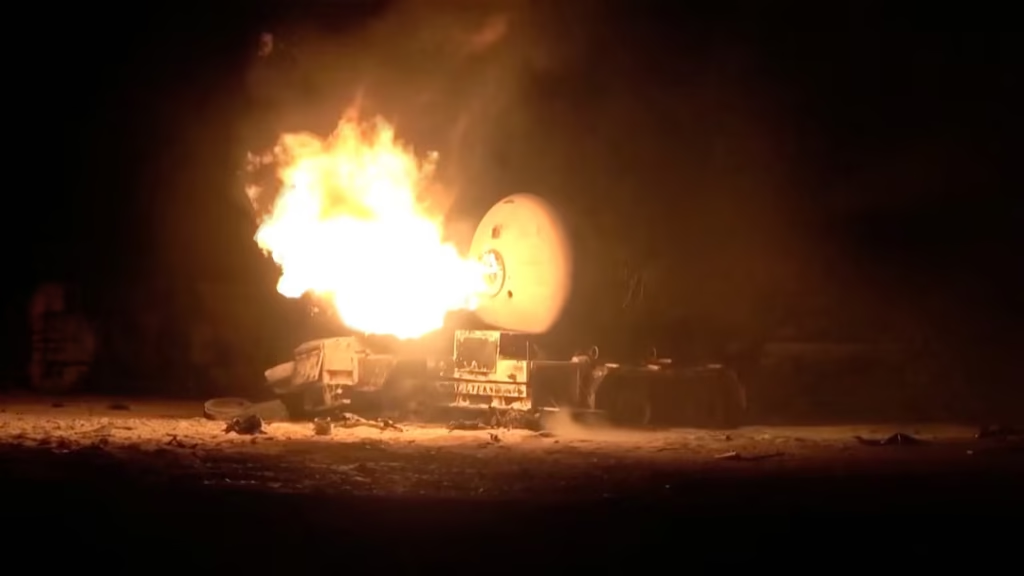
A Russian drone strike killed a family of three in Ukraine’s Zaporizhzhia region as Moscow continues its military campaign while engaging in peace talks with U.S. President Donald Trump.
The attack, which occurred early Saturday, struck a residential home, killing a 14-year-old girl, her 38-year-old mother, and her father. A clock found in the rubble stopped at 1:05 a.m., marking the moment of impact.
A neighbor described the scene, saying rescuers first pulled the mother from the debris. “She was still alive. She had severe head burns,” the witness said. The daughter was also rescued alive but succumbed to her injuries despite doctors’ efforts to resuscitate her. The father was found dead at the scene.
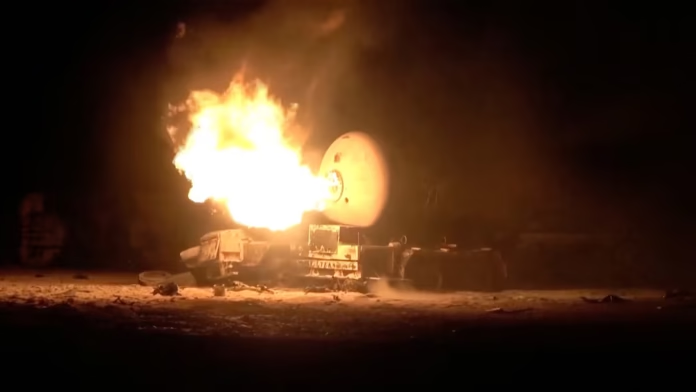
Authorities reported that Zaporizhzhia was hit by 12 drones in the latest wave of attacks. Regional official Ivan Fedorov confirmed that residential buildings, vehicles, and public infrastructure were set ablaze during the strike. Emergency responders worked through the night to locate survivors.
Ukraine’s air force stated that Russian forces launched a total of 179 drones and decoys overnight, with 100 intercepted and another 63 lost due to electronic jamming. Drone debris caused additional fires in the Kyiv and Dnipropetrovsk regions.
Meanwhile, Russia’s Ministry of Defense claimed its air defense systems shot down 47 Ukrainian drones in retaliation.
Despite continued attacks, Ukraine and Russia recently agreed in principle to a limited ceasefire following discussions with Trump. The agreement, which focuses on halting strikes on energy infrastructure for 30 days, does not extend to broader military operations.
Russian President Vladimir Putin reportedly insisted on conditions that include restrictions on Ukraine’s ability to import Western weapons and recruit troops. Ukrainian President Volodymyr Zelensky said Moscow’s position suggests Russia is not ready for a full ceasefire, warning European nations must be involved in negotiations.
Talks on security arrangements continue as Western allies discuss deploying peacekeeping forces in Ukraine. U.S. officials are set to meet with Russian negotiators in Saudi Arabia to finalize technical details.
Zelensky reiterated that Ukraine remains open to a broader ceasefire, stating, “We will not be against any format, any steps toward an unconditional ceasefire.”
Columbia University has agreed to a series of policy changes mandated by the Trump administration to restore $400 million in federal funding. The funding was revoked amid allegations that the university tolerated antisemitism on campus.
The university outlined its agreement in a memo released just hours before a government-imposed deadline. The changes include banning face masks on campus, authorizing security officers to remove or arrest individuals, and shifting oversight of the Middle Eastern, South Asian, and African Studies department from faculty control to a newly appointed official.
The federal government has warned at least 60 other universities of potential action for alleged violations of civil rights laws related to antisemitism. Columbia’s compliance is being closely watched by higher education institutions nationwide as the administration enforces policies on campus protests, transgender sports, and diversity initiatives.
One of the most contested demands involves appointing a senior administrator to oversee curriculum and faculty appointments in Middle East studies. The measure has sparked concerns among professors at Columbia and beyond, who argue that government intervention in academic affairs could set a dangerous precedent.
Republican lawmakers previously criticized at least two professors of Palestinian descent for their comments on the Israel-Hamas conflict in Gaza. The university has also hired three dozen special officers with arrest authority and revised its anti-discrimination policies to strengthen its ability to sanction campus organizations.
The administration’s new policies prohibit face coverings used to conceal identities, and protesters are now required to identify themselves when asked. Additionally, Columbia plans to hire faculty members to promote “intellectual diversity,” including joint positions at the Institute for Israel and Jewish Studies and the School of International and Public Affairs.
The loss of federal funding has already disrupted critical medical and scientific research at Columbia, researchers said. The university’s compliance with the administration’s demands is expected to influence policy decisions at other academic institutions facing similar scrutiny.
A fire that brought Heathrow Airport to a standstill for 24 hours has sparked concerns over potential sabotage, with security experts warning that the incident bears similarities to previous Russian-linked attacks on European infrastructure.
Officials have yet to determine the cause of the fire, but one theory suggests it originated from a faulty transformer. Counterterrorism police are examining the site for evidence of foul play, though no conclusions have been reached. The fire follows a series of intelligence-linked incidents across Europe, including arson attacks and cyber threats that have targeted critical infrastructure.
Security analysts have previously warned that a single substation fire could cripple a major airport, making it a potential target for state-sponsored sabotage. Former military officials have drawn comparisons between the Heathrow incident and past attacks attributed to Russian intelligence operations.
The fire comes after a 2024 blaze at a Ukrainian-owned warehouse in East London, which a British national later admitted to organizing on behalf of Russia. Other incidents include suspected Russian sabotage of undersea internet cables in European waters and an alleged cyber campaign against major airlines.
John McDonnell, a member of Parliament for Hayes and Harlington, called for a full investigation, questioning how both the primary power system and its backup could fail simultaneously. A government spokesperson confirmed that authorities are focused on resolving the situation but emphasized that a thorough inquiry would follow to determine the cause and prevent future disruptions.
Former intelligence officials have pointed to a pattern of Russian involvement in infrastructure attacks, including a foiled plot to bomb a shopping center in Lithuania and a fire at a major retail complex in Poland. Polish Prime Minister Donald Tusk has accused Russia of engaging in “air terror” against European airlines, further heightening concerns about sabotage efforts.
Russian state media and social media users reacted with mockery, with Kremlin-backed outlets suggesting British officials would blame Moscow for the incident. Some posts referenced the 2018 poisoning of Sergei Skripal in Salisbury, in which Russian agents were accused of using a nerve agent.
Security experts have warned that whether the Heathrow fire was accidental or intentional, it underscores vulnerabilities in critical infrastructure. Analysts have urged the UK government to enhance resilience against potential sabotage threats, particularly as geopolitical tensions with Russia remain high.
Investigations are ongoing, and authorities have not ruled out any possible causes. The fire has renewed discussions about airport security and the need for increased protection against potential threats to national infrastructure.
Russian drones struck the Ukrainian Black Sea port city of Odesa, injuring three people and igniting fires, officials said Friday, highlighting Moscow’s continued aerial assaults despite agreeing to a temporary halt on strikes against energy facilities.
The attack came hours before Czech President Petr Pavel arrived in Odesa for meetings with local leaders and officials from southern regions.
“This is another reminder to the whole world: the war continues, and Ukraine continues to fight,” Odesa regional governor Oleh Kiper said in a statement. He reported fires at three locations, including civilian infrastructure and commercial facilities, with damaged vehicles at the scene. Emergency responders deployed over 70 personnel and 20 fire engines to contain what authorities described as “massive fires.”
In a separate assault, Russian glide bombs injured at least six people, including a child, in the Zaporizhzhia region overnight. Regional head Ivan Fedorov shared images of firefighters working to extinguish flames at damaged residential buildings.
Ukraine’s air force reported that Russia launched 214 explosive drones and decoys in the latest wave of attacks, with 114 intercepted and 81 jammed.
Meanwhile, Russia’s Defense Ministry claimed its air defenses downed 43 Ukrainian drones, including 34 over the Volgograd region and others over Rostov, Kursk, and Belgorod. Russian authorities did not report casualties or significant damage.
A fire continued to burn at an oil depot in Russia’s Krasnodar region after a Ukrainian drone strike late Wednesday, adding to the rising tensions between the two nations.
The attacks came amid an agreement in principle for a limited ceasefire between Ukraine and Russia, following a call between U.S. President Donald Trump and the countries’ leaders. However, differences emerged over what infrastructure the ceasefire would protect.
After speaking with Trump, Ukrainian President Volodymyr Zelenskyy indicated that discussions in Saudi Arabia this weekend would determine which sites—beyond energy infrastructure—might be safeguarded. While the White House referred to “energy and infrastructure,” the Kremlin insisted the agreement applied strictly to “energy infrastructure.”
Kremlin spokesperson Dmitry Peskov reiterated Friday that Russia is adhering to the 30-day halt on energy infrastructure attacks, as ordered by President Vladimir Putin.
“The Russian military are currently refraining from strikes on Ukraine’s energy infrastructure in accordance with the agreement reached between Russia and the United States,” Peskov said.
Flights have resumed at London’s Heathrow Airport after a fire at a nearby electrical substation caused a significant power outage, leading to temporary closure and widespread disruptions.
The fire, which started late Thursday night, impacted airport operations, affecting hundreds of flights and thousands of passengers. Heathrow officials confirmed that flight operations could restart, but they advised travelers to check with their airlines before heading to the airport.
“Our teams have worked tirelessly to restore operations,” Heathrow Airport said in a statement Friday. “We are now safely able to restart flights, prioritizing repatriation and relocation of aircraft.”
The fire broke out at a power substation supplying electricity to the airport, causing a “significant power outage.” Officials initially expected Heathrow to remain closed until midnight Friday.
“We expect significant disruptions over the coming days, and passengers should avoid traveling to the airport unless advised by their airline,” a Heathrow spokesperson said.
The London Fire Brigade responded with 70 firefighters and 10 fire trucks after receiving an emergency call at 11:23 p.m. local time. The fire was contained after seven hours, but it continued to smolder into Friday evening.
“This was a highly visible and significant incident,” said Assistant Commissioner Pat Goulbourne. “Our firefighters worked under challenging conditions to bring the fire under control swiftly and prevent further spread.”
Authorities evacuated 29 people from nearby properties, and a 200-meter safety cordon was set up, displacing around 150 residents. Officials advised locals to keep windows and doors shut due to lingering smoke.
The Metropolitan Police confirmed that counterterrorism officers were present at the scene, though there was no indication of foul play.
“Given the location and its impact on critical national infrastructure, the Met’s Counter Terrorism Command is leading the investigation,” police said in a statement.
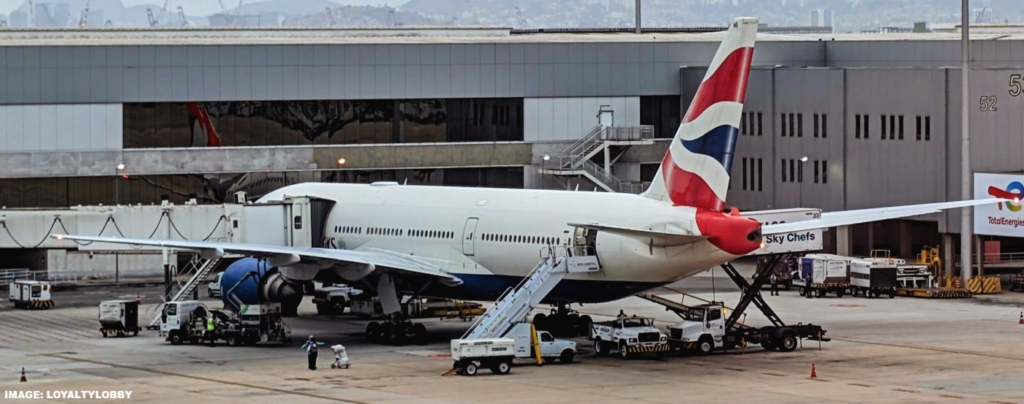
As many as 290,000 passengers were affected by the closure on Friday, with further disruptions expected into Saturday. British Airways, the largest airline operating at Heathrow, urged customers not to travel to the airport until further notice.
Inbound flights were diverted to other UK airports as authorities worked to restore full operations.
A Southwest Airlines flight mistakenly attempted to take off from a taxiway instead of a runway at Orlando International Airport on Thursday before being stopped.
According to the airline, Southwest Flight 3278, scheduled from Orlando to Albany, came to a safe stop on the taxiway after the crew misidentified it as the nearby runway.
The Federal Aviation Administration (FAA), which is investigating the incident, confirmed that the taxiway runs parallel to the intended runway. “An air traffic controller at Orlando International Airport canceled the takeoff clearance for Southwest Airlines Flight 3278 around 9:30 a.m. local time on Thursday, March 20, after the aircraft began its takeoff roll on a taxiway,” the FAA stated.
Southwest Airlines assured that passengers were rebooked on another aircraft to Albany, New York, with no injuries reported. “Southwest is engaged with the National Transportation Safety Board (NTSB) and FAA to determine the circumstances of the event,” the airline stated. “The safety of our customers and employees remains our top priority.”
A massive fire has ravaged two-story buildings housing multiple shops in Adum, the commercial center of Kumasi, causing widespread destruction and panic among traders.
The blaze broke out at the Blue Light arena near Hello FM around 6 a.m., rapidly spreading as firefighters worked to contain it. Shop owners, dealing in mobile phones, accessories, jewelry, and clothing, forced entry into their stores to salvage goods before the flames consumed them.
Eyewitnesses reported that the fire started from an electrical spark on a flickering utility pole, igniting the top floor of one of the buildings. Nana Ama Ataffuah Quainoo, Programmes Director at Hello FM, confirmed that staff were evacuated as a precaution. She also noted delays in the response from fire service personnel.
Several fire tenders arrived later but faced challenges in controlling the flames. Authorities are yet to assess the full extent of the damage as investigations continue.
Sudan’s military announced it has regained control of the Republican Palace in Khartoum, a significant symbolic and strategic victory against the paramilitary Rapid Support Forces (RSF). The development, however, is unlikely to signal an end to the war, as the RSF continues to hold territory in western Darfur and other regions.
Videos circulating on social media showed soldiers inside the palace, citing Friday as the 21st day of Ramadan. A Sudanese military officer wearing a captain’s epaulettes confirmed in the footage that troops were inside the compound. The palace appeared partially destroyed, with soldiers walking over broken tiles and chanting “God is the greatest!” while armed with rifles and rocket-propelled grenade launchers.
Information Minister Khaled al-Aiser confirmed the recapture on social platform X, stating, “Today the flag is raised, the palace is back, and the journey continues until victory is complete.”
Located along the Nile River, the Republican Palace served as the seat of Sudan’s government before the war erupted and is prominently featured on the nation’s banknotes and postage stamps. Its fall marks a critical battlefield gain for Sudan’s military, which has made steady advances in recent months under army chief Gen. Abdel-Fattah Burhan.
The RSF, led by Gen. Mohammed Hamdan Dagalo, has been largely pushed out of Khartoum following the conflict’s eruption in April 2023. Sporadic gunfire continued in the capital Friday, though it remained unclear if it was from ongoing clashes or celebratory firing.
Brig. Gen. Nabil Abdullah, a military spokesperson, stated that Sudanese forces were now holding the palace and surrounding key locations, including government ministry buildings and the Arab Market to the south. However, Khartoum International Airport, approximately 2.5 kilometers (1.5 miles) from the palace, remains under RSF control.
RSF-linked politician Suleiman Sandal acknowledged the military’s capture of the palace but dismissed it as part of history’s “ups and downs.” The RSF later claimed its fighters remained in the area and launched a drone attack that reportedly killed military personnel and journalists inside the palace.
As battles raged in Khartoum, the RSF claimed control of al-Maliha, a strategic desert city in North Darfur near the Chad and Libya borders. The Sudanese military confirmed fighting in the area but has not acknowledged losing control of the city. Al-Maliha sits about 200 kilometers (125 miles) north of El Fasher, a military stronghold under frequent RSF attacks.
The conflict has escalated into what the United Nations calls the world’s largest humanitarian crisis. UNICEF condemned the looting of food aid at Al Bashir Hospital on the outskirts of Khartoum, warning that “commercial supplies and humanitarian aid have been blocked for more than three months due to ongoing conflict along key routes.” The resulting shortages of food, medicine, and essential goods have left thousands of civilians trapped amid the fighting.
Since the war began, more than 28,000 people have been killed, and millions have been displaced. Some families face starvation, resorting to eating grass as famine spreads across the country. Independent estimates suggest the actual death toll may be far higher.
The Republican Palace, a remnant of British colonial rule, played a central role in Sudan’s history, including the raising of the nation’s first independent flag in 1956. It served as the primary office for Sudan’s presidents and senior officials until the recent conflict.
Sudan has been in turmoil since the 2019 ousting of longtime autocrat Omar al-Bashir. A brief transition toward democracy ended in 2021 when Burhan and Dagalo staged a military coup. The RSF and Sudanese military turned against each other in April 2023, igniting a war that has devastated the nation.
Burhan’s forces, including allied militias, have made significant gains this year, recapturing a key refinery north of Khartoum before pushing into the capital itself. The intensifying conflict has led to increasing civilian casualties.
Al-Bashir, wanted by the International Criminal Court for genocide during the early 2000s Darfur conflict, once relied on the Janjaweed militia, the precursor to the RSF. The RSF and allied Arab militias have been accused by the UN and rights groups of committing fresh atrocities against ethnic African communities. Both warring factions have faced allegations of human rights violations, with the U.S. State Department designating the RSF’s actions as genocide before President Joe Biden left office.
Despite denials from both sides, the war continues to exact a devastating toll on Sudan’s civilian population, with no clear resolution in sight.
A massive fire at a substation near Heathrow Airport forced Britain’s busiest airport to shut down on Friday, leaving passengers stranded worldwide and triggering widespread flight disruptions. The fire, which erupted late Thursday night, knocked out power and backup systems, causing a shutdown that aviation experts compared to the 2010 Icelandic volcanic ash cloud crisis.
Flames and thick black smoke engulfed the substation around 11 p.m. (2300 GMT), cutting power to Heathrow, Europe’s busiest and the world’s fifth-busiest airport. The fire brigade said 25,000 liters of cooling oil in the transformer had ignited. By early morning, firefighters had contained the blaze using white foam. Energy Minister Ed Miliband ruled out foul play as a cause.
Heathrow had been scheduled to handle 1,351 flights and 291,000 passengers on Friday. The sudden closure forced inbound flights to divert to alternative airports across Britain and Europe, while some long-haul flights returned to their departure points.
Stranded travelers scrambled for alternate routes. “When we first came here, it was exciting and hopeful,” said Beau Mahr, 21, from Iowa, U.S. “Now that we have to wait, it’s kind of stressful.”
Industry analysts warned of extensive global disruptions as aircraft and crew were displaced, requiring airlines to reorganize operations. Some passengers arriving in Europe faced potential confinement in transit lounges due to visa restrictions.
Hotel prices near Heathrow skyrocketed, with rooms listed at £500 ($646), nearly five times the usual rates. The airport advised travelers not to come to Heathrow and to contact their airlines for updates. “We apologize for the inconvenience,” Heathrow said in a statement, confirming closure until at least midnight Friday.
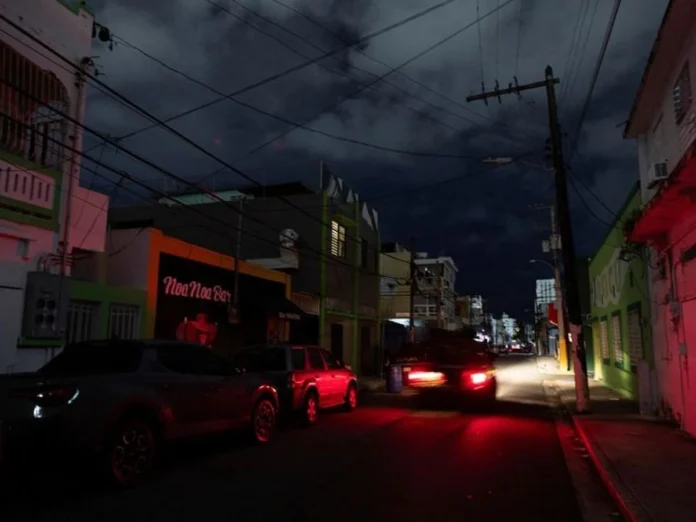
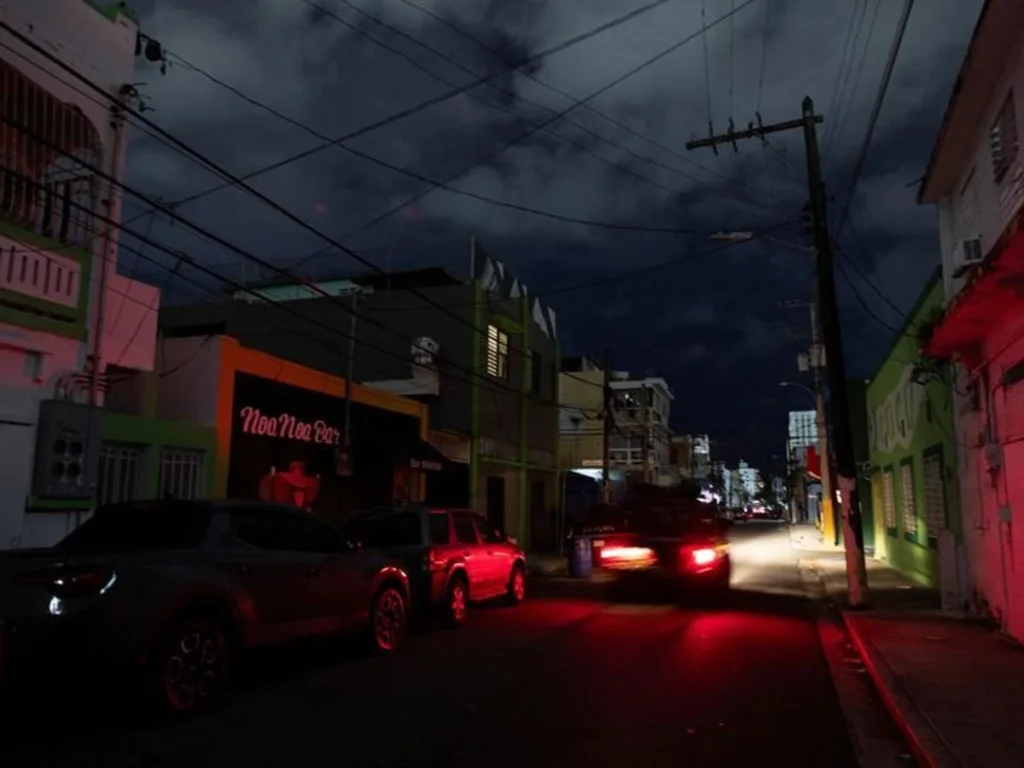
Aviation executives and electrical engineers raised concerns about how a single fire could incapacitate such critical infrastructure. Social media images showed the airport in near darkness overnight.
Power supply specialists described the fire as rare but noted that the entire substation had to be shut down for safety. “We can be fairly confident they will restore power by tomorrow,” said Nicholas Rigby, a commercial engineer at NRG Management Consultancy.
Miliband acknowledged the fire had disabled backup systems, and engineers were working to activate an additional emergency power source. “We will investigate why this happened and what lessons can be learned for infrastructure resilience,” he said.
At least 37 flights from airlines including British Airways, jetBlue, American Airlines, United Airlines, Air Canada, Air India, Delta Air, Qantas, and Virgin Atlantic were either diverted or forced to return to their points of origin, according to aviation analytics firm Cirium.
British Airways, the largest operator at Heathrow, had 341 scheduled flights on Friday. Parent company IAG saw its stock price drop, while EasyJet and Ryanair deployed larger aircraft and extra flights to manage the passenger backlog.
“This is going to disrupt airlines worldwide,” said Ian Petchenik, spokesman for FlightRadar24.
Qantas diverted its Perth-to-Paris flight, while United Airlines rerouted a New York flight to Shannon, Ireland. Another United Airlines flight from San Francisco was redirected to Washington, D.C., instead of London. Some flights from the U.S. turned back mid-air to their departure airports.
Heathrow and other major London airports have faced previous disruptions, including an automated gate failure and an air traffic control meltdown in 2023. A Heathrow spokesperson said there was no timeline for power restoration and warned of “significant disruptions” in the coming days.
Meanwhile, power outages extended beyond the airport, affecting homes and businesses across parts of London.
At least 91 Palestinians were killed and dozens wounded in Israeli airstrikes across Gaza on Thursday after Israel resumed bombing and ground operations, according to the enclave’s health ministry.
Following two months of relative peace, residents fled their homes as Israel effectively abandoned the ceasefire, launching an extensive air and ground campaign. Israeli aircraft dropped leaflets in residential areas, ordering evacuations from Beit Lahiya and Beit Hanoun in the north, the Shejaia district in Gaza City, and towns on the outskirts of Khan Younis in the south.
“War is back, displacement and death are back. Will we survive this round?” said Samed Sami, 29, who fled Shejaia with his family to seek shelter in a camp on open ground.
A day after sending tanks into central Gaza, the Israeli military confirmed it had also begun ground operations in the north along the coastal route in Beit Lahiya. Palestinian militant group Hamas, which had not retaliated during the first 48 hours of renewed Israeli assaults, announced its fighters fired rockets into Israel. The Israeli military reported that sirens were triggered in central areas of the country as projectiles were launched from Gaza.
Palestinian medics reported that Israeli strikes targeted several residential buildings in northern and southern Gaza. The renewed offensive follows failed negotiations to extend the ceasefire, with Israel launching an extensive bombing campaign on Tuesday before deploying ground forces the following day.
On Thursday, the Israeli military said its forces had been engaged for the past 24 hours in an operation to expand a buffer zone between northern and southern Gaza, known as the Netzarim corridor. Israel ordered civilians to avoid the Salahuddin road, the enclave’s main north-south route, directing them to coastal areas instead.
The resumption of airstrikes on Tuesday resulted in the deaths of more than 400 Palestinians, marking one of the deadliest days of the war. Israeli strikes have also killed key Hamas figures, including the head of the de facto Gaza government, the chief of security services, his aide, and the deputy head of the Hamas-run justice ministry.
Hamas condemned the Israeli ground operation and incursion into the Netzarim corridor as a “new and dangerous violation” of the ceasefire agreement. The group reaffirmed its commitment to the truce and urged mediators to intervene.
A temporary ceasefire phase ended earlier this month. Hamas has sought to transition to a second phase, which would require Israel to negotiate a formal end to hostilities, withdraw troops, and exchange hostages for Palestinian prisoners. Israel has rejected a long-term truce, instead opting to resume military operations to pressure Hamas into releasing hostages.
The ceasefire had allowed families like Huda Junaid’s to return to the ruins of their destroyed homes, but renewed fighting forced them to flee once more. “We don’t want war, we don’t want death. Enough, we are fed up,” she said. “There are no longer children in Gaza. All of our children are dead, all of our relatives are dead.”
Palestinians attempting to use the Salahuddin road reported that Israeli troops opened fire on civilian vehicles advancing toward Netzarim. The fate of those inside the cars remains unknown.
A taxi driver, speaking anonymously, described bulldozers escorted by tanks moving west from Israeli positions near the border fence east of the Salahuddin road.
Hamas officials said mediators had intensified efforts to broker a ceasefire extension, though no breakthrough had been reached. While some residents noted a lack of visible Hamas military activity, a member of an allied militant group stated that fighters had been placed on high alert, awaiting further instructions. Commanders also ordered fighters to refrain from using mobile phones.
The war began in October 2023 when Hamas launched an attack on Israeli communities, killing 1,200 people and taking more than 250 hostages, according to Israeli figures. Since then, more than 49,000 Palestinians have been killed, Gaza’s health ministry reports, with much of the enclave reduced to rubble.