Home Blog Page 415

Thousands Protest Across the U.S. on Presidents Day Against Trump and Musk

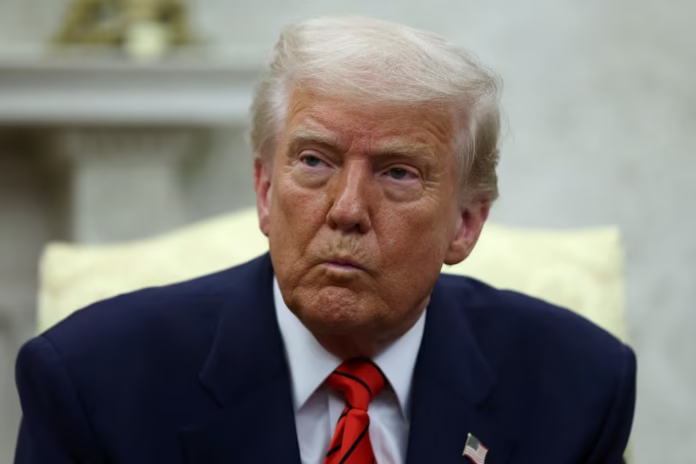
On Presidents Day, demonstrators across the United States gathered at state capitol buildings and other locations to protest against President Donald Trump and billionaire Elon Musk, who has been leading significant changes within the federal government. 

In Washington, D.C., thousands of protesters assembled at the Capitol Reflecting Pool, chanting “Where is Congress?” and urging lawmakers to “do your job!” despite cold temperatures and strong winds. Potus Black, an organizer with the D.C. chapter of the 50501 Movement, which spearheaded the rallies, called on the crowd to stand united in defense of democracy. 

“To oppose tyranny is to stand behind democracy and remind our elected officials that we, the people, are who they are elected to serve, not themselves,” Black said. “The events over the past month have been built to exhaust us, to break our wills. But we are the American people. We will not break.” 

The protests were part of the 50501 Movement, a campaign that stands for “50 protests. 50 states. 1 movement.” Organizers said the demonstrations were a direct response to what they described as “anti-democratic and illegal actions” by the Trump administration. The latest rallies follow a series of executive orders signed by Trump and decisions made by Musk, who has faced criticism for mass firings across multiple federal agencies. 

Several demonstrators spoke out against the changes, voicing concerns about the Department of Government Efficiency, the agency Musk oversees, and its access to data from the IRS and other federal records. Others raised alarm over the dismissal of national park rangers and employees across government agencies. 

Suzanne, a Maryland resident who requested her last name be withheld due to fear of retaliation, attended the protest in support of her husband, a financial regulatory agency employee. She expressed concerns about his job security as the government faces widespread layoffs. 

“It’s put us in a pretty tenuous financial situation. Currently, his paychecks are going through, but we’re looking to Plan B as an alternative on how to support our family, our children,” she said. “But it has really motivated him and his co-workers to stand united, to stand as a solid, solidified workers force.” 

Anita Gilmore, also from Maryland, worried about the potential impact on her son’s healthcare coverage, which he relies on for critical treatment. She expressed anxiety over decisions that could be made by Health and Human Services Secretary Robert F. Kennedy Jr. 

“My son is on Medicaid because he has a life-threatening disease that if I wasn’t there to take care of him, he would be one of these D.C. [homeless] guys on the street,” Gilmore said. 

Frustration with Congress was another recurring theme among protesters. Many accused lawmakers of not doing enough to check the executive branch. Katie Temple, holding a sign that read, “Was the price of your eggs worth our democracy?” called for stronger action. 

“I want Congress to grow a spine, as they’ve been saying,” Temple said. “I feel like, especially the Democrats, are not standing up. We need them to act.” 

Following the protests, Black emphasized that the 50501 Movement would continue. 

“We know that this one protest is not going to be enough to make the changes that we expect,” Black said. “We will be continuing to let the American people’s voice be heard.” 

Protests Spread Nationwide from California to Tennessee to Massachusetts 

Demonstrations occurred across the country, with protesters flooding statehouses, federal courts, and other public spaces. The 50501 Movement organized rallies in more than half of the U.S. states, including California, Colorado, Tennessee, and Massachusetts. 

In the Northeast, despite freezing temperatures and strong winds, hundreds gathered at Boston Common, bundled in winter coats and beanies. Similar protests took place in Hartford, New York City, and Trenton. 

In Tennessee, protesters gathered in Knoxville near a federal courthouse for an event called the “Not My Billionaires” rally. They waved signs that read “Musk wasn’t on the ballot” and “No felons, no Elons.” Demonstrations also took place in Nashville, Atlanta, and Miami. 

In Iowa, dozens of protesters gathered inside the statehouse, chanting “President Musk must go!” to condemn Musk’s influence over the federal government, particularly his leadership at the Department of Government Efficiency, according to Iowa Local 5 News. 

On the West Coast, rallies in Palo Alto targeted Tesla dealerships, with protesters expressing concerns over Musk’s expanding political role. In Denver, Colorado, more than 1,000 people took to the streets despite snowy conditions, holding signs advocating for women’s rights, LGBTQ rights, and immigration protections, according to Colorado Public Radio. 

As protests continued across the country, organizers reaffirmed their commitment to sustained action. 

“We know this is just the beginning,” Black said. “The American people will not stay silent.”

Commonwealth Urges Uganda to Release Detained Opposition Leader Kizza Besigye

The Commonwealth on Tuesday called for Uganda to release detained opposition leader Kizza Besigye, saying his incarceration undermines democracy and human rights in the East African nation. 

President Yoweri Museveni dismissed concerns about Besigye’s health, accusing him of using a hunger strike as “blackmail” to gain public sympathy and secure bail. 

Besigye, 68, a longtime critic of Museveni, has been held for nearly three months after being prosecuted by a military court on charges including illegal firearms possession. His detention has sparked public outrage, with critics accusing the government of escalating repression ahead of next year’s election. 

Besigye began a hunger strike last week and was briefly hospitalized over the weekend, according to an allied lawmaker. 

Commonwealth Secretary-General Patricia Scotland condemned the detention of Besigye, his lawyer, and an aide, calling it a violation of “democracy, human rights, and the rule of law.” 

“The Commonwealth has always had a relationship based on trust with Uganda and looks forward to the return of a more inclusive and democratic political environment aligned with the Commonwealth Charter,” Scotland said in a statement. 

Museveni, who has ruled Uganda since 1986, rejected the criticism. 

“Besigye was on hunger strike. That is part of the cause for his weakness that we could see in the pictures that were in the newspapers,” he said in a statement. “Is that not unprincipled blackmail? How can you be accused of serious crimes and then your response is a hunger strike to generate sympathy for getting bail?” 

Ugandan officials did not immediately respond to requests for comment. The government has previously denied allegations of human rights abuses, insisting that all arrests and prosecutions follow legal procedures. 

On Monday, police detained at least five activists, including members of Besigye’s political party, during protests in Kampala demanding his release, police told local television. 

Bobi Wine, the opposition leader who was the runner-up in the last presidential election, also said Monday that his brother, a party official, was abducted by armed men in the capital. Police have not commented on the claim. 

The escalating crackdown on opposition figures has fueled concerns over Uganda’s political climate as the country heads into another election season. 

Russia’s Wealth Fund Chief Praises Trump as a Problem Solver Ahead of High-Stakes U.S.-Russia Talks in Riyadh

The head of Russia’s sovereign wealth fund praised U.S. President Donald Trump as a “problem solver” ahead of the first high-level U.S.-Russia talks in years, set to take place in Saudi Arabia on Tuesday. 

“We really see that President Trump and his team are problem solvers, people who have already addressed a number of big challenges very swiftly, very efficiently, and very successfully,” Kirill Dmitriev, head of Russia’s Direct Investment Fund, told reporters in Riyadh. 

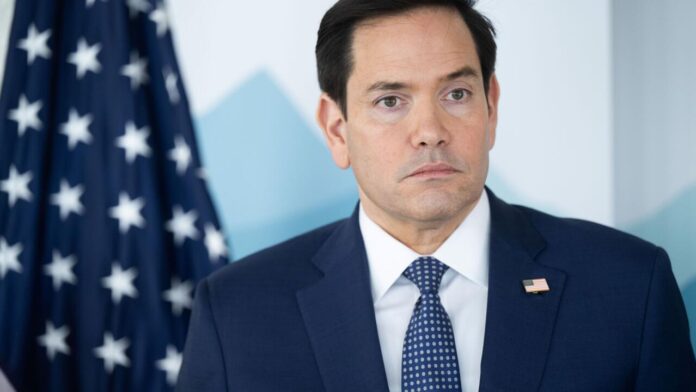
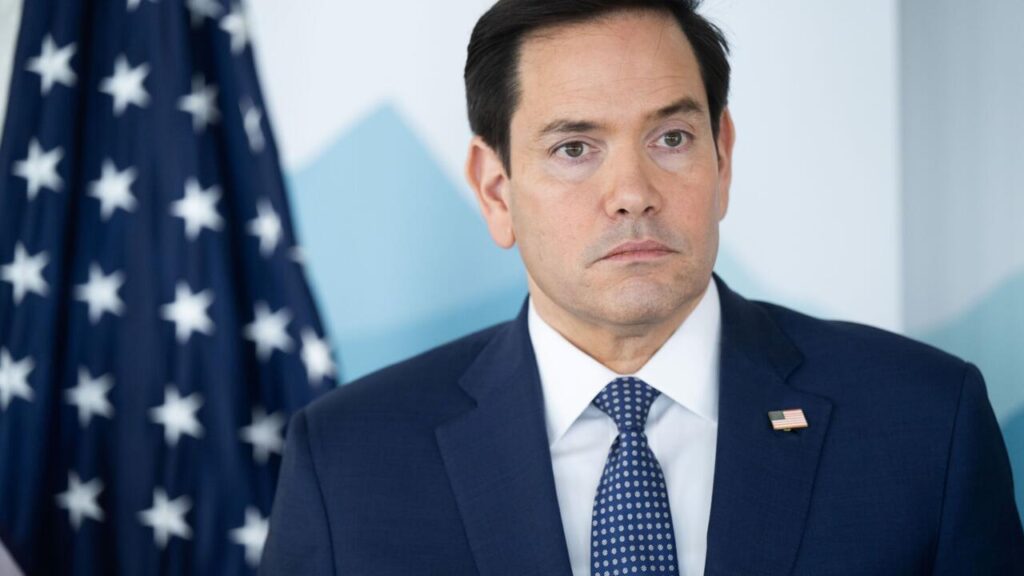
The talks, led by Russian Foreign Minister Sergey Lavrov and U.S. Secretary of State Marco Rubio, will focus on ending the war in Ukraine and restoring the broader scope of U.S.-Russia relations, according to Russian officials. The discussions are expected to lay the groundwork for a potential meeting between Trump and Russian President Vladimir Putin. 

Dmitriev, a former Goldman Sachs banker with a U.S. education, played a key role in backchannel diplomacy between Moscow and Washington during Trump’s first term from 2016 to 2020. 

“It’s important to understand that U.S. businesses have lost around $300 billion from exiting Russia,” Dmitriev said. “There is a huge economic toll on many countries due to the current situation, and we believe the way forward is through solutions.” 

The meeting in Riyadh underscores growing diplomatic maneuvering between the U.S. and Russia as global leaders assess potential shifts in American foreign policy. 

AP

Israel-Hezbollah and Gaza Ceasefires in Jeopardy Amid Withdrawal Delays and Hostage Uncertainty 

Israel’s military announced it will maintain a presence in five strategic locations in southern Lebanon past Tuesday’s withdrawal deadline, raising concerns about the stability of the ceasefire with Hezbollah. Lebanese officials have voiced frustration over the delay, as Hezbollah warns against further postponements.

Military spokesperson Lt. Col. Nadav Shoshani stated that the five locations provide critical vantage points for Israeli security, particularly as approximately 60,000 Israelis remain displaced in northern Israel due to ongoing tensions. The U.S.-led body overseeing the truce extended the ceasefire by three weeks, but Lebanese President Joseph Aoun insisted that the agreement “must be respected.” Hezbollah leader Naim Kassem declared that “there can be no excuses” for any delays beyond Tuesday.

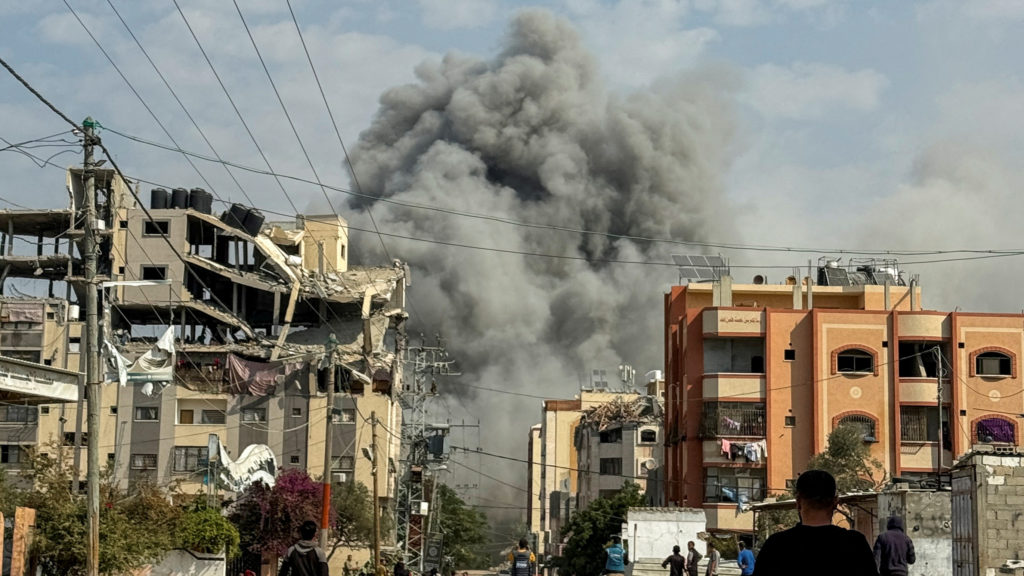
The ceasefire agreement stipulates that Israeli forces should vacate a buffer zone in southern Lebanon, allowing the Lebanese army and U.N. peacekeepers to assume control. While the ceasefire has largely held since November, tensions remain high. On Monday, Israel conducted a drone strike deep inside Lebanon, killing Muhammad Shaheen, a Hamas operations leader, in Sidon. The strike, which left a vehicle charred, has reignited fears of renewed hostilities.

As Israel and Gaza marked 500 days since the war began, conflicting signals from Israel and the U.S. have left the future of the ceasefire with Hamas uncertain. Talks regarding the second phase of the ceasefire have yet to commence, while protests in Israel call for an extension to secure the release of remaining hostages.

An Israeli official, speaking anonymously, stated that four bodies are expected to be returned to Israel on Thursday, though details remain unclear. Hamas has yet to comment on the matter. The current ceasefire, set to expire in less than two weeks, has seen a partial withdrawal of Israeli forces from Gaza and an influx of humanitarian aid. However, negotiations for the second phase—which would involve further hostage releases and Israeli troop withdrawals—have stalled.

Recently released hostages have described dire conditions in captivity. “All I care about is for my friends to return. There were six of us living in unbearable conditions,” said Ohad Ben Ami, who was freed just over a week ago. Families and activists have continued to push for urgent action, warning that the hostages “don’t have time.”

The second phase of the ceasefire could see Hamas release over 70 remaining hostages, around half of whom are believed to be dead, in exchange for Palestinian prisoners and a potential permanent truce. However, Israeli Prime Minister Benjamin Netanyahu and U.S. President Donald Trump’s administration have reiterated their commitment to eradicating Hamas, a goal seen as incompatible with a sustained ceasefire.

Trump has proposed permanently relocating Gaza’s population of over 2 million and placing the territory under U.S. administration—a plan welcomed by Israel but widely rejected by Palestinians and Arab nations. Human rights organizations argue that such a move could violate international law. Meanwhile, Egypt is drafting a counterproposal to rebuild Gaza without displacing its residents.

Since Hamas-led militants launched the Oct. 7, 2023, attack that killed approximately 1,200 people and abducted 250, Israel’s military response has resulted in over 48,000 Palestinian deaths, according to Gaza’s Health Ministry. More than half of the casualties are reported to be women and children.

Amid ceasefire uncertainties, Israel has announced plans to expand settlements in the occupied West Bank. Watchdog group Peace Now revealed that the government has issued a tender for 974 new housing units in Efrat, increasing its population by 40% and restricting the growth of nearby Bethlehem.

Israel has established over 100 settlements across the West Bank, housing more than 500,000 settlers among a Palestinian population of approximately 3 million. Palestinians live under military rule while Israeli settlers enjoy full citizenship rights.

The West Bank, Gaza Strip, and East Jerusalem were captured by Israel in the 1967 Mideast war. Palestinians seek these territories for a future independent state, but ongoing settlement expansions threaten that vision.

As tensions simmer across multiple fronts, Israel’s delicate ceasefire agreements with Hezbollah and Hamas hang in the balance, with uncertainty over whether diplomatic efforts will prevent further escalation.

US and Russian Officials Meet in Saudi Arabia to Discuss Ukraine War, Excluding Kyiv

Senior diplomats from the United States and Russia met Tuesday in Saudi Arabia to discuss efforts to restore relations and negotiate an end to the war in Ukraine. The high-level talks, marking a significant shift in American foreign policy under President Donald Trump, did not include any Ukrainian representatives.

The meeting took place as Ukraine faces increasing pressure on the battlefield, with Russian forces steadily advancing. President Volodymyr Zelenskyy has firmly stated that Kyiv will not accept any outcome from discussions in which Ukraine does not participate. European allies have also voiced concerns over being sidelined in the diplomatic process.

The talks, attended by US Secretary of State Marco Rubio and Russian Foreign Minister Sergey Lavrov, aimed at thawing relations between the two nations, which have reached their lowest point in decades. Officials indicated that the meeting could set the stage for a future summit between Trump and Russian President Vladimir Putin.

Kremlin spokesman Dmitry Peskov said the discussions focused on “restoring the entire range of US-Russian relations” and setting the groundwork for further negotiations on Ukraine. US State Department spokeswoman Tammy Bruce noted that the meeting aimed to assess Russia’s willingness to pursue a peace settlement and initiate detailed negotiations.

The renewed US diplomatic efforts have raised concerns among Ukraine and key European allies, who fear Washington and Moscow could proceed with an agreement that does not fully consider their interests. France convened an emergency meeting of European Union and UK officials to address the ongoing situation.

Bruce reaffirmed that while Ukraine was not included in Tuesday’s meeting, any substantive peace negotiations would involve Kyiv. The previous US administration under Joe Biden maintained a policy of including Ukraine in all discussions related to the war, a stance that shaped international efforts to isolate Russia.

French President Emmanuel Macron spoke with Trump and Zelenskyy following the meeting, emphasizing the need for a lasting peace in Ukraine that includes strong security guarantees for Ukrainians. “To achieve this, Russia must end its aggression,” Macron stated on social media platform X, adding that Europe, the US, and Ukraine must work together toward a resolution.

The meeting, held at Diriyah Palace in Riyadh, underscored Saudi Crown Prince Mohammed bin Salman’s ambitions to play a key role in global diplomacy. Saudi Arabia, maintaining ties with Russia through OPEC+ and diplomatic channels, has previously facilitated prisoner exchanges and hosted Zelenskyy at the 2023 Arab League summit.

US representatives Rubio, National Security Adviser Mike Waltz, and Special Envoy Steve Witkoff participated in the discussions alongside Lavrov and Kremlin foreign policy adviser Yuri Ushakov. Saudi Foreign Minister Faisal bin Farhan and National Security Adviser Musaed al Alban joined for the opening session but were expected to exit early.

Kirill Dmitriev, head of Russia’s sovereign wealth fund, highlighted the importance of strong US-Russia relations. “Only jointly can Russia and the US address global conflicts and offer solutions,” Dmitriev told the Associated Press, stating that economic issues were also a priority in the talks.

As negotiations unfolded, Russia continued its military offensive in Ukraine. Kyiv’s air force reported that Russian forces launched 176 drones overnight, with Ukrainian defenses successfully intercepting most. However, a Russian drone strike hit a residential building in Dolynska, Kirovohrad region, injuring a mother and her two children and prompting evacuations. Additional strikes damaged four buildings in the Cherkasy region.

The US-Russia talks in Riyadh mark the most extensive diplomatic engagement between the two nations since Moscow’s invasion of Ukraine on February 24, 2022. While officials remain cautious about immediate breakthroughs, the meeting signals a potential shift in global diplomatic efforts to end the conflict.

Source: AP

Trump’s DHS to Fire Hundreds of Senior Leaders in Major Overhaul

The Trump administration is preparing to fire hundreds of senior leaders at the Department of Homeland Security (DHS) this week in a sweeping effort to remove officials viewed as not aligned with the administration’s objectives, according to three sources familiar with the plan. 

Unlike broader federal workforce reductions, these dismissals are not aimed at cutting costs but rather at reshaping DHS leadership. Sources say the administration has compiled a list of high-level officials across various DHS agencies, including U.S. Citizenship and Immigration Services (USCIS), the Federal Emergency Management Agency (FEMA), and the Cybersecurity and Infrastructure Security Agency (CISA), who are expected to be removed. 

The targeted officials hold influential roles, including Senior Executive Service (SES) and General Schedule (GS) 15 positions, which significantly impact policy and strategy. The administration views them as roadblocks to its enforcement priorities, particularly on immigration. DHS oversees agencies such as Customs and Border Protection (CBP) and Immigration and Customs Enforcement (ICE), which play central roles in border security and deportation efforts. 

“These people put themselves in a terrible position, and they need to be removed,” a Trump administration official said, defending the decision. The official added that the firings are intended to eliminate bureaucratic resistance and streamline the agency’s ability to execute the administration’s immigration policies. 

A former senior Biden administration official criticized the move, noting that career civil servants at these levels “have an influence on policy and strategy” and that such mass firings could disrupt agency operations. 

DHS issued a statement framing the firings as part of broader government reform efforts: “Under President Trump’s leadership, we are making sweeping cuts and reforms across the federal government to eliminate egregious waste and incompetence that has been happening for decades at the expense of the American taxpayer.” 

The shake-up follows previous job cuts at DHS and signals an aggressive push to reshape the department’s leadership in line with administration priorities.

Russia Releases American Prisoner Ahead of US Talks in Saudi Arabia

The Russian government has released an American citizen detained on minor drug charges just ahead of scheduled diplomatic talks between U.S. and Russian officials in Saudi Arabia, the New York Times reported Monday. 

Kalob Byers Wayne, 28, was arrested at Moscow’s Vnukovo airport on February 7 after customs officials discovered cannabis-laced marmalade in his luggage. He had been held on charges of possession of a small amount of marijuana. 

The Kremlin’s spokesperson suggested that the timing of Wayne’s release could be linked to Tuesday’s talks in Saudi Arabia, which are set to focus on restoring relations between Washington and Moscow. “Certain events can be viewed in this context,” the Times quoted the spokesperson as saying. 

U.S. officials have not yet commented on Wayne’s release or whether it was part of a broader negotiation effort. The meeting in Saudi Arabia marks one of the few direct engagements between the two governments since the start of the Ukraine war, as tensions between the U.S. and Russia remain high. 

Wayne’s detention is one of several recent cases involving Americans held in Russia on drug-related or politically sensitive charges. U.S. officials continue to push for the release of other detained citizens, including journalist Evan Gershkovich and former Marine Paul Whelan, both accused of espionage by Russian authorities.

Bus Plunges Off Cliff in Bolivia, Killing Over 30

A devastating bus crash in southwestern Bolivia on Monday left at least 31 people dead and more than a dozen others injured, local authorities reported. 

According to police, the driver likely lost control of the vehicle, sending it plunging nearly 800 meters (2,625 feet) off a precipice in Yocalla, a mountainous municipality in the Potosí region. 

Emergency responders transported 14 injured passengers—10 adults and four children—to a nearby hospital, where several remain in intensive care, according to hospital officials. 

A police officer at the scene noted that the route where the accident occurred is filled with sharp turns and steep drops, making it particularly hazardous. Authorities believe excessive speed may have contributed to the crash. 

Bolivia’s mountainous terrain is notorious for dangerous roads, with frequent accidents involving buses and trucks navigating steep and winding highways. Officials are investigating the incident to determine if additional factors, such as mechanical failure, played a role. 

The tragedy highlights ongoing concerns about road safety in Bolivia, where high-altitude driving conditions and infrastructure challenges pose significant risks to travelers.

Militants Kill 2, Ambush Aid Convoy in Northwestern Pakistan

Militants ambushed a convoy of trucks delivering humanitarian aid in northwestern Pakistan on Monday, killing a driver and a security official, authorities confirmed. 

The attack occurred in Kurram, a conflict-ridden district in Khyber Pakhtunkhwa province, where sectarian clashes between Shiite and Sunni tribes have claimed at least 130 lives in recent months. The aid trucks were carrying food, medicine, and other supplies for thousands of residents affected by the ongoing violence. 

According to police, the convoy was en route to Parachinar, the district’s main city, when the attackers struck. 

Dr. Qaiser Abbas, a physician at a local hospital, reported that in addition to the two fatalities, 15 people were wounded. Several aid trucks were also looted and set ablaze during the assault. 

Local officials announced that police and security forces had launched an operation to track down the perpetrators. No group has claimed responsibility, but such attacks are common in the region, where militants frequently target convoys and security personnel. 

This marks the third attack on an aid convoy in Kurram since January, further complicating efforts to deliver relief to the conflict-stricken region. 

Beyond Kurram, militant activity has surged across Khyber Pakhtunkhwa, particularly in the bordering regions of North and South Waziristan. Pakistani security forces often conduct raids on suspected militant hideouts in response to attacks. 

Over the weekend, military operations in Dera Ismail Khan and North Waziristan left four soldiers and 15 militants dead, according to Pakistan’s military. 

The slain militants were identified as members of Tehrik-e-Taliban Pakistan (TTP), an insurgent group allied with the Afghan Taliban. While distinct from its Afghan counterpart, the TTP has gained strength since the Taliban took control of Afghanistan in 2022. 

Authorities say the recent violence underscores the growing security threat in Pakistan’s tribal areas, where sectarian and militant attacks continue to destabilize the region.

Delta Jet Crash in Toronto Leaves 17 Injured, No Fatalities

A Delta Airlines jet flipped upon landing at Toronto Pearson International Airport on Monday, injuring 17 people but causing no fatalities, airport officials confirmed. 

The Mitsubishi CRJ-900LR, arriving from Minneapolis, overturned on the snowy tarmac around 2:15 p.m. local time. Video from the scene showed the aircraft upside down as emergency crews worked to control the situation. 

“All passengers and crew are accounted for,” the airport said in a post on X. The flight carried 76 passengers and four crew members. 

Ontario Premier Doug Ford expressed relief on social media, stating, “Provincial officials are in contact with the airport and local authorities and will provide any help that’s needed.” 

The Transportation Safety Board of Canada has launched an investigation, with support from the U.S. National Transportation Safety Board. The U.S. Federal Aviation Administration confirmed that Canadian authorities would lead the probe. 

Investigators are examining multiple factors, including the aircraft’s missing right wing, which could have contributed to its overturning. Aviation safety expert John Cox noted, “If one wing is missing, it’s going to have a tendency to roll over.” 

The flight had been cleared to land minutes before the crash, with air traffic controllers warning of turbulence due to strong winds. According to the Meteorological Service of Canada, wind speeds at the time ranged from 32 mph (51 kph) to gusts of 40 mph (65 kph), with blowing snow. 

Despite the harsh weather, Cox emphasized that the CRJ-900 is a well-established aircraft designed to handle such conditions. “The pilots are trained and experienced to manage that,” he said. 

Emergency responders transported one pediatric patient to Toronto’s SickKids hospital and two injured adults to other medical facilities. The airport temporarily grounded flights for approximately two and a half hours, and two runways remain closed for the investigation. 

Delta Air Lines CEO Ed Bastian issued a statement saying, “The hearts of the entire global Delta family are with those affected by today’s incident.” 

This crash marks at least the fourth major aviation mishap in North America in the past month. Notably, a commercial jetliner and a U.S. Army helicopter collided near Washington, D.C., on Jan. 29, killing 67 people. A separate medical transport plane crash in Philadelphia on Jan. 31 claimed seven lives, and another plane crash in Alaska killed 10. 

The last major accident at Toronto Pearson occurred in 2005, when an Air France Airbus A340 skidded off the runway and caught fire. All 309 passengers and crew survived. 

Investigators expect to recover the flight data and cockpit voice recorders soon, which will provide crucial insights into the cause of the crash.