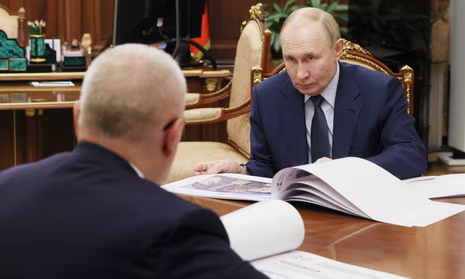
Russia is conducting a “staggeringly reckless campaign” of sabotage across Europe while using nuclear threats to discourage support for Ukraine, Britain’s foreign intelligence chief revealed Friday.
Richard Moore, head of MI6, said his agency has “recently uncovered a staggeringly reckless campaign of Russian sabotage in Europe,” coinciding with what he called Putin’s “nuclear sabre-rattling to sow fear about the consequences of aiding Ukraine.”
The warning comes as NATO and Western intelligence services report increasing Russian hostile activities across the Euro-Atlantic area, ranging from cyber attacks to Moscow-linked arson, all of which Russia denies. Britain’s domestic spy chief recently accused Russia’s GRU military intelligence service of attempting to cause “mayhem” across Britain and Europe.
Moore warned that Putin would not stop at reducing Ukraine to a “vassal state,” saying British, French, European, and transatlantic security would be jeopardized. “The cost of supporting Ukraine is well known, but the cost of not doing so would be infinitely higher. If Putin succeeds China would weigh the implications, North Korea would be emboldened and Iran would become still more dangerous.”
Sources familiar with U.S. intelligence indicate Russia may expand its sabotage campaign against European targets to increase pressure on Western support for Kyiv. Moore, addressing potential changes in U.S. leadership, noted his successful cooperation with the previous Trump administration on security matters, saying he looks forward to continuing such collaboration.
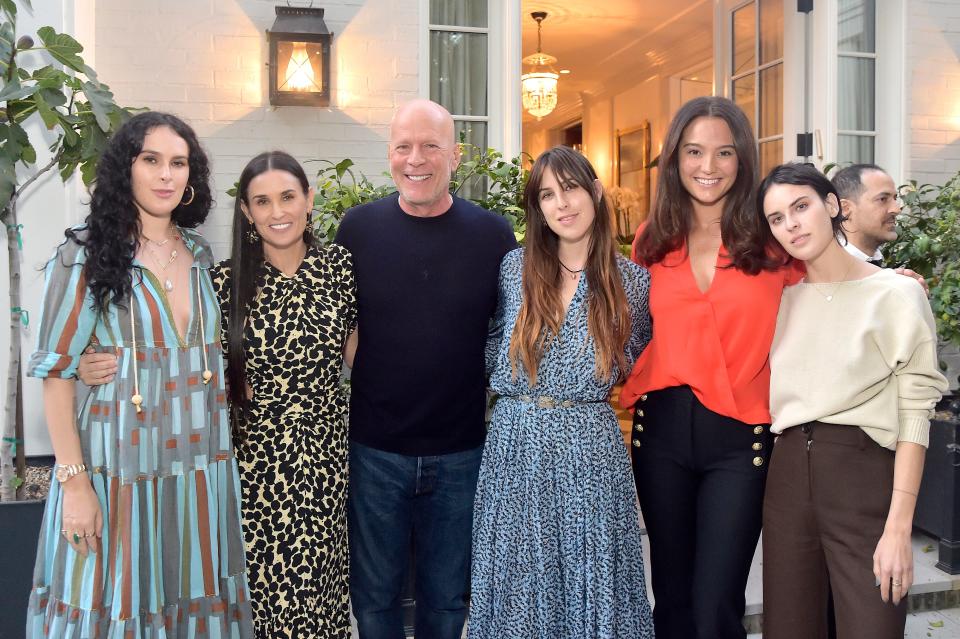
Bruce Willis spent Thanksgiving with his family, with daughters Scout and Tallulah Willis sharing rare intimate photos of their time with their father amid his ongoing battle with frontotemporal dementia.
The 69-year-old former actor’s daughters posted images Thursday showing tender moments with their father, including Scout, 33, placing her hand on his chest and Tallulah, 30, holding his ear. Another photo captured Scout and Bruce touching foreheads in an embrace. The sisters captioned their joint Instagram post simply: “Grateful ????.”
The holiday gathering included presentation of a “Best Dad Ever” plaque to the “Die Hard” star, though eldest daughter Rumer Willis, 36, was not pictured in the shared images. All three are Willis’ daughters with ex-wife Demi Moore.
The celebration comes as Willis continues to face health challenges following his March 2022 diagnosis of frontotemporal dementia and aphasia, conditions that led to his retirement from acting. According to the Mayo Clinic, FTD affects the brain’s frontal and temporal lobes, impacting abilities to write, speak and understand language.
Emma Heming Willis, who married the actor in 2009 and shares daughters Mabel, 12, and Evelyn, 10, with him, recently discussed the family’s journey in Town & Country Magazine. “Finally getting to a diagnosis was key so that I could learn what frontotemporal dementia is and I could educate our children,” she said in October, adding that she has been direct with their daughters about their father’s declining health.
“I’ve never tried to sugarcoat anything for them,” the 46-year-old explained. “They’ve grown up with Bruce declining over the years.”
Vladimir Putin’s alleged secret daughter has adopted a new surname and is living in the West, according to a Ukrainian television investigation that provides fresh details about the 21-year-old’s efforts to distance herself from the Russian president.
The TSN investigation reports that Elizaveta Krivonogikh, also known as Luiza Rozova, now uses the surname Rudnova, taking the name of late Putin ally Oleg Rudnov. The change effectively obscures her patronymic middle name Vladimirovna, which would identify Putin as her father.
Born March 3, 2003, when Putin was Russian president and still married to first lady Lyudmila Putina, Elizaveta vanished from public view shortly before Russia’s invasion of Ukraine. Previous investigations by independent Russian media noted her striking resemblance to Putin.
The young woman’s mother is Svetlana Krivonogikh, 49, reportedly Putin’s former long-term partner who transformed from a cleaner to a multimillionaire with shares in a major bank and ownership of a prominent St. Petersburg strip club. Mother and daughter reportedly occupy a £3.1 million residence in Monaco.
TSN reports Elizaveta studied at the Paris School of Management and Arts near the Arc de Triomphe during the war, though her current location is unclear. She previously maintained a visible social media presence in Russia, running her own fashion brand and working as a DJ before reportedly being told to maintain a lower profile in October 2021.
Russian journalist Andrei Zakharov, who first revealed her existence, noted her sudden withdrawal from public life: “Something happened in October 2021 because she deleted her Instagram account and she is no longer public. It looks like somebody told her: ‘Stop it.'”
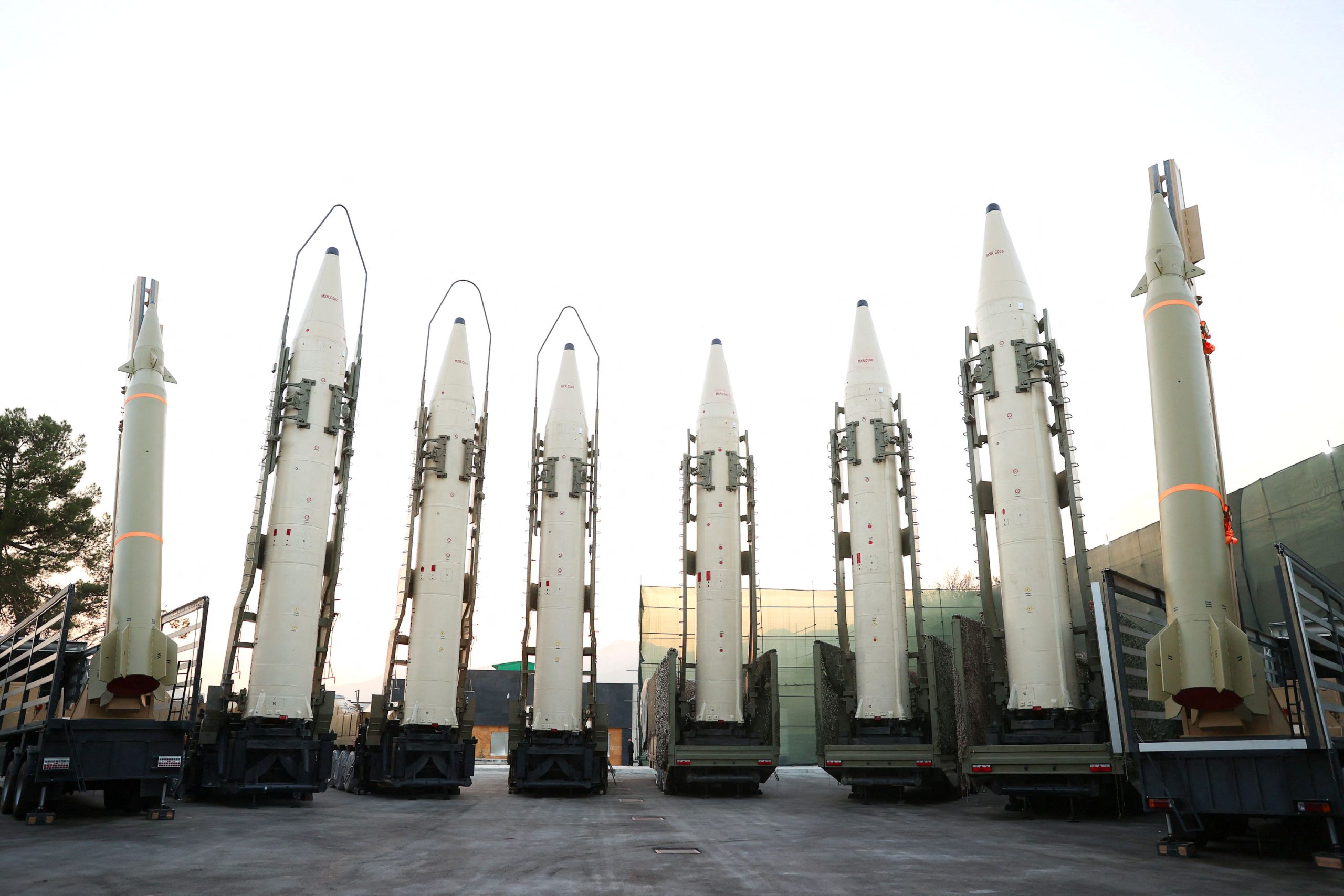
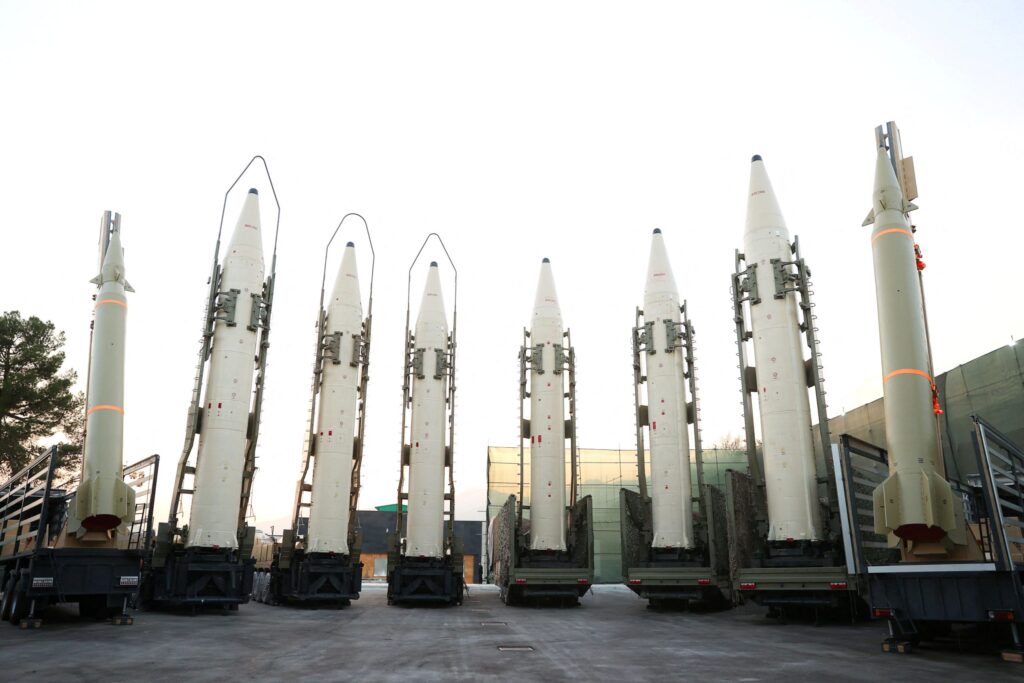
Vladimir Putin vowed Thursday to massively increase Russia’s arsenal of Oreshnik missiles amid a devastating overnight assault on Ukraine that left nearly one million people without power, directly threatening President Volodymyr Zelenskyy with strikes on Kyiv.
Speaking at a summit in Kazakhstan, the 72-year-old Russian leader announced a 30 percent boost in missile production while praising the devastating capabilities of the new Oreshnik weapon. “Everything that is located in the epicentre of the explosion is divided into fractions, into elementary particles, in fact, into dust,” Putin warned, claiming the missile’s impact would rival nuclear weapons.
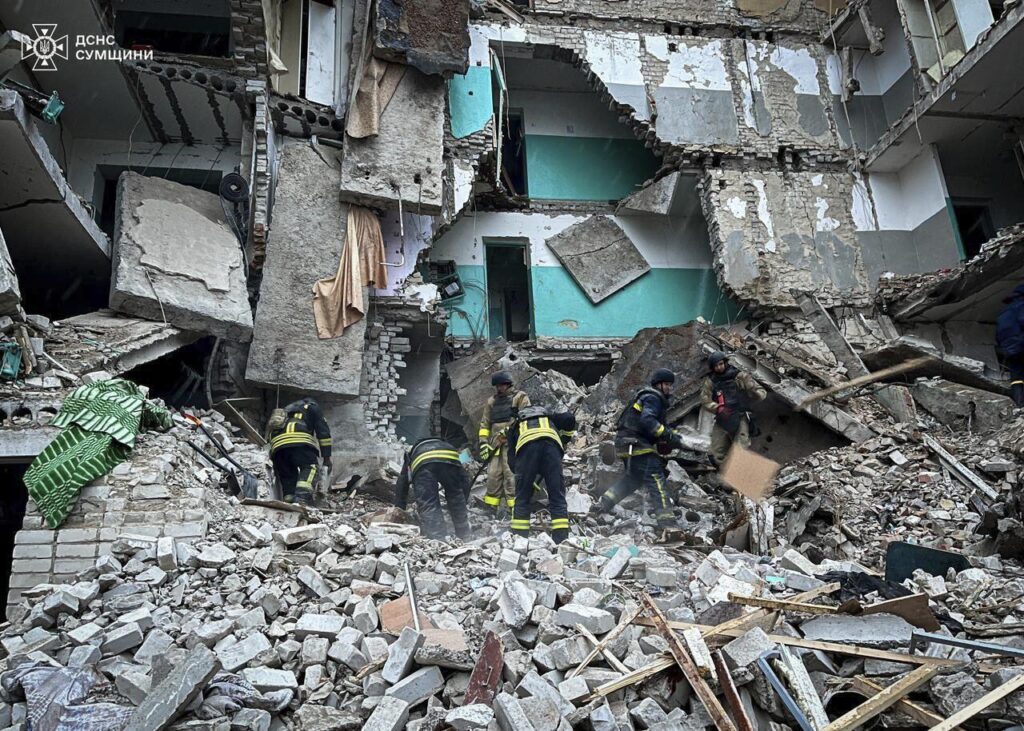
Russian forces mounted a 90-missile blitz overnight in what Putin called retaliation for Ukraine’s use of Western-supplied ATACMS and Storm Shadow missiles inside Russia. The assault targeted energy infrastructure with cruise missiles and kamikaze drones, forcing civilians into bomb shelters.
“Energy infrastructure is once again targeted by the enemy’s massive strike,” Ukrainian Energy Minister German Galushchenko wrote on Facebook. The attacks crippled utilities nationwide, leaving 260,000 Zhytomyr residents without water and cutting power to the Kherson region.
Putin threatened further escalation, warning of strikes on “military facilities, defence and industrial enterprises, or decision-making centres in Kyiv.” He claimed Russia possesses “ten times more” weapons systems than NATO can provide to Ukraine.
Zelenskyy’s chief of staff called the attack evidence of Russia “continuing their tactics of terror,” as officials reported explosions in Kyiv, Kharkiv, Odesa, Lutsk, Mykolaiv and Rivne. The United Nations warned that Russia’s infrastructure attacks could make this winter the “harshest since the start of the war.”
Federal prosecutors unsealed an indictment Tuesday charging U.S.-based Nigerian national Samson Omoniyi, 43, and eight others in a sophisticated money laundering operation that allegedly processed millions in fraudulent proceeds since 2016.
The Department of Justice announced that Omoniyi, of Houston, was arrested alongside accomplices in a coordinated operation across three jurisdictions. The defendants are charged with conspiracy to engage in money laundering, particularly funds obtained through business email compromise schemes and internet fraud targeting U.S. and international victims.
According to court documents, the organization operated across Tennessee, Texas, and other states, using recruiters or “herders” to direct “money mules” in laundering more than $20 million in fraudulent proceeds. Prosecutors allege the group established sham companies to conceal illegal gains and enrich conspiracy members.
The other defendants include Misha L. Cooper, 50, and Robert A. Cooper, 66, of Murfreesboro, Tennessee; Carlesha L. Perry, 36, Lauren O. Guidry, 32, and Caira Y. Osby, 44, of Houston; Whitney D. Bardley, 30, of Florissant, Missouri; and Dazai S. Harris, 34, and Edward D. Peebles, 35, of Murfreesboro.
Each defendant faces up to 20 years in prison if convicted, though final sentences will consider U.S. Sentencing Guidelines and other factors. The Justice Department emphasized that all defendants are presumed innocent until proven guilty.
The case follows recent convictions of two other Nigerian nationals, Anthony Ibekie and Samuel Aniukwu, who received combined 30-year sentences for defrauding U.S. victims of $3.5 million through inheritance and romance scams.
Federal prosecutors unsealed an indictment Tuesday charging U.S.-based Nigerian national Samson Omoniyi, 43, and eight others in a sophisticated money laundering operation that allegedly processed millions in fraudulent proceeds since 2016.
The Department of Justice announced that Omoniyi, of Houston, was arrested alongside accomplices in a coordinated operation across three jurisdictions. The defendants are charged with conspiracy to engage in money laundering, particularly funds obtained through business email compromise schemes and internet fraud targeting U.S. and international victims.
According to court documents, the organization operated across Tennessee, Texas, and other states, using recruiters or “herders” to direct “money mules” in laundering more than $20 million in fraudulent proceeds. Prosecutors allege the group established sham companies to conceal illegal gains and enrich conspiracy members.
The other defendants include Misha L. Cooper, 50, and Robert A. Cooper, 66, of Murfreesboro, Tennessee; Carlesha L. Perry, 36, Lauren O. Guidry, 32, and Caira Y. Osby, 44, of Houston; Whitney D. Bardley, 30, of Florissant, Missouri; and Dazai S. Harris, 34, and Edward D. Peebles, 35, of Murfreesboro.
Each defendant faces up to 20 years in prison if convicted, though final sentences will consider U.S. Sentencing Guidelines and other factors. The Justice Department emphasized that all defendants are presumed innocent until proven guilty.
The case follows recent convictions of two other Nigerian nationals, Anthony Ibekie and Samuel Aniukwu, who received combined 30-year sentences for defrauding U.S. victims of $3.5 million through inheritance and romance scams.
Police have arrested a young man who allegedly poisoned four family members to death in September as part of a traditional money ritual known as “Okeite” in Nigeria’s southeastern city of Nsukka, authorities confirmed Thursday.
The suspect allegedly killed his mother, grandmother, sister, and his sister’s child through food poisoning after consulting a native doctor who promised wealth through the ritual, according to local accounts. A nine-year-old child who also ate the poisoned food survived the attack.
The arrest came Tuesday after local residents paraded the suspect and forced him to seek forgiveness at his mother’s grave. He was then handed over to police and is being held at the State Criminal Investigation Department in Enugu.
The Advocacy for Alleged Witches (AfAW) called for a broader investigation, saying the suspect “did not act alone.” According to Dr. Leo Igwe, the organization’s director, the man was allegedly lured into the scheme by a friend who took him to a native doctor in Nsukka’s Agbani area.
“The Okeite money ritual is a scam that some self-styled native doctors and diviners carry out,” Igwe said in a statement. “The belief is that people could become rich through magical means after performing certain rituals using Ite (pots).” He explained that practitioners demand large payments and often instruct followers to commit murder or other crimes.
AfAW pledged to work with local contacts to support the surviving child while pressing police to investigate all involved, including the native doctor. The organization urged the public to reject such ritual practices and “embrace evidence-based means of earning money.”
Enugu State Police Public Relations Officer Daniel Ndukwe was unavailable for comment.
A Federal High Court in Lagos, Nigeria ordered the detention Wednesday of Patrick Akpoguma, 28, who faces seven criminal counts including conspiracy, identity theft, and fraud totaling $95,000 in an alleged international cybercrime scheme.
Akpoguma, recently paraded by Lagos’ Zone 2 Police Command for allegedly attempting to bribe officers with $100,000 (N174 million), pleaded not guilty before Justice Musa Kakaki to charges including obtaining money by false pretense and converting criminal proceeds.
Prosecutor Zebedee Arekhandia told the court Akpoguma and accomplices still at large operated between 2020 and November 2024, creating fake social media accounts under aliases “Connel Matt Herbert” and “Adam Taggart” to pose as an American citizen. The scheme allegedly targeted victims in Nigeria, the United States, and other countries with fraudulent cryptocurrency investment proposals.
The prosecution detailed how Akpoguma allegedly obtained $58,000 from three victims—Oleg, Connor, and Carlos—by falsely claiming he needed loans for a “business project in Florida USA.” He allegedly secured another $37,500 from Mark Alien, Eric Allan, Avere, Lume, and Portal Smith through fraudulent cryptocurrency investment schemes.
The charges cite violations of the Advance Fee Fraud and Other Fraud Related Offences Act of 2006 and the Cybercrime Act of 2015. Defense counsel Olatunde Kolawole filed a bail application, which prosecutors acknowledged receiving and requested time to counter.
Justice Kakaki ordered Akpoguma held in a correctional facility pending a February 4, 2025, bail hearing.
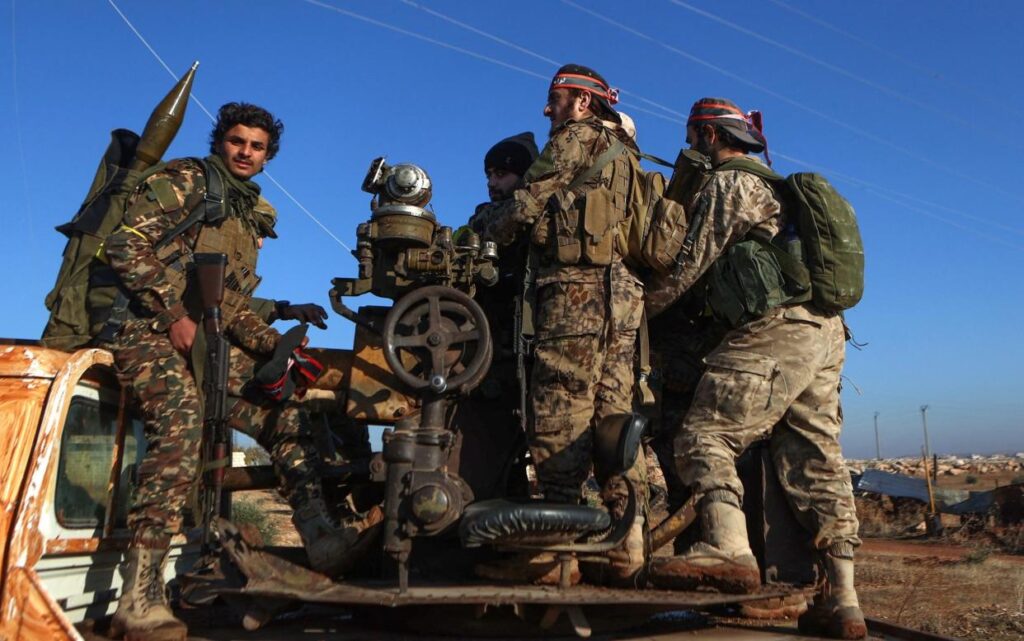
Syrian rebel forces launched their most significant offensive against government troops in western Aleppo since 2020, seizing 13 villages and a major military installation in an operation they dubbed “Deterrence of Aggression,” opposition sources reported Wednesday.
The surprise attack, which opposition factions say responds to recent artillery shelling by President Bashar al-Assad’s forces, has captured strategic towns including Urm Al-Sughra, Anjara, and Base 46, the largest regime installation in western Aleppo. Opposition forces claim 37 government troops and allied militia members died in the fighting.
The Military Operations Command of Syrian rebels told CNN its fighters had “liberated” Urm Al-Kubra, approximately 20 kilometers from Aleppo city, following “intense battles with Assad forces and Iranian militias.” Opposition spokesperson Hassan Abdulghani reported a “precision strike” against a helicopter at Al-Nayrab Airport east of Aleppo.
The offensive marks the first major confrontation between rebels and government forces since Russia and Turkey brokered a ceasefire in March 2020. While Syrian state media has not reported on the clashes, residents in regime-held areas of Aleppo, including the wealthy New Aleppo neighborhood, have begun evacuating due to the fighting.
Opposition forces conducting the attack include both Islamic groups and the moderate Free Syrian Army, previously backed by the United States and Turkey. The conflict represents a significant escalation in Syria’s civil war, which began during the 2011 Arab Spring as a pro-democracy uprising against Assad’s government.
The war, which has killed more than 300,000 civilians according to United Nations figures and displaced millions across the region, evolved into what observers called a “proxy war” as regional and global powers intervened. The conflict had remained largely dormant since the 2020 ceasefire, with only low-level clashes reported.
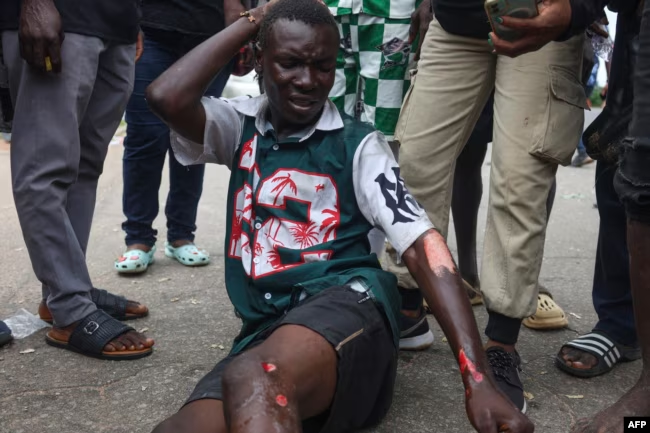
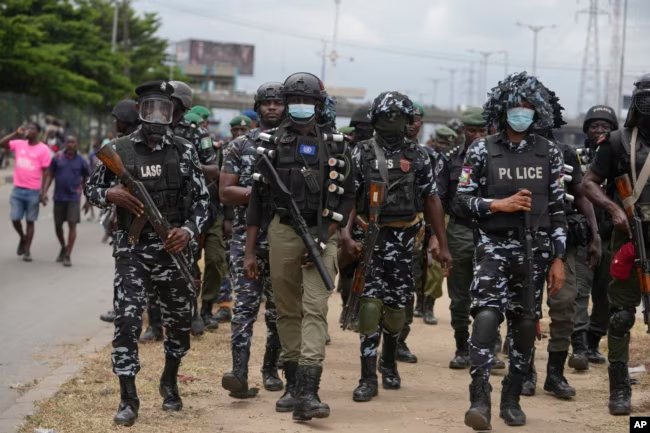
Amnesty International revealed Thursday that Nigerian police killed at least 24 protesters, including two children, and detained more than 1,200 others during August demonstrations against rising living costs, following a months-long investigation into the crackdown.
The human rights organization’s 34-page report, based on eyewitness accounts and interviews with medical workers and victims’ families, documents police firing live rounds at close range, targeting protesters’ heads and torsos across six states: Borno, Kaduna, Kano, Katsina, Jigawa and Niger. Some victims died from tear gas suffocation.
“Even today as we’re launching this report in Kano, many families were coming out to tell us that their children are missing and many are believed to have been killed or be in secret detention,” said Isa Sanusi, Amnesty’s Nigerian country director. “This just goes to show that Nigerian authorities are not ready to accept the fact that the people have the right to peaceful protest.”
The protests, dubbed “Ten Days of Rage,” targeted soaring costs following President Bola Tinubu’s fuel subsidy reforms. Police authorities, who have not responded to Amnesty’s findings, previously denied using live ammunition against demonstrators.
“The lack of accountability, the denial of the killings by the police and other government officials are just signs of the fact that impunity is still reigning in Nigeria and that has to stop,” Sanusi said, noting parallels to the 2020 End SARS protests that ended in deadly police violence at Lagos’s Lekki toll gate.
Nigeria’s Chief of Defense Staff, General Christopher Musa, had addressed security concerns during the protests: “None of us here is happy to hear any Nigerian is injured for whatever reason. It’s our duty to protect Nigerians… but we will not relent in pursuing those that have continued to encourage unconstitutional takeover of government.”
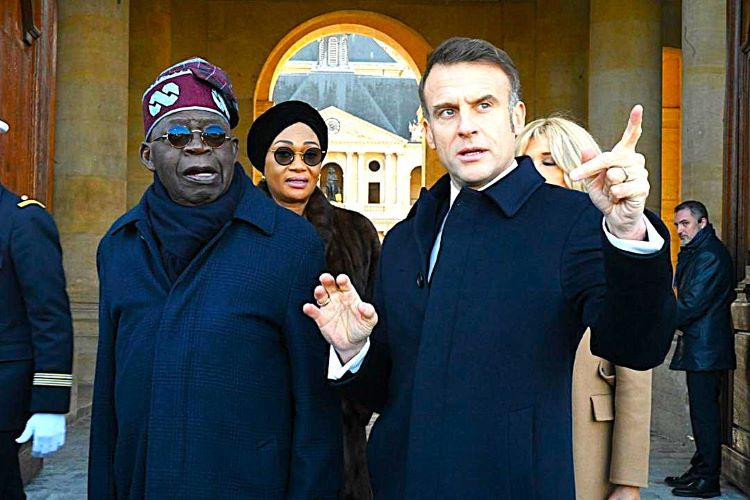
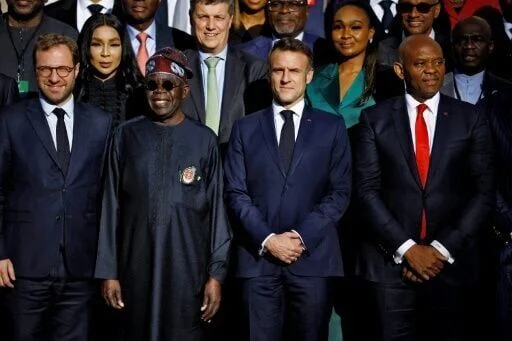
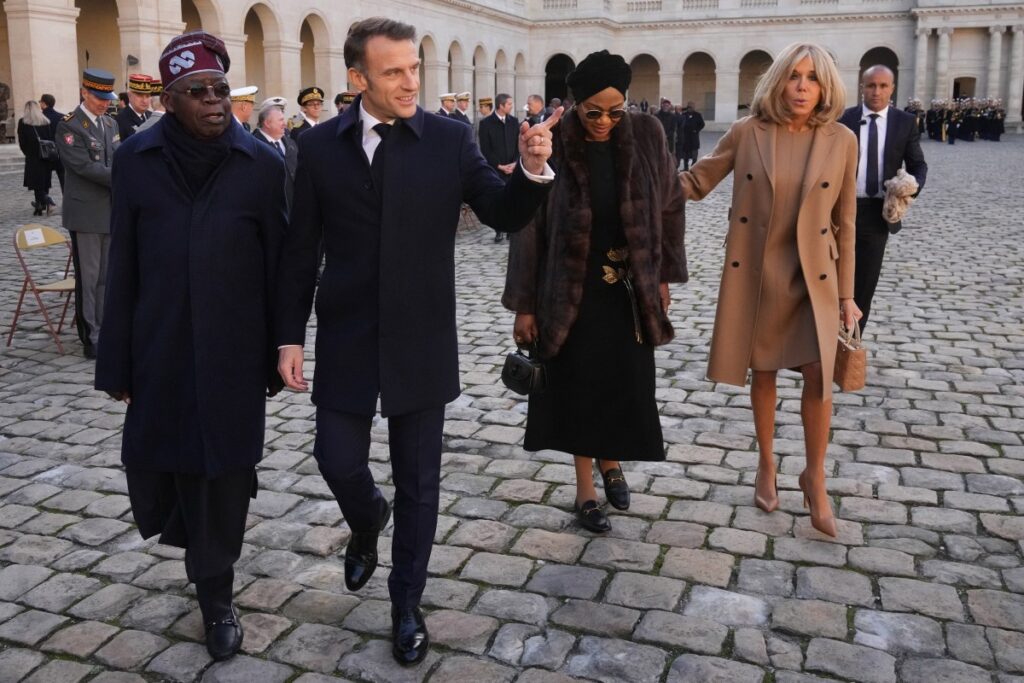
French President Emmanuel Macron welcomed Nigerian President Bola Tinubu Thursday for a historic state visit, marking France’s strategic pivot toward English-speaking Africa as its influence wanes in former colonies.
The two-day visit, the first by a Nigerian leader in more than 20 years, began at the Invalides memorial complex where both national anthems echoed through the courtyard. The summit aims to strengthen economic partnerships with Africa’s most populous nation as France seeks to counter recent diplomatic setbacks in the Sahel region.
France has lost ground in former colonies Niger, Mali, and Burkina Faso, where military coups since 2020 led to breaks with Paris and shifts toward Moscow. The three Sahel nations, battling jihadist violence since 2012, have rejected their former colonial ruler in favor of Russian alignment.
Nigeria, the continent’s leading oil producer and home to 220 million people, represents a crucial opportunity for French influence despite challenges of insecurity and corruption that have left more than half its population below the poverty line. The country was France’s top trading partner in sub-Saharan Africa in 2023, ahead of South Africa.
“France’s leading trading partners in Africa are not French-speaking,” noted Togolese economist Kako Nubukpo. According to Alain Antil, a researcher at the French Institute of International Relations, France maintains significant influence despite competition from China, India, and Turkey, particularly in English-speaking countries where it “is not held back by its colonial past.”
The Nigerian delegation seeks partnerships in “agriculture, security, education, health, youth engagement, innovation and energy transition,” Tinubu’s office said. A diplomatic source, speaking anonymously, emphasized that Nigeria “wants a partnership of equals, not a lecture.”
Macron’s outreach to anglophone Africa, including previous visits to Nigeria, South Africa, and Ethiopia, reflects his broader strategy to renew French-African relations ahead of the 2026 Africa-France Summit. Paris sees particular opportunities in Kenya and Zambia as Africa’s rapid urbanization – projected to add 700 million city dwellers by 2050 – drives demand for foreign investment.