Nigeria’s government has called in South Africa’s acting envoy after new protests and attacks targeting foreign nationals, including Nigerians, raised alarm over safety and strained relations between the two countries.
Officials said the envoy is expected at the foreign affairs ministry in Abuja on Monday, where authorities plan to express strong concern over reports of harassment, violence and destruction of businesses linked to Nigerian citizens living in South Africa.
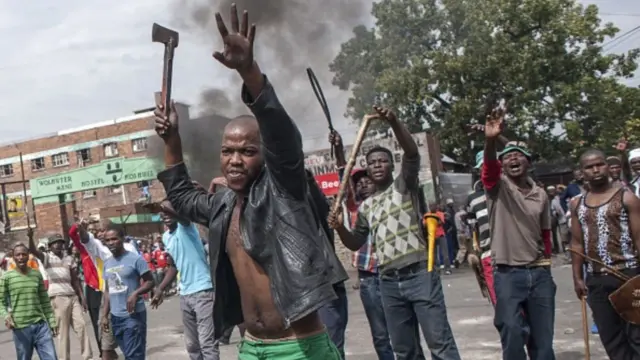
The move follows a wave of demonstrations in parts of South Africa that have, in some cases, turned violent. Witness accounts and local reports describe shops looted and properties damaged, many of them owned by foreigners. Nigerian-owned businesses have been among those affected.
A spokesperson for the ministry, Kimiebi Ebienfa, said the government views the situation as serious and warned it could affect long-standing ties between both nations if not addressed quickly.
Nigeria has also urged its citizens to remain calm, even as anger grows at home over the treatment of Nigerians abroad. Officials say diplomatic steps are already underway to protect citizens and prevent further escalation.
Nigeria and South Africa share one of the continent’s most important partnerships, built on decades of cooperation. That relationship dates back to Nigeria’s support during South Africa’s struggle against apartheid. Yet tensions have surfaced repeatedly in recent years, often triggered by violence against foreign nationals.
Major outbreaks in 2008, 2015 and 2019 left dozens dead and caused widespread destruction. The 2019 crisis led Nigeria to recall its envoy and pull out of a major economic forum in protest, marking one of the lowest points in recent relations.
In response to those past incidents, both countries set up joint systems aimed at preventing violence and improving communication, including early warning channels and consular cooperation. Despite those efforts, tensions have not fully eased, with periodic unrest continuing to target migrants.
The latest developments have again raised fears for the safety of thousands of Nigerians living and working in South Africa. Many rely on small businesses for their livelihoods, making them especially vulnerable during outbreaks of unrest.
Arise TV News noted that the renewed violence has stirred public anger in Nigeria, with calls for stronger action from the government. Leadership Nigeria also reported that the summons is intended to seek explanations from South African authorities and push for urgent measures to protect foreign nationals.
The statement from Nigeria’s foreign ministry emphasized that discussions with the envoy will center on recent protests and documented cases of mistreatment involving Nigerians and their businesses. It added that the government remains committed to defending the rights and dignity of its citizens abroad.
The latest tensions highlight a recurring challenge in Africa’s two largest economies. While Nigeria and South Africa often present a united front on regional issues, domestic pressures can quickly strain that partnership.
In South Africa, high unemployment and concerns about crime have fueled resentment toward foreign workers, who are sometimes blamed for economic hardship. These frustrations can spill into violence, especially in urban areas where competition for jobs and resources is intense.
For Nigeria, the issue carries both political and emotional weight. Nigerians abroad form a large and visible community, and attacks on them often spark strong reactions at home. Governments are expected to respond firmly, even while trying to avoid diplomatic fallout.
The decision to summon the envoy signals that Nigeria wants answers and assurances without immediately escalating the situation. It is a measured step, but one that carries clear pressure. If the violence continues, stronger actions could follow, including diplomatic protests or economic responses.
There is also a broader regional concern. Continued unrest risks undermining efforts to deepen economic integration across Africa. Initiatives tied to the African Union and the African Continental Free Trade Area depend on trust, open borders and the safe movement of people and goods. Persistent attacks on foreigners run counter to those goals.
The coming talks in Abuja could shape what happens next. If both sides can agree on concrete steps to protect foreign nationals and address the root causes of the unrest, tensions may ease. If not, the situation could harden positions on both sides.
For now, the focus remains on safety. Thousands of Nigerians in South Africa are watching closely, hoping that diplomatic talks will lead to real protection on the ground.
Two senior officials from Mexico’s ruling party in Sinaloa state, Mexico, say they are stepping back from their duties after U.S. prosecutors unveiled sweeping drug trafficking charges that have sent shockwaves through the country’s political landscape.
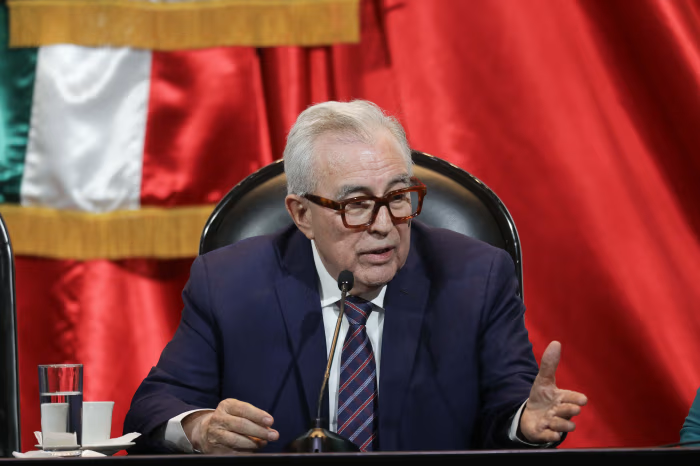
Sinaloa Gov. Rubén Rocha Moya and Culiacán Mayor Juan de Dios Gámez Mendívil announced they would take temporary leave following a U.S. indictment that names them among 10 current and former officials accused of aiding the powerful Sinaloa cartel.
The case, unsealed in New York, alleges that those charged played roles in moving large quantities of illegal drugs into the United States, in some cases in exchange for substantial bribes. The indictment has added pressure on Mexican President Claudia Sheinbaum as she navigates growing demands from Washington to intensify efforts against organized crime.
In a late-night video message, Rocha rejected the accusations and insisted he had done nothing wrong. He said he would step aside temporarily to address what he described as baseless claims and to cooperate with Mexican authorities reviewing the matter.
“My conscience is clear,” Rocha said, speaking directly to residents of Sinaloa. He added that he has never betrayed the public and intends to defend his record.
Gámez Mendívil issued a similar message, denying wrongdoing and confirming he would also take leave. Local officials moved quickly to install an interim mayor in Culiacán, the state capital.
Both men retain legal immunity under Mexican law while in office, meaning formal prosecution would require action by Congress. Their decision to step aside, rather than resign, allows them to keep that protection for now.
The charges have created a delicate political moment for Sheinbaum, who has sought to balance domestic priorities with pressure from President Donald Trump to confront drug cartels more aggressively. Sheinbaum has said her administration has not yet seen conclusive evidence supporting the U.S. claims but pledged that Mexican investigators would conduct their own review.
She also made clear that any prosecution would take place in Mexico if solid proof emerges, signaling a firm stance on national sovereignty that could complicate cooperation with U.S. authorities.
“We will not subordinate ourselves,” Sheinbaum said, framing the issue as one of national dignity.
Mexico’s attorney general’s office indicated that, for now, no arrests will be made locally, even as the United States seeks extradition of those charged. The government has not disclosed how it will respond to those requests.
Rocha, a longtime ally of former President Andrés Manuel López Obrador, has been linked to controversy before. In 2024, his name surfaced in a letter attributed to a Sinaloa cartel figure who claimed he was en route to meet the governor before being abducted by a rival faction. Rocha has denied any connection.
The Associated Press previously detailed that the indictment includes allegations of conspiracy to import narcotics and possession of heavy weapons. If convicted in the United States, some defendants could face decades in prison or life sentences.
The case also casts a spotlight on members of the Morena party, Mexico’s ruling political force. Several of those named have argued the charges are politically motivated, raising concerns about cross-border tensions and the use of legal action in broader geopolitical disputes.
The timing of the indictment matters. It comes as relations between Mexico and the United States face renewed strain over security policy, migration, and economic ties. By naming sitting officials, U.S. prosecutors have escalated the stakes beyond criminal enforcement into the realm of diplomacy.
For Sheinbaum, the challenge is twofold. At home, she must maintain credibility on crime while avoiding the perception of yielding to outside pressure. Abroad, she must manage expectations from Washington, where calls for tougher action against cartels have grown louder.
The decision by Rocha and Gámez Mendívil to step aside suggests an attempt to contain political fallout while preserving legal defenses. It also reflects how sensitive the allegations are within Mexico, where public trust in institutions has long been tested by corruption scandals.
At a broader level, the case underscores the persistent reach of organized crime into political systems. Even unproven allegations can damage confidence and complicate governance, particularly in regions like Sinaloa, which has long been associated with cartel activity.
There is also a strategic dimension. By pursuing charges in U.S. courts, American authorities are signaling they will target not just traffickers but also alleged facilitators in government. That approach could reshape cooperation between the two countries, especially if Mexico resists extradition or insists on handling cases domestically.
For now, the legal process remains in its early stages. None of the accused are in U.S. custody, and the outcome will depend on evidence that has yet to be fully presented in court. But the political impact is already clear.
The case has exposed fault lines within Mexico’s leadership, tested its legal framework, and raised new questions about how far international law enforcement can reach into sovereign governments.
Spirit Airlines is gone. Just like that, after 34 years of cheap tickets, bright yellow planes, and more bad press than most airlines survive in a decade, the carrier shut down Saturday and took 17,000 jobs with it.
No warning to most workers. No help rebooking stranded passengers. Just a website message saying flights were canceled and a company that, by sunrise, no longer existed.
“If you have a flight scheduled with Spirit Airlines, don’t show up at the airport,” Transportation Secretary Sean Duffy said Saturday. “There will be no one here to assist you.”
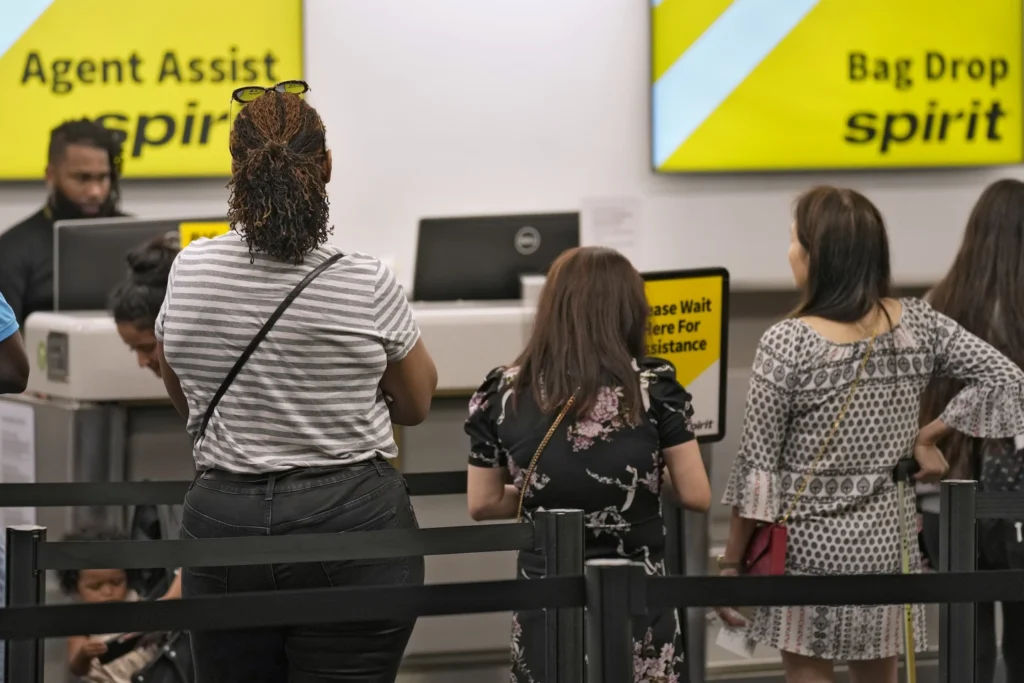
Some passengers got that message too late. At Atlanta’s airport, five Spirit flights were still flashing “on time” on the departure board Saturday morning. Taylor Nantang showed up anyway — with her husband and four kids, having driven down from Tennessee for a last-minute Miami vacation her husband booked the night before.
“What!?” she said when she found out. “So the whole airline at every airport is out of business? Oh my, that’s crazy.”
Joshua Sigler had bought his Miami ticket just the day before. He walked in, found out, and turned around. “I’m just going to go back home,” he said. Spirit had never given him a heads-up. “They get you there,” he said of the flights he’d taken before. “It was cheap.”
That was Spirit in two sentences.
The Last Flight
The final Spirit plane left Detroit and touched down at Dallas Fort Worth. More than 50,000 passengers had flown Spirit on its last day without knowing it. Over 1,300 crew members were scattered across the country, and the airline said it was working to get them home. Many of the 17,000 employees found out they were unemployed through news alerts on their phones, not from their own company.
Flight attendant Freddy Peterson, 60, was on one of those final flights — Detroit to Newark, arriving around 11 p.m. Friday. The plane was full. Nothing seemed off.
He went to bed and set an alarm for 3 a.m. He’d seen the rumors on social media. When he checked the website at 3 o’clock, it said Spirit flights were canceled.
Delta flew him back to Atlanta Saturday morning. He drove home to Shellman, in southwest Georgia, alone.
“I’ll probably do my boo-hoo crying and all that other stuff once I get in the car,” Peterson said.
He worked for Spirit a decade. Said it did wonders for him. Said the chaos reputation wasn’t fair. But he was angry about one thing — management canceled a promised town hall for employees in the final days and said nothing.
A Bailout That Went Nowhere
President Donald Trump floated a government rescue last week. As recently as Friday afternoon, he said the administration was looking at it and had handed Spirit a “final proposal” for a taxpayer-funded takeover.
It never happened. Duffy put it plainly Saturday: “We often times don’t have half a billion dollars laying around.”
The Iran war broke what was left of Spirit’s financial footing. The airline had fought through its first bankruptcy filing in November 2024, having lost more than $2.5 billion since the start of 2020. It filed again in August 2025 with $8.1 billion in debts against $8.6 billion in assets. It had struck a preliminary deal with lenders and thought it might emerge from bankruptcy by early summer.
Then the U.S. and Israel launched strikes on Iran. Crude oil prices shot above $100 a barrel. Jet fuel costs more than doubled in some markets. Spirit, already running on fumes, ran out of runway.
CEO Dave Davis said in a statement the outcome was “tremendously disappointing and not the outcome any of us wanted.”
Who Gets the Blame
The White House wasted no time pointing fingers at the Biden administration. Trump officials took to social media Saturday to argue that former President Joe Biden killed Spirit when his administration blocked a proposed merger between Spirit and JetBlue in 2023.
Duffy blamed Biden and his transportation secretary, Pete Buttigieg, directly. “Many at the time said that this was a disaster. This merger should have been allowed,” Duffy said.
Union leaders who had pushed for a rescue agreed the blocked merger hurt. They argued that a Spirit collapse would cost 17,000 Americans their jobs, cut competition, and push airfares higher — especially in cities like Las Vegas, Fort Lauderdale, and Orlando where Spirit flew heavily and kept prices down for working-class travelers.
Spirit attorney Marshall Huebner confirmed roughly 17,000 jobs were on the line.
Where Spirit Came From
The airline started in the early 1980s as Charter One Airlines, running vacation tour packages. It evolved into a no-frills carrier built around what the industry calls “unbundled” fares — strip everything out, charge for bags, charge for seat selection, charge for printing a boarding pass, and sell the base ticket at a price nobody else could touch.
For years, Ben Baldanza ran the place with an almost religious commitment to cheapness. He ordered his burgers plain because he didn’t want to pay for pickles he wasn’t going to eat. He sat in the same tight seats as his passengers. He told critics that Spirit wasn’t the problem — passengers just weren’t used to seeing every charge itemized. He wasn’t wrong, and he wasn’t apologetic.
The ads were something else entirely. After the Deepwater Horizon oil spill in 2010, Spirit ran a promotion called “Check Out the Oil on Our Beaches.” When Rep. Anthony Weiner got caught in a sexting scandal, Spirit launched a “Weiner Sale” with copy that read “fares just too hard to resist.” Then came the “MILF Sale” — officially standing for “Many Islands, Low Fares” — with a knowing wink at what else the acronym meant.
People loved to hate Spirit. But they kept buying the tickets.
And the joke was ultimately on the big carriers. Delta, United, and American spent years dismissing Spirit’s model. Then they copied it, cutting prices and rolling out their own bare-bones “basic economy” fares. Spirit helped reshape how Americans buy airline tickets. Then the industry it reshaped moved on without it.
Aviation analytics firm Cirium tracked Spirit carrying about 1.7 million domestic passengers in February — roughly 500,000 fewer than the same month a year earlier. Seat capacity had dropped by half compared to May 2024.
What Passengers Do Now
Duffy said United, Delta, JetBlue, and Southwest were offering $200 one-way fares to displaced Spirit passengers who could show a Spirit confirmation number and proof of purchase. Customers who booked directly through Spirit can expect refunds from a reserve fund the airline set up. Anyone who booked through a travel agent or third-party site needs to go back to whoever sold them the ticket.
Angelina Deruelle, a 23-year-old University of Houston student, was at Fort Lauderdale-Hollywood International Airport Friday when her Spirit flight to Texas was canceled. She was trying to figure out how to get home.
“I feel like Spirit is just affordable, simple, nothing too fancy,” she said. “It’s just like home.”
That home is gone now. And for the millions of travelers who counted on Spirit to get somewhere they couldn’t otherwise afford to go, the cheap seat just got a lot harder to find.
What This Means Going Forward
Spirit’s exit is not just a business story. It is a consumer story. Budget travelers — the ones choosing between flying and driving, the ones checking prices at midnight for a long weekend — they are the ones who lose the most here. Spirit was not glamorous. It was functional and accessible. And in a country where airline consolidation has steadily reduced competition and kept prices elevated, one fewer player at the bottom of the market means higher floors for everyone else.
The Iran war provided the final blow, but Spirit had been weakened for years by debt, COVID losses, and a business model that left no cushion for anything going wrong. The blocked JetBlue merger, whatever its merits as an antitrust call, denied Spirit the capital and scale it needed to survive a crisis.
The flight attendants union said it best in its farewell memo to members Saturday. “While the country has had a blast making Spirit the butt of the joke,” it read, “we’ve built a strength together that could withstand anything that anyone throws at us. And that is no joke.”
The yellow planes are grounded. The cheap seats are gone.
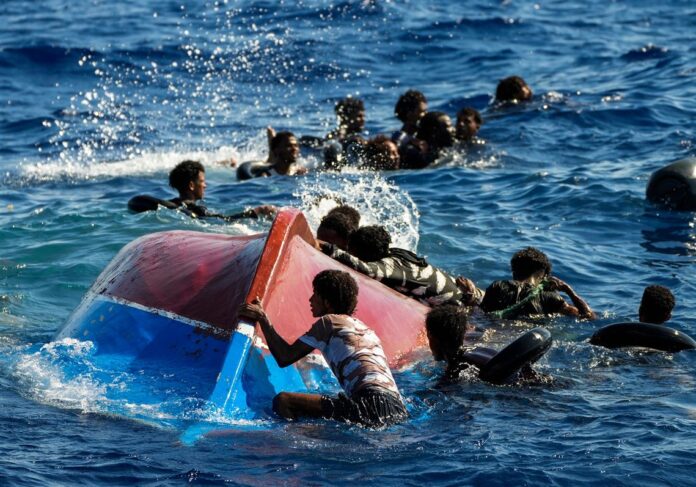
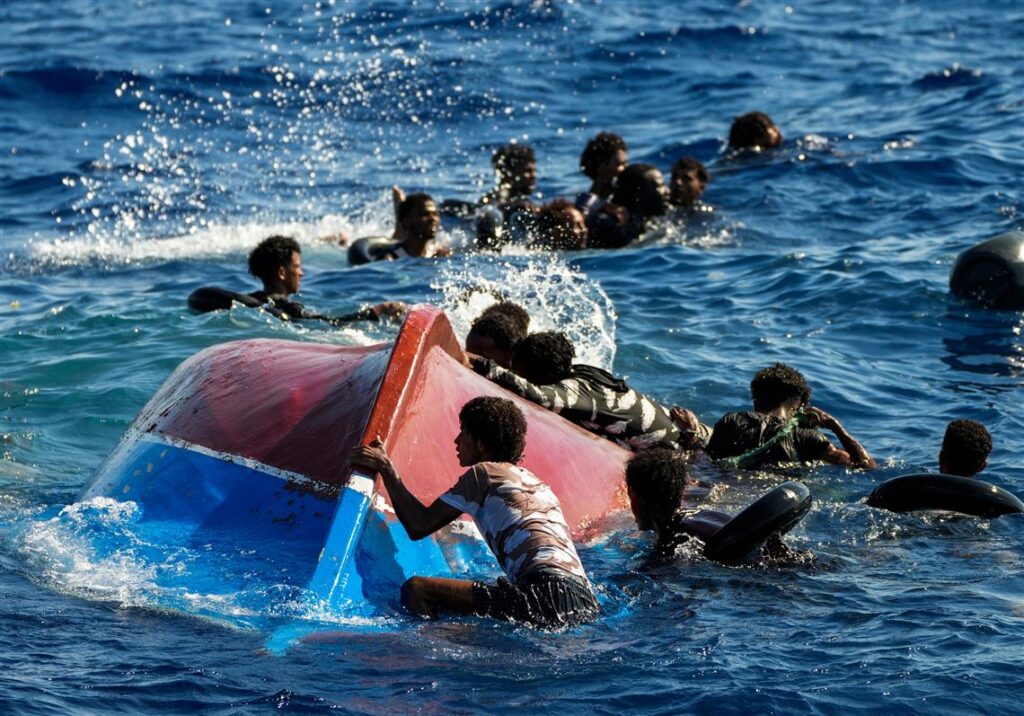
(AP) — A boat carrying dozens of Sudanese migrants capsized in the Mediterranean Sea near eastern Libya, leaving at least 17 people dead and nine others missing, United Nations officials said Thursday, in the latest tragedy along one of the world’s deadliest migration routes.
Only seven people survived the disaster, the UNHCR said in a statement posted on social media. The timeline of the incident was not immediately clear, but rescuers indicated the vessel had been adrift for several days before survivors were located.
The International Organization for Migration said those rescued were in critical condition after being stranded at sea without sufficient food or water. Some of the migrants are believed to have died from dehydration and starvation before help arrived.
The boat departed from Tobruk and was headed toward Greece when it overturned roughly 100 kilometers northwest of the coastal city, the migration agency said. Rescue efforts involved the Libyan navy, the coast guard, and the Libyan Red Crescent.
Images shared by the Red Crescent showed recovery teams handling bodies placed in black bags, underscoring the scale of the loss. Officials did not immediately provide details on the condition of the survivors or whether additional people might still be found.
Libya has long served as a major departure point for migrants attempting to reach Europe by sea. Many are fleeing conflict, economic hardship, and instability across parts of Africa and beyond. The collapse of central authority in Libya following the 2011 uprising that toppled longtime leader Moammar Gadhafi has left the country with limited control over its borders, allowing human smuggling networks to flourish.
The latest incident follows a string of recent disasters in the central Mediterranean. Earlier this month, more than 80 migrants were reported missing after another boat sank after leaving a Libyan coastal town.
Data released in April by the International Organization for Migration shows that 2026 is shaping up to be one of the deadliest years for migrants crossing the Mediterranean since records began more than a decade ago. At least 765 people have died along the central route alone this year, marking a sharp increase compared with the same period in 2025.
Amy Pope, director general of the migration agency, said in remarks to The Associated Press earlier this month that the number of migrants attempting the crossing is rising, with increasing numbers coming from countries such as Bangladesh, Pakistan, Afghanistan, and Sudan.
Officials said it remains unclear what caused the vessel to capsize. Overcrowding, poor vessel conditions, and rough sea conditions are frequently cited in similar incidents. Investigators are expected to examine survivor accounts and any available evidence to determine what led to the accident.
Search efforts for the missing were ongoing as of Thursday, though hopes of finding additional survivors were fading.
The latest shipwreck highlights the worsening humanitarian situation in the Mediterranean, where migration routes have become increasingly dangerous due to stricter border controls and the growing influence of smuggling networks. As legal pathways to migration remain limited, many individuals resort to risky sea journeys aboard unseaworthy vessels.
The sharp increase in fatalities suggests that current deterrence measures may be pushing migrants toward more perilous routes rather than reducing crossings. Experts warn that without expanded rescue operations and safer migration options, the death toll is likely to continue rising.
The involvement of multiple nationalities in recent crossings also points to broader global instability. Conflicts, economic challenges, and climate-related pressures are contributing to increased displacement, placing additional strain on already dangerous migration corridors.
Libya’s ongoing political fragmentation further complicates rescue and prevention efforts. Competing authorities and limited resources have made it difficult to regulate coastal departures or dismantle smuggling networks effectively.
The repeated loss of life at sea is expected to renew calls for coordinated international action. Humanitarian groups have urged stronger search-and-rescue missions, improved conditions for migrants in transit countries, and expanded legal migration pathways.
European nations, meanwhile, continue to face political pressure over migration policies, with debates intensifying over border enforcement, asylum systems, and responsibility-sharing among countries.
For now, the waters off Libya remain a perilous gateway for those seeking a better life, with each new tragedy underscoring the urgent need for solutions that balance security concerns with humanitarian obligations.
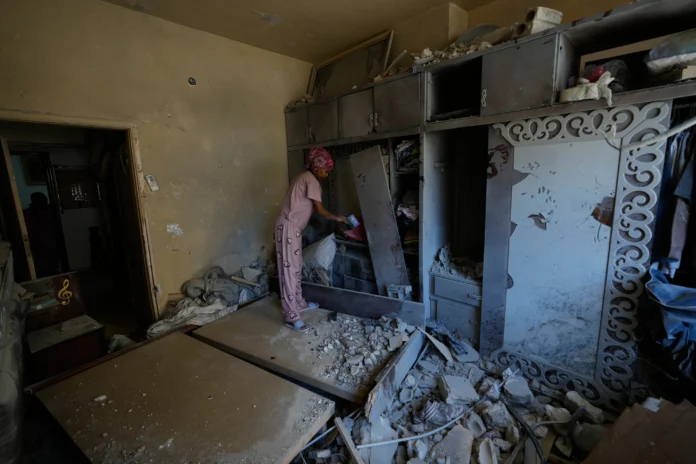
Israeli airstrikes killed at least 10 people across southern Lebanon on Friday as Hezbollah launched drones and rockets into northern Israel, wounding two soldiers in a continued exchange of fire that has persisted without pause since a ceasefire between the two sides took effect April 17 — a truce that has demonstrably failed to halt the bloodshed it was meant to contain.
The deadliest single strike of the day struck the village of Habboush, near the southern city of Nabatiyeh, killing six people including a woman and a child and wounding eight others, Lebanon’s Health Ministry confirmed. The Israeli military had issued an evacuation warning to Habboush residents moments earlier, cautioning that those in proximity to Hezbollah facilities faced danger. The state-run National News Agency confirmed four additional deaths across three separate southern villages struck later in the day.
By Friday afternoon, Hezbollah had released six successive statements acknowledging it had launched both drones and rockets at Israeli military positions along the border. The Israeli military confirmed that an explosive drone crossed into northern Israel and landed near the border with Lebanon. Israeli media outlets reported that a separate drone strike in the vicinity of Margaliot ignited a fire, and that two soldiers sustained light wounds in a Hezbollah drone impact in the same general area.
The violence unfolded against the backdrop of an Israeli ground presence that has remained embedded in a strip of Lebanese territory extending roughly 10 kilometers inside the border since the ceasefire was declared, with Israeli forces characterizing the occupation as an essential buffer zone to shield northern Israeli communities from Hezbollah rocket fire.
A Journalist Killed, Another Left in Rubble
The escalating military exchange has claimed civilian lives beyond Friday’s toll, and no death has drawn more immediate international attention than that of Amal Khalil, a veteran correspondent for the Lebanese newspaper Al-Akhbar who was killed by an Israeli strike in southern Lebanon on Wednesday — five days into the ceasefire — while on assignment to document conditions in the post-truce zone.
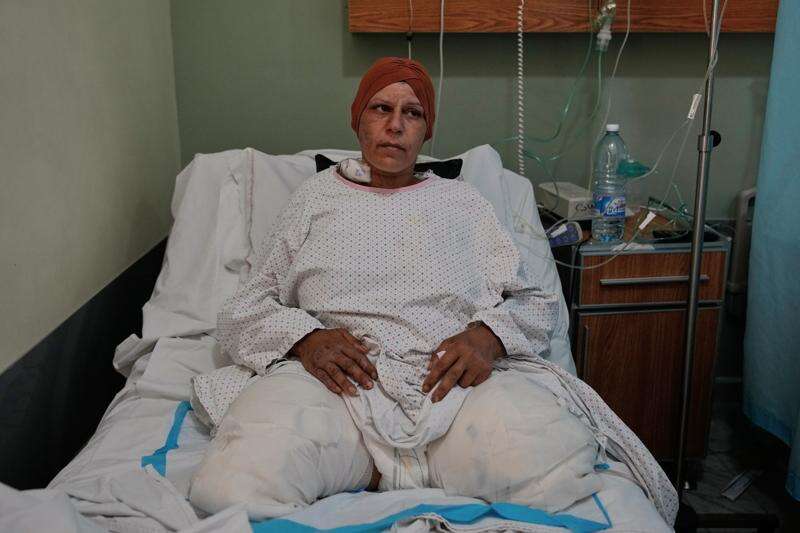
In an interview with the Associated Press conducted Friday from her hospital bed in Beirut, Khalil’s colleague Zeinab Faraj — a freelance photographer and video journalist who survived the same strike — described hours of agony, confusion, and desperate waiting as the two women were trapped in a shop with no rescue forthcoming and Israeli aircraft continuing to circle overhead.
Faraj and Khalil had been driving through the village of al-Tiri, approximately eight kilometers from the Israeli border, when an Israeli strike hit the car traveling ahead of them. Khalil had been holding her phone out the window to capture footage of the post-ceasefire landscape. The women pulled over and took cover on the roadside. A drone remained visible in the sky above them. Roughly an hour later, a second strike hit Khalil’s parked car directly beside them.
Faraj forced open the metal security shutter of a nearby shop and the two women took shelter inside. Khalil, she recalled, was by then crawling — wounded in her nose, head, shoulder, and leg, and suffering burn wounds from the burning vehicle. Despite her injuries, Khalil attempted to reassure her family by phone that both women were safe.
A coordinated effort involving the Lebanese Red Cross, the Lebanese army, the United Nations peacekeeping force UNIFIL, and the Israeli military was initiated to negotiate safe passage for an evacuation. It was slow. As time stretched on and Faraj began to lose consciousness, Khalil drew close.
“When I said I wanted to go to sleep, Amal came closer and hugged me and told me, ‘Zeinab, don’t leave me alone,'” Faraj recounted, speaking with visible difficulty, her face swollen and bruised. “I realized that Amal was not in good condition. The color of her face had changed and I realized that she had some internal bleeding, too.”
Then a third strike hit the building where they were sheltering. Faraj was thrown from the shop by the blast’s force. Khalil was buried inside.
“I was in and out of consciousness, and then I thought my dad had come to get me and I began calling to him, ‘Baba, I’m here, come and help me,'” Faraj said.
Lebanon’s Health Ministry said in a statement that when a Red Cross ambulance finally reached the scene to attempt Khalil’s rescue, Israeli forces opened fire on it, compelling the crew to retreat. The Israeli military denied targeting journalists, denied obstructing rescue operations, and said the incident remained under review, adding that individuals in the village had violated the ceasefire in ways that endangered its troops.
Shortly before midnight, after the Lebanese army, civil defense teams, and the Red Cross received clearance to re-enter the area, Khalil’s body was recovered from the rubble. Faraj had been evacuated hours earlier, unaware until later that her colleague had not been brought out with her.
“If they had gotten to her a bit sooner, Amal would be here today,” Faraj said.
A Pattern of Targeting — and a Social Media Post
Faraj is convinced the two journalists were deliberately targeted. Her belief is grounded in part in something Khalil had disclosed before her death: that during her coverage of the previous Israel-Hezbollah conflict in 2024, she had received threatening messages from a number with an Israeli country code. It remained unclear whether the messages originated from the Israeli military or a private individual. The Israeli army did not respond to an inquiry on the matter.
Wounded Lebanese journalist
Days before Khalil was killed, Israeli military spokesperson Avichay Adraee reposted on the platform X a video from Al-Akhbar showing Khalil rescuing a cat from the rubble of a destroyed building. In his post, Adraee characterized Al-Akhbar as “terrorist media speaking on behalf of Hezbollah, the devil,” citing the newspaper’s editorially pro-Hezbollah orientation.
The Committee to Protect Journalists, an international press freedom organization, characterized Adraee’s post as “incitement” and called for an international investigation into Khalil’s killing. In a statement, the organization cited the protections afforded to journalists under international humanitarian law regardless of the editorial positions of their employers. “Under international humanitarian law, journalists, as civilians, are protected from direct and indiscriminate attack, regardless of the positions or affiliation of their media outlets, provided they do not directly participate in hostilities,” the group said. “There is no evidence that Khalil or Faraj were directly participating in hostilities.”
Lebanon’s information ministry confirmed that nine journalists have been killed by Israeli strikes since the current conflict began on March 2.
The War’s Expanding Human Cost
The latest Israel-Hezbollah conflict ignited March 2, when Hezbollah fired a barrage of missiles across the border two days after the United States and Israel launched military operations against Iran. Israel responded with broad aerial bombardment across Lebanon and a ground incursion that established the border strip its forces continue to occupy.
The cumulative toll since March 2 has reached nearly 2,500 people killed in Lebanon, among them 277 women, 177 children, and 100 health workers, according to Lebanon’s health authorities. On the Israeli side, 15 soldiers and three civilians have been killed.
The April 17 ceasefire has not produced the cessation of hostilities its name implies. Israeli forces have conducted repeated strikes on Lebanese villages since the truce took effect, and Hezbollah has maintained a sustained launch cadence of drones and rockets into Israeli territory. Neither side has formally acknowledged that the ceasefire has collapsed, yet both have continued prosecuting violence at a tempo that renders the agreement functionally inoperative.
Journalism, Impunity, and the Rules of War
The killing of Amal Khalil and the near-death of Zeinab Faraj crystallize a dynamic that has defined coverage of this conflict from its opening days: the extreme danger facing journalists attempting to document conditions in southern Lebanon, and the near-total absence of accountability for strikes that kill or wound members of the press.
The sequence of events Faraj described — a first strike, a second strike on the journalists’ car, a third strike on the building where two wounded women were sheltering, and then gunfire on the ambulance attempting their rescue — represents, if accurately recalled, a pattern that the laws of armed conflict are explicitly designed to prohibit. Whether those events unfolded as Faraj describes them, and whether they reflect deliberate targeting, reckless indifference, or tragic operational error, is precisely the question that the Committee to Protect Journalists argued can only be resolved through an independent international investigation.
Israel’s military has consistently denied targeting journalists and maintained that all strikes are conducted against legitimate military objectives. That position is rendered harder to evaluate by the absence of any independent investigative mechanism with access to both the operational records of the Israeli military and the physical evidence on the ground in southern Lebanon.
What is not in dispute is the aggregate toll: nine journalists killed in Lebanese territory since March 2, in a conflict that began less than two months ago. That figure, measured against any historical baseline for press casualties in modern warfare, demands explanation — and, if the international community is serious about the protections it has written into the laws of war, demands accountability.
An 18-year-old man walked into a small-town Kentucky bank just before 2 p.m. Thursday, shot and killed two employees within seconds of entering, rifled through the teller drawers, and walked out — setting off a multiagency manhunt that stretched through the night and ended only after a chase topping 130 miles per hour on a Lexington interstate left his silver BMW in ruins and him in federal custody.
Brailen Weaver now faces federal charges of armed bank robbery, use of a firearm in a crime of violence, and causing death with a firearm, the U.S. Attorney’s Office for the Eastern District of Kentucky announced Friday. Kentucky Attorney General Russell Coleman separately confirmed his office would pursue state murder charges, ensuring Weaver confronts accountability on two legal fronts simultaneously. Weaver is scheduled to make his initial federal court appearance Monday in Lexington.
According to an FBI affidavit filed in federal court Friday, Weaver entered a U.S. Bank branch in Berea — a city of roughly 16,000 people situated about 36 miles south of Lexington — wearing a black mask and black gloves. He immediately shot and killed a male victim upon entering, then fatally shot a female bank teller. He proceeded to check multiple drawers before fleeing the building. Investigators have not confirmed whether he left with any money.
The names of the two victims were not immediately released. U.S. Bank expressed grief in a statement, saying it was “deeply saddened by the tragic event that took the lives of two of our employees” and pledged to support the victims’ families and colleagues while cooperating fully with law enforcement.
A Digital Trail and a Nightlong Pursuit
The investigation moved quickly. Surveillance footage captured a silver BMW sedan in connection with the robbery, and agents matched the vehicle to a Facebook listing posted by Weaver, the affidavit said. Investigators also cross-referenced clothing worn by the suspect in bank surveillance footage against photographs of Weaver on his social media accounts, establishing a link that tightened as the hours passed.
Then Weaver appeared to hand investigators another thread. At approximately 8 p.m. Thursday — roughly six hours after the shooting — he posted an image to social media depicting an alien holding a large quantity of cash, according to court documents. Whether the post was a taunt, a lapse in judgment, or simply the behavior of an 18-year-old who had not grasped the speed of the net closing around him, it contributed to the digital evidence trail that federal prosecutors now hold.
FBI agents located Weaver’s BMW on Interstate 75 in Somerset, Kentucky, that night. He refused to stop. The pursuit that followed pushed speeds above 100 mph on the interstate before Weaver exited toward Lexington, where the chase accelerated further — exceeding 130 mph, according to the affidavit — before he lost control and crashed the vehicle. A firearm was recovered from the car. Weaver fled on foot into the darkness but was apprehended at approximately 3 a.m. Friday.
The search had drawn extraordinary resources. The FBI, the Bureau of Alcohol Tobacco Firearms and Explosives, the Lexington Police Department, Kentucky State Police, and multiple county sheriff’s offices all participated. Law enforcement personnel went door to door canvassing for surveillance footage and witness accounts. Helicopters, drones, and tracking dogs were deployed across the search corridor. Nearby schools were placed on lockdown Thursday as the suspect remained at large, with students barred from boarding buses and required to be retrieved by their parents.
Federal and State Accountability
Acting U.S. Attorney General Todd Blanche framed the case in unambiguous terms. “As alleged, this deplorable act of violence in broad daylight has left two families in Kentucky with unthinkable loss,” Blanche said in a statement. “Our hearts go out to them.”
Olivia Olson, special agent in charge of the FBI’s Louisville field office, addressed the community directly at a Friday news conference. “While there is no longer imminent danger, we understand that the tragedy is far from over for the community,” Olson said. “The only solace that we can offer is that this individual, who valued a stolen dollar more than two human lives, will be held accountable to the fullest extent of the law.”
Kentucky Attorney General Coleman struck a similar tone, framing the dual prosecution track as a commitment to the victims’ families. “The Kentucky Attorney General’s Office is working collaboratively with federal authorities, and we will pursue state murder charges following the shootings in Berea,” Coleman said. “For the families of the two Kentuckians killed, we will do everything possible to deliver justice.”
Kentucky State Police Trooper Scottie Pennington, speaking at a news briefing, captured the grief felt across a community where the victims were known neighbors. “This is a terrible day for Berea,” Pennington said. “They’re our people that work in our community, and they’re no longer with us.”
Jason Parman, first assistant U.S. attorney for the eastern district of Kentucky, noted in his 18 years as a federal prosecutor he could not recall a death resulting from a bank robbery in the region — underscoring how rare and severe Thursday’s violence was even by the standards of a crime category that already carries severe federal penalties.
A Vanishing Crime That Turned Lethal
The Berea killings land against a backdrop of steadily declining bank robbery in America — a trend that makes the lethality of Thursday’s incident all the more jarring. FBI Bank Crime Statistics data shows the number of bank robberies nationally fell from 5,546 in 2010 to 1,263 in 2023, a drop of 77 percent over 13 years. No deaths were recorded in connection with bank robberies in either 2022 or 2023, the most recent years for which complete data is available.
Tom Myers, a crime historian and retired FBI agent, attributed the decline to a combination of strategic calculation by experienced criminals and the rapid evolution of bank security technology. Armed robbery of a federally insured institution carries severe mandatory federal sentencing exposure, and the proliferation of miniaturized GPS tracking devices embedded in cash bundles has made it increasingly difficult for a robber to benefit from whatever they manage to take before law enforcement closes in.
“The juice ain’t worth the squeeze,” Myers said. “There’s so many other things to do that are profitable — you can go to a big box store and walk out with the same amount in some places, and only face state charges if you’re caught.”
The calculus Myers described appears not to have reached Weaver, or to have been dismissed by him. The U.S. Bank branch he targeted sits roughly a mile from Berea College, an institution whose campus dates to the 1850s and whose presence has long shaped the character of the surrounding community. The quiet, small-city setting made the violence feel, to those who witnessed its aftermath, all the more incomprehensible.
When Lethality Defies the Statistics
The Berea shooting forces a reconsideration of assumptions embedded in the declining bank robbery data. A falling crime rate creates a temptation to treat the remaining incidents as similarly diminished in severity — a mistake that Thursday’s events illustrate with brutal clarity. The 77 percent decline in bank robberies over 13 years has not eliminated the crime; it has concentrated it among a smaller pool of offenders whose profiles, motivations, and willingness to resort to lethal violence may differ substantially from the prior generation of bank criminals that the deterrence statistics were built around.
Weaver’s alleged conduct — entering a bank in daylight, killing two people before checking the drawers, posting on social media hours later, and leading police on a triple-digit chase — does not fit the behavioral pattern of a calculated criminal operating from professional experience. It suggests instead an actor whose risk assessment was either severely distorted or absent entirely, a profile that existing deterrence frameworks, however effective at reducing aggregate crime rates, may be poorly equipped to intercept.
For Berea, none of that analytical context softens the immediate reality: two people who drove to work Thursday morning did not come home. The federal prosecution and the parallel state murder case that Kentucky’s attorney general has promised represent the legal system’s answer to that fact. Whether they constitute justice, for families who lost someone to a crime that should statistically have not resulted in any deaths at all, is a question that courtrooms can adjudicate but cannot fully resolve.
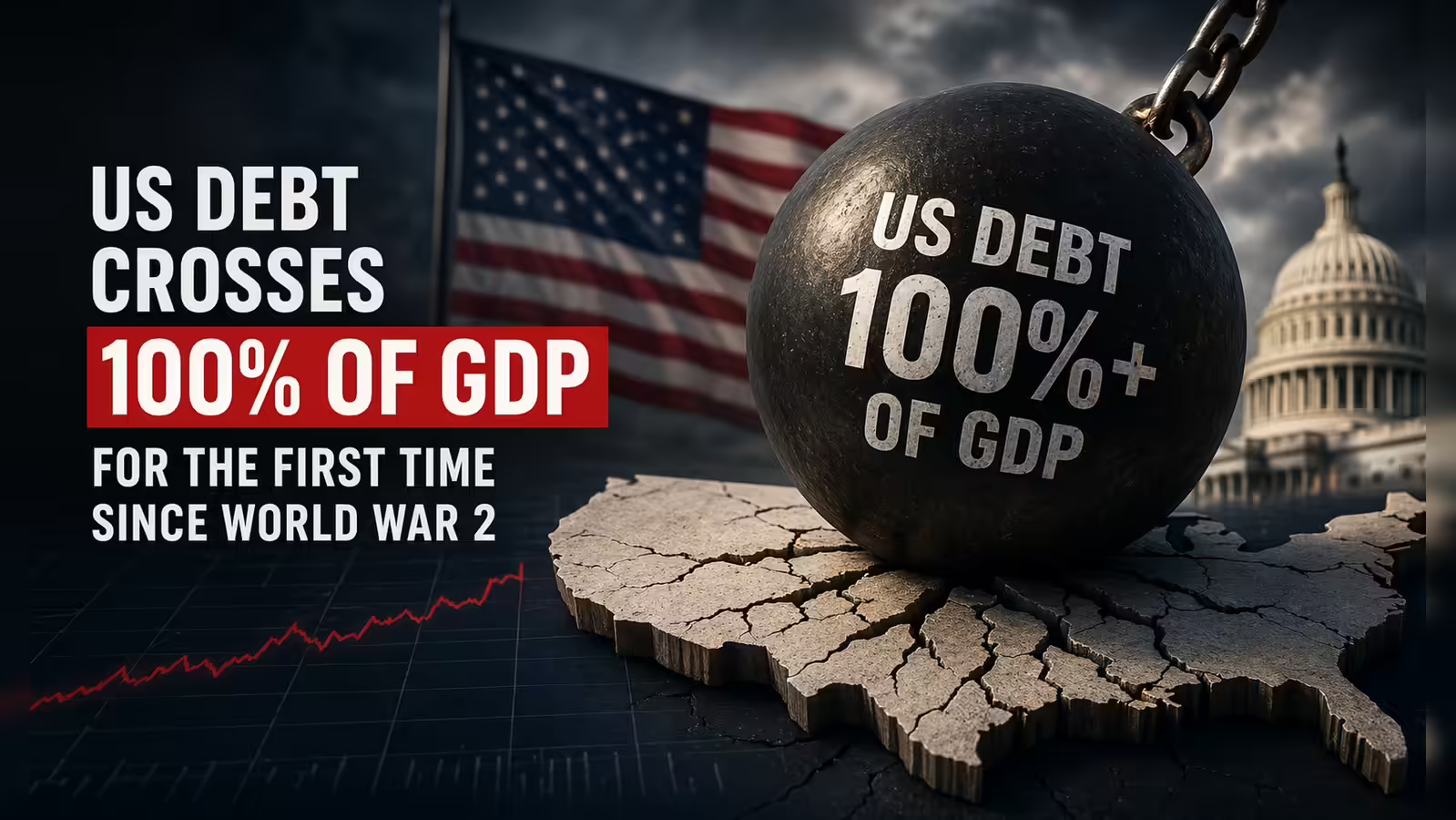
WASHINGTON (FoxBusiness)— The United States national debt has crossed a threshold not seen since the final convulsions of World War II, surpassing the total size of the American economy for the first time in nearly eight decades — a milestone that fiscal analysts warn represents not merely a number on a ledger but a structural shift in the nation’s financial trajectory with consequences that will extend across generations.
Data released by the Bureau of Economic Analysis showed that the national debt held by the public reached $31.27 trillion as of March 31, while nominal gross domestic product for the 12-month period ending in March stood at $31.22 trillion. The gap, though narrow in absolute terms, pushed the public debt-to-GDP ratio above 100 percent — the metric economists regard as the most meaningful gauge of a government’s debt burden because it excludes obligations held within government accounts and isolates the debt that must be financed through external borrowing.
The last time the United States crossed that threshold was in 1946, when the federal government was in the process of drawing down the extraordinary wartime spending that had financed victory in the most destructive conflict in human history. The all-time record debt-to-GDP ratio of 106 percent, set that same year, now stands within measurable reach. The nonpartisan Congressional Budget Office projects the United States will surpass that postwar record by 2030, when debt held by the public is estimated to reach 108 percent of GDP. A decade beyond that, the projection climbs to 120 percent.
Those figures have arrived against a separate but compounding backdrop: the gross national debt — a broader measure that includes obligations held in government trust funds — has already blown past $39 trillion. Treasury Department data showed the gross debt reached $39,016,762,910,245 as of March 17, crossing the $39 trillion threshold roughly five months after the $38 trillion level was breached in late October 2025, which itself had followed the $37 trillion milestone by just two months in mid-August.
The Machinery Driving the Surge
The acceleration of American debt accumulation is not the product of any single policy decision or economic shock but rather the compounding interaction of several structural forces that have been building for years and show no sign of self-correcting.
An aging population is steadily increasing mandatory federal outlays on Social Security and Medicare, programs whose expenditure growth is driven by demographic arithmetic rather than annual congressional appropriations. Interest expenses — the cost of servicing existing debt — have swelled alongside both rising interest rates implemented to combat inflation and the sheer growth of the debt stock itself. The Congressional Budget Office has projected that interest costs will constitute the fastest-growing line item in the federal budget for the foreseeable future, with servicing expenses estimated to total nearly $100 trillion over the next three decades.
Michael A. Peterson, chief executive of the nonpartisan Peter G. Peterson Foundation, characterized the pace of accumulation as categorically unsustainable. “At the current growth rate, we will hit a staggering $40 trillion in national debt before this fall’s elections,” Peterson told Fox Business. “Borrowing trillion after trillion at this rapid pace with no plan in place is the definition of unsustainable.” He argued that the debt’s direct cost to ordinary Americans — through interest rate pressures, reduced income growth, and the compounding burden passed to younger generations — should place the issue at the center of the current political debate rather than at its margins.
A Bipartisan Abdication, Not a Wartime Emergency
Perhaps the most pointed dimension of the current moment, as fiscal analysts frame it, is the contrast between the circumstances that produced the previous debt peak and those driving today’s trajectory. The 106 percent debt-to-GDP ratio recorded in 1946 was the direct consequence of financing a global war that consumed the resources of every major industrial power on earth. The emergency was real, the borrowing was purposeful, and the subsequent decline in the ratio was rapid as the economy expanded and wartime spending was curtailed.
Maya MacGuineas, president of the nonpartisan Committee for a Responsible Federal Budget, drew that contrast with deliberate sharpness. “This time, the borrowing isn’t borne from a seismic global conflict, but rather a total bipartisan abdication of making hard choices,” MacGuineas said in a statement responding to the Bureau of Economic Analysis data.
Her assessment cut across partisan lines in a manner that has become increasingly rare in Washington’s fiscal debates. Both major parties, she argued, have contributed to the structural imbalance through a combination of tax reductions, spending expansions, and a shared unwillingness to accept the political costs of bringing revenues and expenditures into closer alignment. The result is a debt trajectory that the CBO projects will grow faster than the underlying economy in every year of its current 10-year window — a dynamic that, left unaddressed, creates a self-reinforcing cycle in which interest costs consume an ever-larger share of federal revenues, leaving less capacity for investment, defense, or the social programs that a majority of Americans regard as foundational.
“The higher we allow our debt to grow, the more we erode our own prosperity and that of future generations,” MacGuineas added. “Rising debt compromises affordability by slowing income growth, pushing up interest rates, and increasing inflationary pressures. Debt squeezes our budgets with massive interest costs. It exposes us needlessly to challenges from geopolitical rivals. And without corrective action, rising debt could spark a devastating fiscal crisis.”
MacGuineas called on lawmakers to reject new borrowing and to offset any new spending or tax reductions by a factor of more than two to one — a standard that would require genuine sacrifice rather than the familiar pattern of deficit-financed accommodation that has characterized fiscal policymaking across multiple administrations of both parties. To stabilize and ultimately reduce the debt-to-GDP ratio, she argued, the country would need to reduce projected budget deficits by approximately $10 trillion.
“One option among many is to follow the bipartisan momentum towards bringing deficits down to 3% of GDP, which would help bring the debt below 100% of GDP over time,” MacGuineas said. “What’s most important is turning this pattern of inaction around. There is no time to lose.”
Geopolitical Dimensions of a Fiscal Crisis
The implications of America’s debt trajectory extend beyond domestic economics into the country’s capacity to sustain its international posture. A government that devotes an ever-larger share of its federal budget to debt servicing has proportionally less available for defense, foreign assistance, diplomatic engagement, and the other instruments through which it projects power and influence. Fiscal analysts have long noted that adversarial states — China in particular — track American debt dynamics with strategic interest, recognizing that fiscal constraint can impose limits on military readiness and global commitments that no external pressure could achieve as efficiently.
Peterson framed the issue in precisely those terms, arguing that placing the debt on a sustainable path was not merely an economic exercise but a national security imperative. “America faces complex and critical challenges, both at home and abroad, and putting our debt on a sustainable path will support a stronger, more secure future,” he said.
The Political Will Problem
The technical solutions to America’s debt trajectory are not particularly mysterious. Budget analysts across the ideological spectrum have sketched combinations of revenue increases, spending restraints, and entitlement reforms that would, modeled in isolation, bend the curve toward sustainability. The obstacle is not analytical — it is political.
Every meaningful deficit-reduction measure requires a constituency to accept something it prefers not to accept: higher taxes, reduced benefits, delayed retirement eligibility, or curtailed spending on programs with vocal advocates. In an era of sharply polarized politics, divided government, and electoral cycles that reward short-term positioning over long-term stewardship, the incentive structure consistently pushes toward accommodation rather than discipline.
The crossing of the 100 percent debt-to-GDP threshold arrives at a moment when Congress is actively debating new spending and tax measures that the CBO projects would add substantially to the deficit rather than reduce it. The gap between the severity of the fiscal challenge as described by nonpartisan analysts and the trajectory of actual legislative behavior has perhaps never been wider.
Whether the symbolic weight of crossing the World War II threshold — the inescapable reminder that the last time America was here, it was fighting for civilizational survival rather than managing ordinary political disagreements — is sufficient to shift that calculus remains the open question. History offers little grounds for optimism that milestones alone produce discipline. But the arithmetic of compound interest and demographic inevitability is patient in a way that political cycles are not, and the reckoning that today’s inaction defers will eventually arrive on terms far less forgiving than those currently available.
A small aircraft carrying pickleball players to a tournament crashed late Thursday in the Texas Hill Country, killing all five people on board and destroying the plane in a fire, officials said.
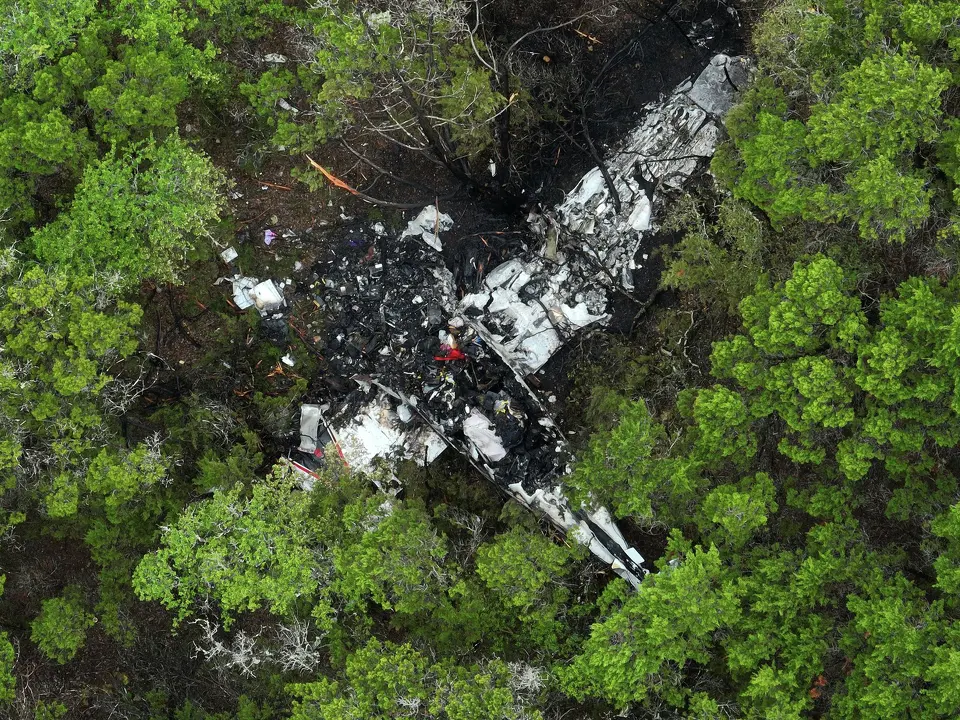
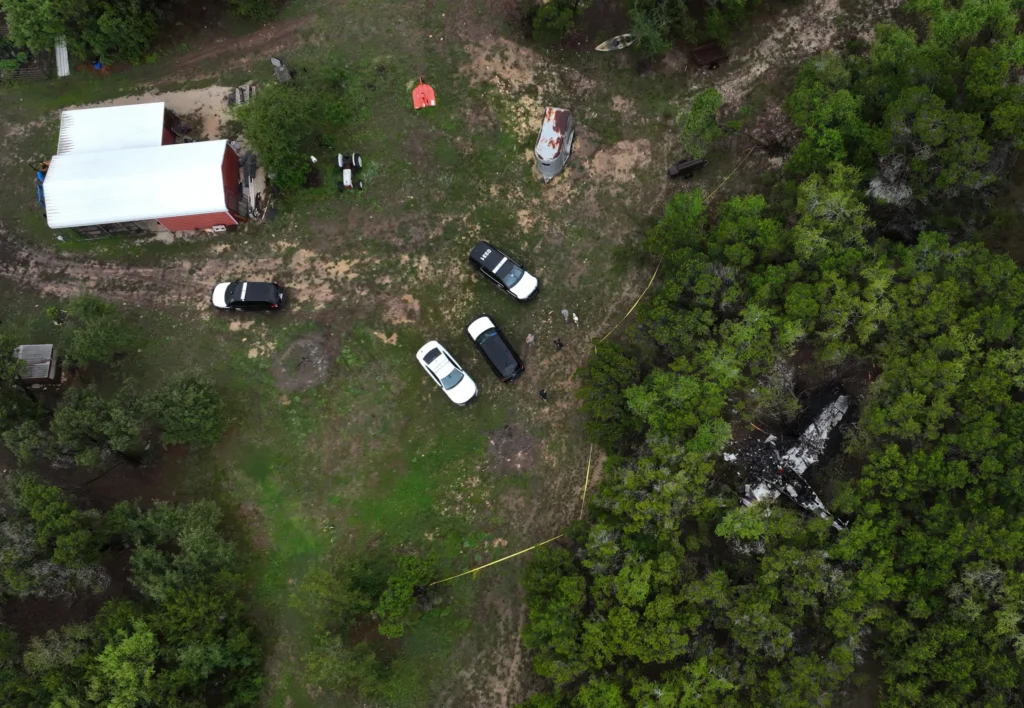
Authorities confirmed that the twin-engine Cessna 421C went down around 11 p.m. in a wooded area near Wimberley, a community roughly 40 miles southwest of Austin. Emergency crews who reached the site found no survivors.
“The pilot and four passengers were pronounced dead at the scene,” Sgt. Billy Ray of the Texas Department of Public Safety told reporters. He added that the aircraft caught fire upon impact, indicating severe damage.
The names of the victims had not been released as of Friday. However, the Amarillo Pickleball Club said in a social media post that the victims were members traveling to a competition. The club asked the public to keep the families in their thoughts.
Flight data shows the aircraft departed from Amarillo about two hours before the crash and was headed to New Braunfels National Airport. Officials said the plane was traveling at high speed before contact was lost and it went down.
Authorities said another aircraft flying to the same event had been in communication with the downed plane before losing contact. The second pilot raised concerns after noticing unusual flight movement. Air traffic controllers also flagged the aircraft when its tracking signal disappeared.
Officials stressed there is no evidence of a midair collision.
Witnesses described a sudden and violent event. Residents near the crash site reported hearing a loud explosion followed by flames. One resident said the impact shook her home like an earthquake, while others described seeing fire spread quickly in the area.
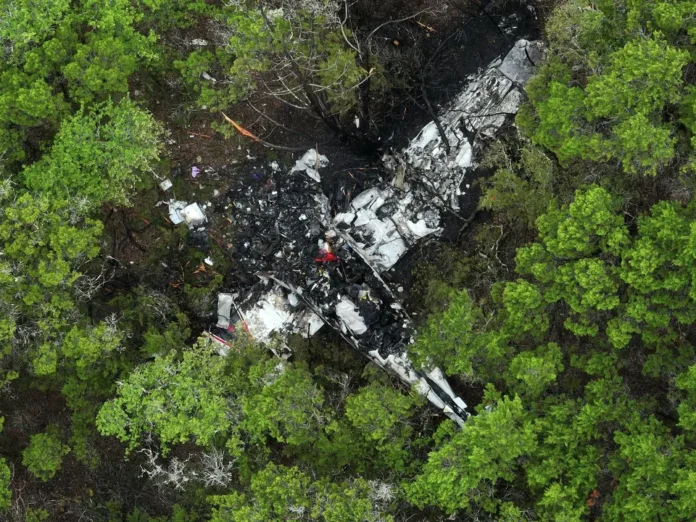
Images from the scene show the aircraft reduced to burned wreckage among trees, with damage extending into nearby vegetation. The crash occurred close to homes, but no injuries were reported on the ground.
The Federal Aviation Administration has opened an investigation into the cause of the crash. Early weather information showed mostly cloudy skies in the area at the time, with storms forming later, though officials have not confirmed whether weather was a factor.
Investigators are examining several possible causes, including mechanical failure, pilot error, and environmental conditions. Flight tracking data indicates the aircraft made a sharp turn before descending rapidly from cruising altitude. Authorities will review maintenance records, pilot background, and communications.
No emergency call has been confirmed, raising questions about how quickly the situation developed.
The crash draws attention to ongoing safety concerns involving small private aircraft. While commercial aviation has strong safety systems, smaller planes often operate under different conditions, which can increase risk.
Aircraft like the Cessna 421C are commonly used for private travel because of their speed and range, but they require careful maintenance and skilled operation. Safety experts have long noted that accident rates are higher for small aircraft compared to commercial airlines, often due to mechanical issues or human factors.
The incident also reflects the growing popularity of pickleball, one of the fastest-growing sports in the United States. As more players travel to tournaments across the country, private flights have become more common, adding new safety considerations.
Investigators are also expected to examine whether nighttime flying conditions played a role. Reduced visibility in rural areas like Wimberley can make navigation more difficult, especially when combined with terrain and weather factors.
The outcome of the investigation could influence future safety guidance for private aviation, particularly for group travel tied to sporting events.
Wimberley, a small town known for tourism and outdoor activities, has been shaken by the crash. Residents gathered near the site Friday, with some visibly emotional as crews continued their work.
Local officials expressed condolences and said support is being provided to the families of those who died. Authorities said more details, including the identities of the victims and preliminary findings, will be released as the investigation continues.
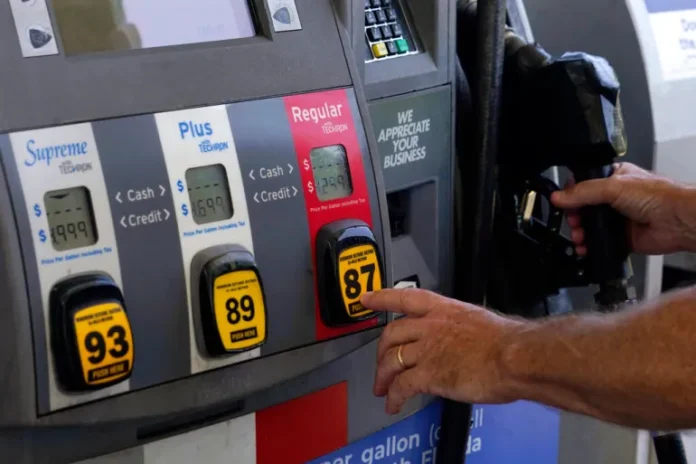
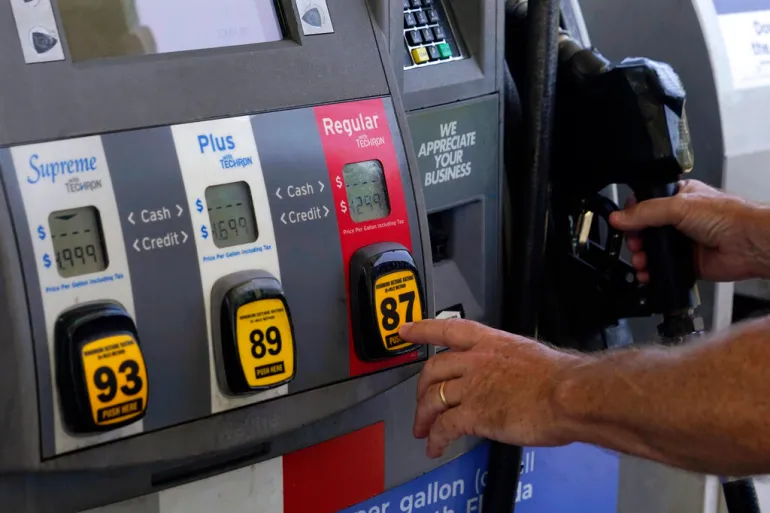
Gasoline prices across the United States have climbed to a new high during the ongoing Iran conflict, with the national average reaching $4.39 per gallon in the largest single-day increase since a ceasefire was announced in early April.
Data released Friday shows prices jumped sharply overnight, rising a combined 16 cents in just over 24 hours. The spike marks the steepest daily increase since early March and underscores mounting pressure on consumers as energy markets remain volatile.
Since hostilities began, the average cost of regular unleaded fuel has surged more than 47%, reflecting the broader impact of disruptions to global oil supply chains.
Crude oil prices have also continued their upward trajectory. U.S. benchmark crude settled near $102 per barrel at the end of the week, while Brent crude — the international standard — closed at approximately $108 per barrel, representing gains of roughly 80% since the start of the conflict.
The latest price surge follows comments from Donald Trump, who indicated that the United States intends to maintain its naval blockade on Iranian oil exports. The blockade, enforced since mid-April, is designed to restrict Tehran’s ability to generate revenue from energy sales.
Speaking at the White House, Trump argued that the strategy is placing significant economic pressure on Iran and could hasten an end to the conflict. He also suggested that fuel prices would fall quickly once hostilities cease.
Market analysts, however, have expressed skepticism about a rapid decline. Many point to ongoing risks surrounding the Strait of Hormuz, a critical maritime corridor through which a significant portion of the world’s oil supply passes. Iran has demonstrated its ability to disrupt shipping in the region, raising concerns that supply constraints could persist even after a ceasefire.
Financial institutions have issued increasingly stark forecasts. Analysts at Citigroup warned that Brent crude prices could climb as high as $150 per barrel if the strait remains restricted through the end of June. Such a scenario would likely push gasoline prices even higher, intensifying inflationary pressures across the global economy.
Energy companies are also signaling strain within the sector. Mike Wirth said supply disruptions could force a reduction in demand across multiple industries if conditions do not improve. Meanwhile, Darren Woods indicated that a portion of his company’s oil production has already been affected by the conflict.
Even if shipping routes reopen, industry leaders caution that recovery will take time. Woods noted it could take up to two months for oil flows to normalize, followed by additional delays before fuel reaches consumers.
The surge in prices comes amid political debate in Washington over the status of the conflict. Some administration officials have suggested that active hostilities have effectively ended, while members of Congress are considering whether to invoke the War Powers Resolution, which requires legislative approval for extended military engagements.
House Speaker Mike Johnson has argued that congressional intervention is unnecessary, maintaining that the United States is not formally at war. However, financial markets appear unconvinced, with oil prices continuing to climb in response to ongoing uncertainty.
Public reaction has grown increasingly vocal as fuel costs rise. Online forums and regional communities have seen a surge in complaints from drivers facing steep increases at the pump, particularly in states where prices have jumped dramatically since the conflict began.
Analysts at the energy research firm Kpler have also raised questions about the effectiveness of the U.S. blockade in the short term. Because of delays in shipping and payment cycles, the impact on Iran’s oil revenue may not be fully realized for several months. This lag could limit the immediate economic pressure on Tehran, potentially prolonging the standoff.
The sharp rise in gasoline prices highlights the fragile balance between geopolitical strategy and economic consequences. While the blockade aims to weaken Iran’s financial position, it also constrains global oil supply, driving up costs for consumers and businesses worldwide.
The situation underscores the outsized influence of the Strait of Hormuz on energy markets. Even partial disruptions can trigger significant price swings, as traders factor in the risk of supply shortages. The current spike reflects not only reduced output but also uncertainty about future conditions.
For U.S. policymakers, the timing presents a challenge. Rising fuel prices have historically carried political consequences, particularly in the lead-up to elections. With inflation already a concern for many households, sustained increases at the pump could shape public sentiment and economic outlook.
From a global perspective, the الأزمة has exposed vulnerabilities in energy infrastructure and supply chains. Countries heavily reliant on imported oil may face increased costs for transportation, manufacturing and agriculture, amplifying economic strain.
The divergence between political messaging and market behavior is also notable. While officials emphasize progress toward de-escalation, investors continue to price in risk, suggesting limited confidence in a near-term resolution.
Looking ahead, the trajectory of gas prices will depend largely on developments in the Strait of Hormuz and the broader diplomatic landscape. A reopening of shipping lanes could ease pressure, but analysts caution that rebuilding supply chains will take time.
In the meantime, consumers are likely to face continued volatility, with energy costs remaining a central issue in both economic policy and everyday life.
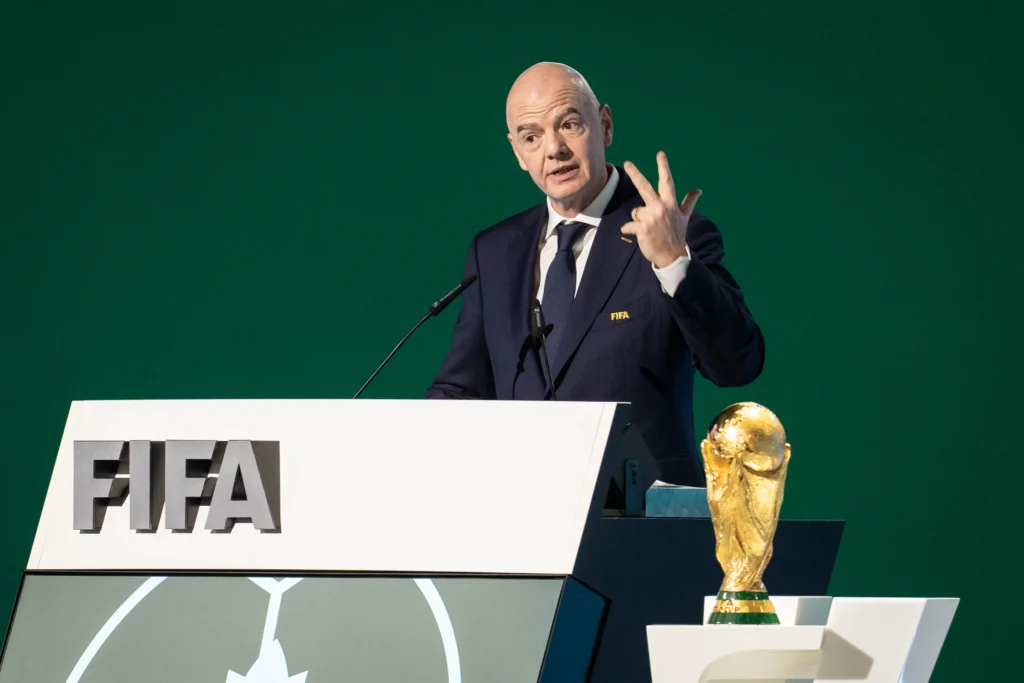
FIFA President Gianni Infantino reaffirmed Thursday that Iran will compete in the 2026 World Cup, including matches scheduled in the United States, underscoring the organization’s stance that football should remain a unifying force despite escalating geopolitical tensions.
Opening the 76th FIFA Congress in Vancouver, Infantino emphasized the governing body’s commitment to inclusivity, stating that the tournament will proceed with all qualified teams regardless of political disputes.
“The reason is simple — we must bring people together,” Infantino told delegates. “Football unites the world, and FIFA has a responsibility to uphold that principle.”
The statement comes amid growing scrutiny over Iran’s participation, particularly as relations between Tehran and Washington remain strained. The issue gained further attention this week when officials from Iran Football Federation were denied entry into Canada.
Canadian Foreign Affairs Minister Anita Anand indicated that Iranian representatives, including federation president Mehdi Taj, were turned away at Toronto’s airport. The development followed reporting by Tasnim, an Iranian news agency.
Despite those complications, FIFA has maintained a consistent position. Iran had previously explored relocating its World Cup matches to Mexico, but that request was rejected, reinforcing the existing tournament framework.
The 2026 World Cup is scheduled to begin June 11, with the final set for July 19. Matches will be held across the United States, Canada and Mexico, marking the first time the tournament will be jointly hosted by three nations.
Iran’s absence was noted during the official roll call at the Congress, where all member associations were recognized. Outside the Vancouver Convention Center, a small group of demonstrators gathered, holding Iranian flags in a peaceful protest.
While geopolitical concerns linger, officials from Canadian Soccer Association used the Congress to highlight Canada’s role as a welcoming host nation. Association president Peter Augruso described the country as a hub of cultural diversity and inclusion, emphasizing its readiness to welcome teams and supporters from around the world.
Infantino also addressed concerns surrounding ticket pricing for the tournament, acknowledging criticism while defending FIFA’s revenue model. He noted that a significant portion of tickets has already been sold and that proceeds will be reinvested into global football development.
“We have both premium and affordable options,” Infantino said, adding that tournament revenues are redistributed to support the sport worldwide.
Earlier in the week, FIFA’s governing council approved an additional $100 million in funding for participating nations to offset rising costs. The decision increases the minimum financial allocation to each federation to $12.5 million.
FIFA projects total revenue for the tournament to exceed $11 billion, reflecting the growing commercial scale of the World Cup. Prize money has also risen significantly over time. The winner of the 2026 tournament is expected to receive $50 million from a total prize pool of $655 million.
For comparison, Argentina earned $42 million for winning the 2022 World Cup, while France received $38 million for its 2018 victory. The increasing financial stakes highlight the tournament’s expanding global footprint and economic significance.
Outside the Congress venue, attention also turned to local football concerns. Supporters of the Vancouver Whitecaps staged a rally to protest uncertainty surrounding the club’s future. Major League Soccer has indicated it is evaluating long-term options for the franchise, including a potential relocation.
The team’s ownership group has been seeking buyers for more than a year, with financial constraints and venue agreements contributing to ongoing uncertainty. BC Place, the club’s home stadium, is set to host several World Cup matches, further complicating planning efforts.
The FIFA Congress drew approximately 1,600 football officials from around the world and is expected to generate millions in economic activity for the host city.
FIFA’s decision to proceed with Iran’s participation reflects a broader tension between sport and geopolitics. Historically, international competitions have often served as platforms for diplomacy, even amid conflict. Infantino’s remarks align with FIFA’s longstanding position that football should remain separate from political disputes, though that principle is increasingly difficult to maintain in a polarized global environment.
The situation also raises practical challenges. Travel restrictions, visa issues and security considerations could complicate logistics for teams and officials, particularly in a multi-country tournament. Canada’s decision to deny entry to Iranian representatives highlights how national policies can intersect with global sporting events, potentially creating friction within FIFA’s framework.
From a commercial perspective, the stakes are significant. The 2026 World Cup is poised to be the most lucrative in history, and any disruption involving participating nations could have financial and reputational consequences. Sponsors, broadcasters and host cities all rely on stability to maximize returns on investment.
At the same time, the controversy underscores the evolving role of governing bodies like FIFA. As global tensions intensify, organizations are increasingly expected to navigate complex political landscapes while preserving the integrity of competition. Infantino’s firm stance suggests FIFA is prioritizing continuity and inclusivity, even at the risk of criticism.
For host nations, the tournament presents both opportunity and challenge. Canada’s emphasis on diversity contrasts with concerns about immigration policies in the United States, illustrating differing national approaches to hosting a global event. These dynamics could shape the overall experience for fans and participants.
Ultimately, Iran’s participation will remain a focal point as the tournament approaches. How FIFA and host nations manage the associated challenges may set a precedent for future international competitions in an increasingly interconnected and politically sensitive world.