Home Blog Page 595

11 Somali Soldiers Killed in Clash with Al-Shabab Near Kismayo

0

Eleven Somali government and regional forces were killed Wednesday in fierce fighting with al-Shabab militants near Kismayo, officials said, marking the latest deadly encounter in the country’s long-running conflict with the insurgent group.

The battle erupted after government forces launched an offensive against a suspected militant gathering spot in Wayaanta, approximately 60 kilometers southwest of Kismayo in Jubaland state. Three officials with direct knowledge of the engagement told VOA Horn of Africa that more than 20 soldiers were also wounded in the operation. The officials, speaking on condition of anonymity because they weren’t authorized to talk to media, claimed over 20 al-Shabab fighters were killed in the clash.

The area has been a focal point of previous military operations. Last year, Somali forces killed an al-Shabab commander who served as deputy emir of the region, while a U.S. military “collective self-defense” airstrike in the same vicinity eliminated three militants.

The latest casualties come as Somali forces intensify their campaign against al-Shabab, which has fought successive governments since 2006 and still controls significant rural territory in south-central Somalia. Since President Hassan Sheikh Mohamud took office in May 2022, local fighters backed by federal forces have reclaimed vast areas in central regions from the militant group.

Somalia’s intelligence and security agency reported Sunday that 27 al-Shabab militants were killed during a 12-hour operation near Yaaqle, 50 kilometers north of Mogadishu. The agency said the operation disrupted militants preparing to attack civilians and resulted in the destruction of vehicles and equipment.

Despite territorial losses, al-Shabab continues to demonstrate its lethal capabilities. On Sunday, the group launched a mortar attack on an African Union base at Mogadishu’s international airport, killing two AU soldiers and wounding another with four rounds from a 107mm rocket fired in daylight.

VOA

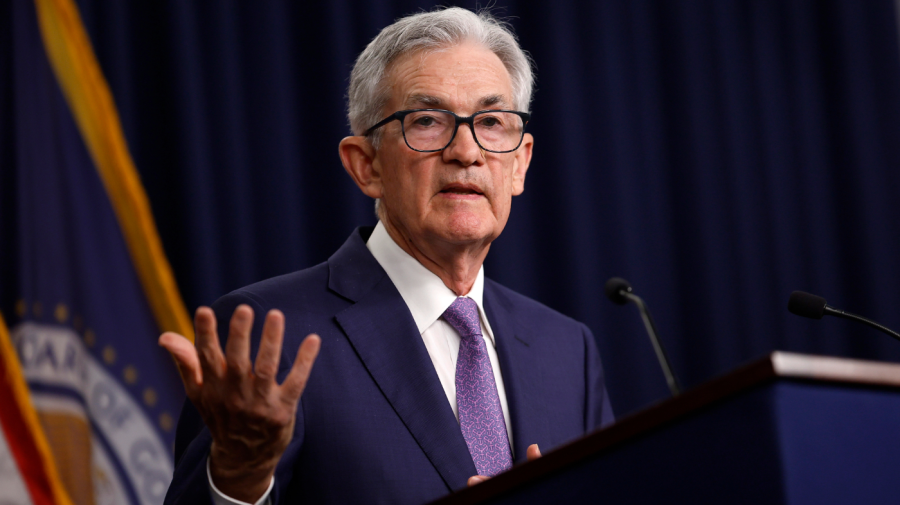
Fed Chair Powell Says Trump Don’t Have Power to Sack Him

0

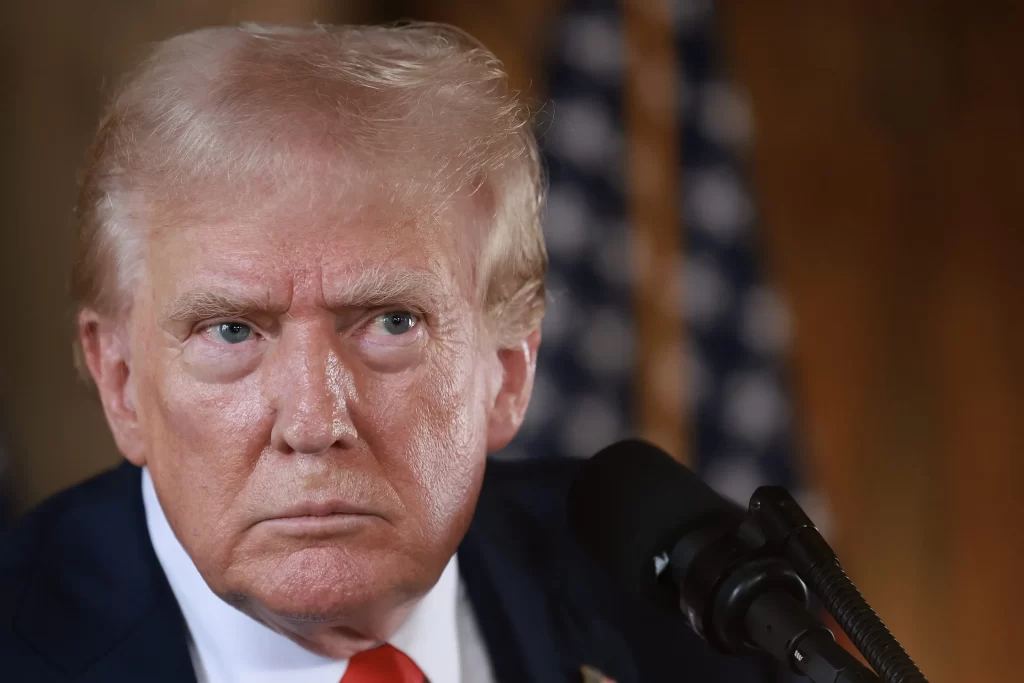
Federal Reserve Chairman Jerome Powell firmly rejected speculation Thursday about potential White House interference in his leadership, declaring he would not step down if asked by President-elect Donald Trump and emphasizing that his removal would be “not permitted under law.”

Powell’s defiant stance came during a press conference following the central bank’s announcement of a quarter-point interest rate cut, which lowered the Fed’s key lending rate to a range of 4.5%-4.75%. The reduction marked the latest in a series of cuts since the Fed began easing monetary policy in September.

“It’s such an early stage – we don’t know what the policies are, we don’t know when they will be implemented,” Powell said regarding the incoming administration’s economic agenda. “In the near term, the election will have no effects on our policy decisions.”

The chairman’s comments address growing speculation about his future, following reports that Trump allies have explored ways to assert greater control over the Fed, including potentially naming Powell’s replacement before his term expires in 2026. Trump, who originally appointed Powell in 2017 but later became a vocal critic, told Bloomberg he would allow Powell to complete his term “especially if I thought he was doing the right thing.”

Economic forecasters warn that Trump’s proposed policies on tax cuts, immigration, and tariffs could maintain inflationary pressures and increase government borrowing, complicating expectations of further rate reductions. U.S. debt interest rates have already risen this week reflecting these concerns.

Thursday’s unanimous rate cut follows a dramatic tightening cycle that saw rates climb from near zero to 5.3% by July 2023 — the highest level in over two decades — as the Fed battled surging inflation. The aggressive increases contributed to higher borrowing costs for mortgages, credit cards, and other loans, fueling public discontent over living expenses that influenced the election outcome.

Recent data shows U.S. inflation at 2.4% in September, down significantly from its 9% peak in June 2022. However, economic indicators present a mixed picture, with October showing minimal job growth amid hurricanes and labor strikes, following unexpectedly strong hiring in September.

Powell indicated the Fed expects to continue reducing rates but remained noncommittal about the pace and extent of future cuts. “We don’t think it’s a good time to be doing a lot of further guidance – there’s a fair amount of uncertainty,” he said. “The point is to find the right pace and destination as we go.”

Whitney Watson, co-chief investment officer of fixed income at Goldman Sachs Asset Management, predicted another rate cut in December but noted increasing uncertainty. “Stronger data and uncertainty over fiscal and trade policies mean rising risks that the Fed may opt to slow the pace of easing,” she said.

The Fed’s decision coincided with the Bank of England’s warning about potentially prolonged high borrowing costs, citing inflation concerns following recent budget measures.

“In the US, it seems interest rates will stay higher for longer as the Fed will need to tread very carefully until it is better able to assess the true impact of Trump’s plans,” said Lindsay James, investment strategist at Quilter Investors.

Germany Arrests American Suspected of Offering US Military Secrets to China

0

German authorities arrested a U.S. citizen on Thursday on suspicion of attempting to share sensitive U.S. military intelligence with China, information he allegedly gathered while working for American forces stationed in Germany.

The suspect, identified only as Martin D. in accordance with German privacy laws, is accused of declaring his willingness to work as an agent for a foreign intelligence service, federal prosecutors said in a statement.

Prosecutors said the man, who had recently worked for U.S. armed forces in Germany, contacted Chinese state representatives in 2024 and offered to provide them with classified information obtained through his military work for transmission to Chinese intelligence services.

The arrest marks the latest in a series of German counterintelligence operations targeting alleged Chinese espionage activities. German officials have repeatedly warned of increasing spying efforts by Beijing within their borders.

Earlier this year, German authorities arrested three of their own citizens on suspicion of attempting to transfer technology that could enhance China’s naval capabilities. In a separate case, they detained a European Union employee working for a far-right politician over alleged collaboration with Chinese intelligence.

Landslide in Cameroon Leaves Four Dead, Dozens Missing After Buses Buried

0

A massive landslide triggered by torrential rains buried three passenger buses and several road workers in western Cameroon on Tuesday, killing at least four people and leaving more than 50 others missing, authorities said Wednesday.

The disaster struck along a highway connecting the city of Dschang in Cameroon’s West Region to the economic capital of Douala, Public Works Minister Emmanuel Nganou Djoumessi said after inspecting the site. Rescue teams have recovered four bodies while dozens remain buried in the debris.

“I’ve asked that rescued victims be taken to the mortuary, while survivors should be fully taken care of in order that they’re quickly relieved of their pains,” Djoumessi said at the scene.

West Region Governor Augustin Awa Fonka noted the increasing frequency of such disasters, stating, “The earth collapses have become common in Cameroon and the world in recent months and roads in these regions have become dilapidated.”

The catastrophe adds to a series of extreme weather events affecting West Africa this year, with the region experiencing some of its worst flooding in decades. More than 1,000 people have died and hundreds of thousands have been displaced across the region.

Djoumessi attributed the landslide to climate change-induced rainfall. The World Meteorological Organization has previously warned that while Africa contributes minimally to global greenhouse gas emissions, it remains among the regions most vulnerable to extreme weather events.

Israeli Police Detain French Guards at Jerusalem Church, Sparking Diplomatic Row

0

Israeli police sparked a diplomatic dispute Thursday after entering a French-owned church compound in Jerusalem with weapons and briefly detaining two French gendarmes, prompting France to summon Israel’s ambassador and cancel a planned ministerial visit to the site.

French Foreign Minister Jean-Noel Barrot, who was scheduled to visit the Eleona church compound, abandoned his plans following the incident. “I will not enter the Eleona Domain today, because Israeli security forces entered with weapons, without prior French authorization, without agreeing to leave today,” Barrot said at the scene, calling the confrontation “unacceptable.”

An AFP journalist witnessed Israeli police surrounding the two French gendarmes before forcing one to the ground. The gendarme identified himself and repeatedly shouted “Don’t touch me” before both officers were placed in police vehicles. They were released shortly afterward.

“This violation of the integrity of a domain placed in the care of France is liable to weaken the ties that I came here to cultivate with Israel, at a time when all of us need to help the region advance on the path towards peace,” Barrot added.

The Sanctuary of the Eleona sits within one of four sites comprising France’s national domain in the Holy Land. The property was attributed to France before Israel’s establishment and operates under French consular administration in Jerusalem as private property. These sites have previously been the focus of diplomatic incidents.

“The Eleona Domain… has not only belonged to France for more than 150 years, but France also ensures its security, maintains it,” Barrot emphasized. “The integrity of the four domains that France is responsible for here in Jerusalem must be respected.”

Israeli authorities have not provided an explanation for entering the compound. The French foreign ministry in Paris announced it would summon Israel’s ambassador over the incident.

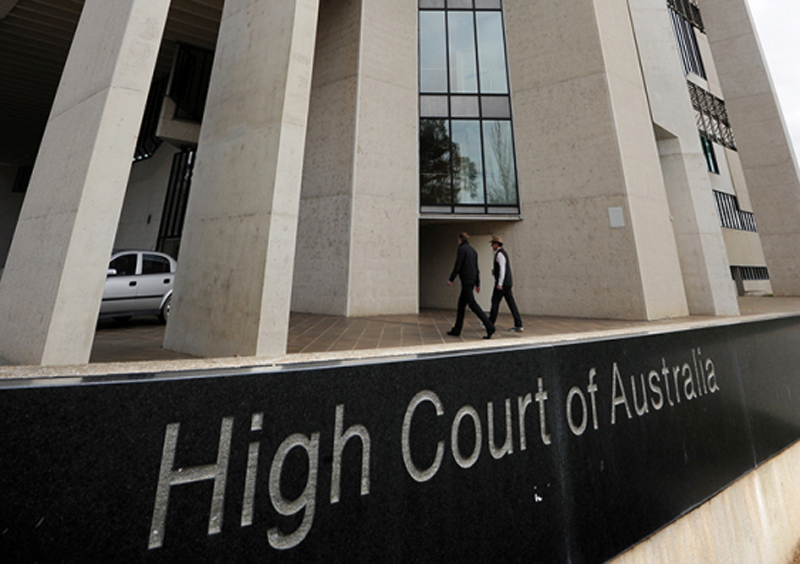
Australia’s High Court Strikes Down Migrant Electronic Monitoring Law

0

Australia’s High Court ruled Wednesday that forcing migrants to wear electronic tracking bracelets and observe curfews is unconstitutional, dealing a significant blow to the government’s controversial monitoring system for non-citizens with criminal records.

In a 5-2 decision, the court found that the restrictive conditions imposed on more than 100 migrants amounted to punishment, which under Australia’s constitution can only be imposed by judges, not legislators. The ruling effectively ends the government’s authority to electronically track over 200 non-citizens who were released from detention but cannot be deported.

Home Affairs Minister Tony Burke announced plans to introduce new legislation Thursday for “an adjusted process for electronic monitoring devices and curfews,” though specific details weren’t provided. “The court’s decision is not the one the government wanted — but it is one the government has prepared for,” Burke said in a statement, emphasizing that “the security and safety of the Australian community will always be the absolute priority.”

The case challenging the monitoring system was brought by a 36-year-old stateless man identified as YBFZ, who fled Eritrea with his family as Jehovah’s Witnesses seeking refuge. After arriving in Australia in 2002, his refugee visa was revoked in 2017 following multiple convictions, including burglary and recklessly causing injury, during a decade-long period.

The ruling follows a previous High Court decision in December that outlawed indefinite detention of non-citizens, overturning a 28-year-old precedent. That earlier case involved a stateless Rohingya man and prompted the emergency legislation that established the electronic monitoring system now deemed unconstitutional.

David Manne, YBFZ’s lawyer, hailed Wednesday’s verdict as a “major victory” for fundamental freedoms. “This is an important ruling because it underscores the bedrock principle that for everyone, whether citizen or non-citizen, the government does not have the power to punish people by stripping them of their fundamental rights to freedom and dignity,” Manne told reporters.

Opposition lawmakers criticized the ruling as an “embarrassing loss” for the government, warning that 215 non-citizen offenders, including 12 murderers, 66 sex offenders, 97 people convicted of assault, and 15 domestic violence perpetrators, would now be free from monitoring restrictions.

Russian Court Sentences Foreign Student to 14 Years on Terrorism Charges

0

A military court in Siberia has sentenced an unidentified foreign student to 14 years in prison for promoting and participating in terrorist activities, Russian state media reported Thursday.

The First Eastern Military Garrison Court in Khabarovsk found the defendant guilty of “justifying and propagandizing” an international terrorist organization since early 2023, according to the state-run TASS news agency. Neither the student’s identity and nationality nor the terrorist group allegedly involved were disclosed by authorities.

Local media outlets, citing the Altai region branch of Russia’s Federal Security Service (FSB), reported that the convicted individual had previously attended an unnamed university in the region, which lies approximately 2,900 kilometers (1,800 miles) east of Moscow near the Kazakh border.

The FSB released video footage, distributed by TASS, showing plainclothes agents apprehending the student in what appeared to be a Soviet-era dormitory hallway before transferring him to an administrative facility.

Ghana President’s Self-Commissioned Statue Sparks Public Outcry

0

Outgoing Ghanaian President Nana Akufo-Addo ignited controversy Wednesday after unveiling a statue of himself during a farewell tour of the country’s Western Region, drawing widespread criticism over perceived self-promotion months before leaving office.

The monument, erected outside Sekondi’s Effia-Nkwanta Regional Hospital, was presented as a tribute to the president’s development initiatives, according to Western Region Minister Kwabena Okyere Darko-Mensah. However, the installation immediately triggered backlash on social media platforms, with many Ghanaians condemning it as an act of self-glorification.

Opposition Member of Parliament Emmanuel Armah Kofi-Buah voiced public sentiment on X, formerly Twitter, stating, “The people of the Western Region deserve better than these self-serving displays.”

The unveiling came during what officials called a “thank-you tour” by the 80-year-old Akufo-Addo, who will step down in January after serving two terms. Throughout his tour, the president has claimed to have fulfilled 80% of his promises to Ghanaians, particularly highlighting his flagship policy of free secondary education as his “most significant legacy.”

The statue’s placement has become a flashpoint for broader criticism about incomplete development projects. Many citizens have taken to social media calling for its removal after the president leaves office, while others questioned the monument’s priority amid ongoing economic challenges.

“It would be admirable if the president had allowed posterity to recognise and appreciate his work,” wrote one X user in a widely shared post.

The monument has found some defenders, particularly among supporters who praise Akufo-Addo’s educational reforms. “He is very deserving of this exquisite monument. The greatest president I’ve ever had. You will be missed by Ghanaians,” posted one supporter, crediting the president as the “founder of Ghana’s free education system.”

The controversy unfolds against the backdrop of intense political campaigning for next month’s general election. During his regional tour, Akufo-Addo urged voters to support Vice-President Mahamudu Bawumia, the ruling New Patriotic Party (NPP) candidate, promising continuity of current policies and projects.

Bawumia faces former President John Dramani Mahama of the opposition National Democratic Congress (NDC) in a contest where economic issues dominate the agenda. Ghana, Africa’s leading gold producer, continues to grapple with a high cost of living, making economic management a central campaign issue.

The Western Region, where the statue stands, represents one of 16 administrative regions in Ghana and has traditionally been a significant battleground in national elections.

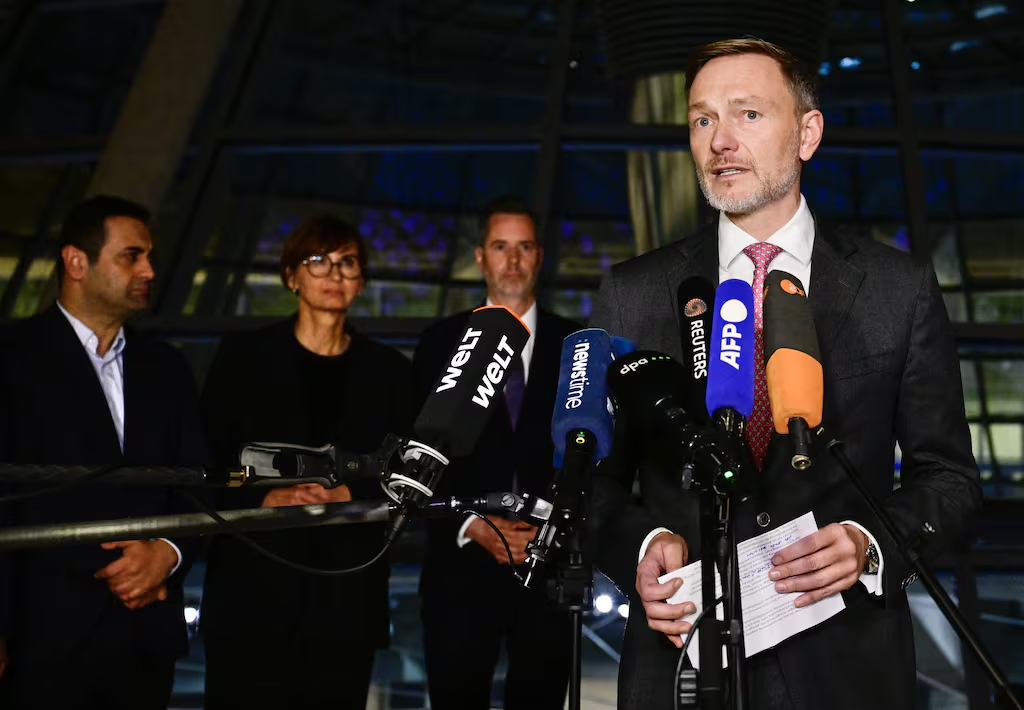
German Government in Crisis as Scholz Dismisses Finance Minister, Coalition Crumbles

0

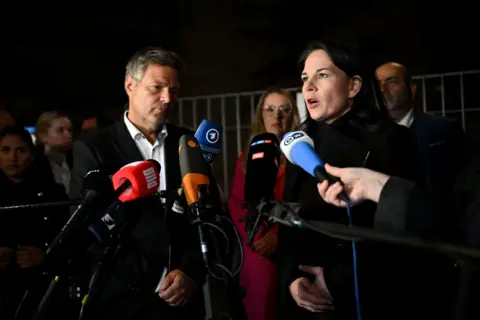
Germany plunged into political turmoil Thursday as Chancellor Olaf Scholz fired Finance Minister Christian Lindner and announced plans for a confidence vote, effectively ending the three-party “traffic light” coalition that has governed Europe’s largest economy since 2021.

The dramatic collapse, coming hours after Donald Trump’s U.S. election victory, deepened uncertainty about the continent’s economic and security outlook. President Frank-Walter Steinmeier urged restraint, stating, “This is no time for tactics and squabbling, but for reason and responsibility.”

Scholz accused Lindner, leader of the pro-business Free Democrats (FDP), of betraying his trust and prioritizing party interests over national needs. The rupture stemmed from escalating tensions over the 2025 budget, with Germany facing its second consecutive year without economic growth.

The coalition’s dissolution leaves Scholz’s government without a parliamentary majority. While the chancellor announced a confidence vote for January 15, opposition leaders demanded an immediate vote. Steinmeier indicated his readiness to dissolve parliament and call early elections should Scholz lose the vote.

“This is not a good day for Germany and not a good day for Europe,” said Foreign Minister Annalena Baerbock of the Greens party, highlighting concerns about regional stability.

The fundamental disagreement centered on Germany’s constitutional “debt brake,” which requires balanced budgets. Scholz and his Green partners advocated loosening these restrictions to increase spending, while Lindner insisted on maintaining fiscal discipline through welfare cuts and delayed environmental targets.

The crisis has fractured the unique alliance formed after the 2021 federal elections, nicknamed the “traffic light” coalition for the party colors of its members: the Social Democrats’ red, FDP’s yellow, and the Greens’ green. While two FDP cabinet members resigned alongside Lindner, Transport Minister Volker Wissing broke ranks, choosing to retain his position while leaving his party.

Friedrich Merz, leader of the opposition Christian Democrats who currently lead in opinion polls, pressed for swift resolution. “We simply cannot afford to have a government without a majority in Germany for several months,” he said.

The coalition’s struggles intensified following Russia’s 2022 invasion of Ukraine, which forced Germany to confront surging energy prices, increased defense spending requirements, and the cost of accommodating 1.5 million Ukrainian refugees.

Scholz will now lead a minority government comprising his Social Democrats and the Greens, who confirmed their commitment to remain in office. Economy Minister Robert Habeck of the Greens announced the party’s ministers would retain their positions.

The chancellor faces significant challenges in governing without a parliamentary majority, requiring support from other parties to pass legislation. Scholz has already reached out to Merz for cooperation on crucial budgetary measures supporting Germany’s economy and military spending.

Jörg Kukies has been appointed as the new finance minister, replacing Lindner. The government could face early elections by March unless opposition parties can form a majority to elect an alternative chancellor.

Rights Group: Kenyan Security Forces Behind Protest Deaths, Disappearances

0

Human Rights Watch released a damning report Tuesday accusing Kenyan security forces of systematically abducting, torturing, and killing suspected leaders of anti-government protests that swept the country between June and August.

The investigation revealed that security officers allegedly detained victims in clandestine facilities, including forests and abandoned buildings, while denying them access to legal representation and family members.

In one case highlighting the human toll, Mary Muthoni Mwangi from rural Kirinyaga in central Kenya described the loss of her 20-year-old son, Kennedy Njeru. He participated in the June 25 demonstrations when protesters stormed parliament following the passage of a controversial tax increase bill. After a four-day search, Mwangi found her son’s body in the city mortuary. A postmortem examination revealed he had been shot in the head.

“Whoever the initial abductors were, the police were involved because people were taken to police stations and many times the torture happened while people were in police custody,” said Mausi Segun, head of HRW’s Africa division. Human rights organizations have documented 61 deaths nationwide during the weeks of unrest.

The HRW investigation, based on interviews with 75 people including victims, families, journalists, parliament staff, and police officers, uncovered a pattern of security agents targeting protesters. Witnesses reported that officers operated in plain clothes, masked their faces, and used unmarked vehicles, making it difficult for families and rights groups to trace victims.

“Many of the bodies of those who have been abducted have showed up sometimes on the streets, sometimes in quarries, unmarked places where they have been dumped,” Segun said. “Many of those bodies have shown signs of torture and dismemberment of body parts, showing what they went through at the hands of their captors.”

Kenyan security forces have denied involvement in the abductions and killings. President William Ruto, speaking at a town hall meeting in Kisumu in late August, claimed no knowledge of the abductions and urged families to submit names to the government for investigation.

The crisis reached a new flash point on September 24 when dozens of activists and victims’ family members, including Mwangi, attempted to deliver a list of the missing and dead to the president’s office. Security forces dispersed them with tear gas.

Human Rights Watch emphasized that the cases of abductions, disappearances, and killings are well-documented and called for government accountability. President Ruto ultimately declined to sign the tax increase that sparked the protests into law.