Home Blog Page 6

Israeli Officials Say Iran’s Supreme Leader Khamenei Killed in Joint U.S.-Israel Strikes

0

(AP) — Israeli officials said Saturday that Iran’s Supreme Leader, Ayatollah Ali Khamenei, was killed during a sweeping military operation carried out by Israel and the United States, a development that could profoundly destabilize Iran’s leadership and intensify an already expanding regional war.
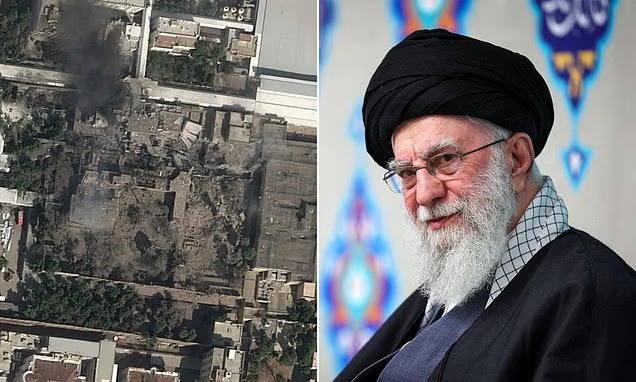
Two Israeli officials, speaking on condition of anonymity ahead of a formal announcement, told The Associated Press that Israel had confirmed Khamenei’s death after strikes hit his compound early Saturday. Israeli Prime Minister Benjamin Netanyahu, in a nationally televised address, cited “growing signs” that Khamenei had been killed when Israeli forces targeted his residence in Tehran.

There was no immediate confirmation from U.S. officials or from Iran. Earlier in the day, Iran’s foreign minister, Abbas Araghchi, told NBC News that Khamenei and President Masoud Pezeshkian were alive “as far as I know,” describing the assault as “unprovoked, illegal and absolutely illegitimate.”

Khamenei, 86, succeeded Ayatollah Ruhollah Khomeini following the 1979 Islamic Revolution and held ultimate authority over Iran’s government, military and judiciary. As supreme leader, he commanded the powerful Islamic Revolutionary Guard Corps and shaped all major policy decisions in the Islamic Republic. No successor had been publicly designated.

President Donald Trump, who earlier confirmed that U.S. forces had begun “major combat operations in Iran,” urged Iranians to rise against their ruling clerics.

“When we are finished, take over your government,” Trump said in a video message. “It will be yours to take. This will be probably your only chance for generations.”

The United States military reported roughly 12 hours after the first strikes that there were no American casualties and minimal damage to U.S. installations despite what it described as “hundreds of Iranian missile and drone attacks.” U.S. targets in Iran included Revolutionary Guard command facilities, missile and drone launch sites, air defense systems and military airfields.
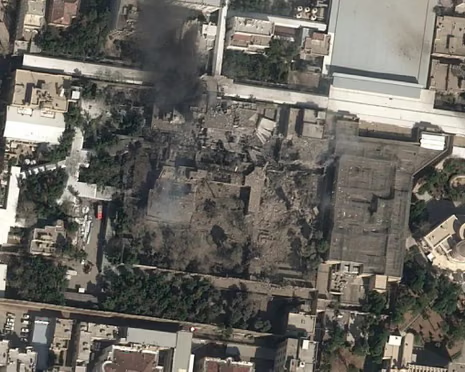
Image, captured by Airbus, shows multiple destroyed or heavily damaged structures within the Tehran complex of Iran’s supreme leader. Photograph: Airbus/Soar Atlas

Iranian state media, citing the Red Crescent, said at least 201 people had been killed and more than 700 wounded nationwide. In southern Iran, a girls’ school was struck, leaving at least 85 dead, according to a local governor speaking on state television. The U.S. Central Command said it was aware of the reports and reviewing them.

Iran retaliated with missile and drone strikes against Israel and U.S. facilities in Bahrain, Kuwait and Qatar. Israel’s military said Iran launched “dozens” of missiles, many of which were intercepted. Emergency service Magen David Adom reported 89 people lightly injured.

Saudi Arabia said an Iranian attack targeting its capital and eastern region was repelled. Bahrain reported damage to buildings near the U.S. Navy’s 5th Fleet headquarters in Manama. Kuwait’s civil aviation authority said a drone struck near its main airport, injuring several employees, and Jordan said it intercepted 49 drones and ballistic missiles.

Israel said it killed several senior Iranian officials in addition to Khamenei, including the commander of the Revolutionary Guard Corps and Iran’s defense minister. The Israeli military also said the secretary of Iran’s Security Council was among those killed. Neither the United States nor Iran publicly confirmed those claims.

The U.N. Security Council scheduled an emergency meeting Saturday afternoon. The International Atomic Energy Agency said on X that it was closely monitoring developments and had detected “no evidence of radiological impact.”
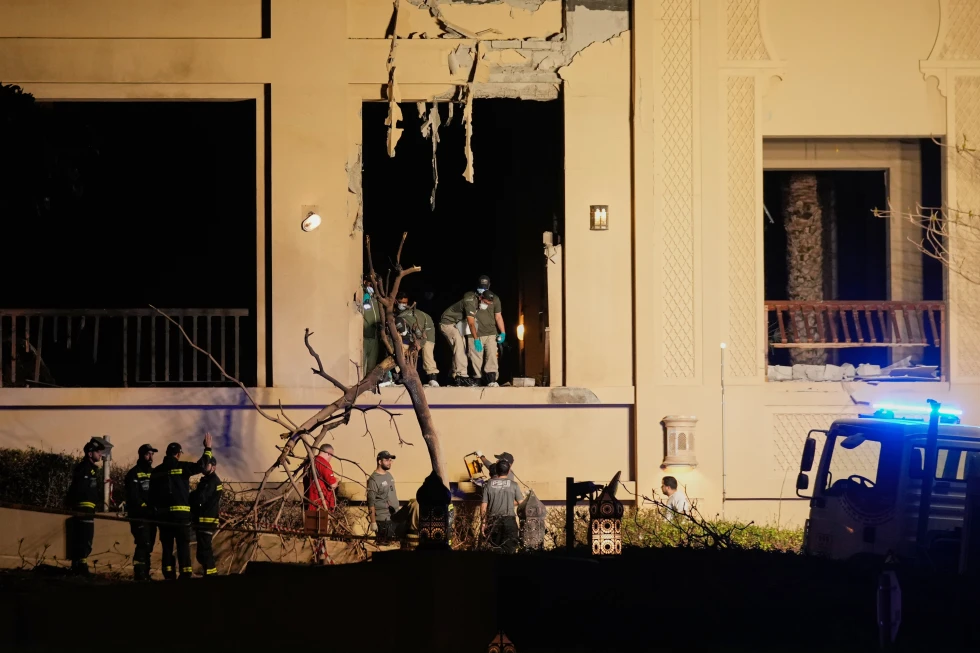
Iran requested an urgent session of the IAEA Board of Governors over what it described, through a letter posted by the semiofficial Tasnim news agency, as threats to safeguarded nuclear facilities.

The operation unfolded during the holy month of Ramadan and marked the second time in eight months that the Trump administration has ordered direct military action against Iran amid stalled nuclear negotiations. The most recent round of talks collapsed Thursday.

Flights were disrupted across the Middle East, and air defense systems were activated over several capitals. Air traffic slowed across the Persian Gulf, raising concerns over the safety of shipping lanes, particularly the Strait of Hormuz, through which roughly a third of the world’s seaborne oil exports passed in 2025.

If confirmed, Khamenei’s death would represent the most consequential decapitation of Iranian leadership since the founding of the Islamic Republic. Unlike the targeted killing of military commanders in past confrontations, the elimination of the supreme leader strikes at the core of Iran’s theocratic structure.

Iran’s constitution provides for an Assembly of Experts to appoint a new leader, but the absence of a clearly identified successor could ignite internal power struggles between clerical authorities and the Revolutionary Guard. The Guard, already central to Iran’s security and economic systems, may assert greater authority in the transition.

Even so, regime change is not assured. Iran’s leadership has historically consolidated power during external crises, and nationalist sentiment could blunt calls for uprising despite Trump’s appeal. Analysts note that previous domestic protest movements were met with harsh crackdowns. The Human Rights Activists News Agency has documented thousands of deaths in recent unrest, underscoring the risks for demonstrators.

Regionally, Iran retains influence through allied militias in Lebanon, Iraq, Syria and Yemen. Retaliatory strikes may expand beyond direct missile exchanges, potentially targeting energy infrastructure or maritime routes. Any sustained disruption to the Strait of Hormuz could reverberate through global energy markets.

Diplomatically, the joint U.S.-Israel campaign marks a dramatic shift from containment to overt confrontation. Oman’s Foreign Minister Badr al-Busaidi, who has mediated nuclear talks, said on X that renewed military action undermined active negotiations and warned that neither U.S. interests nor global peace would benefit.

Domestically in the United States, some Democrats criticized Trump for proceeding without congressional authorization, while White House spokesperson Karoline Leavitt said Republican and Democratic leaders had been briefed in advance.

As night fell, Israeli forces said new strikes were underway against missile launchers and air defense systems in central Iran. Exchanges of fire continued, signaling that the fallout from Saturday’s operation may shape the Middle East’s political landscape for years to come.
Trump Announces Major U.S. Combat Operations in Iran as Joint Strikes With Israel Expand

0

President Donald Trump announced early Saturday that the United States military has begun what he described as “major combat operations in Iran,” confirming American participation in a widening military campaign alongside Israel amid escalating tensions over Tehran’s nuclear program.

“A short time ago, the United States military began major combat operations in Iran,” Trump said in a video posted at 2:30 a.m. Eastern on Truth Social. He framed the action as defensive, declaring that the objective is to protect Americans by eliminating what he characterized as imminent threats posed by Iran’s government.

“It has always been the policy of the United States, in particular my administration, that this terrorist regime can never have a nuclear weapon,” Trump said. “They can never have a nuclear weapon.”

Two U.S. officials told NBC News that the operation is being carried out from both air and sea. One official indicated that a broad array of fighter aircraft are involved. Another said American forces are striking Iranian military and security installations. Three U.S. officials said Tomahawk cruise missiles were launched from Navy vessels toward targets inside Iran.

The Associated Press separately confirmed that the United States and Israel initiated coordinated strikes Saturday, with one apparent early target near offices associated with Supreme Leader Ayatollah Ali Khamenei in Tehran.

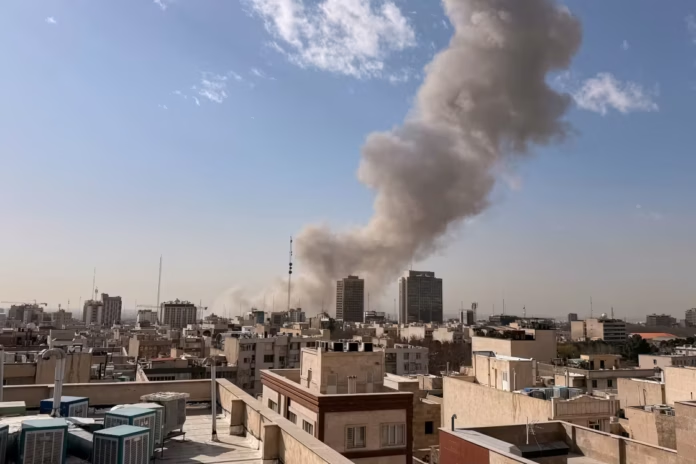
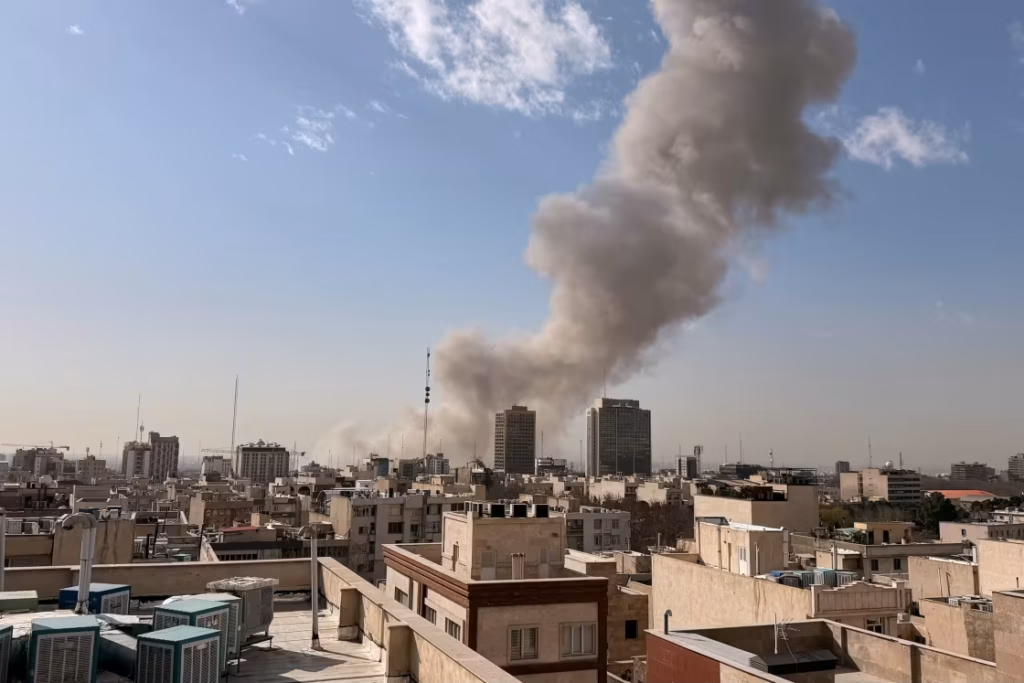
Iranian state media acknowledged multiple explosions across the country. Blasts were reported outside Tehran and in several cities, including Qom, Hamedan, Kermanshah, Karaj, Tabriz, Ilam and on Qeshm Island in the Persian Gulf. Iran’s semi-official FARS news agency said detonations were heard throughout the capital, while images broadcast on state television showed thick plumes of smoke rising over parts of Tehran.

Iran’s semi-official Tasnim news agency indicated that Iranian airspace had been closed.

An Israeli defense ministry spokesperson said Israel initiated what it called a preemptive strike aimed at removing threats to the country. “The State of Israel has launched a preemptive strike against Iran to remove threats against the State of Israel,” the spokesperson said, cautioning that retaliatory missile and drone attacks against Israeli territory could follow.

Sirens sounded across Israel as the strikes unfolded. The Israeli military said the alerts were intended to prepare civilians for the possibility of incoming projectiles. Israeli television networks shifted coverage to bomb shelters as much of the country’s streets appeared largely empty.

Israeli Defense Minister Israel Katz publicly acknowledged the offensive as smoke billowed over Tehran.

A U.S. official, speaking on condition of anonymity because of the sensitivity of ongoing operations, told NBC News that American forces are actively participating in the strikes with Israel and that the campaign remains underway.

In his address, Trump cautioned that conflict could bring American casualties, particularly if Iran retaliates.

“My administration is taking every possible step to minimize the risk to U.S. personnel in the region,” Trump said. “Even so, the Iranian regime seeks to kill. The lives of courageous American heroes may be lost, and we may have casualties. That often happens in war.”

There have been no immediate indications of American deaths or injuries linked to the initial wave of strikes.

Trump’s announcement follows months of mounting tension tied to Iran’s nuclear ambitions. During his recent State of the Union address, the president accused Tehran of pursuing “sinister nuclear ambitions.” The United States had been engaged in nuclear discussions with Iran, but the diplomatic track appeared increasingly strained in recent weeks.

The administration has significantly bolstered U.S. military assets in the Middle East. A second carrier strike group, the USS Gerald R. Ford Carrier Strike Group, was ordered to the region earlier this month. The USS Abraham Lincoln carrier group was already operating nearby following a deployment decision announced Feb. 13.

NBC News reported that the U.S. ambassador to Israel circulated guidance urging Americans who wished to depart to do so “TODAY,” an email that NBC said it reviewed and that was first disclosed by The New York Times.

Iranian lawmaker Ebrahim Azizi issued a defiant message on social media after the strikes. “We warned you!” he wrote. “Now you’ve started down a path whose end is no longer in your hands.”

Iranian media outlets confirmed at least two strike sites in central Tehran. Additional blasts were reported near maritime facilities, including Asaluyeh and the port of Chabahar, suggesting attention to naval capabilities.

Eric Schouten, chief executive of the Netherlands-based Dyami security intelligence firm, told The Associated Press that the strikes appear to be “preparatory shaping actions.” He said disabling radar systems, surface-to-air missile batteries and command nodes would typically precede a broader air campaign intended to secure air superiority.

“The broader pattern suggests preparatory shaping actions,” Schouten said. He described the operation as consistent with the opening phase of a coordinated military campaign rather than a symbolic show of force.

The launch of major combat operations marks one of the most significant escalations between Washington and Tehran in decades. While U.S. administrations have previously conducted targeted strikes — including the 2020 killing of Iranian Gen. Qassem Soleimani — a sustained joint campaign with Israel aimed at degrading Iranian military infrastructure carries far-reaching implications.

If the operation extends over several days, as two U.S. officials suggested to NBC News, it could test Iran’s capacity for asymmetric retaliation. Tehran has historically relied on proxy forces across the region, including groups in Lebanon, Syria and Iraq, to respond indirectly to Israeli and American actions.

The mobilization of two carrier strike groups signals both deterrence and preparation for escalation. Such a force posture not only enables extended air operations but also communicates readiness to defend U.S. assets and allies against counterstrikes.

The strikes also arrive at a delicate geopolitical moment. Energy markets could react sharply if maritime routes in the Persian Gulf are disrupted. Qeshm Island’s proximity to the Strait of Hormuz — through which a significant share of global oil flows — heightens concerns over potential shipping interference.

Domestically, Trump’s decision underscores a hard-line approach that prioritizes coercive leverage over diplomatic compromise in confronting Iran’s nuclear trajectory. Whether the campaign succeeds in constraining Tehran’s capabilities without triggering broader regional war remains uncertain.

For now, U.S. and Israeli officials have signaled determination to continue operations as events rapidly unfold across the Middle East.

NBC/AP

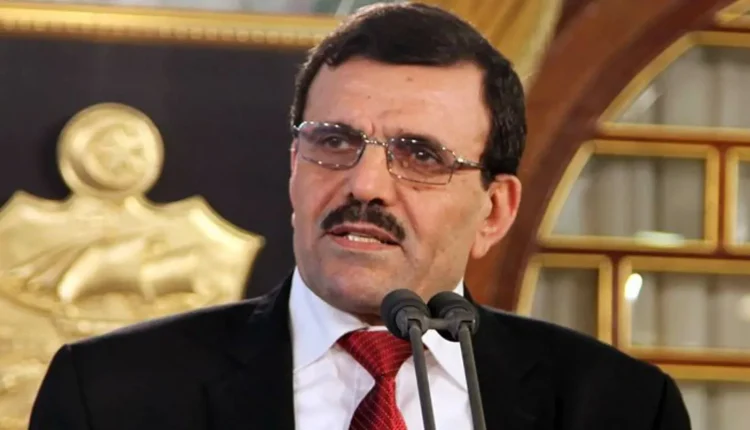
Tunisia Appeals Court Sentences Former Prime Minister Ali Larayedh to 24 Years in ‘Tasfir’ Syria Travel Case

0

TUNIS, Tunisia (BN24) — A Tunisian appeals court on Thursday sentenced former Prime Minister Ali Larayedh to 24 years in prison over allegations that he facilitated the travel of Tunisian fighters to Syria during the country’s civil war, in a case that has deepened political divisions in the North African nation.

The ruling, delivered late Thursday by the Appeals Court of Tunis, reduced by 10 years the 34-year prison term previously imposed in a lower court decision in May 2025. Prosecutors had sought the 34-year sentence, which the trial court had upheld before the case moved to appeal.

Larayedh, who served as Tunisia’s prime minister from 2013 to 2014 in the turbulent period following the Arab Spring uprising, has consistently denied wrongdoing. The case — widely known in Tunisia as the “Tasfir” case, using the Arabic term referring to travel for jihad — centers on accusations that officials during his tenure enabled or failed to prevent the departure of Tunisian nationals to join armed groups in Syria.

The appeals chamber upheld Larayedh’s conviction while reducing the overall sentence. Court officials did not immediately release a detailed explanation of the judgment.

Seven other defendants were sentenced in the same proceeding, receiving prison terms ranging from three to 28 years, according to court findings announced Thursday.

Larayedh’s political party, the Islamist opposition movement Ennahda, criticized the ruling, characterizing it as politically driven. Party representatives argued that the proceedings lacked conclusive evidence and described the prosecution as part of a broader campaign targeting opposition figures.

The former prime minister’s initial trial, held last year, was marked by controversy, including disputes over the sufficiency and reliability of the evidence presented. Defense attorneys questioned whether prosecutors had established a direct link between Larayedh’s official actions and the departure of Tunisian fighters to Syria.

Tunisia was one of the largest sources of foreign fighters during the height of the Syrian conflict. Thousands of Tunisians are believed to have traveled to Syria and Iraq in the early and mid-2010s, raising long-standing questions about state oversight, border controls and the role of political actors during a period of fragile democratic transition.

Larayedh led the government during a particularly volatile chapter in Tunisia’s post-revolution history, as the country struggled to stabilize its institutions following the 2011 uprising that toppled longtime President Zine El Abidine Ben Ali. His term coincided with mounting security challenges, including political assassinations and the growing influence of extremist networks.

The “Tasfir” case has become one of the most politically sensitive judicial proceedings in Tunisia in recent years. Critics say it reflects widening tensions between the current authorities and opposition parties, particularly Ennahda, which once dominated Tunisia’s parliament and led several coalition governments after the revolution.

Government officials have maintained that the judiciary is acting independently and that the case is rooted in national security concerns rather than political calculations.

While the court’s ruling addresses specific allegations tied to the Syria conflict, the broader implications extend well beyond Larayedh’s personal fate.

Tunisia’s democratic trajectory has faced significant strain in recent years, with institutional reforms and political restructuring reshaping the balance of power. Legal actions against prominent political figures have drawn scrutiny from domestic and international observers concerned about due process and judicial independence.

The “Tasfir” proceedings also reopen unresolved questions about accountability during the chaotic years following the Arab Spring. At that time, Tunisia’s security institutions were undergoing rapid transformation, and oversight mechanisms were still evolving. Critics of the prosecution argue that decisions made during that period should be understood within the broader context of state fragility rather than viewed solely through a criminal lens.

Supporters of the verdict, however, contend that the scale of Tunisian recruitment into foreign conflicts warranted a thorough reckoning. They argue that any official negligence or complicity must be addressed to restore public trust in state institutions.

The reduction of Larayedh’s sentence on appeal may signal a degree of judicial recalibration, though it does not fundamentally alter the conviction itself. Legal analysts note that appeals courts often reassess sentencing proportionality while leaving core findings intact.

Beyond the courtroom, the ruling is likely to reverberate across Tunisia’s political landscape. Ennahda, once a central force in the country’s post-revolution governance, has seen its influence diminish amid shifting public sentiment and structural political changes. The conviction of a former prime minister further complicates the party’s efforts to reposition itself.

The case may also affect Tunisia’s international image. During the early years after the Arab Spring, the country was widely regarded as the most promising example of democratic transition in the region. Ongoing legal battles involving high-profile political figures risk reinforcing perceptions of instability or political polarization.

At the same time, the proceedings underscore Tunisia’s struggle to reconcile security imperatives with civil liberties. The Syrian conflict drew thousands of foreign recruits from across North Africa and Europe, and governments throughout the region continue to grapple with the legal and political consequences.

For Larayedh, the appeals court’s decision marks a significant chapter in a legal saga that has unfolded over several years. Whether further legal recourse remains available was not immediately clear.

As Tunisia navigates a complex political era shaped by post-revolution legacies, security concerns and evolving governance structures, the outcome of the “Takfir” case stands as a defining moment not only for a former prime minister, but for the country’s broader debate over accountability, justice and the meaning of its democratic experiment.

More Than 100 Aid Kitchen Workers Killed in Sudan War as Famine Deepens in Darfur

0

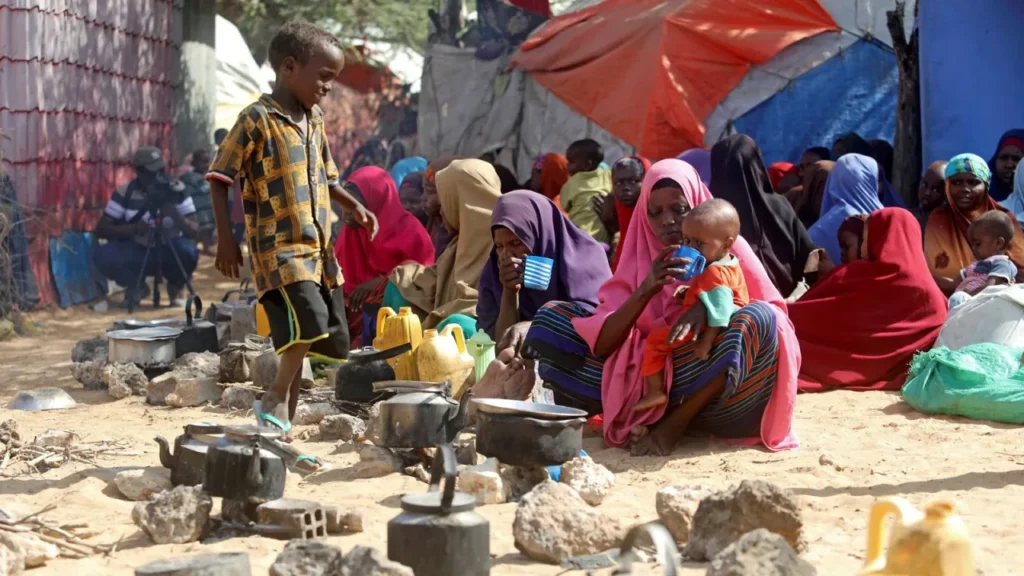
CAIRO (BN24) — More than 100 charity kitchen workers have been killed since Sudan’s civil war erupted in April 2023, according to accounts gathered by The Associated Press and data compiled by the Aid Workers Security database, which monitors major incidents affecting humanitarian personnel worldwide.

The toll highlights the growing risks faced by civilians running community-led food programs in a conflict that has devastated much of the country and pushed parts of the western Darfur region toward famine.

Enas Abab, 19, said her father was among those killed in the North Darfur capital of al-Fasher. She recounted that after fighters from the paramilitary Rapid Support Forces seized control of the city in October, they detained him and demanded ransom.

When relatives said they were unable to pay, the family was later informed that he had been killed.

“He worked at the charity kitchen from the beginning of the war,” Abab said. “He distributed food and drink to people in the camps and gave medicine to those with high blood pressure and diabetes.”

The RSF has been battling Sudan’s military since April 2023 in a power struggle that has fractured the country. Al-Fasher became a focal point of intense fighting as the RSF laid siege to the city, restricting supplies before storming it.

United Nations officials have indicated that only about 40% of al-Fasher’s 260,000 residents managed to escape the assault alive, with thousands wounded. The fate of many others remains unclear.

Abab said she still does not know where her father’s body is. A month after his death, her husband vanished. Fearing for her safety, she fled north with her young son and sought refuge in Egypt.

Farouk Abkar, 60, also worked at a community kitchen in al-Fasher, distributing sacks of grain at Zam Zam camp, roughly 15 kilometers (9 miles) south of the city. He described surviving drone strikes and armed raids before fleeing.

He recounted an attack by RSF fighters on the camp kitchen. “One of them started hitting me,” Abkar said. “When I tried to run, he grabbed me and punched me in the face. Some of my teeth were knocked out.”

Abkar said he escaped under cover of darkness, walking for 10 days with his daughter until they reached safety. Now living in Egypt, he shares a cramped apartment with at least 10 other Sudanese refugees and says he cannot afford medical treatment.

The Aid Workers Security database, which tracks serious incidents involving humanitarian personnel globally, has documented the mounting toll on those working in Sudan’s grassroots relief networks. While precise figures are difficult to verify in conflict zones, the database and interviews with affected families indicate that more than 100 kitchen workers have been killed since the war began.

In Darfur and other areas experiencing heavy fighting, food shortages have intensified. Markets have collapsed, farmland has been abandoned and supply routes have been cut off. Famine conditions are spreading in some districts, according to humanitarian agencies.

Community-run kitchens have become critical lifelines, often providing the only reliable source of meals. Operated by volunteers and funded through local donations or diaspora support, they serve displaced families sheltering in camps and neighborhoods shattered by shelling.

Yet the very visibility of the kitchens has exposed workers to danger. Aid volunteers have been abducted, robbed, detained, beaten and killed. Ransom demands, often ranging between $2,000 and $5,000, have been imposed on families, with sums sometimes escalating after partial payments are made, activists and relatives said.

The United Nations has stated that it remains unclear whether kitchen workers are targeted specifically because of their humanitarian roles or because of perceived ties to one of the warring factions.

Activists say the prominence of kitchen volunteers in their communities may make them conspicuous targets. Their work, which requires organizing food distribution and interacting with large numbers of displaced residents, can draw scrutiny in areas controlled by armed groups.

Despite the threats, many kitchens continue operating. For communities cut off from formal aid channels, they represent not only sustenance but also solidarity places where neighbors share information, pool resources and offer emotional support.

Sudan’s civil war, pitting the RSF against the national army, has produced one of the world’s gravest humanitarian crises. Millions have been displaced internally or across borders. Infrastructure has crumbled, hospitals have closed and agricultural cycles have been disrupted.

The targeting deliberate or incidental of grassroots relief workers underscores a broader erosion of civilian protection. International humanitarian law affords safeguards to aid personnel, but enforcement mechanisms are limited in fragmented conflicts.

The deaths of kitchen workers also illustrate how modern warfare increasingly engulfs informal civilian networks. Unlike international aid agencies, community kitchens operate without armored vehicles, security escorts or global visibility. Their volunteers are neighbors — teachers, farmers, parents — who step into relief roles out of necessity.

The impact extends beyond immediate casualties. Each killing can shutter a food distribution point, depriving hundreds of families of daily meals. In famine-prone areas, the loss of even one kitchen can accelerate malnutrition rates, especially among children and the elderly.

For refugees who have fled to countries like Egypt, trauma compounds economic hardship. Survivors often arrive with untreated injuries and limited means to access healthcare. Host countries, already facing resource constraints, struggle to accommodate the influx.

Diplomatic efforts to broker a ceasefire between Sudan’s warring factions have repeatedly faltered. Without sustained humanitarian corridors and security guarantees, civilian-led relief initiatives will remain vulnerable.

The resilience of Sudan’s community kitchens, however, reflects a broader pattern of local self-organization in times of state collapse. Even amid bombardment and siege, volunteers continue to cook, distribute supplies and care for the sick.

Whether the international community can translate concern into effective protection remains uncertain. For families like Abab’s and Abkar’s, the cost of inaction is already measured in lives lost and in kitchens that have fallen silent where meals were once shared.

U.S. Housing Market Tilts Toward Buyers as Sellers Outnumber Buyers by 44%, Redfin Says

0

NEW YORK (BN24) — The U.S. housing market has shifted decisively in favor of buyers, with sellers now outnumbering buyers by 44% nationwide, according to a new analysis from Redfin.

In January, the country had roughly 600,000 more home sellers than buyers, marking one of the largest imbalances recorded since the brokerage began tracking the metric in 2013. The gap is second only to December 2025, when sellers exceeded buyers by 45%, the firm’s data show.

By Redfin’s definition, any market where sellers exceed buyers by more than 10% qualifies as a buyer’s market. Using that benchmark, the United States has remained in buyer-friendly territory since May 2024.

The shift gives prospective buyers greater negotiating power. When listings significantly exceed demand, purchasers can take more time, request concessions and avoid bidding wars that characterized much of the pandemic-era housing boom.

Redfin estimates there were about 1.36 million buyers in January, down 1% from December and 8% from a year earlier — the lowest level recorded in the dataset. The number of sellers also fell 1% month over month to 1.96 million, marking the sharpest monthly decline since June 2023 and the smallest overall seller count since February 2025. Compared with January last year, however, the number of sellers was up 2%.

The imbalance reflects a mix of economic pressures and shifting consumer sentiment. Elevated mortgage rates, persistently high home prices, layoffs in certain industries and broader political and economic uncertainty have discouraged many would-be buyers from entering the market.

At the same time, some homeowners have removed listings after failing to secure offers, while others have opted against selling after seeing nearby homes close below asking prices.

The New York Post cited Redfin’s findings in its coverage, noting that the current spread between sellers and buyers is historically wide.

Despite the nationwide buyer advantage, local conditions vary widely.

Only five of the 50 largest U.S. metropolitan areas qualified as sellers’ markets in January, meaning buyers outnumbered sellers in those locations.

Newark, New Jersey, had 31% fewer sellers than buyers, making it the strongest seller’s market among major metros. Nassau County, New York, followed with 29% fewer sellers than buyers. Milwaukee and Montgomery County, Pennsylvania, each registered 26% fewer sellers, while New Brunswick, New Jersey, showed a 17% seller shortfall.

In Milwaukee, constrained supply continues to drive competition. Local Redfin Premier agent W.J. Eulberg attributed the tight conditions to declining mortgage rates and limited inventory.

“Two things are fueling Milwaukee’s seller’s market: a drop in mortgage rates and a lack of inventory,” Eulberg said in Redfin’s analysis. “Mortgage rates are lower than they were six months ago and a year ago, which has brought buyers back into the fold. And while listings are creeping back up, we still have less than three months of supply. That means buyers don’t have a lot of homes to choose from, which is driving up prices and competition.”

Milwaukee posted an 11% year-over-year increase in median sale price in January — the largest gain among the top 50 metro areas.

Across the five seller-dominated markets, prices rose an average of 5% compared with a year earlier. That contrasts with a 3% annual increase in six markets deemed balanced and a 1% rise in the 39 buyer-leaning metros, suggesting that softer demand is limiting price growth in much of the country.

Many of the most buyer-friendly markets are concentrated in the South and along the West Coast. Miami recorded the widest buyer advantage, with 159% more sellers than buyers. Fort Lauderdale followed at 128%, Austin at 124%, Nashville at 120% and San Antonio at 114%.

The widening gap between sellers and buyers signals a market that is cooling, though not collapsing. Unlike the 2008 housing crisis, today’s environment is defined less by distressed sales and more by affordability constraints and cautious consumers.

Mortgage rates remain elevated compared with the record lows of 2020 and 2021, significantly increasing monthly payments. Even modest rate fluctuations can alter purchasing power by tens of thousands of dollars over the life of a loan.

At the same time, many homeowners remain locked into low-rate mortgages secured during the pandemic. That “rate lock” effect discourages selling, as moving would often mean financing a new home at a higher interest rate. The result is a paradox: inventory has improved relative to recent years, but not enough to fully rebalance supply-demand dynamics in certain regions.

The sharp decline in buyer numbers to record lows suggests a deeper affordability strain. Wage growth has not kept pace with housing costs in many metropolitan areas, limiting entry for first-time buyers. Student debt burdens and higher living expenses further constrain purchasing capacity.

For buyers who remain active, however, conditions are more favorable than at any point in the past several years. Fewer bidding wars, more price reductions and longer listing times offer opportunities to negotiate.

For sellers, the environment demands strategic pricing. Overpricing homes in a buyer’s market can result in extended time on the market and eventual price cuts, which may weaken negotiating leverage.

Looking ahead, market direction will hinge largely on interest rate trends and broader economic stability. If mortgage rates ease further, demand could recover modestly, narrowing the seller-buyer gap. Conversely, continued economic uncertainty may prolong the imbalance.

For now, Redfin’s January data underscores a clear reality: across much of the country, buyers hold the advantage — a reversal from the frenzied, seller-dominated landscape that defined the housing market just a few years ago.

Pakistan–Afghanistan Border Clashes Escalate as Civilian Areas Hit by Shelling

0

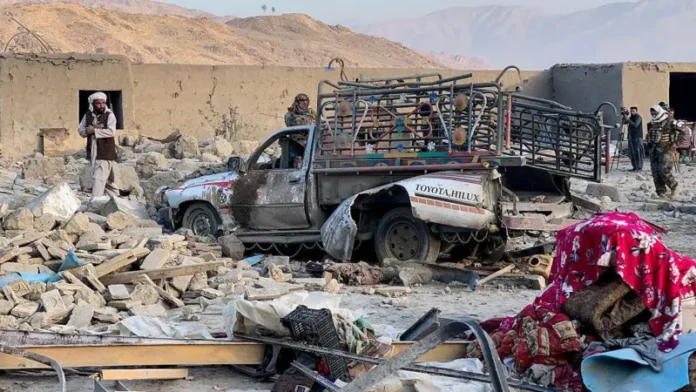
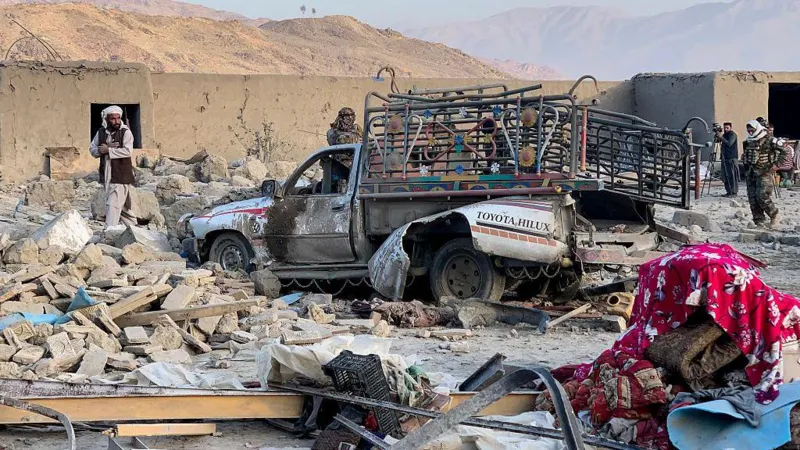
ISLAMABAD (BN24) — Artillery exchanges along the volatile Pakistan Afghanistan frontier struck residential areas and a mosque this week, wounding civilians including women and children as clashes between the two neighbors intensified, residents and officials said.

People living near the disputed sections of the border described shells landing in densely populated areas, damaging homes and forcing families to flee. Community members in affected districts said the explosions shattered windows and left several civilians injured.

Authorities in Afghanistan, led by the country’s Taliban administration, acknowledged that cross-border strikes had occurred. However, officials disputed some casualty figures circulating locally and indicated that their forces had launched retaliatory operations targeting positions near the frontier.

Pakistani officials, meanwhile, asserted that their security forces responded to militant activity originating from across the border. Both sides claimed to have inflicted losses on the other’s military units, though independent verification of battlefield accounts remained unavailable.

At the center of the confrontation is Pakistan’s long-standing allegation that fighters from Tehreek-e-Taliban Pakistan (TTP) are operating from Afghan territory. Islamabad has repeatedly accused the group of using safe havens inside Afghanistan to stage attacks against Pakistani security forces and civilians.

Afghanistan’s Taliban authorities have rejected those accusations, insisting they do not permit armed groups to use Afghan soil to target other countries. The administration in Kabul has instead blamed escalating tensions on what it describes as unilateral military actions by Pakistan along the frontier.

The border, which stretches roughly 2,600 kilometers (1,600 miles), has long been a flashpoint. Known as the Durand Line, it cuts through rugged terrain and tribal regions where communities straddle both sides. Its status has historically been disputed, contributing to recurring friction.

In recent days, key crossings have remained largely closed, disrupting commercial shipments and halting daily cross-border movement for traders, laborers and families with ties on both sides. Transporters reported long queues of trucks carrying perishable goods, while residents described shortages of essential supplies in some local markets.

Regional diplomatic initiatives aimed at defusing the crisis have so far yielded little progress. Efforts by neighboring countries to encourage dialogue have not produced a breakthrough, leaving both governments facing one of their most serious standoffs in years.

Security analysts note that relations between Islamabad and Kabul have grown increasingly strained since the Taliban returned to power in Afghanistan in 2021. Initially, Pakistani officials had expressed cautious optimism about cooperation with the new authorities. But a surge in militant attacks inside Pakistan many attributed to the TTP has eroded trust.

The TTP, ideologically aligned with the Afghan Taliban but organizationally distinct, has waged an insurgency against the Pakistani state for more than a decade. Islamabad maintains that cross-border sanctuaries allow the group to regroup and plan operations. Kabul has consistently denied offering refuge.

Civilians living near the frontier often bear the brunt of such escalations. In villages affected by the recent shelling, families sought shelter overnight amid fears of renewed bombardment. Local elders appealed for restraint, warning that prolonged fighting would compound humanitarian pressures in already fragile districts.

Neither government released comprehensive casualty figures. Military spokespeople on both sides highlighted what they described as defensive measures and emphasized their readiness to safeguard territorial integrity.

The latest confrontation underscores the precarious security dynamic shaping Pakistan–Afghanistan relations. While cross-border skirmishes are not unprecedented, the scale and intensity of recent exchanges point to deepening mistrust.

For Pakistan, curbing militant violence has become a pressing domestic priority. A rise in attacks targeting police and military personnel has fueled public concern and placed pressure on authorities to respond decisively. Linking these incidents to alleged cross-border networks strengthens Islamabad’s justification for tougher border enforcement but also risks provoking retaliatory measures.

For Afghanistan’s Taliban administration, the accusations carry diplomatic and economic consequences. Kabul is seeking broader international recognition and relief from economic isolation. Persistent claims that militant groups operate freely within its territory complicate those ambitions.

The closure of border crossings highlights another layer of vulnerability: economic interdependence. Afghanistan relies heavily on trade routes through Pakistan for access to seaports, fuel and consumer goods. Prolonged disruptions could worsen inflationary pressures and humanitarian strain inside Afghanistan, where millions already depend on aid.

At the same time, Pakistan’s border regions face economic fallout when trade halts. Small businesses, transport workers and daily wage earners depend on the steady flow of goods and people. Interruptions can quickly ripple through local economies.

Diplomatically, the standoff presents a test for regional mediation mechanisms. Neighboring states have a vested interest in preventing sustained instability that could spill across borders. However, without direct bilateral trust-building measures, external mediation may have limited impact.

Strategically, the clashes reveal the enduring volatility of the frontier itself. The mountainous terrain complicates surveillance and control, and overlapping tribal affiliations blur jurisdictional lines. Even minor incidents can escalate rapidly amid mutual suspicion.

The immediate question is whether both governments will recalibrate to prevent further civilian harm. Historically, periods of heightened tension have alternated with fragile truces. Yet the underlying grievances militant sanctuaries, border recognition and political distrust — remain unresolved.

As artillery fire subsides and diplomatic channels continue behind closed doors, communities along the frontier confront an uncertain future. For residents who share ethnic, familial and commercial ties across the boundary, the geopolitical dispute is not an abstract matter of statecraft but a daily reality measured in safety, mobility and livelihood.

Whether this episode marks a temporary spike or a more sustained deterioration in relations may depend on the willingness of Islamabad and Kabul to move from public recriminations to practical security coordination a step that has proved elusive in the past.

UEFA Champions League 2025/26 Round of 16 Fixtures Confirmed After Nyon Draw

0

NYON, Switzerland (BN24) — The Round of 16 matchups for the 2025/26 UEFA Champions League were finalized Friday following the official draw at UEFA headquarters in Nyon, producing a series of high-profile clashes among Europe’s elite clubs.

Pics: Kalshi

The knockout bracket features heavyweight encounters, renewed rivalries and a historic debut appearance at this stage of the competition, setting the tone for what promises to be a compelling run toward the final in May.

Among the standout pairings, Manchester City will once again face Real Madrid, continuing a recent pattern of meetings between the English and Spanish giants in the latter stages of the tournament. The two clubs have developed one of the defining rivalries of modern European football, frequently colliding in decisive knockout rounds.

Defending champions Paris Saint-Germain were drawn against Premier League side Chelsea, a tie that pits continental holders against one of England’s most resurgent squads.

In another marquee fixture, Galatasaray will meet Liverpool, while Italy’s Atalanta take on German champions Bayern Munich.

English representation remains strong in this year’s knockout field. Newcastle United are set to face Spanish powerhouse Barcelona, and Tottenham Hotspur will clash with Atlético Madrid.

Elsewhere, Norway’s Bodø/Glimt have reached the Champions League knockout stage for the first time in their history and will face Portugal’s Sporting CP. Meanwhile, Bayer Leverkusen were paired with Arsenal in what observers view as one of the most evenly matched contests of the round.

The confirmed ties are:

Paris Saint-Germain vs Chelsea
Galatasaray vs Liverpool
Real Madrid vs Manchester City
Atalanta vs Bayern Munich
Newcastle United vs Barcelona
Atlético Madrid vs Tottenham Hotspur
Bodø/Glimt vs Sporting CP
Bayer Leverkusen vs Arsenal

The Round of 16 will be contested over two legs, scheduled for March 10/11 and March 17/18, 2026. Kickoff times are set for 18:45 CET and 21:00 CET.

The quarterfinals will take place April 7/8 and April 14/15, 2026, with matches beginning at 21:00 CET. Semifinal fixtures are slated for April 28/29 and May 5/6, also at 21:00 CET.

The final is scheduled for May 30, 2026, with kickoff at 18:00 CET.

This year’s bracket underscores the competitive depth of the modern Champions League. Several ties resemble matchups more commonly associated with semifinals or finals.

Manchester City’s latest encounter with Real Madrid continues a rivalry that has shaped recent editions of the competition. Tactical evolution, squad depth and managerial adjustments will again be decisive factors. The margin between the two sides has historically been narrow, often determined by moments of individual brilliance.

PSG’s meeting with Chelsea also carries broader significance. As defending champions, PSG face immediate pressure to assert dominance against a Premier League side that thrives in transitional play and high-tempo matches. Chelsea’s European pedigree ensures the contest will test PSG’s defensive resilience.

Arsenal’s pairing with Bayer Leverkusen could prove pivotal for both clubs’ continental ambitions. Leverkusen’s disciplined structure and attacking efficiency contrast with Arsenal’s possession-based approach, suggesting a tactically balanced affair.

For Bodø/Glimt, the knockout debut marks a milestone not only for the club but also for Norwegian football. Advancing beyond the group stage reflects the increasing competitiveness of smaller-market teams capable of leveraging tactical organization and home advantage.

The broader picture reveals strong English participation, reinforcing the Premier League’s financial and competitive influence in European football. However, Spanish and German clubs remain formidable, preserving the traditional power balance within UEFA competitions.

As the tournament moves into its elimination phase, squad rotation, injury management and fixture congestion will shape outcomes. With domestic leagues intensifying simultaneously, maintaining peak performance across competitions will be critical.

The 2025/26 Round of 16 promises not only elite matchups but also narrative continuity — rivalries renewed, newcomers emerging and established powers defending legacy. With Europe’s most prestigious club trophy at stake, the path to May’s final is now clearly defined.

21-year-old woman drugs two men to death after asking ChatGPT chilling questions on how to kill

0

SEOUL, South Korea (BN24) — A 21-year-old woman in South Korea has been taken into custody on suspicion of killing two men after investigators determined she researched the lethal effects of combining sedatives and alcohol using the artificial intelligence chatbot ChatGPT, authorities disclosed.

The suspect, identified by police only by her surname, Kim, was detained Feb. 11. Law enforcement officials later elevated the case to murder allegations following a review of forensic findings and digital evidence tied to two separate deaths in Seoul.

Details of the investigation were first carried by the BBC and The Korea Herald, which cited police briefings on the matter.

Authorities allege the first death occurred Jan. 28 in Seoul’s Gangbuk district. Investigators contend Kim checked into a motel with a man in his 20s. Surveillance footage and lodging records indicate she departed approximately two hours later. The man was discovered dead the following day, police said.

A second fatality unfolded Feb. 9 at another motel in the capital, according to investigators. In that instance, officials assert Kim employed a similar approach, providing a drink that had been laced with drugs to a man before he was later found deceased.

Law enforcement officials are also examining a December 2025 incident in Namyangju that they believe may represent an earlier attempt. In that case, Kim is accused of giving her then-partner a beverage containing a sedative, allegedly rendering him unconscious. The individual survived.

Police indicated that digital forensics performed on Kim’s mobile phone uncovered online queries directed to ChatGPT about the risks associated with mixing sleeping pills and alcohol and whether such combinations could prove fatal. Investigators say those searches became central to their determination that the suspect may have acted with intent.

Authorities further allege that Kim prepared drinks containing elevated quantities of benzodiazepine-based sedatives a class of drugs commonly prescribed for anxiety and insomnia that depress central nervous system activity.

During questioning, Kim acknowledged putting sedatives into drinks but maintained she was unaware that the amounts involved could cause death, according to police statements released to local media outlets.

Investigators said the homicide allegations were formally strengthened after reviewing her search history, which they believe demonstrates prior awareness of the potentially deadly consequences.

No clear motive has yet been established, and officials emphasized that the inquiry remains ongoing. Police have not disclosed whether toxicology reports definitively linked the sedatives to the victims’ deaths, though they signaled that forensic findings support their case.

OpenAI, the U.S.-based technology company behind ChatGPT, has not issued a public comment regarding the investigation.

While authorities have framed the case primarily as a homicide investigation, it also underscores the growing role digital footprints play in modern criminal probes. Online searches, chat histories and algorithm-driven interactions increasingly form part of evidentiary records in courts around the world.

Legal analysts note that search activity alone does not automatically establish criminal intent. However, when paired with physical evidence and consistent behavioral patterns, such digital records can reinforce prosecutorial arguments regarding premeditation.

In South Korea, where surveillance systems and digital data tracking are widespread, courts have accepted electronic records as key components of criminal proceedings. Prosecutors will likely argue that repeated inquiries about drug lethality demonstrate knowledge and planning. Defense attorneys, by contrast, may contend that curiosity or general research does not equate to intent to kill.

The mention of ChatGPT in the case has also reignited debate about the responsibilities of AI platforms. Experts emphasize that generative AI systems typically provide general information and often include safeguards designed to prevent explicit facilitation of harmful activity. Still, critics argue that broader access to information even when legally available elsewhere may complicate oversight.

There is no indication that the chatbot provided instructions specifically tailored for committing a crime. Rather, police maintain that the suspect searched for information concerning the physiological dangers of combining sedatives with alcohol.

The case emerges amid intensifying global discussion about artificial intelligence tools and their societal impact. Governments worldwide are weighing new regulatory approaches aimed at balancing innovation with risk mitigation.

South Korea has been actively investing in AI technologies while also exploring regulatory frameworks. Incidents linking AI platforms to alleged criminal planning could accelerate conversations among policymakers about safeguards, accountability and user monitoring.

At the same time, technology experts caution against attributing criminal conduct to tools rather than individuals. Access to medical and pharmacological information has long existed through textbooks, academic publications and online databases. What may be evolving, analysts say, is the speed and accessibility of synthesized explanations provided by AI-driven systems.

For families of the victims, however, the technological backdrop may be secondary to the human toll. Authorities have not released the identities of the deceased men, citing privacy considerations during the active investigation.

Police officials said they are continuing to analyze forensic evidence, financial records and communications data to determine whether additional charges may be warranted. They have not ruled out the possibility of further victims.

Kim remains in custody as prosecutors prepare their case. South Korean law permits detention during investigation in serious criminal matters, particularly when authorities believe a suspect may pose a flight risk or interfere with evidence.

As the legal process unfolds, the case is likely to draw sustained attention both for its criminal allegations and for its intersection with emerging technologies.

The investigation remains active, and authorities have indicated they will provide additional updates as new findings emerge.

Ghana Confirms 55 Citizens Killed Fighting for Russia in Ukraine as Government Probes Alleged Recruitment Networks

0

KYIV, Ukraine (BN24) — Ghana’s government has confirmed that 55 of its citizens have been killed while fighting for Russian forces in Ukraine, Foreign Minister Sam Okudzeto Ablakwa said Friday, describing the figures as “depressing and frightening.”

In a message posted on X following talks in Kyiv with his Ukrainian counterpart, Ablakwa disclosed that 272 Ghanaians are believed to have been drawn into the conflict since 2022. Of that number, 55 have been confirmed dead and two have been captured and are being held as prisoners of war.

“We cannot turn a blind eye to these heartbreaking statistics. These are not just numbers; they represent human lives, the hope of many Ghanaian families and our nation,” Ablakwa wrote after the meeting in the Ukrainian capital.

The announcement marks one of the clearest acknowledgments by an African government of the scale at which its nationals have become entangled in the war between Russia and Ukraine.

Earlier this week, Ukrainian authorities indicated that more than 1,780 individuals from 36 African countries had been identified among Russian ranks since the war began. Ghanaian officials say they are working to verify identities and circumstances surrounding recruitment.

Ablakwa emphasized that Accra is determined to disrupt what he described as clandestine recruitment operations. The government, he said, is “committed to tracking and dismantling all dark web illegal recruitment schemes operating within our jurisdiction.”

His remarks come amid mounting concern across Africa that citizens are being enticed abroad with promises of employment, only to find themselves deployed to active combat zones.

Journalists from AFP encountered prisoners of war in late 2025 who hailed from Kenya, Togo, Cameroon and Nigeria. Several of those detainees alleged they had been offered what they believed were civilian jobs in Russia, but upon arrival were compelled to sign military contracts and sent to the battlefield with little preparation.

Authorities in Kenya this week charged a prominent individual accused of coordinating the recruitment of more than 1,000 Kenyans to fight for Russia. The state prosecutor filed human trafficking counts on Thursday, signaling a broader regional response to the alleged networks.

In South Africa, Foreign Minister Ronald Lamola said 15 men who were reportedly misled into joining mercenary formations have recently been repatriated. Several others remain in Russia, and at least two South Africans have died in the conflict, he said.

The disclosures have intensified scrutiny of recruitment channels that appear to operate across borders, often targeting young men facing economic hardship.

While the Ghanaian government has not detailed the socioeconomic profiles of those involved, analysts note that high unemployment rates and limited economic prospects in parts of Africa create fertile ground for deceptive recruitment campaigns.

Security experts say such networks frequently advertise lucrative construction or security jobs abroad, masking the true nature of the work. Once individuals arrive in Russia or Russian-controlled areas, they may be pressured or coerced into signing military contracts.

The war in Ukraine, now entering its fourth year, has generated heavy casualties on both sides. As the conflict drags on, both Moscow and Kyiv have sought manpower through various channels, including foreign volunteers and, in some cases, contract recruits.

There is no public evidence that Ghana’s government sanctioned or was aware of its citizens’ involvement before the deaths were reported. Ablakwa’s comments suggest that authorities are now focused on prevention and repatriation where possible.

The confirmation of Ghanaian fatalities could complicate diplomatic dynamics. Ghana has historically maintained non-aligned positions in global conflicts and has called for peaceful resolution of the war.

By publicly addressing the deaths, Accra may be signaling a shift toward more assertive intervention in cases involving its nationals abroad. Efforts to dismantle recruitment schemes could require cooperation with international law enforcement agencies and cybersecurity units, particularly if online platforms are being used to lure recruits.

Legal scholars say prosecutions for human trafficking may hinge on demonstrating deception, coercion or exploitation. Where individuals knowingly signed military contracts, cases could prove more complex.

The issue also raises broader questions about accountability. If recruits were misled about the nature of their work, responsibility could extend beyond individual brokers to organized transnational networks.

The revelations have resonated beyond Ghana. Across Africa, governments are confronting similar reports of citizens caught in foreign battlefields.

The identification of 1,780 African nationals among Russian forces, as cited by Ukrainian officials, suggests the phenomenon is not isolated. Observers say the trend reflects a convergence of economic vulnerability and aggressive recruitment tactics amid a protracted war.

Human rights advocates warn that African recruits may face heightened risks, including inadequate training, language barriers and limited diplomatic protection if captured.

For families in Ghana and elsewhere, the human toll is immediate. The 55 confirmed deaths represent not only a statistical figure but dozens of households grappling with loss and unanswered questions about how their relatives became combatants in a distant war.

Ghanaian authorities say investigations are continuing, with an emphasis on identifying intermediaries and cutting off recruitment pipelines. Officials have not specified whether any arrests have been made within Ghana.

Ablakwa’s remarks in Kyiv underscore the government’s intention to remain engaged diplomatically while addressing domestic concerns. He has not indicated whether Ghana will seek formal discussions with Russian officials regarding the status of its nationals.

As the war persists, the plight of foreign recruits particularly those allegedly misled is likely to draw increasing international attention. For Ghana, the immediate priority appears to be preventing further loss of life and ensuring that vulnerable citizens are not drawn into a conflict far from home.

The government has pledged additional updates as verification efforts continue.

Trump Orders Federal Ban on Anthropic AI Technology Amid Pentagon Standoff Over Military Use Restrictions

0

WASHINGTON — President Donald Trump commanded all federal agencies Friday to phase out Anthropic’s artificial intelligence technology, escalating a bitter public confrontation between the Pentagon and the prominent AI company over military use restrictions that has divided Silicon Valley and exposed fundamental tensions about autonomous weapons, government surveillance, and the boundaries of corporate resistance to national security demands.

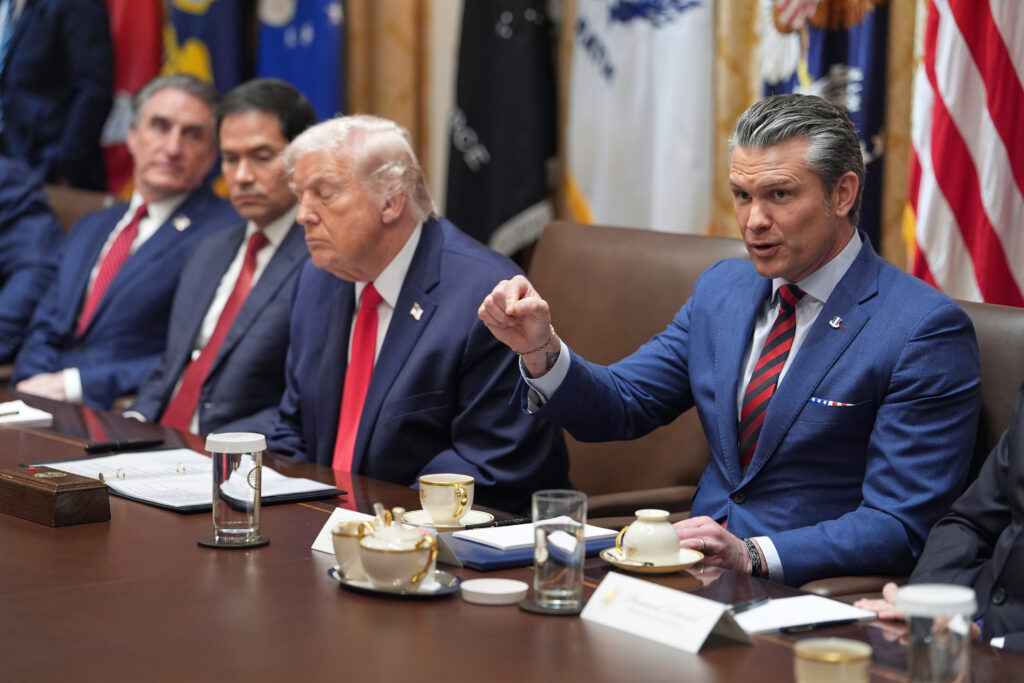
Defense Secretary Pete Hegseth speaks during a cabinet meeting at the White House, Thursday, Jan. 29, 2026, in Washington. (AP Photo/Evan Vucci)

Trump’s directive came slightly more than one hour before a Pentagon-imposed deadline requiring Anthropic to grant unrestricted military access to its Claude chatbot or face punitive measures—and nearly 24 hours after CEO Dario Amodei declared his company “cannot in good conscience accede” to Defense Department demands he characterized as eliminating essential safeguards against misuse.

Anthropic did not immediately respond to requests for comment regarding Trump’s announcement, which transforms what began as a contract dispute into a government-wide technology ban affecting one of artificial intelligence’s most valuable and influential startups.

The conflict centers on fundamental disagreements about AI’s appropriate role in national security operations and growing concerns about how increasingly capable machine learning systems could be deployed in high-stakes situations involving lethal force, sensitive intelligence collection, or domestic surveillance programs.

Anthropic, the San Francisco-based maker of Claude, could financially absorb losing its Pentagon contract given substantial backing from technology investors and corporate partners. However, Defense Secretary Pete Hegseth’s ultimatum this week posed existential risks at the apex of the company’s meteoric ascent from obscure computer science research laboratory to one of the world’s most prominent AI developers.

Military officials warned that beyond contract cancellation, they would designate Anthropic “a supply chain risk”—a classification typically reserved for foreign adversaries that could devastate the company’s critical partnerships with other businesses and government entities. Simultaneously, Pentagon lawyers threatened invoking the Cold War-era Defense Production Act to commandeer Claude’s technology regardless of Anthropic’s objections.

Amodei confronted an impossible dilemma. Capitulating to Pentagon demands risked destroying trust throughout the booming AI industry, particularly among elite researchers and engineers attracted to Anthropic specifically because of its commitments to responsibly developing artificial intelligence systems that, absent rigorous safeguards, could pose catastrophic dangers to humanity.

Anthropic sought narrow assurances from the Pentagon that Claude would not be employed for mass surveillance of Americans or integrated into fully autonomous weapons systems operating without human oversight. However, after months of confidential negotiations exploded into public controversy, the company issued a Thursday statement declaring that new contract language “framed as compromise was paired with legalese that would allow those safeguards to be disregarded at will.”

Sean Parnell, the Pentagon’s chief spokesman, asserted via social media that the military “has no interest in using AI to conduct mass surveillance of Americans (which is illegal) nor do we want to use AI to develop autonomous weapons that operate without human involvement.” He emphasized that defense officials simply want to “use Anthropic’s model for all lawful purposes,” though neither he nor other Pentagon representatives detailed specific intended applications for the technology.

Emil Michael, defense undersecretary for research and engineering, subsequently attacked Amodei personally, alleging on platform X that the Anthropic CEO “has a God-complex” and “wants nothing more than to try to personally control the US Military and is ok putting our nation’s safety at risk.” The inflammatory rhetoric from a senior defense official signaled how thoroughly the dispute had deteriorated beyond standard contract negotiations into ideological confrontation.

Michael’s characterization failed to resonate throughout much of Silicon Valley, where growing numbers of technology workers from Anthropic’s primary competitors—OpenAI and Google—publicly endorsed Amodei’s position Thursday through an open letter expressing solidarity with his refusal to compromise on safety principles.

OpenAI and Google, along with Elon Musk’s xAI, maintain existing contracts supplying their AI models to military applications, creating competitive dynamics where Pentagon officials hope to leverage rival companies against Anthropic’s resistance.

Musk aligned with the Trump administration Friday, declaring on his social media platform that “Anthropic hates Western Civilization” after Michael highlighted a previous iteration of Claude’s guiding principles encouraging “consideration of non-Western perspectives.” All leading AI models—including Musk’s Grok and OpenAI’s ChatGPT—operate according to programmed instructions governing chatbot values and behavior, which Anthropic terms a “constitution.”

While several Trump-allied technology leaders joined the controversy—including Musk and Palmer Luckey, co-founder of defense contractor Anduril—the polarizing debate over “woke AI” has positioned other executives uncomfortably as they balance commercial interests against ideological pressures.

“The Pentagon is negotiating with Google and OpenAI to try to get them to agree to what Anthropic has refused,” the open letter from some OpenAI and Google employees asserted. “They’re trying to divide each company with fear that the other will give in.”

In a surprising development from one of Amodei’s fiercest commercial rivals, OpenAI CEO Sam Altman sided Friday with Anthropic and questioned the Pentagon’s “threatening” approach during a CNBC interview, suggesting that OpenAI and most AI developers share identical ethical boundaries. Amodei previously worked for OpenAI before he and other leaders departed to establish Anthropic in 2021 amid disagreements about the original company’s direction.

“For all the differences I have with Anthropic, I mostly trust them as a company, and I think they really do care about safety,” Altman told CNBC. “I’ve been happy that they’ve been supporting our warfighters. I’m not sure where this is going to go.”

Concerns about the Pentagon’s confrontational strategy extended beyond Silicon Valley to Capitol Hill, where both Republican and Democratic lawmakers questioned the wisdom of publicly threatening a strategic American technology company. Senator Thom Tillis, a North Carolina Republican not seeking reelection, criticized Pentagon officials for conducting contract negotiations through public ultimatums rather than confidential discussions.

“Why in the hell are we having this discussion in public?” Tillis told journalists. “This is not the way you deal with a strategic vendor that has contracts. When a company is resisting a market opportunity for fear of negative consequences, you should listen to them and then behind closed doors figure out what they’re really trying to solve.”

Senator Mark Warner of Virginia, the ranking Democrat on the Senate Intelligence Committee, expressed being “deeply disturbed” by accounts that the Pentagon was “working to bully a leading U.S. company.” Warner characterized the episode as “further indication that the Department of Defense seeks to completely ignore AI governance,” underscoring “the need for Congress to enact strong, binding AI governance mechanisms for national security contexts.”

Retired Air Force General Jack Shanahan, a former Defense Department artificial intelligence initiatives leader, raised concerns about the Pentagon’s approach despite his own history confronting technology sector resistance. Shanahan led Project Maven during Trump’s first administration—an initiative using AI to analyze drone footage and identify weapons targets that triggered massive Google employee protests, ultimately causing the technology giant to withdraw from the contract and pledge against AI weaponry applications.

“Since I was square in the middle of Project Maven & Google, it’s reasonable to assume I would take the Pentagon’s side here,” Shanahan wrote Thursday on social media. “Yet I’m sympathetic to Anthropic’s position. More so than I was to Google’s in 2018.”

Shanahan noted that Claude already operates extensively across government agencies including classified environments, and characterized Anthropic’s restrictions as “reasonable.” He emphasized that large language models powering chatbots like Claude remain “not ready for prime time in national security settings,” particularly for fully autonomous weapons systems. “They’re not trying to play cute here,” he wrote, defending Anthropic’s motivations.

The confrontation exposes fundamental tensions about democratic accountability and technological governance in an era when artificial intelligence capabilities are advancing faster than regulatory frameworks or ethical consensus can accommodate. Pentagon officials insist that operational necessity and national security imperatives require unrestricted access to cutting-edge AI systems, while technology companies argue that precisely because these tools have become so powerful, robust safeguards against misuse are essential.

Amodei emphasized Thursday that threats to designate Anthropic a security risk while simultaneously invoking the Defense Production Act to commandeer its technology were “inherently contradictory: one labels us a security risk; the other labels Claude as essential to national security.” He expressed hope that Pentagon officials would reconsider given Claude’s substantial value to military operations, but indicated that absent reconsideration, Anthropic “will work to enable a smooth transition to another provider.”

The dispute occurs against a broader backdrop of cultural transformation within Defense Department legal ranks. Hegseth told Fox News last February—weeks after becoming defense secretary—that “ultimately, we want lawyers who give sound constitutional advice and don’t exist to attempt to be roadblocks to anything.” That same month, Hegseth dismissed the Army and Air Force top lawyers without explanation, while the Navy’s chief legal officer had resigned shortly after the late 2024 election.

These personnel changes signal deliberate efforts to reduce legal constraints on military operations, creating environments where concerns about AI misuse might receive less rigorous scrutiny than technology companies and civil liberties advocates believe necessary.

The Associated Press previously documented Amodei’s Thursday statement that Anthropic “cannot in good conscience accede” to Pentagon demands, noting that new Defense Department contract language “made virtually no progress on preventing Claude’s use for mass surveillance of Americans or in fully autonomous weapons.” The company emphasized it was not abandoning negotiations but could not accept terms eliminating protections it considers fundamental.

The controversy’s resolution will establish precedents affecting how democratic societies balance innovation imperatives, national security requirements, and ethical constraints on emerging technologies whose capabilities and applications remain imperfectly understood. Whether Trump’s federal ban pressures Anthropic toward capitulation or whether the company maintains its position—potentially sacrificing government contracts to preserve principles—will signal to other AI developers how much leverage they possess when corporate values conflict with state power.

The Wire

DON'T MISS ANY OF OUR UPDATE