Home Blog Page 614

Israel to Weigh US Input but Prioritize National Interest in Response to Iran, Says PM’s Office

The Israeli Prime Minister’s office has issued a statement indicating that while Israel will consider input from the United States, it will ultimately make decisions based on its own national security interests regarding potential retaliation against Iran. This announcement comes amid ongoing speculation about Israel’s response to a major Iranian missile attack on October 1.

The brief statement, released overnight, was a direct response to a Washington Post report suggesting that Prime Minister Benjamin Netanyahu had informed U.S. President Joe Biden of his willingness to target military sites in Iran, rather than nuclear or oil facilities. The Post cited two officials who claimed Netanyahu made these comments during a phone call with Biden last Wednesday.

“We listen to the American government’s thoughts, but will make our final decisions based on Israel’s national security needs,” the Israeli statement read, accompanied by a link to the Washington Post article.

The Iranian attack on October 1 involved the launch of nearly 200 ballistic missiles towards Israel, most of which were intercepted by Israeli defense systems. Following the attack, Netanyahu declared that Iran had made a “big mistake” and would “pay for it.”

According to an anonymous official quoted in the Post, Israel’s retaliatory strike would be designed to avoid the appearance of “political interference” in the upcoming U.S. presidential election, scheduled for less than a month from now.

The U.S. administration has appeared to be trying to limit Israel’s response to Iran. President Biden has explicitly stated that the U.S. does not support any potential strike on Iranian nuclear sites, a course of action advocated by some in Israel, including former Prime Minister Naftali Bennett. On October 4, Biden further signaled opposition to an Israeli strike on Iran’s oil facilities.

Israel has not officially disclosed its intended response to Iran’s missile attack, but Defence Minister Yoav Gallant hinted last week that the reaction would be “deadly, precise and above all surprising.”

Meanwhile, the U.S. has committed to bolstering Israel’s air defenses by deploying a high-altitude anti-missile system. The Pentagon announced the deployment of the Terminal High-Altitude Area Defense (THAAD) system, emphasizing the U.S.’s “ironclad” commitment to Israel’s defense.

Ukraine Denies Providing Drones to Mali Rebels Amid Regional Tensions

Ukraine has vehemently denied allegations that it has supplied drones to rebels fighting against the Malian army and Russian-backed mercenaries, following a report by the French newspaper Le Monde.

The controversy erupted after Le Monde reported that Ukrainian drones were providing “discreet but decisive support” to Tuareg rebels in Mali. This claim has intensified regional tensions, with Mali and its neighbors Niger and Burkina Faso accusing Kyiv of supporting terrorism in the Sahel region.

In a strongly worded statement released Monday, Ukraine’s foreign ministry declared, “Ukraine strongly rejects the accusations that have recently been released by the international media outlets about the alleged involvement of our state in the supply of UAVs [unmanned aerial vehicles] to the rebels in Mali.” The ministry further denied allegations of arming, providing information, or giving “support to the terrorist coalition.”

The situation in Mali has been complex since the country’s junta-led government severed ties with France, its former colonial power, in 2022. Mali subsequently aligned with Russia in an attempt to combat a long-standing insurgency in the north. However, this shift has not quelled the unrest, and Mali’s forces, along with their Russian allies, have recently suffered significant losses.

The controversy deepened following remarks by Andriy Yusov, a spokesman for Kyiv’s military intelligence service, who stated in late July that rebels in Mali had “received necessary information” to successfully carry out an attack. This attack reportedly resulted in the deaths of at least 84 Russia-backed fighters and 47 Malian soldiers in clashes with Tuareg separatists and al-Qaeda-linked fighters.

Le Monde’s report suggests that since Yusov’s statement, Mali rebel commanders have reluctantly acknowledged cooperation with Ukraine, although they remain reticent about the origin of their drones.

The Ukrainian foreign ministry has called for an end to the “spreading of false information that repeats the fake narratives of the aggressor state Russia’s propaganda.” This statement underscores the geopolitical complexities at play, with Ukraine positioning the controversy as part of Russia’s broader disinformation campaign.

Mali severed diplomatic relations with Ukraine in August, following Yusov’s remarks, with a top official accusing Ukraine of violating the country’s sovereignty.

Sir Alex Ferguson to Step Down as Manchester United Ambassador Amid Club Restructuring

Sir Alex Ferguson, Manchester United’s most successful manager, is set to step down from his role as a global ambassador for the club at the end of the current season. This decision comes as part of a broader restructuring initiative by the club’s part-owners, INEOS.

Ferguson, 82, has been a prominent figure in the Old Trafford director’s box since his retirement from management in 2013. That same year, he signed an agreement to serve as a club ambassador, a position that reportedly earned him £2.16 million ($2.82 million) annually.

Sources close to the club describe the split as amicable, noting that Ferguson’s departure is part of his broader scaling back of time-consuming responsibilities. The legendary manager will always be welcome at Old Trafford, the source emphasized.

The decision to end Ferguson’s ambassador role comes amid widespread cost-cutting measures at Manchester United, which has been incurring financial losses for some time. Job cuts have been implemented across various departments of the club as part of these austerity measures.

Ferguson’s managerial tenure at Manchester United was unparalleled in its success. He led the club to 38 trophies, including 13 Premier League titles and two UEFA Champions League victories, before his retirement in 2013.

The club’s fortunes have waned since Ferguson’s departure from the dugout. Manchester United currently sits in 14th place in the Premier League, following a disappointing eighth-place finish last season — their worst in the Premier League era. This poor performance comes despite significant investment in player transfers, with the club spending over £200 million on new signings in the most recent transfer window.

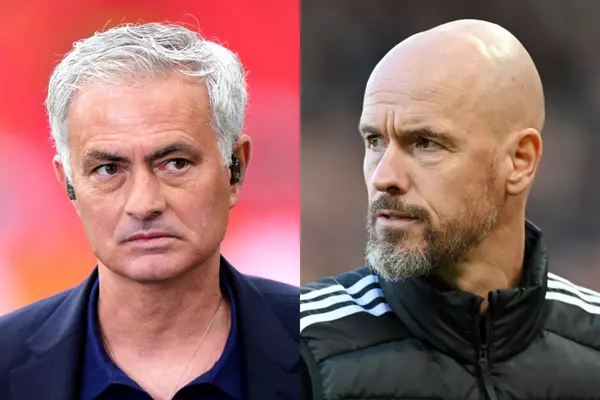
Since the appointment of current manager Erik ten Hag ahead of the 2022-23 season, United’s transfer expenditure has ballooned to approximately £600 million. The Dutch manager has faced criticism for the team’s underperformance relative to this substantial investment.

It remains unclear whether the ongoing cost-cutting measures will affect other club ambassadors, including former players Andy Cole, Park Ji-sung, Dwight Yorke, Denis Irwin, and Bryan Robson.

Ferguson’s departure from his formal role marks the end of an era for Manchester United. While his influence and legacy at the club remain immense, this move signifies a shift in the club’s approach as it grapples with financial challenges and seeks to rebuild its on-field success.

As Manchester United continues to navigate this period of transition, the impact of Ferguson’s reduced formal involvement will be closely watched by fans and football observers alike.

North Korea Destroys Inter-Korean Transport Links, Escalating Tensions with South

North Korea dramatically escalated tensions on the Korean peninsula Tuesday by demolishing sections of inter-Korean roads and railway lines along its side of the heavily fortified border, prompting South Korea’s military to fire warning shots in response.

The provocative action follows Pyongyang’s announcement last week that it would sever these transport links entirely and further fortify its border areas, signaling a dramatic shift away from its longstanding goal of Korean unification towards a “two-state” system.

South Korea’s Joint Chiefs of Staff (JCS) reported that around midday, explosions were observed destroying northern portions of road and rail connections to the South. Video footage released by South Korean military authorities showed a large explosion and plume of smoke rising above a section of road where North Korea had erected a black barrier. The footage also captured dump trucks and earth-moving equipment approaching the area, guided by North Korean military officials.

In immediate response to the blasts, South Korean forces fired warning shots south of the military demarcation line, though no damage was reported on the southern side of the border.

Koo Byoung-sam, spokesperson for South Korea’s Unification Ministry, which handles inter-Korean affairs, strongly condemned the incident. “It is deplorable that North Korea is repeatedly conducting such regressive behavior,” Koo stated during a press briefing. He emphasized that the demolitions represent a clear violation of previous inter-Korean agreements.

The destruction of these transport links carries significant symbolic weight. They were established as part of reconciliation efforts that culminated in a 2018 summit between the two Koreas. South Korea had invested over $132 million in rebuilding these connections through low-interest loans to North Korea, according to Unification Ministry data.

This latest provocation comes amid rising tensions following North Korea’s accusations last week that Seoul had sent drones over Pyongyang to scatter anti-North Korean leaflets. Kim Yo Jong, the powerful sister of North Korean leader Kim Jong Un, warned on Tuesday that South Korea would “pay a dear price” for this alleged action. The South Korean government has declined to confirm or deny these allegations.

The two Koreas have also clashed over balloons carrying trash that have been floated from North Korea since May, which Pyongyang claims are in response to similar balloon launches by anti-regime activists in the South.

These developments mark a significant deterioration in inter-Korean relations, with North Korea increasingly treating South Korea as a hostile, separate state. Earlier this year, Kim Jong Un declared South Korea a “primary foe” and stated that unification was no longer feasible.

The international community has expressed concern over the escalating situation. Chinese foreign ministry spokesperson Mao Ning called for restraint, stating Beijing’s desire “to avoid further escalation of the conflict.”

As tensions mount, South Korea’s Gyeonggi Province, which borders North Korea, announced plans to deploy a special police force to crack down on the launching of anti-North Korea leaflets from border areas. This move comes despite South Korea’s constitutional court overturning a ban on such launches last year, highlighting the delicate balance between freedom of speech and security concerns in the region.

The destruction of these transport links, once symbols of inter-Korean cooperation, underscores the fragile nature of peace on the Korean peninsula and raises concerns about the potential for further military confrontations in the region.

Boeing Secures $35 Billion in Potential Funding Amid Strike and Financial Challenges

Boeing, the embattled aerospace giant, has taken significant steps to bolster its financial position, filing paperwork with the U.S. Securities and Exchange Commission (SEC) on Tuesday for a potential $25 billion stock and debt offering. The company has also entered into a $10 billion credit agreement, bringing its total potential funding to $35 billion.

These financial maneuvers come as Boeing grapples with multiple challenges, including a crippling strike by thousands of union workers since September 13, a slump in production of its best-selling 737 MAX jet following a mid-air door panel blowout earlier this year, and upcoming debt maturities totaling $11.5 billion through February 1, 2026.

While the exact timing and amount of the stock offering remain unclear, analysts estimate Boeing may need to raise between $10 billion and $15 billion to maintain its credit ratings, which currently sit just one notch above junk status.

In a statement, Boeing emphasized that these actions are “prudent steps to support the company’s access to liquidity” as it navigates a “challenging environment.” The company noted that it has not yet drawn on the new $10 billion credit facility or its existing credit revolver.

The universal shelf registration filed with the SEC provides Boeing flexibility to pursue various capital options over a three-year period, potentially including both equity and debt issuances.

Boeing’s financial challenges have been exacerbated by regulatory constraints on 737 MAX production following the January cabin-panel incident. Additionally, the company has committed to issuing $4.7 billion of its shares to acquire Spirit AeroSystems and assume its debt.

The ongoing labor dispute has further complicated Boeing’s recovery efforts. U.S. Acting Labor Secretary Julie Su met with Boeing and union representatives in Seattle on Monday in an attempt to break the deadlock.

Despite these hurdles, Boeing’s shares were up 1% in premarket trading following the announcement of its financial strategy.

REUTERS

Libya Threatens Legal Action Over Nigeria’s Withdrawal from AFCON Qualifier

The Libyan Football Federation (LFF) has threatened legal action against Nigeria following the Super Eagles’ withdrawal from their African Cup of Nations (AFCON) qualifier match scheduled for Tuesday, October 15, in Benghazi.

The controversy erupted after the Nigerian team, led by captain William Troost-Ekong, reported being stranded for over 13 hours at Al Abaq Airport without access to basic necessities such as food, water, or proper rest facilities. Troost-Ekong described the situation as “disgraceful,” accusing Libyan authorities of deliberate “mind games” by revoking their landing permit.

In a statement shared by The Libya Observer, the LFF strongly condemned Nigeria’s decision to withdraw, stating, “The Libyan Football Federation condemns the measures taken by the Nigerian Football Federation by refusing to play the Libya-Nigeria match in the African Cup of Nations qualifiers… stressing that it will take all legal measures to preserve the interests of the Libyan national football team.”

The LFF countered Nigeria’s claims, asserting that their own team faced worse treatment during the first-leg match in Nigeria. “The Libyan Federation attaches some inhumane footage that did not prevent the Libyan mission from playing the Nigeria-Libya match last Friday in Nigeria, out of cooperation with the Confederation of African Football,” the statement read.

Furthermore, the LFF accused the Nigerian Football Federation of failing to cooperate in arrangements for both legs of the qualifier. They emphasized that the challenges faced by the Nigerian team in Libya “do not equal a small part of what the Libyan national team was exposed to in the first leg match.”

The incident has sparked a diplomatic row between the two nations’ football associations, with both sides presenting conflicting accounts of their treatment. Photos circulating on social media showed Nigerian players sleeping on airport benches, fueling public outrage and support for the team’s decision to withdraw.

The LFF extended an apology to Libyan football fans for the confusion and delays in match arrangements, attributing these issues to the actions of the Nigerian Football Federation.

As tensions escalate, the Confederation of African Football (CAF) is expected to review the situation and potentially mediate between the two federations. The outcome of this dispute could have significant implications for both teams’ AFCON qualification prospects and broader diplomatic relations between Libya and Nigeria in the realm of sports.

Israeli Airstrike Kills at Least 21 in Northern Lebanon

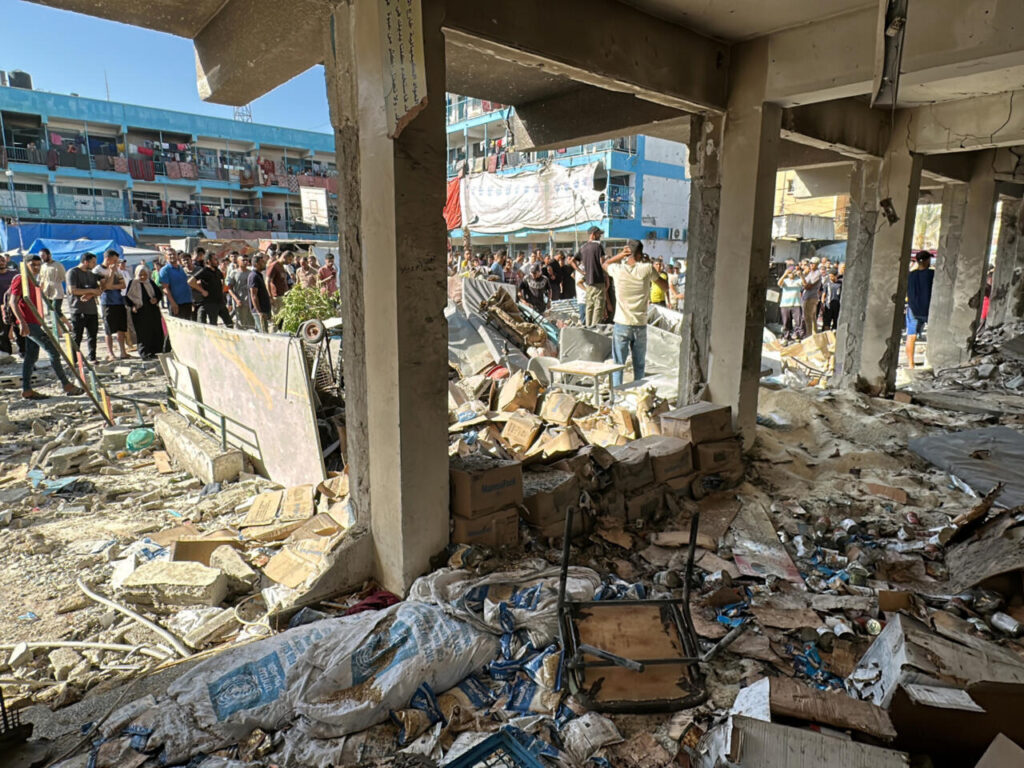
An Israeli airstrike hit an apartment building in the northern Lebanese village of Aito on Monday, killing at least 21 people, according to the Lebanese Red Cross. The attack marks a significant escalation in the ongoing cross-border conflict between Israel and Hezbollah.

The strike targeted a small apartment building in Aito, part of Lebanon’s Christian heartland in the north, an area not typically associated with Hezbollah’s main spheres of influence in the south and east. The Israeli military has not immediately commented on the strike or its intended target.

Rescue workers were seen searching through the rubble of the collapsed building, with ambulances standing by to receive victims’ bodies. The attack also caused damage to nearby buildings and vehicles.

This deadly strike comes just a day after a Hezbollah drone attack on an Israeli army base in northern Israel killed four 19-year-old soldiers and severely wounded seven others. It was the deadliest attack by the militant group since Israel launched its ground invasion of Lebanon nearly two weeks ago.

In response to Sunday’s attack, Israeli Prime Minister Benjamin Netanyahu visited the targeted army base and wounded soldiers, declaring, “We will continue to strike Hezbollah without compassion in every part of Lebanon, including in Beirut.”

The conflict has resulted in significant casualties on both sides. In Lebanon, the Health Ministry reports that approximately 2,300 people have been killed by Israeli strikes since last October, with over three-quarters of these deaths occurring in the past month. On the Israeli side, Hezbollah’s attacks have killed more than 60 people over the past year, despite Israel’s claims that most rockets and drones have been intercepted.

Hezbollah, an ally of Hamas, has pledged to continue its attacks on Israel until a ceasefire is reached in Gaza. Israel maintains that its campaign against Hezbollah aims to stop these attacks and allow displaced Israelis to safely return to their homes near the Lebanese border.

The strike on Aito, far from Hezbollah’s traditional strongholds, raises concerns about the widening scope of the conflict and the potential for increased civilian casualties in areas previously considered relatively safe from cross-border violence.

AP

Sean “Diddy” Combs Faces 6 More Sexual Assault Lawsuits, Including Allegations from a 16-Year-Old

Hip-hop mogul Sean “Diddy” Combs faced a new barrage of legal challenges on Monday as six lawsuits were filed in federal court in Manhattan, accusing him of sexual assault, including the first allegation involving a minor.

The lawsuits, filed anonymously by two women as Jane Does and four men as John Does, add to the mounting legal troubles for the 54-year-old music industry titan. Combs, who has denied all allegations, is currently in custody awaiting trial on federal sex trafficking charges.

One of the most serious allegations comes from a John Doe who claims Combs sexually abused him in 1998 when he was 16 years old. The plaintiff, now residing in North Carolina, alleges that Combs fondled his genitals at one of the rapper’s infamous “white parties” in the Hamptons. According to the lawsuit, Combs told the then-teenager he had “the look” of a star and pressured him to drop his pants, framing it as a “rite of passage” into the music industry.

“Don’t you want to break into the business?” Combs allegedly asked the minor, according to the lawsuit.

Other lawsuits detail disturbing allegations of rape, forced oral sex, and drugging to incapacitate victims. The incidents reportedly span from the mid-1990s to 2021, occurring at various locations including celebrity parties, hotels, and even the storeroom of Macy’s flagship store in Manhattan.

A Jane Doe alleges Combs raped her in a locked hotel room in 2004 after inviting her and a friend to a party, providing them with drinks and cocaine. The woman, a college freshman at the time, claims Combs also forced her friend to perform oral sex on him and threatened their lives if they didn’t comply.

Another Jane Doe accuses Combs of violently raping her in a bathroom at a 1995 party in Brooklyn for the late rapper Notorious B.I.G.’s music video “One More Chance.” She alleges Combs slammed her head against a wall and raped her, later threatening, “You better not tell anyone about this, or you will disappear.”

The lawsuits are part of a larger group of over 100 accusers preparing legal action against Combs, according to plaintiffs’ lawyer Tony Buzbee. This follows Combs’ arrest on September 16 on federal sex trafficking charges.

Combs’ legal team vehemently denies all allegations. In a statement, his lawyers said, “We have full confidence in the facts, their legal defenses, and the integrity of the judicial process. In court, the truth will prevail: that Mr. Combs has never sexually assaulted anyone—adult or minor, man or woman.”

The hip-hop mogul remains in custody at a Brooklyn federal jail, having been denied bail twice. Judges have deemed him a danger to the community if released. His trial is scheduled for May.

These new lawsuits shed light on the dark underbelly of the music industry and raise serious questions about power, abuse, and accountability in celebrity circles. As the legal proceedings unfold, the case continues to captivate public attention and spark discussions about sexual misconduct in the entertainment world.

UN Reports Over 400,000 Children Displaced in Lebanon Due to Recent Conflict

More than 400,000 children in Lebanon have been displaced in the past three weeks due to escalating conflict, a senior UNICEF official reported Monday, warning of a potential “lost generation” in the crisis-stricken country.

Ted Chaiban, UNICEF’s deputy executive director for humanitarian actions, stated, “What struck me is that this war is three weeks old and so many children have been affected.” He added, “As we sit here today, 1.2 million children are deprived of education.”

The displacement comes as Israel intensifies its campaign against the Lebanon-based Hezbollah militant group, including a ground invasion, following a year of exchanges during its war with Hamas in Gaza. The fighting has driven 1.2 million people from their homes in Lebanon.

Chaiban highlighted the severe impact on education, with public schools either inaccessible, damaged, or being used as shelters. He expressed concern that “hundreds of thousands of Lebanese, Syrian, Palestinian children are at risk of losing their learning.”

The conflict has resulted in over 2,300 deaths in Lebanon from Israeli strikes, with more than 100 children killed and over 800 wounded in the last three weeks alone, according to Chaiban.

The humanitarian situation is dire, with displaced families crammed into overcrowded shelters. “Three or four families can live in a classroom separated by a plastic sheet, and where 1,000 people can share 12 toilets,” Chaiban described.

The escalation has also severely impacted healthcare, with over 100 primary health care facilities out of service and 12 hospitals either non-functional or partially operational. Additionally, 26 water stations serving nearly 350,000 people have been damaged.

Chaiban called for the protection of civilian infrastructure and appealed for a ceasefire in Lebanon and Gaza. He emphasized the need for political will to resolve the conflict through non-military means.

The UNICEF official also noted that the emergency response appeal for $108 million in Lebanon has only been 8% funded three weeks into the escalation, highlighting the urgent need for international support.

As the crisis deepens, concerns grow about the long-term impact on Lebanon’s children and the country’s future stability.

Associated Press

Novichok Vial in UK Woman’s Death Contained Lethal Dose for Thousands, Inquiry Hears

The public inquiry into the 2018 death of Dawn Sturgess, a British woman poisoned by the Soviet-developed nerve agent Novichok, revealed Monday that the perfume bottle she unknowingly handled contained enough poison to kill thousands of people.

Andrew O’Connor, lead counsel for the inquiry, stated, “The evidence will suggest that this bottle — which we shall hear contained enough poison to kill thousands of people — must earlier have been left somewhere in a public place creating the obvious risk that someone would find it and take it home.”

Sturgess and her partner collapsed in Amesbury, southwest England, after coming into contact with the discarded perfume bottle. Sturgess died days after spraying the contents on her wrist, while her partner survived.

The incident occurred four months after former Russian intelligence officer Sergei Skripal and his daughter were poisoned with Novichok in nearby Salisbury.

While the Skripals won’t testify due to safety concerns, Skripal provided a witness statement to the inquiry. He expressed shock at the attack, stating, “I had received a presidential pardon and was a free man with no convictions under Russian law. I never thought the Russian regime would try to murder me in Great Britain.”

Skripal’s statement, read by O’Connor, added, “I believe Putin makes all important decisions himself,” suggesting that Russian President Vladimir Putin “must have at least given permission for the attack.”

Michael Mansfield, representing Sturgess’s family, questioned whether UK authorities could have prevented the attack, asking, “Was there a failure to prevent a chemical weapons attack on UK soil? Were countless members of the public put at risk, with the potential for hundreds or even thousands of deaths?”

Britain has blamed Russian intelligence for the poisonings, which Moscow denies. The public inquiry, ordered by coroner Heather Hallett, aims to conduct a comprehensive investigation into Sturgess’s death, including the consideration of sensitive intelligence material.

The inquiry continues to examine the circumstances surrounding the Novichok poisonings and their implications for public safety and international relations.