The Russian government has given the green light for the construction of a petroleum product pipeline in the Republic of Congo, furthering Moscow’s economic engagement in Africa.
The project will be executed through a joint venture between Russian pipeline constructor ZNGS Prometey, holding a 90% stake, and the National Petroleum Company of Congo.
While no specific construction timeline has been announced, the agreement is set to take effect 30 days after both parties complete necessary regulatory procedures.
Russian and Congolese officials are expected to sign a build-own-operate-transfer concession agreement within the next three months to finalize remaining details. The Republic of Congo is anticipated to provide tax incentives as part of the deal.
The pipeline, initially proposed in 2017 but delayed due to the COVID-19 pandemic, will stretch from the southern energy center of Pointe-Noire to the northern region near the capital, Brazzaville. It is designed to operate for a minimum of 25 years.
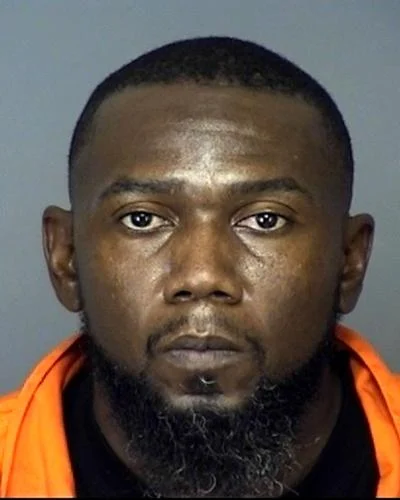
U.S. authorities have apprehended a Russian businessman in Florida on charges of smuggling microelectronics potentially usable in drones to Russia, the Justice Department announced Monday. The arrest comes amid heightened tensions between the United States and Russia following Moscow’s full-scale invasion of Ukraine.
Denis Postovoy faces a seven-count indictment for smuggling, money laundering, and defrauding the United States. According to the Justice Department, Postovoy allegedly exported microelectronics through foreign companies without obtaining the required licenses, violating sanctions imposed on Russia after its invasion of Ukraine.
“Postovoy repeatedly concealed and misstated the true end users and end destinations of the microelectronics by submitting false information on export-related documents,” the Justice Department stated. U.S. law enforcement officials claim that Postovoy employed a complex scheme, shipping the electronics through intermediary locations such as Hong Kong and Switzerland, and receiving payments in U.S. dollars via foreign bank accounts.
The arrest, which took place in Sarasota, Florida, underscores ongoing U.S. efforts to enforce sanctions and prevent the transfer of sensitive technologies to Russia. This case follows the July sentencing of another Russian businessman to three years in U.S. prison for admitting to smuggling military-grade electronics from Hong Kong to Russia.
Russia’s Embassy in Washington acknowledged awareness of Postovoy’s arrest but stated it had not been officially notified by local law enforcement. The embassy has requested information from the U.S. State Department and pledged to provide Postovoy with consular and legal assistance.
An 11-year-old Florida boy was arrested and publicly displayed in handcuffs after allegedly threatening to shoot up local schools and creating a “kill list,” sparking controversy over the treatment of juvenile suspects.
Carlo ‘Kingston’ Dorelli, a student at Creekside Middle School in Port Orange, was taken into custody by the Volusia County Sheriff’s Office following reports that he had bragged about possessing weapons and plotting attacks on his school and nearby Silver Sands Middle School.
Sheriff Mike Chitwood, in a strongly worded statement, said the arrest was intended to set an example. “Since parents, you don’t want to raise your kids, I’m going to start raising them,” Chitwood declared in a video posted on social media. “Every time we make an arrest, your kid’s photo is going to be put out there.”
Authorities acted on a tip from other students who reported seeing Dorelli display what appeared to be weapons during a FaceTime call. A subsequent search of the boy’s room revealed several airsoft rifles, fake ammunition, and various bladed weapons, including swords, knives, and throwing stars.
Investigators also claim to have found a list of names with possible stab marks next to them, which they believe to be potential targets. Dorelli allegedly told officials the threats were “all a joke.”
The arrest and public display of the young suspect have ignited debate in Florida, where juvenile court records are typically exempt from public release except in felony cases. Video footage shows Dorelli being led from a police vehicle into a secure facility in handcuffs, wearing casual clothes and sandals.
This incident is part of a troubling trend of school threats in Florida since the academic year began. In Broward County, site of the deadly 2018 Parkland school shooting, authorities have arrested nine students for making threats since August.
Broward County Sheriff Gregory Tony emphasized the seriousness of such threats at a recent press conference. “Nothing about this is a laughing or joking matter,” he stated. “Parents, students, it’s not a game.”
The case highlights ongoing concerns about school safety, juvenile justice, and the balance between deterrence and the protection of minors in the criminal justice system. As debate continues, local authorities maintain that their strong stance is necessary to prevent potential tragedies and discourage copycat behavior.
MONTREAL – Canada’s ruling Liberal Party suffered a significant setback in a Montreal by-election on Monday, losing a traditionally safe seat and intensifying pressure on Prime Minister Justin Trudeau’s leadership.
According to preliminary results released by Elections Canada on Tuesday, Liberal candidate Laura Palestini was defeated in the LaSalle-Emard-Verdun riding, finishing second to Louis-Philippe Sauvé of the separatist Bloc Quebecois. With all votes counted, Sauvé secured 28% of the vote, narrowly edging out Palestini’s 27.2%, while the New Democratic Party candidate garnered 26.1%.
The loss of this once-reliable Liberal stronghold, held to replace a departing Liberal legislator, underscores the growing challenges facing Trudeau after nearly nine years in office. The Prime Minister’s popularity has waned significantly, with the Liberals now trailing far behind the right-of-center Conservatives in national polls.
Conservative leader Pierre Poilievre has capitalized on widespread discontent over rising living costs and a housing crisis, issues for which many voters blame Trudeau’s government. A recent Leger poll showed the Conservatives commanding 45% of public support – an unusually high level in Canadian politics – compared to just 25% for the Liberals.
Despite mounting pressure, Trudeau maintains he will lead the Liberals into the next federal election, which must be held by October 2025. However, cracks are beginning to show within party ranks. Last week, Liberal MP Alexandra Mendes, representing a Quebec constituency, publicly acknowledged that many of her constituents want Trudeau to step down.
The Liberals’ struggles were further evident in a second by-election held in Elmwood-Transcona, Manitoba, where the party’s share of the vote plummeted to 5% from 15% in the 2021 general election. The New Democratic Party retained the seat.
These results mark a stark contrast to the Liberals’ performance in the 2021 general election, where they won the Montreal seat with 43% of the vote, far ahead of their rivals.
Poilievre has promised to eliminate the federal carbon tax, which he claims is exacerbating affordability issues, and recently pledged to cap immigration until more housing can be constructed. The Conservative leader, known for his confrontational style, has also vowed to defund the Canadian Broadcasting Corporation (CBC), the country’s public broadcaster.
As the next federal election approaches, Liberal strategists admit the polls look grim but say they plan to intensify efforts to portray Poilievre as aligned with the Make America Great Again movement of former U.S. President Donald Trump.
The Montreal by-election loss follows a similar defeat in a Toronto riding in June, adding to a string of setbacks for Trudeau’s Liberals. As the party grapples with these challenges, questions about Trudeau’s political future are likely to persist and intensify in the coming months.
Cuba’s communist government announced Monday a significant reduction in the size of its subsidized daily bread ration, cutting the weight by 25% as the country grapples with severe shortages of basic ingredients.
The bread ration, a cornerstone of Cuba’s decades-old subsidies program established by the late Fidel Castro, will shrink from 80 grams to 60 grams (2.1 oz), roughly equivalent to the weight of an average cookie or a small bar of soap. The price has been marginally reduced to just under 1 peso, approximately one-third of a cent.
This reduction poses a significant challenge for many Cubans, who earn an average monthly salary of 4,648 pesos, or about $15. With limited purchasing power, most citizens struggle to afford more expensive bread on the private market, leaving them with few alternatives.
“We have to accept it, what else can we do?” Havana resident Dolores Fernandez told Reuters while waiting outside a bakery. “There’s no choice.”
The Cuban government attributes the shortage of wheat flour, crucial for bread production, to the U.S. trade embargo. This complex web of restrictions complicates Cuba’s global financial transactions, exacerbating the country’s economic woes.
The Caribbean island nation is currently experiencing extreme shortages across various sectors, including food, fuel, and medicine. These shortfalls have contributed to a record-breaking exodus of Cuban citizens to the United States.
Cuba’s ration book, known locally as the “libreta,” was once hailed as a symbol of Fidel Castro’s 1959 revolution. It originally provided a wide range of heavily discounted products to all Cubans, including bread, fish, meat, milk, and household supplies. However, the crisis-stricken government now offers only a fraction of these products, often delivered late, in poor quality, or not at all.
Bernardo Matos, another Havana resident, expressed dissatisfaction with the quality of the bread, even before noticing the size reduction. “The quality is terrible,” he remarked after purchasing his ration. “The flour tastes like acid.”
In response to quality concerns, the Cuban government has announced plans to strengthen inspections at state bakeries to maintain standards despite the reduction in size.
The bread ration cut is not an isolated incident in Cuba’s struggle with food security. Earlier this year, the government sought assistance from the World Food Programme to ensure the supply of subsidized powdered milk for children, another key staple of the Cuban ration book that has become increasingly scarce.
Cuba’s rationing system, along with those of North Korea, stands out as one of the few remaining examples of such programs outside of wartime, natural disasters, or specific contingencies in centrally planned economies.
TBILISI, Georgia – Georgia’s parliament approved a contentious law on “family values and the protection of minors” on Tuesday, imposing sweeping restrictions on LGBT rights in the Caucasus nation. The bill, which passed its third and final reading, has drawn criticism from human rights activists and Western governments.
The new legislation provides a legal framework for authorities to prohibit Pride events and public displays of the LGBT rainbow flag. It also introduces censorship measures for films and books deemed to promote LGBT content. Additionally, the law reaffirms an existing ban on same-sex marriage and prohibits gender reassignment surgery.
Leaders of the governing Georgian Dream party argue that the law is necessary to preserve traditional moral standards in Georgia, where the conservative Orthodox Church wields significant influence. However, critics view the measure as a political maneuver to bolster conservative support ahead of the October 26 parliamentary elections.
Tamara Jakeli, director of the campaign group Tbilisi Pride, expressed grave concerns about the law’s impact. “This law is the most terrible thing to happen to the LGBT community in Georgia,” Jakeli, 28, told Reuters. “We will most likely have to shut down. There is no way for us to continue functioning.”
The legislation has raised alarms among Western governments, who fear it signals Georgia’s shift away from its European Union aspirations and towards Russia. Georgian President Salome Zourabichvili, a critic of Georgian Dream with largely ceremonial powers, has indicated she will attempt to block the bill. However, the ruling party and its allies hold enough seats in parliament to override a presidential veto.
LGBT rights remain a divisive issue in Georgia, where polls show widespread disapproval of same-sex relationships. In recent years, participants in Tbilisi’s annual Pride marches have faced violent attacks from anti-LGBT protesters.
The debate over LGBT rights has intensified in the lead-up to October’s election, with Georgian Dream campaigning heavily against LGBT rights. The party, led by billionaire ex-prime minister Bidzina Ivanishvili, has strengthened ties with neighboring Russia while relations with Western countries have deteriorated.
Earlier this year, the ruling party passed a controversial “foreign agents” law, which European and U.S. critics denounced as authoritarian and reminiscent of Russian legislation. The law’s passage sparked some of the largest protests in Georgia since its independence from the Soviet Union in 1991.
Despite these controversies, opinion polls indicate that Georgian Dream remains the country’s most popular party, though its support has declined since its narrow parliamentary victory in 2020. The party’s campaign has taken a decidedly conservative turn, with one television advertisement featuring Pride director Jakeli’s face alongside the words: “No to moral degradation.”
Jakeli believes the only hope for stopping the bill lies in Georgian Dream losing power in October. However, she noted that the country’s opposition parties have not been overtly supportive of LGBT rights either. “The only way we can survive in this country and have any progress on LGBT rights is for us to go in great numbers to the elections and vote for change,” she said.
As Georgia grapples with this contentious legislation, the international community watches closely, concerned about the potential implications for human rights and the country’s geopolitical orientation.
SEATTLE – Boeing Co. has implemented a hiring freeze and is considering temporary furloughs to cut costs as a strike by more than 30,000 workers entered its fourth day on Monday, threatening to derail the aerospace giant’s recovery efforts.
The planemaker’s decision comes as union leadership and company executives prepare to resume talks on Tuesday, following a misjudgment of worker sentiment that led to a strike supported by 96% of union members. The work stoppage has halted production of Boeing’s crucial 737 series just as the company was attempting to accelerate assembly lines.
“This strike jeopardizes our recovery in a significant way and we must take necessary actions to preserve cash and safeguard our shared future,” Boeing Chief Financial Officer Brian West wrote in a letter to employees on Monday. The company will cease issuing the majority of supplier purchase orders for the 737, 767, and 777 programs affected by the stoppage.
The rare decision to halt most parts orders for all Boeing jetliner programs except the 787 Dreamliner is expected to send shockwaves through an industry still struggling to rebuild after the COVID-19 pandemic. Industry executives warn of potential layoffs at smaller suppliers unable to weather the financial strain, potentially creating a cycle of worker departures just as the sector faces competition from other industries for skilled labor.
Boeing’s financial position was already strained before the strike, with the company grappling with a safety and production crisis following a door panel incident on a 737 MAX in January. The planemaker is also burdened with $60 billion in debt.
S&P Global Ratings noted that while a shorter strike lasting weeks might be manageable, “an extended strike would be costly and difficult to absorb, given the company’s already strained financial position.”
The International Association of Machinists and Aerospace Workers (IAM) rejected Boeing’s offer of a 25% pay increase over four years, which also removed an annual performance bonus. The union initially sought a 40% wage hike and is pushing for the reinstatement of a defined-benefit pension that was eliminated a decade ago.
Union members on picket lines outside Boeing factories near Seattle expressed determination to secure a better deal, though few expect a quick resolution. “I can go for six weeks, eight weeks, but it’s up to Boeing management to decide when they want to offer a fair deal,” said Thinh Tan, an engineer at the 737 MAX factory.
The strike, the eighth since the IAM’s Boeing unit was established in the 1930s, has brought to the fore long-simmering worker frustrations over lagging wages and executive compensation. “I live paycheck to paycheck,” said Chris Ginn, a 777 jet factory worker, echoing sentiments shared by many of his colleagues.
As both sides prepare to return to the negotiating table, the outcome of these talks could have far-reaching implications for Boeing’s production capabilities, its financial stability, and the broader aerospace industry supply chain.
MENLO PARK, Calif. – Meta, the parent company of Facebook, Instagram, and WhatsApp, announced late Monday it will ban Russian state media organizations from its platforms globally, alleging these outlets employed deceptive tactics to amplify Moscow’s propaganda. The move drew swift condemnation from the Kremlin on Tuesday.
Meta’s decision, set to be implemented over the coming days, marks an escalation in the company’s efforts to counter Russia’s covert influence operations. “After careful consideration, we expanded our ongoing enforcement against Russian state media outlets: Rossiya Segodnya, RT and other related entities are now banned from our apps globally for foreign interference activity,” Meta said in a statement.
Kremlin spokesman Dmitry Peskov denounced the action, calling it “unacceptable” and accusing Meta of discrediting itself. “We have an extremely negative attitude towards this. And this, of course, complicates the prospects for normalizing our relations with Meta,” Peskov told reporters during his daily conference call.
The ban follows recent U.S. sanctions against RT, which American officials accused of being a key component in Russia’s war machine and its efforts to undermine democratic adversaries. U.S. authorities alleged RT was collaborating with the Russian military and conducting fundraising campaigns for equipment used by soldiers in Ukraine.
Earlier this month, the Biden administration seized Kremlin-run websites and charged two RT employees with covertly funneling millions of dollars to a Tennessee-based content creation company to produce English-language social media videos promoting pro-Kremlin messages. Moscow has consistently denied these allegations.
This action by Meta builds on its previous efforts to limit Russian online influence. In 2022, the company dismantled a large-scale disinformation network originating from Russia that utilized hundreds of fake social media accounts and dozens of sham news websites to disseminate Kremlin talking points about the invasion of Ukraine.
Russian authorities designated Meta as an extremist group in March 2022, shortly after the invasion of Ukraine began, blocking access to Facebook and Instagram within the country. These platforms, along with X (formerly Twitter), were popular among Russians before the invasion and subsequent crackdown on independent media. They are now only accessible through virtual private networks.
In a related development, a Russian court convicted Meta communications director Andy Stone in absentia in April, sentencing him to six years in prison for allegedly justifying terrorism. The charges stemmed from Stone’s 2022 announcement of temporary changes to Meta’s hate speech policy in the wake of Russia’s invasion of Ukraine.
Meta’s latest move underscores the ongoing tensions between major tech companies and state actors in the realm of information warfare and online influence campaigns.
71-year-old Dominique Pélicot admitted in court Tuesday to systematically drugging his wife and facilitating her rape by dozens of men over nearly a decade, as well as raping her himself.
Photo:nbc
“Today I maintain that, along with the other men here, I am a rapist,” Pélicot told the court, seated in a wheelchair. “They knew everything. They can’t say otherwise.”
The case, unfolding in a courthouse in Avignon, has become a focal point in France’s ongoing struggle with sexual violence. Pélicot’s ex-wife, Gisèle, has taken the unusual step of waiving her anonymity, allowing the trial to be public and appearing openly before the media.
Pélicot’s testimony, delayed for days due to health issues, offered a disturbing glimpse into the mind of the accused. He spoke for an hour, recounting childhood traumas that he claimed shaped his behavior. “One is not born a pervert, one becomes a pervert,” Pélicot said, describing being raped by a male nurse at age 9 and forced to participate in a gang rape at 14.
The crimes came to light in 2020 when Pélicot was caught filming up women’s skirts in a supermarket. A subsequent police investigation uncovered thousands of photos and videos showing men engaging in sexual acts with an unconscious Gisèle Pélicot. Using this evidence, authorities tracked down most of the 72 suspects they sought.
Gisèle Pélicot, who had been married to Dominique for 50 years and had three children with him, initially defended her husband to police. It was only after being shown photographic evidence that she left him. They are now divorced.
Fifty other men, ranging in age from 26 to 74, are also on trial. Many deny knowing Gisèle was not consenting, claiming they were manipulated by her then-husband.
The trial has drawn intense public interest. Bernadette Tessonière, a 69-year-old retiree, arrived at the courthouse before dawn to secure a seat. “How is it possible that in 50 years of communal life, one can live next to someone who hides his life so well? This is scary,” she said.
Pélicot faces up to 20 years in prison if convicted. His testimony is seen as crucial for the panel of judges to determine the fate of the other defendants.
The proceedings, which cannot be filmed or photographed under French law, are expected to continue with Gisèle Pélicot’s testimony. Her decision to speak publicly has made her a symbol in the fight against sexual violence in France, bringing new awareness to the issue.
MADRID – Brazilian soccer sensation Endrick, 18, has married his girlfriend, model Gabriely Miranda, 23, in a surprise ceremony less than a year after the couple first met. The Real Madrid forward and his new bride shared photos of their wedding on social media platforms Sunday.
Miranda, who boasts over one million Instagram followers, captioned her post with a Bible verse: “Matthew 19:6 So they are no longer two, but one flesh. Therefore what GOD has put together no one can separate.”
The wedding comes amid Endrick’s high-profile transfer to Spanish giants Real Madrid from Brazilian club Palmeiras. The teenage phenom joined Madrid this summer after the clubs agreed to a transfer in December 2022.
Previous reports had suggested the couple maintained a unique relationship agreement, allegedly including clauses prohibiting Endrick from having a virtual girlfriend in video games or engaging with other women’s social media accounts. These claims have not been independently verified.
Endrick has made four appearances for Real Madrid since his arrival, scoring once. He has also netted three goals in eleven matches for the Brazilian national team, cementing his status as one of world football’s most promising young talents.
The newlyweds’ whirlwind romance began less than 12 months ago. Miranda, an influencer with brand partnerships including New Balance, has rapidly become a recognizable figure in her own right.
Endrick could potentially make his UEFA Champions League debut when Real Madrid hosts German side Stuttgart on Tuesday evening.