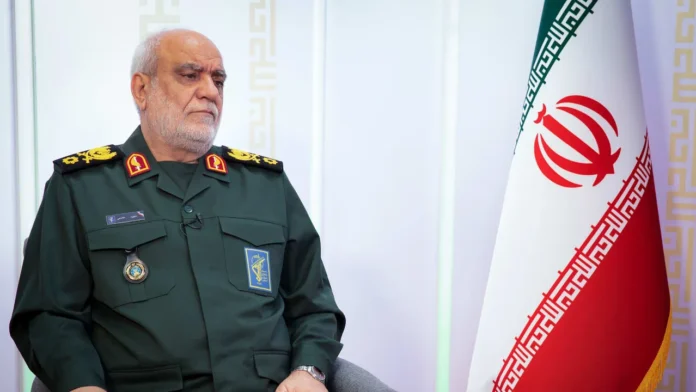
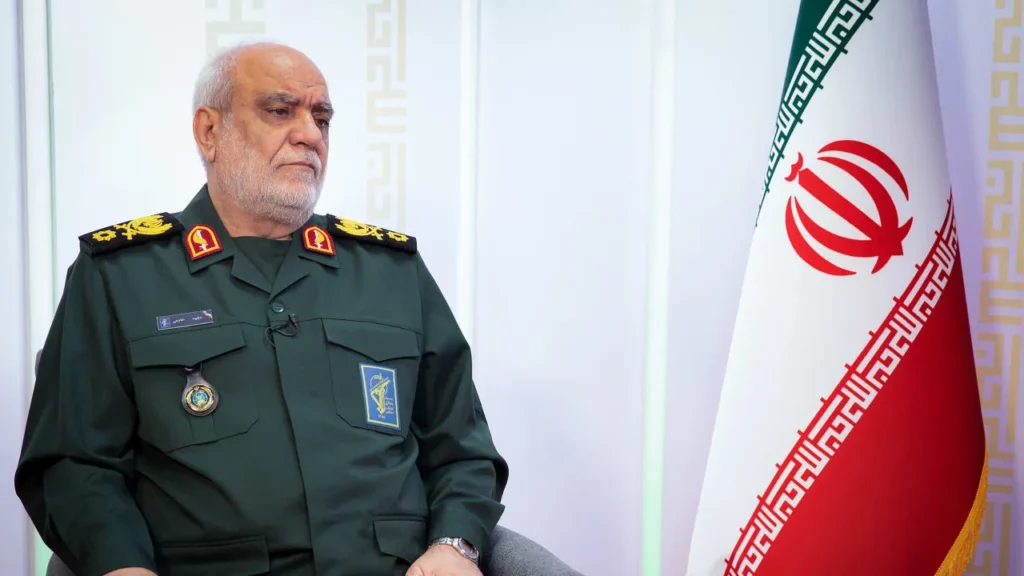
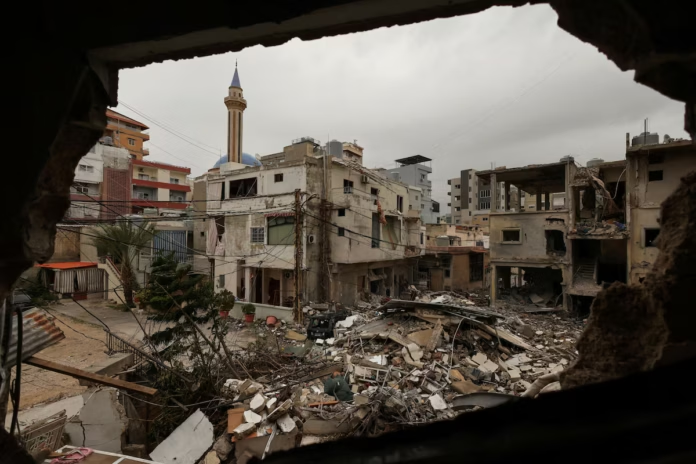
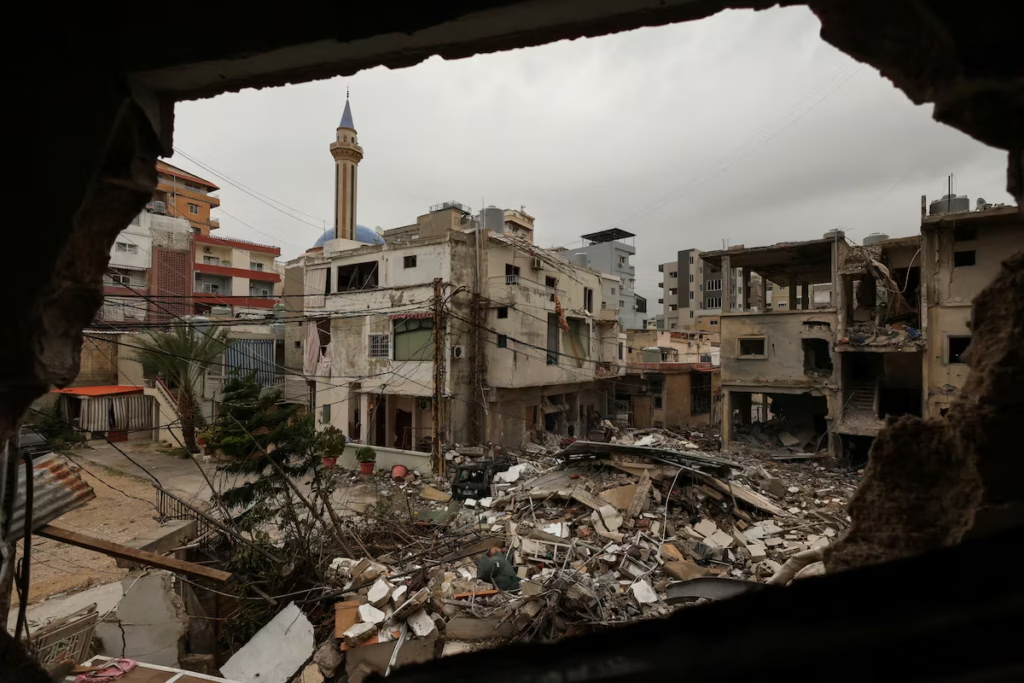
Israel said Monday it killed the head of intelligence for Iran’s Revolutionary Guard in a targeted airstrike in the capital, marking the latest high-level assassination in an escalating conflict that has spread across the region.
Maj. Gen. Majid Khademi was killed in the strike, according to Iranian state media, which blamed the United States and Israel for the attack. Israeli officials later confirmed responsibility, with Defense Minister Israel Katz saying the operation was part of a broader campaign against Iran’s leadership.
“The Revolutionary Guard are shooting at civilians and we are eliminating the leaders of the terrorists,” Katz said, adding that Israel would continue to pursue senior Iranian officials.
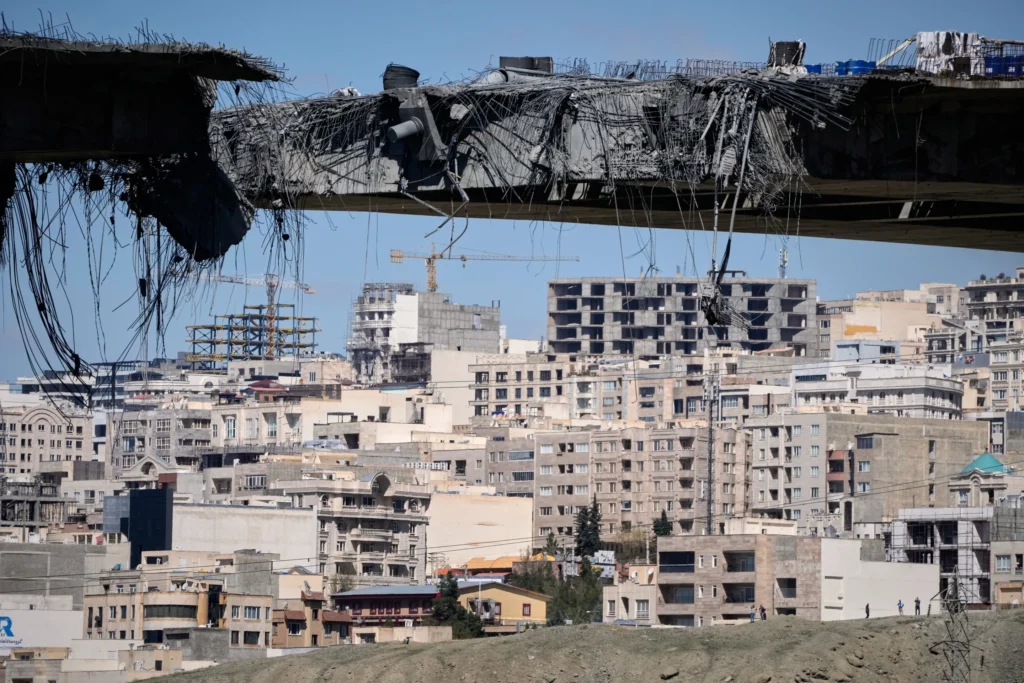
Iranian authorities did not immediately provide details on the exact location of Khademi’s death, but multiple airstrikes struck residential areas in and around Tehran early Monday.
Khademi had recently taken over the powerful intelligence arm of the Revolutionary Guard following the death of his predecessor in an earlier round of fighting. The organization plays a central role in Iran’s security apparatus and reports directly to the country’s top leadership. It has been linked to internal surveillance, detentions of foreign nationals and operations targeting opponents abroad.
The strike came as Israel and the United States carried out a new wave of attacks across Iran, reportedly killing more than 25 people. Iran responded with missile fire targeting Israel and neighboring Gulf countries, further intensifying the conflict.
President Donald Trump has also increased pressure on Iran, setting a deadline for Tehran to reopen a critical global shipping route. He warned that failure to comply could result in U.S. strikes on Iran’s energy and infrastructure facilities.
Efforts to broker a ceasefire are underway, with mediators proposing a temporary halt in fighting and the reopening of key shipping lanes to allow negotiations to continue. Neither Washington nor Tehran has publicly responded to the proposal.
The conflict has taken a heavy toll across the region. More than 1,900 people have been reported killed in Iran, while over 1,200 deaths have been recorded in Lebanon. Casualties have also been reported in Israel, Gulf countries and the West Bank, with U.S. military losses confirmed as well. Millions have been displaced as the fighting continues.
Israel has said its campaign will persist, targeting both military leadership and critical infrastructure, raising concerns about further escalation and the potential for a wider regional war.
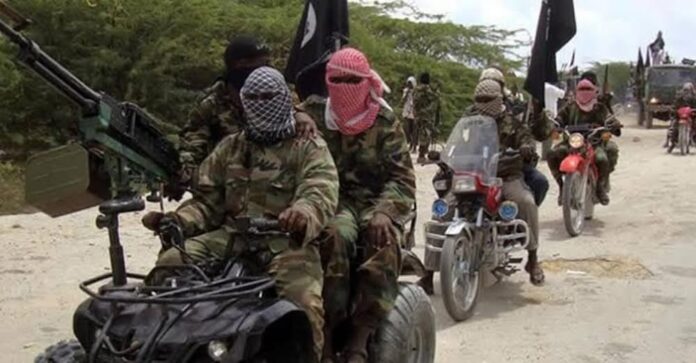
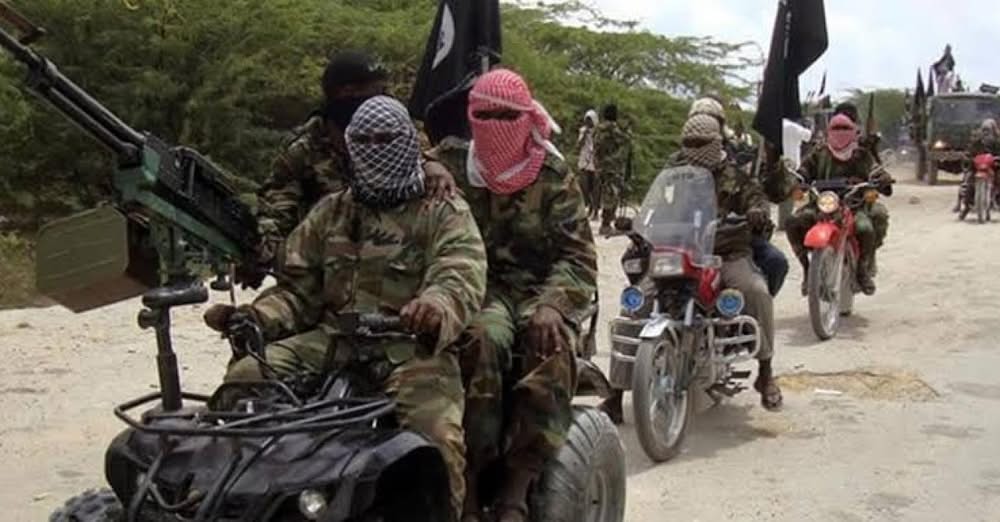
Terrorists launched coordinated assaults on Christian communities across northern Nigeria during Easter weekend, burning a church and homes in Chibok, Borno State, killing at least seven worshippers during Easter Sunday services at two Kaduna churches, and abducting five siblings including a two-year-old toddler in a midnight raid—attacks that underscore escalating violence targeting Christian populations during religious observances.
Fresh terror struck Kwapul community in Chibok Local Government Area, Borno State, as suspected insurgents carried out a late-night raid Saturday that extended into early Sunday hours. SaharaReporters learned that the insurgents set a church and several homes ablaze in what residents characterized as a coordinated attack on the predominantly Christian settlement.
Although no fatalities were documented in the Chibok assault, the attack left families displaced and traumatized, with growing calls for urgent security intervention to protect vulnerable rural populations. Locals disclosed that “attackers operated for hours without resistance,” underscoring fears that rural communities remain highly vulnerable despite years of government counterinsurgency efforts that have consumed enormous resources while failing to eliminate threats.
The attack transpired at a particularly sensitive time as Christian communities observed the Easter season—a period repeatedly targeted in Nigeria’s conflict-prone regions where religious violence has become tragically routine. In recent years, numerous Christian-majority communities across Borno, Adamawa, and Plateau states have experienced similar assaults with churches attacked, worshippers killed, and homes destroyed, heightening concern over the timing and psychological impact of these incidents.
Chibok itself carries a painful legacy that resonates far beyond Nigeria’s borders. In April 2014, more than 270 schoolgirls were abducted from their dormitories by Boko Haram insurgents, drawing global condemnation and exposing the catastrophic scale of insecurity in northeastern Nigeria. Over a decade later, while some girls have been rescued or escaped, others remain missing, and the trauma continues affecting the community whose name became synonymous with governmental failure to protect its citizens.
Residents now fear the continuation of persistent attacks and chronic insecurity that prevents normal life and economic development. Local leaders are urging the Nigerian government and security agencies to respond swiftly, warning that inaction could embolden attackers and deepen the humanitarian crisis already displacing millions across the nation’s northeast.
Meanwhile, tragedy struck the Ariko community in Kachia Local Government Area, Kaduna State, on Easter Sunday when terrorists executed coordinated attacks on two Christian worship centers, killing at least seven people and abducting several others during morning services celebrating the resurrection of Jesus Christ.
The bloody assault, which occurred during early morning hours, targeted congregants at the First ECWA Church and St. Augustine Catholic Church while they gathered for Easter worship. The Councillor representing Awon Ward, Mark Bawa, confirmed the harrowing incident to journalists, disclosing that attackers arrived in large numbers and laid siege to both churches simultaneously.
“The attackers came in large numbers. They surrounded the area and began shooting sporadically at worshippers. Several people were killed, and many others were taken away into the bush,” Bawa stated according to The PUNCH, describing scenes of chaos and terror as armed men fired indiscriminately into congregations.
Bawa noted that sources indicated at least seven people have been verified dead, though the final casualty count remained uncertain as he traveled to the community. “I am currently on my way to the community to ascertain the exact number of casualties. Some sources said seven persons were killed, while others claimed eight. I will provide an update once details are confirmed,” Bawa explained.
Residents lamented that the assailants operated for prolonged periods without any resistance from security agencies. Bawa attributed the delayed response to chronic lack of telecommunications coverage in the rural district, which prevented locals from calling for help as the slaughter unfolded—a infrastructure deficit that has repeatedly proven fatal when communities face armed attacks.
The vulnerability of the area has raised fresh concerns among Southern Kaduna leaders who have repeatedly warned about thinning security presence in the hinterlands where government forces maintain minimal deployment despite escalating violence. The Easter Sunday attack represents the latest in a series of targeted assaults on religious gatherings in the state.
Only two months earlier in February 2026, terrorists invaded the Kurmin Wali community, also in Kachia Local Government Area, where scores of worshippers were kidnapped during a church service. Despite the outrage sparked by the February incident and renewed calls for protection, the latest bloodbath suggests that killers continue operating with near-impunity in the region where governmental authority has effectively collapsed.
Attempts to secure official response from the Kaduna State Police Command proved unsuccessful. The Command’s spokesperson, DSP Mansir Hassan, did not answer multiple calls seeking confirmation of casualty figures or the condition of abducted victims—a pattern of official silence that frustrates communities desperate for information about missing loved ones and security interventions.
Sahara Reporters also documented that terrorists carried out a daring midnight raid in Kachia, Kaduna State, abducting five siblings from a single household. The victims, including a two-year-old toddler named Irene, were taken from their family compound around 11:45 p.m. Saturday, April 4, 2026, in an assault that has devastated the family.
A family member told SaharaReporters that gunmen struck under darkness cover, breaching the compound’s security and leaving the household in terror. “Kidnappers entered our compound in Kachia and kidnapped five of my siblings, including two-year-old Irene,” the source stated, adding that the family remains in shock while “praying to God for their safe return.”
The identities of the other four siblings have not been made public, but the abduction of a toddler underscores the increasing depravity of the banditry crisis plaguing Southern Kaduna. The willingness to kidnap very young children—who have minimal ransom value but maximum psychological impact on families—suggests criminals are employing terror tactics beyond mere financial motivation.
This latest abduction follows a pattern of unbridled aggression in Kachia Local Government Area that has transformed the district into one of Nigeria’s most dangerous territories. The Sunday morning terrorist targeting of First ECWA Church and St. Augustine Catholic Church in the Ariko community, which killed at least seven worshippers and abducted several others, occurred mere hours after the midnight family abduction.
The convergence of multiple attacks within a 24-hour period across Kachia suggests either coordinated operations by a single group or the proliferation of multiple armed factions operating simultaneously in the territory—both scenarios indicating catastrophic security failures. The timing during Easter weekend appears calculated to maximize psychological trauma and media attention while striking when Christian communities gather in predictable locations.
The attacks raise profound questions about Nigerian security forces’ capacity and willingness to protect vulnerable populations in rural areas where government presence remains minimal despite years of promises about restoring order. The ability of armed groups to operate for hours without military intervention—even when attacking churches filled with worshippers—suggests either inadequate force deployment or institutional dysfunction preventing effective response to emergencies.
The telecommunications deficit that prevented Ariko residents from summoning help illustrates how infrastructure deficiencies compound security vulnerabilities in ways that prove lethal during crises. Without cellular coverage, isolated communities cannot alert authorities when attacks commence, allowing perpetrators extended time to kill, abduct, and loot before fleeing.
For Christian communities across northern Nigeria, the Easter weekend violence confirms their worst fears about targeted religious persecution that shows no signs of abating. The pattern of attacks during major Christian holidays—including previous Christmas and Easter assaults—suggests deliberate efforts to terrorize believers and potentially drive Christian populations from regions where they have lived for generations.
The economic impacts extend beyond immediate violence. Communities living under constant threat cannot maintain normal agricultural activities, attend markets, or send children to schools—creating cycles of poverty and underdevelopment that make entire regions increasingly ungovernable. Displaced populations crowd into urban areas lacking infrastructure to accommodate them, straining already inadequate public services.
International human rights organizations have repeatedly documented religious violence patterns in Nigeria while criticizing governmental responses as inadequate to the crisis scale. The attacks occur despite substantial military budgets and international security assistance aimed at combating Boko Haram, Islamic State West Africa Province, and bandit groups terrorizing rural populations.
For the families awaiting news of abducted loved ones—including the siblings taken from their Kachia compound—the uncertainty proves agonizing. Kidnapping victims in Nigeria face uncertain fates ranging from ransom negotiations to forced labor, sexual violence, forced marriage, or execution if families cannot pay demanded sums often exceeding what impoverished rural households can possibly raise.
As Easter Sunday concluded and communities mourned their dead while searching for the missing, the fundamental questions persisted about whether Nigerian authorities possess either the capacity or political will to protect citizens from armed groups that operate with apparent impunity across vast territories. The weekend’s violence suggests that despite years of conflict and countless promises, the security situation for vulnerable populations continues deteriorating rather than improving—a reality with devastating human consequences for millions living in fear.
President Donald Trump issued a sharp and profanity-laced warning to Iran on Sunday, threatening strikes on key infrastructure if the country does not reopen a vital global shipping route, as new details emerged about the rescue of a U.S. aviator whose aircraft was shot down.
Trump said the United States would target Iran’s power plants and bridges if the Strait of Hormuz is not reopened by his stated deadline, escalating tensions in a conflict that has already killed thousands and disrupted global energy markets.
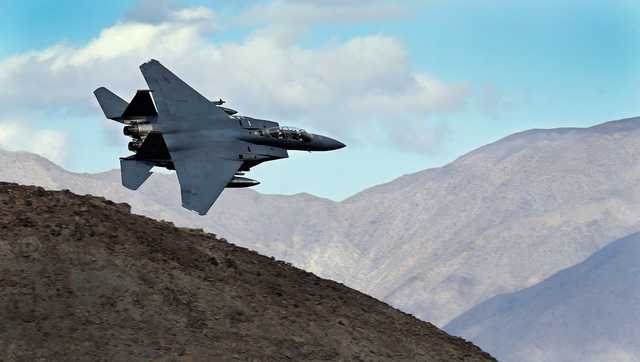
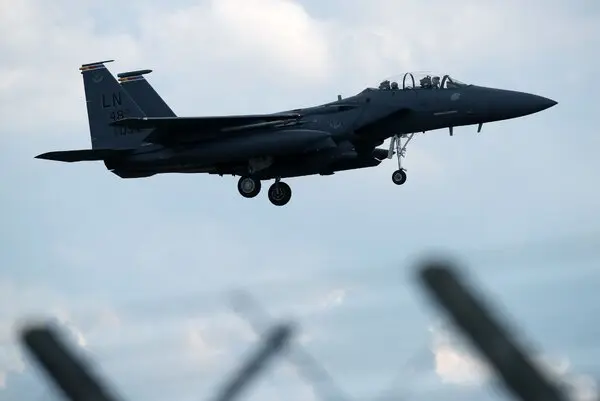
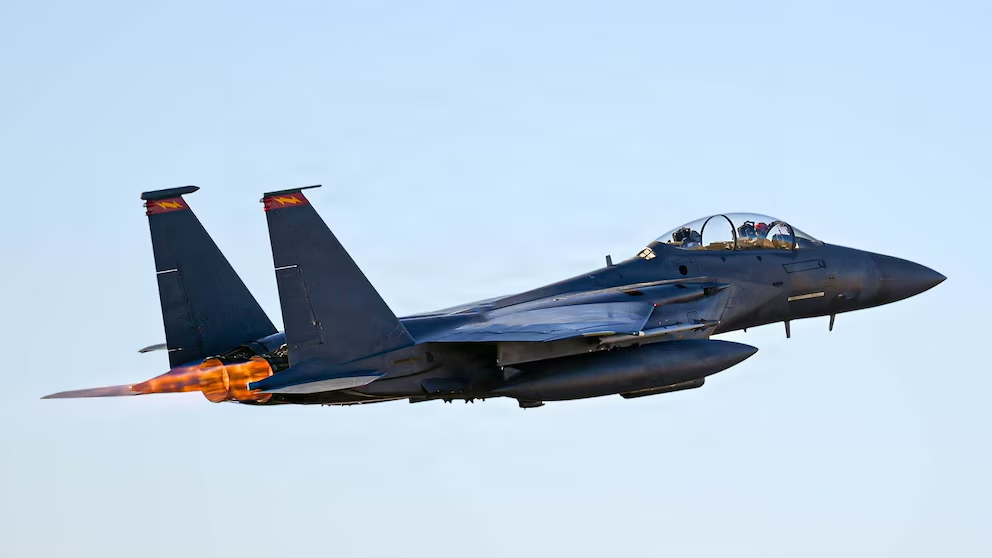
The warning came after U.S. forces carried out a high-risk operation to rescue a service member whose F-15E fighter jet was downed over Iran. Trump said the aviator was seriously injured but had been recovered from mountainous terrain deep inside the country. A second crew member was also rescued shortly after the incident.
The operation followed an intense search effort after the aircraft crashed Friday, marking the first known U.S. plane to go down in Iranian territory since the war began in late February.
U.S. officials said the rescue involved multiple aircraft and complex coordination. A senior administration official said intelligence efforts included spreading misleading information to confuse Iranian forces during the search for the second crew member.
Iran also shot down another U.S. military aircraft the same day, highlighting the continued risks facing American forces despite sustained airstrikes. The status of that aircraft’s crew has not been fully confirmed.
Iranian state media claimed that additional U.S. aircraft were destroyed during the rescue operation, including transport planes and helicopters. However, a regional intelligence official said some U.S. aircraft were deliberately destroyed due to technical problems during the mission, and additional aircraft were deployed to complete the rescue.
Despite the military developments, the conflict has expanded across the region. Iran launched strikes targeting energy and infrastructure sites in several Gulf countries, damaging power facilities, industrial plants and water systems. Fires were also reported at major industrial locations following intercepted projectiles.
At the center of the standoff is the Strait of Hormuz, a critical route for global oil and gas shipments. Disruptions to traffic through the waterway have contributed to rising energy prices and increased volatility in global markets.
Iranian officials signaled they could impose conditions on reopening the route, including compensation related to the war. They also warned of potential disruptions to another key shipping corridor linking the Red Sea to international trade routes.
Both sides have exchanged threats involving civilian infrastructure, raising concerns among legal experts about the potential for violations of the laws of armed conflict, which restrict attacks on non-military targets.
Diplomatic efforts to de-escalate the situation are ongoing. Officials from several countries are engaged in talks aimed at securing safe passage through key waterways and exploring a possible ceasefire.
The war has had a growing human toll across the region, with casualties reported in multiple countries and large numbers of people displaced. The continued escalation and threats to critical infrastructure have heightened fears of a broader regional conflict.
Trump’s latest warning reflects increasing pressure on Iran over control of a key global shipping route, while also signaling a willingness to escalate military action.
The successful rescue of the downed aviator demonstrates the capability of U.S. forces to operate in hostile environments, but the loss of aircraft and continued threats highlight the limits of air dominance in the conflict.
At the same time, the widening scope of attacks on infrastructure across the region underscores the economic and humanitarian risks tied to the war.
With diplomacy continuing alongside military operations, the situation remains highly volatile, with the potential for further escalation still significant.
Congo will begin receiving migrants deported from the United States under a new third-country agreement with the Trump administration, the government said Sunday, becoming the latest African nation to participate in the program.
The Congolese Ministry of Communications said deportees are expected to arrive later this month, though officials did not provide details on the number of individuals or an exact timeline.
The government described the arrangement as temporary and said it reflects Congo’s commitment to humanitarian principles and international cooperation. It added that the United States would cover all logistical costs associated with the transfers.
The agreement is part of a broader effort by the Trump administration to deport migrants to countries other than their own. Similar deals have been reached with several other African nations.
According to a report by Democratic staff on the Senate Foreign Relations Committee, the United States has spent tens of millions of dollars to relocate hundreds of migrants under the program.
The policy has drawn criticism from lawyers and human rights advocates, who have raised concerns about the conditions in some of the receiving countries and the legal status of the deportees. Critics note that some migrants subject to these agreements have protections from U.S. immigration courts preventing their return to their countries of origin due to safety risks.
Congolese officials said each case would be reviewed individually in line with national laws and security considerations, and that there would be no automatic acceptance of deportees.
The development highlights ongoing debate over U.S. immigration policy and the use of third-country agreements, as well as broader concerns about the treatment and relocation of migrants.
The agreement underscores the expansion of third-country deportation policies as the United States seeks alternatives for migrants who cannot be returned to their home countries.
While Congo has framed the move as a humanitarian gesture, the lack of detailed information about implementation and oversight raises questions about how the arrangement will function in practice.
The involvement of countries with varying human rights records has been a central concern for critics, particularly regarding the safety and legal protections afforded to deportees.
As the program grows, its legal and ethical implications are likely to face increasing scrutiny both domestically and internationally.
Lionel Messi made history Saturday night by scoring Inter Miami’s first goal at the club’s new stadium, marking the opening of the long-awaited venue in a 2-2 draw against Austin FC.
Messi’s equalizer came just minutes after Austin stunned the home crowd with an early goal, ensuring the Argentine star would become the first Inter Miami player to score at the new ground. The goal also added to his remarkable career total, pushing him past 900 goals.
The opening match at the 26,000-seat stadium drew a packed crowd and high-profile attendees, including club co-owner David Beckham, who celebrated the milestone moment alongside fans and family.
Austin took the lead in the sixth minute when Guilherme Biro scored with a header, briefly spoiling the celebratory atmosphere. Inter Miami responded quickly, with Messi rising to meet a cross and heading in the equalizer in the 11th minute.
The home side controlled much of the play and created several scoring opportunities, but the match remained level heading into halftime. Austin regained the lead in the second half when substitute Jayden Nelson finished a breakaway chance in the 54th minute.
Inter Miami pushed for another equalizer, with coach Javier Mascherano bringing on veteran forward Luis Suarez. The move paid off when Suarez scored from close range in the 83rd minute to level the match at 2-2.
Suarez appeared to have won the game late with a second goal, but it was disallowed for offside, leaving both teams to share the points.
The match marked Inter Miami’s first game in the city after years of playing in Fort Lauderdale, underscoring a new chapter for the club.
Before kickoff, Beckham addressed supporters and praised Messi’s impact, calling him the greatest player in the history of the sport. The stadium also features a section dedicated to Messi in recognition of his influence on the team.
The new venue is part of a larger development project valued at approximately $1 billion, which includes a hotel, retail space, public parks and community sports facilities. Club officials said the project was privately funded, though public funds were used for nearby road improvements.
The opening drew widespread attention, including from state officials, as fans celebrated the arrival of a permanent home for the team.
Inter Miami will return to action at the stadium next weekend when they host the New York Red Bulls.
Messi’s goal provided a fitting highlight for the stadium’s debut, reinforcing his central role in Inter Miami’s rise in global profile.
The event also represents a significant milestone for soccer in the United States, with the new venue positioning the club as a major presence in the league.
While the result itself was evenly balanced, the occasion carried greater importance, symbolizing both the club’s growth and its long-term ambitions.
The combination of star power, infrastructure investment and fan engagement suggests Inter Miami is entering a new phase as it seeks sustained success on and off the field.
The United States has rescued a service member who had been missing behind enemy lines after a fighter jet was shot down over Iran, officials said Sunday, marking a dramatic recovery as the conflict continues to escalate.
The airman was recovered following a search-and-rescue operation launched after the Friday downing of an F-15E Strike Eagle. President Donald Trump said the service member was injured but in stable condition. A second crew member had already been rescued earlier.
“This brave warrior was behind enemy lines in the mountains of Iran, being hunted by our enemies,” Trump said in a social media post.
The aircraft was the first U.S. plane to go down inside Iran since the war began, highlighting the risks facing American forces despite repeated claims that Iran’s military capabilities have been severely weakened.
The war, which began with U.S. and Israeli strikes on Feb. 28, has killed thousands, disrupted global markets and driven up energy prices. Both sides have carried out attacks that have raised concerns about civilian casualties and potential violations of international law.
Iran has continued to strike economic and infrastructure targets in neighboring Gulf countries, showing no sign of backing down. Drone attacks in Kuwait damaged power plants and disrupted water facilities, while a separate strike in Bahrain caused a fire at an oil storage site. In the United Arab Emirates, debris from intercepted attacks sparked fires at a major industrial plant, halting production.
At the center of rising tensions is the Strait of Hormuz, a critical route for global energy shipments. Trump renewed his warning that Iran must reopen the waterway or face severe consequences, setting a new deadline and threatening further military action.
Iranian officials responded with warnings of their own, signaling the possibility of broader retaliation across the region.
Despite the escalating rhetoric, diplomatic efforts are ongoing. Officials said mediators from several countries are working to bring both sides to the negotiating table, with proposals that include a temporary halt in fighting to allow for talks.
The rescue operation itself underscored the complexity and danger of missions conducted deep inside hostile territory. U.S. officials said multiple aircraft were involved, and additional complications arose during the mission, including equipment failures and reports of enemy fire.
Iranian state media claimed several U.S. aircraft were destroyed during the operation, though American officials have disputed those accounts.
The incident also drew attention to the vulnerability of U.S. aircraft operating over Iran. In a separate event, an A-10 aircraft supporting the rescue mission was damaged and later crashed after its pilot safely ejected and was recovered.
The conflict has already resulted in significant casualties across the region, including U.S. service members, civilians and combatants. It has also displaced large numbers of people and heightened fears of a wider regional war.
The successful rescue of the missing aviator represents a significant operational achievement for the U.S. military, particularly given the risks of conducting missions in hostile territory.
However, the downing of the aircraft and the challenges faced during the recovery highlight the limits of air dominance in a contested environment. Iran’s ability to continue targeting U.S. assets suggests that, despite sustained strikes, it retains operational capabilities.
At the same time, the broader conflict is placing increasing strain on regional stability, with attacks on critical infrastructure and threats to key shipping routes carrying global economic implications.
As diplomatic efforts continue, the situation remains highly volatile, with the potential for further escalation still looming.
The downing of U.S. military aircraft during the ongoing war with Iran marks the first time in more than two decades that American planes have been brought down by enemy fire, underscoring the continued threat posed by Iran despite claims its military capabilities have been significantly weakened.
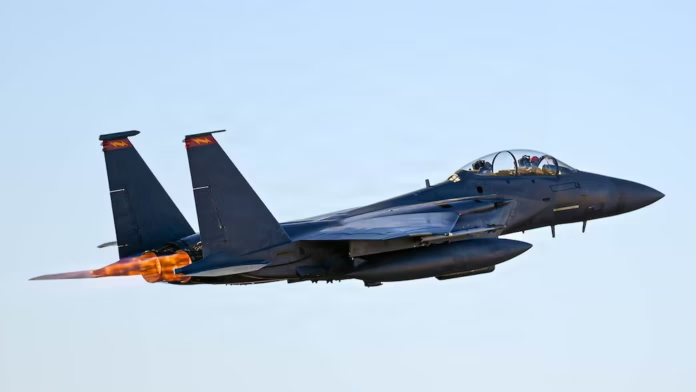
Iranian forces shot down a U.S. F-15E Strike Eagle fighter jet on Friday, according to American officials. One crew member has been rescued, while search efforts continue for a second. Iranian state media also reported that a U.S. A-10 attack aircraft crashed after being struck during operations.
The last confirmed instance of a U.S. fighter jet being shot down in combat occurred in 2003 during the invasion of Iraq, when an A-10 aircraft was hit by a surface-to-air missile over Baghdad. The pilot in that case successfully ejected and was rescued.
Military analysts say such incidents have been rare in recent decades largely because U.S. forces have primarily faced insurgent groups lacking advanced air defense systems. The situation in Iran, however, presents a more capable adversary with the means to target aircraft.
“This had not happened until now largely because of the nature of previous conflicts,” said a retired Air Force general and former fighter pilot. “U.S. aircraft have been operating in contested environments here and facing threats daily.”
U.S. Central Command said American forces have flown more than 13,000 missions and struck over 12,000 targets since the conflict began. Despite sustained airstrikes by the United States and Israel, Iran has continued to launch attacks across the region, contributing to instability and economic disruption.
Experts say the aircraft may have been brought down by a portable, shoulder-fired missile, which is more difficult to detect than larger systems. Others noted that U.S. aircraft have been operating at lower altitudes, increasing their vulnerability to such weapons.
While the U.S. maintains a strong advantage in the air, analysts caution that the distinction between air superiority and complete control remains significant. Even weakened air defense systems can still pose a danger.
“This shows that even a degraded system can still be effective,” said a defense analyst. “It should not be surprising that they are still able to fight back.”
Despite the losses, some defense experts described the broader air campaign as effective, noting that historically, wartime aircraft losses have been far higher. However, they also pointed out that public tolerance for casualties in modern conflicts is significantly lower.
Pilots operating in high-risk environments are trained extensively for such scenarios, including how to evade incoming missiles, eject safely and communicate their location for rescue. Recovery operations themselves carry significant risk, particularly for helicopters, which are more vulnerable due to their lower speed and altitude.
The recent rescue mission highlighted those dangers, as helicopters involved in retrieving a downed pilot came under fire, resulting in injuries to personnel.
The incidents highlight both the intensity of the conflict and the evolving risks faced by U.S. forces, as the war shows no immediate signs of ending.
The loss of U.S. aircraft in Iran represents a notable shift in the conflict, demonstrating that despite sustained strikes, Iran retains the ability to challenge American air operations.
While the overall campaign may still favor the United States, the incidents expose vulnerabilities that could influence military strategy, particularly regarding flight altitude and mission planning.
At the same time, the psychological and political impact of such losses may weigh heavily, especially in a conflict where public support is limited.
As operations continue, the balance between maintaining pressure and managing risk will remain a central challenge for U.S. military leadership.
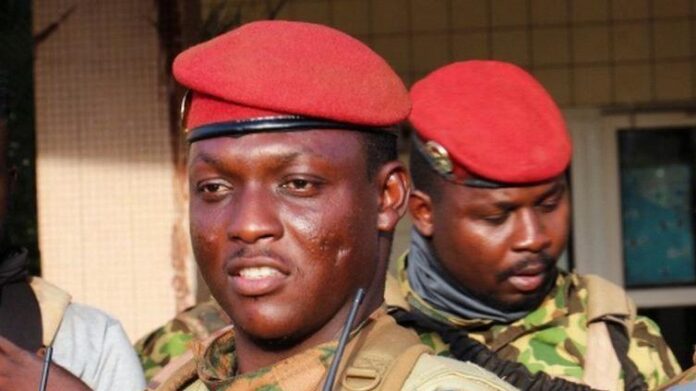
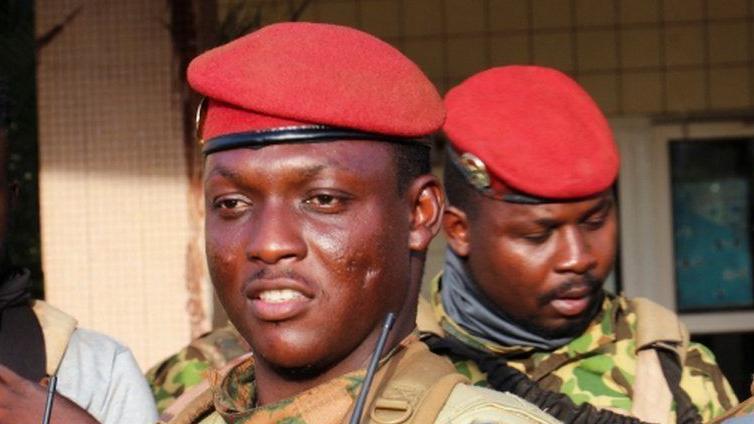
Burkina Faso’s military leader Ibrahim Traoré said the country’s people should abandon the idea of democracy, declaring it “isn’t for us” in remarks that signal his intention to extend military rule.
Traoré, who seized power in a coup in September 2022, made the comments during an interview with the state broadcaster. His government has increasingly tightened control, banning political parties earlier this year after previously suspending political activity.
“We must tell the truth,” Traoré said. “People need to forget about democracy.”
The 37-year-old leader dismissed democratic governance as harmful, arguing that it leads to violence against civilians and destruction of infrastructure. He also indicated that elections are not a priority, despite earlier promises of a transition back to civilian rule.
Following the coup, the military government had pledged to hold elections by 2024. However, the timeline was later extended, allowing Traoré to remain in power until at least 2029. He has since said elections will not be held until the country is secure enough for nationwide voting.
Burkina Faso has been grappling with a long-running armed insurgency that has killed thousands and displaced millions over the past decade. The violence continues to strain the country’s security forces and complicate any return to civilian governance.
Traoré has gained support in parts of Africa for his criticism of Western influence, often invoking the legacy of former leader Thomas Sankara. However, his administration has faced mounting criticism over its human rights record and inability to curb the violence.
A recent report by Human Rights Watch alleged that more than 1,800 civilians have been killed since 2023 by government forces, allied militias and armed groups. The report accused all sides of committing serious abuses, including unlawful killings and forced displacement. The government has denied the allegations and banned the organization, along with several international media outlets that reported on its findings.
The military leadership in Burkina Faso mirrors developments in neighboring Mali and Niger, where coups have also led to the suspension of democratic institutions and the dissolution of political parties.
As the security crisis persists, Traoré’s remarks underscore a broader shift away from democratic governance in parts of West Africa, raising concerns about long-term stability and the future of civilian rule in the region.
Traoré’s rejection of democracy reflects a growing trend among military-led governments in the region, where security concerns are increasingly used to justify prolonged rule without elections.
While the government argues that stability must come before democratic processes, critics say the suspension of political freedoms risks deepening instability and alienating large segments of the population.
At the same time, the continued violence and allegations of human rights abuses highlight the challenges facing the military government as it attempts to assert control over the country.
The absence of a clear path back to civilian rule is likely to remain a key point of tension both domestically and internationally.
One crew member from a United States fighter jet shot down over Iran has been rescued, while efforts continue to locate a second service member still missing, according to U.S. officials cited in media reports.
The rescued pilot was recovered by two U.S. military helicopters after ejecting from the aircraft, identified as an F-15E Strike Eagle. During the operation, one of the helicopters came under small arms fire, injuring personnel on board. The aircraft was able to land safely, and those wounded are receiving medical treatment before being transferred for further care.
Search operations remain underway for the second crew member, a weapons systems officer who was also aboard the jet when it was downed.
In a separate incident tied to the rescue mission, a U.S. A-10 aircraft was damaged after coming under fire. Its pilot ejected over nearby waters and was successfully recovered, according to officials.
The downing of the aircraft and subsequent rescue efforts underscore the dangers facing U.S. forces operating in the region amid the ongoing conflict. The Pentagon has not issued an official statement on the incidents.
Officials from both the United States and Israel, speaking on condition of anonymity due to the sensitivity of the situation, confirmed that at least one crew member had been safely recovered.
Meanwhile, civilians in Iran reported witnessing the intensifying conflict firsthand. A resident in central Tehran described seeing a projectile streak overhead followed by an explosion, with smoke rising from an area that includes key government buildings and a major medical research center.
Iranian authorities confirmed that the facility was struck, while residents also reported damage to nearby police stations.
Iranian state media has claimed responsibility for shooting down the U.S. aircraft. The F-15E is a two-seat fighter jet equipped with advanced systems and emergency locator equipment designed to assist in recovery operations after an ejection.
The incident comes as fighting between Iran, the United States and Israel continues to escalate, with both sides carrying out strikes across multiple locations.
The successful recovery of one crew member highlights the effectiveness of U.S. search-and-rescue operations, even in hostile environments. However, the injuries sustained during the mission and the ongoing search for a second crew member illustrate the significant risks involved.
The damage to an additional aircraft during the rescue effort further emphasizes the contested nature of the airspace, challenging earlier claims of full operational control.
At the same time, reports from civilians in Tehran point to the widening impact of the conflict on populated areas and critical infrastructure. As strikes extend deeper into urban centers, the risk to civilians and essential services increases.
The situation remains fluid, with the fate of the missing crew member and the potential for further escalation continuing to shape the course of the conflict.
Iran shot down a United States fighter jet on Friday, marking the first confirmed loss of a U.S. warplane in the five-week conflict and sharply raising tensions between the two sides, officials said.
According to a U.S. source, one crew member ejected and was rescued, while a second remains missing. The aircraft was identified by analysts as a two-seat F-15E Strike Eagle, based on images circulating online.
The incident highlights the continuing risks facing U.S. and Israeli aircraft operating over Iran, despite claims by President Donald Trump and Defense Secretary Pete Hegseth that their forces have achieved full control of the airspace.
In a separate incident, a second U.S. Air Force aircraft crashed in the Gulf region on the same day, with its pilot safely recovered, according to a report citing U.S. officials.
Iranian state media reported that local residents fired at U.S. helicopters involved in search and rescue efforts following the downing of the jet. Iran’s elite military force said it was searching the area where the aircraft came down in the southwest of the country, while a regional official promised rewards for capturing or killing what were described as enemy personnel.
The Pentagon and U.S. Central Command did not immediately comment on the reports.
The downing of the aircraft adds urgency to a conflict that shows no signs of easing. The possibility that a U.S. service member may still be on the ground inside Iran increases pressure on Washington, particularly as the war continues with limited public support at home.
Diplomatic efforts to end the fighting appear stalled. Iran has reportedly told mediators it will not engage in upcoming talks, and attempts to secure a ceasefire have reached an impasse.
The war began on Feb. 28 with a wave of U.S. and Israeli strikes and has since expanded across the region. Thousands have been killed, and the conflict has begun to strain the global economy.
The United States has reported 13 military deaths and more than 300 wounded since the fighting began. Iran has launched repeated missile and drone attacks on Israel and has also targeted countries in the Gulf aligned with the United States, though those nations have largely avoided direct involvement.
Security concerns are growing beyond the immediate battlefield. The U.S. Embassy in Lebanon issued an alert warning that Iran and allied armed groups could target civilian locations, urging American citizens to leave while commercial flights remain available.
Meanwhile, Israel has intensified operations in Lebanon against an armed group aligned with Iran, further widening the conflict.
President Trump on Friday threatened additional strikes on Iranian infrastructure, including bridges and power plants. Iran responded by targeting critical facilities in the region, including a power and water site in Kuwait, highlighting the vulnerability of infrastructure in Gulf countries.
Drone strikes also hit an aid warehouse in southern Iran, while attacks were reported or intercepted in Saudi Arabia and the United Arab Emirates. In Israel, missile debris landed near a major port city that houses key energy facilities.
Global markets reacted to the escalating conflict, with oil prices rising sharply amid concerns about prolonged instability and disruptions to supply.
The downing of a U.S. fighter jet marks a significant escalation in the conflict, demonstrating that Iran retains the capability to challenge advanced military aircraft. This development undermines claims of complete air superiority and introduces new risks for ongoing operations.
The possibility of a missing U.S. service member inside Iran adds a sensitive dimension, as recovery efforts could further intensify military activity or complicate diplomatic options.
At the same time, the conflict continues to expand geographically, drawing in additional countries and increasing the risk of a broader regional war. Attacks on infrastructure, particularly energy and water facilities, signal a shift toward targeting systems critical to civilian life and economic stability.
With diplomatic efforts stalled and both sides signaling continued military action, the likelihood of a near-term resolution appears low. The situation remains highly volatile, with potential consequences for global security and economic stability.