Home Blog Page 721

Russian Missile Strike Kills 41 in Ukraine’s Poltava, President Zelenskiy Reports

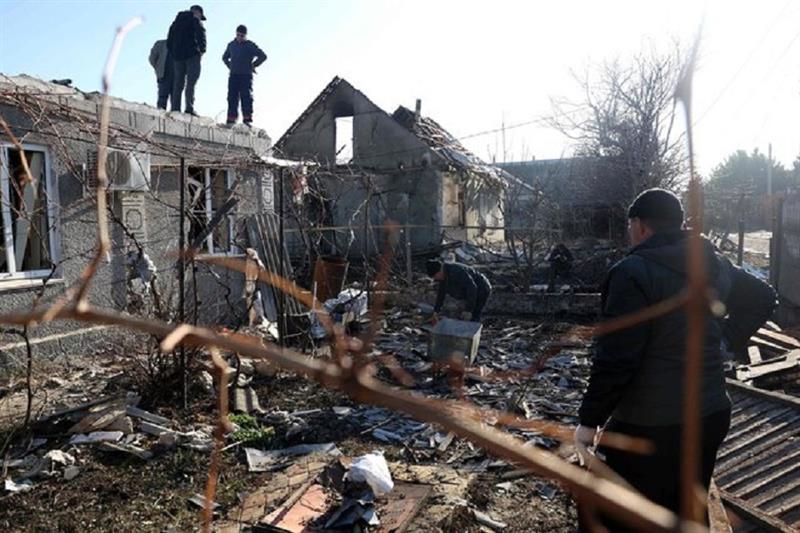
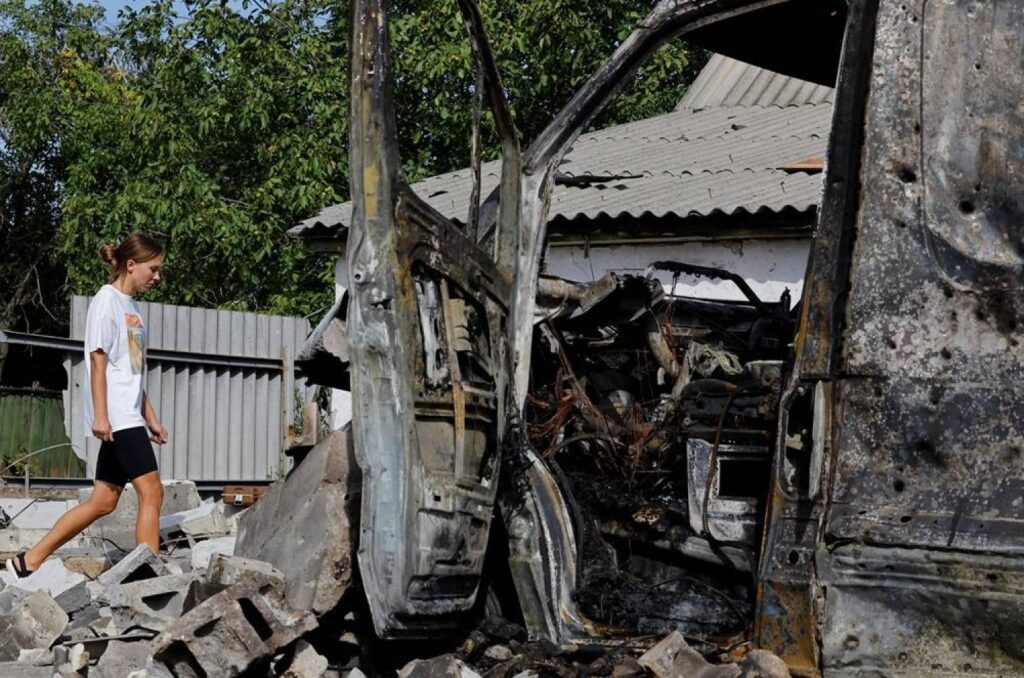
A Russian missile strike on the eastern Ukrainian city of Poltava has resulted in at least 41 deaths and 180 injuries, Ukrainian President Volodymyr Zelenskiy reported on Thursday. The attack marks one of the deadliest single assaults on a civilian area in recent months, further escalating tensions in the ongoing conflict between Russia and Ukraine.

President Zelenskiy, in a statement, provided preliminary details of the attack:

“According to initial reports, the eastern city of Poltava was hit by two Russian ballistic missiles,” Zelenskiy said. He added that the strike targeted “the territory of an educational institution and a nearby hospital.”

The president elaborated on the extent of the damage and rescue efforts: “At least 41 people have been killed and 180 injured, with some individuals being rescued from under the rubble.”

Among the structures affected, Zelenskiy noted that one of the buildings of the Institute of Communications was partially destroyed in the attack.

The strike on Poltava, a city not frequently in the headlines of the conflict, underscores the widespread nature of the war and its impact on civilian areas far from the front lines. The targeting of educational and medical facilities raises further concerns about the protection of civilians in the ongoing conflict.

Emergency services are currently on the scene, working to rescue any remaining survivors and assess the full extent of the damage. The number of casualties may change as more information becomes available.

This attack comes as both Ukraine and Russia continue to engage in military operations across various regions, with civilian areas often bearing the brunt of the conflict. International observers and human rights organizations have repeatedly called for the protection of civilians and civilian infrastructure in accordance with international humanitarian law.

The Ukrainian government is expected to provide more details about the attack and its response in the coming hours. Meanwhile, the international community’s reaction to this latest escalation is anticipated, potentially leading to further diplomatic efforts to address the ongoing crisis.

Canada Tightens Borders: Surge in Rejections of Foreign Visitors Amid Policy Shift

Canada, long known for its welcoming stance towards newcomers, is closing its doors to an increasing number of foreign visitors and temporary residents. Government data obtained by Reuters reveals a significant spike in visa rejections and border turnaways, signaling a marked shift in the country’s immigration policies.

The trend comes as Prime Minister Justin Trudeau’s Liberal government, currently trailing in polls ahead of an anticipated election next year, grapples with mounting public concerns over immigration. Many Canadians have linked the influx of newcomers to the ongoing housing shortage and soaring prices, prompting a recalibration of the country’s traditionally open-door policy.

In July 2024, Canadian border officials refused entry to 5,853 foreign travelers, including students, workers, and tourists. This figure marks the highest number of rejections since at least January 2019. On average, border officers turned away 3,727 foreign travelers per month during the first seven months of 2024, representing a substantial 20% increase from the previous year.

The tightening extends beyond the physical borders. Canada’s immigration department is approving fewer visas across various categories. The ratio of refused visitor visa applications to approved ones reached a post-pandemic high in June. In fact, during January, February, May, and June of 2024, more visa applications were refused than approved, a stark reversal from previous trends.

Study and work permits, which had seen multi-year highs in 2023 and 2022 respectively, have also experienced a notable decline in approvals. This shift affects not only tourists but also international students and temporary workers who have long contributed to Canada’s economic and cultural landscape.

Immigration Minister Marc Miller acknowledged the changing landscape in August, stating, “Canadians want a system that is not out of control.” This sentiment reflects growing public opinion, with polls indicating that an increasing number of Canadians believe the country is admitting too many immigrants.

The Canada Border Services Agency (CBSA) attributes these changes to shifting migration patterns and policy adjustments, emphasizing that decisions are made on a case-by-case basis. However, the agency has not identified specific policy changes driving this trend.

Legal experts on the ground are reporting increased scrutiny of visa holders at airports and land border crossings. British Columbia lawyer Will Tao has observed a “180-degree” shift in attitude towards immigration from the government. He notes that the perception of foreigners potentially causing harm to Canada is trickling down from politicians to front-line officials, influencing their decision-making processes.

This heightened scrutiny has led to situations where valid visa holders are being turned away at the border, sometimes under pressure to leave voluntarily or face deportation. These actions can have severe implications for individuals’ visa status or travel authorizations, including potential cancellations.

One such case involved Mohammed Kamil Shaibu, a Ghanaian traveler en route to a conference in Edmonton. Despite holding a valid tourist visa, Shaibu was denied entry to Canada last September during a layover in Paris. After a phone interview with a Canadian immigration officer, he was told his “temporary-resident visa is no longer valid for travel to Canada” and was asked to return to Accra.

This practice of granting visas only to deny entry later has drawn criticism from academic circles. Gideon Christian, an assistant law professor at the University of Calgary, questions the logic behind this approach, asking, “Why accept people if, when they come, you’re not going to admit them?”

The shift in Canada’s immigration stance represents a significant departure from its long-standing reputation as a country that embraces newcomers. This changing landscape reflects a complex interplay of factors, including economic pressures, particularly in the housing market, and evolving public sentiment.

As Canada navigates these changes, the impact on its international reputation and economy remains to be seen. The country has long benefited from the contributions of immigrants and temporary residents in various sectors. However, the current trend suggests a recalibration of its immigration policy, potentially affecting Canada’s appeal as a destination for international students, skilled workers, and tourists.

The upcoming election may well serve as a referendum on these evolving immigration policies, with the outcome likely to shape Canada’s approach to newcomers in the years to come. As the situation continues to develop, observers both within Canada and internationally will be watching closely to see how the country balances its economic needs, public sentiment, and humanitarian traditions in crafting its future immigration policies.

Russia Sentences Hypersonic Scientist to 15 Years for Treason

A Russian court on Tuesday sentenced physicist Alexander Shiplyuk to 15 years in prison on treason charges, marking the latest in a series of cases against scientists involved in hypersonic missile research.

Shiplyuk, 57, director of a prominent Siberian science institute, was arrested in August 2022. The trial, held behind closed doors as is typical for treason cases in Russia, concluded with the severe sentence that has alarmed the scientific community.

Two of Shiplyuk’s colleagues from the Khristianovich Institute of Theoretical and Applied Mechanics (ITAM) in Novosibirsk, Anatoly Maslov and Valery Zvegintsev, were also detained on suspicion of treason. Maslov, 78, received a 14-year sentence in May.

Shiplyuk’s lawyer has not yet commented on whether the scientist plans to appeal the verdict, which was reported by Russian news agencies.

The Kremlin, commenting on these cases last May, stated that the men face “very serious accusations,” adding that the matter was under the purview of security services.

Russia has positioned itself as a world leader in hypersonic missiles, weapons capable of traveling at up to 10 times the speed of sound and potentially evading air-defense systems.

Colleagues of Anatoly Maslov, Alexandr Shiplyuk and Valery Zvegintsev say their prosecution would damage Russian science. (Supplied: ITAM)

Sources familiar with Shiplyuk’s case told Reuters last May that the ITAM director was suspected of sharing classified material at a scientific conference in China in 2017. However, Shiplyuk reportedly maintained his innocence, insisting the information was not classified and was freely available online.

The Khristianovich Institute, located at the Akademgorodok science campus near Novosibirsk, is registered as part of Russia’s military-industrial complex, according to its website.

Two U.S. scientists acquainted with Maslov and Shiplyuk told Reuters last year that the arrested Russians were involved in one aspect of hypersonic missile development, a process that also includes integrating sensors, navigational systems, and propulsion.

These cases have raised concerns about academic freedom and international scientific collaboration in Russia, particularly in fields with potential military applications. The sentences have also highlighted the intensifying focus on national security in the country’s scientific research sector.

DR Congo: 129 Killed in Attempted Prison Break in Kinshasa

At least 129 people were killed during an attempted mass escape from the central Makala prison in Kinshasa, the capital of the Democratic Republic of Congo, government officials reported Tuesday.

Interior Minister Shabani Lukoo, in a statement posted on social media platform X, said the situation was now under control. The attempted breakout occurred late Sunday night, resulting in significant casualties and damage to the facility.

“The mass escape attempt at Makala central prison resulted in the loss of life and significant material damage,” Lukoo said in a video statement. He added that a fire had broken out in the prison’s administrative building, food depots, and hospital. Additionally, 59 people were reported wounded in the incident.

The escape attempt began around 2:00 a.m. local time (0100 GMT) on Sunday. Prisoners told Reuters they heard heavy gunfire and sounds of other inmates outside their cells during the incident.

A prison official, speaking on condition of anonymity, stated that no prisoners had successfully escaped. Those who attempted to flee were reportedly killed, although this claim has not been independently verified.

The government has launched an investigation into the incident, which marks one of the deadliest prison events in recent Congolese history.

Makala prison, the largest in Kinshasa, has a history of overcrowding and poor conditions. This incident raises concerns about prison security and inmate treatment in the Democratic Republic of Congo.

Human rights organizations have long criticized the state of prisons in DR Congo, calling for reforms to address overcrowding, inadequate healthcare, and poor sanitation.

The government has not yet provided details on the identities of those killed or the circumstances that led to such a high death toll during the escape attempt.

Ethiopian Airlines Suspends Flights to Eritrea Amid Diplomatic Tensions

0

Ethiopian Airlines, the state-owned flag carrier of Ethiopia, announced Monday it has suspended flights to neighboring Eritrea, citing unspecified “difficult operating conditions.”

The suspension comes after Eritrea had previously stated it would halt all Ethiopian Airlines flights at the end of September. This development marks a significant setback in bilateral relations that had shown signs of improvement since 2018.

“Ethiopian Airlines regrets to inform its valued customers travelling to/from Asmara that it has suspended its flights to Asmara effective Sept. 3 … due to very difficult operating conditions it has encountered in Eritrea that are beyond its control,” the airline said in a statement.

The carrier, ranked as Africa’s largest by revenue and profit according to the International Air Transport Association, said it would assist affected passengers by rebooking them on other airlines at no additional cost or offering refunds.

Flights between Ethiopia and Eritrea had resumed in 2018 after a two-decade hiatus, following a peace deal that earned Ethiopian Prime Minister Abiy Ahmed the Nobel Peace Prize in 2019. The resumption of air travel was seen as a symbol of renewed diplomatic ties between the once-warring nations.

Five diplomats, speaking on condition of anonymity, told Reuters that the flight suspension signifies a significant deterioration in relations between Asmara and Addis Ababa. However, they noted that the risk of renewed conflict remains low for now.

The roots of tension between the two countries date back to a border war from 1998 to 2000. More recently, Eritrea fought alongside Ethiopia against regional forces from Ethiopia’s Tigray region in a conflict that began in November 2020. However, relations soured again after Eritrea was excluded from peace talks that ended the Tigray conflict in 2022, and due to the continued presence of some Eritrean troops in Tigray.

Eritrean Information Minister Yemane Gebremeskel did not immediately respond to requests for comment on the flight suspension.

This development raises concerns about the stability of diplomatic relations in the Horn of Africa and potential impacts on regional trade and movement. Observers will be closely monitoring for any further signs of tension or efforts at reconciliation between the two nations.

Reuters

Ugandan Olympian Rebecca Cheptegei Hospitalized After Alleged Petrol Attack

Ugandan Olympian Rebecca Cheptegei is in critical condition after an alleged petrol attack by her boyfriend in western Kenya, local authorities reported Monday.

Cheptegei, 33, who finished 44th in the women’s marathon at the 2024 Paris Olympics, is being treated for burns covering 75% of her body. The incident occurred at her home in Trans Nzoia County, Kenya.

Trans Nzoia County Police Commander Jeremiah ole Kosiom said Cheptegei’s boyfriend, identified as Dickson Ndiema, allegedly purchased petrol, poured it on her, and set her on fire during a disagreement on Sunday.

“The suspect, Ndiema, also sustained burn injuries in the incident,” Kosiom stated. Both Cheptegei and Ndiema are receiving specialized treatment at the Moi Teaching and Referral Hospital in Eldoret city.

Cheptegei’s parents told local media that their daughter had purchased land in Trans Nzoia to be near the county’s numerous athletic training centers. The local chief’s report indicates that the couple was heard arguing over the land where the house was built before the fire started.

The athlete’s Olympic performance in Paris last August saw her complete the marathon in two hours, 32 minutes, and 14 seconds.

This incident has shocked the athletic community and raised concerns about the safety of athletes in their personal lives. Local authorities are continuing their investigation into the circumstances surrounding the attack.

Kenyan and Ugandan athletic officials have yet to comment on the situation. Support services for athletes facing domestic violence are being highlighted in the wake of this tragic event.

Nigeria Police Arrest 70-Year-Old Man for Alleged Sexual Abuse of Daughter

Lagos State Police Command, Nigeria, arrested a 70-year-old farmer on August 29, 2024, for allegedly sexually abusing his 14-year-old daughter, authorities said Thursday.

Bashiru Abiodun, residing at No. 26, Papa-Ado Street in the Agbowa community of Lagos State, was taken into custody by the Agbowa-Ejirin division following allegations of sexual abuse against his teenage daughter.

The victim’s mother, identified only as Mrs. Abiodun, told police, “My daughter informed me that her father had been sexually abusing her before I caught him in the act.”

According to Mrs. Abiodun, confronting her husband about the allegations led to arguments and hostility. She claims he then attempted to silence the family by selling their house.

“He put our only house up for sale and received partial payment from a buyer. He then relocated to the Itu Kosomi community,” Mrs. Abiodun said. “My husband seems to believe that selling the house will punish us into dropping the accusations.”

At the police station, a community member alleged that Abiodun had also abused his daughter from a previous marriage, who is now an adult.

The victim, whose name is withheld due to her age, stated, “My father occasionally engaged in inappropriate sexual contact with me.”

Lagos State Police Command is conducting an ongoing investigation into the allegations. Authorities urge anyone with information related to the case to come forward.

Child protection advocates emphasize the importance of reporting suspected abuse and providing support for victims of family violence.

Russia Imports $30M in U.S. Dollars and Euros from Rwanda Despite Western Sanctions

Russia has imported more than $29 million in U.S. dollar and euro banknotes from Rwanda this year, despite Western sanctions prohibiting such cash imports, according to a report by the investigative outlet Vyorstka. The revelation, based on confidential customs data, highlights potential loopholes in the sanctions regime imposed on Russia following its invasion of Ukraine.

Vyorstka’s investigation found that on January 23, Russia’s state-controlled arms exporter Rosoboronexport imported $29.21 million worth of $100 bills from Rwanda’s Defense Ministry. This transaction occurred nearly two years after the United States and the European Union banned the export of their banknotes to Russia in March 2022.

The report also detailed two additional shipments registered on January 18 by Aero-Trade, a company providing duty-free shopping services for flights and airports. These shipments were valued at $20 million and 20 million euros ($22.14 million) respectively. Vyorstka noted that these were the last reported imports of what Russia publicly refers to as “toxic” currencies until at least April 30.

Since the imposition of sanctions, an estimated $2.27 billion in dollars and euros has been sent to Russia from countries that have not imposed such restrictions, including Turkey and the United Arab Emirates. The Vyorstka report suggests that Rwanda, which was among the UN members condemning Russia’s invasion of Ukraine, has now joined this list of countries facilitating currency imports to Russia.

Reuters, in a separate investigation, identified Aero-Trade as the only company that declared foreign currency imports for 2022 and 2023, reporting a total of $1.5 billion in banknotes across 73 shipments. Each shipment was valued at $20 million in either dollars or euros. However, the exact source and destination of this cash could not be determined.

In response to previous reports, Aero-Trade had stated that it was “not involved in the supply of hard currency to Russia.” The company’s role in these transactions and its relationship with Russian financial institutions remain unclear.

This latest revelation raises questions about the effectiveness of Western sanctions and the strategies employed by Russia to circumvent them. It also highlights the complex web of international financial transactions that continue to occur despite efforts to isolate Russia economically.

As international observers and policymakers digest this information, it may prompt renewed discussions on strengthening sanctions enforcement and closing potential loopholes in the global financial system. The involvement of Rwanda, a country that officially condemned Russia’s actions in Ukraine, adds a layer of complexity to the geopolitical implications of these currency imports.

The Russian government and financial institutions have not yet commented on Vyorstka’s report. As the situation develops, it is likely to draw attention from international financial regulators and diplomatic circles, potentially leading to further scrutiny of Russia’s economic activities amid ongoing sanctions.

Uruguay’s Luis Suarez Announces Retirement from International Football

0

Luis Suarez, one of Uruguay’s most iconic football players, announced his retirement from international football on Monday. The 37-year-old striker confirmed that Friday’s 2026 World Cup qualifier against Paraguay in Montevideo will be his final match representing his country.

“Friday will be my last match for my country,” an emotional Suarez told reporters during a press conference. “It was not an easy decision to make, but I do it with the peace of mind that I will give my maximum until the very last game of my (Uruguay) career.”

Suarez leaves the international stage as Uruguay’s all-time leading scorer, having netted 69 goals in 142 appearances since his debut in 2007. His illustrious career with La Celeste spans over 16 years and includes participation in nine major tournaments.

The highlight of Suarez’s international career came in 2011 when he played a pivotal role in Uruguay’s Copa America triumph. Named player of the tournament, Suarez reflected on this achievement with pride: “I wouldn’t trade the Copa America title for anything. It was the best moment of my career.”

Throughout his career, Suarez has been known for his dynamic playing style, exceptional skill, and clinical finishing. However, his time on the international stage has also been marked by controversial moments. Most notably, he was expelled from the 2014 World Cup after receiving a four-month ban for biting Italy’s Giorgio Chiellini.

Suarez’s international career also includes the infamous handball incident during the 2010 World Cup quarter-final against Ghana, which denied the African side a potential winning goal. While vilified by many, the incident showcased Suarez’s win-at-all-costs mentality that endeared him to Uruguayan fans.

At club level, Suarez’s career has been equally impressive and controversial. He faced an eight-game ban in England in 2011 for allegedly racially abusing Manchester United’s Patrice Evra while playing for Liverpool. Despite the controversies, Suarez’s talent shone through at top clubs including Barcelona and Liverpool.

In recent years, Suarez has taken on a different role within the national team. During this summer’s Copa America, coach Marcelo Bielsa utilized him primarily as a substitute. Nevertheless, Suarez managed to score his 69th international goal in a third-place playoff victory over Canada.

As Suarez prepares for his final match in Uruguay’s sky blue jersey, fans and fellow players alike are reflecting on the impact of a player who, despite his controversies, has left an indelible mark on Uruguayan football. His retirement marks the end of an era for a generation of Uruguayan players who brought the small South American nation back to football’s top table.

The football world now turns its attention to Friday’s match against Paraguay, where Suarez will have one final opportunity to add to his impressive goal tally and bid farewell to the passionate supporters who have stood by him throughout his rollercoaster international career.

Arsenal Reject Al Ittihad’s Bid for Leandro Trossard as Saudi Transfer Window Nears Close

0

Arsenal have reportedly rejected a bid from Saudi Pro League side Al Ittihad for Belgian winger Leandro Trossard, according to multiple sources. The offer comes as the Saudi transfer window approaches its September 2 closure, while the Premier League’s summer transfer period concluded on August 30.

Transfer expert Fabrizio Romano revealed on Monday that Al Ittihad, home to stars like Karim Benzema and N’Golo Kante, had submitted an offer for Trossard. The Athletic subsequently reported that Arsenal swiftly rejected the “informal proposal,” which was structured as a season-long loan with an obligation to buy next summer for €20-25 million.

Arsenal’s decision to retain Trossard underscores the club’s belief in his importance for the remainder of the season, despite the player’s limited playing time in the 2024/25 campaign so far. The 28-year-old Belgian international has started only one Premier League match this season, against Brighton & Hove Albion, and came off the bench in wins over Aston Villa and Wolverhampton Wanderers.

Gunners manager Mikel Arteta had previously acknowledged Trossard’s frustration at his lack of starts, citing the team’s depth in the left wing position. However, Trossard’s contributions during the 2023/24 season, where he made 46 appearances and scored 17 goals in Arsenal’s title challenge, have not been forgotten by the club’s hierarchy.

The rejection of Al Ittihad’s bid comes in the wake of Arsenal’s deadline day acquisition of Raheem Sterling from Chelsea, further intensifying competition for the left wing role. Simultaneously, the departure of Reiss Nelson to Fulham has somewhat balanced the squad dynamics.

Trossard’s situation at Arsenal reflects the broader challenges faced by Premier League clubs in managing squad depth and player satisfaction, especially with the allure of lucrative offers from Saudi Arabian clubs. The Saudi Pro League has made significant moves in recent transfer windows, attracting high-profile players with substantial financial packages.

As Arsenal prepares for their upcoming north London derby against Tottenham Hotspur after the international break, the retention of Trossard signals the club’s intent to maintain a strong, competitive squad across all competitions. The Belgian’s ability to impact games, whether as a starter or from the bench, remains valued by Arteta and the Arsenal management.

The failed bid also highlights the growing influence of Saudi Arabian football in the global transfer market, with clubs like Al Ittihad actively seeking to recruit established Premier League talent. As the Saudi transfer window nears its close, further attempts to lure players from Europe’s top leagues may be expected.