Home Blog Page 726

Russian Forces Capture Village of Memryk in Eastern Ukraine, Kyiv Claims Troops Holding Firm

0

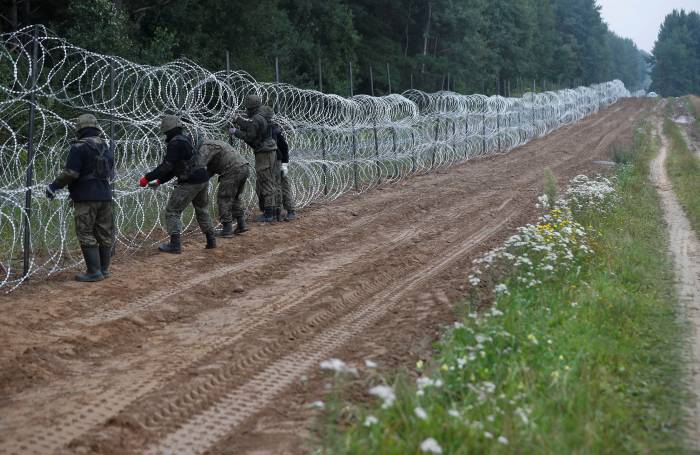
Russian forces have made a new advance in eastern Ukraine, capturing the village of Memryk, east of the city of Pokrovsk, according to a statement from the Russian Defence Ministry on Monday. This development marks another step in Russia’s slow but persistent push through the Donetsk region in the 2-1/2-year-old war against Ukraine.

The Ukrainian military’s General Staff did not mention Memryk in its official accounts. However, Ukrainian war blogs reported that the village had fallen into Russian hands last week. The conflicting reports highlight the fluid and often unclear nature of the front lines in this protracted conflict.

Ukrainian President Volodymyr Zelenskiy, in his nightly address, maintained that Kyiv’s forces were holding their ground in the Donetsk region. “It is equally important to destroy as many occupying forces as possible. The Pokrovsk sector, the Kurakhove sector, it is here that the Russian army must lose as much combat capability as possible,” Zelenskiy stated, emphasizing the strategic importance of these areas.

The Russian Defence Ministry, in one of its daily reports, not only noted the capture of Memryk but also claimed to have inflicted losses on Ukrainian troops in at least two other nearby villages. Additionally, Moscow reported repelling eight Ukrainian attacks in the Donetsk region.

This latest Russian advance follows the announcement on Sunday of the capture of another village, Novohrodivka. A Ukrainian officer acknowledged that Kyiv’s forces had abandoned Novohrodivka several days prior to the Russian announcement.

The ongoing Russian offensive in this sector appears to be part of a broader strategy to advance towards the town of Pokrovsk, a significant logistical hub for Ukrainian forces in the region. The capture of these villages, while seemingly minor gains, could potentially set the stage for a more significant push towards Pokrovsk.

As the conflict continues, the ability to independently verify claims from either side remains challenging. The situation on the ground is complex, with both sides often providing conflicting accounts of territorial control and military successes.

Germany Increases Controls at All Borders in Immigration Crackdown

0

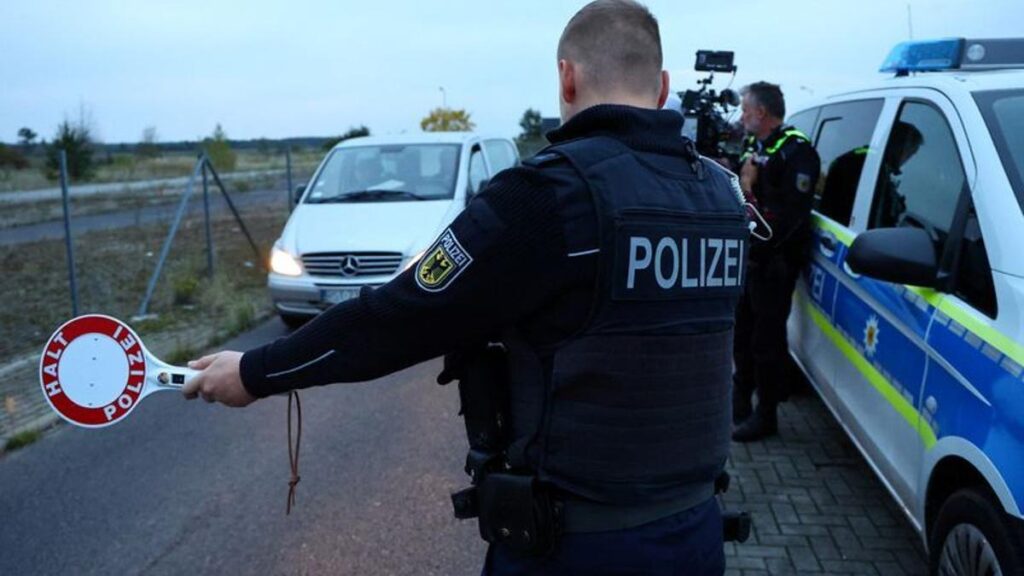
Germany announced on Monday plans to impose tighter controls at all of its land borders, marking a significant shift in its approach to immigration and security. Interior Minister Nancy Faeser said the measures, set to begin on September 16 and initially last for six months, aim to tackle irregular migration and protect the public from threats such as Islamist extremism.

The new controls will be implemented within the Schengen zone, an area typically known for free movement across European borders. This decision comes as part of a series of measures Germany has taken to toughen its stance on irregular migration following a surge in arrivals, particularly from the Middle East.

Chancellor Olaf Scholz’s government is attempting to regain political initiative from opposition far-right and conservative parties, which have seen increased support as they capitalize on voter concerns about stretched public services, integration, and security.

Faeser emphasized the government’s commitment to internal security and continued hard line against irregular migration. The European Commission and neighboring countries have been notified of the intended controls.

Recent events have heightened concerns over immigration in Germany. A deadly knife attack in Solingen that killed three people in August, for which the Islamic State group claimed responsibility, has stoked public anxiety. Additionally, the far-right Alternative for Germany (AfD) party recently won a state election in Thuringia, campaigning heavily on migration issues.

The government has also designed a scheme to reject more migrants directly at German borders, though details of this legally complex move have not been disclosed.

These measures come against the backdrop of Germany’s experience during the 2015/2016 migrant crisis when it took in over a million people, mostly from war-torn countries like Syria. The country also granted automatic asylum to around a million Ukrainians fleeing Russia’s 2022 invasion, further straining resources during an energy and economic crisis.

The new border controls could test European unity if they lead to German authorities requesting other countries to take back substantial numbers of asylum seekers and migrants. Austria’s Interior Minister Gerhard Karner has already stated that his country would not accept migrants turned away by Germany at the border.

While these measures may not immediately result in a significant increase in migrants being turned away, experts suggest they could act as a deterrent and potentially lead to more returns to other European countries in the future.

REUTERS

Forty-Seven Inmates Escape from Liberian Prison

0

Liberia’s justice ministry reported on Monday that 47 inmates have escaped from a maximum security prison in Margibi County, a rural area east of the capital Monrovia.

Initial investigations suggest the mass breakout occurred over the weekend due to a breach in the prison’s security system. The ministry expressed deep concern over the incident and assured the public that all necessary measures are being taken to recapture the escaped prisoners.

In response to the escape, additional officers have been deployed to assist in the search operation. The ministry has urged the public to remain calm and report any information that could lead to the recapture of the fugitives.

The justice ministry also issued a direct appeal to the escaped inmates, calling on them to turn themselves in at the nearest police station or to prison authorities. The statement emphasized that voluntary surrender could help the escapees avoid facing additional charges.

Sweden Announces $440 Million Support Package for Ukraine

0

Sweden’s Defence Minister Pal Jonson announced on Monday that the country will provide its 17th aid package to Ukraine, totaling 4.6 billion Swedish crowns ($443 million) in military support.

This latest package includes a variety of military equipment and resources, such as ammunition for infantry fighting vehicles previously donated by Sweden, additional combat boats, missiles, camouflage gear, and funding to support defense procurements for Ukraine.

Notably, about half of the package’s value is allocated to components needed for Sweden’s production of the latest model Gripen E fighters for its own air force. This strategic allocation allows Sweden to avoid cannibalizing its existing C/D models during the upgrade process, potentially enabling the transfer of older jets to Ukraine at a future date.

Jonson emphasized during a press conference, “We want to have the ability to donate Gripens to Ukraine at a possible later stage.” However, he clarified that no decision on such a transfer has been made yet.

The Swedish government statement further explained, “At present, it is not on the cards to transfer JAS Gripens to Ukraine as this would disturb the introduction of F-16s.” This suggests a consideration for the ongoing efforts to integrate F-16 fighters into Ukraine’s air force.

The aid package was developed in close collaboration with Kyiv, ensuring that the support aligns with Ukraine’s current needs and strategic objectives. This commitment from Sweden represents a significant contribution to Ukraine’s defense capabilities as the country continues to face Russian aggression.

Sweden’s continued support for Ukraine comes at a time when the Nordic country is awaiting final approval for its NATO membership, a process that has gained momentum following Russia’s invasion of Ukraine in 2022.

This substantial aid package underscores Sweden’s commitment to supporting Ukraine’s sovereignty and territorial integrity, while also preparing for potential future needs in the ongoing conflict.

Germany to Implement Temporary Controls on All Land Borders

0

German Interior Minister Nancy Faeser is set to announce temporary border controls on all of Germany’s land borders, according to a government source who spoke to Reuters. The measure aims to address irregular migration and protect the public from potential Islamist extremism.

Faeser is scheduled to hold a press conference at 1430 GMT to detail a package of security measures, which will include notifying the European Commission of the planned border controls.

This decision comes amid growing public concern over migration issues and follows a deadly knife attack by a Syrian asylum seeker in Solingen last month. The German government has been in consultation with the main opposition Christian Democratic Union (CDU) party to develop strategies for curbing migration.

The move also follows recent political developments, including the anti-immigration Alternative for Germany (AfD) party’s victory in state elections in Thuringia and its second-place finish in Saxony. Faeser’s Social Democratic Party (SPD) faces upcoming state elections in Brandenburg in two weeks, where it currently governs in coalition with the Greens and Christian Democrats.

Germany shares over 3,700 kilometers (2,300 miles) of land borders with nine countries: Denmark, the Netherlands, Belgium, Luxembourg, France, Switzerland, Austria, the Czech Republic, and Poland. Last year, Germany had already announced stricter controls on its borders with Poland, the Czech Republic, and Switzerland in response to a significant increase in first-time asylum requests.

This new measure represents a significant expansion of border control efforts and reflects the growing political pressure to address migration issues in Germany. It also highlights the ongoing challenges European countries face in balancing freedom of movement within the Schengen area with national security concerns and migration management.

As Germany implements these new controls, it will likely face scrutiny from both domestic and international observers regarding the impact on cross-border travel, trade, and the broader implications for European integration. Keywords: Germany, border controls, Nancy Faeser, migration.

REUTERS

International Hunt for Man Who Threw Hot Coffee on Baby in Brisbane, Australia

0

Australian authorities have launched an international manhunt for a suspect who allegedly poured boiling coffee on a nine-month-old baby in Brisbane last month, leaving the infant with severe burns to his face and limbs.

Queensland Police confirmed on Monday that the main suspect, a 33-year-old man, fled Australia six days after the August 31 incident. The suspect departed from Sydney airport just 12 hours before police were able to confirm his identity.

Detective Inspector Paul Dalton described the case as one of the “most complex and frustrating” he has ever led. An arrest warrant has been issued for the suspect on charges of acts intending to cause grievous bodily harm, which carries a potential life sentence.

The attack occurred during a family picnic at a suburban park in Brisbane. Witnesses reported that a “strange man” approached the family, emptied a flask of hot coffee on the child, and fled on foot. The baby received immediate first aid from an off-duty nurse who took him to her nearby apartment to run cold water over his burns.

The infant has already undergone multiple surgeries and faces a long recovery process, according to his parents. The motive for the attack remains unknown.

Police have not disclosed the suspect’s name or destination country to avoid compromising their investigation. They described him as an “itinerant” worker who had traveled to Australia repeatedly since 2019, with addresses in both New South Wales and Victoria.

Det Insp Dalton revealed that the suspect was aware of “police methodologies” and had been “conducting counter-surveillance activities” to evade capture.

The baby’s parents expressed mixed feelings about the suspect’s flight, telling the Australian Broadcasting Corporation they were “devastated” he had left the country but also relieved he was gone. They acknowledged the uncertainty of how long it might take to achieve justice for their son.

Despite the trauma, the father reported that the boy is in “good spirits” but may require further skin graft surgeries. A fundraising page for the family has raised over A$150,000 ($100,000; £76,000) to date.

This shocking incident has garnered national attention in Australia and highlights the challenges of international law enforcement cooperation in pursuing suspects across borders.

Steven Ling: Parole Board Recommends Release of Man Who Admitted to Rape and Murder

0

The Parole Board has recommended the release of Steven Ling, who was jailed for life in December 1998 for the brutal murder of Joanne Tulip, 29, in Stamfordham, Northumberland. Ling, who admitted to stabbing Tulip 60 times during a sexual attack on Christmas Day 1997, has been in prison for 27 years.

Ling, who was 23 at the time of the murder, received a life sentence with a minimum term of 20 years, later reduced to 18 years by the High Court. The original sentencing judge, Mr. Justice Potts, described the crime as motivated by “an aspiration of sadism” and stated Ling should never be released if he continued to pose a danger to women.

Although a charge of rape was left on file during the original court case, meaning Ling is not officially classified as a convicted sex offender, the Parole Board’s ruling noted: “Mr Ling has always accepted that he raped the victim.”

This recommendation for release comes after Ling’s fifth parole hearing. Two psychologists testified in favor of his release, citing Ling’s enduring “shame” about his “monstrous” past. Psychologist A stated that Ling’s risk was “not imminent” and “manageable in the community,” while Psychologist B believed Ling “meets the test for release and no longer needs to be detained for the protection of the public.”

The hearing revealed that past risk assessments had identified several factors contributing to Ling’s attack on Tulip, including preoccupation with sex, interest in indecent exposure, capacity to use force for sexual gratification, entitlement towards sex, and a negative attitude towards women. Issues with Ling’s self-worth and self-esteem were also noted.

The decision has been met with controversy. Doreen Soulsby, the victim’s mother, branded the parole exercise a “farce” after it was ruled that the killer’s evidence could be given in private.

This case highlights the ongoing debates surrounding the rehabilitation and release of violent offenders, the effectiveness of long-term incarceration, and the balance between public safety and the rights of prisoners who have served their minimum sentences.

As the process moves forward, it is likely to face scrutiny from victims’ rights advocates, law enforcement, and the wider public. The final decision on Ling’s release will consider various factors, including his behavior in prison, risk assessment reports, and potential plans for his reintegration into society.

Credit: news.sky.com

Airbus Beluga Lands at London’s Heathrow Airport for Special Delivery

0

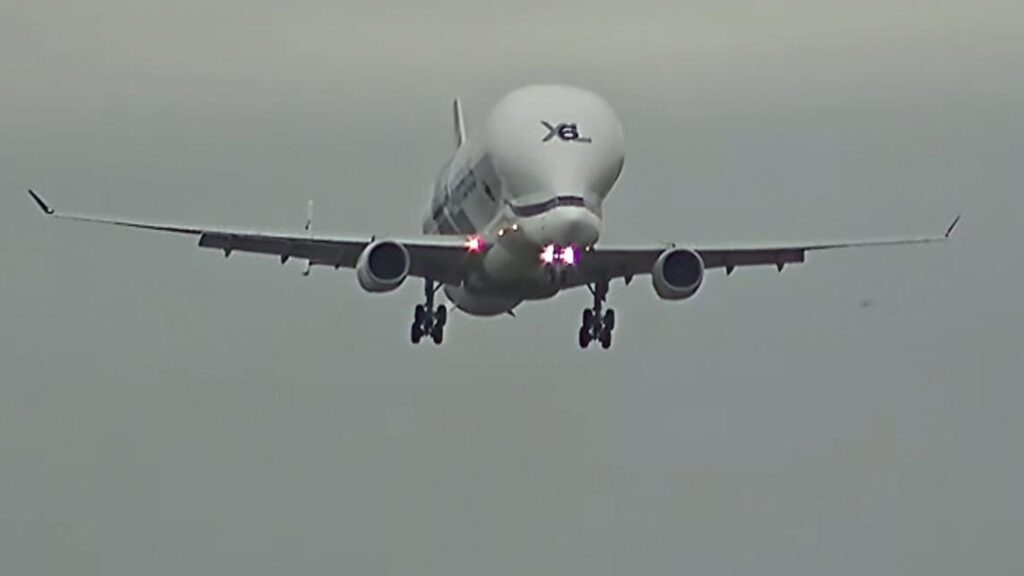
An Airbus Beluga, a uniquely shaped aircraft named for its resemblance to the beluga whale, landed at London’s Heathrow Airport on Monday to deliver crucial spare parts for a grounded British Airways plane.

The Beluga flew from Toulouse, France, carrying components for a British Airways Airbus A350 that has been out of service since April. The A350 was damaged in a ground collision with a Virgin Atlantic 787 that was being towed at Heathrow’s Terminal 3.

The incident, which occurred on April 25, saw the empty Virgin Atlantic aircraft clip the wingtip of the stationary British Airways plane during towing operations. Footage from the scene showed minor damage to both aircraft and the presence of emergency services and ground crew on the runway. No passengers were on board either plane at the time, and no injuries were reported.

While the Virgin Atlantic 787 has since returned to service, the British Airways A350 sustained more serious damage, necessitating the special parts delivery via the Beluga.

The Airbus Beluga is a massive cargo aircraft specifically designed to transport large aircraft parts or oversized cargo. Its distinctive shape allows it to carry entire sections of planes in its voluminous hold. Airbus currently operates a fleet of six Beluga aircraft for such specialized transport needs.

According to flight tracking website Flightradar24, the Beluga is scheduled to return to Toulouse later today after completing its mission at Heathrow.

This unusual sighting at one of the world’s busiest airports highlights the complex logistics involved in aircraft maintenance and repair, especially following incidents that can ground multimillion-dollar planes for extended periods.

The arrival of the Beluga at Heathrow also serves as a reminder of the intricate supply chains and specialized equipment required to keep the global aviation industry running smoothly, even in the face of unexpected challenges.

Source: news.sky.com

RSF Paramilitaries Kill 31 in Sudanese City of Sennar, Activists Say

0

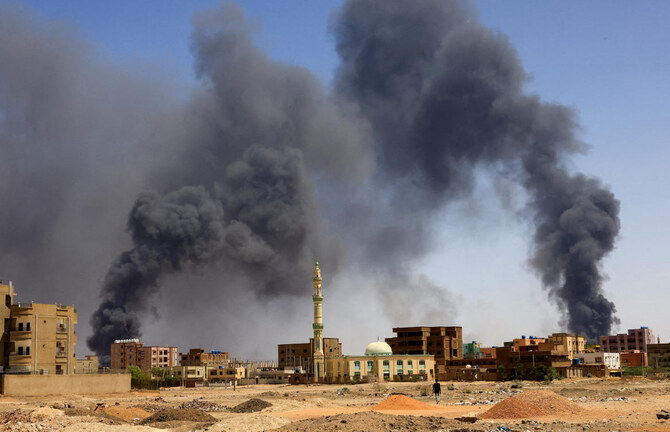
At least 31 people have been killed and 100 wounded in the southeastern Sudanese city of Sennar since Sunday, following a renewed assault by the paramilitary Rapid Support Forces (RSF), according to reports from Emergency Lawyers, a legal activist group monitoring civilian casualties and humanitarian violations.

The group stated that several parts of Sennar, including the main market, have been targeted by RSF artillery fire. This latest offensive comes as the RSF, which already controls most of Sennar and approximately half of Sudan, faces slowed progress in the southeast due to heavy rains hampering movement.

The ongoing conflict between the RSF and Sudan’s army has plunged the country into a humanitarian crisis, creating what is now considered the world’s largest hunger and internal displacement emergency. Tens of thousands of civilians have been killed, and much of Sudan’s infrastructure and economy lies in ruins.

Emergency Lawyers also reported that the Sudanese army had killed at least four people in al-Souki, a town near Sennar, during airstrikes. Additionally, RSF artillery strikes in el-Obeid, another contested town, resulted in one death and 17 injuries.

This escalation of violence comes in the wake of a UN-mandated mission’s report released on Friday, which stated that both sides in Sudan’s 18-month-old civil war have committed abuses that may amount to war crimes. The mission called for the deployment of peacekeepers and the implementation of a country-wide arms embargo.

However, Sudan’s army-aligned foreign ministry rejected these recommendations on Saturday, dismissing the idea of international peacekeepers as “the wish of Sudan’s enemies and it will not be fulfilled.”

As the conflict continues to ravage Sudan, the international community faces mounting pressure to intervene and address the escalating humanitarian crisis. The situation in Sennar underscores the urgent need for a resolution to the conflict and highlights the devastating impact of prolonged warfare on civilian populations.

Leader of Nigeria’s Labour Federation Arrested, Union Says

0

The president of Nigeria’s largest labour federation, Joe Ajero, was arrested on Monday by the country’s state security service, according to the Nigeria Labour Congress (NLC). The charges against Ajero have not been disclosed.

The arrest occurred at the Abuja airport as Ajero was attempting to board a flight to Britain for union business, the NLC reported on social media platform X. The Department of State Security (DSS), responsible for the arrest, has not immediately commented on the situation.

This development comes just days after Ajero publicly criticized the government’s decision to raise gasoline prices by 39%. He had threatened to call for a strike if the price hike was not reversed. The increase in fuel prices was a key factor in cost of living protests that took place in early August.

The timing of Ajero’s arrest has raised concerns about potential government retaliation against labour leaders who oppose its economic policies. Nigeria has been grappling with significant economic challenges, including high inflation and widespread hardship among its population.

Analysts suggest that the latest increase in gasoline prices could further exacerbate inflation, which is already in double digits. Gasoline is widely used by small businesses and households to power generators due to unreliable electricity supply, making its price a sensitive economic and political issue.

The arrest of a prominent labour leader like Ajero could potentially escalate tensions between the government and workers’ unions. It may also impact ongoing discussions about economic reforms and labour rights in Africa’s most populous nation.

As news of the arrest spreads, labour unions and civil society organizations are likely to demand Ajero’s immediate release and clarification on the charges against him. The incident could also draw international attention to Nigeria’s treatment of union leaders and its approach to managing economic dissent.

The NLC, under Ajero’s leadership, has been a vocal critic of government policies that it perceives as detrimental to workers and the general population. This arrest may signal a potential shift in the government’s tolerance for such criticism.