Home Blog Page 742

Israeli Military Rescues Hostage from Gaza Tunnel in Complex Operation

The Israeli military announced Tuesday that it has successfully rescued one of the hostages abducted during Hamas’ October 7 attack, which sparked the ongoing war in Gaza. This rare moment of joy comes amid months of grueling conflict and provides a glimmer of hope for the families of those still in captivity.

Qaid Farhan Alkadi, 52, was freed in what the military described as “a complex operation in the southern Gaza Strip.” The rescue took place in a tunnel, though specific details about the operation, including potential casualties or resistance encountered, were not immediately disclosed.

Alkadi, a member of Israel’s Arab Bedouin minority, was one of eight Bedouins kidnapped on October 7. He had been working as a security guard at a packing factory in Kibbutz Magen, one of several farming communities targeted in the initial Hamas attack. Alkadi is married to two wives and is the father of 11 children.

Israeli media captured the emotional moment as Alkadi’s family members sprinted through the hospital where he was brought for medical evaluation. His brother, Hatem, told reporters they witnessed Alkadi disembark from a helicopter and walk to the ambulance that transported him to the hospital.

“We’re so excited to hug him and see him and tell him that we’re all here with him,” a family member identified as Faez told Israel’s Channel 12. “I hope that every hostage will come home so the families can experience this happiness.”

Defense Minister Yoav Gallant praised the rescue operation as part of the army’s “daring and courageous activities conducted deep inside the Gaza Strip,” reaffirming Israel’s commitment to exploring every opportunity to bring the hostages home.

The October 7 attack by Hamas-led militants resulted in the abduction of approximately 250 people and the deaths of some 1,200 Israelis, mostly civilians. Israel’s retaliatory offensive in Gaza has led to over 40,000 Palestinian casualties, according to local health officials, though this figure does not distinguish between civilians and combatants. The conflict has also displaced 90% of Gaza’s 2.3 million residents and caused extensive destruction across the territory.

Currently, Israel believes 108 hostages remain inside Gaza, with more than 40 presumed dead. The majority of the others were released during a weeklong ceasefire in November, exchanged for Palestinians imprisoned by Israel. Including this latest rescue, Israel has now freed a total of eight hostages through military operations.

The United States, Egypt, and Qatar continue their efforts to broker an agreement for the release of the remaining hostages in exchange for a lasting ceasefire. Negotiations are ongoing in Egypt, but there have been no signs of a breakthrough.

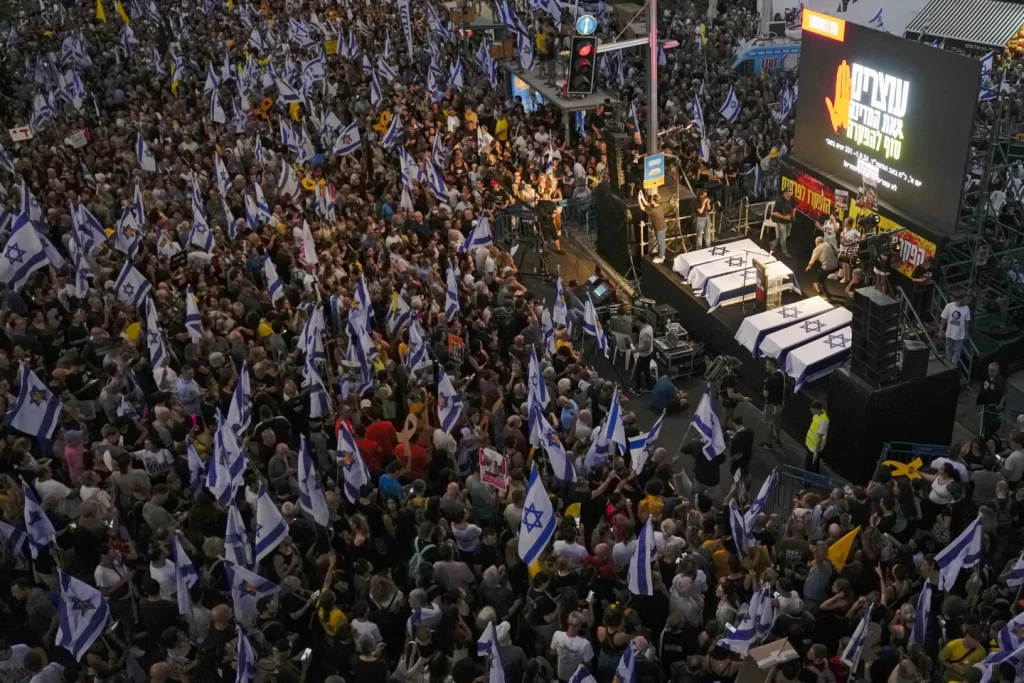
Israeli Prime Minister Benjamin Netanyahu faces mounting criticism from hostage families and the broader public for failing to secure a deal with Hamas for their return. Hamas seeks to exchange the hostages for a permanent ceasefire, the withdrawal of Israeli troops from Gaza, and the release of numerous Palestinian prisoners, including high-profile militants.

Last week, after recovering the bodies of six hostages in southern Gaza, Israeli military spokesperson Rear Adm. Daniel Hagari acknowledged the challenges of rescue operations, stating, “We cannot bring everyone back through rescue operations alone.”

Source: apnews.com

Iran’s Supreme Leader Signals Openness to Nuclear Talks with U.S.

In a significant shift in rhetoric, Iran’s Supreme Leader Ayatollah Ali Khamenei on Tuesday signaled a willingness to engage in renewed negotiations with the United States regarding Iran’s advancing nuclear program. Addressing the country’s civilian government, Khamenei stated there was “no barrier” to engaging with the “enemy,” while simultaneously cautioning against placing trust in Washington.

Speaking in a video broadcast by state television, Khamenei, who holds final say on all state matters, remarked, “We do not have to pin our hope to the enemy. For our plans, we should not wait for approval by the enemies. It is not contradictory to engage the same enemy in some places, there’s no barrier.”

The Supreme Leader’s comments come at a crucial juncture, with reformist President Masoud Pezeshkian’s government seeking to navigate complex diplomatic waters. Khamenei’s statements echo sentiments expressed around the time of Iran’s 2015 nuclear deal with world powers, which saw Tehran’s nuclear program significantly curtailed in exchange for sanctions relief.

However, the geopolitical landscape has shifted dramatically since then. The United States, under former President Donald Trump, unilaterally withdrew from the deal in 2018. Subsequently, Iran has abandoned all limits imposed by the agreement, now enriching uranium to up to 60% purity — dangerously close to weapons-grade levels of 90%.

The International Atomic Energy Agency (IAEA) has faced significant challenges in monitoring Iran’s nuclear activities. Surveillance cameras have been disrupted, and some of the agency’s most experienced inspectors have been barred from sites. Iranian officials have also increasingly hinted at the possibility of pursuing atomic weapons.

Tensions in the broader Middle East further complicate the situation. The ongoing Israel-Hamas war in Gaza and Iran’s recent unprecedented drone-and-missile attack on Israel in April have heightened regional instability. The assassination of Hamas leader Ismail Haniyeh in Tehran has added another layer of complexity to the already volatile situation.

President Pezeshkian, who came to power following a helicopter crash that claimed the life of hard-line President Ebrahim Raisi, campaigned partly on a promise to reengage the West through negotiations. Khamenei’s remarks could provide the political cover needed for such initiatives. Notably, Pezeshkian’s new foreign minister, Abbas Araghchi, played a key role in negotiating the 2015 nuclear deal.

The U.S. State Department, responding to Khamenei’s comments, told The Associated Press, “We will judge Iran’s leadership by their actions, not their words.” The department emphasized that while diplomacy is viewed as the best path forward, Iran’s recent nuclear escalations and lack of cooperation with the IAEA have created significant obstacles.

As Iran contemplates reengagement, the upcoming U.S. presidential election in November adds another layer of uncertainty. The potential return of Donald Trump to the presidency is a concern for Tehran, while a possible Kamala Harris administration’s stance on Iran remains unclear.

The meeting between Khamenei and Pezeshkian’s Cabinet also saw the appearance of former Foreign Minister Mohammad Javad Zarif, a key architect of the 2015 deal. Zarif announced he would continue to serve as a vice president in Pezeshkian’s administration, suggesting a potential return to a more diplomatic approach in Iran’s foreign policy.

Malaysian Naval Attack Ship Sinks After Collision with Unknown Underwater Object-AP

Malaysian authorities launched salvage operations Monday for a 45-year-old fast attack naval ship that sank after colliding with an unidentified underwater object off the southern coast of Johor state. The incident has raised concerns about the aging Malaysian naval fleet and prompted a review of older vessels.

The Malaysian Navy reported that the KD Pendekar, a 260-ton vessel commissioned in 1979, began taking on water through a leak in its engine room on Sunday. Despite the crew’s efforts to repair the damage, the ship sank hours later. All 39 crew members were safely evacuated without injuries.

“The leak is believed to be caused by the ship hitting an underwater object,” the navy stated, adding that an investigation into the cause of the incident has been initiated. Salvage operations are currently underway to recover the sunken vessel.

In response to the incident, Defense Minister Mohamed Khaled Nordin ordered an immediate inspection of all navy vessels over 40 years old, which constitute at least one-third of Malaysia’s naval fleet. The KD Pendekar, built by Karlskrona Varvet Shipyard in Sweden, was among the older ships in active service.

“We do not deny that (some of) our ships are old but that is not likely to be one of the causes … and the important thing is that thankfully no lives were lost,” Khaled told the Malay-language Harian Metro newspaper. He emphasized that the age of the vessel may not have been the primary factor in the incident.

The sinking has highlighted ongoing efforts to modernize Malaysia’s naval capabilities. Khaled revealed that a fleet modernization program is currently in progress, which includes the construction of new littoral combat ships. The first of these vessels is scheduled to be commissioned in 2026.

Additionally, the defense ministry is in negotiations to purchase littoral mission ships from Turkey, further demonstrating Malaysia’s commitment to upgrading its naval forces.

The incident has sparked discussions about maritime safety and the challenges faced by navies operating aging fleets. It also underscores the importance of regular maintenance and timely replacement of older vessels to ensure operational readiness and crew safety.

As investigations continue, the Malaysian Navy will likely face scrutiny over its maintenance practices and the overall condition of its fleet. The outcome of this incident may influence future decisions regarding naval procurement and the acceleration of fleet modernization efforts.

The sinking of the KD Pendekar serves as a reminder of the risks associated with naval operations and the critical need for constant vigilance and modernization in maritime defense capabilities. As Malaysia works to salvage the sunken vessel and determine the exact cause of the accident, the incident is likely to have lasting implications for the country’s naval strategy and fleet management practices.

Former Malaysian PM Muhyiddin Charged with Sedition Over Remarks About Ex-King

Former Malaysian Prime Minister Muhyiddin Yassin was charged with sedition on Tuesday for allegedly making remarks that questioned the integrity of the country’s previous king. The case has reignited debates about freedom of speech and the role of Malaysia’s unique rotating monarchy in the nation’s political landscape.

Malaysian opposition leader and former premier Muhyiddin Yassin shakes hand with his supporters as he arrives at the Gua Musang Sessions Court in Gua Musang, Malaysia August 27, 2024. REUTERS/Hasnoor Hussain

Muhyiddin, who served as Prime Minister from March 2020 to August 2021, pleaded not guilty in a court in the northeastern state of Kelantan. According to the charge sheet, the alleged seditious remarks were made during a by-election campaign in Kelantan on August 14.

The controversy stems from Muhyiddin’s public questioning of why then-King Sultan Abdullah Sultan Ahmad Shah did not invite him to become prime minister following a hung Parliament in November 2022. Muhyiddin claimed he had the backing of a majority of lawmakers at the time.

Malaysia’s system of constitutional monarchy, established upon independence from Britain in 1957, features a unique rotating kingship where nine ethnic Malay state rulers take turns as the country’s monarch for five-year terms. While largely ceremonial, the monarchy holds significant symbolic importance, particularly among the nation’s Muslim majority.

The remarks in question were directed at Sultan Abdullah from central Pahang state, whose reign ended on January 30 this year. While the former king has not commented on the case, his son issued a strong rebuke to Muhyiddin, characterizing the remarks as dangerous and potentially divisive.

Muhyiddin’s Islamic nationalist bloc had received stronger-than-expected support from ethnic Malays, who comprise about two-thirds of Malaysia’s 34 million population. However, Sultan Abdullah ultimately appointed Anwar Ibrahim as prime minister after Anwar successfully formed a unity government with support from rival parties.

The use of the colonial-era Sedition Act against Muhyiddin has drawn criticism from human rights advocates. Zaid Malek from Lawyers for Liberty, a human rights and law reform group, condemned the application of the law in this case, arguing that questioning or criticizing the constitutional powers of the king should not be considered seditious.

“The king is a constitutional monarch, and not a feudal ruler. His exercise of his power can thus be debated, questioned or criticized. This is the very bedrock of our system of constitutional monarchy,” Malek stated. He also noted that current Prime Minister Anwar Ibrahim had previously pledged to repeal the Sedition Act, which has long been criticized for suppressing dissenting voices.

If found guilty, Muhyiddin, 77, could face up to three years in prison, a fine, or both. This case adds to his legal troubles, as he is already battling corruption and money-laundering charges, which he claims are politically motivated.

Muhyiddin becomes the second former Malaysian leader to face criminal charges in recent years, following ex-Prime Minister Najib Razak, who is currently serving a 12-year prison term for corruption with several more trials pending.

Ukraine Claims Control of 100 Russian Settlements in Ongoing Kursk Incursion

Ukraine’s top military commander, General Oleksandr Syrskyi, announced on Tuesday that Ukrainian forces have taken control of 100 settlements in Russia’s Kursk region during a three-week incursion. The operation, which marks a significant escalation in the conflict, has reportedly diverted substantial Russian resources from other fronts.

Speaking via video link in a televised address, General Syrskyi provided a detailed update on the military situation, highlighting both successes and challenges faced by Ukrainian forces. He emphasized the strategic importance of the Kursk operation in disrupting Russian military plans.

“The Kursk operation diverted a significant number of its forces,” Syrskyi stated, noting that Russian troops had been redeployed from Ukraine’s south. “As of now, we can say that around 30,000 servicemen have been sent to the Kursk front and this figure is growing.”

In a surprising revelation, Syrskyi disclosed that Ukrainian forces had captured 594 Russian servicemen during the Kursk operation, the first time such a specific figure has been made public.

However, the general also warned of intensifying Russian efforts on the eastern Pokrovsk front, where Ukrainian forces face mounting pressure. “The situation on the Pokrovsk front is fairly difficult,” Syrskyi admitted. “The enemy is using its advantage in personnel, weapons and military equipment, it is actively using artillery and aviation.”

Pokrovsk, a coal mining city, holds strategic military value as a crucial transport hub. Syrskyi reported that Russian forces are attempting to disrupt Ukraine’s supply lines to the front near Pokrovsk, underlining the critical nature of the ongoing battles in the region.

Despite these challenges, Syrskyi asserted that Ukrainian forces continue to repel Russian counterattacks in the Kursk region, where Moscow’s troops have been trying to encircle the advancing Ukrainian units.

Elderly Woman’s Killer Released Twice to Fight in Ukraine, Sparking Outrage and Fear

In a shocking development that underscores the desperate measures taken by Russia to bolster its forces in Ukraine, Ivan Rossomakhin, a convicted murderer, has been released from prison for the second time to fight on the front lines. This decision has sparked outrage and fear, particularly among the family members of his most recent victim.

Her killer now fights in the war

Rossomakhin, 29, was initially serving a 14-year sentence for murder when he was first released in 2022 to join the Wagner mercenary group. Upon returning to his home district of Vyatskiye Polyany in Russia’s Kirov Region, he brutally attacked and killed 85-year-old Yulia Byuskikh in her own home.

Anna Pekareva, Byuskikh’s granddaughter, told the BBC, “Grandma’s killer has escaped punishment for his crime – again – and has gone to fight in the war.” The family’s horror was compounded when, just one week after beginning a new 23-year sentence for the rape and murder of Byuskikh, Rossomakhin was again released on August 19.

“My first reaction was terror. I read the forensic reports and I know what this person did to my grandmother. It’s monstrous that he has been released again,” Pekareva said, adding, “The fact that this is happening in the 21st Century… there are no words that can describe what’s happening!”

An official document signed by the prison governor, seen by the BBC, cites a specific Russian law allowing the military to recruit convicts for frontline duty. This practice, initially started by Yevgeny Prigozhin’s Wagner Group, has now been formalized and taken over by the Russian military following Prigozhin’s failed mutiny last year.

The release of dangerous criminals like Rossomakhin points to Russia’s urgent need for manpower in Ukraine. The UK Ministry of Defence estimates that during a two-month offensive in Ukraine’s Donbas region, Russia lost as many as 70,000 men – an average of 1,000 casualties per day.

This desperate recruitment drive has led to increased sign-up bonuses, with some men being offered up to 1.5 million roubles (£12,360) to volunteer. Under the current law, convicted criminals who enlist have their sentences suspended for the duration of their service, with the possibility of receiving an official pardon for acts of “bravery” on the battlefield.

The practice has raised serious concerns about public safety in Russia. “The authorities don’t give a damn about peaceful civilians if they allow people who have committed serious crimes to be exonerated and let out of prison. It tells us that no-one can feel safe in Russia,” Pekareva stated.

For Byuskikh’s family, Rossomakhin’s release presents an immediate threat. “If he comes back he’ll try and take revenge on us – for our efforts to ensure he got a life sentence,” Pekareva said, adding that she wants to leave the country while other family members plan to go into hiding.

The Russian Embassy in London has not responded to requests for comment on the practice of releasing dangerous criminals to fight in Ukraine. Meanwhile, Ukraine has also released some prisoners to fight, though those convicted of murder or sexual offenses are not eligible, according to Ukrainian Deputy Justice Minister Olena Vysotska.

As the conflict in Ukraine continues with no end in sight, the release of convicted criminals like Rossomakhin highlights the lengths to which Russia is willing to go to maintain its military offensive. The practice not only raises ethical questions but also poses significant risks to civilian populations both in Russia and potentially in Ukraine.

A bbc.com story

Another 17 Killed as Israel Intensifies Gaza Offensive with Displaced Palestinians Facing Dire Conditions

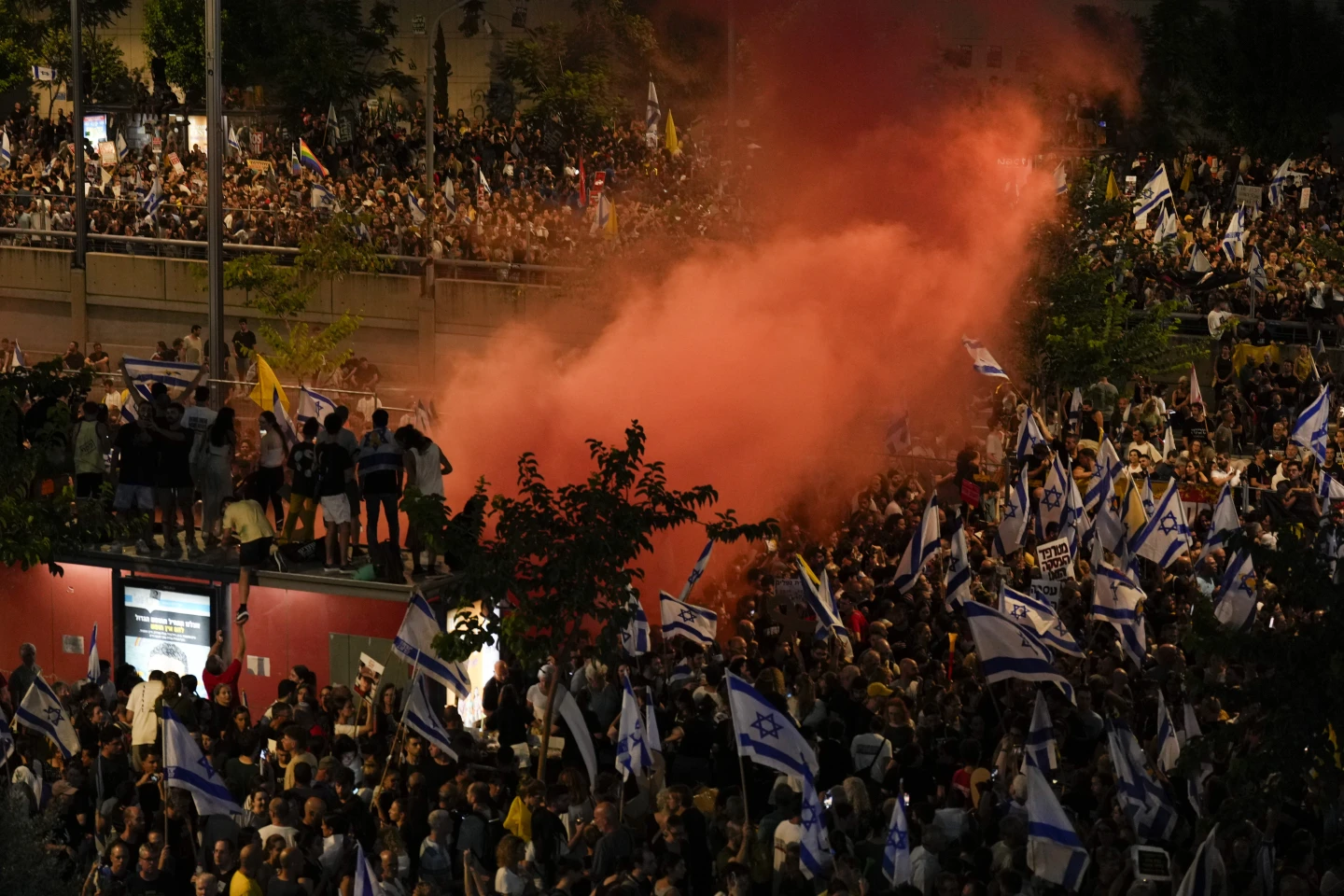
Israeli forces intensified their offensive against Hamas in the Gaza Strip on Tuesday, with Palestinian health officials reporting at least 17 fatalities in recent strikes. The ongoing conflict has forced thousands of displaced Palestinians to seek refuge along the seashore as habitable areas continue to shrink.

In Khan Younis and Deir Al-Balah, where much of Gaza’s population is now concentrated, residents and displaced families report being pushed to live in tents packed along the beach. Aya, a 30-year-old displaced woman from Gaza City, told Reuters via a chat app, “Maybe they should bring ships, so next time they order people to leave we can jump there, people are now on the beach near the seawater.”

The Israeli military has issued several evacuation orders across Gaza in recent days, the most since the war began 10 months ago. This has prompted outcry from Palestinians, the United Nations, and relief officials over the reduction of humanitarian zones and the absence of safe areas.

Palestinian health officials reported that Israeli strikes killed nine Palestinians in Bureij and Maghazi, two of Gaza’s eight historic refugee camps. Additional strikes resulted in five fatalities in Khan Younis and three in Rafah. The Gaza Health Ministry reports that more than 40,400 Palestinians have been killed since the conflict began, with most of the enclave’s 2.3 million residents displaced multiple times and facing acute shortages of food and medicine.

The conflict, triggered by Hamas’ October 7 attack on southern Israel that killed 1,200 and took over 250 hostages, has devastated Gaza’s infrastructure and civilian population. Humanitarian agencies report critical shortages of essential supplies and widespread destruction across the territory.

United Nations aid operations in Gaza came to a halt on Monday after Israel issued new evacuation orders for Deir Al-Balah, where the U.N. operations center was located. This disruption comes as the U.N. was preparing a campaign to vaccinate an estimated 640,000 children in Gaza against polio, following the identification of at least one case of the disease.

Ceasefire talks continue in Cairo, with negotiators working towards halting the fighting and securing the release of 109 Israeli and foreign hostages in exchange for Palestinian prisoners. However, progress has been slow, with Hamas and Israel trading blame for the lack of advancement.

Key sticking points in the negotiations include Israel’s insistence on maintaining control over the Philadelphi corridor on the border with Egypt, which it claims is a main route for weapons smuggling into Gaza. Israel also demands checks on people moving between southern and central Gaza into northern areas across the Netzarim corridor to prevent armed fighters from moving north.

As the conflict persists, the international community watches with growing concern. The United States, supporting the talks along with Egypt and Qatar, has expressed optimism, but concrete breakthroughs remain elusive.

The ongoing violence and displacement continue to exacerbate the humanitarian crisis in Gaza, with civilians bearing the brunt of the conflict. As safe areas diminish and essential services become increasingly scarce, the urgency for a diplomatic solution and immediate humanitarian relief grows ever more pressing.

Russia Intensifies Attacks on Ukraine for Second Consecutive Day, Killing at Least Four

Russia unleashed several waves of missile and drone attacks across numerous Ukrainian regions early Tuesday, killing at least four people, according to Ukraine’s military. The assault comes just a day after Moscow conducted its largest air offensive of the war, further escalating the conflict that has raged since February 2022.

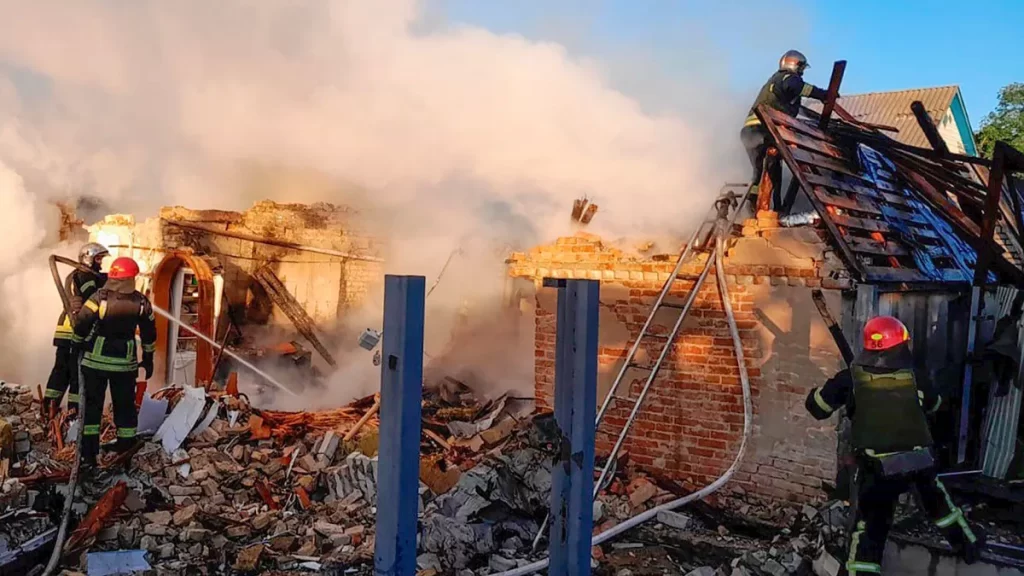
In the central Ukrainian city of Kryvyi Rih, a hotel was reportedly “wiped out” by Russian strikes, resulting in two fatalities, regional officials stated. Another two individuals lost their lives in drone attacks on Zaporizhzhia, a city east of Kryvyi Rih. The full extent of casualties and damage was still being assessed as the attacks continued.

Kyiv, the nation’s capital, once again found itself under fire. The region’s military administration reported that air defense systems were activated multiple times overnight to intercept missiles and drones targeting the city. Reuters witnesses in Kyiv reported at least three distinct rounds of explosions throughout the night, underlining the intensity of the assault.

This latest barrage follows Monday’s massive attack, during which Russia launched over 200 missiles and drones, killing at least seven people and significantly damaging energy infrastructure across Ukraine. U.S. President Joe Biden condemned Monday’s strikes as “outrageous,” highlighting the international concern over the escalating violence.

The Washington-based Institute for the Study of War suggested in a recent analysis that Moscow might struggle to sustain such large-scale attacks regularly, citing potential limitations in Russia’s defense-industrial capacity. However, the consecutive days of intense bombardment indicate Russia’s continued ability and willingness to launch significant offensives.

Several Russian military bloggers, including the pro-war collective known as Rybar, characterized the attacks as retaliation for Ukraine’s recent incursion into Russian territory – a bold move not seen since World War II. The Kremlin had previously promised a response to this Ukrainian action in the Kursk region, though Kyiv claims to have made further advances in the area.

As of early Tuesday, the full scope of the latest attacks remained unclear. Ukraine’s air force reported detecting the launch of multiple drone groups and the takeoff of Russian Tu-85 strategic bombers and MiG-31 supersonic interceptor aircraft from Russian airfields, signaling a coordinated and multi-faceted assault.

In Kryvyi Rih, Governor Serhiy Lisak of the Dnipropetrovsk region reported that two civilians might still be trapped under the rubble of the destroyed hotel, with five others injured. The attack also damaged six shops, four high-rise buildings, and eight vehicles, underscoring the indiscriminate nature of the strikes.

Zaporizhzhia Governor Ivan Fedorov confirmed two deaths and four injuries in his region, attributing the casualties to attacks by Iranian-made Shahed kamikaze drones, which Ukraine claims Russia frequently employs in its offensive operations.

As Ukraine grapples with this renewed onslaught, the international community watches closely. The continued targeting of civilian areas and critical infrastructure has raised further concerns about the war’s humanitarian impact and the potential for broader regional destabilization.

The Russian defense ministry maintains that its strikes on Monday hit “all designated targets” in Ukraine’s critical energy infrastructure, adhering to its narrative of targeting military-related facilities. However, the mounting civilian toll and widespread damage to non-military structures continue to challenge these claims.

As the conflict intensifies, Ukrainian officials reiterate their calls for increased international support, particularly in bolstering air defense capabilities to protect civilian populations and critical infrastructure from these persistent and devastating attacks.

90 Day Fiancé’s Michael Ilesanmi Breaks Silence on ‘Missing’ Incident, Citing Marital Struggles

Michael Ilesanmi, star of TLC’s “90 Day Fiancé: Happily Ever After?”, has finally broken his silence on the circumstances surrounding his disappearance earlier this year, shedding light on the deteriorating relationship with his estranged wife, Angela Deem.

In Sunday’s episode of the popular reality series, Ilesanmi, 37, revealed that he left Deem’s Georgia home just four days after the couple returned from filming the season 8 tell-all in New York City. The Nigeria native explained his decision to leave in a recorded video statement.

“After the Tell-All, you know, we went back home and as usual, my wife Angie, you know, she got angry. She started giving me attitude and saying all sorts of things to me. So it got to a point — I just had to leave,” Ilesanmi recounted. He described walking for over five hours before a friend helped him reach a bus station, embarking on an 18-hour journey to an undisclosed location.

Ilesanmi vehemently denied accusations that he used Deem to obtain a U.S. visa, stating, “I’m here for the right reason, of course, yes, from the bottom of my heart.” He expressed disappointment in the reality of their life together, adding, “Unfortunately, what I was expecting wasn’t what I met, you know.”

The couple’s relationship, which began on season 2 of “90 Day Fiancé: Before the 90 Days” in 2018, has been marked by long-distance struggles and visa complications. Ilesanmi finally moved to the United States in December 2023 after a seven-year visa process.

Deem, 58, reported Ilesanmi missing on February 26, sharing on TikTok that he had left with nothing but the clothes on his back. Authorities later located Ilesanmi, who claimed he left due to fear for his life.

The relationship appears to have reached its breaking point, with Deem filing for an annulment on June 20. Court documents obtained by InTouch reveal that Deem accused Ilesanmi of fraudulently entering the marriage “for the purpose of gaining legal permanent resident status in the United States.”

Ilesanmi has since denied these fraud allegations and launched a GoFundMe campaign for legal fees. In response to Deem’s annulment filing, he made counter-accusations of “cruel treatment” and “physical and mental abuse” during their marriage, both in private and during filming of the show.

As the legal battle unfolds, Ilesanmi is seeking a fair division of assets and both temporary and permanent spousal support. The case highlights the complex realities often hidden behind the scenes of reality television romances and international marriages.

TLC has not yet commented on the ongoing legal situation between the estranged couple. Fans of the “90 Day Fiancé” franchise continue to follow the dramatic developments, as the story serves as a stark reminder of the challenges faced by couples navigating cross-cultural relationships under the spotlight of reality TV.

Source: Toofab

Jennifer Lopez Wasn’t Happy Filling for Divorce from Ben Affleck; Sources Say She’s Now ‘Relieved’

While Jennifer Lopez has filed for divorce from Ben Affleck, marking the end of their high-profile reunion and two-year marriage, sources close to the situation report that despite Lopez “doing as well as she can,” the decision to end the marriage has been difficult for the 55-year-old actress and singer.

The divorce filing, submitted on August 20 – the two-year anniversary of their Georgia wedding celebration – came as a surprise to many fans who had celebrated the couple’s rekindled romance. According to a source speaking to PEOPLE magazine, Lopez “didn’t want a divorce” initially and had hoped to work through their issues.

“It’s been incredibly difficult for her that Ben chose to pull away from their marriage and move on with his life, leaving her behind,” the source revealed. “Jennifer is not the type to just give up. It’s been almost torture for her to wait around.”

Despite the emotional toll, the same source indicated that Lopez seems relieved after taking the step to file for divorce. “Her family and friends agree that it was the right decision,” the insider added. “She’s surrounded by a lot of love and support. She’ll be fine. She’s strong and always comes out on top.”

In an unusual move, Lopez filed the divorce papers without an attorney present, a decision that legal experts suggest may indicate her desire to expedite the process and move forward. Marilyn Chinitz, a matrimonial partner at Blank Rome LLP not connected to the case, commented on Lopez’s pro se filing, saying, “I think that she most likely just wanted to get this done, [that] there was a lot of hesitation and hemming and hawing back and forth, and it’s a statement: ‘I’m moving forward, I’m filing and I’m doing it on my own.'”

The couple’s relationship has been a subject of public fascination for over two decades. Lopez and Affleck first dated in the early 2000s, becoming engaged before postponing their September 2003 wedding and ultimately splitting in January 2004. Their reunion in April 2021 sparked a media frenzy, with fans and tabloids alike celebrating the return of “Bennifer.”

As news of the divorce filing spreads, supporters of both Lopez and Affleck, 52, have expressed their sympathies and well-wishes for the couple. The end of their marriage marks the conclusion of one of Hollywood’s most-watched relationships, leaving fans to speculate about what the future holds for both stars.

Although representatives for Lopez and Affleck have not yet commented publicly on the divorce filing, the story continues to develop, with many awaiting official statements from the couple regarding their separation.

People.com