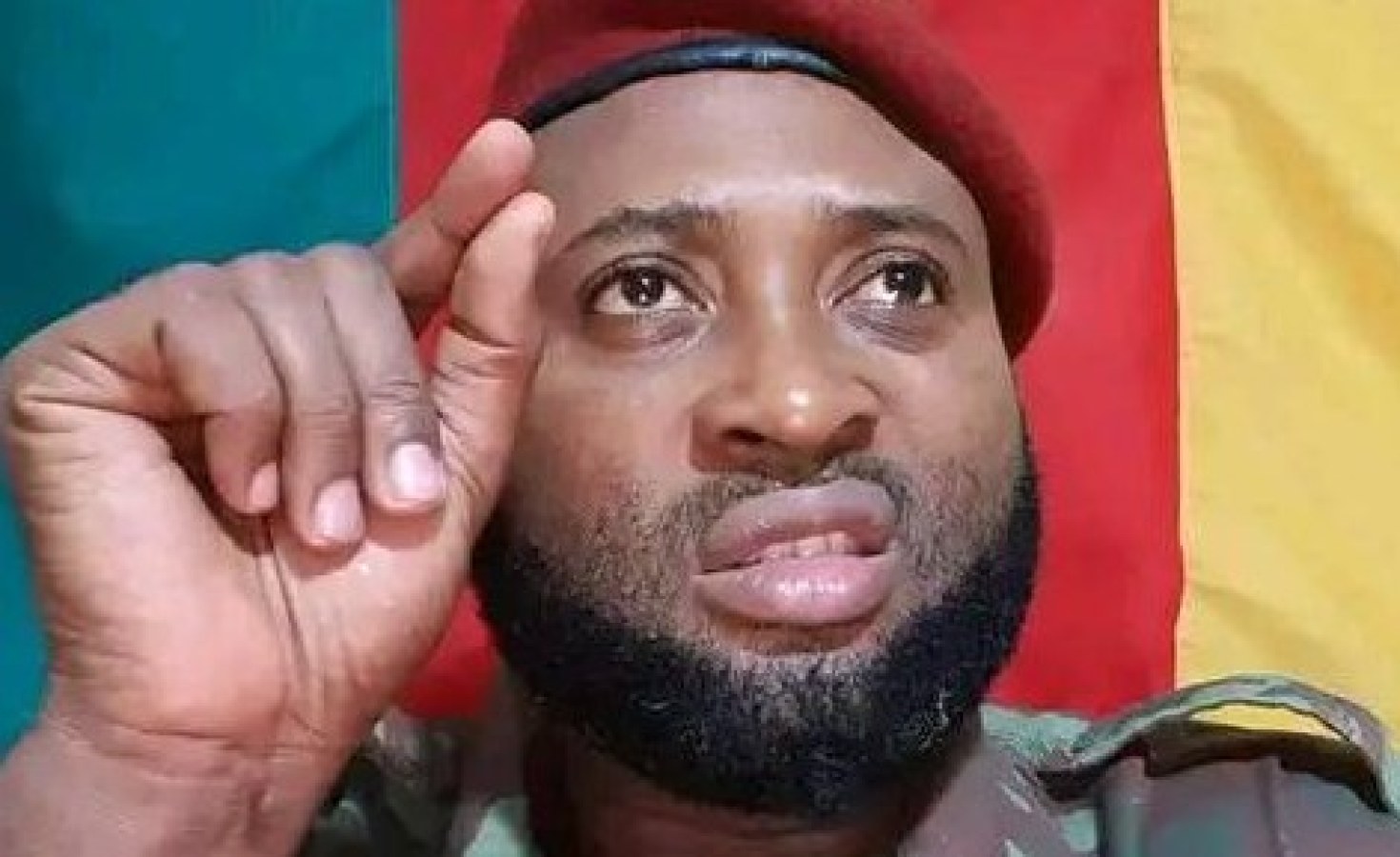
Human Rights Watch reported Tuesday that Cameroonian social media activist and government critic Steve Akam, who disappeared last month, has been found in a security cell at the military court in Yaoundé, Cameroon’s capital, showing signs of torture.
Akam’s lawyers, who gained access to him in custody, found him partially paralyzed with severe visual impairments, according to the international rights group. The lawyers believe Akam was extrajudicially returned to Cameroon from Gabon, where he had been living for the past decade.
Known on TikTok as Ramon Cotta with over 30,000 followers, Akam was last seen in a video circulated online, handcuffed and surrounded by Cameroonian police near the Gabon border. He has been an outspoken critic of President Paul Biya’s administration, recently accusing Biya of prolonging the conflict in Cameroon’s anglophone regions to maintain power.
Ilaria Allegrozzi, senior Sahel researcher at Human Rights Watch, expressed urgent concern for Akam’s well-being. “He may already have lost his sight and ability to walk properly as a result of torture, so prompt action is immediately needed,” Allegrozzi stated. She called on Cameroonian authorities to provide medical treatment and investigate the alleged torture.
The Cameroonian government has not yet responded to requests for comment on Akam’s situation.
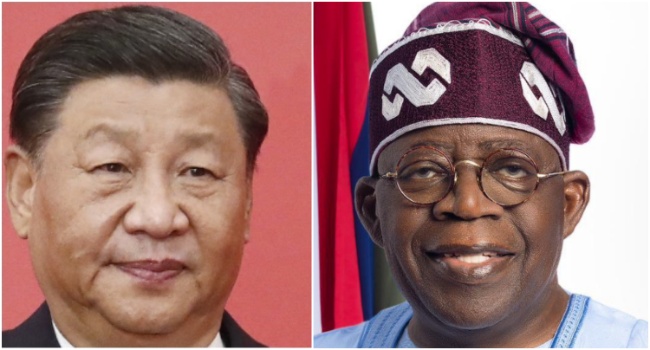
ABUJA, Nigeria – Nigerian President Bola Tinubu is set to meet with Chinese leader Xi Jinping next week in Beijing, as part of a strategic visit aimed at bolstering economic ties and technological cooperation between the two nations. The visit, announced by Nigerian government spokesperson Ajuri Ngelale on Tuesday, will coincide with the China-Africa Cooperation Summit, where Tinubu will join other African leaders.
“This is going to be part of a broader engagement where the two heads of state will discuss matters of mutual interest across not just the economy, but also on issues of national, regional, and international security,” Ngelale stated, underlining the comprehensive nature of the planned talks.
The visit comes at a crucial time for Nigeria, Africa’s largest economy, as Tinubu has recently initiated significant economic reforms. The Nigerian leader’s agenda in China reflects his administration’s focus on attracting investment and fostering partnerships in key sectors.
A highlight of Tinubu’s itinerary includes site visits to two major Chinese companies: telecommunications giant Huawei Technologies and the China Rail and Construction Corporation. The latter visit is particularly significant as Nigeria seeks to complete a high-speed rail line linking Ibadan in the southwest to the capital, Abuja, a project that could dramatically improve the country’s transportation infrastructure.
In addition to these corporate visits, Tinubu is scheduled to meet with CEOs from ten major Chinese companies. These firms represent a diverse range of industries including information and communications technology, oil and gas, aluminum production, seaport and harbor construction, financial services, and satellite technology development. These meetings underscore Nigeria’s ambition to attract foreign investment across multiple sectors of its economy.
Barcelona continue their pursuit of early La Liga frontrunners Real Betis on Tuesday night as they travel to face Rayo Vallecano at the Estadio de Vallecas. The Catalan giants, under new manager Hansi Flick, look to maintain their perfect start to the season after securing 2-1 victories in their opening two fixtures against Valencia and Athletic Club.
Kick-off is scheduled for 20:30 BST (15:30 ET / 12:30 PT) with Cesar Soto appointed as the referee and Jorge Vazquez overseeing VAR duties.
Barcelona’s visit to Madrid comes with added intrigue as summer signing Dani Olmo could finally make his competitive debut for the club. Reports suggest La Liga has accepted Olmo’s registration following the departures of players like Ilkay Gundogan and Clement Lenglet, which helped alleviate the club’s financial constraints.
Flick faces some selection challenges, with midfielders Frenkie de Jong and Gavi sidelined due to injuries. The defensive line is also depleted, as centre-back Ronald Araujo has been joined on the injury list by Andreas Christensen, who is expected to be out for a month with an Achilles problem.
The German coach is likely to field a 4-2-3-1 formation, with Marc-Andre ter Stegen in goal, protected by a back four of Jules Kounde, Pau Cubarsi, Inigo Martinez, and Alejandro Balde. The midfield could see Oriol Romeu partnered with Pedri, while the attack may feature Lamine Yamal, Dani Olmo, and Raphinha supporting Robert Lewandowski.
Rayo Vallecano, also unbeaten this season, have made headlines with the recent signing of 2014 World Cup star James Rodriguez on a free transfer. While Rodriguez may not feature in this match, Vallecano still possess attacking threats, particularly in the form of right-winger Isi Palazon.
The home side is expected to line up in a 4-2-3-1 formation, with Stole Dimitrievski in goal, and a defensive line of Ivan Balliu, Florian Lejeune, Abdul Mumin, and Alfonso Espino. The midfield could be anchored by Pathé Ciss and Oscar Valentin, with an attacking quartet of Palazon, Alvaro Garcia, Oscar Trejo, and Sergio Camello.
Recent history between these two sides has been competitive, with Rayo Vallecano securing two wins to Barcelona’s one in their last five encounters, alongside two draws. However, Barcelona won their most recent meeting 3-0 in May 2024.
Given Barcelona’s strong start under Flick and the potential boost from Olmo’s debut, the visitors are favored to secure a narrow victory. The prediction stands at Rayo Vallecano 1-2 Barcelona, which would maintain the Catalan club’s perfect start to the La Liga campaign and keep pressure on early leaders Real Betis.
As the match approaches, all eyes will be on Flick’s team selection and tactical approach, as well as the potential impact of new signings like Olmo in Barcelona’s quest to reclaim the La Liga title.
Three men have been arrested in connection with the stabbing of a 32-year-old woman at the Notting Hill Carnival, an incident that police believe resulted from the victim being caught in the crossfire of a fight between two groups of men. The woman remains in a life-threatening condition in hospital following the attack, which occurred shortly before 6 pm on Sunday.
The Metropolitan Police announced on Tuesday that a 20-year-old man was arrested on suspicion of attempted murder and violent disorder. Additionally, a 24-year-old man and a 22-year-old man were taken into custody on suspicion of violent disorder. All three arrests were made at separate addresses in Hammersmith and Fulham on Tuesday morning, with the suspects remaining in police custody.
Commander Charmain Brenyah of the Metropolitan Police described the arrests as a “significant step” in the ongoing investigation. “Our thoughts remain with the victim who was caught up in the most awful violence,” Brenyah stated, emphasizing the seriousness of the incident.
The police have revealed that initial inquiries suggest the woman was not the intended target but rather an unfortunate bystander caught between two warring groups. “While the investigation is ongoing, initial inquiries suggest the woman got caught up in the middle of an altercation between two groups of men,” a police statement read. “It’s not yet clear if they were known to her.”
This stabbing incident was not isolated, as police reported five additional stabbings on the closing day of the carnival on Monday. The event, which traditionally celebrates Caribbean culture in west London, saw a total of 230 arrests made on its final day, raising concerns about public safety at large-scale public events.
The Notting Hill Carnival, one of Europe’s largest street festivals, has faced scrutiny in recent years due to incidents of violence. This year’s events have reignited debates about the balance between cultural celebration and ensuring public safety during such large gatherings.
As the investigation continues, authorities are urging anyone with information about the incident to come forward. The police are particularly interested in any video footage or eyewitness accounts that could help piece together the events leading up to the stabbing.
The incident has cast a shadow over what is usually a vibrant celebration of Caribbean culture, music, and community in London. Local officials and community leaders are expected to meet in the coming days to discuss strategies for improving security and preventing such incidents at future events.
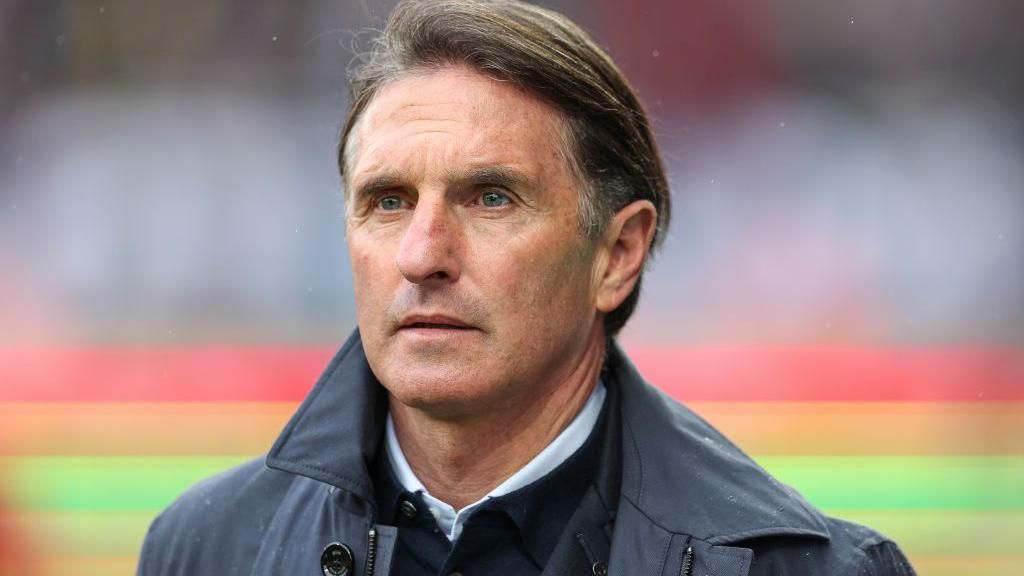
ABUJA, Nigeria – The Nigeria Football Federation (NFF) has appointed Bruno Labbadia, former VfB Stuttgart manager, as the new head coach of the men’s national team, the Super Eagles. The 58-year-old German takes the helm ahead of crucial 2025 Africa Cup of Nations (AFCON) qualifying matches, with his first game scheduled for September 7 against Benin in Uyo.
NFF general secretary Mohammed Sanusi announced the appointment, stating, “The NFF Executive Committee has approved the recommendation of its Technical and Development Sub-Committee to appoint Mr Bruno Labbadia as the head coach of the Super Eagles. The appointment is with immediate effect.”
The decision comes after negotiations with other high-profile candidates, including former Sweden coach Janne Andersson and two-time AFCON winner Herve Renard, fell through. BBC Sport Africa reports that while a contract with Labbadia has not yet been signed, the German emerged as the preferred choice among final contenders that included Gustavo Poyet, Aitor Karanka, and Fabio Cannavaro.
Labbadia, who holds a UEFA Pro License, brings extensive Bundesliga experience, having managed Hertha Berlin, VfL Wolfsburg, Hamburger SV, and Bayer Leverkusen. He becomes the sixth German to lead the Super Eagles, following a lineage that includes Karl-Heinz Marotzke, Gottlieb Goller, Manfred Honer, Berti Vogts, and most recently, Gernot Rohr.
The new coach faces significant challenges as he takes over a team struggling in their World Cup qualifying campaign. Nigeria currently sits near the bottom of Group C, with only Zimbabwe faring worse after four rounds of matches. The unexpected difficulty in what was perceived as a comfortable qualifying group has increased pressure on the team and federation.
Labbadia must also contend with infrastructural and administrative issues plaguing Nigerian football. The national team lacks a permanent home ground, with recent fixtures hosted in Uyo by default. The absence of a dedicated national training facility comparable to those of other football powers further complicates preparation efforts. Additionally, ongoing issues with player allowances and match bonuses persist within the current squad.
The German tactician will have little time to acclimate to his new role before facing critical qualifiers for both the 2025 AFCON and the 2026 World Cup. Despite the limited preparation time, expectations for immediate results remain high among Nigerian football fans and officials alike.
NFF president Ibrahim Gusau, who had been intensely negotiating with other candidates, now turns to Labbadia to revitalize the Super Eagles’ fortunes. The appointment represents a crucial decision for Nigerian football, as the team seeks to reclaim its position as a powerhouse in African football and secure qualification for major tournaments.
As Labbadia prepares to take charge, all eyes will be on the Super Eagles’ performances in the upcoming qualifiers. The new coach’s ability to quickly implement his tactics and motivate the squad will be crucial in determining Nigeria’s football future on the continental and global stages.
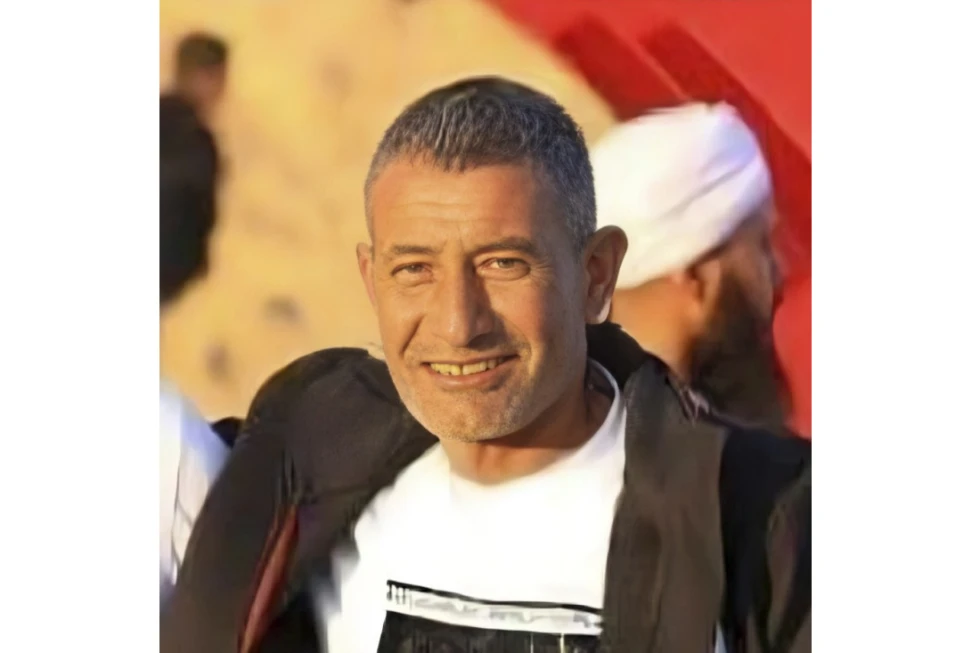
The Israeli military announced Tuesday that it has successfully rescued one of the hostages abducted during Hamas’ October 7 attack, which sparked the ongoing war in Gaza. This rare moment of joy comes amid months of grueling conflict and provides a glimmer of hope for the families of those still in captivity.
Qaid Farhan Alkadi, 52, was freed in what the military described as “a complex operation in the southern Gaza Strip.” The rescue took place in a tunnel, though specific details about the operation, including potential casualties or resistance encountered, were not immediately disclosed.
Alkadi, a member of Israel’s Arab Bedouin minority, was one of eight Bedouins kidnapped on October 7. He had been working as a security guard at a packing factory in Kibbutz Magen, one of several farming communities targeted in the initial Hamas attack. Alkadi is married to two wives and is the father of 11 children.
Israeli media captured the emotional moment as Alkadi’s family members sprinted through the hospital where he was brought for medical evaluation. His brother, Hatem, told reporters they witnessed Alkadi disembark from a helicopter and walk to the ambulance that transported him to the hospital.
“We’re so excited to hug him and see him and tell him that we’re all here with him,” a family member identified as Faez told Israel’s Channel 12. “I hope that every hostage will come home so the families can experience this happiness.”
Defense Minister Yoav Gallant praised the rescue operation as part of the army’s “daring and courageous activities conducted deep inside the Gaza Strip,” reaffirming Israel’s commitment to exploring every opportunity to bring the hostages home.
The October 7 attack by Hamas-led militants resulted in the abduction of approximately 250 people and the deaths of some 1,200 Israelis, mostly civilians. Israel’s retaliatory offensive in Gaza has led to over 40,000 Palestinian casualties, according to local health officials, though this figure does not distinguish between civilians and combatants. The conflict has also displaced 90% of Gaza’s 2.3 million residents and caused extensive destruction across the territory.
Currently, Israel believes 108 hostages remain inside Gaza, with more than 40 presumed dead. The majority of the others were released during a weeklong ceasefire in November, exchanged for Palestinians imprisoned by Israel. Including this latest rescue, Israel has now freed a total of eight hostages through military operations.
The United States, Egypt, and Qatar continue their efforts to broker an agreement for the release of the remaining hostages in exchange for a lasting ceasefire. Negotiations are ongoing in Egypt, but there have been no signs of a breakthrough.
Israeli Prime Minister Benjamin Netanyahu faces mounting criticism from hostage families and the broader public for failing to secure a deal with Hamas for their return. Hamas seeks to exchange the hostages for a permanent ceasefire, the withdrawal of Israeli troops from Gaza, and the release of numerous Palestinian prisoners, including high-profile militants.
Last week, after recovering the bodies of six hostages in southern Gaza, Israeli military spokesperson Rear Adm. Daniel Hagari acknowledged the challenges of rescue operations, stating, “We cannot bring everyone back through rescue operations alone.”
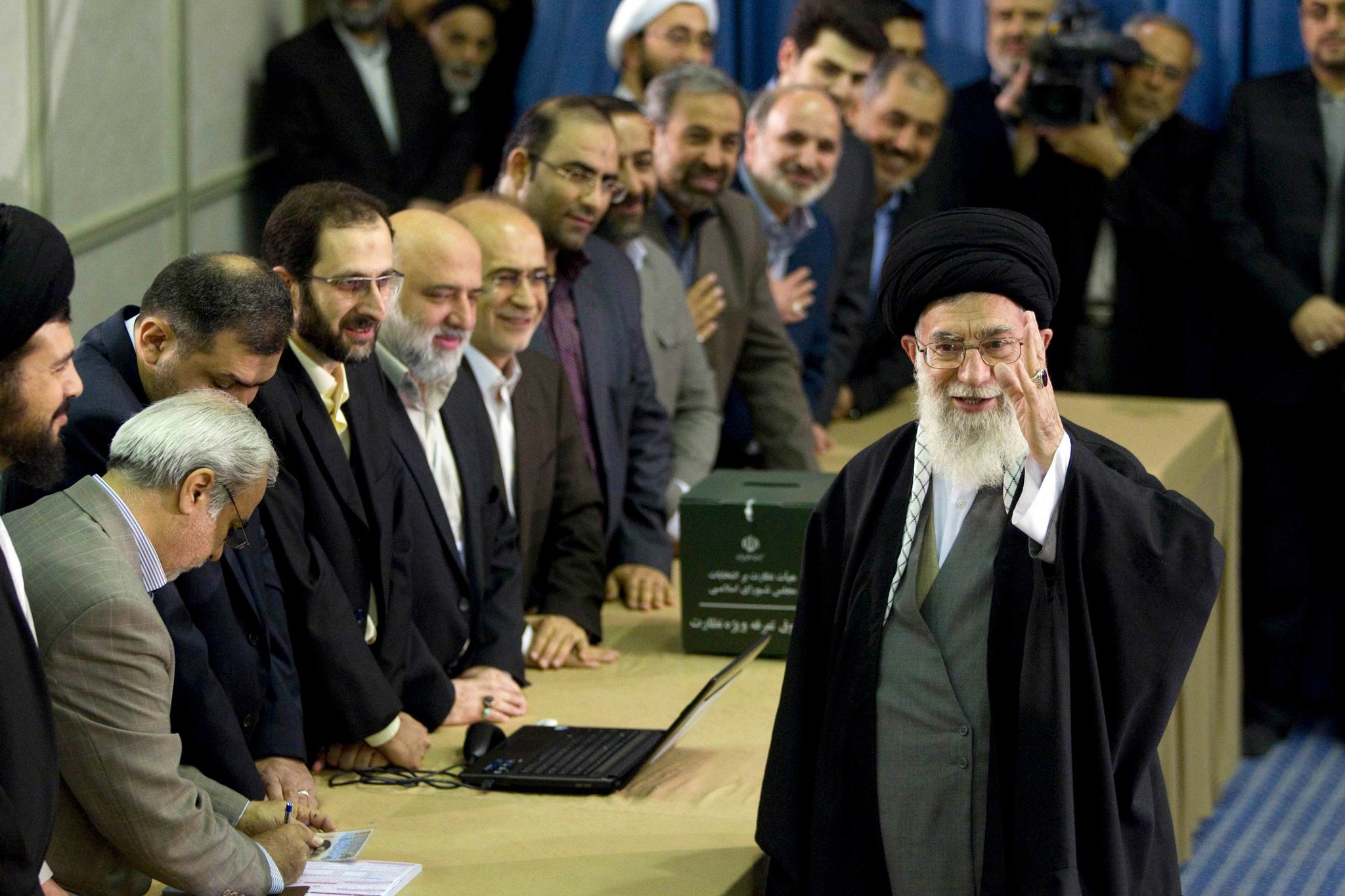
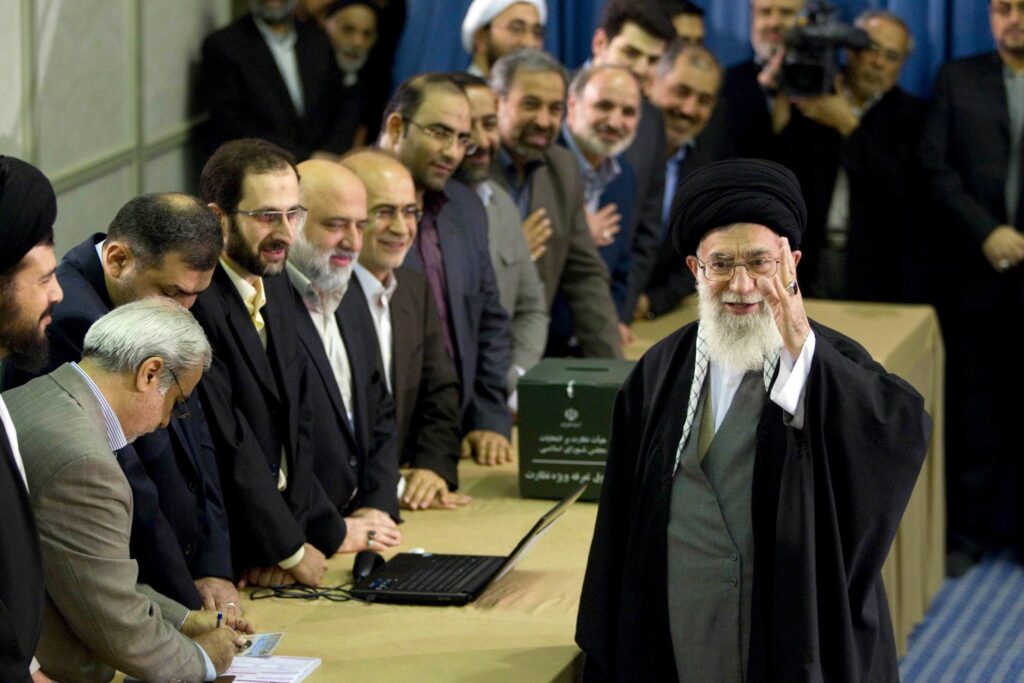
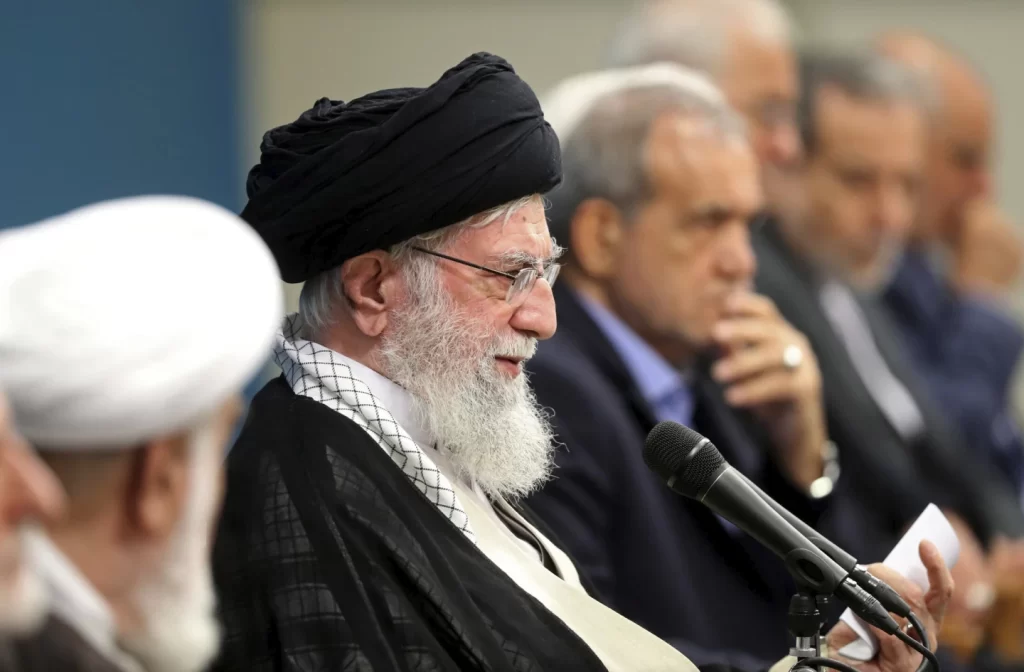
In a significant shift in rhetoric, Iran’s Supreme Leader Ayatollah Ali Khamenei on Tuesday signaled a willingness to engage in renewed negotiations with the United States regarding Iran’s advancing nuclear program. Addressing the country’s civilian government, Khamenei stated there was “no barrier” to engaging with the “enemy,” while simultaneously cautioning against placing trust in Washington.
Speaking in a video broadcast by state television, Khamenei, who holds final say on all state matters, remarked, “We do not have to pin our hope to the enemy. For our plans, we should not wait for approval by the enemies. It is not contradictory to engage the same enemy in some places, there’s no barrier.”
The Supreme Leader’s comments come at a crucial juncture, with reformist President Masoud Pezeshkian’s government seeking to navigate complex diplomatic waters. Khamenei’s statements echo sentiments expressed around the time of Iran’s 2015 nuclear deal with world powers, which saw Tehran’s nuclear program significantly curtailed in exchange for sanctions relief.
However, the geopolitical landscape has shifted dramatically since then. The United States, under former President Donald Trump, unilaterally withdrew from the deal in 2018. Subsequently, Iran has abandoned all limits imposed by the agreement, now enriching uranium to up to 60% purity — dangerously close to weapons-grade levels of 90%.
The International Atomic Energy Agency (IAEA) has faced significant challenges in monitoring Iran’s nuclear activities. Surveillance cameras have been disrupted, and some of the agency’s most experienced inspectors have been barred from sites. Iranian officials have also increasingly hinted at the possibility of pursuing atomic weapons.
Tensions in the broader Middle East further complicate the situation. The ongoing Israel-Hamas war in Gaza and Iran’s recent unprecedented drone-and-missile attack on Israel in April have heightened regional instability. The assassination of Hamas leader Ismail Haniyeh in Tehran has added another layer of complexity to the already volatile situation.
President Pezeshkian, who came to power following a helicopter crash that claimed the life of hard-line President Ebrahim Raisi, campaigned partly on a promise to reengage the West through negotiations. Khamenei’s remarks could provide the political cover needed for such initiatives. Notably, Pezeshkian’s new foreign minister, Abbas Araghchi, played a key role in negotiating the 2015 nuclear deal.
The U.S. State Department, responding to Khamenei’s comments, told The Associated Press, “We will judge Iran’s leadership by their actions, not their words.” The department emphasized that while diplomacy is viewed as the best path forward, Iran’s recent nuclear escalations and lack of cooperation with the IAEA have created significant obstacles.
As Iran contemplates reengagement, the upcoming U.S. presidential election in November adds another layer of uncertainty. The potential return of Donald Trump to the presidency is a concern for Tehran, while a possible Kamala Harris administration’s stance on Iran remains unclear.
The meeting between Khamenei and Pezeshkian’s Cabinet also saw the appearance of former Foreign Minister Mohammad Javad Zarif, a key architect of the 2015 deal. Zarif announced he would continue to serve as a vice president in Pezeshkian’s administration, suggesting a potential return to a more diplomatic approach in Iran’s foreign policy.
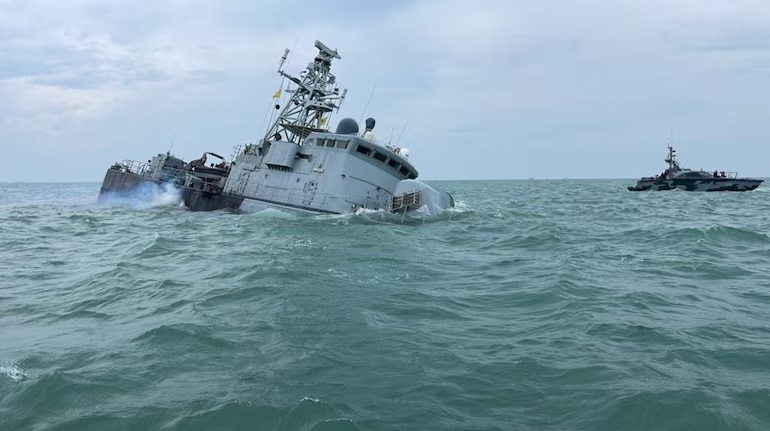
Malaysian authorities launched salvage operations Monday for a 45-year-old fast attack naval ship that sank after colliding with an unidentified underwater object off the southern coast of Johor state. The incident has raised concerns about the aging Malaysian naval fleet and prompted a review of older vessels.
The Malaysian Navy reported that the KD Pendekar, a 260-ton vessel commissioned in 1979, began taking on water through a leak in its engine room on Sunday. Despite the crew’s efforts to repair the damage, the ship sank hours later. All 39 crew members were safely evacuated without injuries.
“The leak is believed to be caused by the ship hitting an underwater object,” the navy stated, adding that an investigation into the cause of the incident has been initiated. Salvage operations are currently underway to recover the sunken vessel.
In response to the incident, Defense Minister Mohamed Khaled Nordin ordered an immediate inspection of all navy vessels over 40 years old, which constitute at least one-third of Malaysia’s naval fleet. The KD Pendekar, built by Karlskrona Varvet Shipyard in Sweden, was among the older ships in active service.
“We do not deny that (some of) our ships are old but that is not likely to be one of the causes … and the important thing is that thankfully no lives were lost,” Khaled told the Malay-language Harian Metro newspaper. He emphasized that the age of the vessel may not have been the primary factor in the incident.
The sinking has highlighted ongoing efforts to modernize Malaysia’s naval capabilities. Khaled revealed that a fleet modernization program is currently in progress, which includes the construction of new littoral combat ships. The first of these vessels is scheduled to be commissioned in 2026.
Additionally, the defense ministry is in negotiations to purchase littoral mission ships from Turkey, further demonstrating Malaysia’s commitment to upgrading its naval forces.
The incident has sparked discussions about maritime safety and the challenges faced by navies operating aging fleets. It also underscores the importance of regular maintenance and timely replacement of older vessels to ensure operational readiness and crew safety.
As investigations continue, the Malaysian Navy will likely face scrutiny over its maintenance practices and the overall condition of its fleet. The outcome of this incident may influence future decisions regarding naval procurement and the acceleration of fleet modernization efforts.
The sinking of the KD Pendekar serves as a reminder of the risks associated with naval operations and the critical need for constant vigilance and modernization in maritime defense capabilities. As Malaysia works to salvage the sunken vessel and determine the exact cause of the accident, the incident is likely to have lasting implications for the country’s naval strategy and fleet management practices.
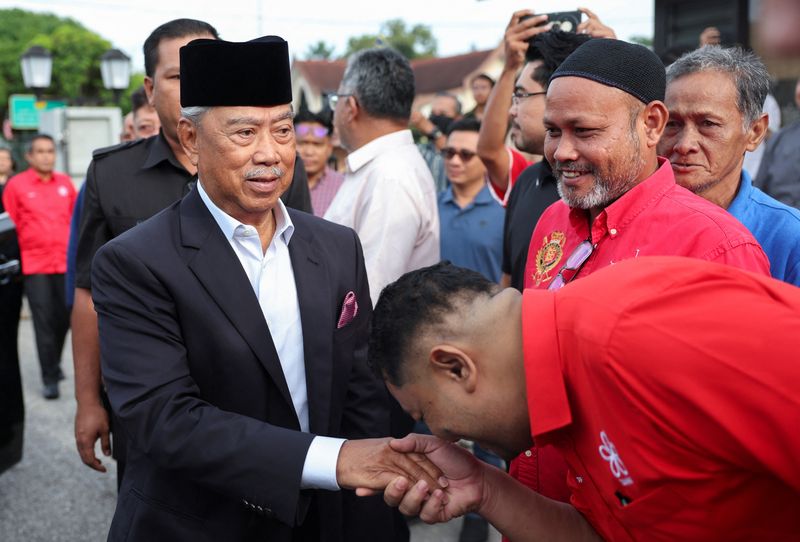
Malaysian opposition leader and former premier Muhyiddin Yassin shakes hand with his supporters as he arrives at the Gua Musang Sessions Court in Gua Musang, Malaysia August 27, 2024. REUTERS/Hasnoor Hussain
Former Malaysian Prime Minister Muhyiddin Yassin was charged with sedition on Tuesday for allegedly making remarks that questioned the integrity of the country’s previous king. The case has reignited debates about freedom of speech and the role of Malaysia’s unique rotating monarchy in the nation’s political landscape.
Malaysian opposition leader and former premier Muhyiddin Yassin shakes hand with his supporters as he arrives at the Gua Musang Sessions Court in Gua Musang, Malaysia August 27, 2024. REUTERS/Hasnoor Hussain
Muhyiddin, who served as Prime Minister from March 2020 to August 2021, pleaded not guilty in a court in the northeastern state of Kelantan. According to the charge sheet, the alleged seditious remarks were made during a by-election campaign in Kelantan on August 14.
The controversy stems from Muhyiddin’s public questioning of why then-King Sultan Abdullah Sultan Ahmad Shah did not invite him to become prime minister following a hung Parliament in November 2022. Muhyiddin claimed he had the backing of a majority of lawmakers at the time.
Malaysia’s system of constitutional monarchy, established upon independence from Britain in 1957, features a unique rotating kingship where nine ethnic Malay state rulers take turns as the country’s monarch for five-year terms. While largely ceremonial, the monarchy holds significant symbolic importance, particularly among the nation’s Muslim majority.
The remarks in question were directed at Sultan Abdullah from central Pahang state, whose reign ended on January 30 this year. While the former king has not commented on the case, his son issued a strong rebuke to Muhyiddin, characterizing the remarks as dangerous and potentially divisive.
Muhyiddin’s Islamic nationalist bloc had received stronger-than-expected support from ethnic Malays, who comprise about two-thirds of Malaysia’s 34 million population. However, Sultan Abdullah ultimately appointed Anwar Ibrahim as prime minister after Anwar successfully formed a unity government with support from rival parties.
The use of the colonial-era Sedition Act against Muhyiddin has drawn criticism from human rights advocates. Zaid Malek from Lawyers for Liberty, a human rights and law reform group, condemned the application of the law in this case, arguing that questioning or criticizing the constitutional powers of the king should not be considered seditious.
“The king is a constitutional monarch, and not a feudal ruler. His exercise of his power can thus be debated, questioned or criticized. This is the very bedrock of our system of constitutional monarchy,” Malek stated. He also noted that current Prime Minister Anwar Ibrahim had previously pledged to repeal the Sedition Act, which has long been criticized for suppressing dissenting voices.
If found guilty, Muhyiddin, 77, could face up to three years in prison, a fine, or both. This case adds to his legal troubles, as he is already battling corruption and money-laundering charges, which he claims are politically motivated.
Muhyiddin becomes the second former Malaysian leader to face criminal charges in recent years, following ex-Prime Minister Najib Razak, who is currently serving a 12-year prison term for corruption with several more trials pending.
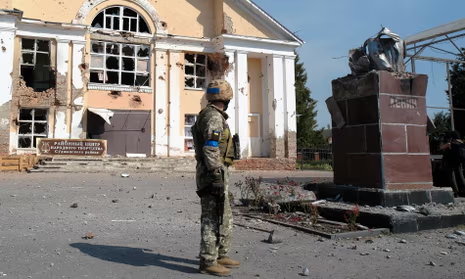
Ukraine’s top military commander, General Oleksandr Syrskyi, announced on Tuesday that Ukrainian forces have taken control of 100 settlements in Russia’s Kursk region during a three-week incursion. The operation, which marks a significant escalation in the conflict, has reportedly diverted substantial Russian resources from other fronts.
Speaking via video link in a televised address, General Syrskyi provided a detailed update on the military situation, highlighting both successes and challenges faced by Ukrainian forces. He emphasized the strategic importance of the Kursk operation in disrupting Russian military plans.
“The Kursk operation diverted a significant number of its forces,” Syrskyi stated, noting that Russian troops had been redeployed from Ukraine’s south. “As of now, we can say that around 30,000 servicemen have been sent to the Kursk front and this figure is growing.”
In a surprising revelation, Syrskyi disclosed that Ukrainian forces had captured 594 Russian servicemen during the Kursk operation, the first time such a specific figure has been made public.
However, the general also warned of intensifying Russian efforts on the eastern Pokrovsk front, where Ukrainian forces face mounting pressure. “The situation on the Pokrovsk front is fairly difficult,” Syrskyi admitted. “The enemy is using its advantage in personnel, weapons and military equipment, it is actively using artillery and aviation.”
Pokrovsk, a coal mining city, holds strategic military value as a crucial transport hub. Syrskyi reported that Russian forces are attempting to disrupt Ukraine’s supply lines to the front near Pokrovsk, underlining the critical nature of the ongoing battles in the region.
Despite these challenges, Syrskyi asserted that Ukrainian forces continue to repel Russian counterattacks in the Kursk region, where Moscow’s troops have been trying to encircle the advancing Ukrainian units.