Home Blog Page 762

Gabon Interim President Bans Foreign Holidays for Government Officials

LIBREVILLE, Gabon  — Gabon’s interim president, Gen. Oligui Nguema, who seized power in a coup last year, has prohibited members of his transitional government from taking holidays abroad and limited their leave to a maximum of one week, state television reported Monday.

Gabon’s interim president, Gen. Oligui Nguema

The new restrictions were announced following Gen. Nguema’s tour of the country to hear citizens’ concerns. This move comes as Gabon approaches the first anniversary of the coup that ousted former President Ali Bongo.

Gen. Nguema overthrew Bongo, his cousin, who had been in power since 2009. Bongo had succeeded his father, Omar Bongo Ondimba, who ruled Gabon for 41 years.

According to the announcement on state television, the goal of these restrictions is to “immerse” government officials “in the realities and expectations of their compatriots.”

A spokesman for the interim government explained that “this measure aims to encourage a return to the roots and increased proximity with local populations.” Exceptions to the rule will only be made in cases of “force majeure” or on health grounds.

The timing of this announcement, just days before the coup’s first anniversary, has led to speculation about Gen. Nguema’s political aspirations. Some observers suggest he may be positioning himself for a presidential run in the elections planned for 2025, though he has not publicly commented on this possibility.

Gabon’s interim president, Gen. Oligui Nguema and his officers in jubilation

Since taking power, Gen. Nguema has sought to portray his military government as acting in the best interests of the Gabonese people. This latest move appears to draw a contrast with the previous administration, as former President Bongo was known for frequent overseas travel and his family’s ownership of multiple properties in France and the UK.

However, Gen. Nguema himself has faced questions about his own foreign property holdings. When asked about reports of multiple properties he owns in the United States, he has previously stated that his private life should be respected.

It is understood that the new holiday restrictions will apply to Gen. Nguema as well, though he will likely be permitted to travel abroad for official purposes.

Despite the restrictions, Gabonese officials still have access to domestic tourist attractions, including white sand beaches and renowned gorilla safaris in Loango National Park.

As Gabon moves towards its planned 2025 elections, the first since the coup, these new measures are likely to be closely scrutinized as indicators of the interim government’s approach and priorities.

Nigerian Forces Search for 20 Abducted Medical Students

ABUJA, Nigeria  — Nigerian police have launched a search operation for 20 medical students and a doctor who were kidnapped by gunmen on Thursday in central Benue State, authorities said Monday.

The students from universities in Jos and Maiduguri, along with the accompanying doctor, were en route to a medical convention in eastern Enugu State when their motorcade was intercepted.

Anene Sewuese Catherine, the Benue State police public relations officer, told The Associated Press via phone that tactical teams have been deployed on a rescue mission. “The team has moved but we’ve not heard from them,” Catherine said. “Investigation of kidnap is classified, we don’t [share] details or until there’s success. There’s no update for now.”

The national police have ordered the deployment of helicopters, drones, and specialized tactical teams to aid in the search, underscoring the severity of the incident.

The Nigerian Medical Students Association reported that the kidnappers, using the students’ phones, have demanded approximately $31,400 for the release of the entire group.

Moses Onwubuya, the association’s national president, expressed growing frustration with the authorities’ response. “The only response we’ve been getting is that we should just calm down, that security agencies are in the matter,” Onwubuya said. He added that students are threatening to protest if their colleagues are not released soon.

This abduction has reignited concerns about Nigeria’s security crisis. The country has grappled for years with violence from armed gangs, locally referred to as “bandits.”

According to the Center for Democracy and Development — West Africa, Nigeria recorded more than 4,000 abductions in 2023, accounting for 58 percent of the total cases in West Africa and marking a five-year high.

Security analysts attribute the rise in kidnappings for ransom to Nigeria’s severe economic crisis, which they say is pushing more people toward crime.

The incident has sparked widespread condemnation and renewed calls for the government to address the country’s security challenges. Nigerian authorities have pledged to tackle both economic problems and security issues, but families of victims remain anxious for the safe return of their loved ones.

As the search continues, the case highlights the ongoing security challenges facing Africa’s most populous nation and the impact on its citizens, particularly students and healthcare workers.

AP

House Republicans Release Report Urging Biden’s Impeachment

WASHINGTON  — House Republicans released a 291-page report Monday accusing President Joe Biden of “impeachable conduct” and calling for his removal from office, just as the president prepares to deliver the keynote address at the Democratic National Convention.

The report, compiled by the Oversight and Accountability, Judiciary, and Ways and Means committees, largely reiterates accusations from previous reports and hearings. It alleges that Biden, both as president and vice president, committed abuses of power and obstructed congressional investigations.

Judiciary Committee Chairman Jim Jordan, R-Ohio, confirmed the timing of the report was deliberate. “As Democrats celebrate Joe Biden and crown Kamala Harris as his heir apparent this week, Americans should remember the reality of the Biden-Harris administration: crime, chaos, and corruption,” Jordan said in a statement.

The White House dismissed the report. Sharon Yang, spokesperson for oversight and investigations, told The Associated Press in an email, “After wasting nearly two years and millions of taxpayer dollars, House Republicans have finally given up on their wild goose chase.”

The Republican investigation has focused on the financial dealings of Biden’s son, Hunter Biden, and the president’s brother, James Biden. It alleges they profited from foreign business dealings while Joe Biden was vice president from 2009 to 2017.

The report cites instances where Joe Biden met or spoke with clients of his son and brother. Most interactions appear to have been brief encounters at dinners and events or phone calls where Hunter Biden put his father on speakerphone with clients present.

However, the committees provided no evidence that Joe Biden used or offered to use his authority to benefit his family members’ business associates.

The report also charges Biden with obstruction of justice, citing his resistance to certain investigative requests, including not ordering the Justice Department to release audio recordings of his interview with special counsel Robert Hur regarding classified documents found at Biden’s private residence.

Legal experts have expressed skepticism about the strength of the case. Michael Gerhardt, a constitutional law professor at the University of North Carolina at Chapel Hill, told the AP that the evidence doesn’t point to the kind of conduct that has triggered previous impeachments.

“We have not had many presidential impeachments, so we’re talking about an awfully small set, but typically, we’re looking for some kind of serious misconduct that hurts the republic or hurts the Constitution,” Gerhardt said. “And I don’t think we have either of those things here in this case.”

Frank O. Bowman III, professor emeritus of law at the University of Missouri, described the report as “performative foolishness that would be comical if it were not such a terrible misuse of a serious constitutional power.”

It remains unclear whether there is enough Republican support in the House to approve articles of impeachment. The GOP holds a slim majority and would need nearly unanimous support from its members to pass such articles.

House Speaker Mike Johnson, R-La., said in a statement, “We encourage all Americans to read this report.” However, he gave no indication of plans to bring an impeachment vote to the House floor.

As the impeachment debate unfolds, Biden is set to address the Democratic National Convention on Monday night, where Vice President Kamala Harris is expected to be nominated as his running mate for the 2024 presidential election.

Nigeria’s NNPC Reports 28% Increase in Annual Net Profit

ABUJA, Nigeria — Nigeria’s state oil firm, NNPC, reported on Monday a 28% increase in its annual net profit, reaching 3.297 trillion naira ($2.14 billion), and declared a dividend.

Chief Financial Officer Umar Ajiya stated, “Despite inherent challenges of our operational and economic environment, we have improved the productivity and the financial performance of this great company.”

The NNPC announced a dividend of 2.1 trillion naira. The company also indicated plans to announce its initial public offering once shareholders and the board give their approval.

In a move to boost production, NNPC set a target of 2 million barrels per day crude oil production by the end of the year. This goal follows reported improvements in efforts to combat crude oil theft and pipeline vandalism.

Earlier this month, Nigeria’s Navy Chief Emmanuel Ikechukwu Ogalla reported that the country’s oil output had increased to between 1.6 million and 1.7 million barrels per day. This rise comes after the government strengthened security measures to curb crude theft.

NNPC’s profitability trend began in 2020 when it posted its first-ever profit. The company had reported losses in 2018 and 2019 following its transition to a commercial entity. The Nigerian government has stated that this transition was intended to deliver profits and improve accountability.

The state oil firm’s financial performance reflects broader changes in Nigeria’s oil sector, which is crucial to the country’s economy as Africa’s largest oil producer. The increase in profit and production targets come at a time when global oil markets are experiencing significant volatility.

NNPC’s ability to maintain and increase production levels will be critical for Nigeria’s economy, which relies heavily on oil exports for foreign exchange and government revenue. The company’s performance also has implications for global oil supply, particularly as other major producers adjust their output.

As NNPC moves forward with its commercial operations and potential public offering, industry observers will be watching closely to see how the company balances its role as a state entity with its commercial objectives.

Ghana Begins Construction of $12 Billion Petroleum Hub

JOMORO, Ghana  — Ghanaian President Nana Akufo-Addo has initiated construction of a 300,000 barrel-per-day oil refinery, marking the start of a $12 billion petroleum hub project in the southwestern city of Jomoro. The government aims to establish Ghana as a key petroleum center for the West African region.

Ghana, which began oil production in 2010, currently outputs approximately 132,000 barrels per day of crude oil and 325 million standard cubic feet per day of natural gas.

“The project promises to be a cornerstone of our nation’s development,” Akufo-Addo said Monday at the groundbreaking ceremony, broadcast on state-owned Ghana Television (GTV).

The first phase of the project will be funded and constructed by a consortium including Touchstone Capital Group Holdings, UIC Energy Ghana, China Wuhan Engineering Co., and China Construction Third Engineering Bureau Co.

According to the African Refiners and Distributors Association, West Africa consumes about 800,000 barrels per day of petroleum products, with nearly 90% imported. The new hub aims to supply refined products and by-products to the region by 2036, as per an agreement signed in June 2018.

The project, however, faces criticism and opposition. Bright Simons, vice president at the Accra-based think tank IMANI Africa, expressed skepticism about the consortium’s investment readiness and the project’s business plan.

Some residents of the proposed 20,000-acre site have protested, demanding the project’s footprint be reduced to 5,000 acres. Oliver Barker-Vormawor, a senior partner at a law firm representing affected farmer cooperatives, stated that his clients would continue to oppose the current plans.

“The abrasive manner that the government is proceeding discounts valid concerns around the social and environmental impact of the project, the livelihoods at risk by the displacement of farmers and the unsettled questions of ownership and community land rights,” Barker-Vormawor said.

The government has dismissed these concerns, citing petitions from other residents supporting the project.

The petroleum hub, which will include petrochemical plants alongside the refinery, represents a significant expansion of Ghana’s energy infrastructure. As the world’s second-largest cocoa producer, Ghana is seeking to diversify its economy and strengthen its position in the regional energy market.

The project’s progress and its impact on local communities and the regional energy landscape will likely be closely monitored as construction proceeds.

Morocco Pardons Thousands of Cannabis Farming Convicts

Morocco’s King Mohammed VI has issued pardons for nearly 5,000 individuals convicted or wanted on charges related to illegal cannabis cultivation, the justice ministry announced Monday.

The North African nation, a major cannabis producer, legalized the cultivation, export, and use of cannabis for medicinal and industrial purposes in 2021. However, recreational use remains prohibited.

Mohammed El Guerrouj, head of Morocco’s cannabis regulatory agency ANRAC, told Reuters that the royal pardon aims to encourage farmers “to engage in the legal process of cannabis cultivation to improve their revenue and living conditions.”

Morocco’s inaugural legal cannabis harvest in 2023 yielded 294 metric tons, according to official figures. Guerrouj reported that legal exports since 2023 have reached 225 kilograms.

The country anticipates higher production in the coming year as the number of farming permits increases. ANRAC has also authorized the cultivation of Beldia, a local cannabis strain.

Cannabis cultivation has long been a primary economic activity in parts of northern Morocco, where nearly a million people reside. The plant has been openly grown and consumed in these regions for generations, traditionally mixed with tobacco and smoked in long-stemmed pipes with clay bowls.

The 2021 legalization aimed to improve farmers’ incomes and protect them from drug traffickers who have historically dominated the illegal cannabis trade. Additionally, Morocco seeks to capitalize on the growing global market for legal cannabis. In 2023, the country awarded 54 export permits.

This move towards legalization and regulation represents a significant shift in Morocco’s drug policy. The pardons are seen as a step towards integrating longtime cannabis farmers into the new legal framework, potentially reducing the illegal drug trade while boosting the legitimate cannabis industry.

Reuters

Kenya’s Supreme Court Suspends Ruling on 2023 Finance Law

Kenya’s Supreme Court on Tuesday suspended a lower court’s judgment that had declared the 2023 Finance Act unconstitutional, citing the need to maintain budget stability pending the government’s appeal hearing next month.

The Court of Appeal’s decision in late July to nullify the 2023 Finance Act dealt a significant blow to President William Ruto’s administration. The act, which introduced several tax increases, had already faced substantial public opposition, leading to protests earlier this year.

In its ruling, the Supreme Court stated, “We find that public interest tilts in favor of granting conservatory and stay orders to … maintain stability in the budget and appropriation process pending the determination of this appeal.”

The court scheduled hearings for September 10 and 11 to determine the constitutionality of the 2023 law. The government, which has been relying on the act to continue tax collection after Ruto withdrew this year’s finance bill in June, has not immediately commented on the Supreme Court’s decision.

Finance bills, typically presented to parliament at the beginning of each financial year, serve as the primary vehicle for the government to outline its revenue-raising measures, including tax hikes.

President Ruto has argued that tax increases are necessary to fund development programs and address Kenya’s substantial public debt. However, his administration faces the challenge of balancing these fiscal needs with the demands of Kenya’s economically strained citizens and international lenders like the International Monetary Fund.

Kenya’s President

The 2023 Finance Act introduced several contentious measures, including doubling the value-added tax on fuel, implementing a new housing tax, and raising the top personal income tax rate

These changes sparked a series of violent street protests led by opposition parties last year, culminating in a legal challenge to the act’s constitutionality.

The Supreme Court’s decision to suspend the lower court’s ruling comes as Ruto’s government grapples with its biggest challenge since taking office two years ago. The president withdrew this year’s finance bill in June following youth-led protests, the largest demonstrations during his tenure.

As the September hearings approach, the government’s ability to navigate these legal and public challenges while maintaining fiscal stability remains a critical issue for Kenya’s economic outlook.

The Supreme Court’s intervention underscores the delicate balance between constitutional governance, economic policy, and public sentiment in Kenya’s evolving democracy. The outcome of the September hearings is expected to have significant implications for the country’s fiscal policy and political landscape. I’ve rewritten the article in detail, following

Congo to Receive First Mpox Vaccines Amid Global Emergency

The Democratic Republic of Congo is set to receive its first batch of mpox vaccines next week from the United States, Health Minister Roger Kamba announced Monday. This development comes days after the World Health Organization (WHO) declared mpox outbreaks in Africa a global health emergency.

Kamba, speaking to journalists, said both the U.S. and Japan have offered to donate vaccines. He did not specify the number of doses expected from the U.S. or the arrival date for Japan’s contribution. Congo currently requires 3 million vaccine doses to address its outbreak.

The WHO has reported over 17,000 mpox cases and more than 500 deaths globally this year. Congo accounts for over 96% of all cases and deaths, with its health system struggling to contain the outbreak across the country’s vast territory and poor infrastructure.

Children under 15 represent more than 70% of the cases and 85% of deaths in Congo, according to WHO data. The outbreak has affected both children and adults in more than a dozen African countries.

Scientists are monitoring a new form of the mpox virus in Congo that may be more transmissible. Sweden recently reported its first case of this new version, though officials there stated the risk to the general public was “very low.”

This new form presents milder symptoms and genital lesions, making detection more challenging. Mpox typically requires close, skin-to-skin contact to spread and is not airborne.

The WHO recently identified mpox for the first time in four East African countries: Burundi, Kenya, Rwanda, and Uganda. All these outbreaks are linked to the epidemic in Congo.

Vaccine availability remains limited across the African continent. The global response to the mpox outbreak in Africa contrasts with the swift action taken when cases appeared in Europe and North America last year.

As Congo prepares to receive its first vaccine doses, health officials hope to curb the spread of the virus and prevent further casualties. The effectiveness of the vaccination campaign will be closely monitored as it unfolds in the coming weeks.

AP

Suspected Kenyan Serial Killer Escapes Police Custody

A man suspected of a string of gruesome killings in Kenya’s capital has escaped from police custody, officials confirmed Tuesday, raising concerns about public safety and the integrity of the country’s criminal justice system.

Collins Jumaisi Khalusha, 33, who police say confessed to killing 42 women, including his wife, managed to break out of a Nairobi police station along with 12 other inmates. The escape occurred in the early hours of Tuesday morning, just days before Khalusha was expected to be formally charged.

Mohamed Amin, head of Kenya’s Directorate of Criminal Investigations (DCI), described the incident as “unfortunate” in an interview with The Associated Press. “This was a high-value suspect who was to face serious charges. We are investigating the incident and will take action accordingly,” Amin stated.

According to preliminary reports, Khalusha and his fellow escapees cut through wire mesh in their cells and scaled the perimeter wall of the police station. The audacious escape has prompted questions about security measures at the facility and the potential for insider assistance.

Khalusha’s arrest in July had sent shockwaves through Nairobi after police discovered 10 dismembered bodies and various body parts wrapped in plastic sacks in the city’s Kware area. The grisly findings led to an intensive investigation that culminated in Khalusha’s apprehension.

Police reported that following his arrest, Khalusha confessed to the murders of 42 women. However, the suspect’s lawyer has vehemently contested this claim, telling journalists that his client was tortured and forced to confess. The lawyer maintains Khalusha’s innocence, setting the stage for what would have been a high-profile criminal trial.

The escape has reignited debate about Kenya’s criminal justice system and the treatment of suspects in custody. Human rights organizations have long criticized the use of torture and coercion in obtaining confessions, calling for reforms to ensure fair trials and humane treatment of detainees.

Authorities have launched a massive manhunt for Khalusha and the other escaped inmates. Police have set up roadblocks and increased patrols in Nairobi and surrounding areas. The public has been urged to remain vigilant and report any sightings of the suspects to law enforcement immediately.

The case has also drawn attention to the broader issue of violence against women in Kenya. Women’s rights activists have called for increased efforts to address gender-based violence and improve support systems for victims and their families.

Two other suspects connected to the case, arrested for possessing mobile phones belonging to some of the deceased women, are scheduled to appear in court on August 26. Their involvement and the evidence against them are expected to be crucial in piecing together the full extent of the alleged crimes.

As the search for Khalusha continues, questions linger about how such a high-profile suspect managed to escape and what measures will be taken to prevent similar incidents in the future. The DCI has promised a thorough internal investigation, with potential disciplinary action for any officers found negligent in their duties.

The escape has also raised concerns about potential witness intimidation and the safety of those involved in the investigation. Authorities have not disclosed whether any specific threats have been made, but security measures around key witnesses and investigators are likely to be enhanced.

This case continues to grip the nation, highlighting issues of public safety, police competence, and the challenges facing Kenya’s criminal justice system. As the manhunt intensifies, Kenyans await answers and assurances that justice will be served for the victims and their families.

Source: AP

Russia Strikes Ukraine’s Energy Infrastructure in Overnight Attack

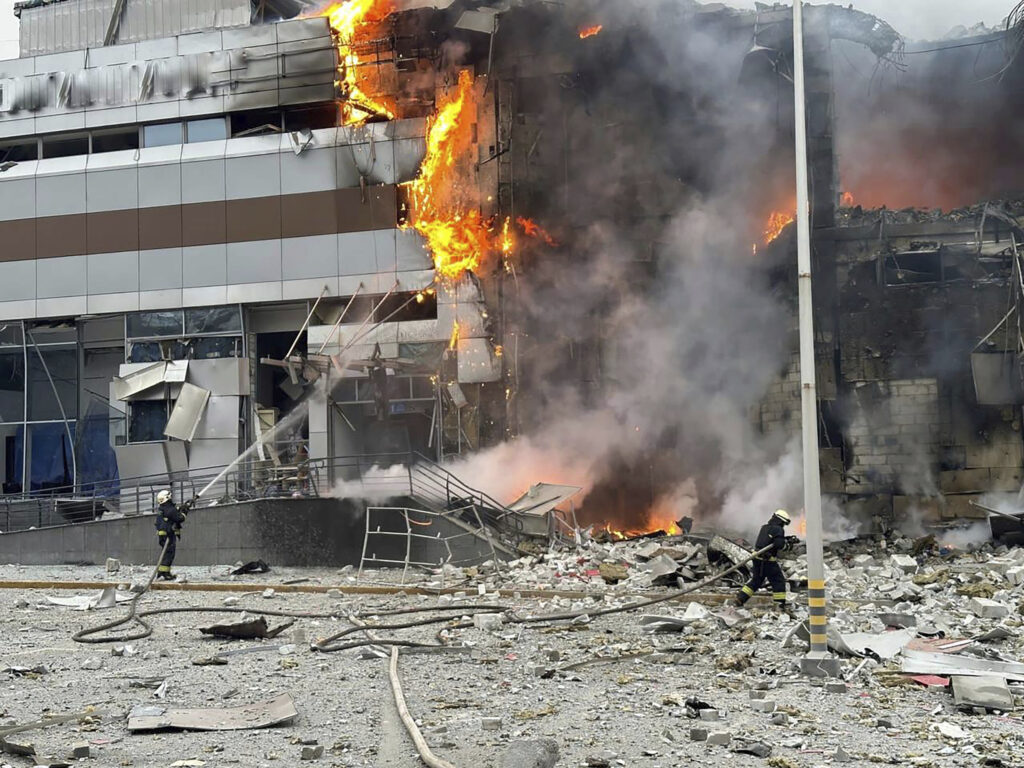
KYIV, Ukraine  — Russian forces launched a large-scale overnight attack on Ukraine’s energy infrastructure, targeting multiple regions and causing significant damage, Ukrainian officials reported Tuesday.

The assault, involving both missiles and drones, struck facilities in northern Ukraine and ignited a major fire in the west of the country, highlighting Russia’s continued strategy of targeting civilian infrastructure as the war, which began with Moscow’s full-scale invasion in February 2022, grinds on.

Ukraine’s air force commander stated that Ukrainian defense systems successfully intercepted three ballistic missiles and 25 out of 26 drones launched across nine regions. Despite this high interception rate, some attacks breached defenses, resulting in power outages and property damage.

In the northeastern Sumy region, which borders Russia, an energy facility was hit, plunging 72 settlements and over 18,500 consumers into darkness. Regional authorities, communicating via the Telegram messaging app, reported that energy workers were rushing to repair the damage and restore power.

The attack on Sumy underscores the vulnerability of Ukraine’s power grid, which has faced nearly daily bombardments over the past six months. Despite purchasing electricity from neighboring European Union countries, Ukraine struggles to make up the deficit caused by these persistent attacks. As a result, scheduled power cuts during peak evening hours have become a regular occurrence for many Ukrainians.

Further west, in the Ternopil region, an industrial facility was targeted, and a fuel reservoir was struck, officials said. Ukrainian television broadcast images of massive columns of black smoke rising over Ternopil, prompting regional authorities to urge residents to remain indoors.

Viktor Ustenko, a deputy head of the Ternopil regional administration, reported that more than 90 firefighters were engaged in efforts to extinguish the blaze. “The situation is fully under control,” Ustenko assured the public.

In Kyiv, the capital, city officials reported that air defenses successfully repelled an attack without major damage or casualties.

The Russian Ministry of Defense has not immediately commented on Tuesday’s attacks. Both sides in the conflict maintain that they target facilities of military significance rather than civilian infrastructure. However, the ongoing war has resulted in numerous civilian casualties.

These latest airstrikes come in the wake of a Ukrainian incursion into Russia’s Kursk region on August 6, demonstrating the conflict’s potential to spill across borders. Meanwhile, Russian forces have been making gradual advances in parts of eastern Ukraine, indicating a protracted and evolving battlefield situation.

As Ukraine continues to bolster its air defenses with Western support, the effectiveness of these systems in protecting critical infrastructure remains a key factor in the country’s resilience against Russian aggression.

The persistent targeting of energy facilities underscores the broader impact of the war on civilian life in Ukraine, with power outages affecting daily activities and the economy. As winter approaches, concerns grow about the potential humanitarian consequences of widespread energy shortages.

International observers continue to monitor the situation closely, with many calling for increased diplomatic efforts to bring an end to the conflict and alleviate the suffering of civilians caught in the crossfire.