PHUKET, Thailand — A mudslide on the popular Thai resort island of Phuket has claimed the lives of 13 people, including two Russian tourists, local authorities announced Sunday. The search for missing persons has been called off, marking a grim end to rescue efforts following heavy rains last week.
Phuket Governor Sophon Suwannarat confirmed that the mudslide occurred near the Big Buddha statue, a well-known tourist attraction in the southern part of the island. “The victims include a Russian couple, nine migrant workers from Myanmar, and two Thai nationals,” Sophon told reporters.
The governor added that approximately 20 people were injured in the incident, which affected 209 households in the area. A major cleanup operation is now underway as the island, a key destination in Thailand’s crucial tourism industry, grapples with the aftermath of the disaster.
“We are in the process of contacting the relatives and embassies of the victims,” Sophon said, highlighting the international impact of the tragedy.
The mudslide was triggered by unusually heavy rains that battered the island last week, saturating hillsides and creating hazardous conditions in areas popular with both tourists and local residents.
Thailand’s meteorological department had issued warnings about potential flash floods and landslides in several southern provinces, including Phuket, due to the intense monsoon conditions. However, the scale of this disaster has shocked local officials and residents alike.
MEXICO CITY — Former world champion Floyd Mayweather completed an eight-round exhibition fight against John Gotti III on Saturday night at the Arena Ciudad de Mexico, going the distance in a bout with no official judges.
Mayweather, 47, dominated the fight from the second round onward, showcasing the skills that made him one of boxing’s all-time greats. The fighter nicknamed “Money” requested a change of referee in the second round, a move that seemed to shift the momentum decisively in his favor.
This exhibition was a rematch of a controversial fight that ended in a massive brawl in Florida last June. In contrast to that chaotic encounter, Saturday’s bout concluded with Mayweather and Gotti III embracing in the ring, even as Mexican fans voiced their disapproval with loud boos.
Mayweather, who retired from professional boxing in 2017 with an unblemished 50-0 record, has been participating in exhibition matches since 2018. His opponents have included three Japanese fighters and Logan Paul, a YouTuber and WWE wrestler.
During his illustrious 21-year professional career, Mayweather captured world titles in five different weight divisions and defeated a who’s who of boxing, including Manny Pacquiao, Oscar De la Hoya, Shane Mosley, and Saúl “Canelo” Álvarez.
The exhibition format, which typically features no official scoring and relaxed rules, has become increasingly popular among retired boxers looking to capitalize on their enduring fame. For Mayweather, these bouts offer a way to stay in the public eye and continue earning substantial paydays without the risks associated with professional fights.
While some boxing purists criticize these exhibitions as mere spectacles, events like Saturday’s fight in Mexico City continue to draw significant crowds and media attention, underscoring the enduring appeal of legendary fighters like Mayweather.
As the boxing world continues to evolve, with crossover events and exhibitions gaining prominence, fights like Mayweather vs. Gotti III represent a new frontier in combat sports entertainment. Whether this trend will have lasting implications for the sport of boxing remains a topic of debate among fans, fighters, and industry insiders alike.
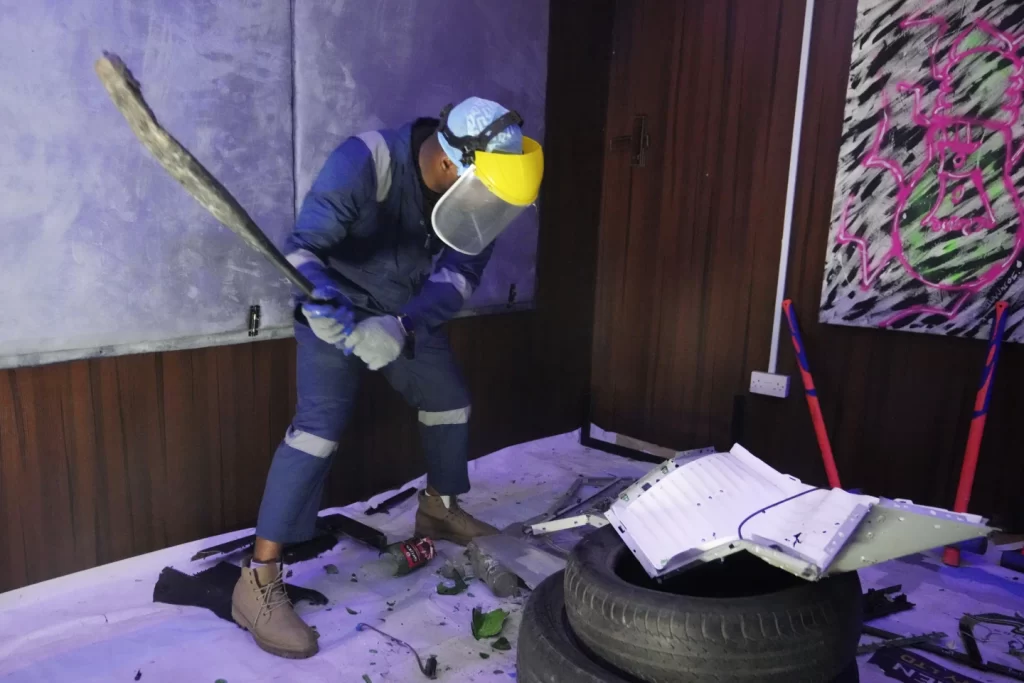
LAGOS, Nigeria — In the heart of Lagos, Nigeria’s largest city, residents are finding an unconventional way to cope with mounting stress: a “rage room” where they can smash electronics and furniture with sledgehammers.
The Shadow Rage Room, reportedly the first of its kind in Nigeria, offers customers a 30-minute session to vent their frustrations for 7,500 naira ($5). Dr. James Babajide Banjoko, the founder and a physician, describes it as “a safe space” for people to release pent-up emotions.
“The idea came during the COVID-19 pandemic in 2020 after I lost my mother and struggled with work,” Banjoko told a reporter.
This unique stress-relief method emerges as Nigeria grapples with its worst cost-of-living crisis in a generation. The country’s inflation rate has soared to a 28-year high of 33.4%, while the naira currency has plummeted to record lows against the dollar.
The economic turmoil has exacerbated mental health challenges in Africa’s most populous nation, where traditional mental health services remain inaccessible or unaffordable for many. According to the Nigerian Association of Clinical Psychologists (NACP), the country has fewer than 400 registered psychologists — approximately one for every 500,000 people.
Dr. Gboyega Emmanuel Abikoye, NACP president, noted in an interview that even when therapy is available, stigma remains a significant barrier.
While rage rooms are not new globally, their effectiveness as a mental health intervention is debated. Dr. Maymunah Yusuf Kadiri, a Lagos-based psychiatrist, cautioned that any benefits from smashing objects are usually short-lived and cannot replace therapy.
“There is also the risk of such a practice making someone less likely to use healthy coping strategies,” Kadiri said, expressing concern that “repeated engagement might reinforce aggressive tendencies.”
Despite these concerns, the Shadow Rage Room has gained popularity, with bookings often filled up to two weeks in advance. Visitors like Olaribigbe Akeem find relief in the experience.
“As an average Nigerian, you get to deal with a lot every day,” Akeem said after a session. “The anger has been piling up, and instead of venting on somebody, this is the best avenue for me. I feel a lot renewed.”
The rage room phenomenon highlights the broader challenges facing Nigeria, a country of over 200 million people where 40% of citizens live on less than $2 per day. Recent mass protests led by frustrated youth have been met with violent suppression by security forces, further underscoring the nation’s socio-economic tensions.
Lagos, an overcrowded metropolis of about 20 million, epitomizes these challenges. Daily stressors include notorious traffic jams and high pollution levels, contributing to the city’s reputation as one of the world’s most stressful urban environments.
As Nigerians seek ways to cope, some turn to social media platforms like TikTok, while others find solace in religious communities or fitness centers. The rage room represents yet another attempt to manage stress in a country where traditional mental health support remains scarce.
Banjoko, while acknowledging the limitations of the rage room, sees it as a potential gateway to more comprehensive mental health care. “My favorite people are those that just want to try it, and at the end of the day, you see them, they break down, they cry, they become very expressive,” he said, adding that he often refers such individuals to therapy.
As Nigeria continues to navigate its economic challenges and mental health landscape, the Shadow Rage Room stands as a symbol of the creative — if controversial — ways citizens are seeking relief in challenging times.
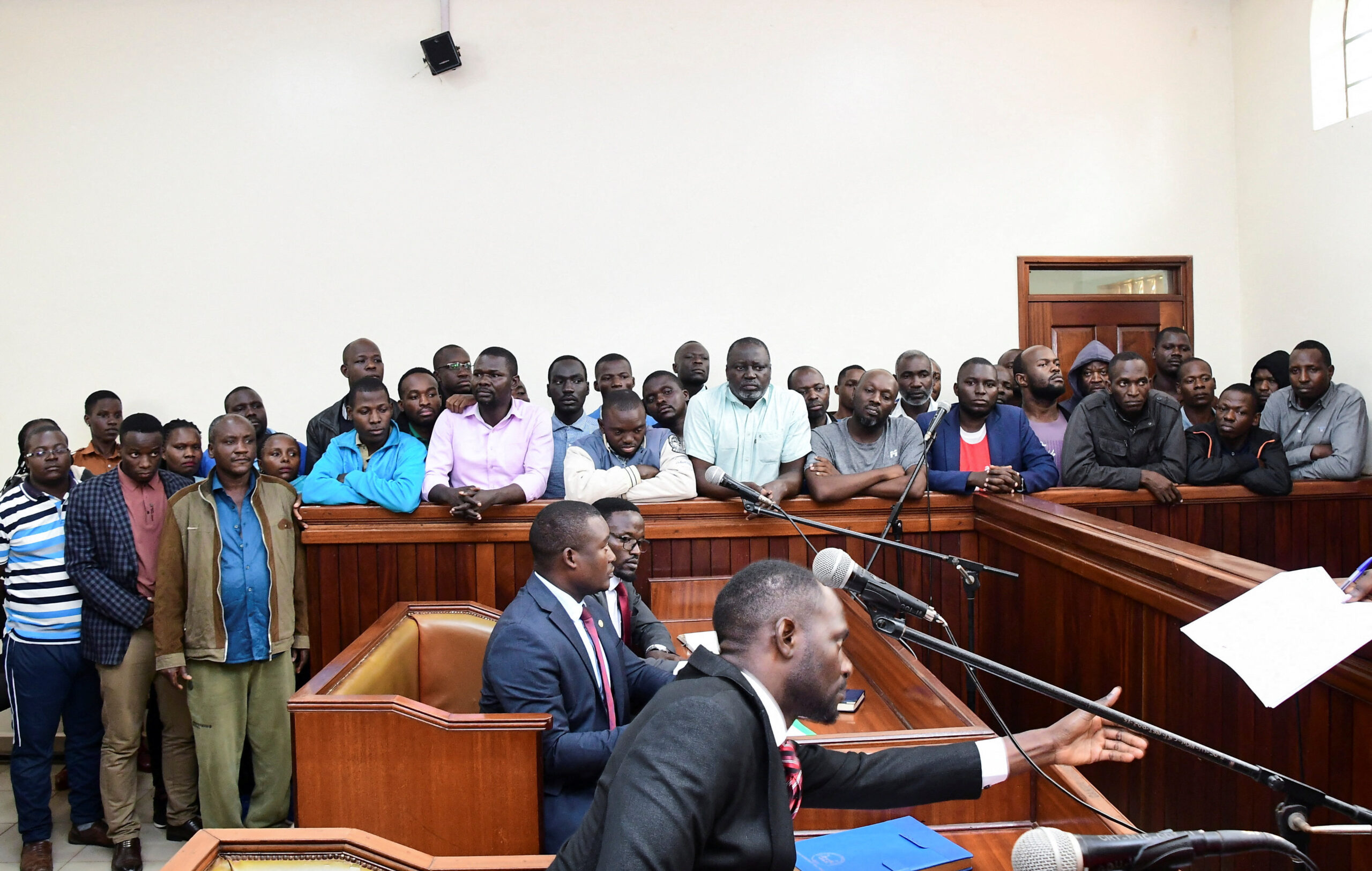
Ugandan opposition supporters stand in the dock where they were charged with terrorism-related offences, after they were deported from neighbouring Kenya, where they had traveled to attend a training course in Kisumu, at the Nakawa Chief Magistrates court in Kampala, Uganda July 29, 2024. REUTERS/Abubaker Lubowa
KAMPALA, Uganda — Thirty-six members of Uganda’s opposition Forum for Democratic Change (FDC) party are scheduled to appear in court Monday on terrorism-related charges, a case that human rights groups claim is politically motivated.
The accused were arrested last month after being deported from Kenya, where they had allegedly traveled for a training course. Uganda Police Force stated the group was “engaged in covert activities that are suspected to be subversive,” which drew the attention of Kenyan security forces.
Erias Lukwago, a lawyer representing the accused, denounced the charges as “an absurd abuse of a judicial process to witch-hunt and torment opposition supporters.” Lukwago asserts that the FDC members had traveled to Kisumu, Kenya, to attend a training seminar.
The court charge sheet accuses the 36 individuals of traveling to Kenya “to provide or receive terrorist training.” They are currently held in a prison approximately 50 kilometers (31 miles) northwest of Kampala.
Wanjeri Nderu, president of the International Society For Human Rights (ISHR), criticized the arrests, noting that Kenya does not have an extradition treaty with Uganda. “There was no due process followed or court process,” Nderu told DW. “This is what impunity looks like.”
The case has reignited concerns about political repression in Uganda under President Yoweri Museveni, who has ruled the country for 38 years. Critics, including opposition leaders and human rights campaigners, have long accused Museveni’s government of using fabricated charges to suppress dissent.
Adolf Mbaine, a political analyst at Makerere University, told DW, “The relationship between President Museveni and the political opposition has been fractured over many years. The president doesn’t like strong opposition and threats to his hold onto power.”
Ugandan opposition supporters gesture as they are escorted to court where they were charged with terrorism-related offences, after they were deported from neighbouring Kenya, where they had traveled to attend a training course in Kisumu, at the Nakawa Chief Magistrates court in Kampala, Uganda July 29, 2024. REUTERS/Abubaker Lubowa
The arrests have also raised questions about regional politics and cooperation between East African nations. Mbaine suggested that the close relationship between Kenyan President William Ruto and Museveni may have played a role in the opposition group’s deportation from Kenya.
Uganda’s history of political repression came to international attention during the 2021 presidential election when demonstrations against the arrest of opposition leader Bobi Wine were violently suppressed, resulting in at least 54 deaths.
Human rights defenders warn that Kenya may not be a safe haven for political dissidents from neighboring countries. Nderu advised against human rights defenders from neighboring countries seeking refuge in Kenya, citing the “huge possibility” of being accessed by those they were fleeing.
As the court case proceeds, it is likely to draw further scrutiny to Uganda’s human rights record and its treatment of political opposition. International observers and human rights organizations are expected to closely monitor the proceedings.
The Ugandan government has consistently denied allegations of political repression, maintaining that it operates within the law to maintain national security and public order.
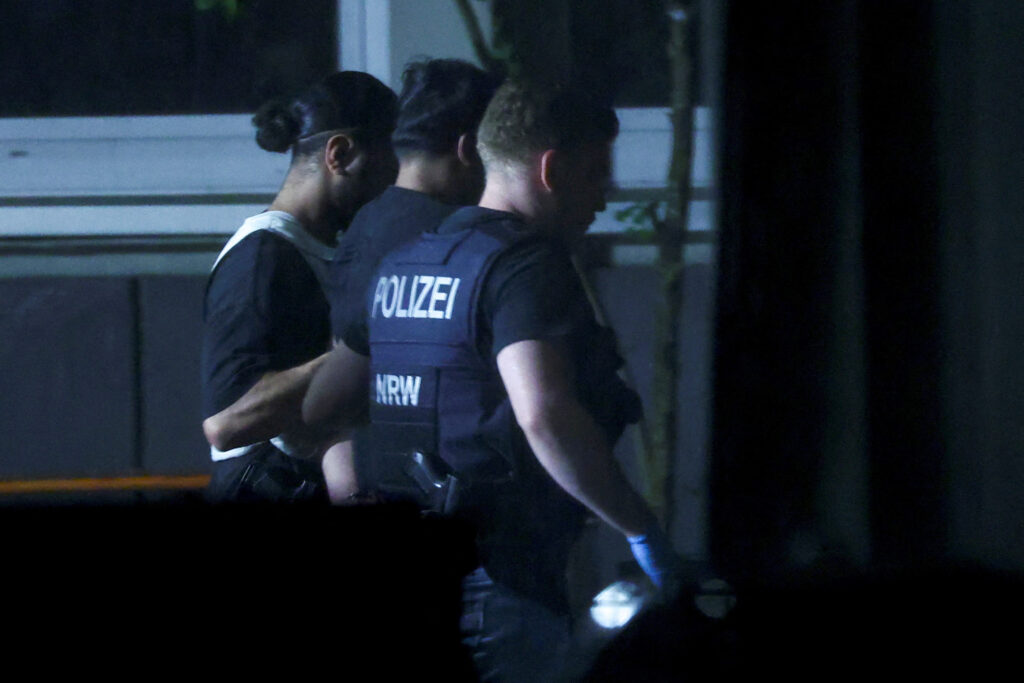
SOLINGEN, Germany — German authorities announced Sunday that a 26-year-old Syrian man has confessed to a stabbing rampage that left three people dead and eight injured in the city of Solingen. Police are now investigating possible links between the suspect and the Islamic State militant group.
The attack, which occurred Friday evening during a festival celebrating Solingen’s 650th anniversary, has reignited debates on security, immigration, and refugee policies in Germany.
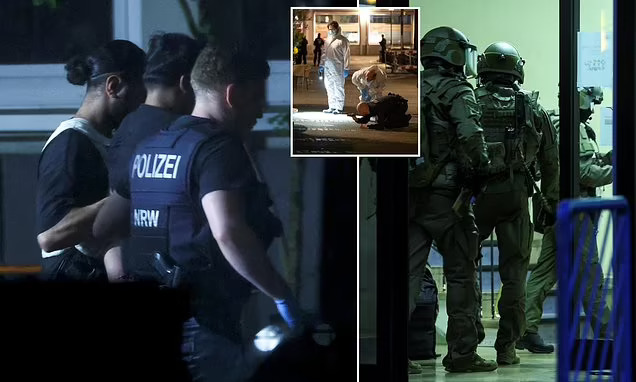
Police officers detain a person, following an incident in which several individuals were killed after a man randomly stabbed passers-by with a knife at a city festival, in Solingen, Germany, August 24, 2024. REUTERS/Thilo Schmuelgen
Düsseldorf police and prosecutors said in a joint statement that the suspect turned himself in late Saturday and admitted to the crime. “The involvement of this person is currently under intensive investigation,” the statement read.
Herbert Reul, Interior Minister of North Rhine-Westphalia, confirmed that the suspect had been living in a refugee home in Solingen, which was searched by authorities on Saturday. Der Spiegel magazine, citing unnamed security sources, reported that the man had moved to Germany in late 2022 and sought asylum.
The incident has prompted calls for enhanced security measures and stricter immigration policies from some political figures. Friedrich Merz, leader of the opposition center-right CDU party, urged a halt to further refugee admissions from Syria and Afghanistan. “It’s enough!” Merz wrote in a letter published on his website.
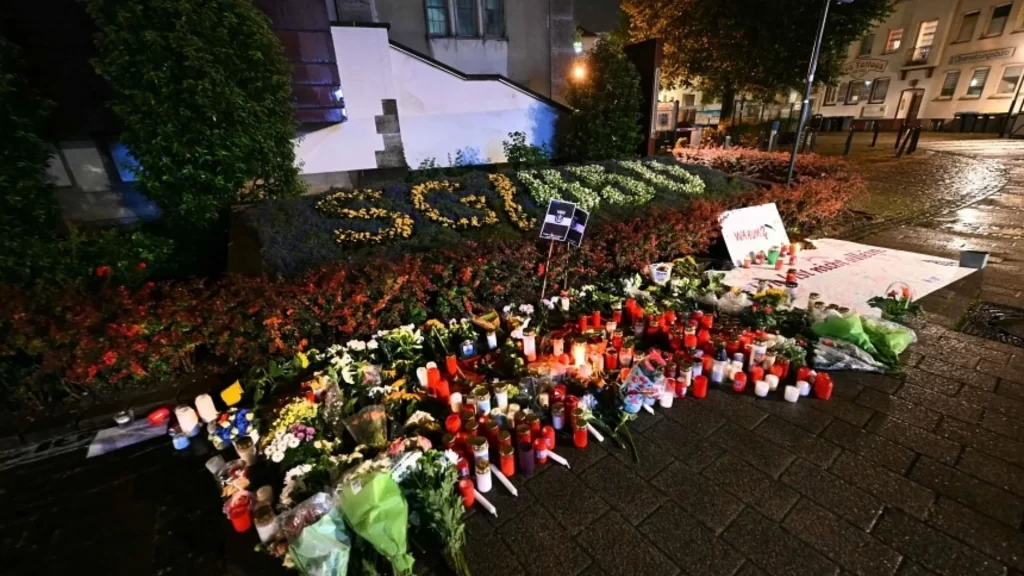
The attack took place in the Fronhof, a market square where live bands were performing as part of the city’s anniversary celebrations. Mourners have since created a makeshift memorial near the scene.
The Islamic State group’s claim of responsibility for the attack has heightened concerns among politicians and security experts. Some are calling for tighter curbs on weapons, stiffer punishments for violent crimes, and a reassessment of immigration policies.
As the investigation continues, authorities are focusing on the suspect’s background and potential radicalization. The incident has raised questions about the effectiveness of integration programs and the challenges of monitoring potential security threats among refugee populations.
German Chancellor Olaf Scholz expressed his condolences to the victims’ families and called for a thorough investigation. “We must do everything in our power to prevent such heinous acts and to protect our citizens,” Scholz said in a statement.
The attack in Solingen, a city of about 160,000 residents near Düsseldorf, has shocked the local community and reignited national debates on security and immigration that have simmered since the 2015 refugee crisis.
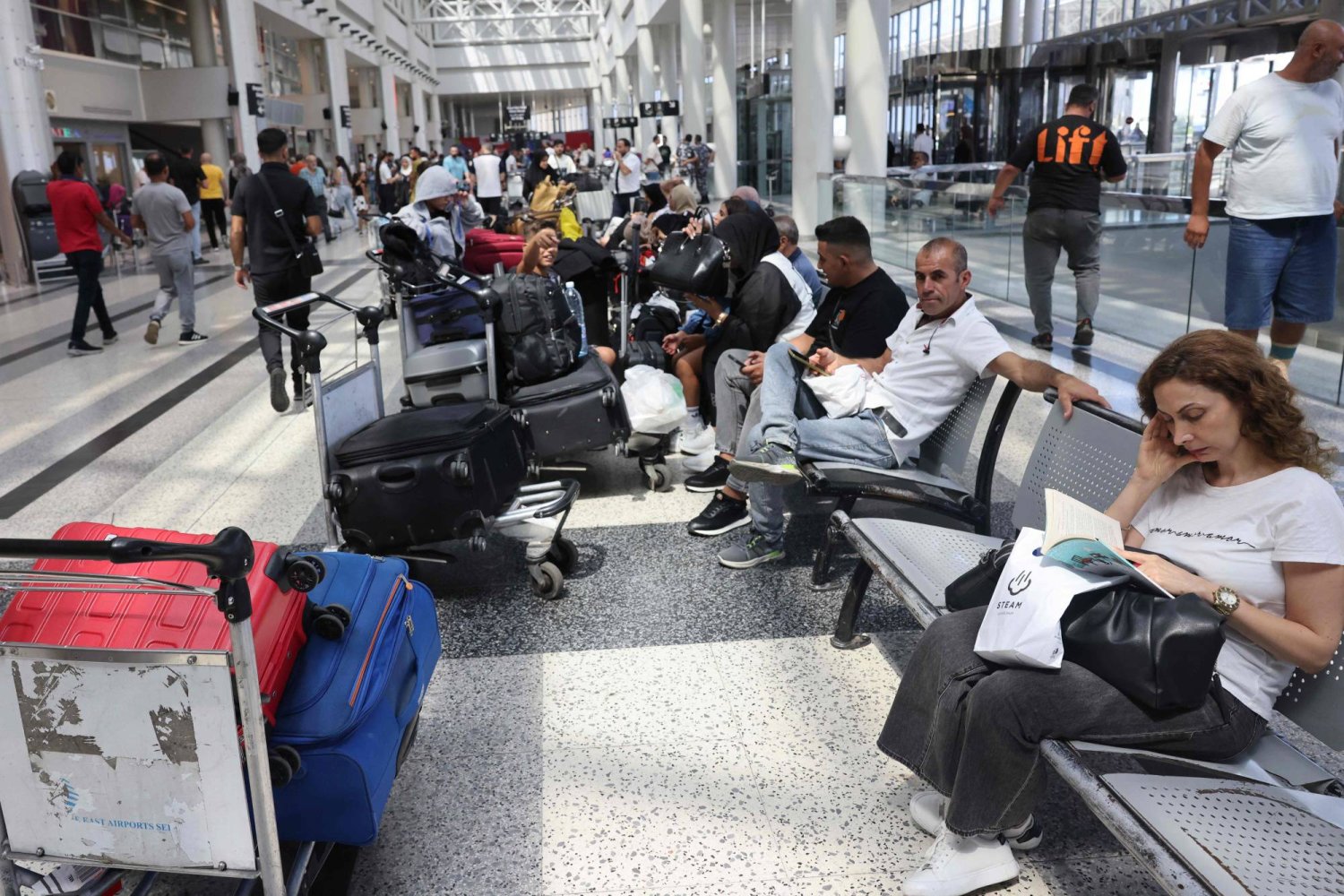
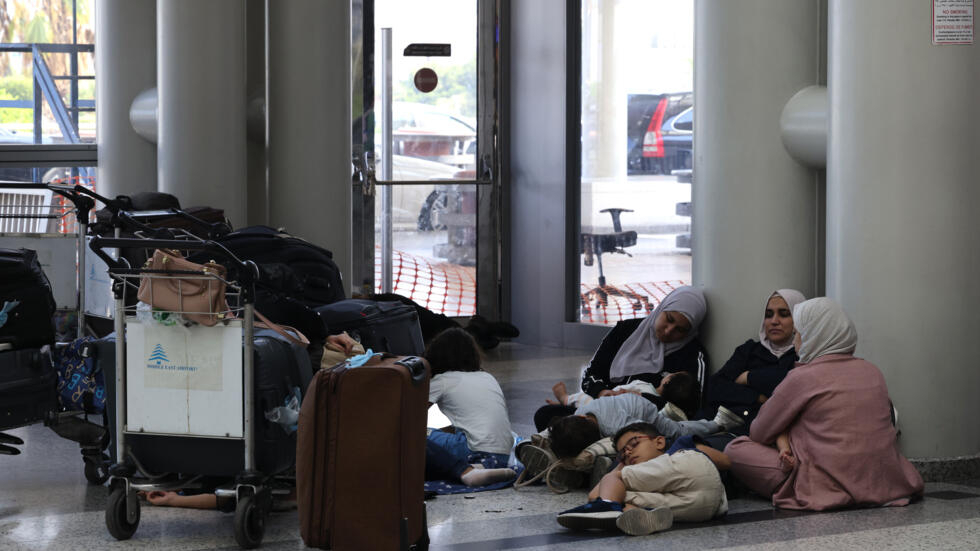
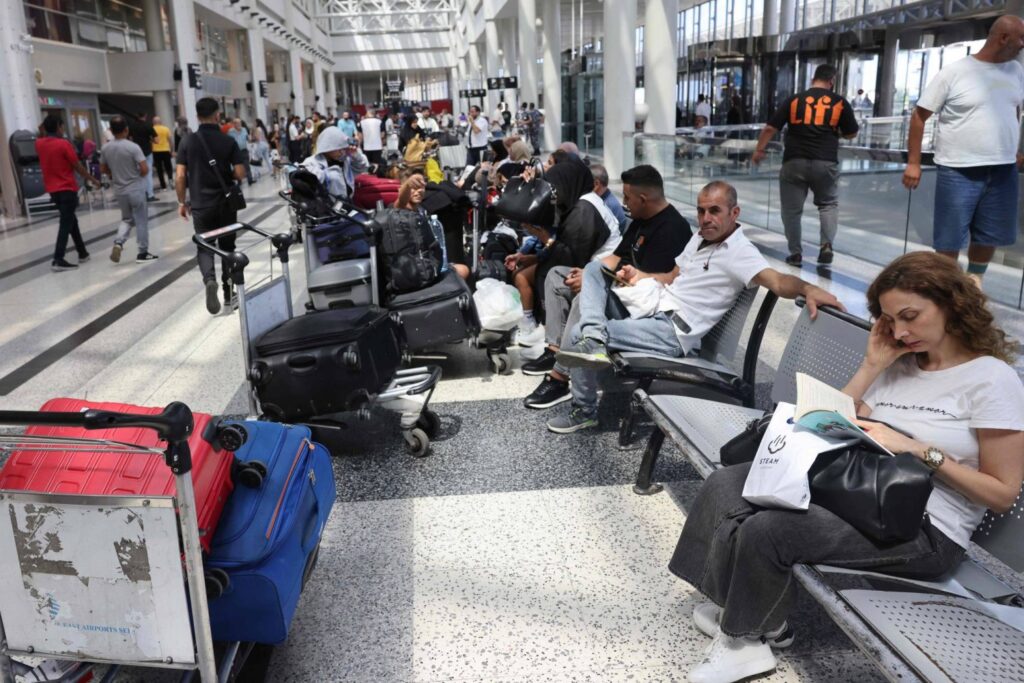
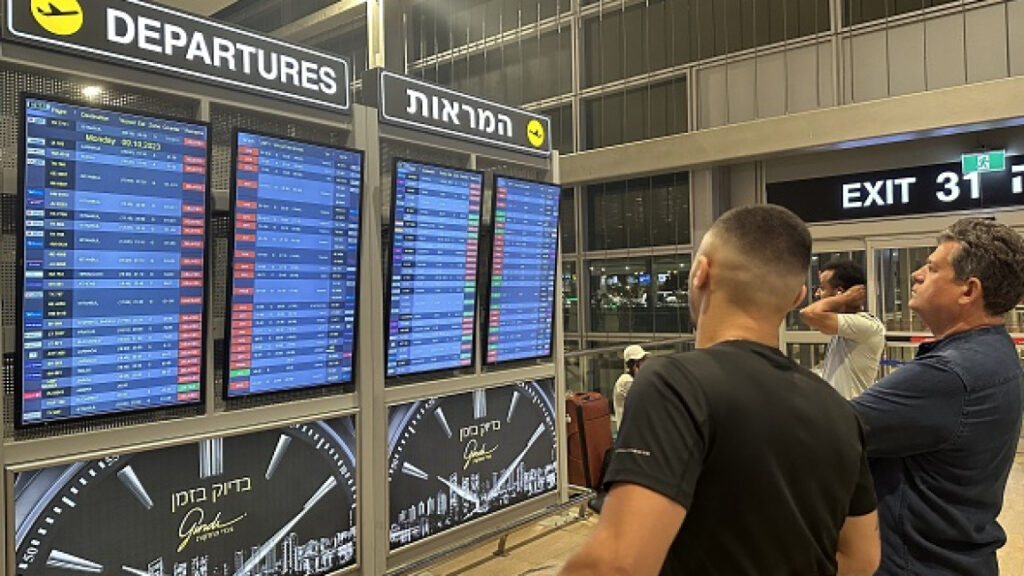
BEIRUT — Several major airlines have suspended or cancelled flights to Beirut and Tel Aviv following an escalation in the conflict between Hezbollah and Israel, with both sides launching attacks across their shared border on Sunday.
Jordan’s national carrier, Royal Jordanian, announced the suspension of its flights to Beirut “due to the current situation,” according to a report by the state news agency. The airline did not specify the duration of this suspension. Jordanian officials, speaking to Reuters on condition of anonymity, emphasized that there was no disruption to Jordanian airspace itself.
Air France has cancelled its flights to both Tel Aviv and Beirut at least until Monday, a company spokesperson told Reuters. The French carrier cited security concerns as the primary reason for this decision.
German airline Lufthansa extended its previously announced suspension of flights to Beirut until September 30. This decision, initially made on Friday, reflects growing concerns about the stability of the region.
Despite these cancellations, Lebanon’s civil aviation authority issued a statement on Sunday, carried by the official National News Agency, emphasizing that “the airport is functioning normally” despite some disruptions. The authority refuted rumors of a complete shutdown of flights, stating there is “no truth” to such claims.
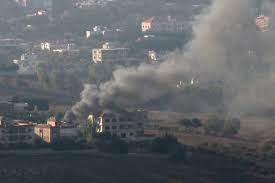
The flight cancellations come in response to a significant escalation in the conflict between Hezbollah and Israel. On Sunday, Hezbollah launched rockets and drones at Israel, prompting the Israeli military to retaliate with strikes involving approximately 100 jets targeting locations in Lebanon.
This latest round of violence has raised concerns about the safety of civilian air traffic in the region. A spokesperson for the International Air Transport Association (IATA) told Reuters, “We are closely monitoring the situation and advising our member airlines to exercise caution and follow all relevant safety advisories.”
The disruptions to air travel are likely to have significant economic impacts on both Lebanon and Israel, countries heavily reliant on tourism and international business travel. Lebanon’s Tourism Minister, speaking on condition of anonymity due to the sensitivity of the situation, expressed concern about the potential long-term effects on the country’s struggling economy.
Several other airlines had already announced flight suspensions or cancellations to Beirut in recent weeks, with some later resuming services as tensions fluctuated. However, this latest escalation has prompted a more widespread response from international carriers.
Passengers with bookings to the affected destinations are advised to check with their airlines for the latest information and rebooking options. Many carriers are offering flexible rebooking policies in light of the uncertain situation.
As the conflict continues to evolve, the international aviation community remains on high alert, with airlines and regulatory bodies closely monitoring developments to ensure the safety of passengers and crew.
JERUSALEM — Israel conducted a series of intense airstrikes in southern Lebanon early Sunday, describing the action as a pre-emptive strike against Hezbollah. The militant group swiftly retaliated by launching what it called a “large number of drones” toward Israel, marking a significant escalation in the ongoing Middle East conflict.
The Israeli military said the airstrikes were aimed at thwarting a planned heavy barrage of rockets and missiles by Hezbollah. Rear Adm. Daniel Hagari, Israel’s military spokesman, stated, “In a self-defense act to remove these threats, the (Israeli military) is striking terror targets in Lebanon, from which Hezbollah was planning to launch their attacks on Israeli civilians.”
Hezbollah announced its drone attack as an initial response to Israel’s assassination of Fouad Shukr, a top Hezbollah commander, in Beirut’s southern suburbs last month. The group said it was targeting “a qualitative Israeli military target that will be announced later” as well as “targeting a number of enemy sites and barracks and Iron Dome platforms.”
The escalation follows a series of high-profile assassinations, including that of Hamas leader Ismail Haniyeh in Tehran, which led to vows of reprisal against Israel by Iran.
As tensions mounted, air raid sirens were reported throughout northern Israel. The Israel Airports Authority began diverting incoming flights and delaying takeoffs at Ben-Gurion International Airport. Flight-tracking data showed at least two El Al flights swinging far south and diverting after the announcement.
Israeli Prime Minister Benjamin Netanyahu’s office announced an emergency cabinet meeting scheduled for 7 a.m. local time (0400 GMT) to address the situation.
Last week, Israeli Defense Minister Yoav Gallant announced the deployment of additional troops to the Lebanese border in anticipation of possible escalation. Hagari warned, “We can see that Hezbollah is preparing to launch an extensive attack on Israel, while endangering the Lebanese civilians,” urging civilians in areas where Hezbollah operates to evacuate for their safety.
The conflict between Israel and Hezbollah has been simmering since October 7, when Hamas launched a cross-border attack into Israel, prompting immediate retaliation from Hezbollah. Daily exchanges of fire have displaced tens of thousands of people on both sides of the Israel-Lebanon border, raising fears of a broader conflict.
Until Sunday’s escalation, both sides had been careful to avoid a wider conflagration. However, the latest developments suggest a potential shift in the conflict’s dynamics, with both Israel and Hezbollah demonstrating a willingness to engage in more significant military actions.
The situation has drawn international concern, with diplomatic efforts underway to prevent further escalation. The United Nations Interim Force in Lebanon (UNIFIL) has increased its patrols along the Blue Line, the border demarcation between Lebanon and Israel.
As the situation remains fluid, international observers and neighboring countries are on high alert, with many calling for immediate diplomatic intervention to prevent a potentially catastrophic regional conflict.
The escalation between Israel and Hezbollah adds another layer of complexity to the already volatile situation in the Middle East, raising concerns about the potential for a wider regional war involving multiple actors.
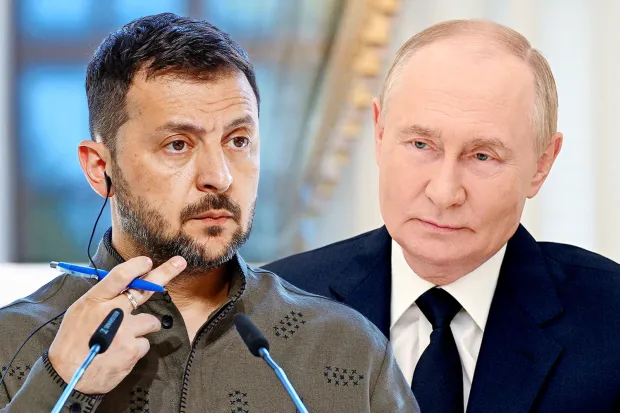
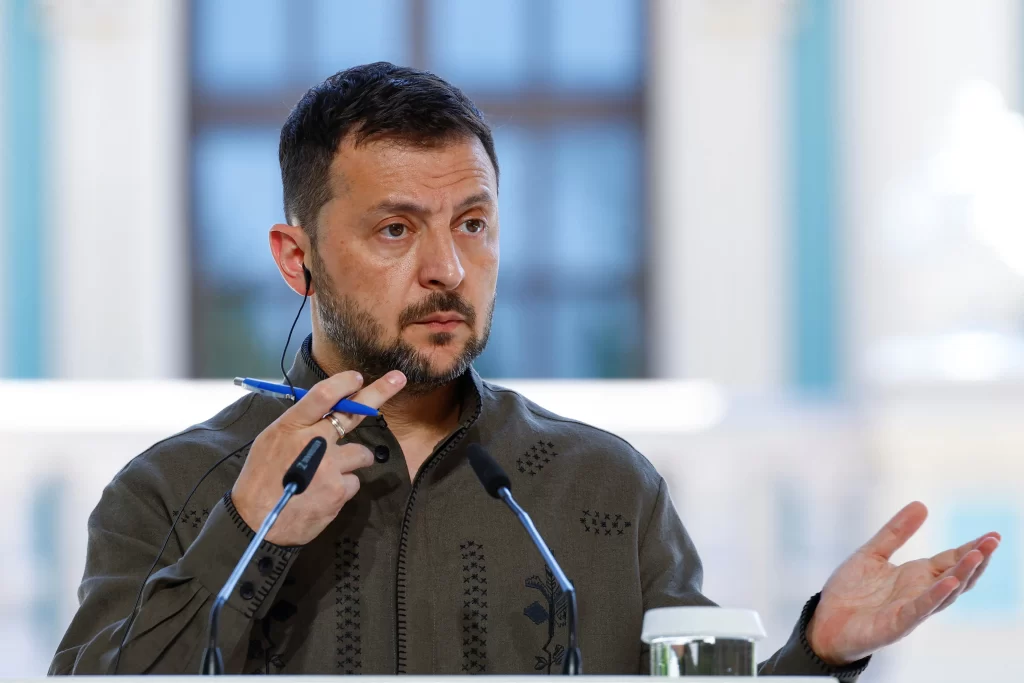
KYIV, Ukraine — In a bold Independence Day address, Ukrainian President Volodymyr Zelensky mocked Russian President Vladimir Putin as a “sick old man” and pledged to continue military operations on Russian soil, defying nuclear threats from Moscow.
Speaking on the thirty-second anniversary of Ukraine’s independence from Soviet rule, Zelensky directly challenged Putin’s authority and rhetoric. “A sick old man from the Red Square, who constantly threatens everyone with the red button, will not dictate any of his red lines to us,” Zelensky declared, referring to Putin’s repeated allusions to Russia’s nuclear capabilities.
The Ukrainian leader’s provocative statements come amid reports of Ukrainian military advances in Russia’s Kursk province and successful long-range drone strikes on Russian airfields, oil refineries, and ammunition depots. These operations mark a significant escalation in Ukraine’s military strategy, bringing the war directly to Russian territory.
Zelensky emphasized Ukraine’s determination to retaliate against Russian aggression, stating, “Our enemy will also know what the Ukrainian way of retaliation is. Worthy, symmetrical, long-ranged.” He added a stark warning: “They will know that sooner or later a Ukrainian response will reach any point in the Russian Federation that is a source of danger to the life of our state and our people.”
The speech, delivered as Ukraine celebrated its Independence Day, underscores the country’s increasingly assertive military posture. Despite the risks of escalation, including potential nuclear threats from Russia, Zelensky’s address signals Ukraine’s commitment to an aggressive defense strategy that includes strikes within Russian borders.
Ukrainian military officials, speaking on condition of anonymity due to the sensitivity of ongoing operations, confirmed to the Associated Press that recent attacks on Russian soil are part of a broader strategy to disrupt Russian military logistics and command structures. “These operations are carefully planned to minimize civilian casualties while maximizing impact on Russian military capabilities,” one official stated.
International reactions to Zelensky’s speech and Ukraine’s military actions have been mixed. While Western allies continue to support Ukraine’s defense efforts, concerns about potential escalation have grown. A senior NATO official, who requested anonymity to discuss sensitive matters, told the AP, “We support Ukraine’s right to self-defense, but we also urge caution to avoid uncontrolled escalation that could lead to a wider conflict.”
Russian officials responded to Zelensky’s remarks with condemnation. Kremlin spokesperson Dmitry Peskov called the speech “irresponsible and provocative,” warning of “severe consequences” for attacks on Russian territory. However, he did not specify what these consequences might entail.
The ongoing conflict, now in its nineteenth month, has seen a significant shift in dynamics with Ukraine’s recent incursions into Russian territory. Military analysts suggest that these operations aim to stretch Russian defenses and demonstrate Ukraine’s growing military capabilities.
Dr. Olga Oliker, Program Director for Europe and Central Asia at the International Crisis Group, told the AP, “Zelensky’s rhetoric and Ukraine’s actions on Russian soil serve multiple purposes: they boost domestic morale, showcase Ukraine’s military advancements to international supporters, and aim to create strategic dilemmas for Russian military planners.”
As tensions continue to escalate, the international community remains on high alert. The United Nations Security Council is scheduled to convene an emergency session to discuss the latest developments and explore potential diplomatic solutions to the conflict.
Zelensky’s defiant stance and Ukraine’s military actions on Russian soil mark a new phase in the war, challenging long-held assumptions about the conflict’s boundaries and raising questions about the potential for further escalation in the coming months.
French police arrested a suspected terrorist on Saturday evening following a dramatic gunfight, culminating a day-long manhunt after an attack on a synagogue in the southern resort town of La Grande-Motte. The incident, which authorities are treating as an act of terrorism, has heightened concerns about rising anti-Semitism in France amid the ongoing Israel-Hamas conflict.
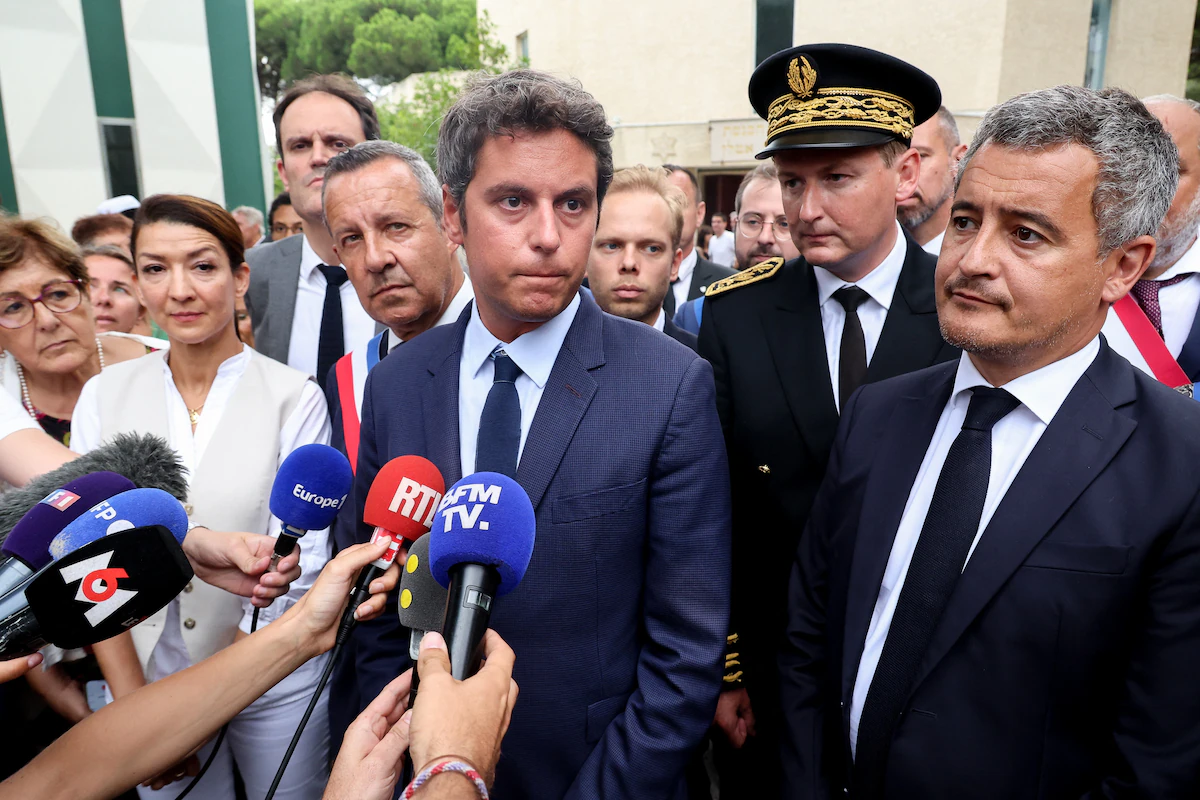
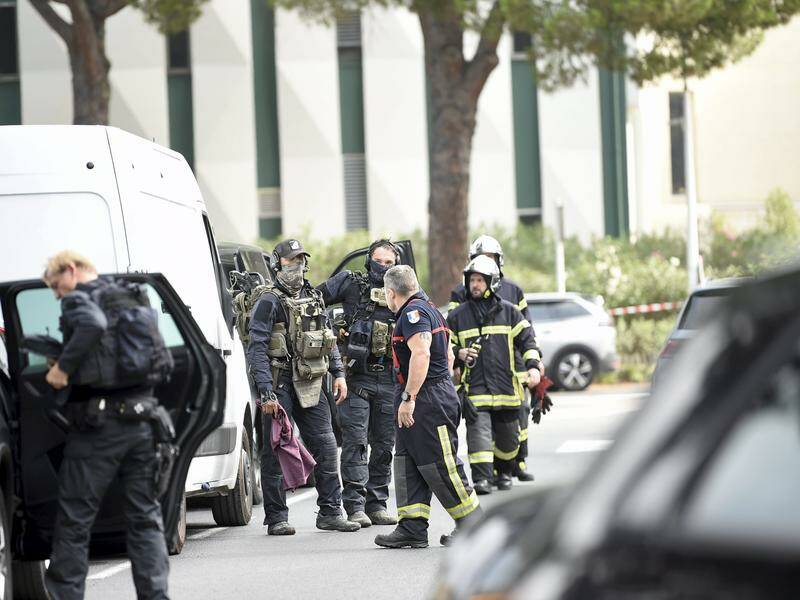
The suspect, identified as a 33-year-old Algerian national, was apprehended at the top of a council estate tower block in the city of Nimes, approximately 50 kilometers (30 miles) from the site of the initial attack. French Interior Minister Gerald Darmanin confirmed the arrest on social media platform X, praising the police force, particularly the RAID (Research, Assistance, Intervention, Deterrence) special forces, for their “great professionalism despite the gunfire.”
According to an investigating source who spoke on condition of anonymity due to the ongoing nature of the investigation, the suspect was “severely wounded” during the arrest operation and subsequently taken to a secure hospital facility. A local municipal police officer in Nimes sustained minor injuries when the suspect opened fire prior to his capture.
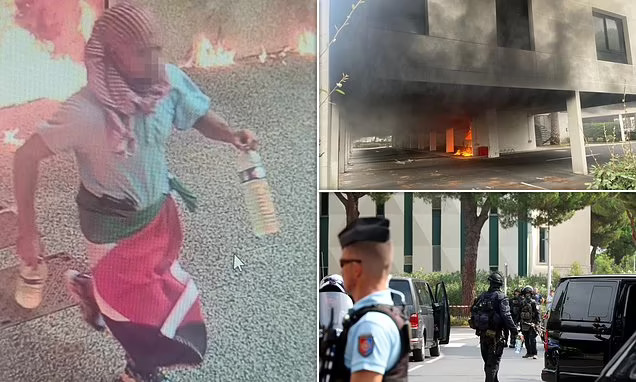
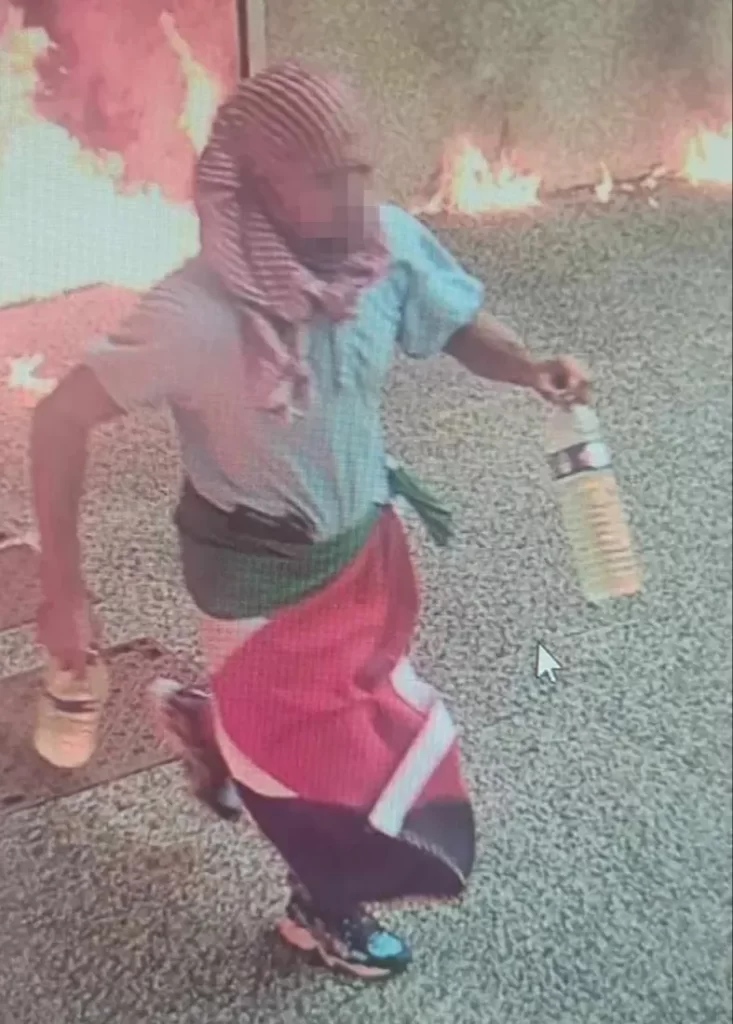
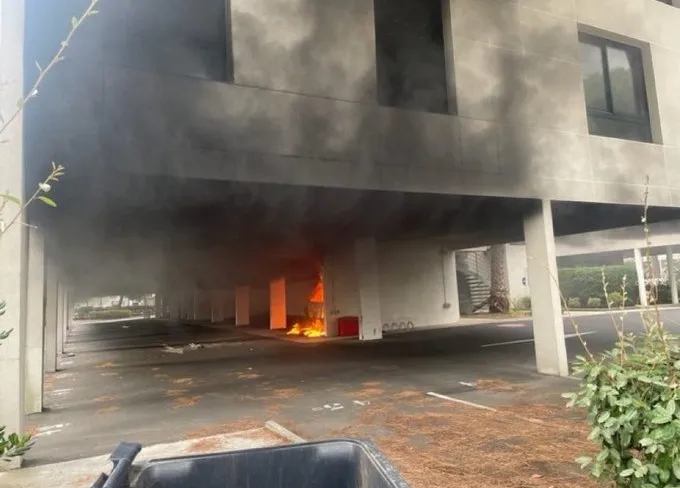
The events began around 8:30 a.m. on Saturday when the suspect allegedly caused an explosion in a parked car and set fire to the doors of the Beth Yaacov synagogue in La Grande-Motte. CCTV footage reportedly shows the man wearing a Palestinian flag around his waist during the attack, which French President Emmanuel Macron swiftly condemned as an “act of terrorism.”
Stephan Rossignol, Mayor of La Grande-Motte, confirmed that surveillance cameras had captured images of an unidentified man setting fire to cars outside the synagogue. Police sources indicated that the suspect may have been armed with a pistol.
The attack has sent shockwaves through France’s Jewish community. Yonathan Arfi, president of the Representative Council of Jewish Institutions of France (CRIF), described the incident as “an attempt to kill Jews,” noting that a gas cylinder was detonated “in front of the synagogue of La Grande-Motte at the expected time of arrival of worshippers.”
This latest incident occurs against a backdrop of escalating anti-Semitic acts in France since the outbreak of the Israel-Hamas conflict on October 7, 2023. According to an Interior Ministry spokesperson in Paris, anti-Semitic incidents in France have nearly tripled since the beginning of the conflict, with 887 incidents recorded during the first half of this year alone.
The attack and subsequent arrest have reignited discussions about security measures for Jewish institutions in France and the broader implications of the Israel-Hamas conflict on domestic tensions. Hussein Bourgi, a Socialist Senator in the Herault department where La Grande-Motte is located, expressed “full solidarity with the Jewish community of La Grande Motte.”
This incident follows a pattern of concerning events targeting Jewish communities in France. In May, an Algerian immigrant was fatally shot by police after throwing a Molotov cocktail through a synagogue window in Rouen, Normandy. Additionally, a Holocaust memorial in Paris was defaced with red handprints, apparently referencing the rising civilian death toll in Gaza and the West Bank.
French authorities have mobilized significant resources to combat the rise in anti-Semitic acts. The manhunt for the La Grande-Motte synagogue attacker involved approximately 200 police officers, culminating in the RAID special forces operation in Nimes around 11:30 p.m. on Saturday.
ST. PETERSBURG, Russia — A Russian court on Saturday ordered the release of Joshua Cartu, an Israeli-Canadian racing car driver and entrepreneur wanted by the United States on fraud charges, citing the absence of an official extradition request.
Cartu, nicknamed the “Ferrari fugitive,” was detained on Monday by Russia’s Interpol unit at St. Petersburg’s Pulkovo Airport. The U.S. government had declared him “wanted” in connection with allegations of multimillion-dollar investor fraud.
The St. Petersburg Moskovsky District Court ruled to “terminate proceedings” against Cartu, stating that Russian authorities had not received a formal extradition request from the United States. Russia does not have an extradition treaty with the U.S., although the two countries recently conducted a high-profile prisoner swap.
According to the St. Petersburg court press service, Cartu was subject to an Interpol Red Notice. He is accused of being part of a group that allegedly defrauded U.S. investors of approximately $60 million between 2013 and 2017.
In 2021, the U.S. government filed a fraud complaint against Cartu and others, including his brothers David and Jonathan, alleging conspiracy to commit wire fraud. The complaint details a complex scheme involving binary options trading platforms that allegedly misled investors.
Cartu’s detention earlier this week had been extended by the court due to concerns that, as an Israeli citizen, he could freely leave Russia. However, Saturday’s ruling effectively ends his detention in the country.
The racing driver and tech entrepreneur has a significant social media presence, with hundreds of thousands of followers on platforms like Instagram and Facebook. His accounts feature images showcasing a luxury lifestyle centered around high-performance cars, particularly Ferraris.
In interviews with British media, Cartu has described himself as a race car and tech entrepreneur who owns a fleet of Ferrari vehicles. His public persona has contributed to the “Ferrari fugitive” moniker in media coverage of his legal troubles.
Canada’s foreign ministry acknowledged on Tuesday that it was “aware of an arrest involving a Canadian in Russia” and had offered consular assistance. The ministry has not yet commented on Cartu’s release.
The case highlights the complexities of international law enforcement cooperation, particularly between countries without formal extradition agreements. It also underscores the challenges faced by authorities in pursuing individuals accused of financial crimes across borders.
Legal experts note that while Cartu has been released in Russia, he may still face legal challenges if he travels to countries with closer ties to the United States. The U.S. Department of Justice has not yet commented on the Russian court’s decision or its next steps in pursuing the fraud allegations against Cartu.