Home Blog Page 811

John Mahama Vows to Reinstate July 1 as a National Holiday if Elected

John Mahama, the 2024 flagbearer of Ghana’s opposition National Democratic Congress (NDC), has promised to reinstate July 1 as a national holiday if he is elected in the upcoming elections. This move is aimed at honoring Ghana’s history and re-establishing Republic Day, which commemorates the nation’s transition to a republic on July 1, 1960. The day was historically celebrated until the current Akufo-Addo administration replaced it with Founders’ Day on August 4.

The change from Republic Day to Founders’ Day was implemented by President Nana Akufo-Addo, who declared August 4 as a statutory holiday to recognize the contributions of various individuals who played significant roles in Ghana’s independence struggle. This decision has been met with criticism from some segments of the population who view it as an attempt to alter the country’s historical narrative.

During a tour in the Upper East Region, John Mahama publicly criticized President Akufo-Addo’s decision to shift the holiday from July 1 to August 4. Mahama argued that this change undermines the historical significance of July 1, which marked the day Ghana became a republic, independent of colonial rule.

According to Mahama, the current administration is attempting to “rewrite history” by replacing Republic Day with Founders’ Day. He expressed strong opposition to this move, emphasizing the importance of preserving Ghana’s historical identity and the significance of July 1 as Republic Day.

“Apart from destroying the economy, one of the things this government wants to do is to rewrite our history, and we shall not allow them to rewrite our history because the president said he does not accept that one person can be the founder of our nation,” Mahama stated.

He further elaborated on the importance of recognizing Republic Day, particularly as it was a significant milestone in Ghana’s journey towards full independence. Mahama highlighted that the change to Founders’ Day distorts the historical narrative by not adequately honoring the day Ghana transitioned to a republic.

Mahama’s comments came shortly after President Akufo-Addo reignited the debate by asserting in a national broadcast that Ghana’s independence was not solely the work of one individual. Akufo-Addo emphasized the collective efforts of the United Gold Coast Convention (UGCC) and other groups in the independence movement.

Mahama contends that July 1 should be restored as a national holiday under a future NDC government to preserve Ghana’s historical legacy. He also mentioned the significance of Republic Day to senior citizens who have historically celebrated it as a pivotal day in Ghana’s history.

“Nobody can come and rewrite our history. Indeed, for those of you who don’t know it, when the Queen finally agreed to give Ghana independence, the UGCC that Nana Akufo-Addo is fighting to be recognized as founders of Ghana wrote a petition. They sent people to England to tell the queen not to grant independence because we are not ready yet,” Mahama added.

John Mahama’s pledge to reinstate July 1 as a national holiday reflects his commitment to preserving Ghana’s historical identity and honoring the legacy of those who fought for the country’s independence. As the election approaches, this issue is likely to remain a significant point of debate between the political parties.

Hunger Protests Turn Violent in Northern Nigeria, Prompting Curfew in Kaduna

Northern Nigeria has been plunged into chaos as hunger protests in Zamfara State turned violent, while neighboring Kaduna State imposed a 24-hour curfew in response to escalating unrest. The nationwide demonstrations against economic hardship have taken a dangerous turn, highlighting the deepening crisis facing Africa’s most populous nation.

In Gusau, the capital of Zamfara State, protesters blocked major roads and clashed with police near the Central Police Station on Monday. What began as peaceful demonstrations quickly devolved into scenes of vandalism and looting, with both private and public properties targeted. Security forces were deployed across the city in an attempt to restore order, but many residents sought shelter as shops, businesses, and filling stations shuttered their doors.

The unrest has paralyzed daily life in Gusau, with one resident, Usman Muktar, lamenting, “Hoodlums are now using the opportunity of the nationwide protest to loot peoples’ properties even though it was supposed to be peaceful protest, as promised by the organizers.” The breakdown of law and order has made even basic activities like fueling vehicles nearly impossible, further exacerbating the hardships faced by citizens.

In response to similar unrest, Governor Uba Sani of Kaduna State took decisive action by imposing a 24-hour curfew on Kaduna and Zaria metropolitan areas. The Kaduna State Security Council, citing evidence that criminal elements had hijacked the protests, implemented the curfew with immediate effect. Samuel Aruwan, the Overseeing Commissioner for the Ministry of Internal Security and Home Affairs, stated that the decision was unanimous among council members.

The curfew in Kaduna and Zaria requires citizens to remain indoors while security forces work to maintain safety and stability. Authorities have promised to monitor the situation closely and review the curfew as needed, indicating the fluid nature of the crisis.

These events underscore the volatile situation in northern Nigeria, where economic hardships have fueled widespread discontent. The protests, initially focused on hunger and economic policies, have rapidly evolved into a broader expression of frustration with governance and living conditions.

The Nigerian government now faces a complex challenge: addressing the legitimate grievances of its citizens while maintaining public order and preventing further violence. The situation in Zamfara and Kaduna serves as a stark warning of the potential for civil unrest to spread if the root causes of public dissatisfaction are not addressed.

As night falls on Gusau and Kaduna, residents brace for an uncertain future, caught between the desperation that drove the initial protests and the fear of escalating violence. The coming days will be crucial in determining whether authorities can restore calm and begin to address the underlying issues that have brought so many Nigerians to the streets in protest.

Congolese Police Officers Flee to Uganda Amid Intensifying Conflict in Eastern Congo

Nearly 100 police officers from the Democratic Republic of Congo have fled to neighboring Uganda as fighting between M23 rebels and the Congolese military intensifies in Congo’s eastern regions. The officers crossed into Uganda over the weekend, according to a statement from the Ugandan military on Monday.

The officers, numbering 98, arrived via the Ishasha border crossing in the Kanungu district of southwestern Uganda, confirmed Major Klocon Tabaro, a regional spokesperson for the Uganda People’s Defense Forces. The officers brought with them 43 guns and ammunition, which were subsequently disarmed by Ugandan authorities.

“They were fleeing fighting by M23 and other militias and the Congo military; there’s a lot of violence there, and then there’s also hunger,” Major Tabaro said, highlighting the dire conditions driving the officers to seek refuge across the border.

In addition to the police officers, the ongoing conflict has forced at least 2,500 Congolese civilians to flee into Uganda over the past four days, further escalating the humanitarian crisis. “The main push factor is the intensifying violence and insecurity,” Tabaro noted, adding that pregnant women, breastfeeding mothers, and young children are among the refugees seeking safety.

The M23 rebel group has been waging a fresh insurgency in Congo’s mineral-rich eastern regions since 2022. The group, primarily composed of Tutsi fighters, has repeatedly seized large areas of land, leading to widespread displacement and instability.

A United Nations report seen by Reuters last month accused Uganda of providing support to the M23 rebels, a claim that Uganda denies. Additionally, the U.N. has long accused Rwanda of backing the M23, an allegation that Rwanda has also denied.

The Congolese military has intensified its efforts to push back the rebels, deploying troops and aircraft to the conflict zones. However, despite these efforts, the rebels have continued to expand their territorial control, causing further unrest in the region.

The recent fighting has centered around the town of Kanyabayonga, whose location on a high plateau makes it a significant gateway to other parts of eastern Congo’s North Kivu province. The strategic importance of such locations has made them focal points in the ongoing conflict, with control over these areas being highly contested.

As the conflict continues, the influx of refugees into Uganda is expected to rise, putting additional pressure on humanitarian resources and regional stability. The international community remains concerned about the escalating violence and the potential for further displacement of civilians in the region.

Source: Reuters

Two Men Claiming to Be Russian Hostages Appear in Video Released by Al-Qaeda-Linked Group in Niger-AP

Two men claiming to be Russian nationals appeared in a video published by an al-Qaeda-affiliated media platform, stating they were taken captive in Niger by militants linked to the extremist group.

The video, released on the az-Zallaqa platform on Friday, showed the men, who said they were seized by militants while working in Baga, northeastern Niger.

Seated side by side and dressed in traditional local clothing, the men spoke to the camera. One identified himself as Yury, stating he is a geologist working for a Russian company when arrested by JNIM, the al-Qaeda affiliate in the region. The other man gave his name, which was harder to make out, and said he’d been in Niger for a month.

The Associated Press could not independently verify the video’s authenticity or the date it was filmed. The men, speaking in English, did not specify when they had been detained.

This is reportedly the first known sighting of the men. If their account is confirmed, they would be the first Russians in the Sahel believed to be kidnapped by jihadists, despite increasing Russian presence across the region.

Russia has increased its involvement in West Africa amidst deteriorating relations between the West and coup-affected Sahel nations. Wagner, a shadowy Russian mercenary group, has been active in the Sahel — the vast expanse south of the Sahara Desert — as the mercenaries profit from seized mineral riches in exchange for their security services.

Niger, in particular, has shifted away from Western partners, notably France and the United States, instead turning to Russia for security. In April, Niger hired Wagner mercenaries to reinforce the country’s air defenses.

This hostage video emerges shortly after an al-Qaeda claim of responsibility for an attack that dealt Wagner its deadliest blow in recent years, with at least 50 people killed in Mali. At least two Russians were taken captive by rebels, who were pushing into Niger.

South African Police Uncover Human Trafficking Ring, Rescue 90 Ethiopian Migrants

South African police have rescued 90 Ethiopian migrants who were being held against their will in a Johannesburg property. The rescue operation, which took place on Sunday, uncovered a harrowing scene of exploitation and confinement that has once again brought the issue of migrant trafficking to the forefront of regional concerns.

The discovery was made during a police search for a reported kidnapping victim at the property. Upon arrival, authorities found not only the kidnapping victim but also scores of Ethiopian migrants crammed into small, locked rooms in deplorable conditions. The operation resulted in the arrest of two suspects on charges of kidnapping and human trafficking, with legal proceedings set to follow.

This rescue sheds light on the persistent and dangerous trafficking routes that span several southern African countries, ultimately funneling migrants towards South Africa. International law enforcement agencies, including Interpol, have repeatedly raised alarms about the perilous journeys undertaken by Ethiopian migrants, often at the hands of unscrupulous traffickers who show little regard for human life.

The incident in Johannesburg is far from isolated, as evidenced by a series of tragic discoveries across the region in recent years. In 2020, the bodies of 64 Ethiopian migrants were found in a freight container in Mozambique, marking one of the deadliest single incidents of its kind. The following years saw further grim discoveries, with 30 Ethiopian migrants found in a mass grave in Malawi and 27 bodies of Ethiopian men dumped in Zambia in 2022.

These recurring tragedies underscore the complex challenges faced by law enforcement and humanitarian organizations in combating human trafficking networks that exploit vulnerable individuals seeking better lives. The rescued migrants in Johannesburg have been taken to hospitals for medical care, a small mercy in their tumultuous journey.

AP

Olympic Boxer Imane Khelif Calls for End to Bullying and Gender Misconceptions on Path to Medal

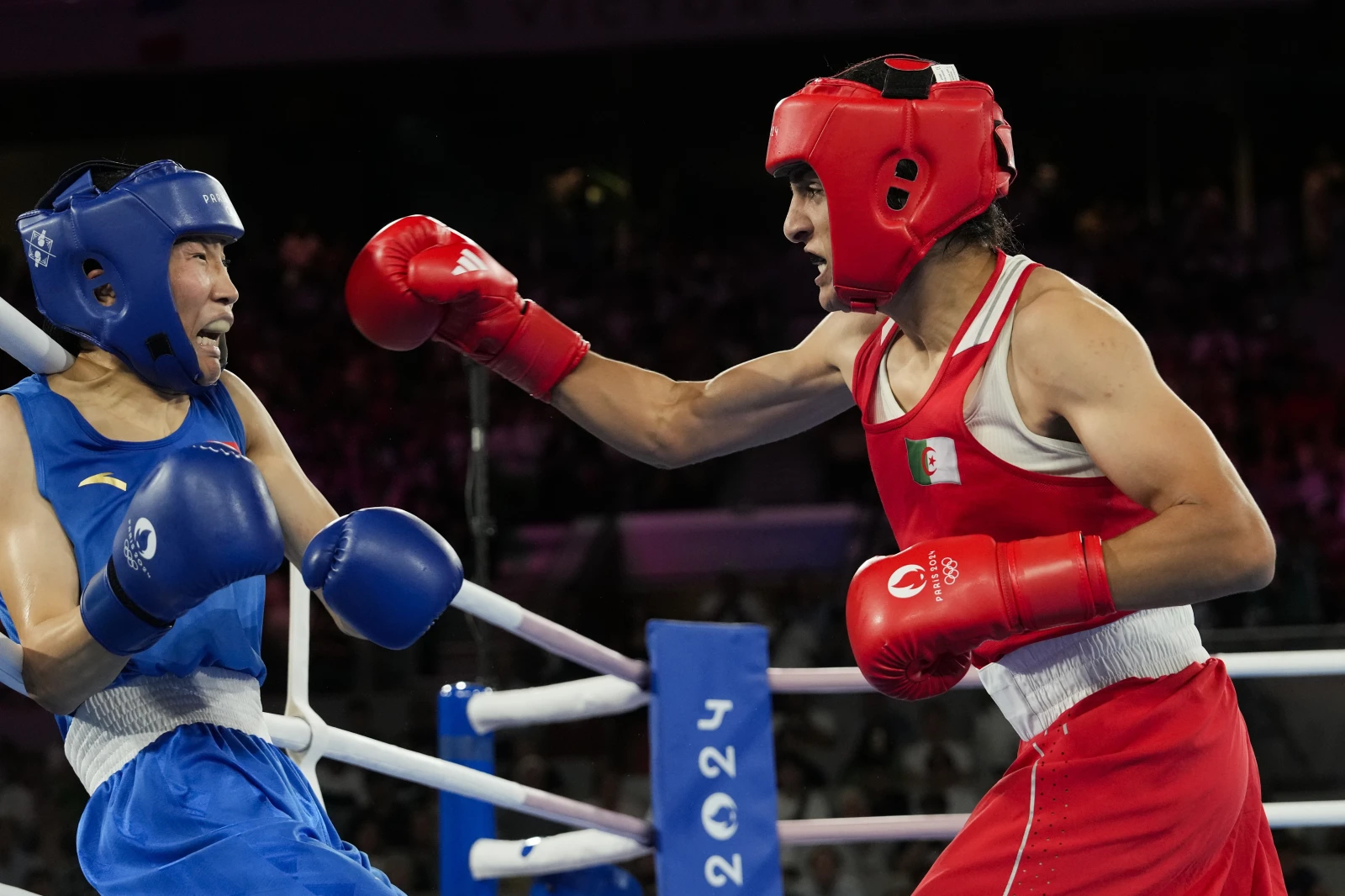
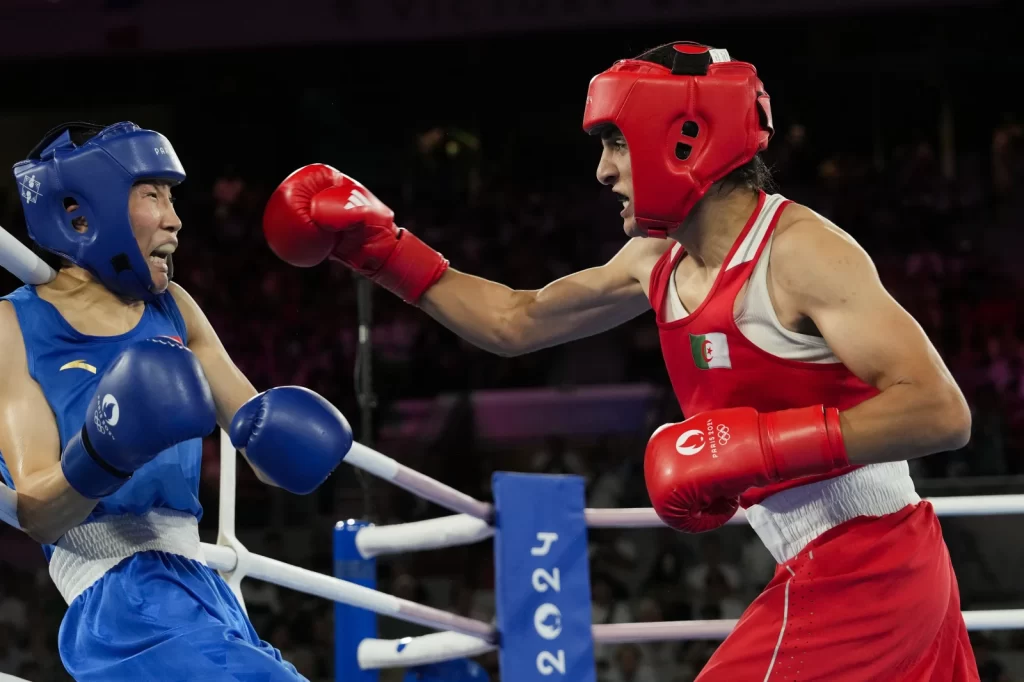
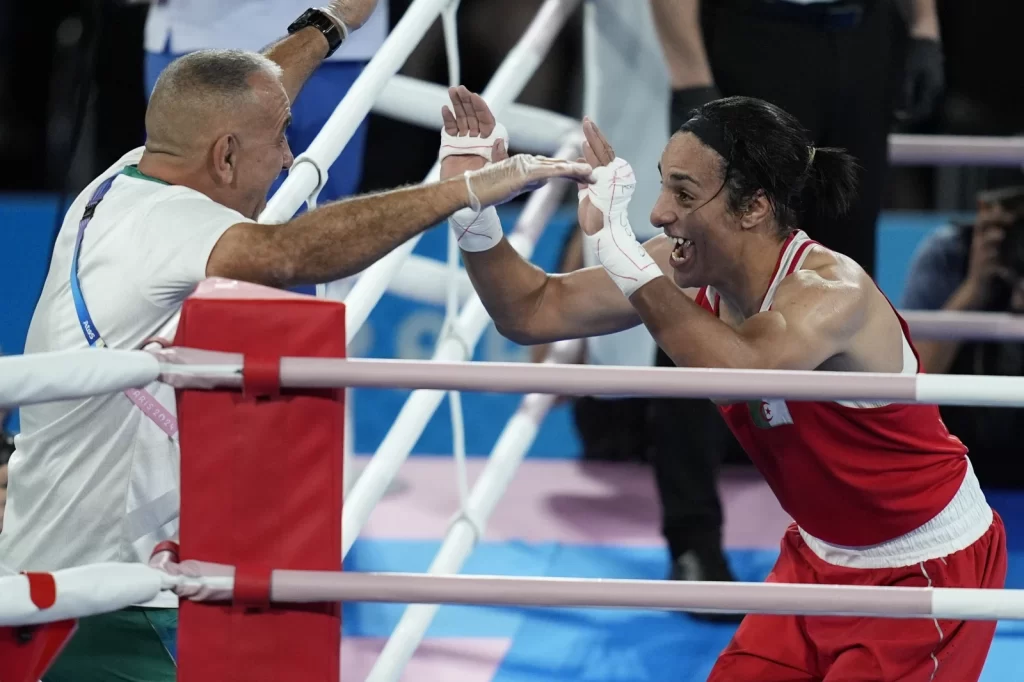
Algerian Olympic boxer Imane Khelif has made a powerful plea against athlete bullying, speaking out about the devastating impact of hateful scrutiny she has faced due to misconceptions about her gender. As she advances through the Paris Olympics, Khelif’s journey has become one of the Games’ most compelling narratives, highlighting the intersection of athletic achievement and societal prejudices.

In an emotional interview with SNTV, Khelif addressed the international backlash that has overshadowed her Olympic experience. “I send a message to all the people of the world to uphold the Olympic principles and the Olympic Charter, to refrain from bullying all athletes,” she urged, emphasizing the potentially destructive effects of such behavior on athletes’ mental health and spirit.

The 25-year-old boxer’s ordeal stems from claims made by the International Boxing Association (IBA), a body permanently banned from the Olympics, regarding unspecified eligibility tests for the women’s competition. Despite these allegations, the International Olympic Committee (IOC) has stood firmly behind Khelif, affirming her qualification for the Paris Games.

Khelif expressed gratitude towards the IOC and its president, Thomas Bach, for their unwavering support amidst the controversy. “I know that the Olympic Committee has done me justice, and I am happy with this remedy because it shows the truth,” she stated, underscoring the importance of fair treatment in sports governance.

The Algerian athlete’s resilience in the face of adversity has been evident throughout the Games. After each victory, including a win over Hungary’s Anna Luca Hamori, Khelif has been visibly emotional, reflecting the weight of the scrutiny she has endured. “I couldn’t control my nerves,” she admitted, describing the mix of joy and distress following her successes.

Despite the challenges, Khelif remains focused on her Olympic goals. “I don’t care about anyone’s opinion,” she declared, emphasizing her determination to compete for a medal and potentially secure Algeria’s first Olympic gold in women’s boxing. Her next bout in the women’s 66-kilogram semifinals at Roland Garros represents another step towards this historic achievement.

Khelif’s story extends beyond the boxing ring, touching on broader issues of gender identity and regulations in sports. The controversy has drawn comments from high-profile figures and sparked debates on social media platforms. However, Khelif maintains limited exposure to this online discourse, crediting the mental health team for shielding athletes from potentially harmful content during the Games.

The boxer’s journey to Olympic glory began in rural northwestern Algeria, where she overcame initial family objections to pursue her passion for boxing. Her path has been marked by perseverance, from traveling long distances to train to overcoming early career struggles to reach the elite level of international competition.

As Khelif prepares for her upcoming match against Thailand’s Janjaem Suwannapheng, her story continues to resonate with fans and fellow athletes alike. Her call to end bullying and uphold the principles of fair competition serves as a powerful reminder of the human element behind every Olympic performance.

In the face of unsubstantiated claims and online vitriol, Imane Khelif stands as a testament to the resilience of the human spirit. Her journey through the Paris Olympics not only showcases her athletic prowess but also highlights the ongoing need for compassion, understanding, and respect in the world of sports and beyond.

Unexpected Slip Costs Simone Biles Medal in Olympic Balance Beam Final

American gymnastics icon Simone Biles missed out on a medal in the balance beam final after an unexpected fall during her routine. The 27-year-old star, who had previously won bronze medals on this apparatus in the 2016 and 2020 Games, slipped off the beam during her acrobatic series, dashing hopes for another podium finish.

Biles, adorned in a crystal-studded blue-and-white leotard, was more than halfway through her performance when she lost her balance, eliciting a collective gasp from the packed Bercy Arena. The crowd, which included notable spectators like NFL legend Tom Brady, watched as Biles hopped off the beam onto the mat below.

The slip resulted in a score of 13.100 for Biles, tying her with teammate Sunisa Lee for fourth place. The visibly frustrated Biles rolled her eyes during the extended wait for her score, realizing she would not be adding to her impressive Olympic medal collection in this event.

In a surprising twist, Italy’s Alice D’Amato claimed the gold medal with a score of 14.366, marking Italy’s first-ever medal on the balance beam. China’s Zhou Yaqin secured silver with a 14.100, while another Italian, Manila Esposito, took bronze, completing a historic day for Italian gymnastics.

Sunisa Lee, who entered the competition with high hopes for a gold medal on her favorite apparatus, also faced disappointment. The 21-year-old fell during her acrobatic series, mirroring Biles’ misfortune. Despite this setback, Lee will leave Paris with three medals, a remarkable achievement considering her recent struggle with chronic kidney-related diseases.

While the balance beam final proved challenging, Biles still has an opportunity to add to her Olympic legacy in the floor exercise final later in the day. Known for her dominance in this event, Biles has never lost a major international competition on floor, including her gold medal performance in Rio de Janeiro eight years ago.

The gymnastics community remains in awe of Biles’ resilience and talent. As Lee remarked, “She’s the G.O.A.T., so she’ll be amazing.” With 10 Olympic medals already to her name, including seven golds, Biles is on the cusp of tying Czechoslovakia’s Vera Caslavska for the second-most medals by a female gymnast in Olympic history.

As speculation swirls about her future in the sport, Biles has left the door open for a potential return at the Los Angeles Olympics, tantalizing fans with the comment, “Never say never.” Whether this marks the end of her illustrious Olympic career or not, Simone Biles continues to captivate the world with her extraordinary skills and indomitable spirit, even in the face of unexpected challenges.

The Associated Press

Hezbollah Fires Drones at Israel, Intensifying Middle East Conflict Amid Assassination Fallout

The Israel-Hamas war has taken a dangerous new turn as Hezbollah, the Lebanese militant group, launched a drone attack on northern Israel early Monday, wounding two Israeli troops and igniting fears of an all-out regional conflict. This escalation comes in the wake of high-profile assassinations that have sent shockwaves through the Middle East.

Hezbollah claims the attack targeted a military base in northern Israel, framing it as retaliation for Israeli operations in southern Lebanon. However, this strike is not believed to be the full-scale response anticipated following the recent killing of senior Hezbollah commander Fouad Shukur in Beirut. The incident adds to the nearly daily exchanges between Israel and Hezbollah over the past 10 months, a conflict that has thus far remained contained but threatens to boil over.

The regional powder keg was further primed by the assassination of Hamas political leader Ismail Haniyeh in Tehran last week. In response, Gen. Hossein Salami, head of Iran’s Revolutionary Guard, issued a stark warning to Israel, stating they were “digging their own grave” and promising retaliation at an unspecified time and place.

As tensions mount, Israel has returned over 80 bodies to the Gaza Strip, though the identities and causes of death remain unclear. This action occurs against the backdrop of Israel’s ongoing offensive in Gaza, which has included the exhumation of remains in search of hostages taken during Hamas’ October 7 attack.

The conflict continues to claim lives and disrupt the region. An Israeli airstrike killed Abdel-Fattah al-Zariai, an official in the Hamas-run government in Gaza, along with his mother. Israel claims al-Zariai was involved in militant activities, including the misappropriation of humanitarian aid for military purposes.

In Lebanon, an Israeli drone strike reportedly killed two people, including a paramedic, near a cemetery in the southern village of Meissa al-Jabal. This incident further heightens concerns about the potential for the conflict to spread beyond Gaza’s borders.

Palestinian militants in Gaza have maintained pressure on Israel, firing at least 15 projectiles into Israeli territory, resulting in one minor injury. These attacks, while less frequent than at the war’s outset, demonstrate the ongoing threat faced by Israeli communities near the Gaza border.

As the international community watches with growing concern, Iran’s vow to respond with “power and decisiveness” to the killing of Haniyeh adds another layer of complexity to an already volatile situation. Iranian Foreign Ministry spokesperson Nasser Kanaani emphasized Iran’s right to self-defense while claiming the country is not seeking to escalate regional tensions.

With each new development, the prospect of containing the conflict diminishes. The interplay of local skirmishes, international assassinations, and regional power dynamics has created a precarious situation where any misstep could trigger a wider conflagration. As world leaders scramble to prevent further escalation, the people of the Middle East brace for what may come next in this increasingly unpredictable and dangerous conflict.

Wall Street Braces for Steep Decline as U.S. Recession Fears Intensify

Wall Street is poised for a significant downturn as U.S. stock index futures plummeted on Monday, with Nasdaq futures falling nearly 4%, as fears of an impending recession in the United States ripple through global markets. This sharp decline reflects growing investor anxiety over the health of the world’s largest economy and its potential impact on financial markets worldwide.

The sell-off is not limited to U.S. markets, as stock exchanges from Asia to Europe are experiencing substantial losses. Investors are rapidly shifting towards safe-haven assets, causing bond yields to slide. This flight to safety is accompanied by increasing bets that the Federal Reserve will need to implement quick interest rate cuts to stimulate economic growth.

Megacap and growth stocks, which have been the primary drivers of recent record highs, are facing severe premarket losses. Apple Inc. has seen a staggering 7.3% drop following news that Warren Buffett’s Berkshire Hathaway has reduced its stake in the tech giant by almost 50%. This move by the legendary investor is being interpreted as a sign of caution about the broader U.S. economy or potentially overvalued stock market.

Nvidia, a key player in the artificial intelligence chip market, has also been hit hard, falling 6.8% amid reports of delays in launching its new AI chips due to design flaws. These developments in the tech sector are contributing significantly to the overall market pessimism.

The recent weak jobs report and shrinking manufacturing activity in the U.S. have pushed both the Nasdaq 100 and Nasdaq Composite into correction territory. The jobs data has also triggered the “Sahm Rule,” considered by many as a reliable recession indicator, further fueling concerns about the economy’s trajectory.

People walk past the New York Stock Exchange Tuesday, April 9, 2024 in New York.European equities have dipped in early trading while Asian stocks closed mostly higher, with investors mainly focusing on a U.S. inflation report and what it means for interest rate cuts by the Federal Reserve. (AP Photo/Peter Morgan)

In response to these economic signals, traders are now assigning a 91.5% probability that the Federal Reserve will cut benchmark rates by 50 basis points in its September meeting. Market expectations have shifted dramatically, with year-end rates now projected at 4-4.25%, down from the current 5.25%-5.50%.

The CBOE Volatility Index, often referred to as Wall Street’s “fear gauge,” has surged to its highest level since May 2022, breaching the long-term average of 20 points. This spike in volatility underscores the heightened uncertainty and risk aversion pervading the market.

Cryptocurrency-linked stocks are not immune to the sell-off, with Bitcoin hitting a five-month low. Major crypto-related companies like Coinbase Global, Bitfarms, Microstrategy, and Riot Platforms are all facing significant premarket losses.

As investors brace for a turbulent week ahead, all eyes will be on upcoming statements from Federal Reserve officials regarding the economy and monetary policy. Their insights could potentially provide some reassurance to the markets, but for now, the prevailing sentiment remains one of caution and concern about the economic outlook.

Reuters

Prime Minister Sheikh Hasina Resigns and Leaves Bangladesh, Ending 15-Year Rule

Bangladesh’s Prime Minister Sheikh Hasina resigned on Monday, bringing an end to her 15-year leadership as nationwide protests intensified, leading to defiance of a military-imposed curfew and the storming of her official residence by thousands of demonstrators.

Shortly after local media broadcasted images of Hasina boarding a military helicopter with her sister, Bangladesh’s military chief, General Waker-uz-Zaman, announced plans to consult with the president about forming an interim government. This announcement came amid a backdrop of escalating violence and public unrest.

General Waker-uz-Zaman assured the public that the military would stand down and pledged to investigate the deadly crackdowns that have fueled widespread outrage against the government. He emphasized the need for accountability and urged citizens to remain calm as authorities work to restore peace.

“Keep faith in the military, we will investigate all the killings and punish the responsible,” he stated. “I have ordered that no army and police will indulge in any kind of firing. Now, the students’ duty is to stay calm and help us,” he added.

The protests initially began peacefully as citizens demanded an end to the quota system for government jobs. However, the demonstrations quickly evolved into a larger uprising against Hasina and her ruling Awami League party. As the protests gained momentum, the government resorted to using force in an attempt to quell the dissent, resulting in nearly 300 deaths and exacerbating public anger.

The unrest saw at least 95 fatalities, including 14 police officers, during clashes in the capital city of Dhaka, as reported by the country’s leading Bengali-language daily newspaper, Prothom Alo. Additionally, hundreds sustained injuries during the violence.

In response to the protests, authorities arrested over 11,000 individuals in recent weeks. The turmoil has spread to various regions, including college campuses and universities across the country, prompting the government to impose a shoot-on-sight curfew in an attempt to maintain order.

Now exiled former president, Hasina

The resignation of Sheikh Hasina marks a significant shift in Bangladesh’s political landscape as the nation navigates through a period of instability and uncertainty. The military’s promise to step back and initiate investigations provides a glimmer of hope for accountability and reform, but the path to restoring peace and stability remains challenging.

As Bangladesh moves forward, the focus will be on rebuilding trust within the government, addressing the demands of protesters, and ensuring that the transition of power occurs peacefully and democratically.

Source: apnews.com