Home Blog Page 844

Dollar Weakens After Fed Meeting, Yen Hits Four-Month High

0

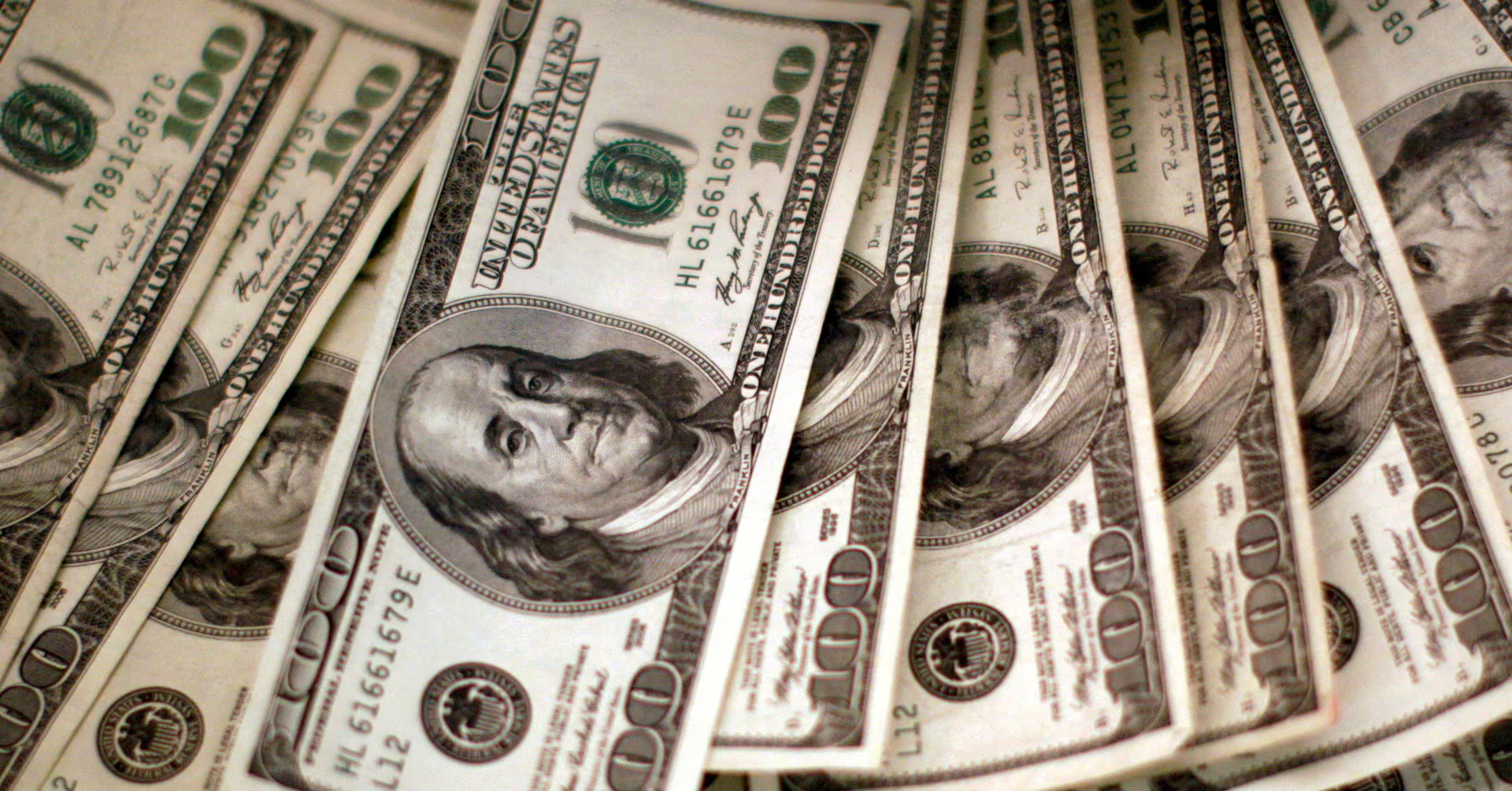
The US dollar weakened on Wednesday after the Federal Reserve held interest rates steady but signaled a potential rate cut as early as September. The dollar index fell to 103.92, down 0.34% at 104.09, on track for a monthly loss of 1.7%.

Fed Chair Jerome Powell stated that an interest rate cut could be considered in September if inflation aligns with expectations, growth remains strong, and the labor market stays stable. The Fed maintains its data-dependent approach and has not made decisions about future meetings.
Traders have fully priced in a September rate cut, with expectations of a second and possible third cut by year-end. The next significant US economic release influencing Fed policy will be Friday’s government jobs report for July, with economists expecting 175,000 new jobs.

The Japanese yen hit a four-month high against the dollar after the Bank of Japan raised rates to 0.25% from 0-0.1%, the largest increase since 2007. The dollar was down 1.87% at 149.91 yen, reaching as low as 149.63. Japanese authorities spent 5.53 trillion yen ($36.8 billion) intervening in the foreign exchange market this month to boost the currency.

In other currency movements, the Australian dollar fell to a three-month low of $0.6480 following softer core inflation data. The euro gained 0.05% to $1.082, set for a roughly 1% gain in July. The pound rose 0.11% to $1.2848, heading for a monthly gain of 1.5%.

The cryptocurrency market also saw movement, with Bitcoin falling 0.77% to $65,668.

These currency fluctuations reflect the impact of central bank decisions and economic data on the forex market. Traders are closely watching for signs of future monetary policy shifts, particularly from major central banks like the Federal Reserve and the Bank of Japan.

The ADP National Employment Report released on Wednesday showed that private payrolls rose by 122,000 jobs this month, below economists’ expectations for 150,000 job gains. This data, along with Friday’s upcoming government jobs report, will be crucial in shaping expectations for the Fed’s next moves.

As the global economic landscape continues to evolve, currency markets remain sensitive to policy decisions and economic indicators. The recent moves in the dollar, yen, and other major currencies underscore the interconnected nature of global finance and the significant role that central bank policies play in shaping market dynamics.

Ivorian Farmers See Hope with New High-Yield, Drought-Resistant Rice Variety-Reuters

0

Ivory Coast rice farmer Francois Kasse Yao has long struggled to make ends meet, facing unpredictable weather conditions and producing only one harvest per year. However, a groundbreaking new rice variety is transforming his prospects, allowing for more frequent and abundant harvests.

The new rice grain was introduced as part of a nationwide program designed to boost the output of the regional staple food and reduce the country’s dependency on rice imports. This innovative rice variety, which is drought-resistant, allows farmers like Yao to harvest up to seven times a year, with yields reaching 5 metric tons per hectare.

This agricultural breakthrough is not just a boon for local farmers but also a significant step towards strengthening the nation’s food security. By reducing reliance on foreign imports, the Ivory Coast can enhance its self-sufficiency and bolster its economy.

The introduction of this new rice variety is coupled with enhanced farming techniques, including better irrigation, mechanization, and the development of short-cycle drought-resistant seeds. Before these advancements, farmers in some areas struggled to yield even one metric ton per hectare.

“Today’s yields are better,” said Yao, a 52-year-old farmer from the village of Subiakro, located 14 kilometers from Yamoussoukro, the Ivorian capital. “This time we’ve started with a new variety, so today we’re doing just fine.”

Hermann N’Guessan Kouame, a fellow farmer from a neighboring village, praised the new rice variety for its resilience and superior taste, qualities that make it highly valued in local markets. “The grain is not only drought-resistant but also has a unique aroma and flavor that is well-appreciated by consumers,” Kouame explained.

The average market price for this newly milled rice is 650 CFA francs ($1.09) per kilogram, a price point that reflects its quality and demand.

“When you plant it, no matter how the weather changes, it’s always intact,” said Kouame, who tends a 44-hectare plot in Zatta, about 15 kilometers from Yamoussoukro.

The national output of local white rice is currently estimated at 1.4 million metric tons, with expectations of significant growth as more farmers adopt this high-yield variety. According to agricultural experts, this could help bridge the gap between local production and demand, reducing the country’s reliance on imported rice.

The government’s agricultural program aims to further enhance production capacities, with plans to expand the use of modern farming techniques and provide ongoing support to local farmers. This initiative is part of a broader strategy to revitalize the agricultural sector and promote sustainable economic growth in the Ivory Coast.

Bank of England Implements First Interest Rate Cut Since 2001 Amid Economic Pressures

0

In a significant move aimed at addressing economic uncertainties, the Bank of England (BoE) has announced its first interest rate cut since 2001, lowering rates from a 16-year high. The decision, made by a narrow 5-4 vote within the BoE’s Monetary Policy Committee (MPC), reflects ongoing concerns about inflation and the broader economic climate in the United Kingdom.

Governor Andrew Bailey, who spearheaded the decision to reduce rates by a quarter-point to 5%, emphasized the need for caution as the bank navigates the complex economic landscape. “We must ensure that inflation remains under control while avoiding excessive rate cuts that could destabilize the economy,” Bailey stated during a press conference following the announcement.

The decision aligns with predictions from a recent Reuters poll of economists, although financial markets had priced in only a slightly more than 60% probability of a rate reduction. This unexpected move underscores the commitment of the Bank of England to managing inflation while supporting economic growth.

This rate cut marks the first reduction since March 2020, at the onset of the COVID-19 pandemic, when the bank slashed rates to support the economy amidst unprecedented global challenges. Before the current decision, rates had been held steady for nearly a year, marking the longest period of unchanged rates during a tightening cycle since the early 2000s.

Minutes from the most recent MPC meeting revealed that the decision to cut rates was “finely balanced” for some committee members, highlighting the delicate nature of the current economic environment. The language used in the meeting minutes echoes previous instances when the BoE opted to maintain rates, emphasizing the cautious approach the bank is taking.

The shift in voting patterns among key policymakers, including Governor Bailey and Deputy Governors Sarah Breeden and Clare Lombardelli, signals a change in the bank’s approach to monetary policy. None of these officials had publicly commented on monetary policy since the BoE’s June meeting, adding an element of surprise to the decision.

Recent political developments, including the Labour Party’s victory in the national election, have influenced the economic landscape. The new government has announced public sector pay decisions that will be incorporated into the BoE’s forecasts following the upcoming October 30 budget.

The BoE’s decision comes amid broader economic challenges, including the ongoing impacts of the COVID-19 pandemic, geopolitical tensions, and concerns about inflationary pressures. These factors have contributed to a complex economic environment, requiring careful consideration by policymakers to balance growth and stability.

Governor Bailey has indicated that the BoE will continue to closely monitor economic indicators and adjust policy as needed to support the UK’s recovery and long-term economic health.

Reuters

Mother with Baby Confronts Police After Teargas, Pepper Spray Used on #EndBadGovernance Protesters in Abuja

0

A tense and dramatic scene unfolded at the Eagles Square in Abuja, Nigeria, when a mother holding a baby boldly confronted police officers after they used teargas and pepper spray to disperse #EndBadGovernance protesters. The incident, which occurred around 10:30 am, marked a significant escalation in the ongoing protests against economic hardship and perceived governmental failures.

The confrontation began when police officers stationed at the square fired warning shots into the ground, a move that immediately raised tensions among the gathered protesters. In response to these warning shots, an unidentified woman, cradling a baby in her arms, stepped forward to confront the officers directly. In a heart-stopping moment, she dared the police to shoot, using her vulnerable position as a mother with an infant to challenge the officers’ use of force.

The woman’s brave, if risky, action quickly drew support from other protesters who joined her in confronting the police. This collective show of defiance prompted a swift and harsh response from the officers. In quick succession, they deployed pepper spray and then teargas canisters to disperse the growing crowd of agitated demonstrators.

The use of such crowd control measures in the presence of a baby has raised serious questions about the tactics employed by Nigerian police in managing the protests. The image of a mother, baby in arms, standing against a line of police officers amid clouds of teargas, has become a powerful symbol of the tensions gripping the nation.

As news of the incident spread, it added fuel to the already burning fires of discontent across Nigeria. The #EndBadGovernance protests, which have been gaining momentum in various cities, have seen citizens expressing their frustrations over rising living costs and demanding better governance.

The fate of the mother and child following the confrontation remains unclear. Reports have not confirmed whether the woman was arrested or if she managed to leave the scene safely with her baby. This uncertainty has only added to the growing concerns about the treatment of protesters and the potential for further escalation of violence.

This incident at Eagles Square is part of a larger pattern of unrest across Nigeria. While some areas have seen peaceful demonstrations, others have experienced violent clashes between protesters and authorities. In Gombe State, angry demonstrators pelted stones at the Government House, while in contrast, states like Ogun and Kogi reported minimal protest activity.

As the #EndBadGovernance movement continues to unfold across the country, the confrontation between the mother with her baby and the police in Abuja has become a defining moment. It underscores the deep-seated frustrations driving the protests and the challenging position of law enforcement in managing civil unrest.

The incident has sparked debates about police tactics, the right to peaceful protest, and the government’s response to citizen grievances. As Nigeria grapples with these complex issues, the image of a mother standing against a line of police officers serves as a powerful reminder of the human stakes in this ongoing struggle for better governance.

#EndBadGovernanceInNigeria Protests Spread Across Nigeria as Citizens Demand Change

0

Protests under the banner #EndBadGovernanceInNigeria have erupted across major cities in Nigeria, with demonstrators demanding an end to economic hardship and calling for better governance. The protests, which have spread to Abuja, Lagos, Delta, Rivers, and Kano, have seen citizens take to the streets to voice their frustrations with the current administration.

In Abuja, protesters gathered at Eagles Square, where they shouted down the Minister of State for Youths Development, Ayodele Olawande, who attempted to address the crowd. The protesters chanted “hunger dey,” drowning out the minister’s words. Damilare Adenola, Director of Mobilisation for the Take It Back Movement, stated that the protests would continue unless President Bola Tinubu accedes to their demands.

The Gani Fawehinmi Park in Ojota, Lagos, saw protesters arrive around 11 am, chanting “All we are saying! End Bad Governance!” Security operatives, including officers from the Counterterrorism Unit of the Nigeria Police Force, closely followed the demonstrators.

In Delta State, protesters gathered at the Interbua Roundabout in Asaba amid a heavy security presence. Starting with just two young men at 9:30 am, the group grew to 15 by 10:20 am. Protesters alleged that the state governor had attempted to thwart the demonstration by giving money to some youth groups.

Port Harcourt, the Rivers State capital, witnessed hundreds of youths marching through Aba Road towards the Government House. Their placards bore messages such as “We say no to bad governance in Nigeria,” “There is hunger in the land,” and “Tinubu must go.”

The situation escalated in Kano, where police fired tear gas to disperse several hundred protesters rallying outside the governor’s office. The demonstrators had attempted to light bonfires before being driven back by the police response.

These protests come in the wake of mounting economic challenges facing Nigeria, with citizens expressing their frustration over the rising cost of living and perceived governmental failures. The demonstrators have made it clear that they will not be easily deterred, with many vowing to remain on the streets until their demands are met.

The widespread nature of these protests, spanning multiple cities and drawing significant crowds, underscores the depth of dissatisfaction among Nigerian citizens. As the demonstrations continue, all eyes are on President Tinubu and his administration to see how they will respond to the growing calls for change and improved governance across the nation.

Weston Cage Pleads Not Guilty to Attacking Mother, Claims ‘She Needs Help’

0

Weston Cage, the son of actor Nicolas Cage, has pleaded not guilty to attacking his mother, Christina Fulton. The incident has garnered significant media attention due to the high-profile nature of the family involved.

As for his mother, Christina was emotional on her way into the building and was in no mood to talk about their fractured relationship, other than to say Weston should seek help. Clearly, Christina’s healed from the injuries she claims she suffered at her son’s hand.

Weston was arrested after his mother alleged that he attacked her, leaving her with horrific bruises. In court, Weston maintained his innocence, stating that his mother needs help.

In addition to Weston’s not guilty plea, the judge issued a protective order for Christina, barring him from contacting his mother as the case plays out. Weston’s got another hearing set for September.

Shocking as Woman Flashes Boobs at Olympic Tennis Match

0

Viewers of the 2024 Paris Olympics were left shocked when a woman unexpectedly flashed her boobs during a tennis match, transforming what appeared to be a “nice family outing” into a controversial spectacle. The incident, which fans described as “bizarre behavior,” occurred during the women’s singles quarter-final between Iga Swiatek and Danielle Collins.

Television cameras inadvertently captured the moment as they panned across the crowd during a Mexican wave. The footage showed a man, woman, and child seated together in the stands. Initially, the trio smiled and waved at the camera, presenting a picture of family enjoyment at the prestigious sporting event. However, the scene took an unexpected turn when the woman suddenly lifted her shirt, revealing her boobs covered by a bikini.

The presence of a young child next to the woman during this act of exposure has particularly fueled outrage on social media. Fans were quick to express their disbelief and criticism online. One viewer commented on X (formerly Twitter), “Having a nice family outing at the Olympics and then Mum had to show her boobs again.” Another added, “Bizarre behaviour with a young child,” encapsulating the general sentiment of shock and disapproval.

The incident has been widely characterized as a “wtf moment” by viewers, highlighting the unexpected and inappropriate nature of the act in the context of a family-friendly international sporting event.

Despite the distraction in the stands, the match continued on court. Top seed Swiatek advanced to the semi-finals after Collins was forced to retire during the match tiebreak, with the players level at one set each in their quarter-final encounter.

This controversial moment has overshadowed what was otherwise a significant tennis match in the Olympic tournament. It has also raised questions about spectator behavior and the challenges of managing live broadcasts during major sporting events.

The incident occurs against the backdrop of the Paris Olympics, dubbed the event in the “City of Love,” where organizers have made various provisions for athletes, including the distribution of 300,000 condoms in the Olympic village. This practice, which began at the Seoul 1988 Games, has become a tradition at the Olympics, though it stands in stark contrast to the family-friendly image the Games aim to project.

Shocking Video: Plane Ripped Open in Brazil Runway Collision

0

Shocking footage has emerged showing the alarming aftermath of a runway collision between two passenger-packed planes at Congonhas Airport in São Paulo, Brazil. The video, which has been circulating widely, reveals a Gol Boeing 737-8 MAX with a gaping hole torn in its fuselage following a collision with a Latam Airbus A319 on July 29.

The terrifying incident unfolded around 5 pm as the Gol Boeing was preparing for takeoff. Moments earlier, the Latam Airbus had landed and was taxiing to the airport’s parking gate when its left wing tip struck the tail cone of the stationary Boeing. The impact caused a substantial tear in the Boeing aircraft, leaving a hole visible in the lower part of its fuselage.

The footage clearly shows the extent of the damage, with the Boeing’s tail section severely compromised. The Latam plane, while less severely affected, sustained minor damage to its wing and moderate damage to its tail. The visual evidence of the collision has left many viewers stunned by the potential catastrophe that was narrowly avoided.

Despite the alarming nature of the collision and the dramatic footage, both airlines reported that no injuries occurred. Passengers from both planes were safely evacuated, a testament to the quick response of the flight crews and airport personnel. The incident, however, led to significant disruptions in flight schedules.

Gol was forced to reroute passengers who were heading to Florianópolis to another plane. Latam, meanwhile, canceled two flights – one from São Paulo Congonhas to Curitiba and another returning to Congonhas. The airline worked to accommodate affected passengers on other flights.

The footage of the incident serves as a stark reminder of the potential dangers present even on the ground at busy airports. It highlights the critical importance of precise coordination and communication between flight crews, ground staff, and air traffic controllers to prevent such collisions.

This event occurs against a backdrop of recent issues involving Boeing aircraft, although the collision itself appears to be unrelated to any manufacturer defect. Nonetheless, the incident adds to a series of concerning events that have put Boeing under scrutiny in 2024.

Russia Initiates Third Phase of Nuclear Weapons Exercises

0

Russia’s Defense Ministry announced on Wednesday the commencement of a “third phase” in its ongoing non-strategic nuclear weapon exercises, a series that began in the spring. These latest drills are taking place across a wide geographical area, including the central and southern military districts of Russia, several North Caucasus republics, annexed Crimea, and four partially occupied regions of southern and eastern Ukraine that Russia claims to have annexed.

The exercises focus on enhancing the combat readiness of Russia’s missile formations. According to the Defense Ministry, personnel will be tasked with “acquiring special training ammunition for the Iskander-M tactical missile systems.” Additionally, servicemen will receive instruction in “equipping launch vehicles and covertly advancing to designated positions to prepare for electronic launches.

Accompanying the announcement, the Defense Ministry released video footage showing camouflaged military vehicles navigating muddy forest roads, with some visibly carrying missiles. This visual evidence underscores the scale and nature of the exercises being conducted.

These drills are part of a broader response ordered by President Vladimir Putin in early May to what Russia perceives as Western “threats and provocations.” Russian officials specifically cited comments made by French President Emmanuel Macron regarding the possibility of NATO countries sending troops to Ukraine as a catalyst for these exercises.

The current phase follows two previous stages of the drills. The first began in May, shortly after Putin’s order. The second stage, conducted in June, saw Russian and Belarusian armed forces carrying out joint exercises after Belarusian leader Alexander Lukashenko ordered a surprise inspection of his country’s non-strategic nuclear weapon carriers.

It’s worth noting that while Belarus doesn’t possess its own nuclear weapons, it agreed last year to host Russian tactical warheads on its territory. This decision came amidst escalating tensions surrounding Russia’s full-scale invasion of Ukraine.

These ongoing nuclear drills highlight the continuing geopolitical tensions between Russia and the West, particularly in the context of the Ukraine conflict. As Russia flexes its nuclear capabilities, the international community watches closely, aware of the potential implications for global security and stability.

The exercises serve as a stark reminder of the nuclear dimension in current geopolitical tensions, underscoring the complex challenges facing diplomats and policymakers as they navigate an increasingly volatile international landscape.

Additional reporting contributed by AFP.

Delta and United Airlines Cancel Flights to Israel Amid Escalating Tensions in the Middle East

0

United Airlines is suspending its daily flights to Israel, beginning with the Wednesday night flight from Newark to Tel Aviv, as tensions in the Middle East escalate.

“Beginning with this evening’s flight from Newark Liberty to Tel Aviv, we are suspending for security reasons our daily Tel Aviv service as we evaluate our next steps,” a United spokesperson told USA TODAY in an emailed statement. “We continue to closely monitor the situation and will make decisions on resuming service with a focus on the safety of our customers and crews.”

Delta Air Lines will also cancel flights between New York (JFK) and Tel Aviv through at least August 2.

“Delta flights between New York-JFK and Tel Aviv will be paused through Friday, Aug. 2, due to ongoing conflict in the region. Sales of flights for DL234 on Jul. 31 and Aug. 1, and DL235 on Aug. 1 and Aug. 2, are suspended,” the airline said in a statement. “Customers impacted by the schedule change will receive notifications via the Fly Delta app and contact information listed in their reservation.”

The airline has also issued a waiver for flights to and from Israel through Aug. 14, which allows them to change their plans without paying a fare difference. Delta said it will continue monitoring the security situation and will keep customers updated about any further schedule changes.

If your flight is canceled by a U.S. airline or departing from a U.S. airport, you are entitled to a cash refund, even if you purchased a nonrefundable ticket,” the airline noted.

U.S. airlines suspended flights to and from Tel Aviv in October amid ongoing conflict between Israel and Palestinian militants. American Airlines then resumed its flights.

The State Department has issued a travel advisory for the region, urging American citizens to reconsider travel to Israel and the West Bank, and suggesting not to travel to Gaza.

usatoday.com