Home Blog Page 923

Switzerland vs Italy: Saturday’s Euro 2024 Round of 16 Clash Preview

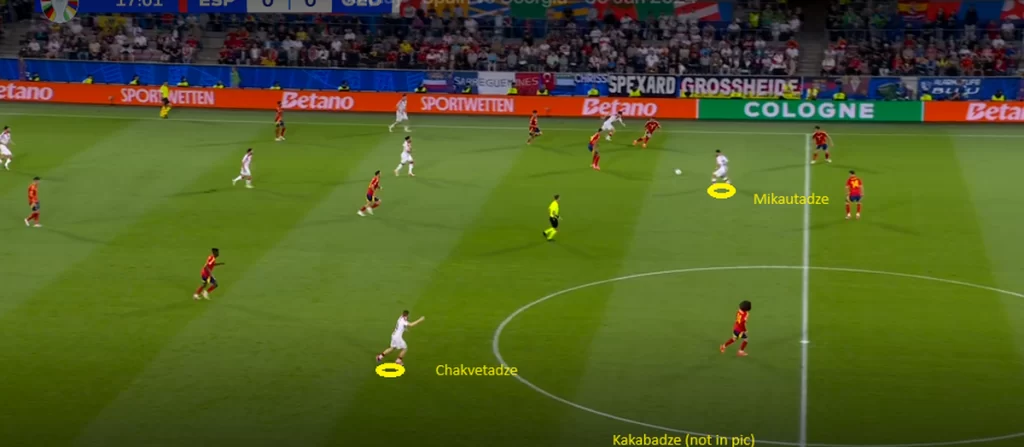
The Euro 2024 knockout stage kicks off with a tantalizing clash between Switzerland and defending champions Italy at Berlin’s Olympiastadion on Saturday. Both teams narrowly missed out on more favorable positions in the tournament bracket, setting the stage for an intense battle in this round of 16 encounter.

Switzerland enters the match after an impressive group stage performance that exceeded many expectations. Murat Yakin’s side came within minutes of topping Group A, leading Germany 1-0 before Niclas Fullkrug’s late equalizer relegated them to second place. The Swiss have proven themselves to be a formidable and resilient opponent, continuing their trend of strong tournament showings.

Italy, on the other hand, struggled through a challenging Group B, securing second place with a last-gasp equalizer against Croatia. Substitute Mattia Zaccagni’s crucial goal salvaged a point for the Azzurri and elevated them from a potential third-place finish. Roberto Mancini’s side will be eager to shake off their group stage inconsistencies and reassert their credentials as tournament favorites.

This match-up presents an intriguing tactical battle between Switzerland’s disciplined, counter-attacking style and Italy’s possession-based approach. The Swiss will be aiming to record their first victory over Italy since 1993, while the Azzurri look to continue their defense of the European crown.

Key factors to watch in this match include:

– Italy’s ability to break down Switzerland’s well-organized defense

– The impact of Switzerland’s counter-attacks, particularly through Xherdan Shaqiri and Breel Embolo

– The midfield battle between Italy’s Marco Verratti and Switzerland’s Granit Xhaka

– The form of Italy’s forwards, who have struggled to find consistent goal-scoring form in the tournament

Recent head-to-head history favors Italy slightly, with one win and four draws in their last five meetings. Their most recent encounter, a World Cup qualifier in November 2021, ended in a 1-1 draw.

As the Euro 2024 knockout stages begin, this match promises to be a closely contested affair between two sides with contrasting styles but similar ambitions. The winner will progress to a potential quarter-final clash with England, adding extra motivation to an already high-stakes encounter.

With experienced Polish referee Szymon Marciniak overseeing the match and VAR in place for crucial decisions, fans can anticipate a tense and potentially dramatic opening to the Euro 2024 knockout phase. As Switzerland aims for a historic upset and Italy seeks to continue its title defense, this round of 16 clash at the Olympiastadion sets the stage for an enthralling evening of international football.

New York Times Editorial Board Tells Biden to Exit 2024 Presidential Race

In a striking development, the New York Times Editorial Board has called on President Joe Biden to withdraw from the 2024 presidential race, citing concerns over his performance in the recent CNN presidential debate. This unprecedented move by one of the nation’s most influential newspapers has sent shockwaves through the political landscape and intensified discussions about the Democratic Party’s leadership.

The editorial, published Friday, painted a stark picture of Biden’s debate performance, describing him as “the shadow of a great public servant” who struggled to articulate his vision for a second term and effectively counter his opponent’s arguments. The board expressed concern over Biden’s ability to hold former President Donald Trump accountable and present a clear, compelling alternative to a second Trump presidency.

Central to the editorial’s argument is the assertion that Biden’s continued candidacy represents a “reckless gamble” for the Democratic Party and the nation. The board suggests that there are other Democratic leaders better equipped to face the challenges of the upcoming election and calls on Biden to prioritize the country’s stability and security over his personal ambitions.

Despite their critique, the Editorial Board maintained that they would still support Biden over Trump if those remained the only two options. However, they argue that forcing voters to choose between the perceived deficiencies of both candidates is an unnecessary risk.

The Biden campaign swiftly responded to the editorial, with campaign co-chair Cedric Richmond reminding CNN that Biden has previously succeeded without the Times’ endorsement. In 2020, the newspaper endorsed Senators Amy Klobuchar and Elizabeth Warren in the Democratic primary.

This call for Biden’s withdrawal is not isolated. It follows a wave of criticism from various quarters, including prominent Democratic figures and media personalities. David Axelrod, a longtime Democratic operative and CNN senior political commentator, noted Biden’s apparent disorientation during the debate and suggested that discussions about his continued candidacy are likely to occur within the party.

The concerns raised by the New York Times and others center primarily on Biden’s age and perceived cognitive decline. At 81, Biden is already the oldest sitting president in U.S. history, and questions about his stamina and mental acuity have persisted throughout his presidency.

As the Democratic Party grapples with these concerns, the potential for alternative candidates to emerge becomes a topic of intense speculation. The editorial’s call for Biden to step aside opens the door for discussions about who might be best positioned to lead the party into the 2024 election.

This development comes at a critical juncture in the election cycle, with primaries and caucuses set to begin in the coming months. The Biden campaign’s response and the president’s next moves will be closely watched as the Democratic Party navigates this unexpected challenge to its presumptive nominee.

As the political landscape continues to evolve, the impact of the New York Times Editorial Board’s stance remains to be seen. However, it has undoubtedly amplified the ongoing debate about leadership, age, and electability within the Democratic Party and across the nation.

CNN

Moderate Candidate Massoud Pezeshkian Advances to Iran’s Presidential Run-off

In a surprising turn of events, moderate candidate Massoud Pezeshkian has secured a place in the run-off for Iran’s presidential election, narrowly beating hardliner Saeed Jalili in Friday’s first round of voting. The 69-year-old cardiac surgeon, lawmaker, and former health minister will face Jalili in a second round on July 5, as neither candidate achieved the required majority of 50% plus one vote to win outright.

Moderate candidate Massoud Pezeshkian has secured a place in the run-off for Iran’s presidential election.

Pezeshkian’s campaign has stood out in an election dominated by hardliners, with the moderate candidate advocating for women’s rights, increased social freedoms, cautious détente with the West, and economic reform. His stance offers a stark contrast to the fiercely anti-Western position of many of his rivals, who more closely align with Supreme Leader Ayatollah Ali Khamenei’s views.

The moderate candidate’s success in the first round has sparked renewed interest in the election, particularly among young and disillusioned voters hungry for change. However, Pezeshkian faces significant challenges in the run-off, including the need to attract supporters of current hardline parliament speaker Mohammad Baqer Qalibaf, who finished third in the initial vote.

Iranian presidential candidates Saeed Jalili, left, and Masoud Pezeshkian. 
Getty Images

Despite his reformist leanings, Pezeshkian remains faithful to Iran’s theocratic rule and has pledged not to confront the country’s powerful security hawks and clerical rulers. His campaign gained momentum after receiving endorsements from reformists led by former President Mohammad Khatami and appointing former Foreign Minister Mohammad Javad Zarif as his foreign policy adviser.

Pezeshkian’s moderate stance on foreign policy and his support for reviving the 2015 nuclear deal have drawn criticism from hardliners. Supreme Leader Khamenei implicitly referred to Zarif’s appointment, warning that “anyone who is attached to America will not be a good colleague for you.”

If elected, Pezeshkian has promised to foster a pragmatic foreign policy and ease nuclear tensions with the West. However, under Iran’s dual system of clerical and republican rule, ultimate power in shaping key state policies rests with Khamenei, leading many voters to question Pezeshkian’s ability to fulfill his campaign promises.

Throughout his career as a lawmaker since 2008, Pezeshkian has been critical of the clerical establishment’s suppression of political and social dissent. He has also been a vocal supporter of ethnic minority rights, being of Azeri descent himself. However, he has acknowledged the limits of his potential authority as president, particularly concerning political prisoners.

Pezeshkian’s personal history includes service as both a combatant and physician during the Iran-Iraq war in the 1980s. He served as health minister from 2001 to 2005 under reformist President Mohammad Khatami. Tragically, Pezeshkian lost his wife and one of his children in a car accident in 1994, raising his surviving children alone.

As the run-off election approaches, all eyes will be on Pezeshkian to see if he can maintain his momentum and attract enough support to overcome his hardline opponent. The outcome of this election could have significant implications for Iran’s domestic policies and its relationships with the international community, particularly regarding the nuclear deal and social reforms.

Reuters

Martin Mull, Versatile Comedian and Actor, Dies at 80

Martin Mull, the multitalented comedian, actor, and musician who became a cultural icon in the 1970s and continued to delight audiences for decades, has died at the age of 80. His daughter, TV writer and comic artist Maggie Mull, announced that he passed away at home on Thursday after a prolonged illness.

Martin Mull, the multitalented comedian, actor, and musician.

Mull’s career spanned over five decades, showcasing his versatility across various entertainment mediums. Born in Chicago and raised in Ohio and Connecticut, Mull initially pursued art before transitioning into show business as a songwriter. His breakthrough came with the semi-hit “A Girl Named Johnny Cash” in 1970, setting the stage for a career that would blend music and comedy.

In the mid-1970s, Mull caught the attention of legendary television producer Norman Lear, which led to his role in the satirical soap opera “Mary Hartman, Mary Hartman.” This appearance catapulted him to national fame and resulted in his starring role in the spinoff “Fernwood Tonight,” where he played talk show host Barth Gimble. The show, which later evolved into “America 2 Night,” established Mull as a master of deadpan humor and satirical commentary.

Throughout his career, Mull demonstrated remarkable range as an actor. He often portrayed slightly sleazy or smarmy characters, most notably as Colonel Mustard in the cult classic film adaptation of “Clue” (1985). His collaborations with Fred Willard, including the mockumentary series “A History of White People in America,” became touchstones of 1980s comedy.

In the 1990s, Mull found renewed popularity with his recurring role on “Roseanne,” playing Leon Carp, Roseanne’s openly gay boss. This role showcased his ability to bring depth and warmth to characters that might otherwise have been stereotypical. Later in his career, Mull delighted audiences with guest appearances on shows like “Arrested Development” and “Veep,” the latter earning him an Emmy nomination in 2016.

Beyond acting, Mull was an accomplished painter and guitarist, embodying the Renaissance man ideal that defined much of his public persona. His wit and talent earned him the respect and admiration of fellow comedians and actors, with many citing him as an influence on their own careers.

Mull’s passing marks the end of an era in American comedy. His unique blend of dry humor, musical talent, and artistic sensibility made him a truly singular figure in entertainment. As noted by his daughter, Mull “was never not funny,” a testament to his enduring comedic genius.

Martin Mull is survived by his daughter Maggie, his wife of over 40 years, musician Wendy Haas, and a legacy that spans generations of comedy lovers. His contributions to television, film, and music will continue to be celebrated and remembered, ensuring that his distinctive voice in American humor lives on.

Hall of Fame Slugger Orlando Cepeda, ‘Baby Bull’ of Baseball, Dies at 86

Orlando Cepeda, the Hall of Fame first baseman known as “Baby Bull” and one of the pioneering Puerto Rican stars in Major League Baseball, has died at the age of 86. The San Francisco Giants and Cepeda’s family announced his passing on Friday night, with his wife Nydia stating that he died peacefully at home, surrounded by loved ones and listening to his favorite music.

Cepeda’s death comes just 10 days after the passing of another Giants legend, Willie Mays, adding to the sense of loss felt by the baseball community. Giants manager Bob Melvin expressed the team’s sadness, calling the news “another gut punch” and praising Cepeda as an “incredible personality” beloved by fans.

Throughout his 17-year career in the majors, Cepeda was a force to be reckoned with at the plate. He began his journey with the San Francisco Giants in 1958, earning the National League Rookie of the Year award. His career highlights include being named the National League MVP in 1967 with the St. Louis Cardinals, and leading the NL in home runs (46) and RBIs (142) in 1961.

Cepeda’s career took an interesting turn in 1973 when he became the Boston Red Sox’s first designated hitter, a role he credits for his eventual induction into the Hall of Fame in 1999. Despite facing challenges with knee injuries throughout his career, Cepeda adapted to the DH position, hitting .289 with 20 home runs and 86 RBIs in his first season in the role.

As one of the early wave of Spanish-speaking players in MLB, Cepeda faced significant cultural and linguistic challenges. He recalled the difficulties of adapting to life in the United States while also supporting his family back in Puerto Rico. His experiences paved the way for future generations of Latin American players in the league.

Cepeda’s life wasn’t without controversy. In 1976, he was convicted of drug smuggling in Puerto Rico, which likely contributed to his initial exclusion from the Hall of Fame by baseball writers. However, his eventual induction by the Veterans Committee in 1999 cemented his legacy as one of the game’s greats.

Throughout his career, Cepeda was a seven-time All-Star and played in three World Series. He finished with a .297 career batting average and 379 home runs. Beyond his statistics, Cepeda was known for his love of the game and his role as an ambassador for baseball, particularly in Latin American communities.

In his later years, Cepeda remained a regular presence at Giants home games until health challenges arose in 2018. His impact on the game extended far beyond his playing days, as he continued to inspire and connect with fans and players alike.

As the baseball world mourns the loss of Orlando Cepeda, his legacy as a trailblazer for Latin American players, his resilience in the face of adversity, and his contributions to the sport will be remembered and celebrated. His story serves as a testament to the evolving nature of baseball and the enduring impact of those who helped shape its history.

Armed Attacker Wounds Serbian Police Officer at Israeli Embassy in Belgrade, Assailant Shot Dead

An attack at the Israeli Embassy in Belgrade, Serbia, on Saturday resulted in the injury of a Serbian police officer and the death of the assailant. The incident, which authorities suspect may be terror-related, has heightened security concerns in the Serbian capital.

According to Serbia’s Interior Ministry, the attacker approached the embassy armed with a crossbow and fired a bolt at the police officer on guard duty, striking him in the neck. The injured officer responded by using his firearm in self-defense, fatally shooting the attacker.

Interior Minister Ivica Dacic reported that the wounded policeman was conscious when transported to Belgrade’s main emergency hospital, where surgery to remove the bolt from his neck was planned. The officer’s condition was not immediately disclosed.

Israeli Ministry of Foreign Affairs confirmed that no embassy employees were harmed during the incident, as the embassy was closed at the time. A spokesperson for the ministry described the event as an “attempted terrorist attack” in the vicinity of the embassy.

While the motive remains under investigation, Dacic told reporters that “there are now all indications that the motives relate to terrorism.” He revealed that one person was arrested near the scene, and police are investigating potential links to foreign terrorist groups.

Dacic mentioned possible connections to the Wahhabi movement, a hardline Islamist group, but emphasized that this information was not yet confirmed. The identity of the attacker was still being determined at the time of the report.

In response to the incident, Serbian authorities have raised the security alert level in Belgrade. Enhanced security measures are being implemented for foreign embassies, government buildings, and public spaces such as shopping malls and other busy areas.

The Israeli Embassy, located in an upscale Belgrade district not far from the U.S. Embassy, is typically guarded by an elite police unit equipped with automatic weapons. This attack has prompted a review of security protocols for diplomatic missions in the city.

The incident occurs against the backdrop of Serbia maintaining close relations with Israel during the ongoing conflict in Gaza. This diplomatic stance may have implications for the investigation and future security arrangements.

As the situation develops, authorities are expected to provide further updates on the investigation, including any potential international connections or broader security implications for diplomatic missions in Serbia.

AP

Man Sentenced to Life in Prison for 2020 Murder of St. Louis Police Officer

Thomas Kinworthy Jr., 46, has been sentenced to life in prison without the possibility of parole for the 2020 murder of St. Louis police officer Tamarris Bohannon. Judge Elizabeth Hogan handed down the sentence on Thursday, which includes two consecutive life terms for first-degree murder and first-degree assault, along with additional years for burglary and other charges.

The sentencing follows Kinworthy’s conviction earlier this month by a jury for the violent incident that occurred in August 2020. Officer Bohannon, 29, a three-and-a-half-year veteran of the St. Louis Police Department, was fatally shot in the head while responding to a call about an armed man who had forced a family from their home and barricaded himself inside. A second officer was shot in the leg during the incident.

During the sentencing hearing, members of Officer Bohannon’s family, including his parents, sister, wife, and children, delivered impact statements detailing the profound loss they have experienced. Elizabeth Bohannon, the officer’s mother, expressed her grief, stating, “He should still be here. He should be here to experience all that life had to offer him.”

Tiffany Bautista, Bohannon’s sister, recounted the difficult circumstances under which she learned of her brother’s shooting, having just given birth to her first child. She described having to plead with a hospital CEO to allow her to leave her newborn to see her critically injured brother.

Kinworthy, who maintained his innocence throughout the trial, spoke briefly during the sentencing. He disputed the case against him and stated that nothing could change the events surrounding Bohannon’s death or his sentence. At times, Kinworthy interrupted the prosecutor as she read through his criminal history during sentencing recommendations.

The defense attorney for Kinworthy argued that his client was experiencing a psychotic episode on the day of the shooting. The defense team indicated their intention to appeal the verdict and expressed hope for a retrial.

The sentencing of Kinworthy brings a measure of legal closure to a case that has deeply affected the St. Louis law enforcement community and the family of Officer Bohannon. The tragic loss of the young officer, who left behind a wife and three young children, underscores the risks faced by law enforcement officers in the line of duty.

As the community reflects on this case, it serves as a somber reminder of the sacrifices made by police officers and the lasting impact of violent crimes on families and communities. The life sentence without parole for Kinworthy represents the justice system’s response to the gravity of the offense and its commitment to holding perpetrators of violence against law enforcement accountable.

Ugandan Prime Minister’s Convoy Involved in Serious Accident, One Injured

A harrowing incident unfolded on Friday evening when two vehicles in Ugandan Prime Minister Robinah Nabbanja’s convoy were involved in a serious accident near the Lwera swamp in Kalungu District. The crash occurred as the Prime Minister was returning to Kampala following an official event in Lwengo, sending shockwaves through the country’s political circles and raising concerns about government officials’ safety on Uganda’s roads.

Ugandan Prime Minister Robinah Nabbanja’s convoy were involved in a serious accident.

According to Southern Region Police spokesperson Twaha Kasirye, the accident involved two Toyota Hilux vehicles, registered as UG 0861Z and UG 1052Z, both part of the Prime Minister’s official convoy. The incident was triggered when the driver of one Hilux attempted to overtake a truck carrying matooke (green bananas), a common sight on Ugandan roads. Upon noticing an oncoming vehicle, the driver tried to abort the maneuver and return to the original lane. However, this action led to a collision with another vehicle in the convoy, causing the driver to lose control.

The severity of the accident was underscored by its classification as “serious” by traffic police in Kalungu, who registered the incident under case number TAR58/2024. In the aftermath of the crash, one woman in the convoy, whose identity was not immediately disclosed, sustained serious injuries and was rushed to Nkozi hospital in Mpigi District for urgent medical attention.

Ugandan Prime Minister Robinah Nabbanja.

Prime Minister Nabbanja, fortunately, escaped unharmed and was able to continue her journey to Kampala after a brief delay. The incident, however, has raised questions about the safety protocols in place for high-ranking government officials and the potential risks associated with convoy travel on Uganda’s often challenging road network.

The two damaged vehicles have been towed to the police station in Lukaya Town Council for further investigation. This accident comes at a time when Prime Minister Nabbanja was actively engaged in government programs, including national farmers mobilization efforts in the districts of Kyotera and Mpigi.

This incident highlights the ongoing issues of road safety in Uganda and the potential vulnerabilities even in high-security convoys. It serves as a stark reminder of the risks faced by government officials and ordinary citizens alike on the country’s roads.

As investigations into the cause of the accident continue, there will likely be increased scrutiny of convoy safety measures and traffic management protocols for high-ranking officials. The incident may also spark broader discussions about infrastructure improvements and road safety initiatives across Uganda.

The swift response of emergency services and the successful evacuation of the injured party demonstrate the importance of well-coordinated emergency protocols. However, the accident also underscores the need for continued vigilance and potentially enhanced safety measures for government convoys traversing Uganda’s diverse and sometimes challenging terrain.

As Prime Minister Nabbanja resumes her duties, the incident serves as a sobering reminder of the unexpected dangers that can arise even in the most secure environments. It may prompt a review of travel procedures for government officials and potentially lead to new safety measures being implemented to prevent similar incidents in the future.

Suspected Electricity Vandal Electrocuted While Attempting to Steal Transformer Cables in Enugu, Nigeria

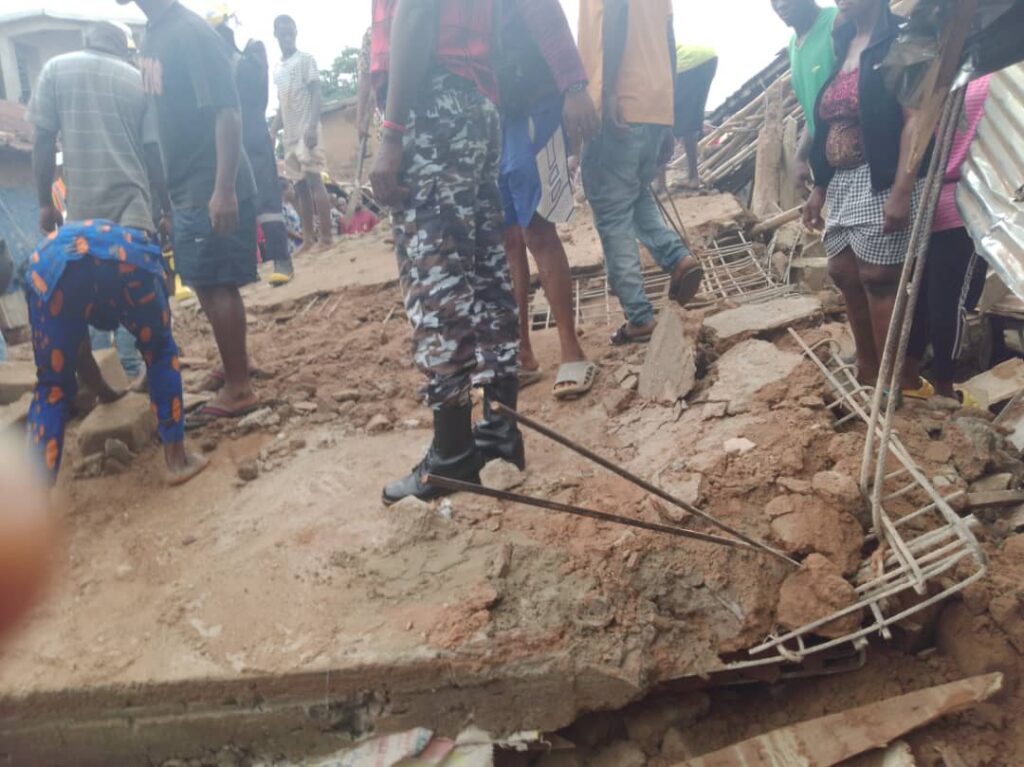
A tragic incident unfolded in Enugu, Nigeria, as an unidentified man was electrocuted while allegedly attempting to steal transformer cables belonging to the Enugu Electricity Distribution Company (EEDC). The fatal accident, which occurred in the early hours of Friday, has once again brought attention to the persistent issue of electricity vandalism plaguing Nigeria’s power infrastructure.

Emeka Ezeh, Head of Corporate Communications for EEDC, confirmed the incident in a statement, describing it as “tragic and very unfortunate.” The lifeless body of the suspected vandal was discovered within the premises of a distribution transformer located around Missionary Avenue, Coal Camp, Enugu. Investigators believe that power was restored while the deceased was in the process of cutting the armoured cables, resulting in his electrocution.

This incident highlights the ongoing challenge of vandalism faced by electricity distribution companies in Nigeria. Ezeh lamented the increasing frequency of attacks on electricity installations within the EEDC’s network, emphasizing the need for support from critical stakeholders to address this pervasive issue. The impact of such vandalism extends beyond the immediate loss of equipment, adversely affecting the quality of service provided to customers and the company’s revenue.

The EEDC’s struggle with vandalism is reflective of a broader problem facing Nigeria’s power sector. Theft of electrical components and infrastructure not only results in significant financial losses for distribution companies but also contributes to the unreliability of power supply across the country. This, in turn, hampers economic development and affects the daily lives of millions of Nigerians.

In a related development, the EEDC has also had to address misinformation circulating on social media. The company refuted claims made by an individual purporting to be a university lecturer and chairman of a consumers’ association, who falsely stated that EEDC was offering free prepaid meters. The company clarified that while it encourages customers to apply for meters, there is a specific procedure in place for meter acquisition, and no free distribution program is currently active.

This incident and the subsequent clarification underscore the complex challenges facing Nigeria’s electricity sector. From combating vandalism and theft to managing public communications and customer expectations, distribution companies like EEDC are navigating a multifaceted landscape of obstacles in their efforts to provide reliable power to Nigerian consumers.

As authorities continue to investigate this latest incident, the tragedy serves as a grim reminder of the dangers associated with electricity theft and vandalism. It also highlights the urgent need for increased security measures, public awareness campaigns, and collaborative efforts between electricity providers, law enforcement, and communities to safeguard critical infrastructure and ensure the safety of all citizens.

The ongoing battle against electricity vandalism in Nigeria remains a crucial factor in the country’s quest for stable and reliable power supply. As stakeholders grapple with these challenges, incidents like the one in Enugu underscore the importance of finding sustainable solutions to protect both infrastructure and human lives.

Iran Issues Stark Warning of “Obliterating War” if Israel Attacks Lebanon

The specter of a wider Middle East conflict looms large as Iran issues a stark warning to Israel, threatening an “obliterating war” should the Jewish state launch a full-scale military offensive against Lebanon. This ominous declaration, made by Iran’s mission to the United Nations, underscores the escalating tensions in a region already destabilized by the ongoing Gaza conflict.

Iran’s United Nations Ambassador Amir Saeid Iravani addresses the UN General Assembly at the body’s headquarters in New York, February 23, 2023. (AP Photo/Bebeto Matthews)

Iran’s warning comes amidst heightened concerns of a potential war between Israel and Lebanon’s Iran-backed Hezbollah movement. The two adversaries have engaged in near-daily exchanges of fire since the outbreak of hostilities in Gaza, with recent weeks seeing a marked increase in both military actions and belligerent rhetoric.

The Iranian mission’s statement, posted on social media platform X, dismisses Israel’s talk of attacking Lebanon as “psychological warfare.” However, it leaves no doubt about the potential consequences of such an action, stating, “Should it embark on full-scale military aggression, an obliterating war will ensue. All options, including the full involvement of all Resistance Fronts, are on the table.”

Iranian armed forces.

This reference to the “Resistance Fronts” – a term encompassing Iran and its regional allies – signals a readiness to escalate the conflict beyond Lebanon’s borders, potentially drawing in multiple actors across the Middle East. The threat of such widespread involvement adds a new dimension of risk to an already volatile situation.

The current crisis has its roots in the October attack by Hamas on southern Israel, which triggered the ongoing war in Gaza. While Iran has praised the attack as a success, it denies direct involvement. Nevertheless, its support for Hamas and other regional militant groups places it at the center of the wider conflict.

Evidence of this wider engagement can be seen in the actions of Iran-backed Houthi rebels in Yemen, who have repeatedly targeted commercial ships in the Red Sea in solidarity with the Palestinian cause. These attacks, coupled with Hezbollah’s ongoing confrontations with Israel along the Lebanese border, illustrate the potential for rapid escalation across multiple fronts.

Iranian army.

The situation is further complicated by recent events, including an airstrike on Iran’s consulate in Damascus that killed seven Revolutionary Guards, and Iran’s subsequent unprecedented drone and missile attack on Israel. These incidents have pushed tensions to new heights, with fears of a regional war reaching a fever pitch.

As the international community watches with growing concern, the potential for miscalculation or unintended escalation remains high. Iran’s latest warning serves as a stark reminder of the precarious balance in the region and the potentially catastrophic consequences of further military action.

The coming days and weeks will be crucial in determining whether diplomacy can prevail over the drums of war. With so much at stake, the need for de-escalation and dialogue has never been more urgent. As the world holds its breath, the hope remains that cooler heads will prevail in this increasingly heated conflict.