Home Blog Page 94

Suspected IED Explosion on Nigerian Highway Kills Travelers in Zamfara State, Casualties Unconfirmed

0

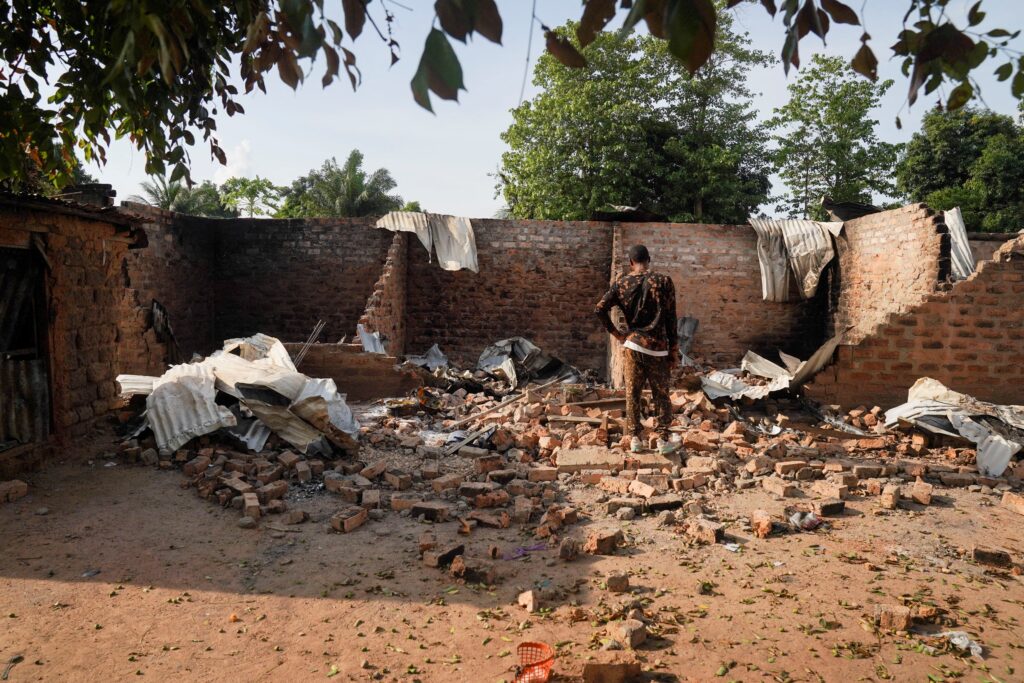
MARU, Nigeria — A suspected improvised explosive device detonated Saturday along a highway in Zamfara State, killing an unspecified number of travelers on the Yar’Tasha–Dansadau road in Maru Local Government Area, police confirmed, though casualty figures remain unavailable as investigations continue.

Yazid Abubakar, Police Public Relations Officer of the Zamfara State Command, confirmed the incident to Daily Post in a telephone interview. “I can confirm that there was a blast in that area but the incident just happened. I can’t tell you details yet. I will update you later,” Abubakar stated, according to Daily Post.

PUNCH Online was unable to reach Abubakar for additional confirmation, as his phone was switched off at the time of publication, the outlet reported.

Videos purportedly showing the explosion’s aftermath circulated on social media, depicting travelers fleeing the scene in apparent panic. The authenticity and precise timing of the footage could not be independently verified.

Nuhu Sada, who posted on X with the handle #NuhuSada0 and identified as the Social Democratic Party candidate for Kaduna State House of Assembly representing Zaria Kewaye Constituency in the 2025 bye-election, wrote: “Another tragic attack on innocent travelers in Zamfara. Families are grieving, lives are lost, and property destroyed. Security agencies must act quickly to prevent further harm and bring those responsible to justice.”

Another X user posting as #DanKatsina50 stated: “BREAKING NEWS: Moment ago, an explosion struck travelers on the Yar’Tasha–Dansadau way in Maru LGA, Zamfara State. The blast suspected to be an IED planted by bandits caused deaths and loss of property; casualties remain unconfirmed. Are security agencies investigating and what measures are being taken to secure this route?”

Sahara Reporters also reported the incident, citing the Daily Post interview with Abubakar and referencing the same social media videos and X posts.

The explosion adds to escalating security concerns in Zamfara State, where armed criminal groups described locally as “bandits” have conducted kidnappings, cattle rustling, mass killings and displacement of communities for years. These groups have increasingly employed improvised explosive devices, a tactical evolution that security analysts view as particularly alarming.

The use of IEDs represents a significant escalation from conventional banditry tactics. While kidnapping for ransom and cattle theft generate revenue for criminal networks, IED deployment suggests either technical training, external support, or adaptation of techniques from militant groups operating elsewhere in Nigeria or the broader Sahel region.

The Yar’Tasha–Dansadau route’s repeated targeting reflects how criminal groups exploit vulnerable transportation corridors. Highways passing through forested or poorly secured areas become prime locations for ambushes, kidnappings and, increasingly, IED attacks that maximize casualties while minimizing attackers’ exposure to security forces.

The inability to provide immediate casualty figures is common in the chaotic aftermath of such attacks, particularly in areas with limited emergency response infrastructure. Victims may be transported to multiple medical facilities, some may have fled the scene before responders arrived, and families may hesitate to report casualties due to security concerns or cultural practices around death notification.

The police spokesman’s acknowledgment that “the incident just happened” at the time of his interview suggests authorities were still gathering information, a process that can take hours or days in remote areas with communication challenges. The subsequent unavailability of the police spokesman—with his phone switched off—complicates verification efforts and public information dissemination.

Social media has become a primary information channel for such incidents in Nigeria, with videos and eyewitness accounts circulating before official statements emerge. This creates both opportunities for rapid awareness and challenges regarding verification, as unconfirmed footage and casualty claims spread before authorities can assess situations accurately.

The reference to families grieving and property destroyed in social media posts, even without confirmed casualty figures, reflects the human toll of such attacks beyond immediate deaths. Survivors face trauma, displaced families lose livelihoods, and communities experience psychological impacts that persist long after incidents.

The security challenges in Zamfara and neighboring northwestern states have defied successive government military operations. Armed groups maintain operational capacity despite military pressure, suggesting either insufficient resources devoted to counterinsurgency, corruption undermining security efforts, challenging terrain favoring insurgents, or some combination of factors.

In a potentially related development, residents of Offa in Kwara State experienced panic Thursday night after explosions struck parts of the town, destroying residential buildings. This occurred shortly after U.S. President Donald Trump announced airstrikes targeting ISIS positions in parts of Nigeria, though it remains unclear whether the Offa military action was part of U.S. operations or conducted solely by Nigerian forces.

The possible connection between U.S. airstrikes, Nigerian military operations and the Zamfara highway explosion remains speculative. While armed groups in northwestern Nigeria primarily engage in banditry rather than ideological extremism associated with ISIS, some analysts have noted concerning links between northwestern bandits and jihadist groups operating in northeastern Nigeria and the Sahel.

The timing raises questions about whether increased military pressure from external or Nigerian forces might provoke retaliatory attacks against civilian targets, a pattern observed in other conflict zones where counterterrorism operations trigger responses against vulnerable populations.

For travelers in Zamfara and surrounding states, the explosion reinforces the dangerous reality of using highway corridors through conflict-affected areas. Many Nigerians have no alternative to these routes for commerce, family visits or essential travel, forcing them to balance economic necessities against security risks.

The Nigerian government faces mounting pressure to secure transportation infrastructure and protect civilians from armed groups that have demonstrated increasing sophistication in weapons and tactics. The evolution from bandits using rifles and machetes to groups deploying IEDs represents a qualitative shift requiring different security responses.

As investigations continue and casualty information emerges, the Zamfara explosion will likely renew debates about Nigeria’s security strategy in the northwest, resource allocation for counterinsurgency operations, and whether current approaches are adequate to address armed groups that continue conducting deadly attacks despite years of military campaigns.

For families awaiting information about loved ones traveling on the Yar’Tasha–Dansadau road Saturday, the hours and days ahead bring agonizing uncertainty as authorities work to identify victims and notify next of kin in the aftermath of yet another attack on one of northwestern Nigeria’s increasingly dangerous highways.

Punchng/SaharaReportrs

Nigeria says joint U.S.-backed airstrikes destroyed two ISIS-linked camps in northwest

0

Nigerian authorities said U.S.-backed airstrikes destroyed two camps linked to the Islamic State group in the country’s northwest, describing the operation as a coordinated effort to disrupt foreign fighters moving into Nigeria from the Sahel region.

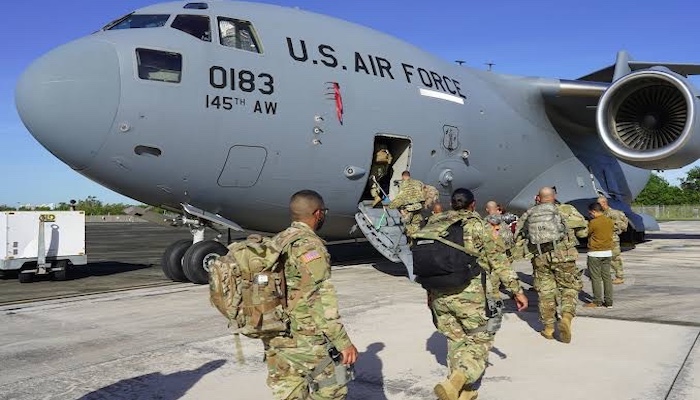
The strikes, carried out Thursday in the Bauni forest of Sokoto State, were authorized by President Bola Tinubu following what the government described as weeks of intelligence collection, surveillance and operational planning. Nigeria’s Ministry of Information said Friday that the attacks were launched from maritime platforms based in the Gulf of Guinea.

President Donald Trump said earlier on his Truth Social platform that U.S. forces conducted the operation at Nigeria’s request, framing the strikes as part of efforts to halt attacks on Christian communities in the region. Trump described the action as “numerous perfect strikes” and signaled that additional operations could follow.

In its statement, the Nigerian government said 16 GPS-guided precision munitions were released using MQ-9 Reaper unmanned aerial vehicles, striking camps believed to be used by Islamic State-linked fighters attempting to cross into Nigeria from the Sahel corridor. Officials said intelligence assessments indicated the sites served as planning hubs for large-scale attacks inside Nigeria.

Authorities said no civilian deaths were recorded, though debris from the strikes fell in parts of Sokoto and Kwara states. State officials in Sokoto confirmed the operation and urged residents to remain calm, saying security agencies were working to ensure the safety of surrounding communities.

“The ongoing operations are geared toward securing the state and ensuring the protection of lives and property,” the Sokoto state government said.

The operation highlights deepening security cooperation between Abuja and Washington at a time when militant violence is spreading southward from the Sahel, where extremist groups have expanded amid weak governance and military takeovers in several countries. Joint military actions of this scale remain rare for Nigeria, which has traditionally relied on domestic forces to combat insurgencies.

Nigeria has fought Islamist militants for more than a decade, primarily in the northeast, where Boko Haram and the Islamic State West African Province have waged a prolonged insurgency. Officials say the emergence of foreign fighters in the northwest represents a dangerous evolution of the threat, linking Nigeria’s internal security challenges more closely to regional instability across Mali, Niger and Burkina Faso.

Analysts say the use of advanced U.S. surveillance and strike capabilities suggests Nigerian authorities are seeking to contain the threat before it becomes entrenched. However, they caution that airstrikes alone are unlikely to dismantle militant networks without sustained ground operations, intelligence sharing and measures to protect civilians in border communities.

The Nigerian government reiterated its commitment to countering what it described as transnational extremist networks, saying further action would be taken to prevent fighters from establishing new footholds inside the country.

Reuters

Nigerian-American Geriatric Physician Found Dead in Ohio Lake After Month-Long Search, Autopsy Confirms Drowning

0

SPRINGFIELD TOWNSHIP, Ohio — The body of Dr. Cletus Iwuagwu, a 71-year-old Nigerian-American geriatric physician and University of Toledo medical professor who vanished after being released from a hospital in late November, was discovered Christmas Day in an Ohio lake, with autopsy results confirming he died from drowning.

The Lucas County Sheriff’s Office found Iwuagwu’s body Thursday in Orchard Lake near Stone Oak Country Club, according to a Lucas County Coroner’s Office news release. The Springfield Fire Department retrieved the remains from the water, which were subsequently identified as the missing physician.

The coroner’s office announced Friday that autopsy investigation determined drowning as the cause of death. “There were no signs of trauma or foul play at autopsy,” the office stated, though officials emphasized “the circumstances surrounding this death are still being investigated.”

Iwuagwu was reported missing November 25 after his niece last saw him around 8 p.m. November 24, according to a Lucas County Sheriff’s Office report obtained by PEOPLE. His daughter filed the missing person report that day, triggering an extensive search involving drones, K-9 teams and dozens of volunteers over the subsequent month.

The physician had been discharged from a local hospital November 24 and returned home, a family member told responding officers. Surveillance footage captured him near his Holland residence around 2:15 a.m. November 25, marking the last confirmed sighting.

One of Iwuagwu’s daughters informed police she had been receiving location updates about her father through her phone. However, when officials investigated those locations, they were unable to locate him.

“It’s been like a cloud that has been over us because we somehow seemed to feel or know that he was there,” resident Dusty Foreman told WTOL. “Over the past month, I’ve been out there several times and this time, unfortunately, on Christmas, they did find the body.”

Iwuagwu served as a professor in the University of Toledo College of Medicine and Life Sciences, Department of Medicine, and practiced as a UToledo Health geriatric medicine physician, specializing in healthcare for elderly patients.

“He is a well-respected physician, and we share the community’s hope for his safe return as law enforcement continues to investigate his missing-person case,” a University of Toledo Medical Center spokesperson stated to ABC 13 before the body’s discovery.

The circumstances surrounding how Iwuagwu ended up in Orchard Lake remain unclear despite the autopsy findings. The gap between his last confirmed sighting at 2:15 a.m. near his home and his eventual discovery in the lake raises questions about his movements during those intervening hours and what led him to the water.

The timeline presents several puzzling elements. Iwuagwu disappeared just hours after hospital discharge, during early morning hours when most people are asleep. The location data his daughter received on her phone apparently led authorities to areas where they couldn’t find him, suggesting either technical limitations, delayed information, or that he was moving between locations.

The one-month interval between his disappearance and the discovery of his body in a lake that volunteers and official search teams had been investigating raises questions about search methodologies, water conditions that may have concealed the body, or whether the remains moved after death due to water currents or other factors.

The absence of trauma or evidence of foul play, as determined by autopsy, suggests Iwuagwu entered the water under circumstances that did not involve violence from another person. However, drowning can result from various scenarios including accidental falls, medical emergencies that incapacitate individuals near water, disorientation, or intentional entry.

For elderly individuals recently discharged from hospitals, several factors could contribute to disorientation or compromised judgment. These might include medication effects, underlying medical conditions that prompted hospitalization, cognitive impairment, or exhaustion. The coroner’s investigation may examine whether any of these factors played a role.

The discovery on Christmas Day adds a tragic dimension to the case, with first responders and investigators working on a major holiday to recover the body and begin determining what happened. For Iwuagwu’s family, the holiday will now forever be associated with the conclusion of their month-long search and confirmation of their worst fears.

The University of Toledo medical community has lost a respected colleague described as a well-regarded physician and educator. Geriatric medicine specialists like Iwuagwu play crucial roles in healthcare systems, providing specialized care for aging populations with complex medical needs. His absence will be felt by patients, students, and colleagues.

The Nigerian-American community in Ohio and beyond will also mourn Iwuagwu’s death. Nigerian physicians constitute a significant presence in American healthcare, with thousands practicing across specialties throughout the United States. Iwuagwu’s death at 71 suggests he dedicated decades to medical practice and education.

As investigators continue examining circumstances surrounding the death, questions persist about what occurred between Iwuagwu’s hospital discharge and his discovery in Orchard Lake. The ongoing investigation may seek to establish whether he went to the lake intentionally, became disoriented and wandered there, or whether other factors contributed to his presence at that location.

The case highlights challenges in locating missing persons even with modern technology. Despite phone location tracking, drone searches, K-9 teams, and volunteer efforts, Iwuagwu remained undiscovered for a month in a lake that searchers apparently investigated. This raises broader questions about search effectiveness, resource allocation, and technological limitations in missing person cases.

For the Toledo medical community and Iwuagwu’s family, the discovery brings a measure of closure while simultaneously raising new questions about the final hours of a respected physician’s life. As the investigation continues, authorities will work to piece together the sequence of events that led to this tragedy, though some answers may remain elusive.

People.com

Tyler Perry Faces Second Sexual Assault Lawsuit, Actor Seeks $77 Million Over Alleged Incidents Spanning Four Years

0

LOS ANGELES — Filmmaker Tyler Perry faces a second sexual assault lawsuit within six months, with actor Mario Rodriguez alleging a pattern of unwanted sexual advances and assault between 2015 and 2019 while Perry allegedly promised career opportunities, according to a complaint seeking $77 million in damages.

Rodriguez, a model who secured a minor role as “Frat Guy #10” in Perry’s 2016 film Boo! A Madea Halloween, filed the lawsuit through attorney Jonathan J. Delshad, who also represents Derek Dixon, another actor who made similar allegations against Perry earlier this year.

Alex Spiro, an attorney for Perry, stated December 26: “Having recently failed in another matter against Mr. Perry, the very same lawyer has now made yet another demand from more than a decade ago which will also be a failed money grab.”

Delshad disputed Spiro’s characterization, stating Dixon’s claims “are alive and well, and none of them have failed; they were just moved to a different court,” as the case relocates from California to Georgia.

According to the lawsuit obtained by PEOPLE, Rodriguez alleges that in 2015 a trainer approached him at a Los Angeles gym stating Perry wished to meet him. Perry subsequently contacted Rodriguez by phone and offered him a small role in the Madea Halloween film, the complaint states.

The complaint alleges Perry repeatedly invited Rodriguez to his home ostensibly to discuss future work opportunities, but instead made sexual advances while drinking. In November 2018, Perry allegedly “grabbed [Rodriguez’s] penis” and Rodriguez “repeatedly told Mr. Perry to stop” and had to “physically struggle to get away,” according to the lawsuit.

Perry allegedly told Rodriguez to “let it happen” and “If you were to just be with me, I would take care of you…,” the complaint states. Following two incidents, Perry allegedly apologized, provided Rodriguez $5,000 “and sent him away,” the lawsuit claims.

At a final alleged encounter in April 2019, “More than ever before, it was clear that Mr. Perry would do whatever he wanted, whenever he wanted, to whomever he wanted no matter how many times he was rejected,” the lawsuit alleges.

The complaint claims Perry “randomly reach out to” Rodriguez through 2024, and “when Perry became aware that Rodriguez was going to file this action, Perry once again reached out to Rodriguez by text,” stating he “did so much to help Rodriguez” and he “was feeling betrayed.”

In a December 13 Instagram video, Rodriguez addressed feeling “scared and ashamed,” explaining why he hadn’t previously disclosed the allegations publicly, though he did not identify Perry by name in the post, referring only to a “powerful” director “that everybody knows.”

“I stayed quiet for much too long. And I just want to say I’m really sorry, man. Because if I would’ve spoken up sooner I could’ve saved somebody that this probably happened to after me,” Rodriguez stated in the clip viewed by his nearly 1 million followers. “I just wanna say sorry for that, whoever that may be. It could’ve stopped with me if I would’ve said something. … But I’m speaking up now.”

Dixon, who starred on Perry’s television series The Oval, filed a $260 million lawsuit against Perry in June, alleging sexual harassment, assault and retaliation, which the filmmaker denies.

In September, Perry attorney Matthew Boyd characterized Dixon as “an individual who got close to Tyler Perry for what now appears to be nothing more than setting up a scam.” Boyd added: “Tyler will not be shaken down and we are confident these fabricated claims of harassment will fail.”

The emergence of a second lawsuit represented by the same attorney raises questions about whether additional accusers may come forward and whether patterns alleged across separate complaints will influence judicial proceedings. Perry, 56, has built a entertainment empire encompassing film, television production and studio operations, making him one of the industry’s most powerful figures.

The lawsuits arrive amid continuing industry reckoning with sexual misconduct allegations that began with the 2017 #MeToo movement. High-profile entertainment figures have faced allegations, criminal charges and civil litigation, with varying outcomes ranging from acquittals to substantial settlements and imprisonment.

Rodriguez’s decision to publicly discuss the allegations before filing suit represents a increasingly common approach where accusers use social media to control their narratives, build public support and potentially encourage other victims to come forward before formal legal proceedings commence.

The substantial damages sought—$77 million by Rodriguez and $260 million by Dixon—reflect both compensatory claims for alleged harm and potentially punitive damages designed to penalize defendants and deter similar conduct. Such amounts also generate publicity that can pressure defendants toward settlement negotiations rather than prolonged litigation.

Perry’s legal team’s characterization of both lawsuits as “money grabs” suggests a defense strategy emphasizing financial motivation rather than legitimate grievances. This approach attempts to frame plaintiffs as opportunists exploiting celebrity wealth rather than victims seeking accountability, though such tactics can backfire if evidence supports accusers’ claims.

The involvement of the same attorney representing both accusers cuts both ways strategically. For plaintiffs, it suggests an attorney with specific knowledge of Perry’s alleged patterns and operations. For defense, it potentially supports arguments about coordinated financial demands rather than independent complaints arising from genuine misconduct.

The relocation of Dixon’s case from California to Georgia—where Perry’s studios are based—may reflect jurisdictional considerations, venue preferences or strategic litigation decisions by either party. Georgia courts will apply different procedural rules and potentially different substantive law than California, potentially affecting case outcomes.

Perry has not personally addressed the allegations publicly beyond statements from his attorneys. His silence represents a common legal strategy where defendants avoid creating statements that could be used against them in litigation, though it leaves accusers’ narratives largely uncontested in public discourse.

The entertainment industry will watch these cases closely given Perry’s prominence and the potential implications for how studios and production companies address power dynamics between established figures and aspiring talent seeking career advancement. The allegations describe a pattern where career promises allegedly create conditions for exploitation—a dynamic that has drawn increased scrutiny across creative industries.

As litigation proceeds, questions will focus on evidence supporting or refuting the allegations, whether settlement negotiations occur, and whether Perry’s companies implement policy changes regardless of legal outcomes. For Rodriguez and Dixon, the cases represent efforts to obtain both financial compensation and public acknowledgment of alleged misconduct by one of entertainment’s most successful figures.

People.com

U.S. signals further Nigeria strikes as Abuja confirms intelligence-sharing operation against Islamic State

0

The United States is preparing for additional military strikes against suspected Islamic State targets in northwestern Nigeria, U.S. Defense Secretary Pete Hegseth said, as Nigerian officials confirmed that Abuja provided intelligence support for the initial operation in what both governments describe as a coordinated counterterrorism effort.

Hegseth, writing on X on Christmas Day, said President Donald Trump had made clear that attacks on Christians in Nigeria and elsewhere “must end,” adding that the Pentagon remains prepared to act. “ISIS found out tonight — on Christmas. More to come,” Hegseth wrote, thanking the Nigerian government for its cooperation.

Nigeria’s Foreign Minister Yusuf Tuggar said Friday that the U.S. strikes in Sokoto state were “part of joint ongoing operations,” marking what he described as a new phase in a long-running fight against militant violence that has killed civilians of multiple faiths. Tuggar’s remarks followed weeks of diplomatic friction after Trump accused Nigeria of failing to protect Christian communities, an allegation Nigerian officials have consistently rejected.

President Trump, speaking to Politico, said the strike was initially scheduled for Wednesday but was postponed at his direction. “They were going to do it earlier, and I said, ‘nope, let’s give a Christmas present,’” Trump said, adding that militant camps were “decimated.”

Nigeria is constitutionally secular, with a population that is roughly evenly split between Muslims and Christians. While violence against Christian communities has drawn heightened attention from U.S. religious conservatives, Nigerian authorities stress that armed groups routinely attack both Christians and Muslims, particularly in rural and border regions where state presence is limited.

Tuggar told Channels Television that Nigeria supplied intelligence used in the strikes and that the decision followed direct consultations with U.S. officials, including Secretary of State Marco Rubio, and with Nigerian President Bola Tinubu. “We have been working closely with the Americans,” Tuggar said, describing the operation as collaborative and aimed at stopping the killing of innocent Nigerians.

U.S. Africa Command said the strikes were carried out in coordination with Nigerian authorities. An earlier statement posted on X and later removed indicated the operation had been conducted at Nigeria’s request. Neither government has released details on casualties or the precise targets hit.

In Sokoto’s Jabo village, residents described panic as missiles struck nearby. Abubakar Sani, who lives close to the impact site, told The Associated Press that intense heat and shaking walls sent people fleeing their homes. “The Nigerian government should take appropriate measures to protect us as citizens,” he said, adding that the community had never experienced anything similar.

Sanusi Madabo, a farmer, said the night sky glowed red for hours. “It was almost like daytime,” he said. Residents told AP that security forces later cordoned off the area and that there were no immediate reports of deaths.

Analysts say the lack of official information has amplified fear among villagers. Bulama Bukarti, a security analyst at the Tony Blair Institute, said transparency from both governments is essential to prevent further tension. “The more opaque the governments are, the more panic there would be on the ground,” he said.

Security experts suggest the strikes may have targeted camps linked to Lakurawa, a relatively new armed group operating in northwestern Nigeria whose fighters are believed to include foreign nationals from across the Sahel. While U.S. officials have framed the operation as an attack on Islamic State elements, researchers caution that direct ties between Lakurawa and ISIS remain unproven. The Islamic State West African Province has historically operated in Nigeria’s northeast, where it competes with Boko Haram for influence.

The strikes underscore a broader shift in U.S. policy under Trump, who campaigned as a “candidate of peace” but has authorized multiple overseas military actions in his second term, including operations in Yemen, Iran and Syria. In West Africa, the intervention highlights Washington’s growing willingness to conduct targeted operations alongside regional partners amid rising instability across the Sahel.

For communities like Jabo, the immediate concern is safety. Village leader Aliyu Garba told AP that debris from the strike scattered across farmland, with residents rushing to collect fragments, raising fears of injury. For 17-year-old Balira Sa’idu, who is preparing for her wedding, the uncertainty has been deeply unsettling. “I am supposed to be thinking about my wedding,” she said, “but right now I am panicking.”

As Nigerian and U.S. officials signal that further action may follow, the challenge will be balancing counterterrorism objectives with civilian protection and clear communication — a test that could shape public support for future joint operations.

TheGuardian/AssociatedPress

Mosque bombing during Friday prayers kills 8 in Homs, deepens Syria’s fragile security crisis

0

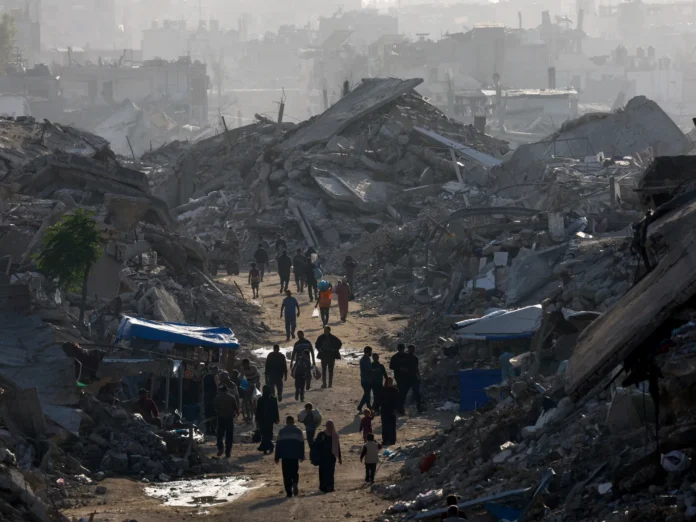
A bombing inside a mosque during Friday prayers in the central Syrian city of Homs killed at least eight people and wounded 18 others, Syrian authorities said, underscoring the persistent instability gripping the country despite the end of large-scale fighting.

The explosion struck the Imam Ali ibn Abi Talib Mosque in the Wadi al-Dhahab neighborhood, an area largely inhabited by members of Syria’s Alawite minority, in the nation’s third-largest city. Images released by Syria’s state-run Arab News Agency showed bloodstained carpets, shattered windows, blast-scarred walls and fire damage inside the prayer hall.

SANA, citing a security source, said initial findings indicate that explosive devices had been planted inside the mosque. Security forces sealed off the area as investigators searched for those responsible, Syria’s Interior Ministry said.

Local officials condemned the attack, describing it as part of what they called repeated attempts to destabilize the country and inflame sectarian tensions. Syria’s Ministry of Foreign Affairs said in a statement that the government remains committed to combating terrorism “in all its forms and manifestations.”

The bombing comes at a volatile moment for Syria, where deep-seated sectarian, ethnic and political divisions have re-emerged since the fall of President Bashar al-Assad last year. Assad, an Alawite, fled to Russia, and members of his sect have since faced reprisals and heightened scrutiny in several parts of the country.

In March, an ambush by Assad loyalists against security forces set off days of retaliatory violence that killed hundreds of people, most of them Alawites, according to Syrian officials and monitoring groups.

The Syrian information minister said in a post on X that remnants of the former regime, ISIS militants and their collaborators were seeking to undermine the country’s fragile transition. “They share one objective: threatening civil peace and obstructing the path of the new state,” he said.

Regional governments also denounced the attack. Lebanon’s President Joseph Aoun said in a statement that Beirut stands with Syria in its fight against terrorism, while Saudi Arabia, Jordan and other neighboring countries issued similar condemnations.

Friday’s bombing followed renewed clashes earlier this week between Syrian government forces and Kurdish-led Syrian Democratic Forces in mixed neighborhoods of the northern city of Aleppo. Those confrontations forced temporary closures of schools and public institutions before a ceasefire was announced late in the day.

The attack in Homs also adds to a broader pattern of violence across the country. In February, a car bomb exploded on the outskirts of Manbij in northern Syria, killing at least 20 people and wounding more than a dozen, many of them women, local officials and emergency responders said. Mohammad Ahmad, a nurse at the local hospital, told The Associated Press that at least 18 women were among the dead.

Manbij has seen repeated bombings in recent months, including a separate car blast that killed four civilians and wounded nine, SANA reported, citing civil defense officials. Munir Mustafa, deputy director of Syria’s civil defense, warned that the attacks threaten postwar security and economic recovery efforts.

Analysts say the violence reflects the challenges facing Syria’s interim authorities as they try to assert control over a fragmented country still hosting multiple armed factions and foreign-backed forces. The continued presence of ISIS cells, unresolved sectarian grievances and rival power centers have made civilian targets — including places of worship — especially vulnerable.

Syria’s presidency said in a statement that those responsible for the Homs bombing would face the “harshest penalties,” vowing that attacks on civilians would not derail efforts to restore stability.

cbsnews

Drone strike near Sudan border kills two Chadian soldiers, heightens regional tensions

0

A drone strike hit a Chadian military position near the Sudanese border before dawn Friday, killing two soldiers and seriously wounding another, Chadian local authorities and security officials said, raising new concerns about the spillover of Sudan’s war into neighboring countries.

The attack struck a military camp in the border town of Tine, a key transit point for refugees fleeing Sudan’s conflict. Hamit Hassan, the prefect overseeing the department that includes Tine, confirmed the deaths and injury but said authorities had not yet identified who carried out the strike.

A Chadian military intelligence officer, speaking to Reuters on condition of anonymity because he was not authorized to comment publicly, said preliminary assessments suggested the drone crossed into Chad from Sudan. However, the officer said it remained unclear whether the aircraft was operated by Sudan’s national army or the paramilitary Rapid Support Force, known as the RSF.

“We are still in the process of confirming the origin of this drone,” the officer told Reuters. “If it is a Sudanese military drone, we will exercise our right to retaliate.”

The officer said Chad’s air force base in the eastern city of Abeche had been placed on high alert and that additional ground forces had already been deployed to Tine in response to the attack.

Sudan’s army and the RSF did not immediately respond to requests for comment.

The strike underscores the growing regional risks posed by Sudan’s civil war, which has increasingly affected border areas and strained relations with neighboring states. Chad has sought to maintain a delicate neutrality since fighting erupted between Sudan’s rival military factions, even as violence and armed activity creep closer to its territory.

Tine plays a critical humanitarian role as a first stop for Sudanese refugees crossing into Chad. Refugees are typically moved onward to camps farther from the border, but humanitarian groups say funding shortfalls have slowed relocations. Aid agencies cite shortages of water, sanitation facilities and shelter at inland sites as major obstacles.

More than 12 million people have been displaced by the conflict in Sudan, according to the International Rescue Committee, making it one of the world’s largest displacement crises. Analysts say the presence of refugees, combined with cross-border military incidents, heightens the risk that Chad could be drawn more directly into the conflict.

Security experts note that the reported use of drones near an international border marks a dangerous escalation, particularly if responsibility is traced to one of Sudan’s warring parties. Any confirmed violation of Chadian airspace could force N’Djamena to reassess its security posture and regional diplomacy, potentially complicating efforts to keep the conflict contained.

For now, Chadian authorities say investigations are continuing, with officials focusing on identifying the drone’s origin while reinforcing defenses along the volatile eastern frontier.

Reuters story

Nigeria confirms coordination with U.S. in airstrikes on ISIS-linked targets, officials say

0

Nigerian and U.S. security officials coordinated closely ahead of American airstrikes that hit Islamic State-linked targets in northwest Nigeria, according to Nigerian government and U.S. statements released following the operation.

A senior Nigerian government source told Sahara Reporters that the strikes carried out under President Donald Trump were coordinated largely through the Office of the National Security Adviser, headed by Nuhu Ribadu. The source said intelligence units within the adviser’s office worked with the U.S. military, including U.S. Africa Command, to identify militant positions tied to ISIS affiliates operating in the region.

The source said the cooperation focused on locating and neutralizing what were described as high-value terrorist targets, though officials have not disclosed how many sites were struck or whether senior militant figures were killed.

Reports from local sources indicated an explosion occurred on the outskirts of Jibo village in Tambuwal Local Government Area of Sokoto State. Sahara Reporters said it was unable to independently confirm casualty figures or assess damage as of the time of publication.

U.S. Africa Command later confirmed on social media that it had conducted strikes against terrorist enclaves in northwest Nigeria. In its initial statement, AFRICOM misspelled Sokoto as “Soboto,” an error that was subsequently corrected. AFRICOM did not provide further operational details.

Nigeria’s federal government later publicly acknowledged the cooperation. Punchng reported that authorities confirmed ongoing intelligence and security collaboration between Abuja and Washington following the airstrikes.

In a statement issued Friday, the Ministry of Foreign Affairs said Nigeriaiga maintains “structured security cooperation with international partners, including the United States of America,” aimed at countering terrorism and violent extremism. The statement, signed by ministry spokesperson Kimiebi Ebienfa, said the partnership involves intelligence sharing, strategic coordination and operational support conducted in line with international law and respect for Nigeria’s sovereignty.

“This has led to precision hits on terrorist targets in Nigeria by air strikes in the North West,” the ministry said.

The ministry stressed that counterterrorism operations prioritize civilian protection and national cohesion. “Nigeria reiterates that all counter-terrorism efforts are guided by the primacy of protecting civilian lives, safeguarding national unity, and upholding the rights and dignity of all citizens, irrespective of faith or ethnicity,” the statement said.

It added that terrorist violence, “whether directed at Christians, Muslims, or other communities, remains an affront to Nigeria’s values and to international peace and security.”

The confirmation followed remarks by President Donald Trump, who said Thursday that U.S. forces had launched what he described as “powerful and deadly” strikes against ISIS militants in northwest Nigeria. Writing on his Truth Social platform, Trump accused the group of carrying out mass killings, “primarily, innocent Christians,” and warned that further action would follow if the violence continued.

“The Department of War executed numerous perfect strikes, as only the United States is capable of doing,” Trump wrote.

In a separate social media post, U.S. Defense Secretary Pete Hegseth said the operation was conducted with Nigerian cooperation, thanking the Nigerian government for its support and adding that the Pentagon was “always ready.”

The strikes came amid heightened concern over militant violence in northern Nigeria. They were carried out a day after a bomb attack on a mosque in Maiduguri, Borno State, killed five people and wounded dozens in what authorities suspect was a suicide bombing, underscoring the persistent threat posed by jihadist groups in the region.

Security analysts say the public acknowledgment of coordination marks a significant moment in U.S.–Nigeria relations, as Abuja has often been cautious about foreign military operations on its territory. By emphasizing sovereignty, civilian protection and shared intelligence frameworks, Nigerian officials appear to be seeking to balance domestic sensitivities with the need for external military support.

The Ministry of Foreign Affairs said Nigeria would continue to work through established diplomatic and security channels to weaken terrorist networks, disrupt financing and logistics, and prevent cross-border threats, adding that updates would be released through official channels as appropriate.

Malaysian Court Convicts Former PM Najib Razak on 25 Counts in $700 Million 1MDB Corruption Case

0

A Malaysian court convicted imprisoned former Prime Minister Najib Razak on Friday on 25 corruption charges related to more than $700 million channeled from the scandal-plagued 1MDB state investment fund into his personal bank accounts, marking a major milestone in one of history’s largest financial fraud cases.

The High Court found Najib, 72, guilty on four counts of abuse of power and 21 charges of money laundering following a trial directly linking him to the multibillion-dollar looting that triggered investigations across multiple continents and ultimately toppled his government in 2018.

Justice Collin Lawrence Sequerah spent five hours delivering the ruling, systematically dismantling Najib’s defense that the funds represented a political donation from Saudi Arabia and that he had been deceived by rogue financiers led by Low Taek Jho. Low, believed to be the scandal’s architect, remains at large despite international arrest warrants.

“The accused was no country bumpkin,” Sequerah stated. “Any attempt to paint the accused as an ignoramus who was hopelessly unaware of the misdeeds going around him must therefore, fail miserably.”

The judge characterized Najib’s claim of a Saudi donation as “incapable of belief.” Four letters purportedly from the Saudi donor were forged, and evidence conclusively demonstrated the funds originated from 1MDB, he stated.

Sequerah rejected defense arguments portraying Najib as an unwitting victim duped by former 1MDB officials and Low. Witness testimonies revealed an “unmistakable bond” between Najib and Low, who played a pivotal role in the scandal and operated as “the proxy, the conduit, the intermediary and the facilitator” for Najib regarding 1MDB matters, the judge said.

The judge noted that Najib failed to verify the origin of the massive funds or take action against Low. Instead, Najib utilized the money despite its suspicious origins and took steps to protect his position, including removing the attorney general and anti-corruption chief investigating the case, Sequerah stated.

Dressed in a blue suit, Najib appeared composed throughout the lengthy ruling and occasionally wrote in his notebook. His defense team was expected to present mitigation arguments before sentencing later Friday.

Najib, who served as prime minister from 2009 to 2018, currently is serving a prison sentence after conviction in an earlier case linked to the 1MDB scandal. He was sentenced to 12 years in prison in 2020 for abuse of power, criminal breach of trust and money laundering involving 42 million ringgit ($10.3 million) channeled into his accounts from SRC International, a former 1MDB unit.

He began serving that sentence in August 2022 after exhausting appeals, becoming Malaysia’s first former leader imprisoned. The Pardons Board, which advises rulers on granting clemency, halved his sentence and sharply reduced his financial penalty in 2024. He is scheduled for release in August 2028 under the reduced sentence.

Najib established the 1Malaysia Development Berhad fund shortly after assuming office in 2009. He chaired 1MDB’s advisory board and wielded veto power as finance minister while simultaneously serving as prime minister, creating conflicts of interest that facilitated the massive fraud.

Between 2009 and 2014, top executives and associates of Najib looted over $4.5 billion from the fund, laundering proceeds through countries including the United States, Singapore and Switzerland, according to the U.S. Justice Department. Authorities alleged the stolen funds financed Hollywood films and extravagant purchases including hotels, a luxury yacht, artwork and jewelry. Then-U.S. Attorney General Jeff Sessions characterized the scheme as “kleptocracy at its worst.”

The scandal’s tentacles reached Wall Street, where Goldman Sachs faced billions in fines for its role raising money for 1MDB. The investment bank’s involvement in bond offerings for the fund drew scrutiny after evidence emerged suggesting Goldman officials knew or should have known about the fraudulent nature of the transactions.

The scion of a prominent political family, Najib was long perceived as untouchable until public fury over 1MDB contributed to the historic 2018 election defeat of his ruling United Malays National Organization, which had governed Malaysia since independence from Britain in 1957.

Friday’s conviction followed a Monday High Court ruling rejecting Najib’s bid to serve his remaining sentence under house arrest. The court determined that a purported royal order issued by the nation’s former king was invalid because it wasn’t made according to constitutional requirements.

Judge Alice Loke ruled Monday that while the addendum order’s existence was undisputed, the house arrest option wasn’t raised or discussed at the January 29, 2024 Pardons Board meeting chaired by then-King Sultan Abdullah Sultan Ahmad Shah. The king’s clemency prerogative must be exercised based on Pardons Board advice under the constitution and cannot be made independently, as that would “invite arbitrary decision,” she stated.

Najib displayed minimal emotion during Monday’s ruling. His lawyer, Muhammad Shafee Abdullah, described the decision as “shocking” and indicated plans to appeal, arguing the ruling had diluted royal powers.

The conviction carries severe potential penalties. Najib faces up to 20 years imprisonment for each abuse of power count and up to five years for each money laundering charge, potentially adding decades to his current sentence if the court imposes consecutive rather than concurrent terms.

The ruling represents vindication for Malaysian citizens who demanded accountability for the massive theft of public funds. The 1MDB scandal dominated Malaysian politics for years, exposing systemic corruption at the highest levels of government and demonstrating how political elites could exploit state institutions for personal enrichment.

For international observers, the conviction affirms that even powerful political figures can face consequences for corruption, though the lengthy legal process—with trials beginning in 2019 and continuing through 2024—illustrates the challenges of prosecuting complex white-collar crimes involving sophisticated money laundering schemes across multiple jurisdictions.

The scandal’s international dimensions highlighted vulnerabilities in global financial systems that enabled massive sums to move across borders with insufficient scrutiny. Money laundering through luxury real estate purchases, art acquisitions and entertainment industry investments demonstrated how criminals exploit legitimate business sectors to disguise illicit proceeds.

Najib’s wife, Rosmah Mansor, was sentenced to 10 years in prison and assessed a substantial fine in 2022 in a separate corruption case. She has been released on bail pending appeal, adding another dimension to the legal saga surrounding Malaysia’s former first family.

Despite his conviction and imprisonment, Najib retains influence within the United Malays National Organization, which currently participates in Prime Minister Anwar Ibrahim’s unity government formed after 2022 elections. This continued political relevance complicates efforts to fully reckon with the 1MDB scandal’s legacy and raises questions about whether Malaysian politics has truly moved beyond the culture of corruption the case exposed.

The trial also spotlighted the role of Low Taek Jho, the fugitive financier known as Jho Low, whose whereabouts remain unknown despite international efforts to locate him. Low’s continued freedom frustrates investigators and victims who view him as the scandal’s primary architect. Reports have placed him variously in China, Macau and other locations, though none have been confirmed.

As sentencing proceedings continue, attention will focus on whether the court imposes penalties severe enough to serve as meaningful deterrent to future corruption while acknowledging Najib’s age and existing prison term. The judge’s remarks during the conviction—particularly characterizing Najib as sophisticated and aware rather than deceived—suggest skepticism toward lenient sentencing arguments.

The 1MDB scandal’s resolution through Malaysian courts, while incomplete given Low’s continued absence and ongoing asset recovery efforts, demonstrates that even in countries with corruption challenges, judicial systems can ultimately hold powerful figures accountable when public pressure, international cooperation and dedicated prosecutors align to pursue justice despite political obstacles and elite resistance.

AP

President Donald Trump says U.S. forces carried out strikes on ISIS targets in Nigeria

0

President Donald Trump said the United States military carried out airstrikes against Islamic State targets in Nigeria, describing the operation as a decisive response to extremist violence that he said has disproportionately targeted Christian communities.

In a Christmas Day post on his Truth Social platform, Trump said he ordered what he called a “powerful and deadly strike” against ISIS militants operating in northwest Nigeria. He said the Pentagon executed “numerous” strikes aimed at degrading the group’s capabilities in the region.

Trump said the operation followed repeated warnings to extremists whom he accused of carrying out mass killings. “I have previously warned these terrorists that if they did not stop the slaughtering of Christians, there would be hell to pay,” he wrote, adding that the strikes were carried out under his direction as commander in chief.

U.S. officials have not released independent confirmation or operational details of the strikes, including targets hit or assessments of casualties. The Pentagon did not immediately respond to requests for comment.

The announcement came days after U.S. forces carried out airstrikes against ISIS positions in Syria on Dec. 19, following the deaths of two U.S. service members and a civilian interpreter, underscoring what the administration portrays as a broader campaign against Islamic State affiliates across multiple regions.

Trump’s remarks also followed weeks of escalating rhetoric toward Nigeria. On Nov. 1, he accused the Nigerian government of failing to protect Christians and said he had instructed what he called the “Department of War” to prepare for possible action. In that post, Trump said the United States could suspend aid to Nigeria and warned of potential military intervention if violence continued.

Those comments coincided with his administration’s decision on Oct. 31 to designate Nigeria a “Country of Particular Concern” under the International Religious Freedom Act, citing what officials described as evidence of “systematic, ongoing and egregious violations of religious freedom,” as reported by CNN and The Associated Press.

Nigeria’s government has strongly rejected that characterization. President Bola Ahmed Tinubu said Nigeria is a secular country with constitutional protections for all faiths and does not condone religious persecution. In a Nov. 1 post on X, Tinubu said the designation did not reflect Nigeria’s reality or the government’s efforts to safeguard religious freedom.

“Religious freedom and tolerance have been a core tenet of our collective identity and shall always remain so,” Tinubu wrote, adding that his administration remains committed to cooperation with the United States and the international community.

Bayo Onanuga, Tinubu’s press secretary, also pushed back against U.S. criticism after Secretary of State Marco Rubio condemned what he described as the “slaughter of thousands of Christians.” Onanuga called that description “a gross exaggeration,” saying violence in Nigeria affects Christians, Muslims, churches and mosques alike. He said Nigeria needs military support to combat extremist groups, not punitive designations.

The violence in Nigeria has been driven by a complex mix of factors, including jihadist insurgencies linked to Islamic State and Boko Haram, criminal banditry, land and resource disputes, and long-running tensions between farming and herding communities. Security analysts say religious identity is often intertwined with broader political and economic grievances, complicating efforts to assign singular motives to attacks.

Trump’s decision to publicly frame the strikes around the protection of Christians signals a sharper linkage between U.S. counterterrorism policy and religious freedom advocacy. Supporters say such messaging sends a strong deterrent signal to extremist groups, while critics warn it risks oversimplifying Nigeria’s conflict dynamics and straining diplomatic ties with a key regional partner.

As of Thursday, Nigerian authorities had not publicly commented on Trump’s claim that U.S. forces carried out strikes on Nigerian territory, and it remained unclear whether the operation was coordinated with Abuja.

USAToday/Foxnews