

Construction has begun on China’s groundbreaking 621mph magnetic levitation (maglev) train, which promises to revolutionize high-speed travel by surpassing the cruising speed of most commercial airplanes. The project, spearheaded by China Railway, uses maglev technology to propel trains through vacuum tubes at unprecedented speeds, aiming to redefine global transportation standards.
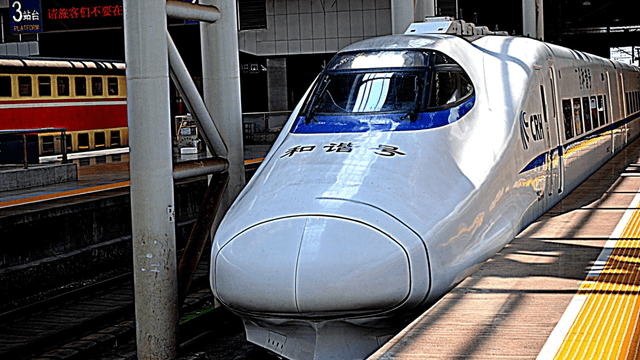
The maglev train employs magnets to create frictionless movement, enabling it to “float” on air while gliding along a low-vacuum tube. Currently, China’s high-speed trains operate at 217mph, offering 5G connectivity even in tunnels. The new design will significantly boost passenger travel speeds, exceeding 400mph more than existing systems.
The train’s track will connect to Changsha Nan station, extending from the 11.5-mile Maglev Express Line S2. China already operates a maglev line in Shanghai, which links the airport to the city center in just seven minutes, completing the 19-mile journey at remarkable speeds.
Maglev technology eliminates mechanical friction, relying on superconducting magnets to maintain levitation and propulsion. However, engineers face challenges in maintaining stable communication signals at near-sonic speeds. Changes in train velocity disrupt signal frequencies, posing obstacles to consistent data transfer. Vibrations within the vacuum tubes can also destabilize antennas, potentially endangering operations.
To address these issues, researchers at Southeast University, led by Professor Song Tiecheng, have proposed an innovative solution. Their design includes embedding parallel cables along the inner tube walls to emit electromagnetic signals, ensuring uninterrupted communication.
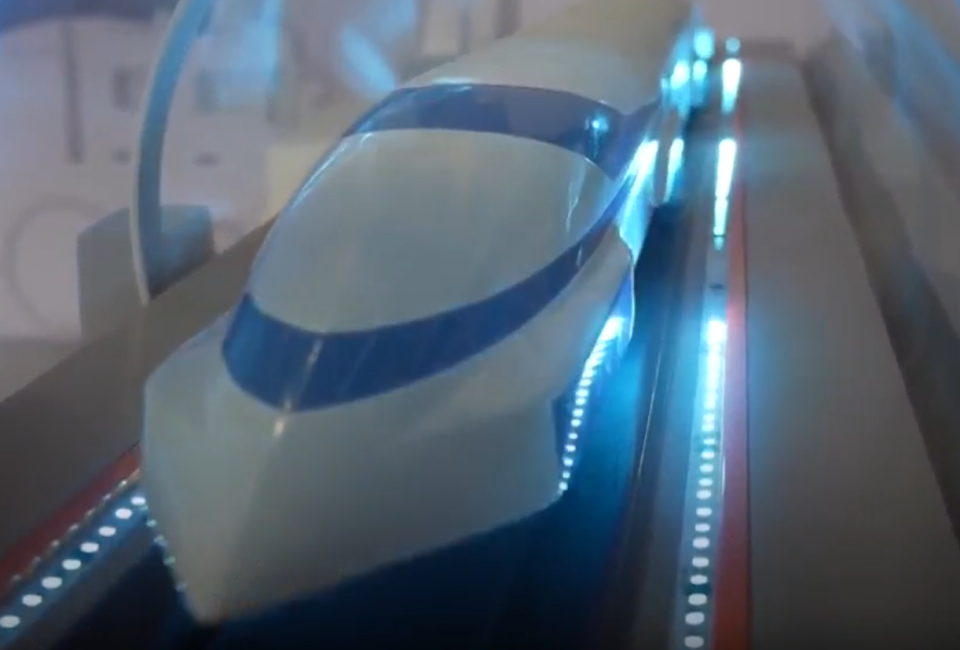
China Railway is positioning this project as a milestone in its quest to develop faster, smarter, and more sustainable transportation. The maglev train is part of China’s broader effort to maintain its global leadership in high-speed rail technology, although other countries are also advancing their systems.
International competitors such as Siemens and Bombardier have collaborated on projects like the ICE 3 electric trains, which currently operate between the Netherlands and Germany. While these trains run at speeds up to 198mph, certain routes allow for speeds above 200mph to reduce travel time.
China’s new maglev train represents the next evolution in high-speed travel, setting the stage for a future where trains outpace planes while offering an eco-friendly alternative to air travel.





