

ABUJA, Nigeria — Gunmen carried out two devastating attacks in north-central Nigeria over the weekend, killing at least 17 people across Benue and Plateau states in separate incidents that included the slaughter of nine members of a single family and the murder of a two-month-old infant, as a new security intelligence report revealed that Nigeria recorded 792 violent deaths across all 36 states in June 2026 alone.
The attacks, which occurred within hours of each other, added fresh urgency to growing calls for the federal and state governments to address what residents and rights groups described as a security crisis that has made daily life unbearable across large parts of the country’s middle belt.
What We Know So Far
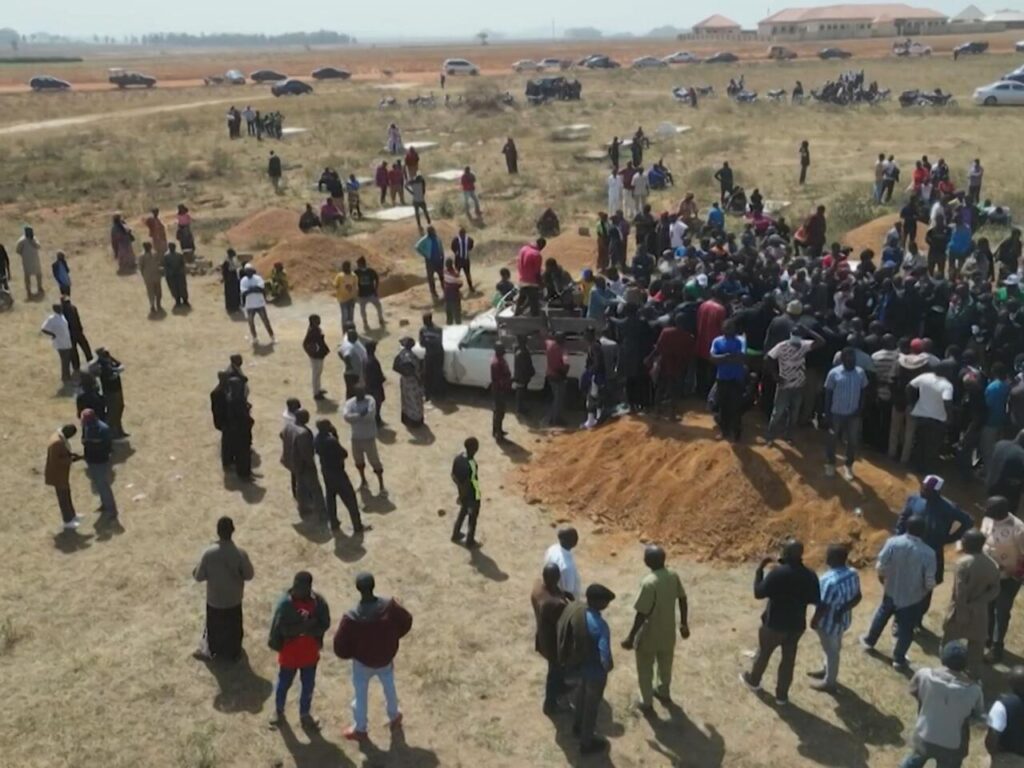
In Benue state, gunmen opened fire on residents gathering after a funeral in the Otukpo-Nobi community in the early hours of Sunday, killing at least eight people and wounding five others, state police spokesperson Udeme Edet confirmed to the Associated Press. Thatched houses and a motorcycle were set ablaze during the assault, and additional officers were deployed to the area in the aftermath.
Amnesty International Nigeria put the Benue death toll at least ten, noting that police casualty figures in Nigeria are frequently lower than those recorded by independent observers.
The rights group said youth protests that followed the attack reflected the depth of community exhaustion with recurring raids and abductions. “The government must live up to its main obligation of protecting lives and property,” Amnesty International Nigeria said in a statement.
In Plateau state, a separate and even more catastrophic attack struck the Kum and Wereng-Camp communities in Riyom Local Government Area late Saturday night. Residents told Punch Nigeria that the assault began around 11:30 p.m. and continued for more than an hour, with gunmen entering homes and firing indiscriminately.
Nine members of a single family were killed in one house, among them a two-month-old infant who was not spared, Rwang Tengwong, National Publicity Secretary of the Berom Youth Moulders Association, confirmed to Punch Nigeria. The village head of the community sustained life-threatening injuries and was rushed to hospital for treatment.
A resident identified as Precious Tok described what residents encountered when they emerged from the bush where they had fled for safety. “The gunmen came in large numbers, shooting everywhere.
We could hear screams from the houses. They entered homes and slaughtered people. It was one of the deadliest attacks we have seen here in recent times,” Tok said.
Another resident, who declined to be named, captured the communal despair in direct terms. “We buried our children with our hands again. This is too much. The government should come and help us. Every time they attack at night, and by morning, people are dead. We are tired of running,” the resident said.
Security personnel were deployed to the Kum and Wereng-Camp communities by the time Punch Nigeria filed its report, though many residents remained displaced and fearful of further violence. Plateau State Police Command spokesperson Alabo Alfred was unreachable for official comment.
What Authorities Are Saying
Beyond the immediate law enforcement response in both states, political accountability for the attacks remained elusive. Neither the Benue nor Plateau state governments had issued formal public statements addressing the specific incidents at the time of initial reporting.
Tengwong of the Berom Youth Moulders Association expressed hope that security agencies would apprehend those responsible but framed the demand in terms that reflected broader community skepticism about the state’s capacity to protect them. Residents of both affected communities directed their calls directly at the federal and state governments, asking for strengthened security in Riyom and other vulnerable areas rather than promises of investigation.
The pattern in Benue, where herder and farmer conflicts have repeatedly generated mass casualty events including an attack last year that killed 150 people in the Yelewata community, suggests a conflict dynamic that police deployments alone have consistently failed to address, the Associated Press noted.
The Broader Picture: 792 Deaths In June Alone
The weekend’s attacks did not occur in isolation. A comprehensive monthly security overview for June 2026, produced by SARI Global, a U.S.-registered risk intelligence and security analysis firm, and obtained by Punch Nigeria, documented 792 confirmed deaths across 882 security incidents in Nigeria during June alone, painting a picture of widespread and intensifying violence that far exceeds what individual incidents convey.
The military killed 274 insurgents during the month, the report confirmed. Non-state armed actors caused the most deaths, with 337 fatalities from just 224 incidents, a kill rate per engagement significantly higher than that of government forces, which generated 375 incidents but 274 fatalities. The remaining deaths were distributed among unknown actors, civilians, criminal actors, and political actors.
Borno state was the single most violent, recording 109 incidents and 172 confirmed fatalities, concentrated around the Lake Chad basin, the Sambisa Forest periphery, Gwoza, and northern garrison towns.
Zamfara followed with 63 incidents, reflecting what SARI Global described as the entrenched banditry economy in the northwest. Plateau recorded 51 incidents, Katsina 44, Lagos 40, and the Federal Capital Territory 36.
The Islamic State West Africa Province carried out a particularly calculated campaign in the Monguno axis of northern Borno during June, the report confirmed. On June 24, ISWAP fighters breached a residential compound in Monguno town and abducted an international non-governmental organization staff member and a local guard, demonstrating what SARI Global described as detailed prior intelligence on the location of humanitarian personnel.
Days later, fighters destroyed two NGO-contracted cargo trucks on the Monguno to Gajiram road, following an earlier arson attack on aid cargo on June 18. SARI Global said the deliberate destruction of food cargo was a calculated tactic to intimidate commercial vendors, force them away from contracts with humanitarian organizations, and cut off food supplies to hundreds of thousands of internally displaced persons in northern Borno.
“ISWAP’s activities made staff unsafe at night and supply routes unsafe by day, thereby controlling humanitarian operations from outside the perimeter,” the report said.
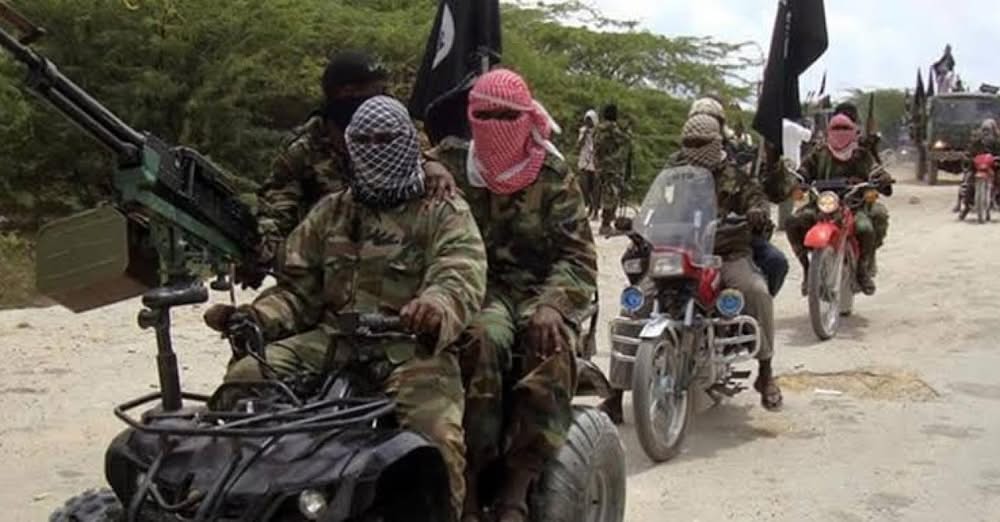
On June 29, ISWAP fighters raided the Government Day Secondary School in Lassa in Askira/Uba Local Government Area, abducting students and teachers in broad daylight. SARI Global rated the attack as ideologically driven and instrumentally calculated to generate international attention while demonstrating state vulnerability.
“Each successful abduction of this kind emboldens replication,” the firm warned, advising that all educational facilities in peripheral areas near ISWAP strongholds should be treated as elevated threat settings.
Across the northwest, 67 insurgent-style ambush and explosive attacks were recorded in June, including an improvised explosive device on the Bagega to Anka road in Zamfara on June 15. SARI Global noted that the spread of IED tactics from the northeast into the Zamfara, Katsina, Sokoto, and Kebbi corridor suggests the cross-pollination of methods between armed groups.
The report offered one of its most pointed observations in a single sentence: “A busy security apparatus is not the same as an improving environment.”
Why This Matters
The Benue and Plateau attacks and the SARI Global data collectively illustrate a security environment in which the Nigerian state is simultaneously active and insufficient.
Government forces initiated the largest share of recorded incidents in June but produced a kill rate per engagement that non-state actors exceeded by a substantial margin, indicating that armed groups remain capable of concentrated, lethal violence even in the face of significant military counter-pressure.
The murder of a two-month-old infant in Plateau state and the deliberate cutting off of food supplies to displaced populations in Borno represent opposite ends of the same crisis: communities in the middle belt facing ethnic and resource-driven violence, and communities in the northeast facing a sophisticated insurgency that has learned to use humanitarian logistics as a weapon.
The SARI Global report’s projection for July is sobering. It warned that the gap between humanitarian need and response capacity will widen as lean-season food insecurity deepens, raising both demand for distributions and the risk of crowd-related friction, while ISWAP’s sustained campaign continues to constrain the supply chain on which those distributions depend.
For ordinary Nigerians in Benue, Plateau, Borno, and beyond, the data and the deaths describe a reality that official security briefings rarely capture: communities burying their children, running into the bush at night, and returning in the morning to count their dead.
What Happens Next
Security agencies in Benue and Plateau were deployed to the affected communities by Monday, with investigations into both attacks underway. Residents expressed little confidence that the deployments would produce lasting protection rather than temporary visibility.
The SARI Global report will be published on ReliefWeb, the United Nations humanitarian information platform, where it will inform the operational planning of international organizations working in Nigeria’s conflict zones. Its warnings about educational facilities, humanitarian supply routes, and the deepening lean-season food crisis carry direct operational implications for the dozens of NGOs and UN agencies working in northern Borno.
At the political level, the scale of June’s documented violence, 792 deaths in a single month, across every state in the federation, provides a statistical framework for accountability conversations that community protests alone cannot generate.
Whether federal and state governments respond with the structural security reforms that Amnesty International and community leaders have demanded, or whether the attacks of another weekend become another entry in a lengthening record, remains the central and unanswered question.
AP/PunchOnline





