

Iran has executed two men convicted of killing four police officers during anti government protests in the central city of Isfahan, extending a wave of executions linked to the nationwide unrest that shook the country earlier this year.
Judiciary affiliated news outlet Mizan identified the men as Abolfazl Sepahi Badjani and Amir Hossein Safari Hosseinabadi. Authorities said they were convicted of killing four police officers, setting fire to a police station and damaging public property during demonstrations in Isfahan, about 400 kilometers south of Tehran.
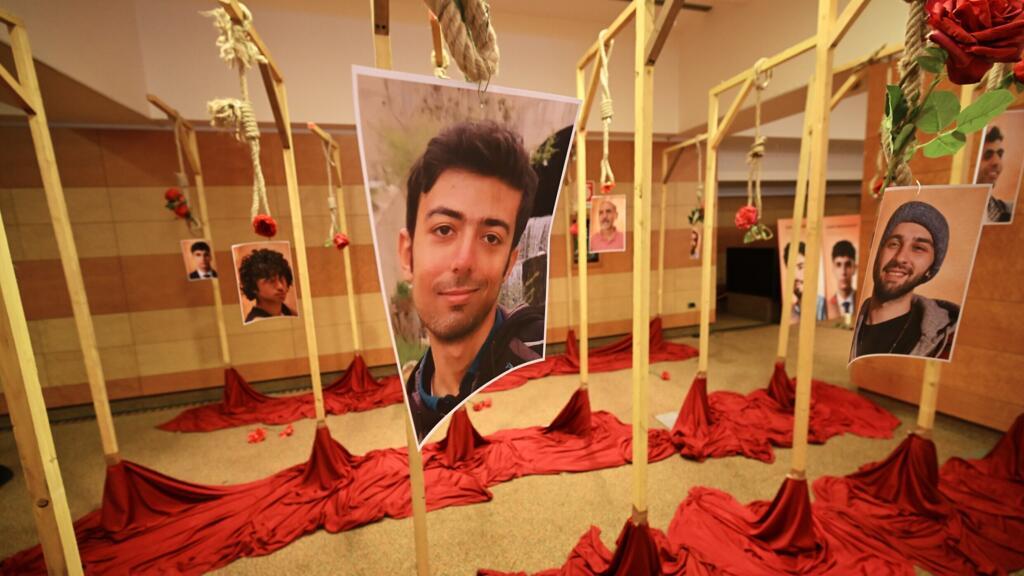
The executions were carried out before dawn Tuesday.
The two men are among thousands arrested during the government’s crackdown on protests that erupted nationwide in late December and continued into January. Earlier this month, Iranian authorities also executed two other defendants connected to the same case.
What we know so far
Iranian officials said the violence centered on clashes at Shahid Alikhani Square in Isfahan on Jan. 8, where four police officers were killed.
State media said investigators accused the defendants of participating in armed attacks using knives, firearms, axes and Molotov cocktails while setting fire to buildings, police vehicles and public facilities.
The judiciary said convictions were based on police reports, witness testimony, mobile phone records, confessions and crime scene reconstruction. Iran’s Supreme Court later upheld the death sentences.
The Centre for Human Rights in Iran and the Norway based Hengaw Organization for Human Rights said crowds gathered near the execution site in an attempt to stop the hangings before security forces dispersed them.
Activist videos circulating online, which could not be independently verified, appeared to show dozens of people assembling before police cleared the area.
One witness quoted by rights organizations said authorities switched off nearby lights before carrying out the executions after dispersing the crowd.
What authorities are saying
Iranian authorities described the executions as punishment for what Mizan called a “horrific crime” committed during violent unrest.
Officials alleged Badjani played a leading role by encouraging attacks, blocking roads and assaulting police officers before helping set injured officers on fire.
Safari Hosseinabadi was accused of joining the clashes while armed with a blade.
Iran has defended its judicial process, saying convictions were supported by evidence reviewed by the country’s courts.
The government has consistently maintained that its response to the protests was necessary to restore public order and national security.
Rights groups raise concerns
Human rights organizations sharply criticized the executions and warned additional defendants could face similar punishment.
Hengaw said both men were subjected to severe physical and psychological torture after their arrests to force confessions. The organization also alleged they were denied independent legal representation and a fair trial.
The group expressed concern over another defendant, Alireza Sepahi, whose family reportedly was summoned for a final prison visit. His current whereabouts remain unknown, raising fears that another execution could be imminent.
On Monday, United Nations experts said at least 24 people have been executed in connection with the January protests during 2026.
Amnesty International has repeatedly criticized Iran’s use of capital punishment. The organization said Iran carried out at least 2,159 executions in 2025, more than double the previous year’s total.
Why this matters
The latest executions underscore Iran’s continued reliance on capital punishment following one of the country’s most significant waves of anti government unrest in years.
The January demonstrations, initially fueled by worsening economic conditions including inflation, unemployment and declining living standards, evolved into broader demands for political reform. The government’s response has drawn sustained criticism from international rights organizations over arrests, prosecutions and the use of the death penalty.
The executions also come as Iran remains under heightened international scrutiny during ongoing tensions with the United States following months of military confrontation and fragile diplomatic efforts.
Competing accounts of the protest crackdown remain unresolved. Iranian authorities have reported more than 3,000 deaths linked to the unrest, while rights organizations have placed the figure above 7,000.
What happens next
Human rights organizations expect additional defendants connected to the January protests could face execution as legal proceedings continue.
International pressure on Tehran over its use of capital punishment is also likely to intensify, particularly as rights advocates continue urging greater transparency in Iran’s judicial system and independent investigations into allegations of torture and forced confessions.
The executions are expected to further deepen international debate over Iran’s handling of political dissent and the country’s expanding use of the death penalty.
Sources: Associated Press, The Straits Times (Reuters), The NationalNews





