

(NewYorkPost)-Iran warned it could target U.S. Navy ships entering the Strait of Hormuz after American warships passed through the strategic waterway for the first time since the conflict began, raising tensions as diplomatic talks continue.
Multiple U.S. military vessels, including at least two guided-missile destroyers, transited the strait on Saturday in what officials described as an uncoordinated move. The passage marked a significant development in the standoff over control of the narrow shipping route, a critical artery for global energy supplies.
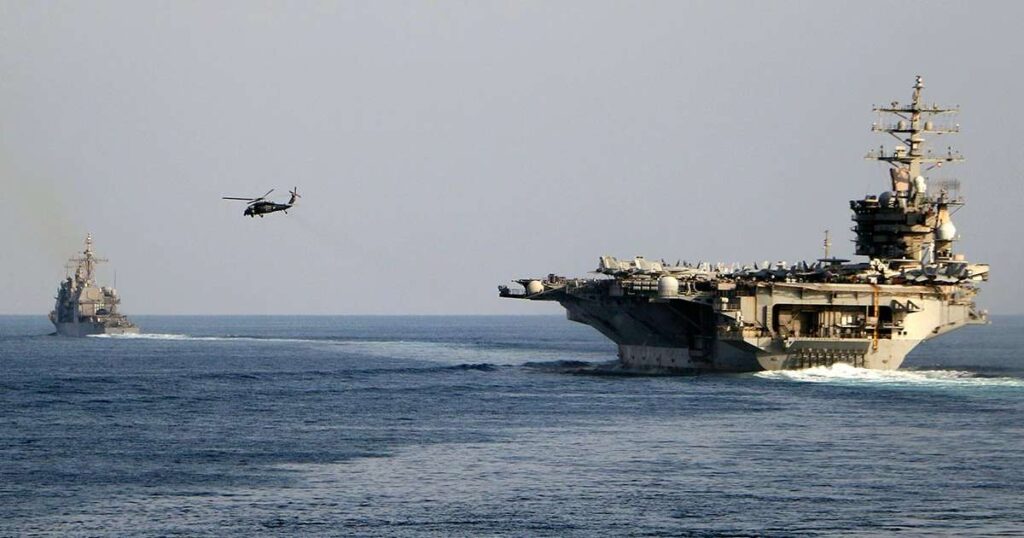
President Donald Trump appeared to confirm the operation in a series of social media posts, stating that the United States had begun efforts to reopen the route to international shipping. He framed the move as part of a broader effort to ensure the flow of energy supplies to global markets.
Iranian officials responded with warnings that any U.S. naval presence in the strait could be treated as a hostile act. A government spokesperson indicated that Iranian forces had tracked one American destroyer approaching the area and cautioned that further movement could trigger a military response.
Despite the warnings, the U.S. vessels completed their transit without incident. A report by The Wall Street Journal described the operation as a routine freedom-of-navigation mission, adding that the ships were not escorting commercial traffic.
The episode unfolded as U.S. and Iranian representatives met in Pakistan for high-level negotiations aimed at preserving a fragile ceasefire. Iranian officials signaled that military activity in the strait could complicate those discussions, warning that continued U.S. movements might undermine diplomatic progress.
Iran has maintained that control over the waterway is central to any broader agreement, while the United States has insisted on unrestricted access for international shipping. The competing positions have emerged as a key obstacle in ongoing efforts to de-escalate the conflict.
The transit of U.S. warships through the Strait of Hormuz represents a calculated show of force designed to reinforce freedom of navigation while testing Iran’s red lines. By proceeding without coordination, Washington signaled it does not recognize any unilateral restrictions on the waterway, even as negotiations continue.
Iran’s response reflects its reliance on the strait as a strategic lever. Control over the route provides Tehran with significant influence over global energy markets, allowing it to exert pressure far beyond the immediate conflict. The threat to target U.S. vessels, even if not acted upon, underscores the risk of rapid escalation in a confined and heavily trafficked maritime corridor.
The timing is particularly sensitive. With talks underway in Pakistan, both sides appear to be balancing diplomacy with displays of strength. Such parallel strategies can increase leverage at the negotiating table but also heighten the risk of miscalculation, especially in a region where military forces operate in close proximity.
For global markets, the incident highlights the fragility of supply routes that handle a large share of the world’s oil and natural gas. Even limited disruptions or threats can drive price volatility and ripple through international economies.
Ultimately, the episode illustrates how the Strait of Hormuz has become the central pressure point in the conflict. Whether it remains open or becomes a flashpoint for further confrontation may determine the trajectory of both the negotiations and the broader regional stability.





