

The son of senior Hamas negotiator Khalil al-Hayya has died after being wounded in an Israeli strike in Gaza, the group said Thursday, as renewed violence underscored the fragility of a ceasefire meant to halt months of devastating conflict.
Hamas said the negotiator’s 32-year-old son, Azzam al-Hayya, was injured in a strike in Gaza City a day earlier that also killed another person and left several others wounded. He later died from his injuries. The Israeli military has not issued a statement on the strike.
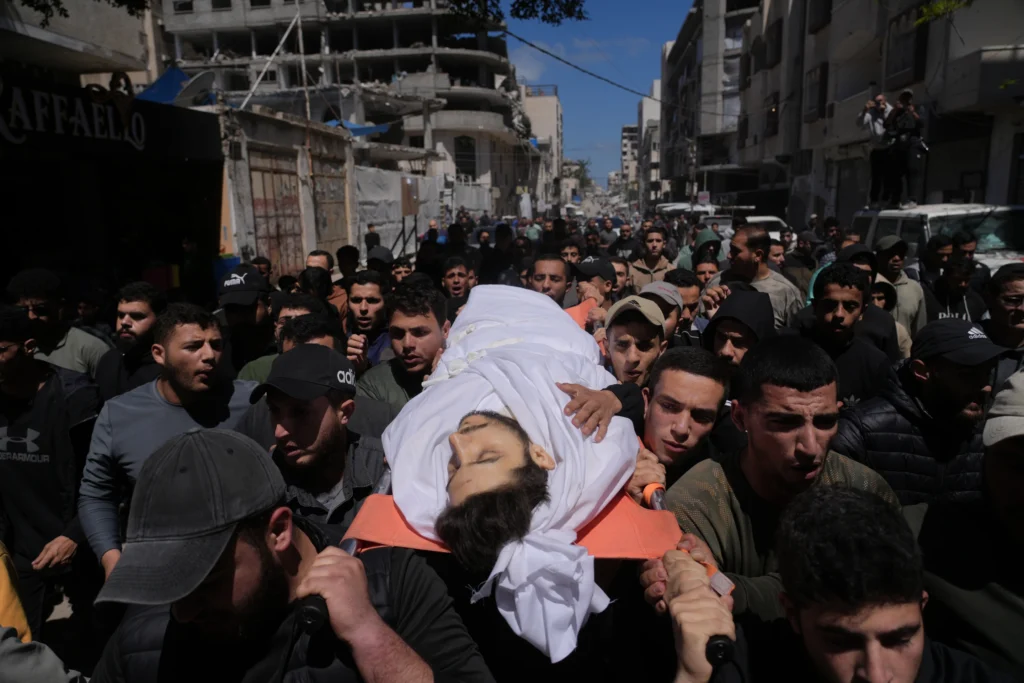
The elder Khalil al-Hayya, a central figure in ceasefire negotiations, is believed to be outside Gaza. His family’s loss comes as indirect talks over a longer-term truce remain stalled, with both sides accusing each other of failing to meet key commitments.
In a separate development, an Israeli strike killed three Hamas-affiliated security personnel at a guard position in Gaza, hospital officials confirmed. A fourth individual sustained critical injuries, while Hamas authorities said the location targeted functioned as part of their internal security structure. The Israeli military said it struck what it described as a Hamas command site.
The renewed strikes come months after a United States-mediated ceasefire agreement halted large-scale operations in October following Hamas’ October 7, 2023, attack on Israel, which ignited the war. That agreement also led to the release of hostages captured during the initial assault.
Despite the truce, Israel has continued targeted operations against what it identifies as militant infrastructure. These actions have frequently resulted in civilian casualties, reflecting the ongoing volatility across the territory.
Hamas has accused Israel of attempting to influence negotiations through targeted killings, including attacks on relatives of senior figures. It remains unclear whether Azzam al-Hayya was the intended target of the strike.
In remarks broadcast by Al Jazeera before his son’s death, Khalil al-Hayya said that if his son had been deliberately targeted, it would be considered a sacrifice shared by many Palestinians. He reiterated that Hamas would only engage in discussions about disarmament after Israel fulfills earlier ceasefire conditions, including a complete halt to hostilities and expanded humanitarian aid.
The conflict has already claimed the lives of several senior Hamas figures and their relatives over the years. Another son of the negotiator, Hammam, was killed in a previous strike targeting Hamas leaders abroad.
At Gaza’s Shifa Hospital, the negotiator’s daughter said the family’s loss would not alter their stance. She described the suffering as part of a broader national struggle, emphasizing that many families across Gaza have endured similar tragedies.
The humanitarian situation in Gaza remains dire. According to health officials cited by The Associated Press, more than 72,000 people have been killed since Israel launched its military campaign in response to the 2023 attack. Civilians continue to face severe shortages of food, water and medical care, while many remain displaced in crowded camps.
Scenes of grief unfolded again on Thursday as families gathered at hospitals to mourn loved ones killed in recent strikes. In one case, relatives said three members of the same family were killed while setting up tents after relocating from a school where they had sought shelter.
Meanwhile, regional tensions extended beyond Gaza. In Lebanon, Israel said it carried out a strike in Beirut’s southern suburbs that killed three members of Hezbollah, including a commander identified as part of its elite Radwan Force. The area, while a stronghold of the group, is also densely populated with civilians. Hezbollah has not issued an immediate response.
The Beirut strike marked the first attack on the area since a ceasefire between Israel and Hezbollah was announced in April. However, clashes have continued in southern Lebanon, highlighting the broader regional impact of the conflict.
Israel maintains that its operations are aimed at preventing militant regrouping and protecting its security. It has said it recently struck dozens of sites linked to Hezbollah and killed multiple fighters over the past week, though independent verification remains limited.
The death of Azzam al-Hayya adds another layer of complexity to an already fragile diplomatic process. Targeting or inadvertently killing relatives of key negotiators can deepen mistrust and harden positions, making it more difficult to reach lasting agreements. Even if unintended, such incidents carry symbolic weight in a conflict where personal loss is deeply intertwined with political strategy.
The continued Israeli strikes despite a ceasefire framework suggest a shift toward a prolonged low-intensity conflict rather than a complete halt to hostilities. This pattern mirrors previous cycles in the region, where ceasefires reduce large-scale fighting but fail to address underlying disputes.
At the same time, Hamas faces internal and external pressure. Internally, it must respond to widespread suffering among civilians in Gaza. Externally, it remains under scrutiny from mediators and regional actors pushing for a sustainable resolution. The death of a negotiator’s family member could strengthen hardline factions within the group, potentially complicating future talks.
Regionally, the strike in Beirut signals that tensions remain interconnected across multiple fronts. The involvement of Hezbollah and ongoing clashes in Lebanon increase the risk of broader escalation, especially if retaliatory actions intensify.
For civilians in Gaza, the immediate concern remains survival. With infrastructure severely damaged and aid deliveries inconsistent, daily life continues to deteriorate. The ongoing violence, even at reduced levels, prolongs displacement and economic collapse, raising concerns about long-term stability.
Diplomatically, the situation underscores the limitations of ceasefire agreements that lack enforcement mechanisms. Without clear accountability and mutual trust, violations—whether perceived or real—can quickly erode fragile gains.
AP





